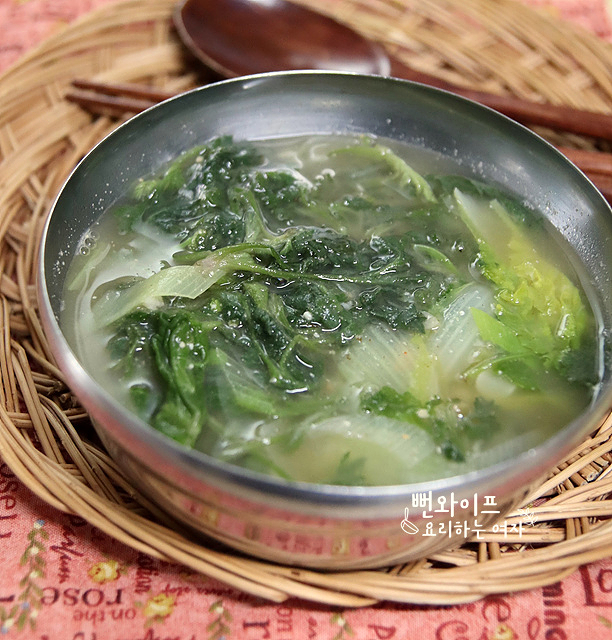
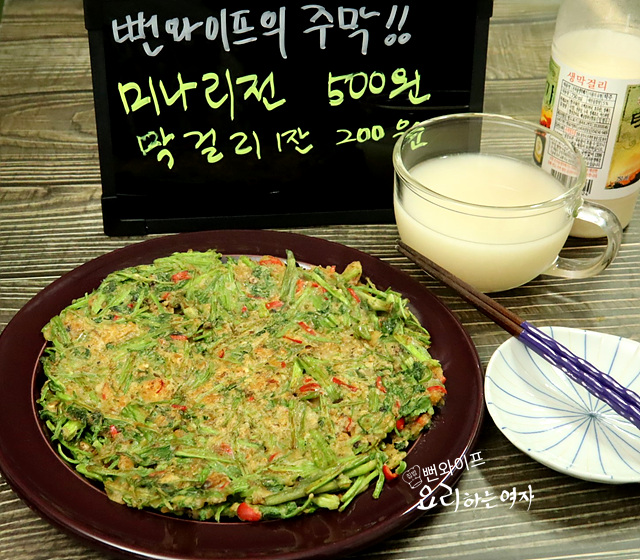
Fragrant and Crispy Ssuk Jeon (Pan Fried Mugwort Pancakes)
A seasonal spring delicacy made by finely chopping tender mugwort, coating it in a minimal batter, and pan-frying it until crisp.
Translated from Korean by AI and not yet checked by a native speaker. Amounts and numbers are taken directly from the original recipe. Read the Korean original →
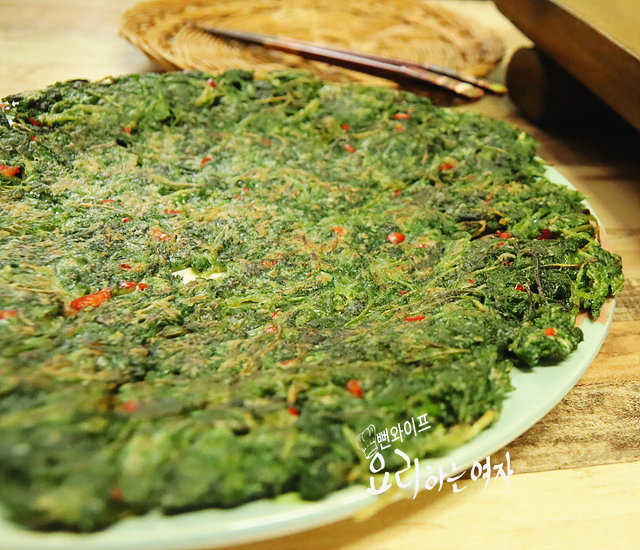
This spring pancake highlights the aroma of tender mugwort by finely chopping it, while frying mix and cold water add plenty of crispiness. Using minimal flour lets the mugwort's natural flavor shine through, and with such simple ingredients, it makes a wonderful snack or pairing for makgeolli.
- Servings
- about 2 servingsOriginal: 2 pancakes, 22 cm across
- Difficulty
- Easy
- Spiciness
- Not spicy
Ingredients
Ingredients
- Mugwort100 g (after cleaning)
- Red chili pepper1
Batter
- Korean pancake mix (buchim-garu)3 tbsp
- Frying mix (twigim-garu)3 tbsp
- Cold water (or warm water)1/2 cup
Vinegar soy dipping sauce
- Regular soy sauce (jin-ganjang)1 tbsp
- Vinegar1/2 tbsp
- Mirin (cooking rice wine)1 tbsp
- The red chili pepper does not affect the flavor and is just for color, so you can leave it out.
- When making mugwort pancakes, pluck off any yellowed leaves or tough stems so the texture is smooth when chewed. When used in soups, even tough mugwort softens up as it boils, but small, tender mugwort is best for pancakes.
Steps
Prepare the ingredients
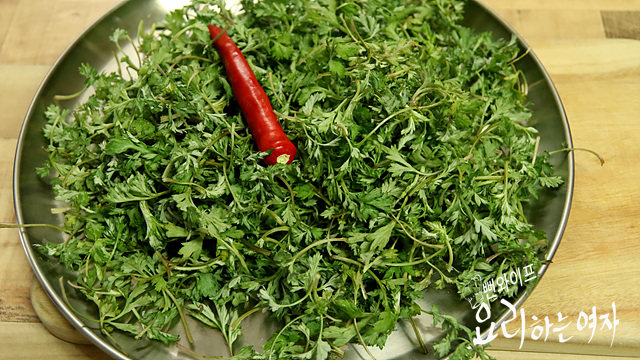
Here is the cleaned, washed, and drained mugwort along with 1 red chili pepper.
The red chili pepper does not affect the flavor and is just for color, so you can leave it out.
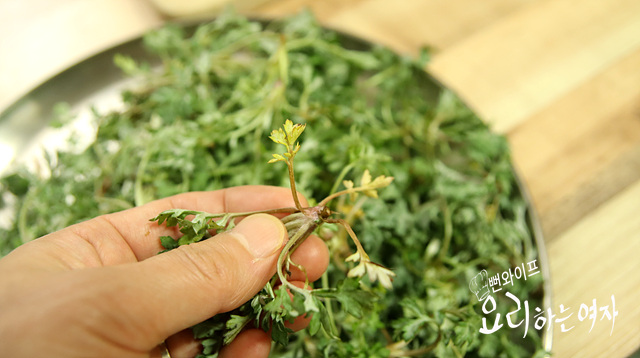
When making mugwort pancakes, pluck off any yellowed leaves or tough stems so the texture is smooth when chewed.
When used in soups, even tough mugwort softens up as it boils, but small, tender mugwort is best for pancakes.
I cleaned, rinsed several times, and thoroughly drained it.
Chop the ingredients
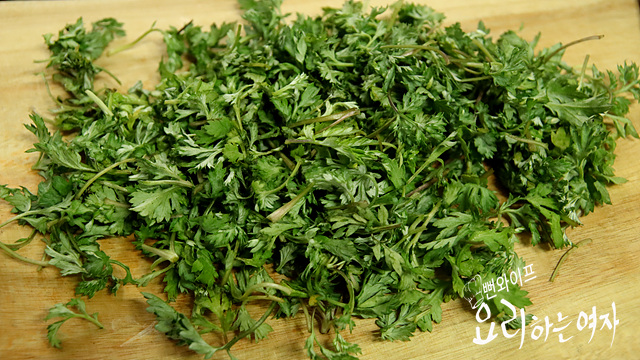
Chop the mugwort finely so it separates easily during frying. Chopping it this way also brings out a richer aroma.
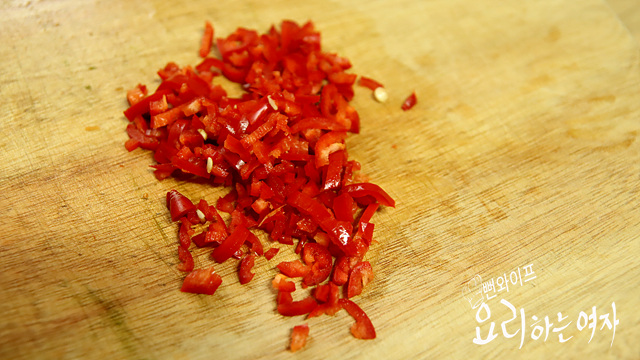
Chop the red chili pepper finely as well.
Make the batter
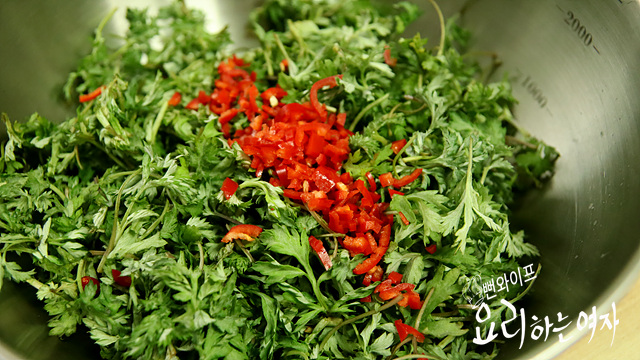
Place the mugwort and red chili pepper into a mixing bowl.
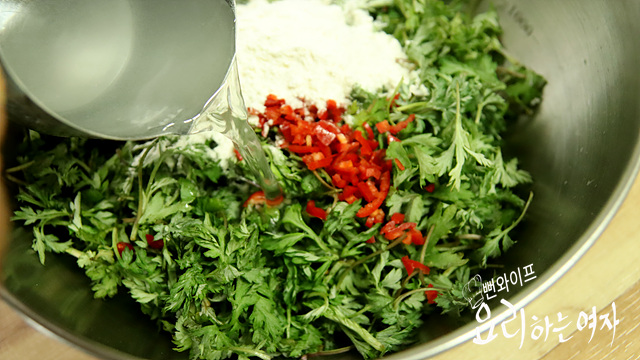
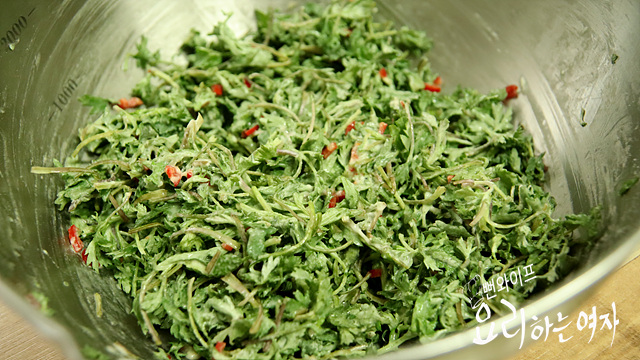
Add 3 tbsp Korean pancake mix (buchim-garu) and 3 tbsp frying mix (twigim-garu), then gently toss while adding 1/2 cup cold water little by little rather than pouring it all at once.
When making fried foods or pancakes, the colder the water used in the batter, the crispier the result.
Also, tender mugwort clings together well even with just a little flour, so keep the flour to a minimum.
Pan-fry the pancakes
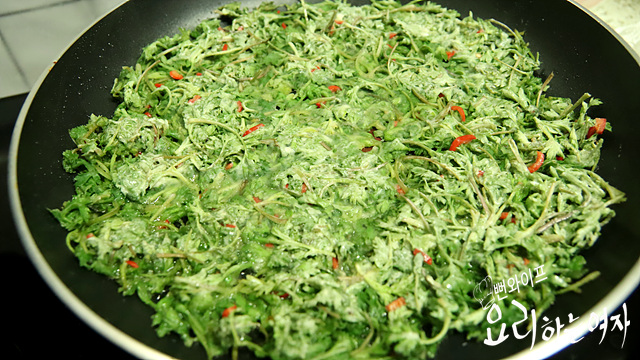
Heat a skillet, drizzle with cooking oil, keep the heat on medium, and add the mugwort to the pan.
Since mugwort is tender and burns easily, keep the heat lower than usual.
Use utensils in both hands to spread the clustered batter thin and shape it.
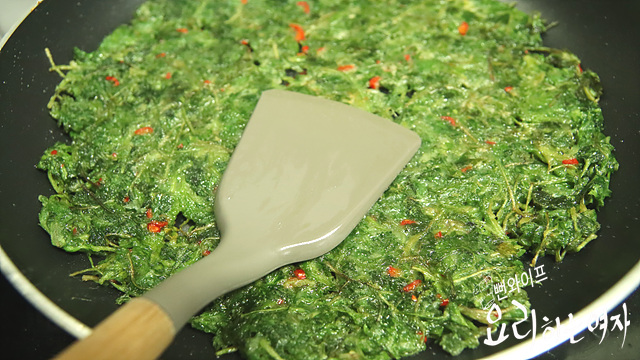
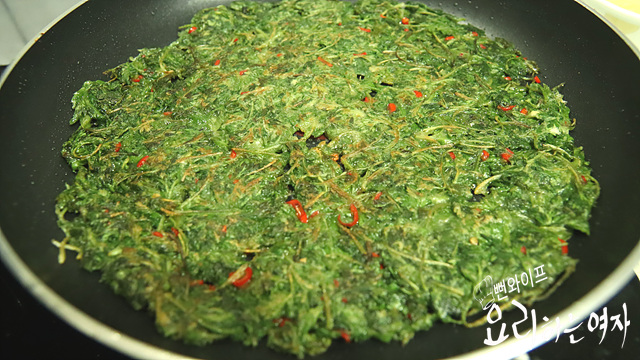
After flipping, press down with a spatula so any lifted batter makes firm contact with the pan.
Once the color deepens overall and it seems fully cooked, turn the heat to high at the very end to cook off moisture on both sides, which makes it golden and much crispier.
Finish
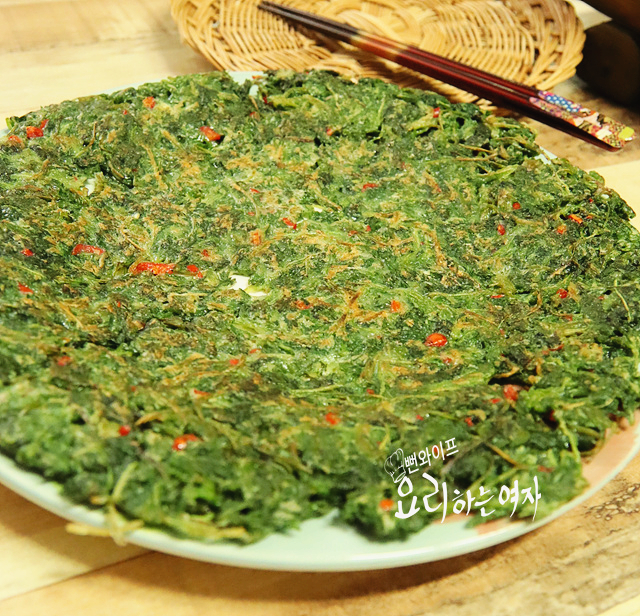
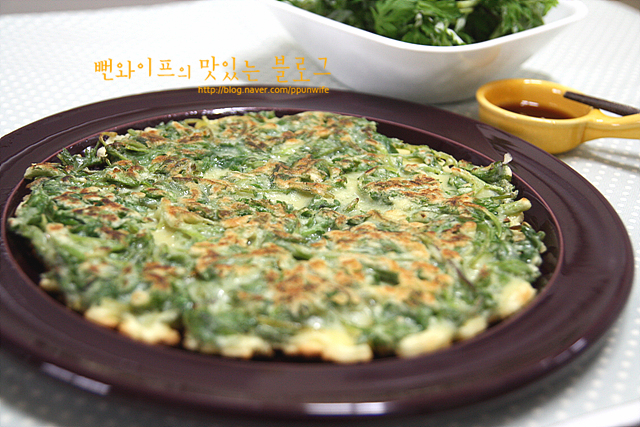
Doesn't this ssuk jeon look wonderfully crispy and appetizing?
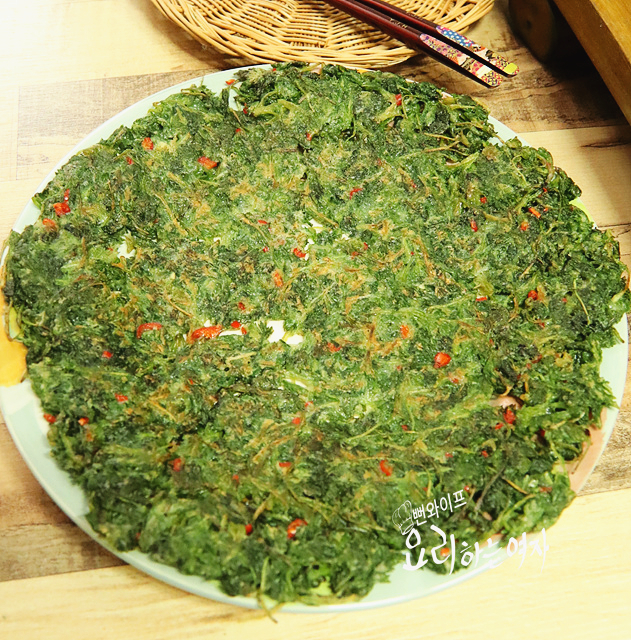
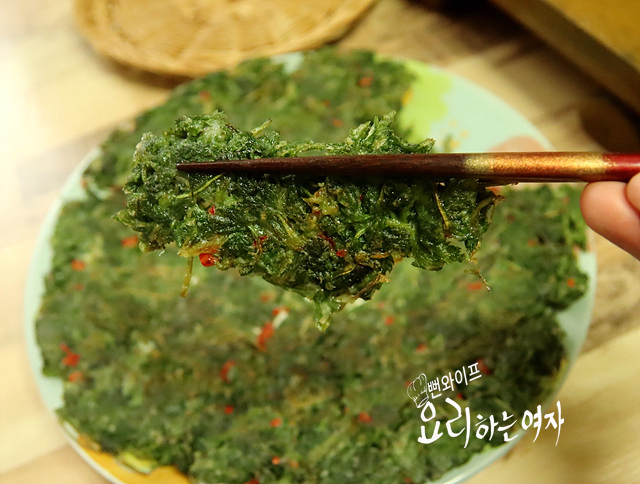
A few holes opened up from spreading it so thin, but those spots actually turned out even crispier and nicer.
The salt in the prepared mixes provides a gentle seasoning, so you do not need to add extra seasoning.
Seasoning the batter heavily can overpower the aroma of the mugwort, so it is better to serve it with a dipping soy sauce for light dipping.
Dipping sauce ratio: 1 tbsp regular soy sauce (jin-ganjang), 1/2 tbsp vinegar, 1 tbsp mirin (cooking rice wine)
 Ppunwife's tips
- Finely chopping the mugwort makes its aroma much richer on the nose and palate.
- When making fried foods or pancakes, the colder the water used in the batter, the crispier the result.
- Tender mugwort clings together well even with just a little flour, so keep the flour to a minimum.
- Since mugwort is tender and burns easily, keep the heat lower than usual.
- Once the color deepens overall and it seems fully cooked, turn the heat to high at the very end to cook off moisture on both sides, which makes it golden and much crispier.
- Seasoning the batter heavily can overpower the aroma of the mugwort, so it is better to serve it with a dipping soy sauce for light dipping.
FAQ
Is there a batter secret to making pancakes extra crispy?
Combining Korean pancake mix with frying mix and mixing the batter with ice-cold water will give you a crispy texture.
Do I need to add salt to season the batter?
Korean pancake mix and frying mix already contain salt, so no extra seasoning is needed. Heavy seasoning can mask the mugwort's natural aroma, so pairing it with a vinegar soy dipping sauce is best.
Why do you chop the mugwort finely before adding it to the batter?
Finely chopping the mugwort keeps it from clumping, allows it to spread evenly, and brings out its delicate, characteristic aroma even more.
How should I manage the heat while pan-frying?
Mugwort is delicate and burns easily, so spread it thin over medium or low heat, then briefly raise the heat to high at the very end to cook off moisture and crisp up the outside.