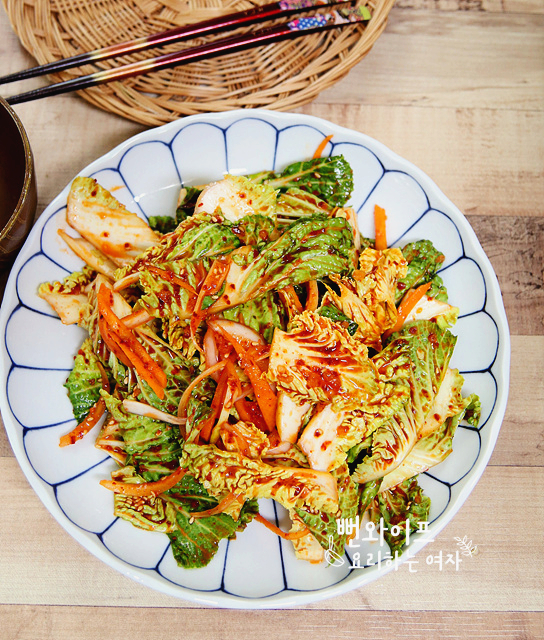
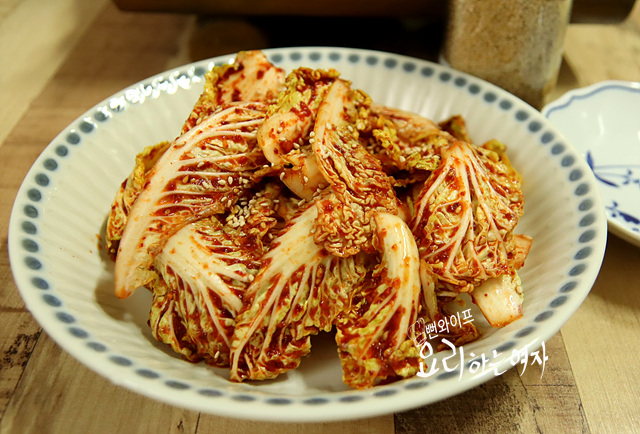
Crispy Bomdong Jeon (Spring Cabbage Pancake)
A savory pancake made with in-season spring napa cabbage coated in a cold batter and pan-fried until crispy.
Translated from Korean by AI and not yet checked by a native speaker. Amounts and numbers are taken directly from the original recipe. Read the Korean original →
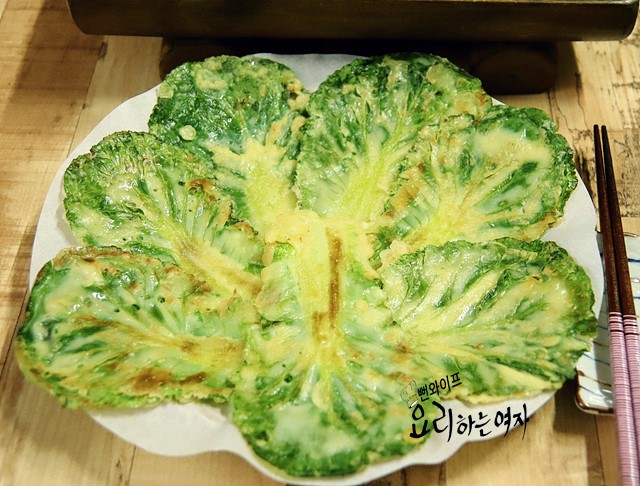
This pancake brings out the sweet, savory flavor unique to in-season bomdong by frying it until crispy. The batter uses ice water and egg yolk to enhance the texture, making it a great pairing for makgeolli or a special snack.
- Servings
- about 2–3 servings
- Difficulty
- Easy
- Spiciness
- Not spicy
Ingredients
Ingredients
- Bomdong (spring napa cabbage)14 leaves, 150 g
Batter ingredients
- Korean pancake mix (buchim-garu) (or frying mix (twigim-garu))1 1/2 cups
- Water1 1/3 cups
- Egg yolk1
- Tuna extract sauce (chamchi-aek)1 tbsp
- Soak the separated leaves in water for at least 10 minutes before washing.
- The tender, yellow center is great for seasoned salads or geotjeori, the middle leaves are good for pancakes, and the outermost large leaves are good for soups; use the middle leaves for this pancake.
- If using regular all-purpose flour, you can add about 2 tbsp of potato starch to make the batter.
Steps
Prepare the ingredients
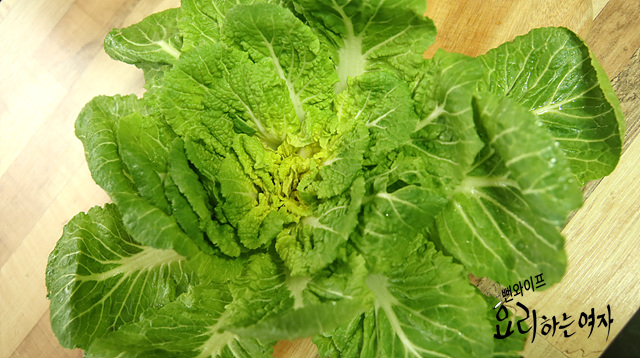
Bomdong is a type of cabbage that grows spread wide open, with a yellowish center and mostly green outer leaves.
Because it grows close to the ground, a lot of dirt clings to the stems, so it is important to wash each leaf thoroughly.
Trim the bomdong
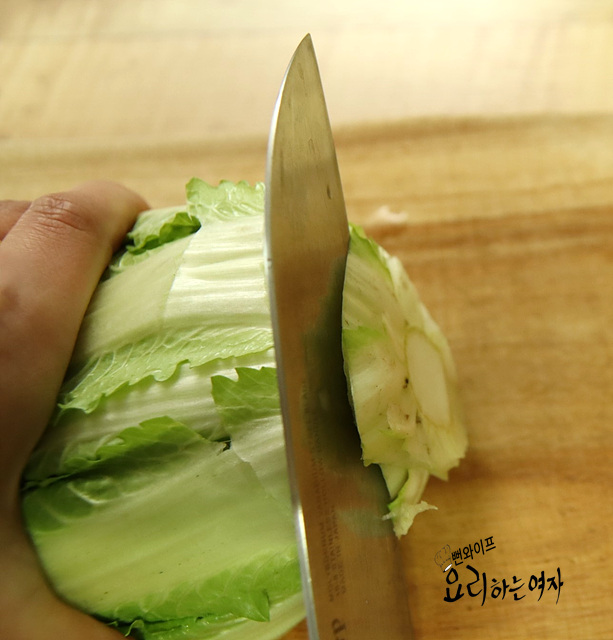
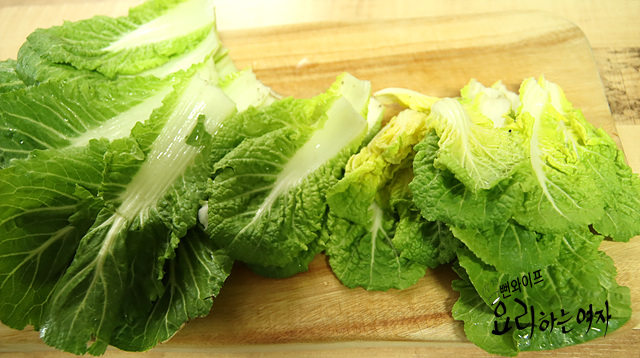
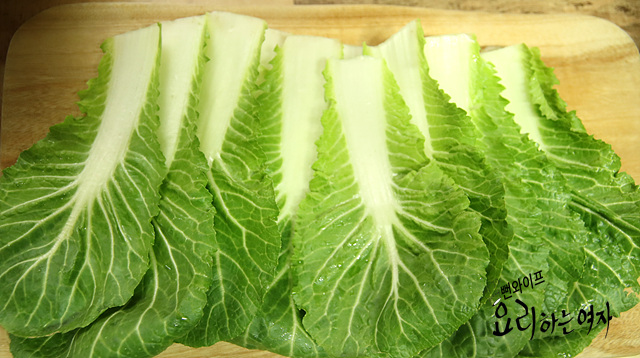
Cut off the base stem, and the leaves will separate naturally.
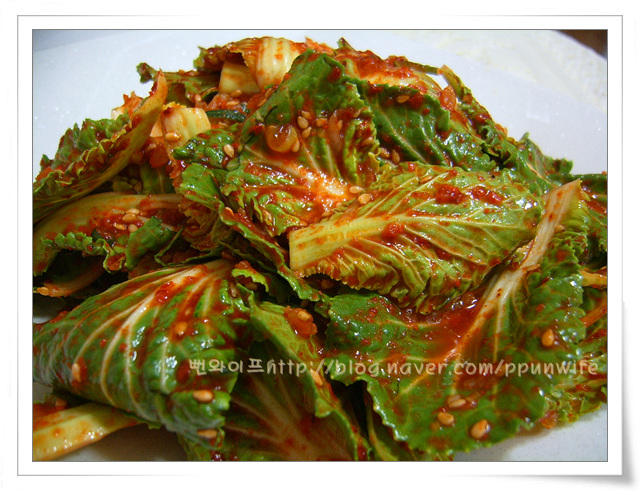
The tender, yellow center is great for seasoned salads or geotjeori, the middle leaves are good for pancakes, and the outermost large leaves are good for soups.
Today, we will use the middle leaves to make the pancakes.
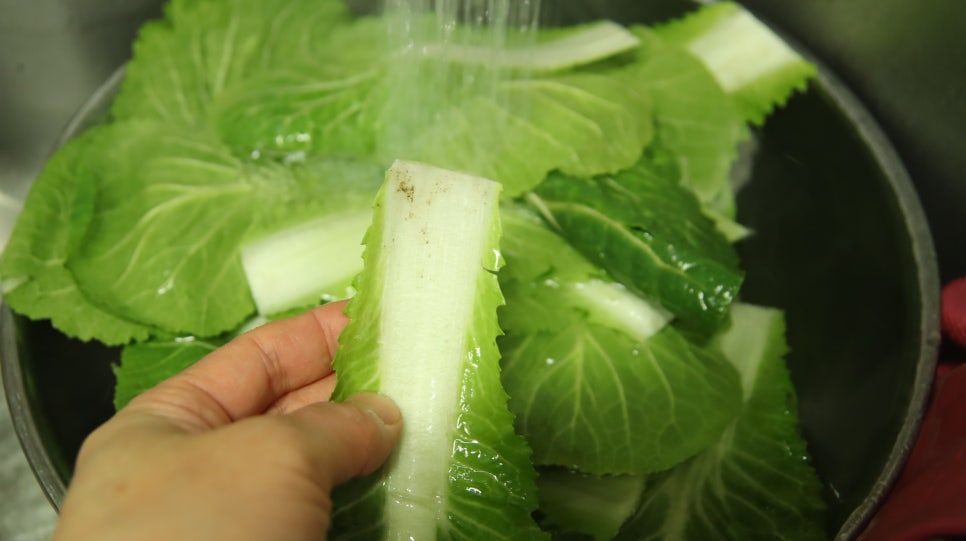
Soak the separated bomdong leaves in water for at least 10 minutes, then wash them under running water while rubbing the dirt off the stems.
Make the batter
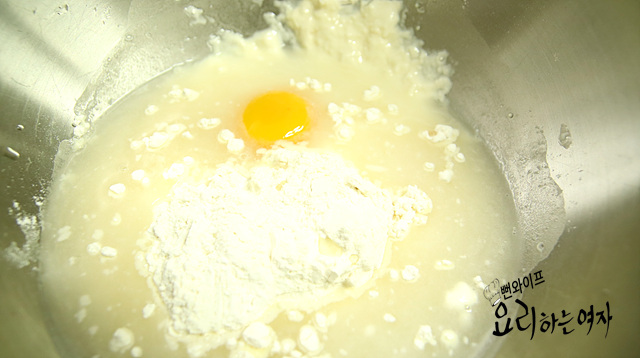
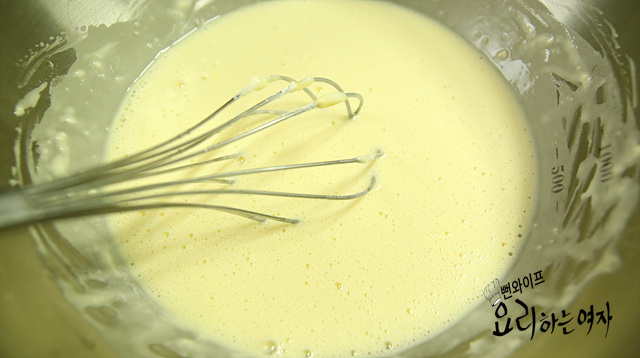
In a bowl, pour 1 1/2 cups of Korean pancake mix or frying mix. Add 1 egg yolk for an appetizing color, along with 1 tbsp of tuna extract sauce and 1 1/3 cups of cold water or ice water.
For a crispy pancake, the colder the water, the better, or use Korean pancake mix or frying mix that contains starch.
If using regular all-purpose flour, you can add about 2 tbsp of potato starch to make the batter.
Mix until there are no large lumps, and rather than pouring all the water in at once, add it little by little while mixing to reach your desired consistency.
If you mix it too long, gluten forms and the pancake will not turn out crispy.
Pan-fry
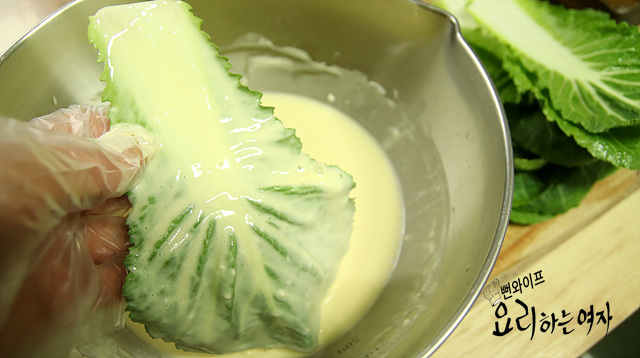
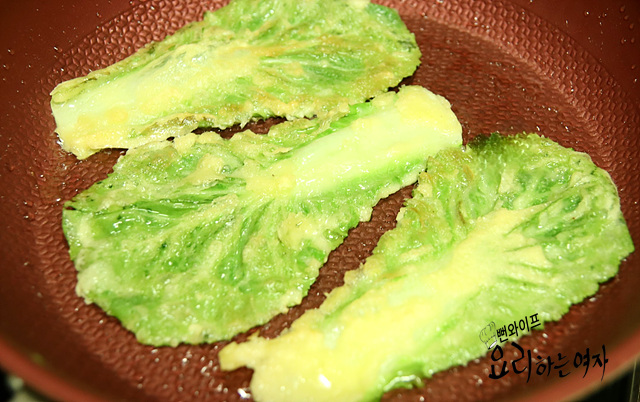
Heat a generous amount of cooking oil in a preheated pan, coat both sides of each leaf with batter, and fry over medium heat.
Flip once or twice and fry until both sides are nicely colored and crispy.
Finish
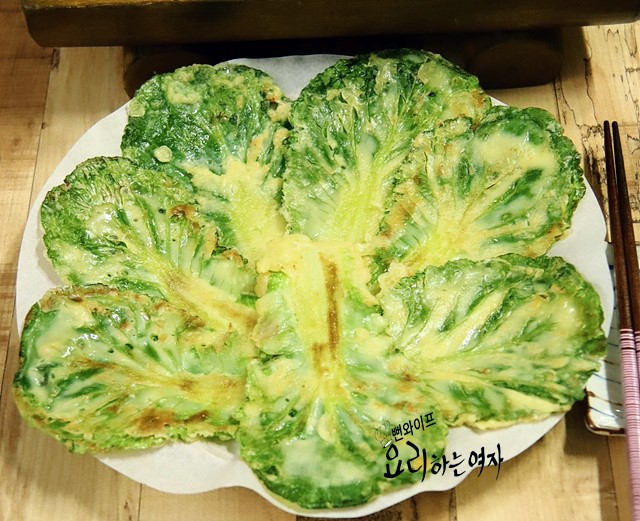
Eating it right after frying makes the savory flavor of this bomdong jeon truly wonderful.
Adding a few ice cubes to the batter gave it an amazing crunch.
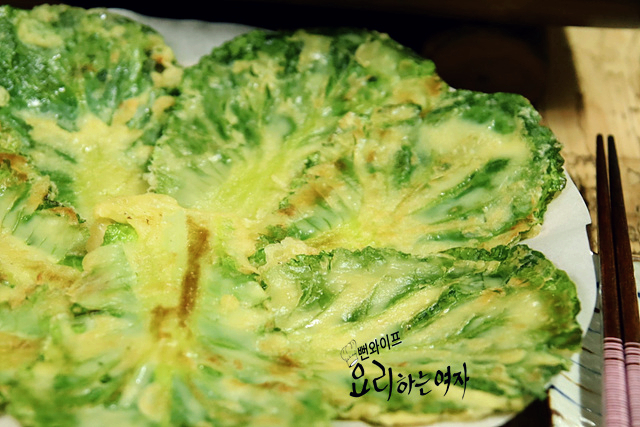
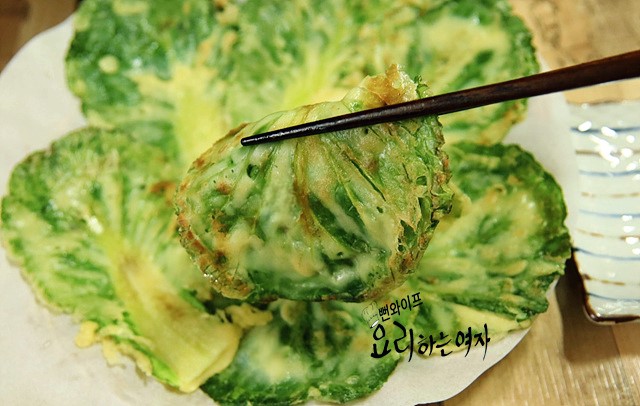
Because bomdong has firm stems and fibrous texture, the stems feel tough once they cool down.
It tastes best when you quickly fry just enough to eat in one sitting.
 Ppunwife's tips
- For a crispy pancake, the colder the water, the better, or use Korean pancake mix or frying mix that contains starch.
- If you mix it too long, gluten forms and the pancake will not turn out crispy.
- Because bomdong has firm stems and fibrous texture, the stems feel tough once they cool down, so it tastes best when you quickly fry just enough to eat in one sitting.
FAQ
Is there a trick to making the pancake crispier?
Use cold water or ice water when mixing the batter, and do not stir for too long so that less gluten develops, which keeps it crispy.
Can I use regular all-purpose flour instead of Korean pancake mix?
If using regular all-purpose flour, you can mix in about 2 tbsp of potato starch to make the batter.
Which part of the bomdong leaves is best for pancakes?
The tender yellow leaves at the very center work best for geotjeori, while the medium-sized leaves in the middle are ideal for pan-frying.
Is bomdong jeon still good after it cools down?
Bomdong has firm fibers, so the stems can become tough once cooled; it is best to fry only what you will eat and enjoy it right away while warm.