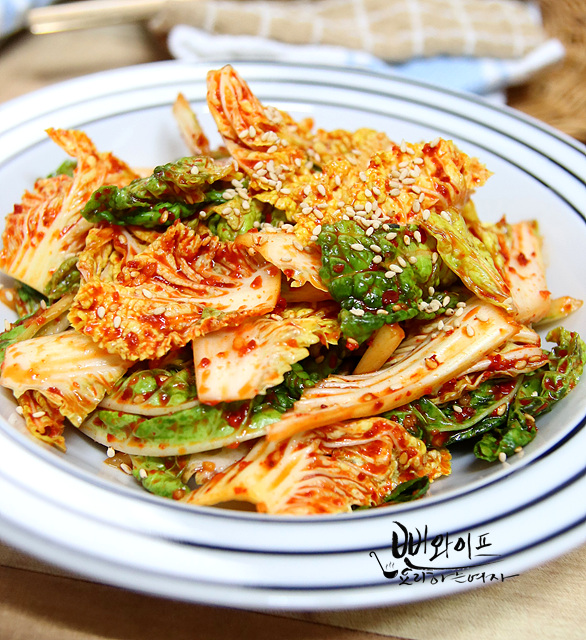
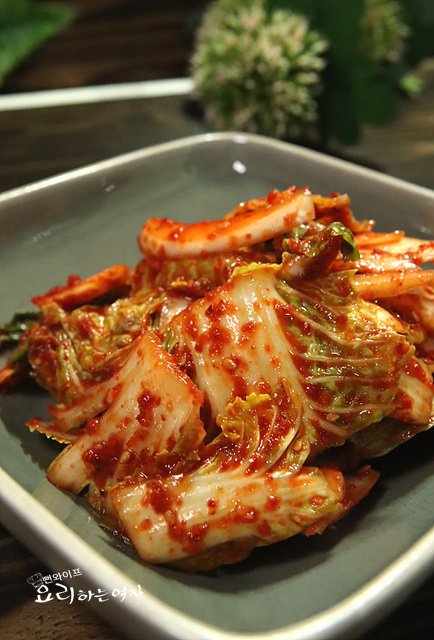
Crisp and Savory Bomdong Geotjeori (Fresh Spring Cabbage Salad)
A quick fresh geotjeori side dish made by tossing well-drained bomdong spring cabbage in a sweet-and-tangy gochugaru seasoning.
Translated from Korean by AI and not yet checked by a native speaker. Amounts and numbers are taken directly from the original recipe. Read the Korean original →
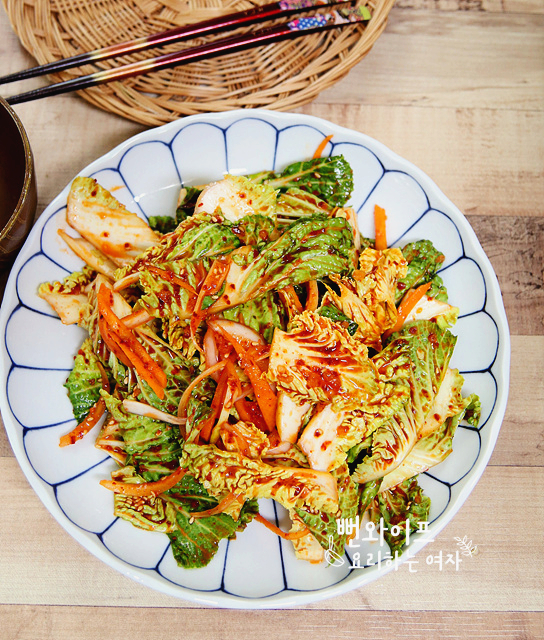
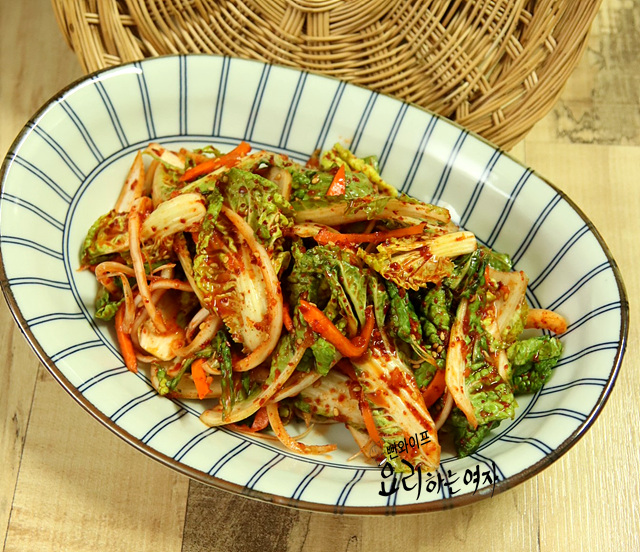
This fresh geotjeori is made by lightly tossing crisp, firm bomdong in a sweet-and-tangy dressing. Because bomdong has relatively little natural moisture, adding a tiny splash of water prevents the seasoning from sitting on the surface and helps it coat evenly. It works wonderfully as a side dish for rice, paired with grilled meats, or enjoyed like a fresh salad.
- Servings
- about 2–3 servings
- Difficulty
- Medium
- Spiciness
- Mildly spicy
Ingredients
Ingredients
- Bomdong (spring napa cabbage)1 head, 200 g
- Onion1/4
- Carrota little
Seasoning
- Gochugaru (Korean chili flakes)2 tbsp
- Fish sauce (or dried anchovies)1 tbsp
- Soy sauce (or brewed soy sauce (yangjo-ganjang))1 tbsp
- Minced garlic1 tbsp
- Minced ginger1/2 tsp
- Vinegar1–2 tbsp
- Green plum syrup (maesil-cheong)1 tbsp
- Sugar1 tsp
- Water2 tbsp
- Toasted sesame oil1 tbsp
- Toasted sesame seeds1 tbsp
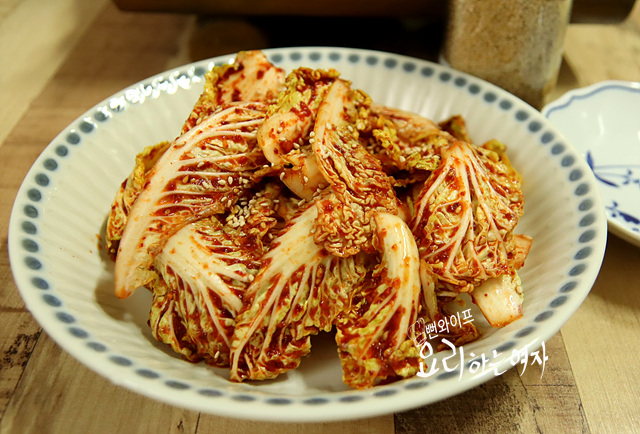
- Bomdong heads vary in size, so weighing yours before seasoning will help you season it accurately. Choosing one with a yellow center makes it even nuttier and more delicious.
Steps
Prepare the ingredients
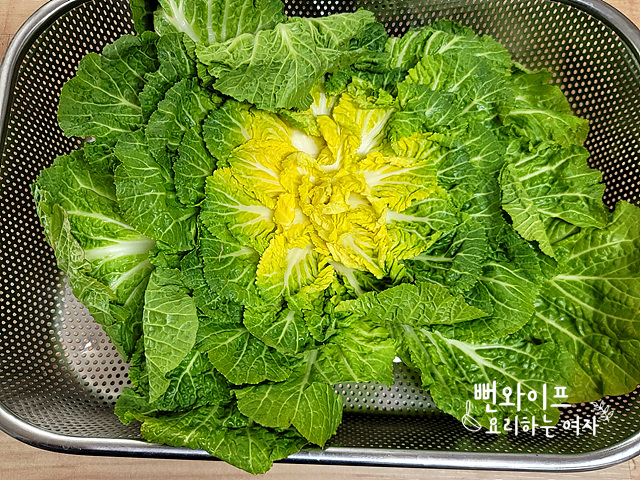
Bomdong heads vary in size, so weighing yours before seasoning will help you season it accurately.
Choosing one with a yellow center makes it even nuttier and more delicious.
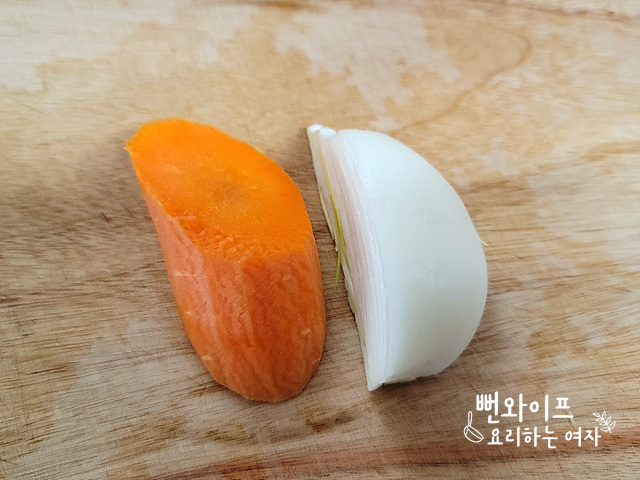
Adding fragrant onion and carrot makes the geotjeori taste even better. Prepare just a little bit of each.
Clean the bomdong
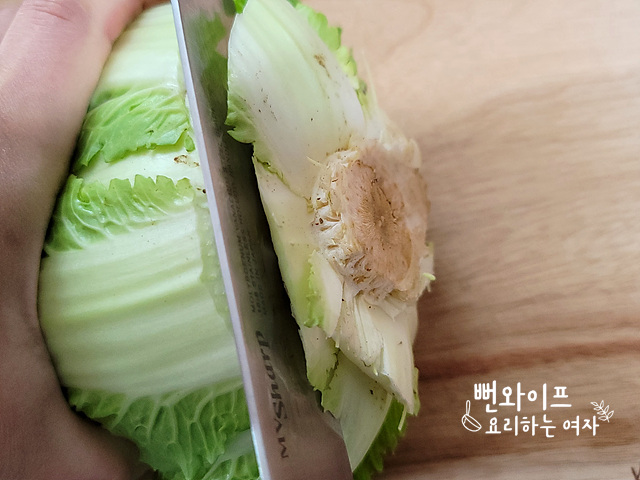
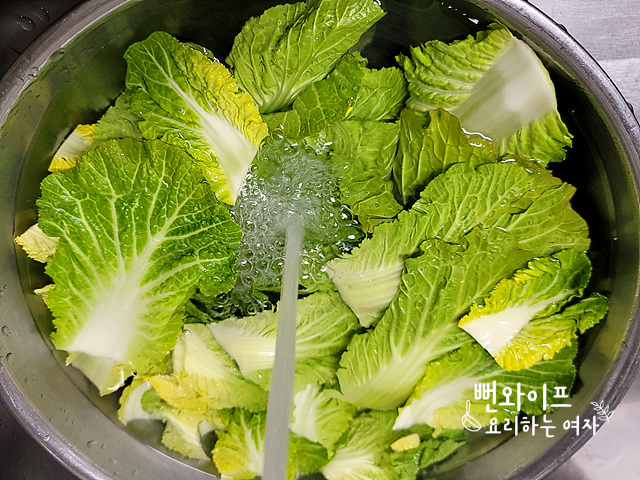
Hold the bomdong firmly, slice off the root base, and separate the leaves one by one.
The stems tend to hold a lot of soil, so soak them in water and wash them several times.
Slice the ingredients
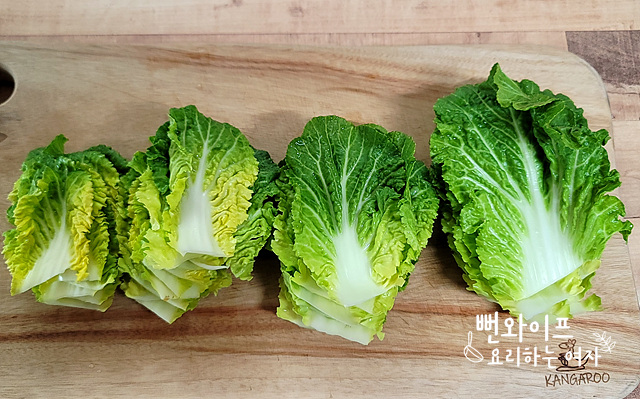
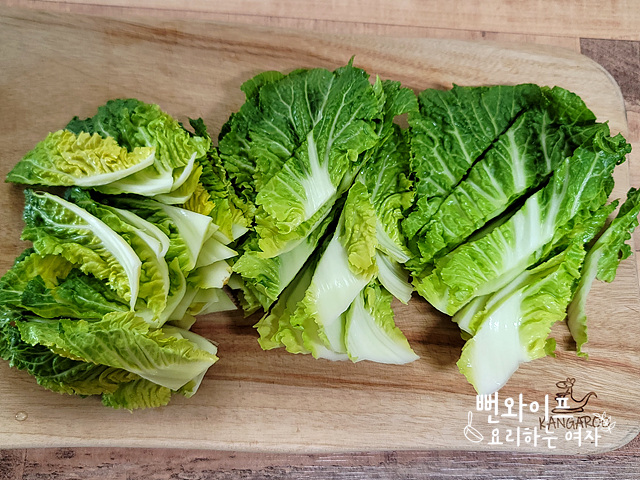
Group the bomdong leaves by size, cut smaller ones in half, and slice larger ones diagonally as you would for geotjeori.
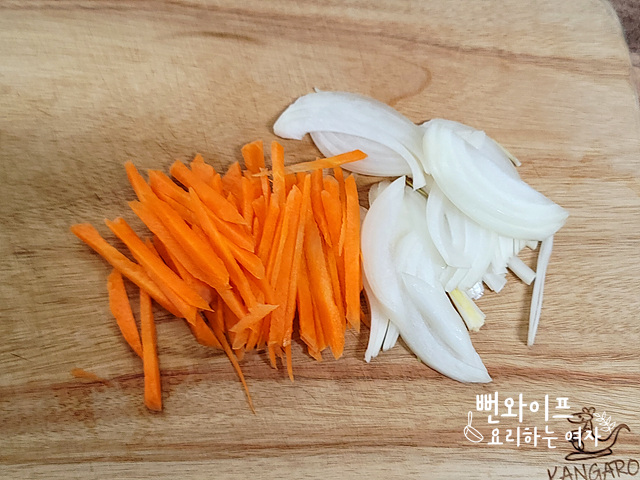
Thinly julienne the carrot and onion.
Toss with the seasoning
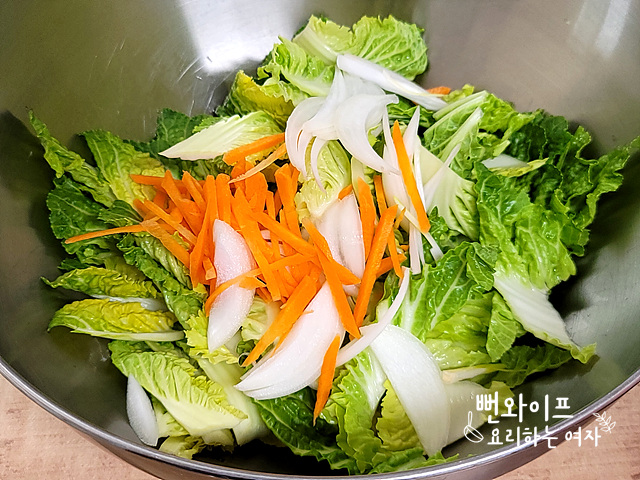
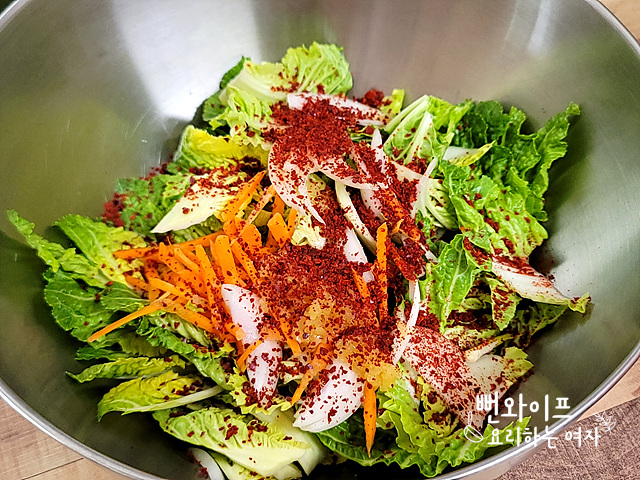
Place all the ingredients in a bowl and scatter the seasonings evenly across the top, one by one.
2 tbsp gochugaru (Korean chili flakes), 1 tbsp fish sauce, 1 tbsp regular soy sauce (jin-ganjang), 1 tbsp minced garlic, 1/2 tsp minced ginger, 1 to 2 tbsp vinegar, 1 tbsp green plum syrup (maesil-cheong), 1 tsp sugar.
This way, the seasoning will mix in well without clumping in one spot.
Because bomdong itself has low moisture, shaking off too much water will prevent the seasoning from blending moistly, so add about 2 tbsp of water and toss.
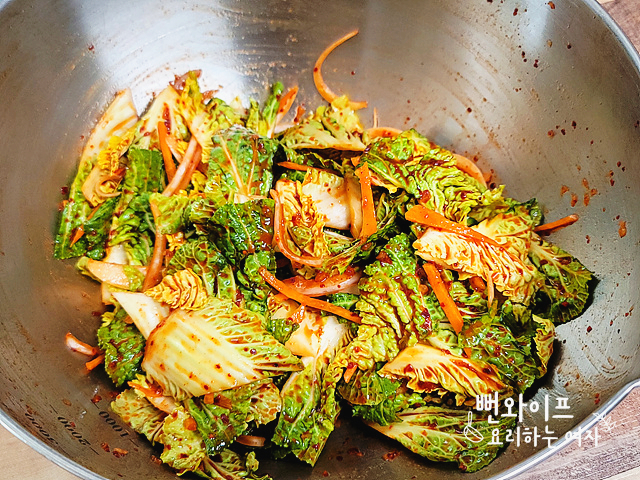
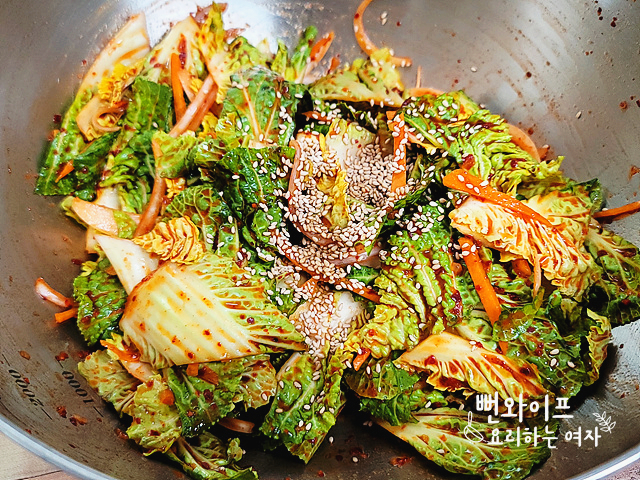
Taste and adjust the seasoning if needed, then finish with 1 tbsp toasted sesame oil and a little toasted sesame seeds.
Finish
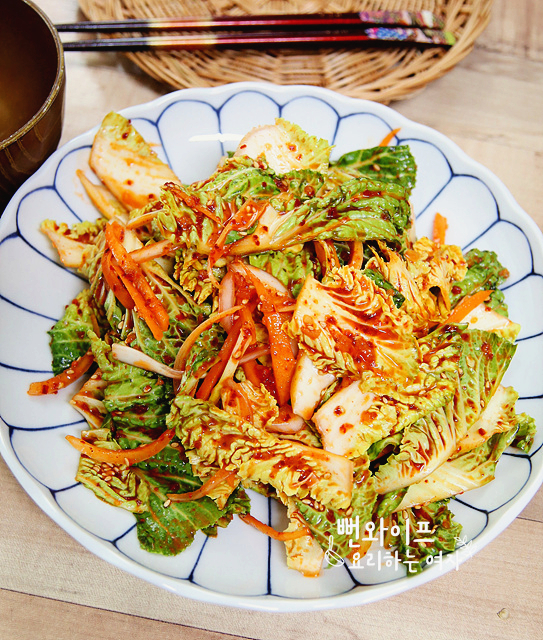
Its name means "spring cabbage," but it seems to taste best right now in the coldest season, so perhaps we should call it winter cabbage.
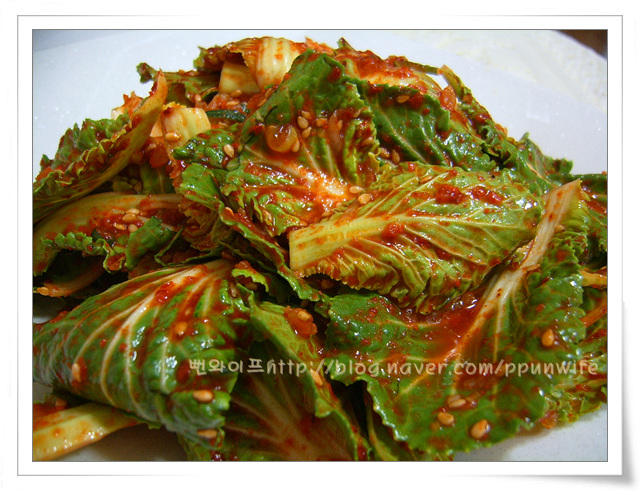
Eating it right after tossing gives you the best crunchy texture, and after sitting overnight it wilts slightly so you can enjoy it tender.
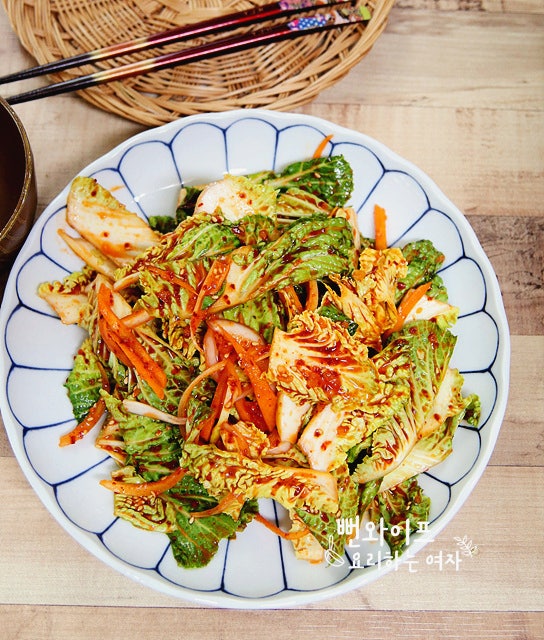
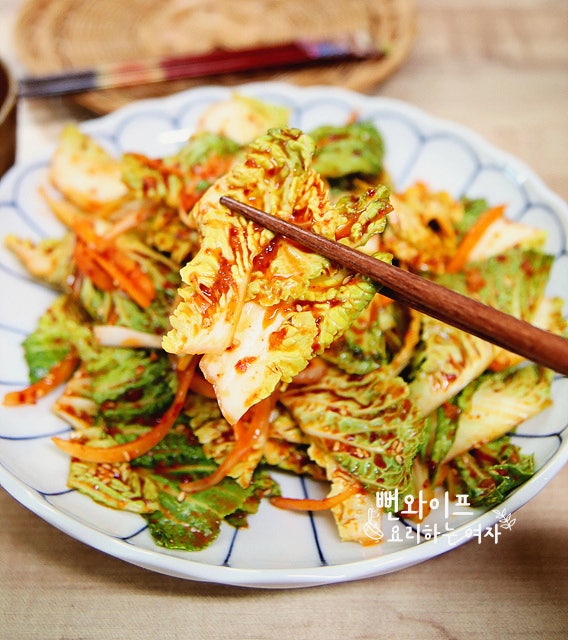
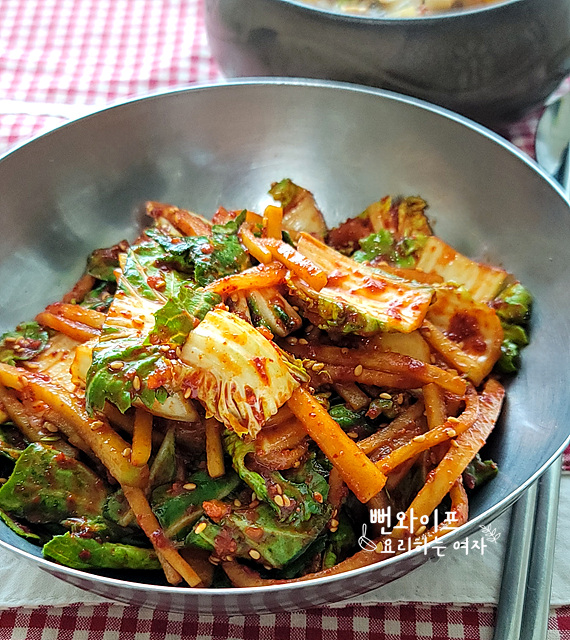
This is a seasonal green you can enjoy through spring, so try making it into nutty, crunchy bomdong geotjeori.
It goes great with rice, but tossed with a refreshing touch, it is also wonderful with grilled meats or as a salad.
 Ppunwife's tips
- Scattering the seasonings evenly over the ingredients one by one prevents clumping and helps everything mix smoothly.
- Because bomdong naturally has little moisture, draining off too much water makes it hard for the seasoning to blend moistly, so add about 2 tbsp of water as you toss.
- Eating it right after tossing lets you enjoy its crisp texture, and letting it sit overnight allows it to wilt slightly for a tender bite.
FAQ
Is there a trick to picking good bomdong?
Choosing one with a yellow center gives it a nuttier flavor and better texture.
Why do you add water when tossing the seasoning?
Bomdong has low moisture content, so shaking off too much water can cause the seasoning to clump; adding about 2 tbsp of water helps everything mix smoothly and stay moist.
Can I use anchovy fish sauce instead of sand lance fish sauce?
Yes, anchovy fish sauce can be used as a substitute.
Is there a difference in flavor right after making it versus after some time has passed?
Eating it immediately after tossing gives you a lively, crunchy texture, while letting it rest for about a night softens it slightly for a much more tender bite.