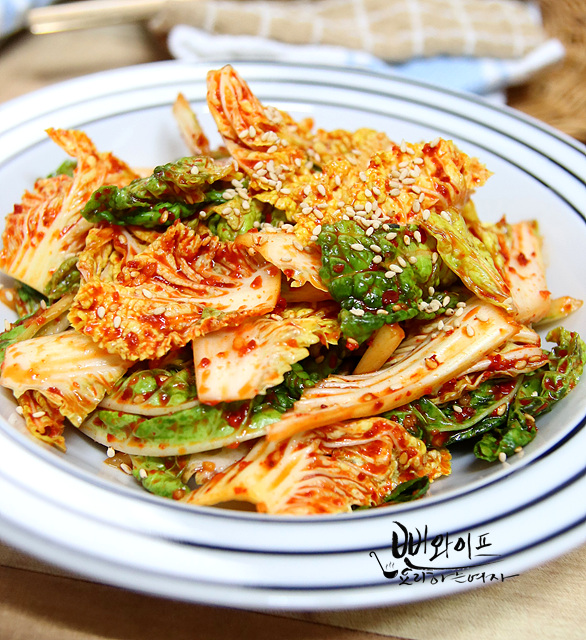
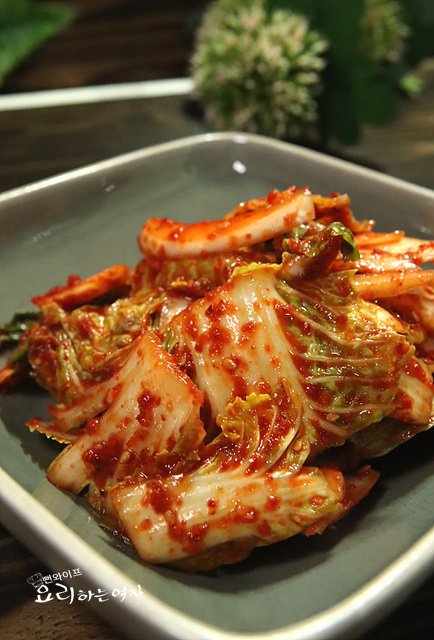
Crisp, Refreshing Bomdong Geotjeori (Fresh Spring Cabbage Salad)
A spring seasonal bomdong geotjeori made extra juicy and crunchy with thick-cut julienned Korean radish.
Translated from Korean by AI and not yet checked by a native speaker. Amounts and numbers are taken directly from the original recipe. Read the Korean original →
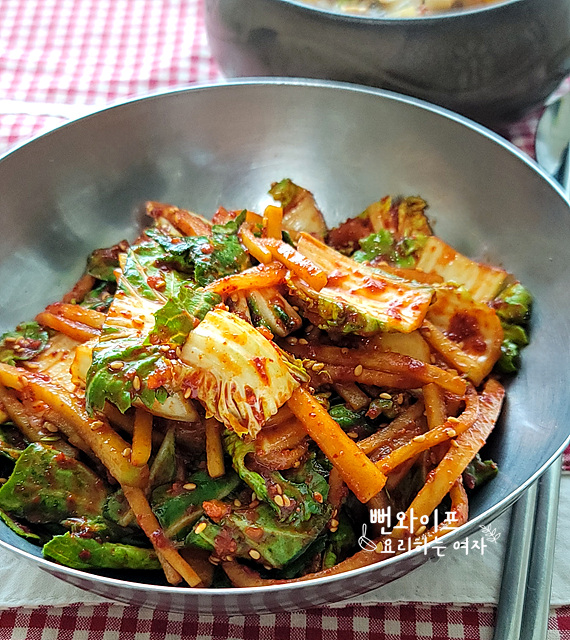
Tossing seasonal bomdong with thickly julienned Korean radish adds plenty of moisture and a crisp texture. The trick is to toss the radish in the sweet and tangy seasoning first so it softens slightly before adding the cabbage. The finished geotjeori is also wonderful served with savory doenjang jjigae over a bowl of bibimbap.
- Servings
- 3–4 servings
- Difficulty
- Easy
- Spiciness
- Mildly spicy
Ingredients
Ingredients
- Bomdong (spring napa cabbage)200 g
- Korean radish (mu)200 g
Seasoning
- Gochugaru (Korean chili flakes)3 tbsp
- Regular soy sauce (jin-ganjang) (or brewed soy sauce (yangjo-ganjang))2 tbsp
- Sand lance fish sauce (or dried anchovies)1 tbsp
- Minced garlic1/2 tbsp
- Vinegar2 tbsp
- Green plum syrup (maesil-cheong)1 tbsp
- Sugar1/2 tbsp
- Toasted sesame oil1 tbsp
- Toasted sesame seeds1 tbsp
- If you do not care for the smell of fish sauce, you can use tuna extract sauce, crab soy sauce, or salt instead.
Steps
Prepare the ingredients
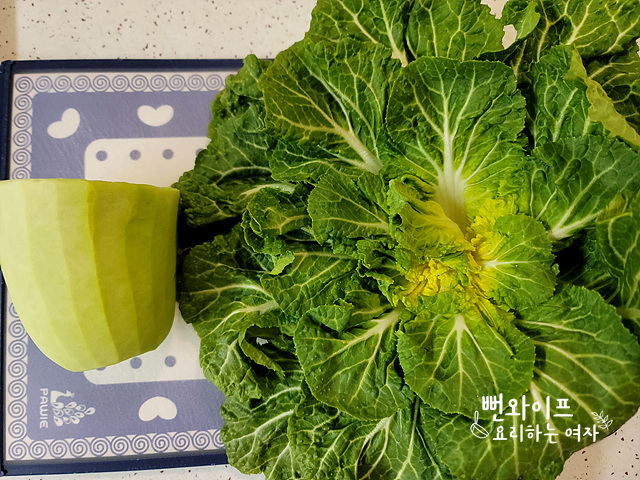
I prepared one head of bomdong (spring napa cabbage) weighing 200g, and an equal weight of 200g of Korean radish (mu).
Trim the bomdong
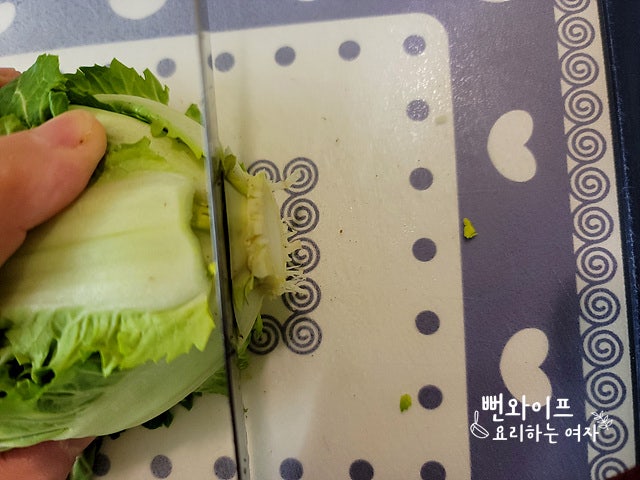
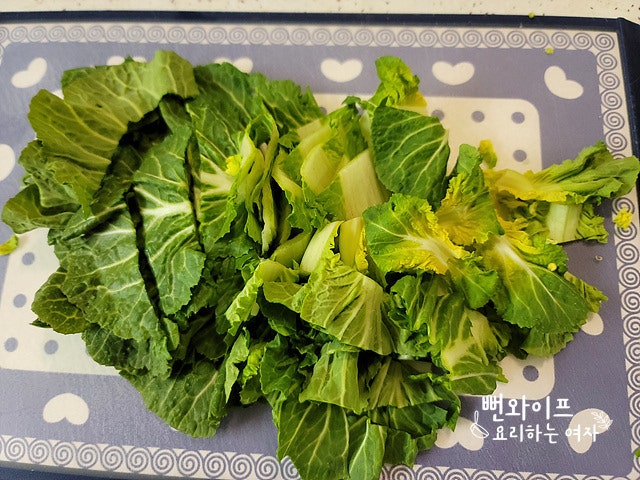
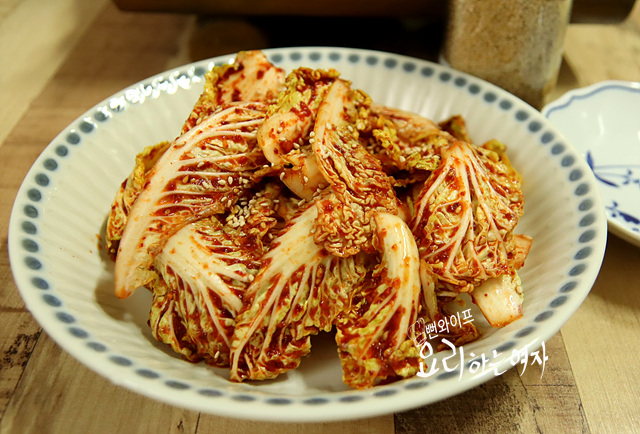
Gather the spread-out bomdong leaves in your hand and cut off the base root.
Cut into bite-sized pieces.
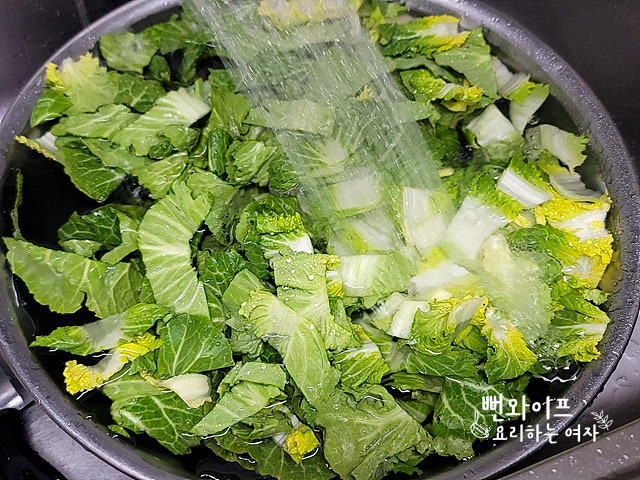
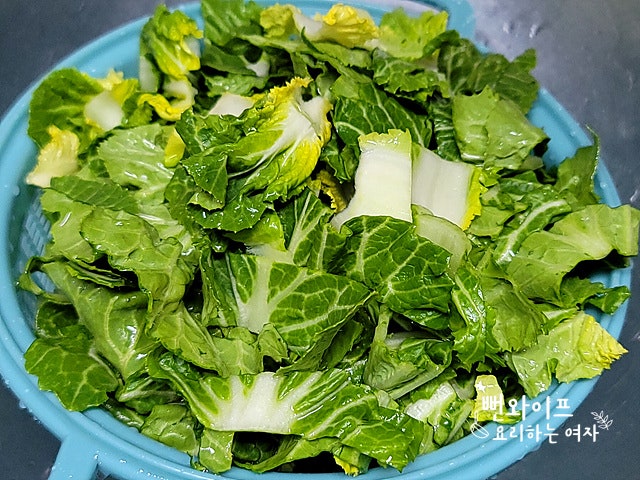
Soak in water briefly so any dirt or grit falls away, then wash until no sand or dirt comes out at the bottom.
Drain in a colander to remove the water.
Julienne the radish
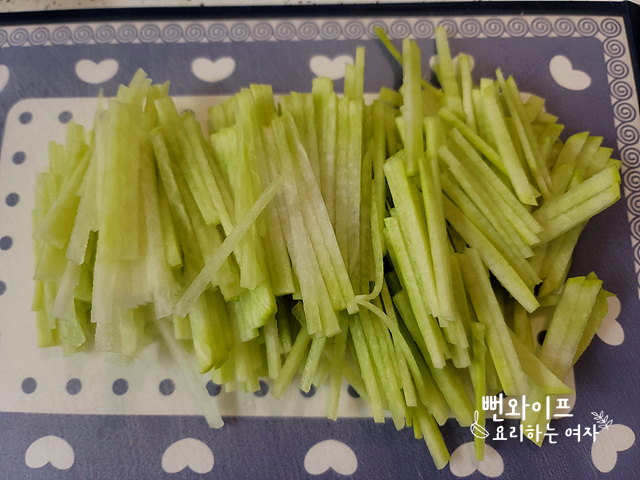
Julienne the radish not too thinly, to a thickness of about 0.5cm.
Make the seasoning
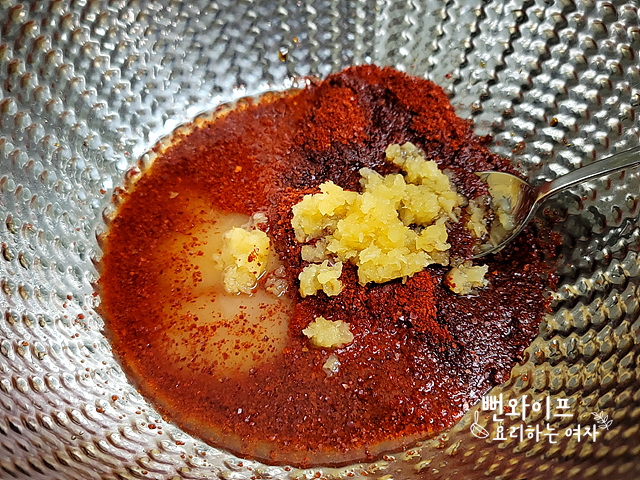
In a bowl, add 3 tbsp gochugaru (Korean chili flakes), 2 tbsp regular soy sauce (jin-ganjang), 1 tbsp fish sauce, 1/2 tbsp minced garlic, 2 tbsp vinegar, 1 tbsp green plum syrup (maesil-cheong), and 1/2 tbsp sugar. Mix well and let it sit briefly so the flavors blend and the color of the gochugaru deepens.
If you do not care for the smell of fish sauce, you can use tuna extract sauce, crab soy sauce, or salt instead.
Toss the salad
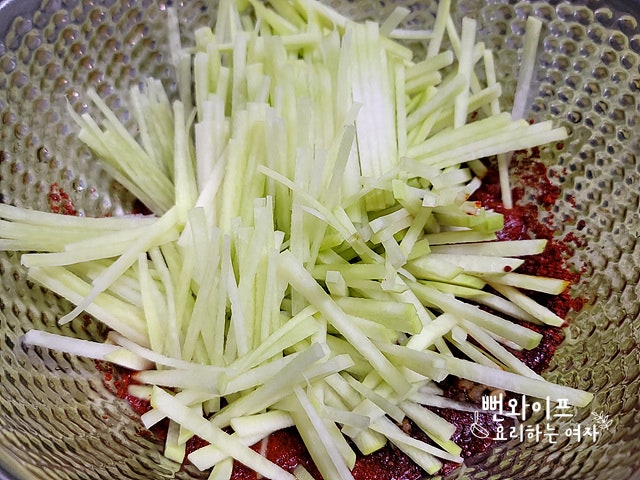
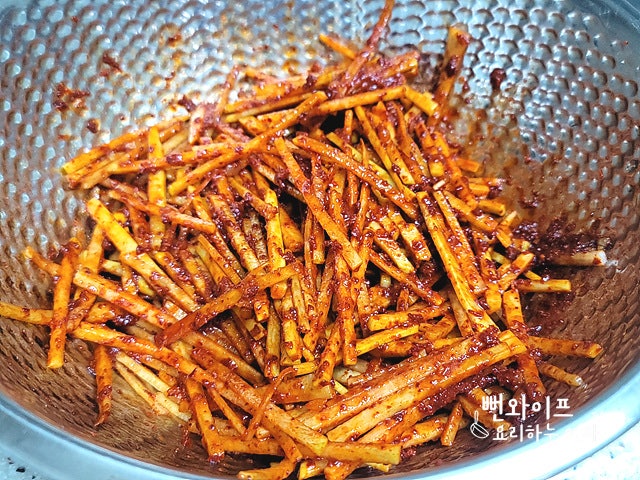
Add the julienned radish first and toss thoroughly so it is evenly coated in the seasoning.
Just tossing it briefly in the seasoning will soften the stiff radish slightly.
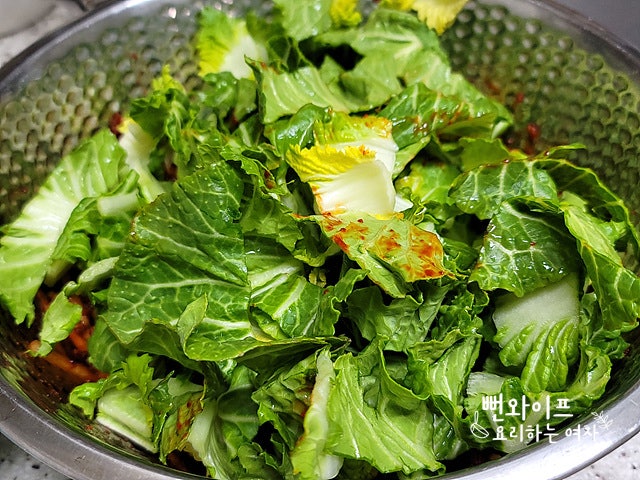
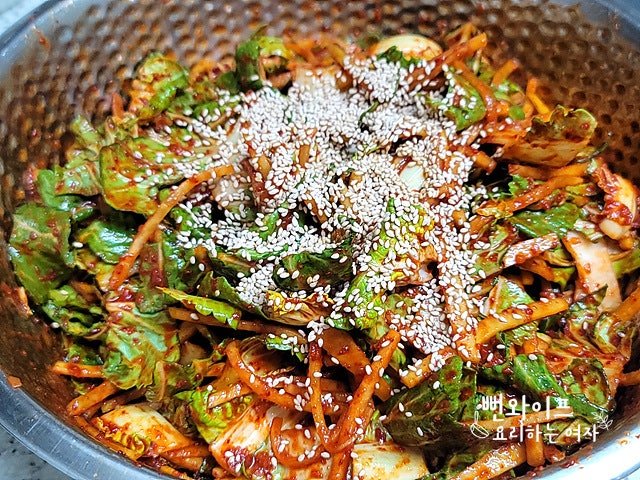
Now add all of the bomdong and toss together, then taste and adjust the seasoning to your liking.
Finish by adding 1 tbsp toasted sesame oil and 1 tbsp toasted sesame seeds.
Finished
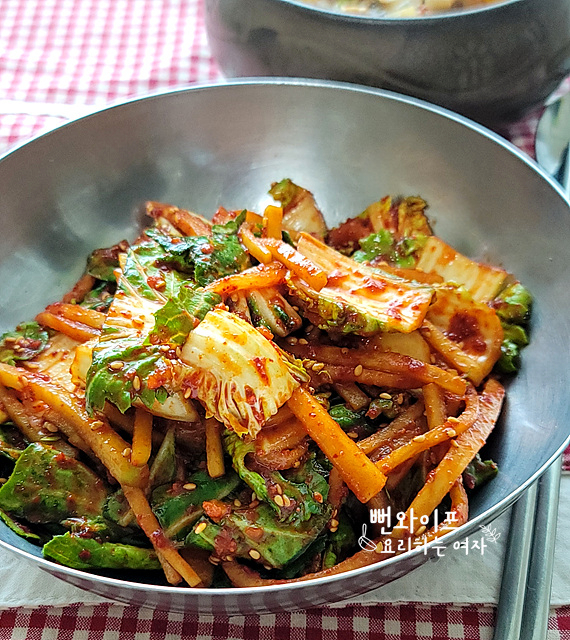
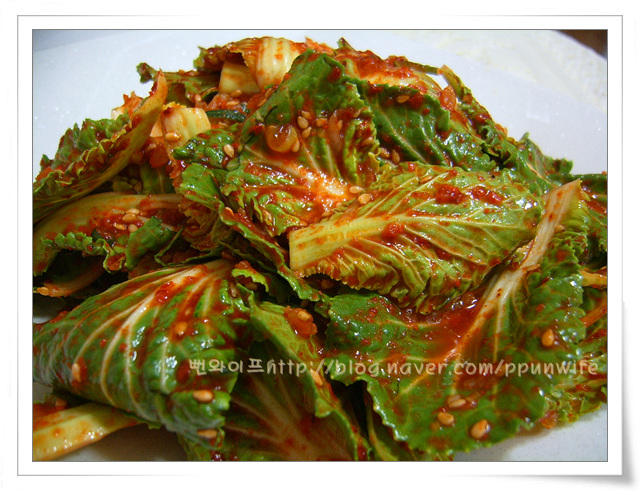
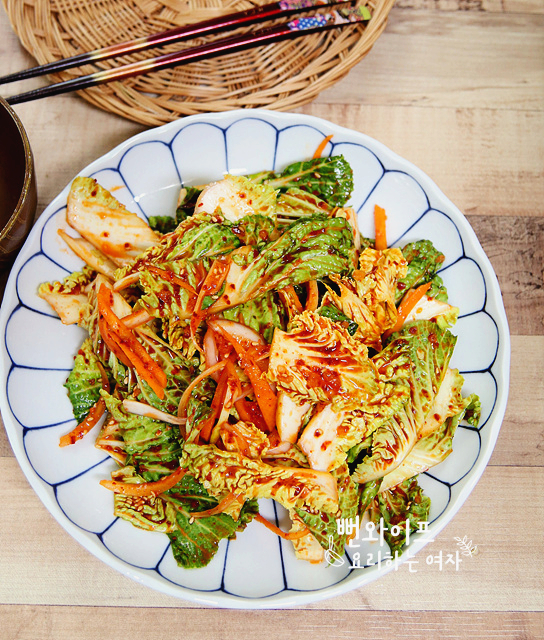
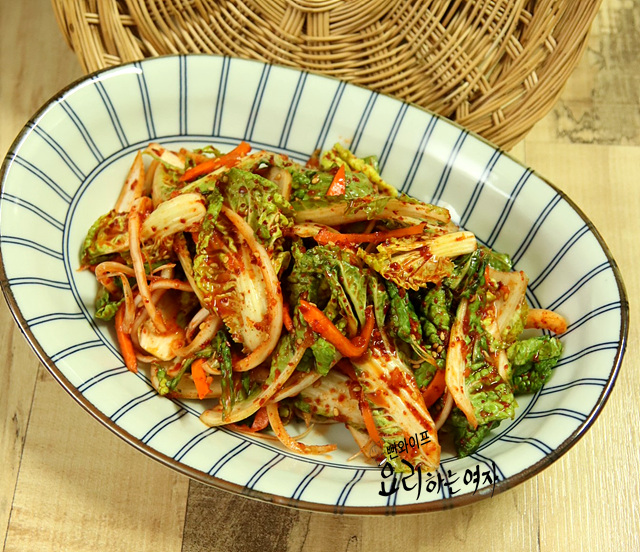
The bomdong geotjeori is finished.
Just looking at it looks refreshing and whets the appetite.
 Ppunwife's tips
- Bomdong is delicious tossed on its own, but try tossing it with radish cut into slightly thick julienne strips. The moisture from the sweet, cool radish keeps the bomdong geotjeori juicy, and you get to enjoy twice the crisp texture.
- Just tossing it briefly in the seasoning will soften the stiff radish slightly.
FAQ
What should I do if I find the distinct smell of fish sauce off-putting?
You can substitute tuna extract sauce or crab soy sauce instead, or simply season it with salt.
Is there a specific order to follow when tossing the bomdong and julienned radish together?
If you add the julienned radish to the seasoning first and toss well, the firm radish will soften slightly, and tossing in the bomdong afterward brings everything together in harmony.
How do you wash off the dirt and grit stuck to the bomdong?
Cut off the base to separate the leaves, soak them briefly in water so grit settles to the bottom, rinse thoroughly until no sand or dirt remains, and drain well.