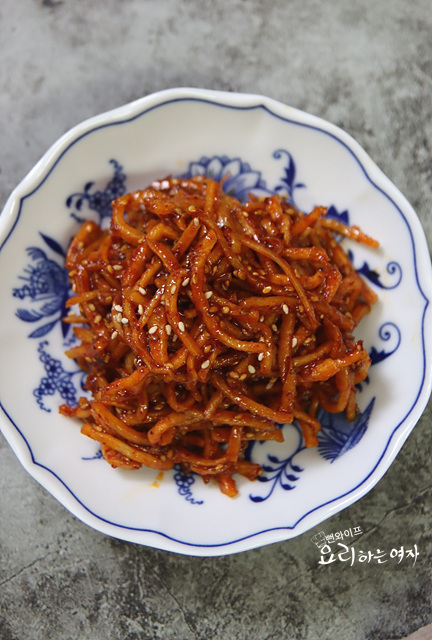
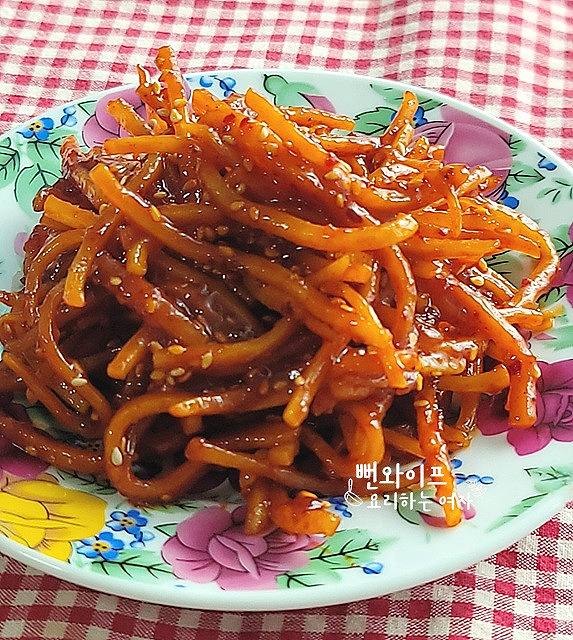
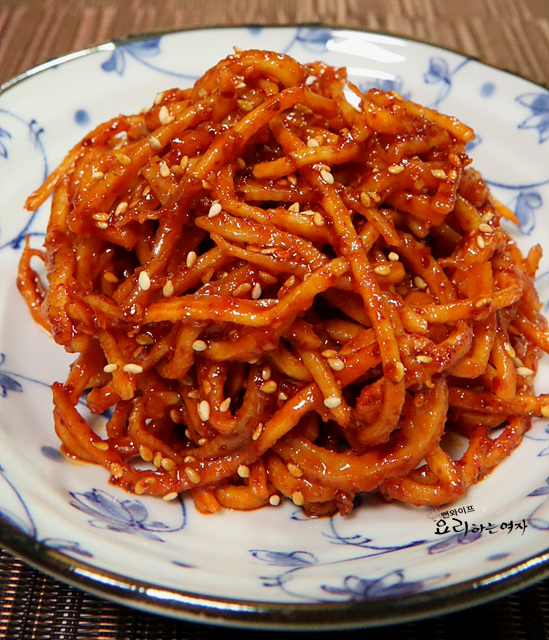
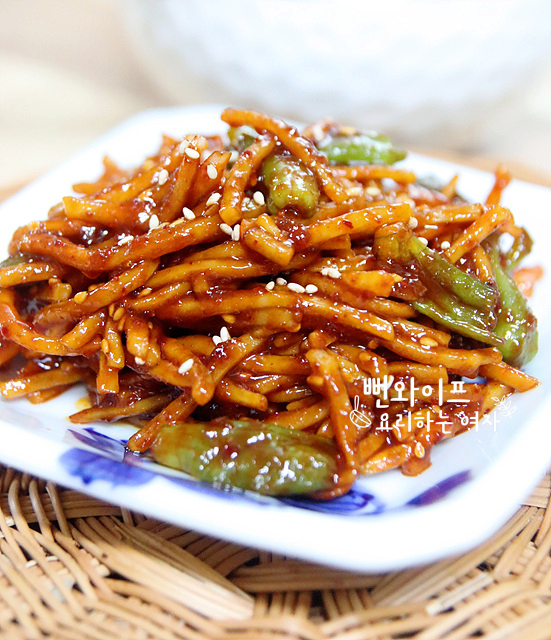
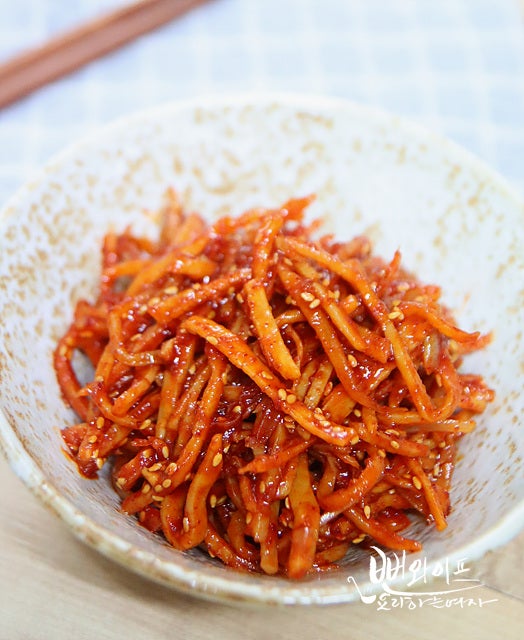
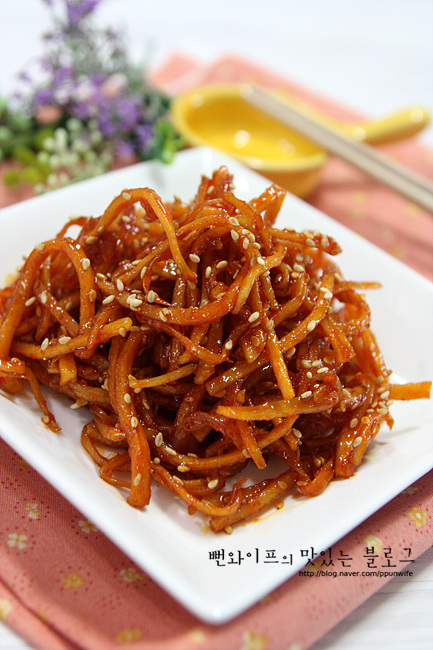
Tender Gochujang Jinmichae Bokkeum for Lunch Boxes
A tender dried squid strip side dish tossed in flavorful chili oil without mayonnaise.
Translated from Korean by AI and not yet checked by a native speaker. Amounts and numbers are taken directly from the original recipe. Read the Korean original →
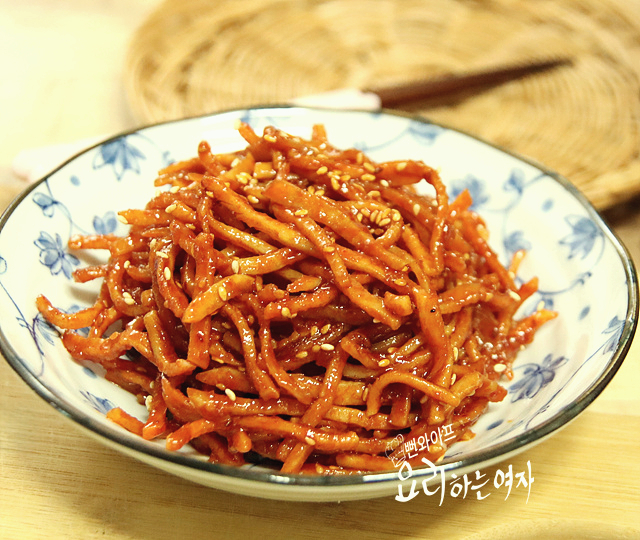
This stir-fry uses chili oil to sauté garlic instead of adding mayonnaise, bringing out rich savory flavor without feeling greasy. A quick rinse in water keeps the dried squid strips tender, and they are tossed carefully so the seasoning does not burn. With a gentle heat that is not overly spicy, it makes a great lunch box side dish.
- Servings
- about 4–6 servings
- Difficulty
- Easy
- Spiciness
- Mildly spicy
Ingredients
Ingredients
- Dried squid strips200 g
Seasoning
- Chili oil3 tbsp
- Minced garlic1 tbsp
- Gochujang (Korean red chili paste)3 tbsp
- Regular soy sauce (jin-ganjang) (or brewed soy sauce (yangjo-ganjang))1 tbsp
- Mirin (cooking rice wine)2 tbsp
- Corn syrup (mulyeot)3 tbsp
- Sugar1 tbsp
- Toasted sesame oil1 tbsp
- Toasted sesame seeds1 tbsp
- Dunking the squid strips in water and draining them immediately removes additives and softens them so they do not turn hard. If they are very tough, let them soak until soft before taking them out.
- If you do not have chili oil, you can substitute it by sautéing 3 tbsp cooking oil and 1 1/2 tbsp gochugaru together with the minced garlic.
Steps
Prepare the ingredients and seasoning
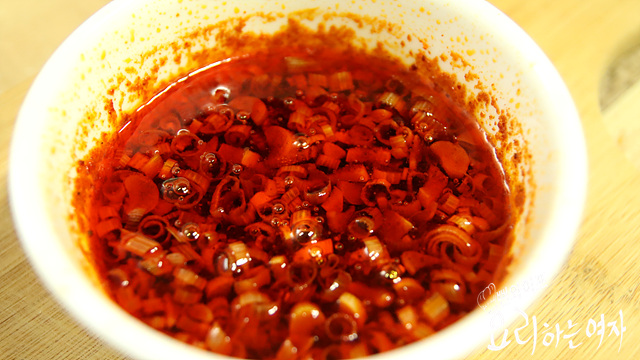
While prepping the dried squid strips, I whipped up some chili oil.
Making chili oil is really easy, so make a batch to use not only for dried squid strip stir-fries, but also across various Chinese dishes.
This is Chef Lee Yeon-bok's chili oil recipe: mix 2 1/2 tbsp gochugaru, 1/2 cup cooking oil, and a little bit of the white part of a large green onion, then microwave it 3 times at 1-minute intervals.
Microwaving for 3 minutes all at once can cause it to boil over. Once it has cooled completely, strain it through a fine sieve and keep it in the refrigerator to use.
Prepare the dried squid strips
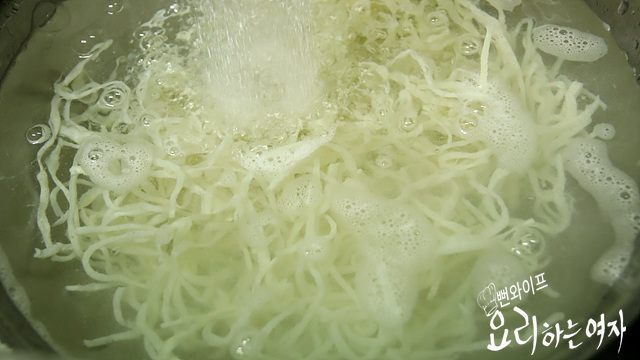
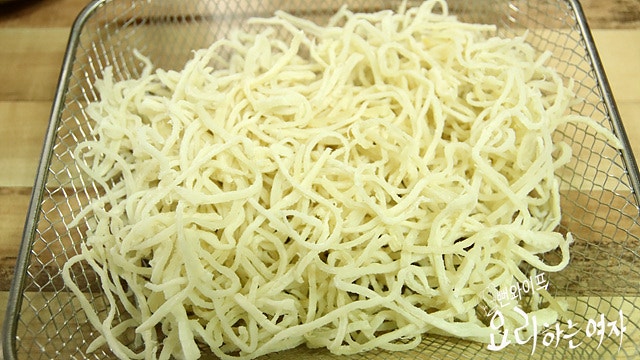
Dunk the dried squid strips in water and pull them right out. This removes additives and softens stiff squid strips.
If they are very tough, let them soak until soft before lifting them out.
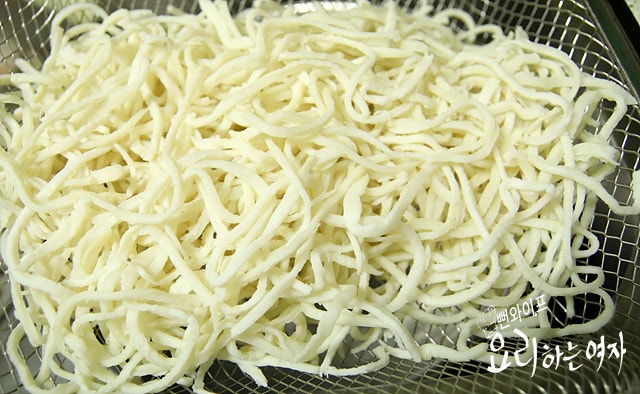
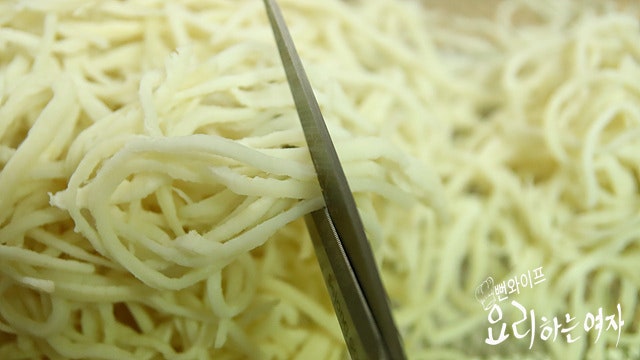
Drain them well in a sieve or press them with paper towels to remove excess moisture. If the strips are long, they can be annoying to eat, so cut them to a manageable length with kitchen shears.
Tear any thick pieces apart with your hands.
Sauté the garlic in chili oil
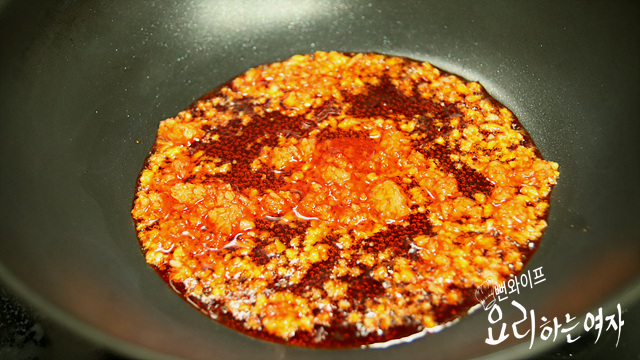
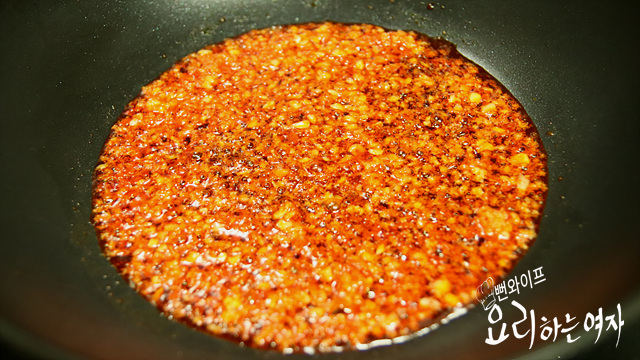
Add 1 tbsp minced garlic to 3 tbsp chili oil and sauté lightly over low heat until fragrant.
Do not be discouraged if you do not have chili oil.
You can simply sauté 3 tbsp cooking oil and 1 1/2 tbsp gochugaru together with the minced garlic.
However, gochugaru burns easily, so stir-fry it carefully without burning until the chili oil releases into the cooking oil, preventing any bitter taste.
Simmer the seasoning sauce
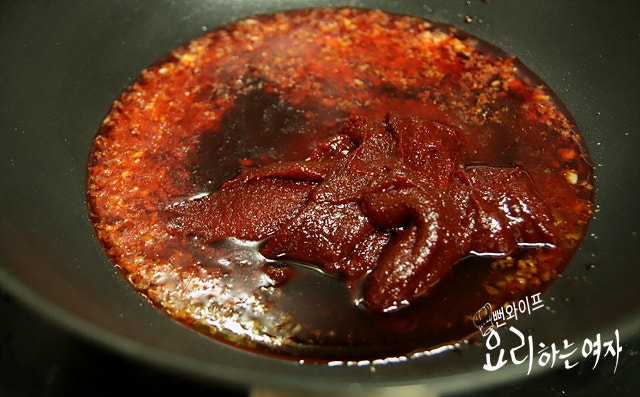
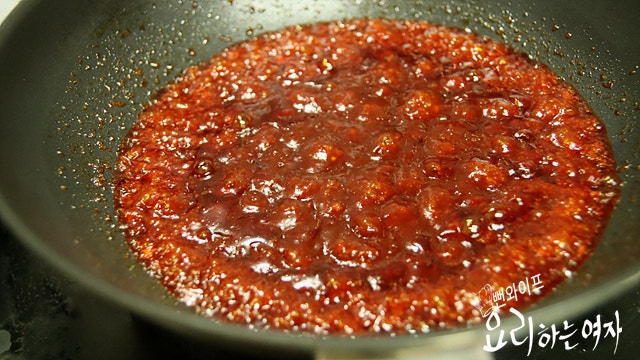
To this, add 3 tbsp gochujang, 1 tbsp regular (or brewed) soy sauce, 2 tbsp mirin, 3 tbsp corn syrup, and 1 tbsp sugar.
It can burn while you add the seasonings one by one, so it is convenient to turn off the heat first or mix the seasonings ahead of time and pour them in all at once.
Bring it to a bubbling boil so all the seasonings blend together...
Stir-fry the dried squid strips
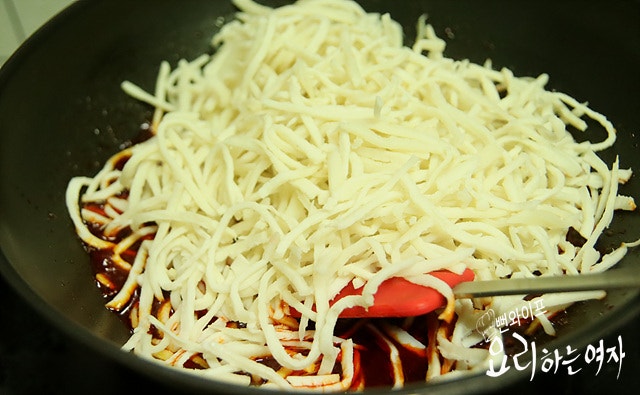
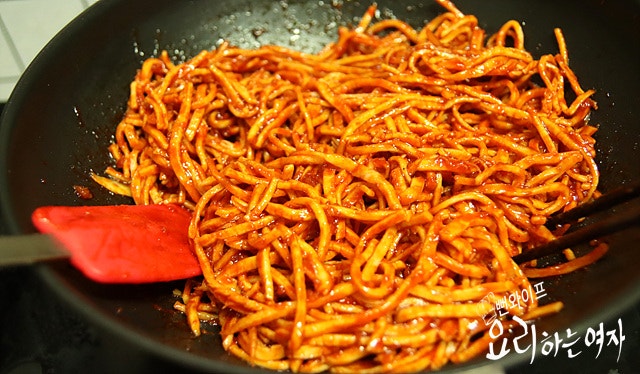
Turn off the heat and quickly toss in the dried squid strips using the residual heat...
If the squid strips are very soft, toss them without turning off the heat until evenly coated, then turn off the heat.
As the limp squid strips stir-fry in the sauce, they become plump and chewy.
If you stir-fry them too long and let them cool, they can turn hard again, so turn off the heat and let them cool while the squid strips still feel tender.
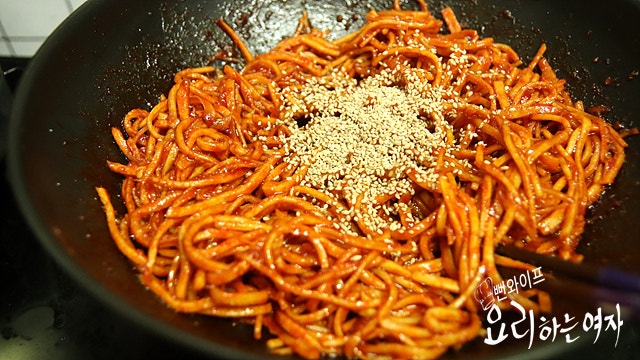
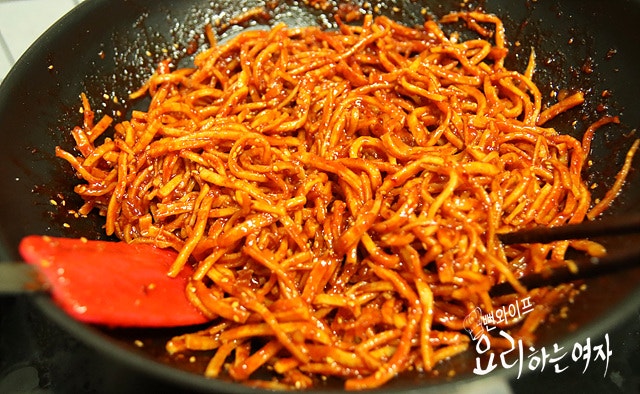
Finish by adding 1 tbsp toasted sesame oil and 1 tbsp toasted sesame seeds.
Finish
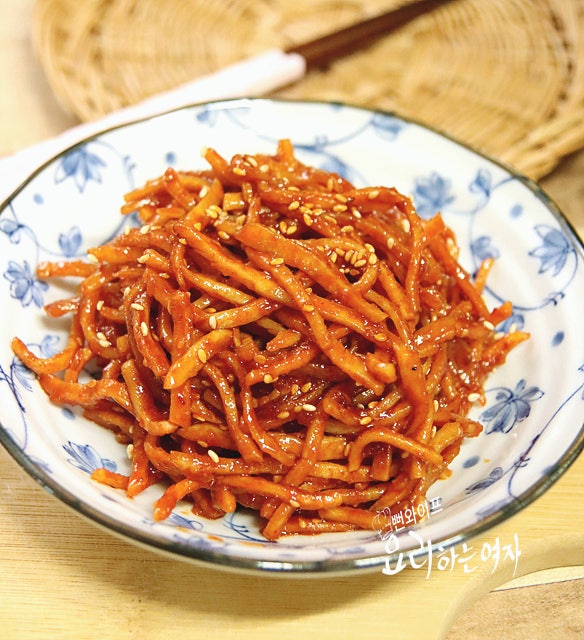
Dried squid strip stir-fry is my all-time favorite dried side dish.
Because the price is steep, I cannot make it all that often, but stirring up a batch once in a while makes me feel rich.
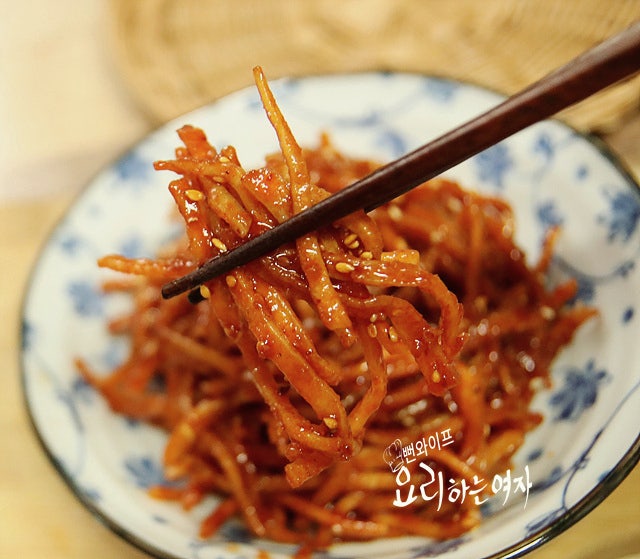
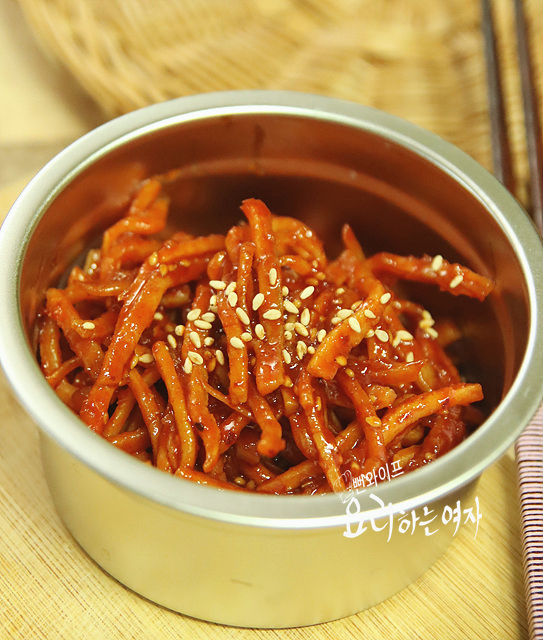
It is tender yet pleasantly chewy, and the sweet and salty sauce is great for waking up your appetite.
 Ppunwife's tips
- It can burn while you add the seasonings one by one, so it is convenient to turn off the heat first or mix the seasonings ahead of time and pour them in all at once.
- If you stir-fry them too long and let them cool, they can turn hard again, so turn off the heat and let them cool while the squid strips still feel tender.
FAQ
How do I keep the dried squid strips from turning hard?
Dip them briefly in water and take them out before cooking to add moisture. When coating them with the sauce, avoid stir-frying for too long; it is best to turn off the heat and toss them using the residual heat.
How can I substitute store-bought chili oil?
You can add 3 tbsp cooking oil, 1.5 tbsp gochugaru, and minced garlic to the pan, then sauté gently over low heat without burning to infuse the oil before use.
Is there anything to watch out for when simmering the sauce?
The sauce can burn while you add the ingredients one by one, so it is easiest to turn off the heat while adding them or mix them in advance before bringing the mixture to a bubbling boil.