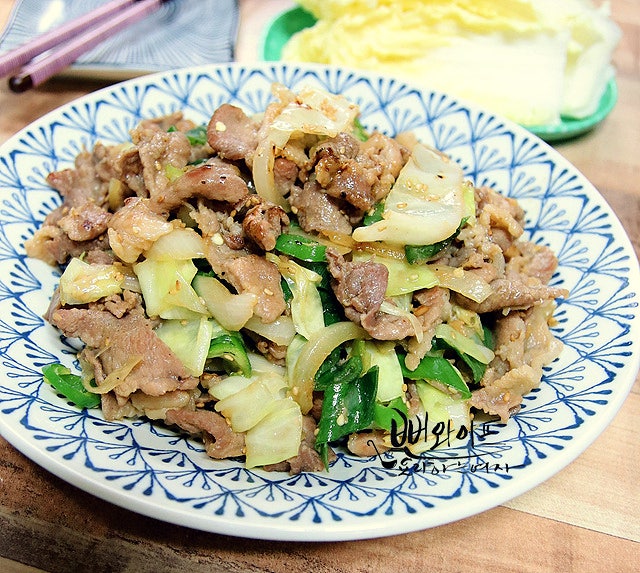
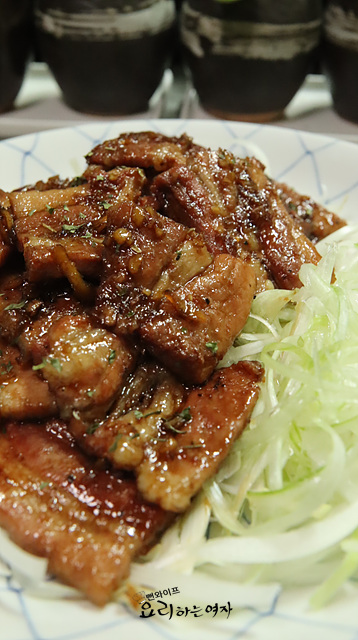
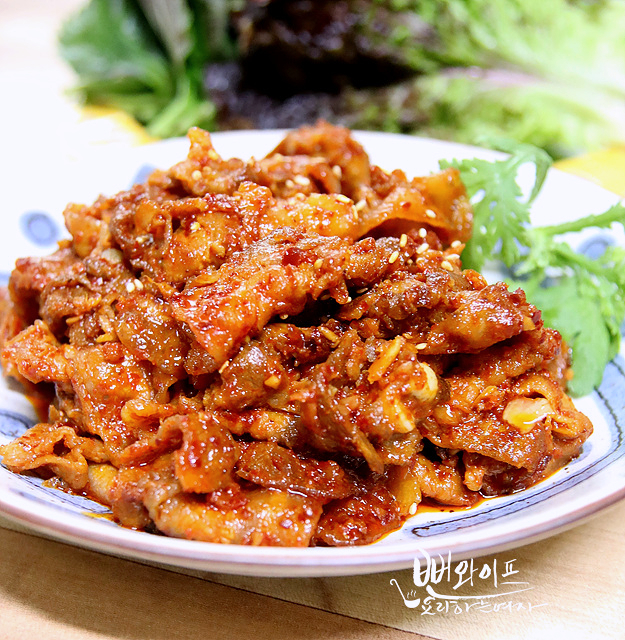
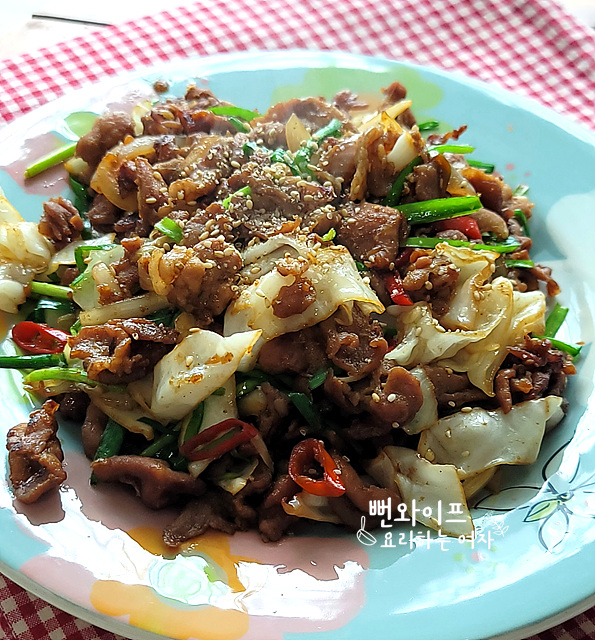
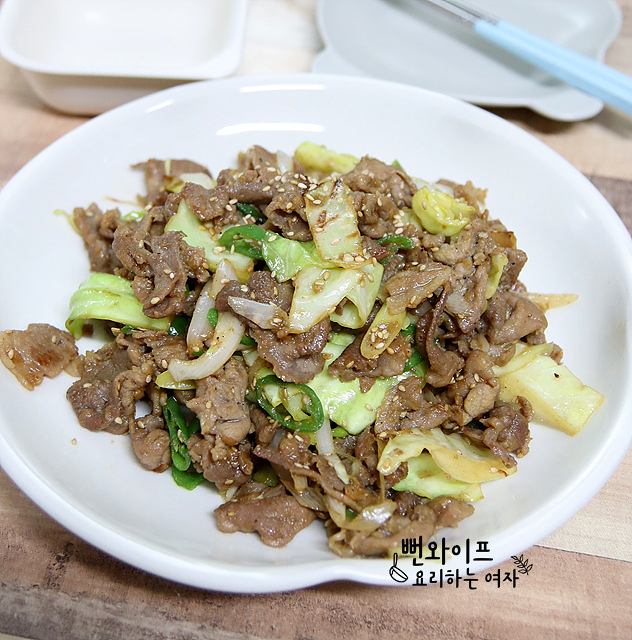
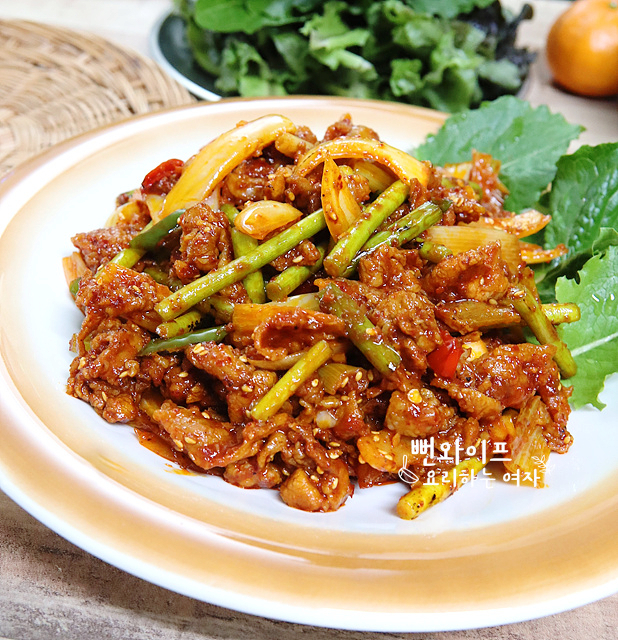
Ginger Soy Sauce Jeyuk Bokkeum (Stir Fried Soy Sauce Pork)
A stir fried soy sauce pork that eliminates pork odor by using more ginger than garlic.
Translated from Korean by AI and not yet checked by a native speaker. Amounts and numbers are taken directly from the original recipe. Read the Korean original →
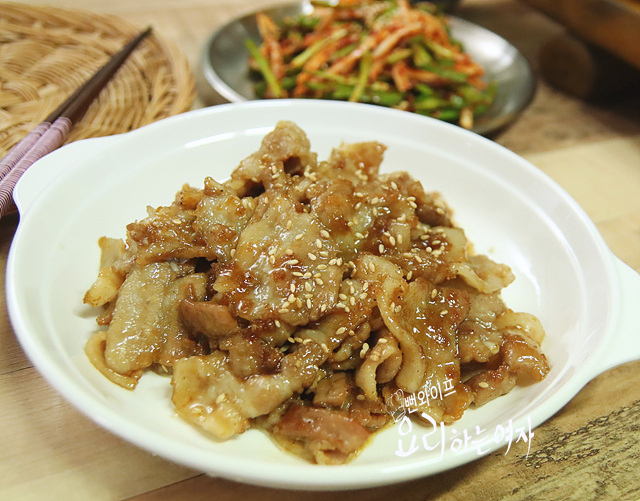
This stir fried soy sauce pork uses a generous amount of minced ginger to cleanly eliminate any gamey odor. After pan-frying the thinly sliced pork belly while wiping away rendered fat, pour in the special soy seasoning and glaze over high heat. It comes together quickly with an easy cooking process.
- Servings
- 2–3 servings
- Difficulty
- Easy
- Spiciness
- Not spicy
Ingredients
Ingredients
- Thinly sliced pork belly400 g
Seasoning
- Water5 tbsp
- Regular soy sauce (jin-ganjang) (or brewed soy sauce (yangjo-ganjang))3 tbsp
- Minced garlic1/2 tbsp
- Minced ginger1 tbsp
- Mirin (cooking rice wine)2 tbsp
- Corn syrup (mulyeot)3 tbsp
- Ground black peppera little
- If you like ginger, julienning it finely and braising it in the sauce gives a wonderful crunchy ginger texture.
- Any cut works well as long as it is thinly sliced bulgogi-style meat; cut it into bite-sized pieces.
- If using a thicker cut like pork shoulder instead of thin meat, season it lightly with salt, pan-fry it, and then simmer it in the sauce.
Steps
Prepare the ingredients
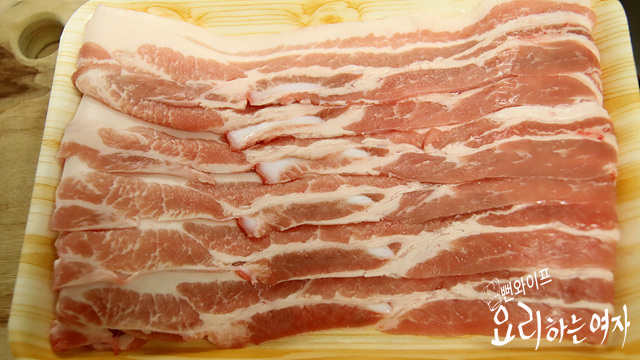
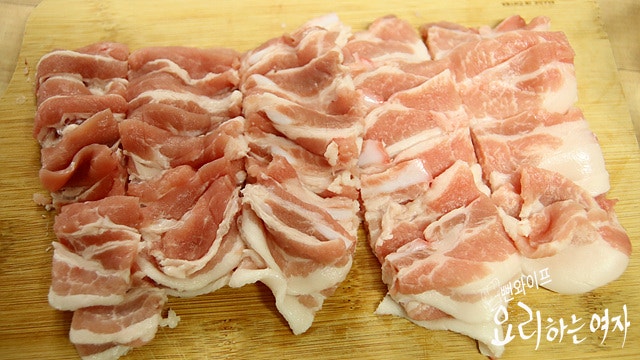
400 g of thinly sliced pork belly.
Any cut works well as long as it is thinly sliced bulgogi-style meat; cut it into bite-sized pieces.
Make the sauce
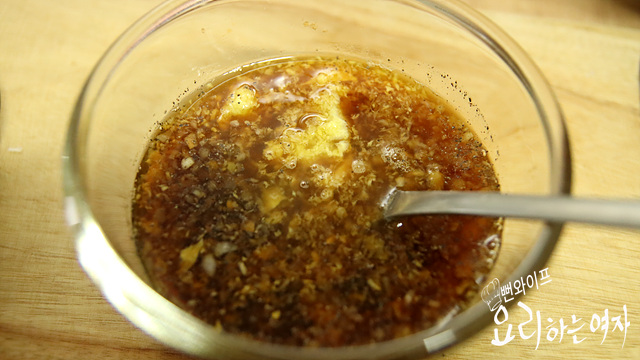
In a bowl, combine 5 tbsp water, 3 tbsp regular soy sauce (jin-ganjang), 1/2 tbsp minced garlic, 1 tbsp minced ginger, 2 tbsp mirin (cooking rice wine), 3 tbsp corn syrup (mulyeot), and a little ground black pepper.
Add all the seasoning ingredients and mix.
Today's seasoning is made by swapping the usual ratio of garlic and ginger.
Cook the meat
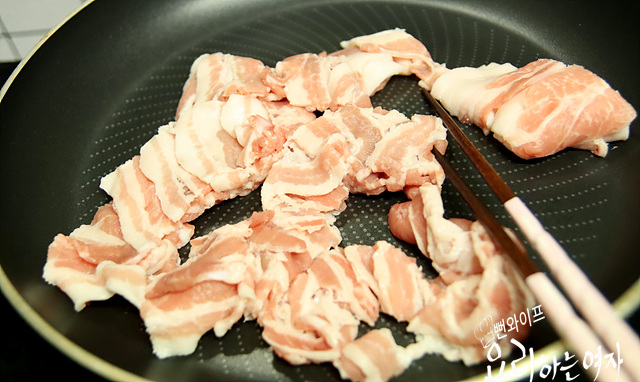
Since it is thinly sliced pork belly, cook it straight in the pan without oil.
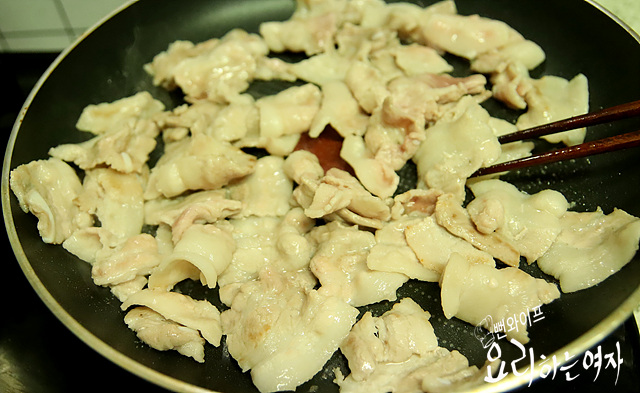
Separate the sticking pieces of meat and stir-fry until both sides turn white.
You do not need to cook it completely since it will be simmered with sauce, and it is good to wipe away the rendered fat from the meat with a paper towel.
Add sauce and braise
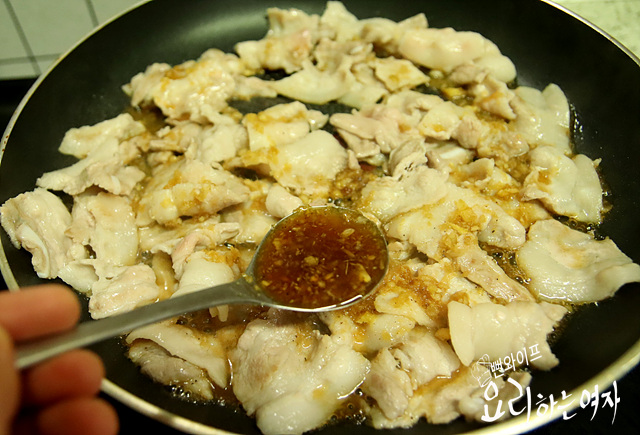
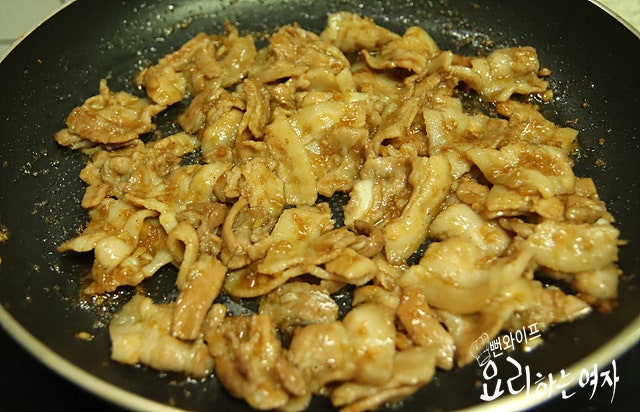
Pour over the sauce and stir-fry over high heat until glossy, cooking it down completely.
Finished
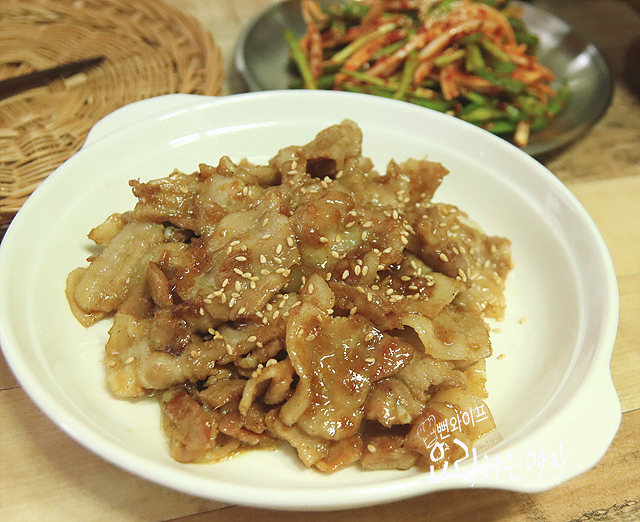
It is finished so simply.
Because it is stir-fried with plenty of ginger, there is a subtle ginger aroma and not even 1 bit of pork odor.
 Ppunwife's tips
- It is good to wipe away the rendered fat from the meat with a paper towel.
- Since the meat is stir-fried without vegetables, pairing it with seasoned garlic chives or seasoned green onions keeps the meal light and refreshing.
FAQ
Can I use other cuts of meat besides thinly sliced pork belly?
Any thinly sliced cut suitable for bulgogi can be used, and if using thicker pork shoulder, lightly season it with salt, sear it first, and then simmer in the sauce.
Is it okay to julienne the ginger instead of mincing it?
If you want to enjoy the ginger flavor more, you can julienne it finely and braise it in the sauce to bring out a pleasant texture.
Do I need to add cooking oil when stir-frying the meat?
Thinly sliced pork belly releases its own fat, so cook it directly in the pan without oil, and it is best to wipe away rendered fat with a paper towel.