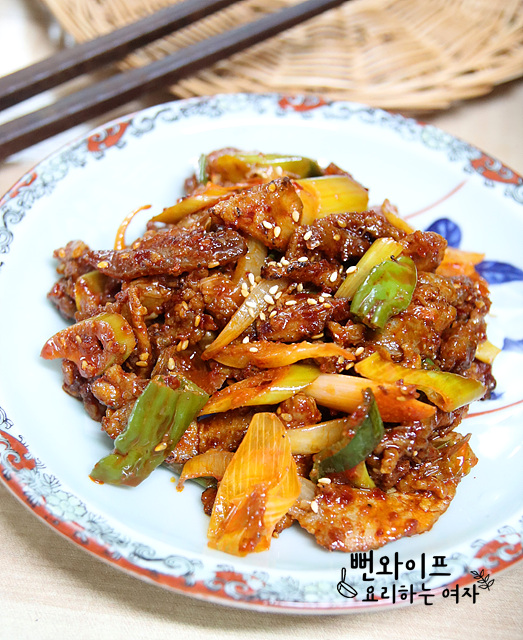
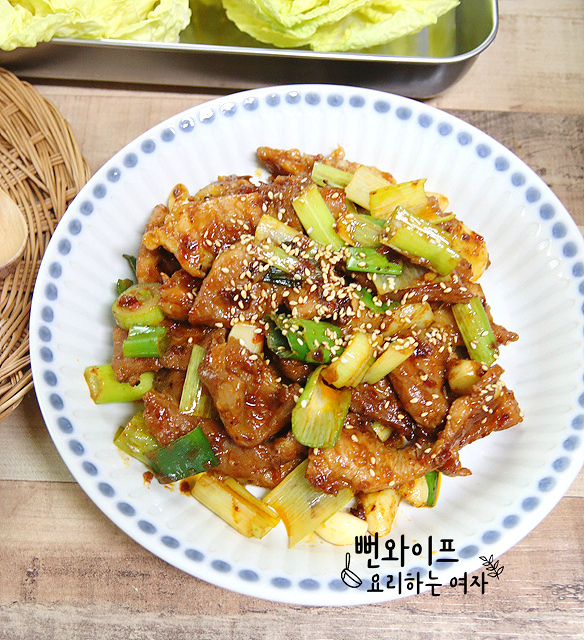
Ginger Soy Sauce Jeyuk Bokkeum (Stir-Fried Pork)
Pork front leg stir-fried over high heat in a ginger soy sauce seasoning that removes any gaminess.
Translated from Korean by AI and not yet checked by a native speaker. Amounts and numbers are taken directly from the original recipe. Read the Korean original →
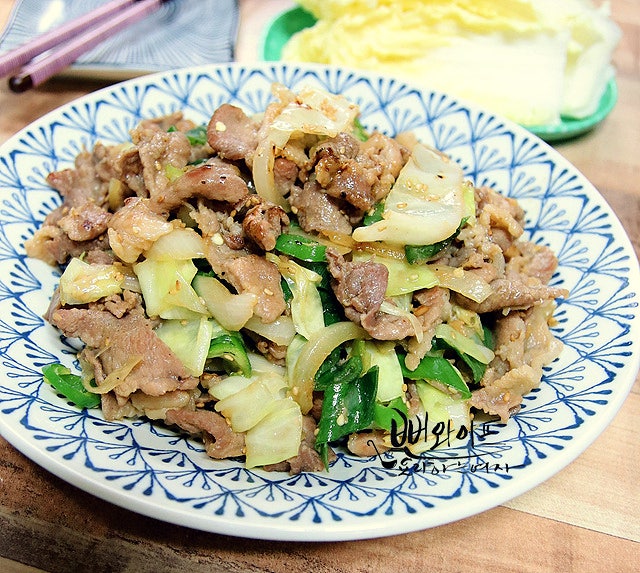
Lean pork front leg is tossed in a soy sauce seasoning with plenty of ginger to keep it clean-tasting without any gaminess. Stir-frying it quickly with vegetables over high heat preserves their crisp texture and natural sweetness. Because it is mild and not overly stimulating, it makes an easy everyday side dish for rice.
- Servings
- 3–4 servings
- Difficulty
- Medium
- Spiciness
- Mildly spicy
Ingredients
Ingredients
- Pork for bulgogi400 g
- Onion1/2
- Cabbage100 g
- Large green onion (daepa)1/4 stalk
- Cheongyang chili pepper (hot green chili)2
Seasoning
- Regular soy sauce (jin-ganjang) (or brewed soy sauce (yangjo-ganjang))2 tbsp
- Oyster sauce1 tbsp
- Minced garlic1 tbsp
- Minced ginger1/2 tbsp
- Mirin (cooking rice wine)2 tbsp
- Corn syrup (mulyeot)2 tbsp
- Sugar1/2 tbsp
- Toasted sesame oil1 tbsp
- Ground black peppera little
- Pat the pork dry of any blood with paper towels and cut it into bite-size pieces.
Steps
Prepare the ingredients
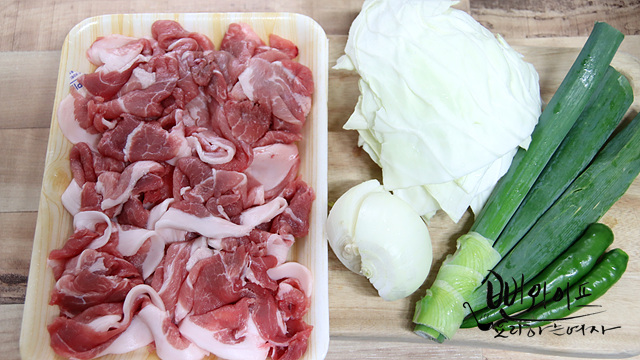
I prepared pork front leg thinly sliced for bulgogi.
Here are the onion, cabbage, large green onion, and Cheongyang chili peppers.
Slice the ingredients
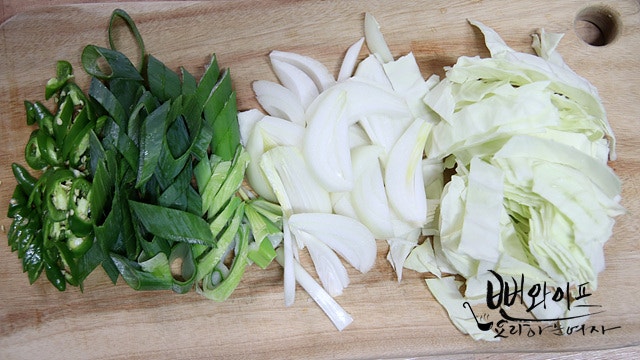
Slice the cabbage and onion not too thinly so they retain their crisp texture, and diagonally slice the large green onion and Cheongyang chili peppers.
Season the pork
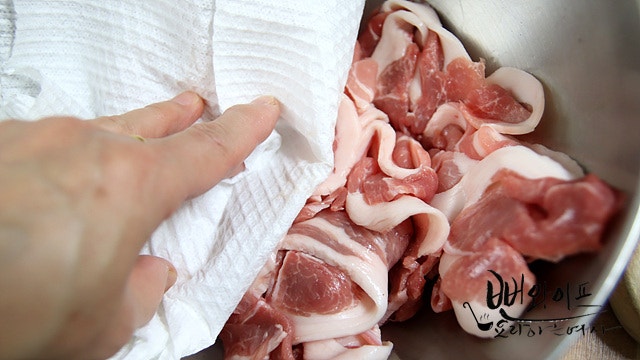
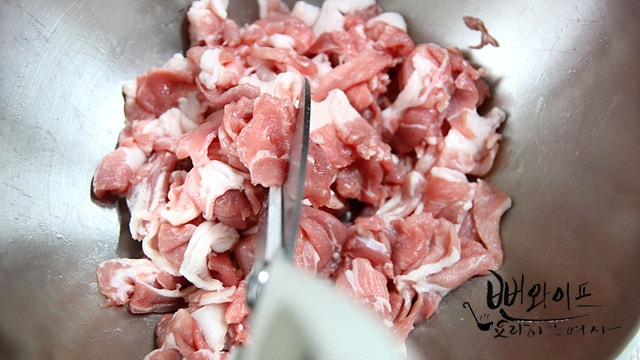
Pat the pork dry of any blood with paper towels and cut it into bite-size pieces.
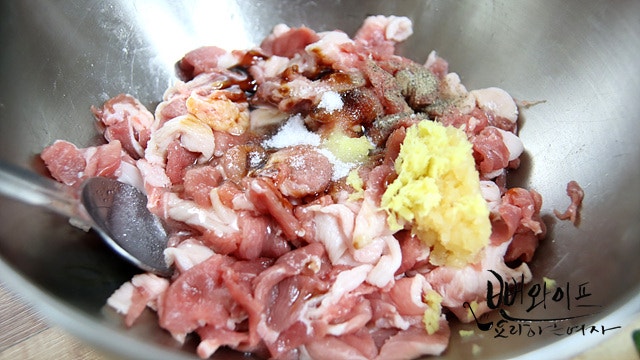
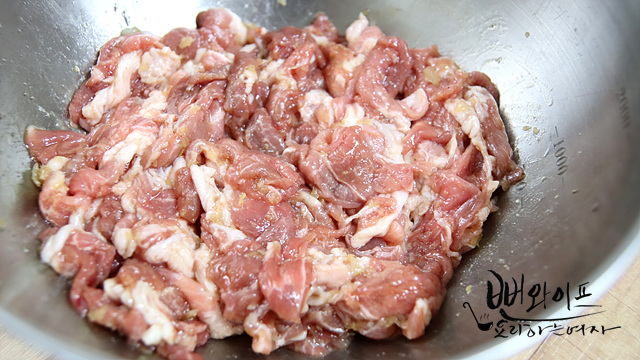
Add 2 tbsp regular soy sauce (jin-ganjang), 1 tbsp oyster sauce, 1 tbsp minced garlic, 1/2 tbsp minced ginger, 2 tbsp mirin (cooking rice wine), 2 tbsp corn syrup (mulyeot), 1/2 tbsp sugar, 1 tbsp toasted sesame oil, and a little ground black pepper to the meat and mix thoroughly.
You can let it marinate for about 30 minutes, but if you are using thinly sliced bulgogi meat like mine, the flavors absorb quickly so you can stir-fry it right away.
Stir-fry the meat
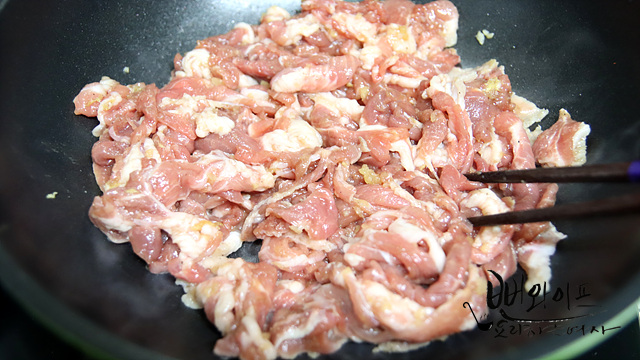
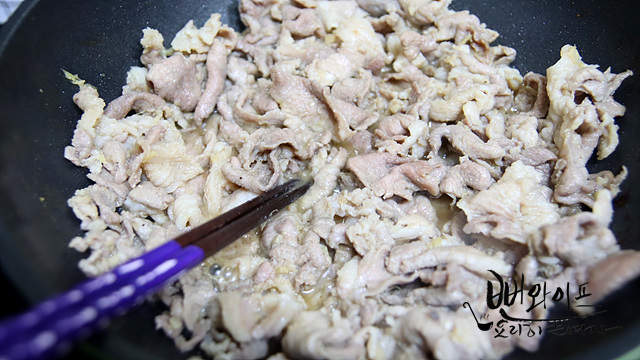
Heat the pan over high heat, add the meat, and stir-fry briskly.
Once the meat turns white and cooks through, a lot of liquid will have gathered.
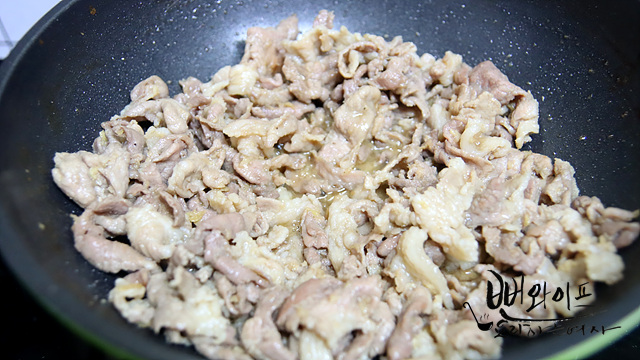
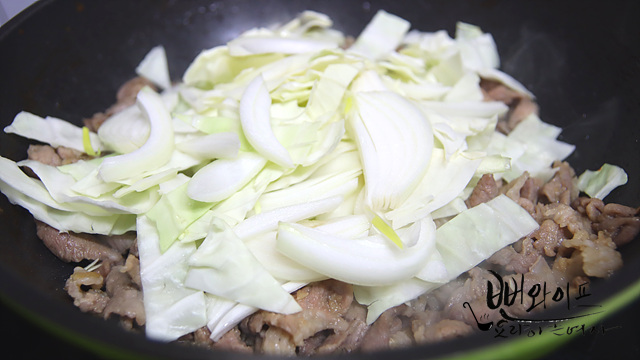
Keep stir-frying over high heat until the liquid cooks down completely and the meat turns lightly golden, as if searing against the pan.
Add the onion and cabbage...
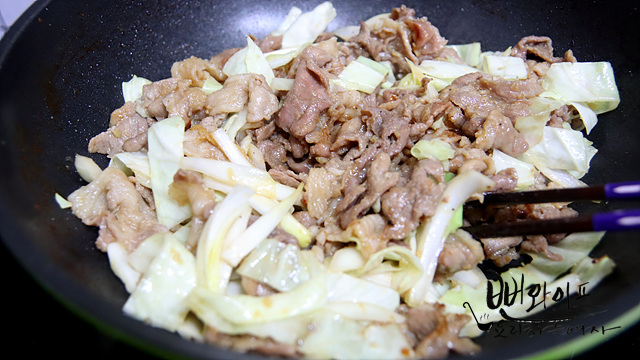
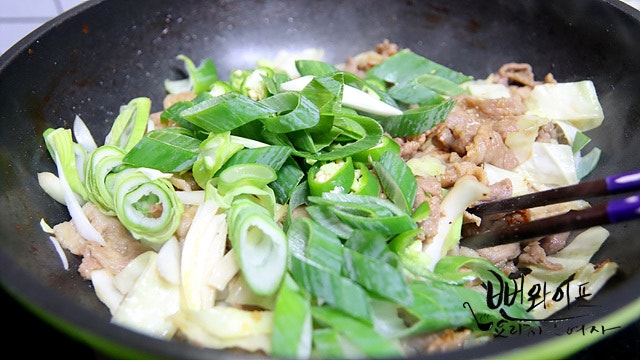
Toss a few times to let them wilt slightly.
At the end, add the green onion and chili peppers...
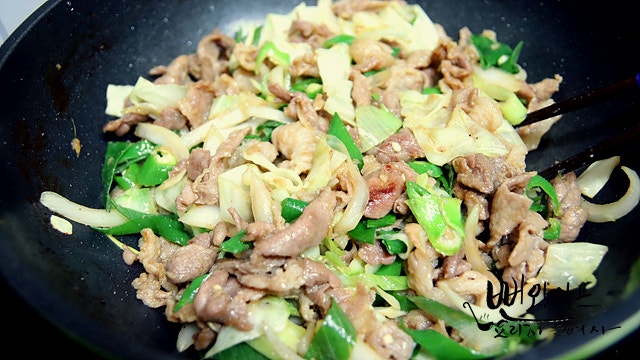
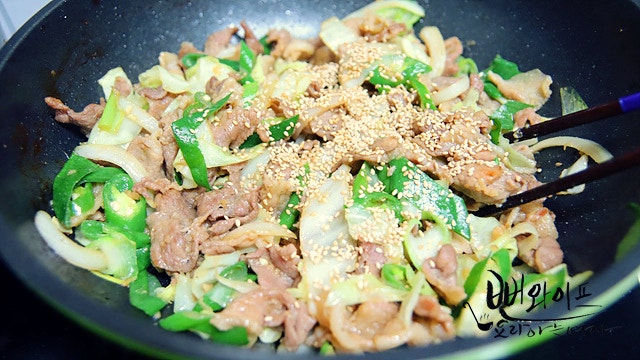
Stir-fry until all the ingredients come together nicely, then turn off the heat and finish by sprinkling toasted sesame seeds over top.
Complete
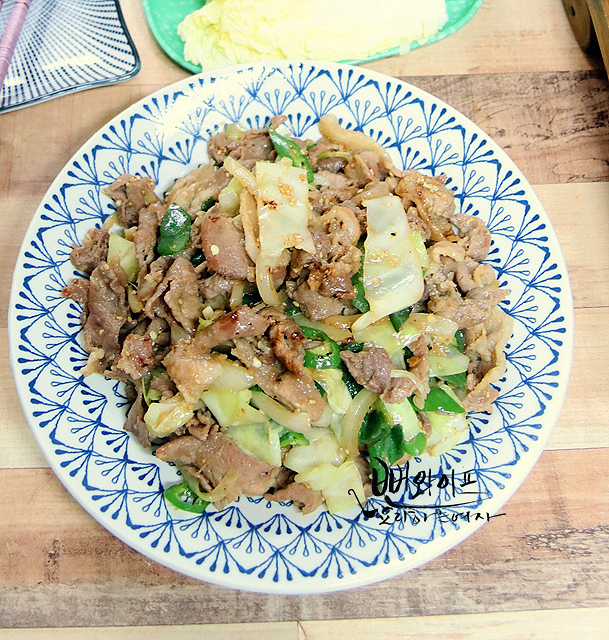
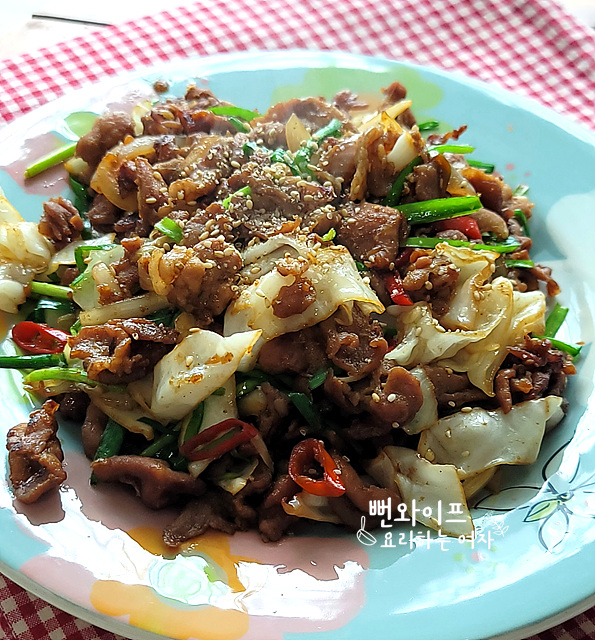
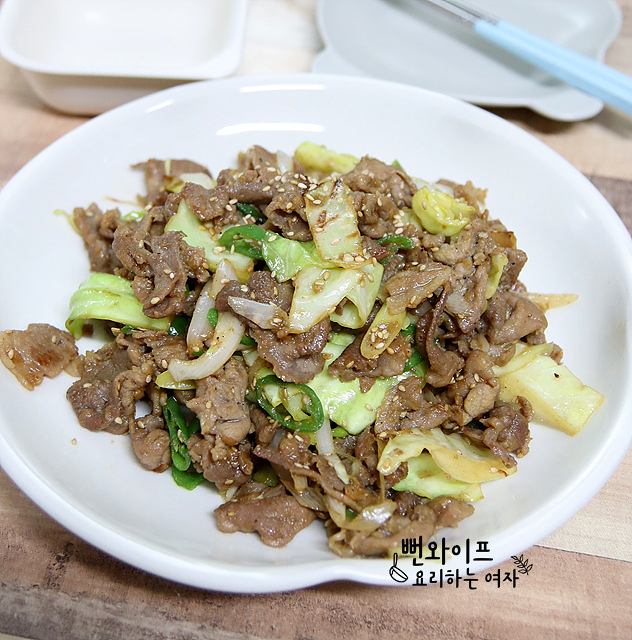
Stir-frying over high heat from start to finish makes it very fast. Because the meat is thin, the sauce absorbed well too.
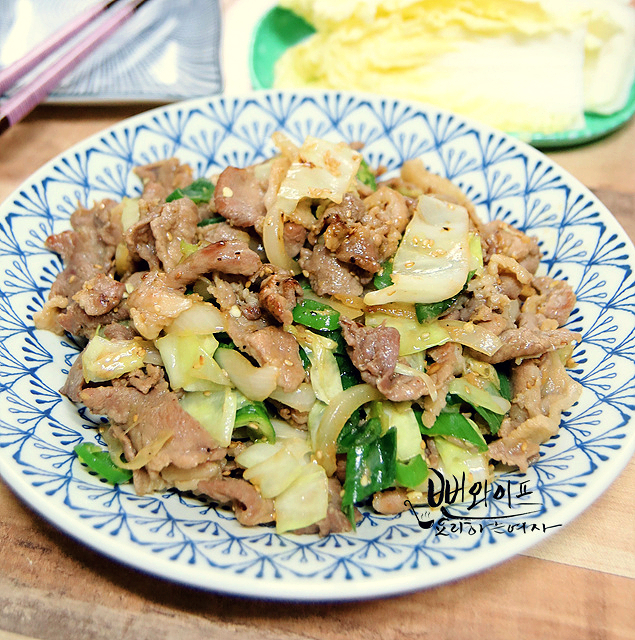
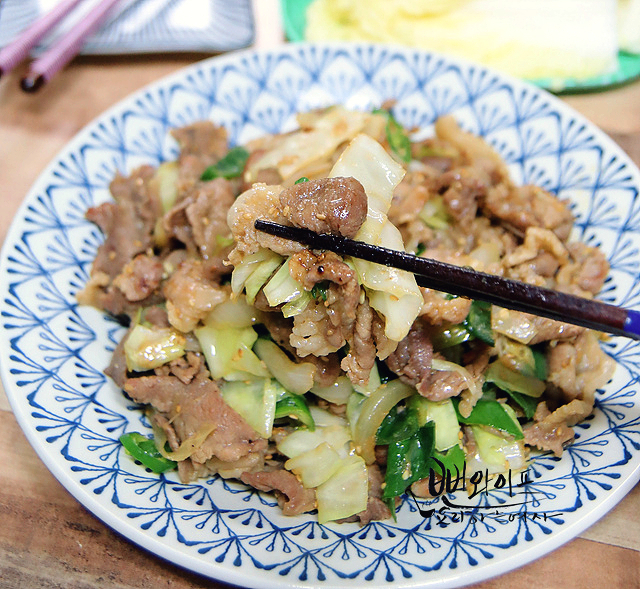
Even after adding the vegetables, you must stir-fry them briefly over high heat so water does not release and you can enjoy this crisp texture.
If you omit just the Cheongyang chili peppers, it has no gochujang or gochugaru, making it perfect for children or elderly family members who prefer non-spicy food.
 Ppunwife's tips
- Even after adding the vegetables, stir-fry them briefly over high heat so water does not release and you can enjoy their crispness.
- You can marinate it for about 30 minutes, or stir-fry it right away if you are using thinly sliced bulgogi meat because the seasoning absorbs quickly.
- People usually use spicy seasonings for jeyuk bokkeum to mask any pork gaminess, but today's recipe uses a soy sauce seasoning, so I handled it by adding more ginger than usual.
FAQ
Do I need to let the seasoned meat marinate before stir-frying?
Marinating for about 30 minutes is fine, but if you use thinly sliced bulgogi meat, the seasoning absorbs quickly so you can stir-fry it right after tossing.
How can I prevent water from forming when stir-frying the vegetables?
Cook the meat over high heat until all the meat juices have reduced, then add the vegetables and stir-fry them quickly over high heat just until slightly wilted to keep them crisp without releasing water.
How do I make this completely non-spicy?
Since this dish uses a soy sauce base without gochugaru or gochujang, simply omit the Cheongyang chili pepper to make it entirely non-spicy.
Can I use other cuts of pork instead of front leg? AI-generated
Generally, any thinly sliced bulgogi-style pork cuts, such as rear leg or pork shoulder, can be used to suit your preference.