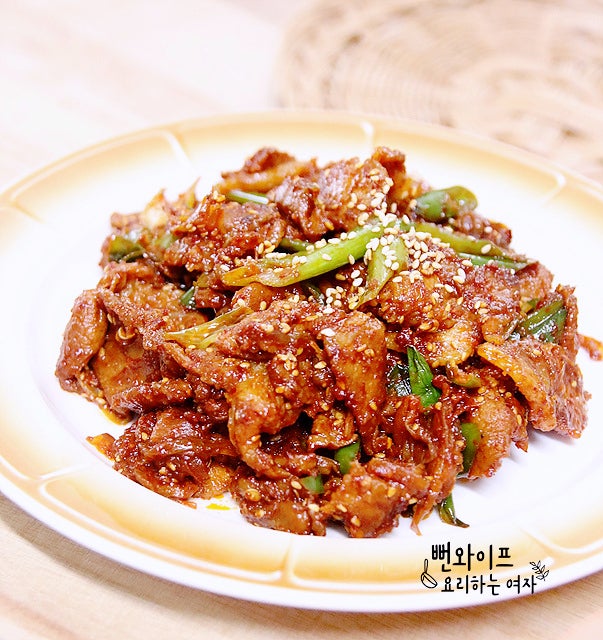
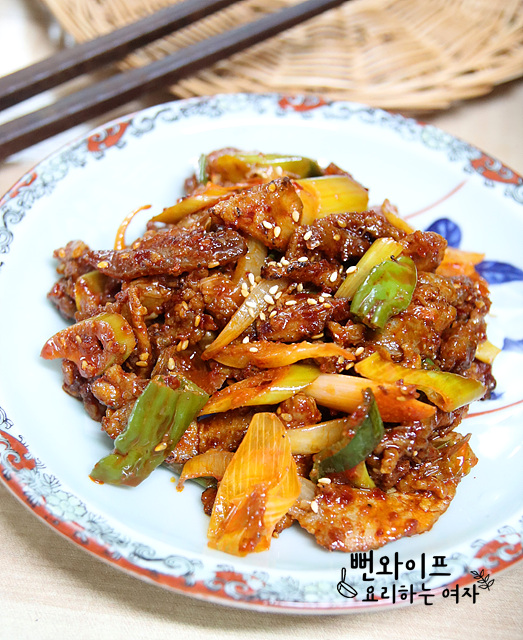
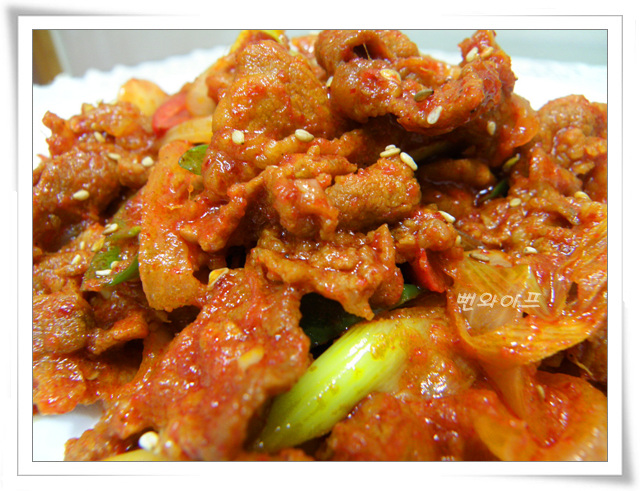
Savory Spicy Jeyuk Bokkeum (Stir-Fried Pork) with Doubanjiang
A savory, spicy, umami-rich stir-fried pork shoulder using leftover doubanjiang seasoning.
Translated from Korean by AI and not yet checked by a native speaker. Amounts and numbers are taken directly from the original recipe. Read the Korean original →
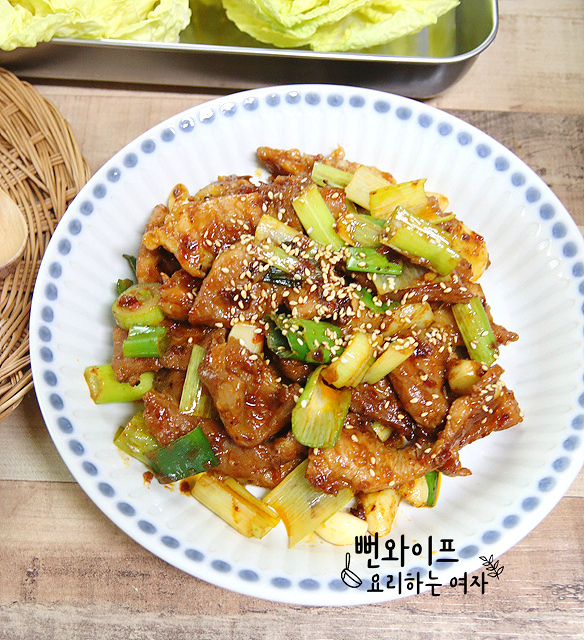
This jeyuk bokkeum pairs lean pork shoulder with doubanjiang to bring out savory depth and spicy flavor. Doubanjiang provides its own salty seasoning, so simply balancing it with sweetness makes it easy to pull together. It goes wonderfully as a side dish for rice or as a snack with drinks.
- Servings
- 2–3 servings
- Difficulty
- Easy
- Spiciness
- Mildly spicy
Ingredients
Ingredients
- Pork300 g (pork shoulder)
- Peeled garlic20 cloves (for lettuce wraps)
- Large green onion (daepa)1/2 stalk
Seasoning
- Doubanjiang (chili bean paste)1 1/2 tbsp
- Minced garlic1 tbsp
- Mirin (cooking rice wine)1 tbsp
- Corn syrup (mulyeot)1 tbsp
- Sugar1/2 tbsp
- Ground black peppera little
- Toasted sesame oil1/2 tbsp
- Toasted sesame seedsa little
- I used pork shoulder sliced slightly thicker than bulgogi meat, but thinly sliced bulgogi pork or shaved pork belly works well too.
- The meat had some thickness, so I marinated it for about 1 hour. Shaved pork belly or thinly sliced bulgogi meat can be stir-fried right away without marinating.
Steps
Prepare the ingredients
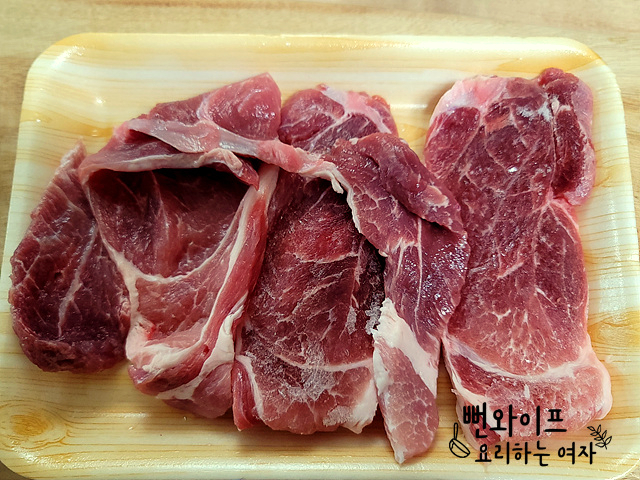
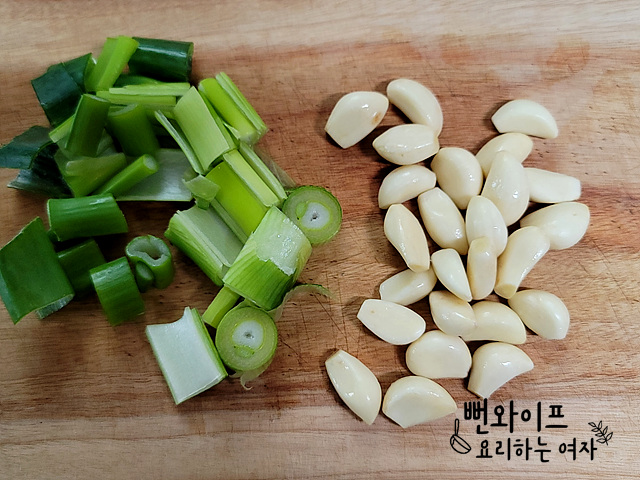
Here is pork shoulder.
It is slightly thicker than bulgogi meat, but thinly sliced bulgogi pork or shaved pork belly also works well.
I prepared about 20 small peeled garlic cloves suitable for wraps, and 1/2 stalk large green onion (daepa) cut into similar lengths.
Prepare and season the meat
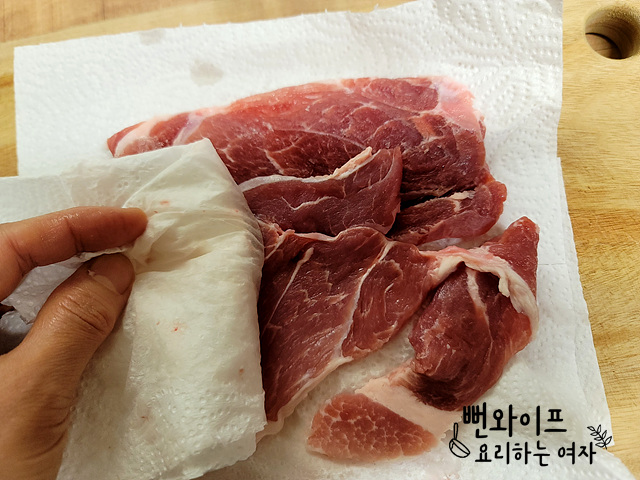
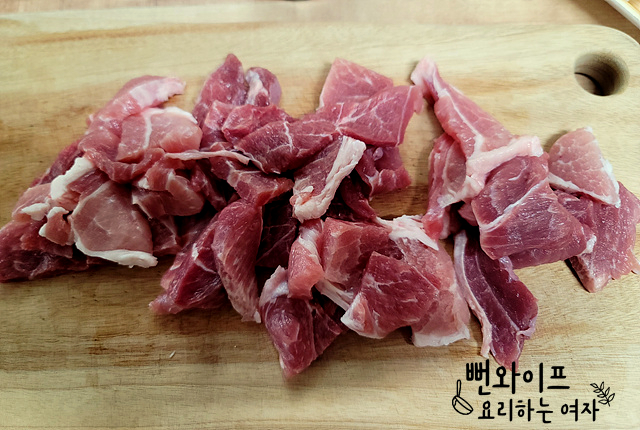
Press with paper towels to remove excess blood, then cut into bite-sized pieces.
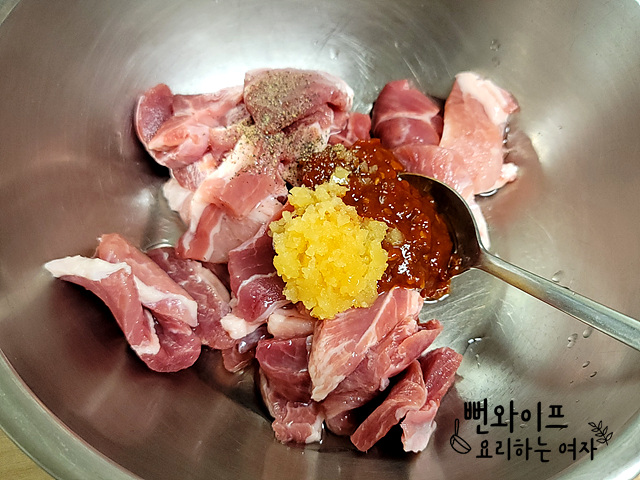
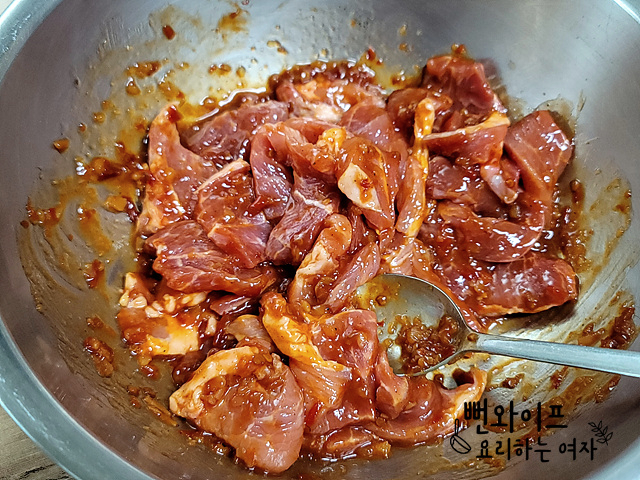
Add the seasoning ingredients to the meat—1 1/2 tbsp doubanjiang (chili bean paste), 1 tbsp minced garlic, 1 tbsp mirin (cooking rice wine), 1 tbsp corn syrup (mulyeot), 1/2 tbsp sugar, and a little ground black pepper—then mix together.
The meat was slightly thick, so I let it marinate for about 1 hour.
Shaved pork belly or thinly sliced bulgogi cuts can be stir-fried right away without marinating.
Stir-fry
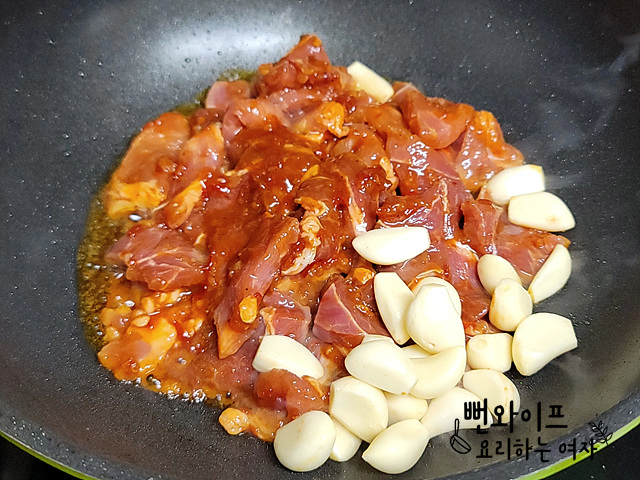
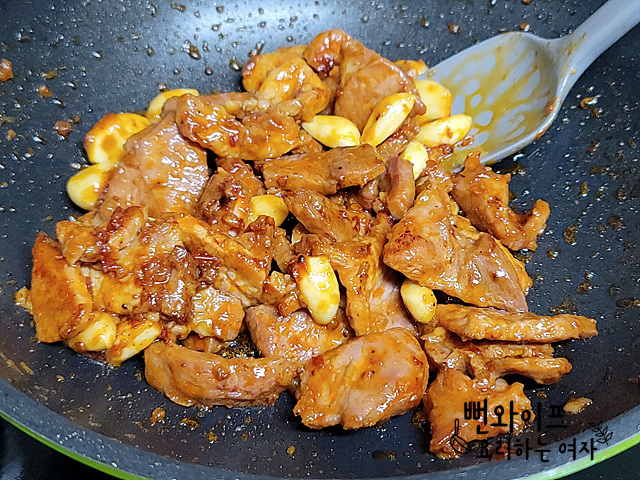
Lightly coat a pan with cooking oil, add the garlic and meat, and stir-fry until the meat is fully cooked.
It tastes much better if you stir-fry until almost all the moisture evaporates and the seasoning slightly caramelizes on the pan.
Taste it, and if it needs more seasoning, add more doubanjiang or soy sauce...
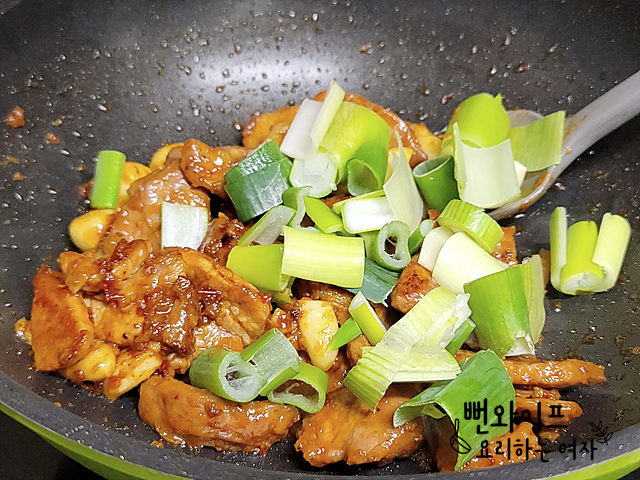
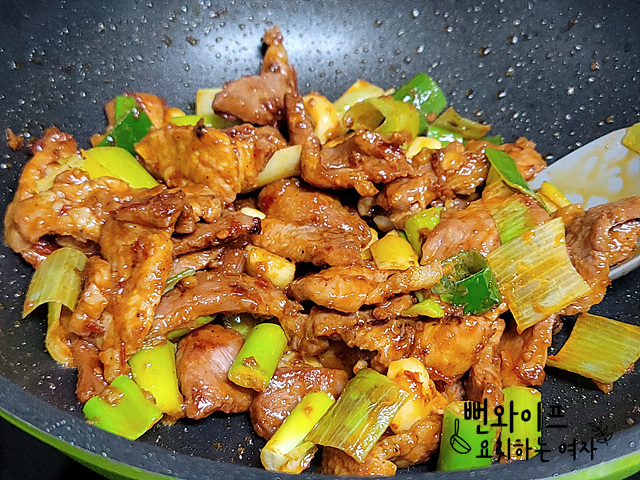
Add the large green onion and stir-fry until tender, then finish with toasted sesame oil and toasted sesame seeds at the end.
You can also add spicy Cheongyang chili pepper (hot green chili) to stir-fry.
Finish
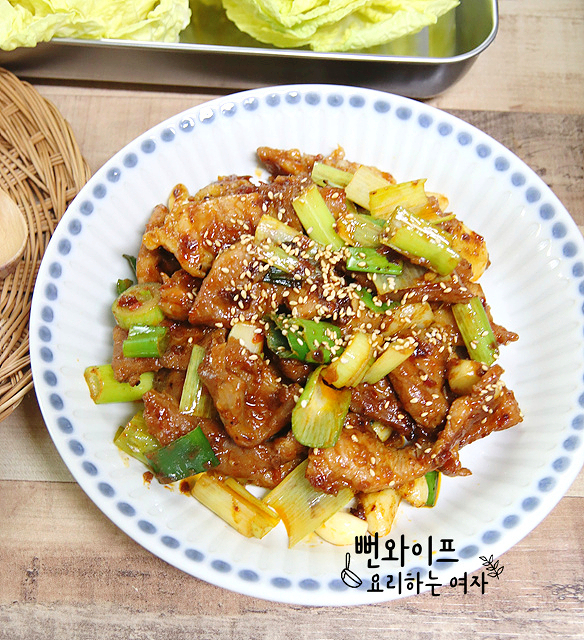
If you have leftover doubanjiang after making mapo tofu just once, try using it in jeyuk bokkeum like I did.
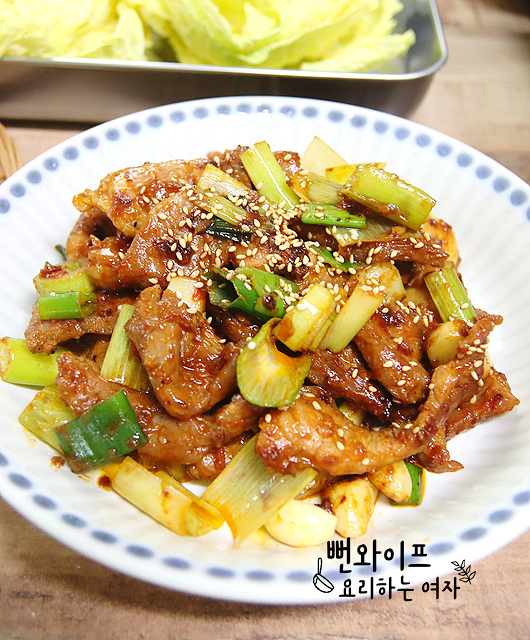
I also rounded up rolling peeled garlic cloves and solved that by stir-frying them together.
These days I enjoy wrapping meat with yellow baby napa cabbage hearts rather than lettuce; if you season the meat a bit boldly, the seasoning balances out just right in a wrap.
As the cold drags on, vegetable prices keep fluctuating.
Still, delicious home-cooked meals are the secret to staying healthy, so eat well and take good care of your winter health.
 Ppunwife's tips
- The salt in the doubanjiang is plenty, so do not add more salty seasoning; just balance it with sweetness from corn syrup and sugar.
- It tastes much better if you stir-fry until almost all the moisture evaporates and the seasoning slightly caramelizes on the pan.
- You can also add spicy Cheongyang chili pepper (hot green chili) to stir-fry.
FAQ
Can I use other cuts of pork instead of pork shoulder?
You can substitute thinly shaved pork belly or thinly sliced bulgogi pork.
Do I have to marinate the meat in advance?
Thicker cuts are best marinated for about 1 hour, but thin bulgogi meat or shaved pork belly can be stir-fried immediately without marinating.
What should I add if the seasoning is too light after stir-frying?
Taste before finishing, and if it lacks seasoning, adjust by adding more doubanjiang or soy sauce.
What ingredient should I add to make it spicier?
You can add Cheongyang chili pepper along with the large green onion when stir-frying for extra heat.