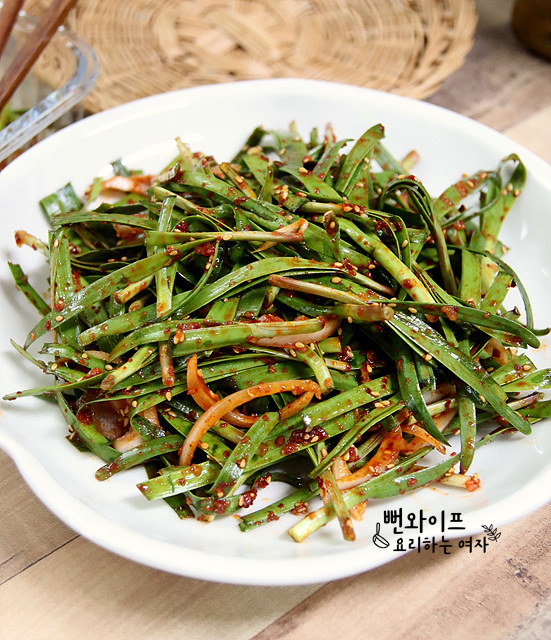
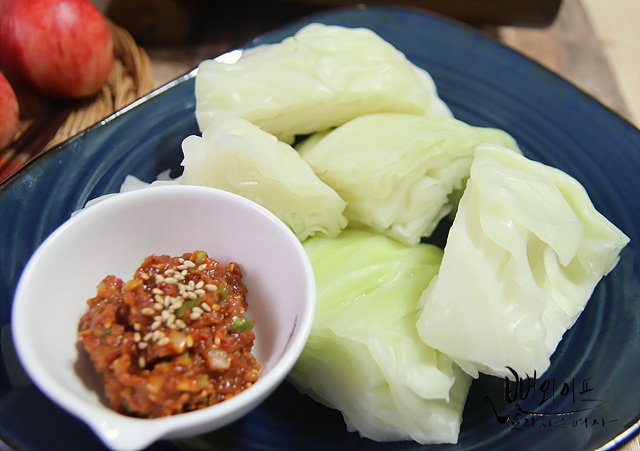
Steamed Vegetable Bibimbap (Bibimbap with Steamed Vegetables)
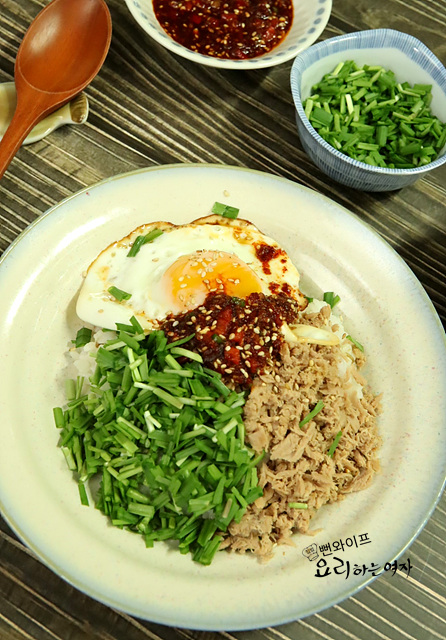
A light and clean one-bowl meal made by steaming assorted vegetables together and mixing them with fragrant buchu jjambak-i (garlic chive sauce).
Translated from Korean by AI and not yet checked by a native speaker. Amounts and numbers are taken directly from the original recipe. Read the Korean original →
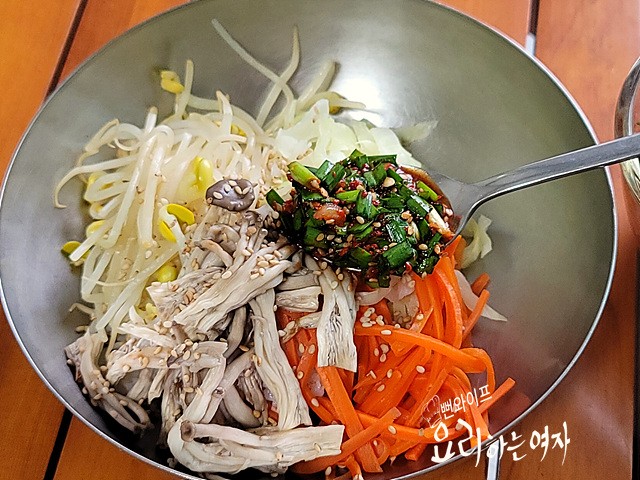
This is an easy bibimbap made by steaming all the vegetables together in a steamer instead of stir-frying them one by one. Topped with a fragrant garlic chive seasoning sauce, it makes a light, gentle, and satisfying meal.
- Servings
- 3–4 servings
- Cook time
- 8 minprep not included
- Difficulty
- Easy
- Spiciness
- Mildly spicy
Ingredients
Ingredients
- Garlic chives (buchu)100 g
- Cheongyang chili pepper (hot green chili)1
Seasoning sauce
- Gochugaru (Korean chili flakes)2 tbsp
- Regular soy sauce (jin-ganjang) (or brewed soy sauce (yangjo-ganjang))6 tbsp
- Corn syrup (mulyeot) (or rice syrup (jocheong), green plum syrup (maesil-cheong), sugar)1 tbsp
- Mirin (cooking rice wine)2 tbsp
- Minced garlic1 tbsp
- Toasted sesame seeds1 tbsp
- Perilla oil (or toasted sesame oil)as needed
- In addition to soybean sprouts, baby oyster mushrooms, cabbage, and carrots, you can use various other vegetables such as zucchini, mung bean sprouts, Korean radish, or spinach.
Steps
Prepare the ingredients
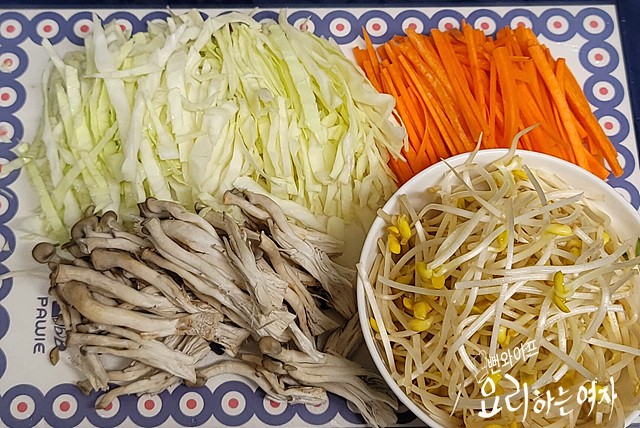
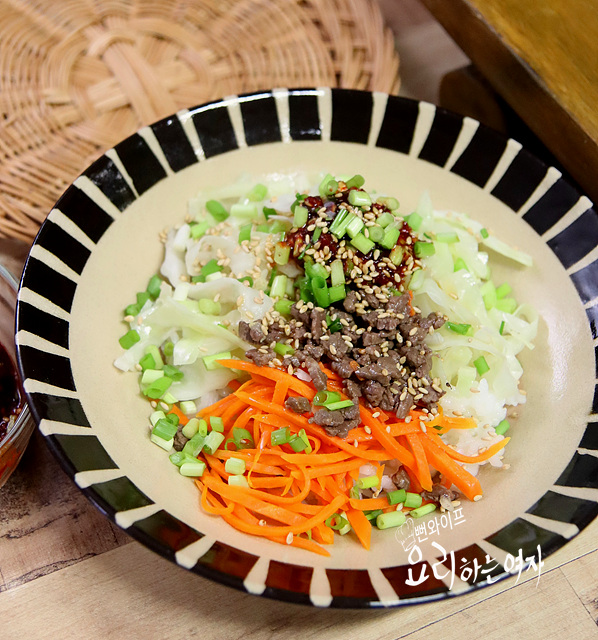
Prepare soybean sprouts, baby oyster mushrooms, cabbage, and carrots for the bibimbap. Slice the cabbage thickly and julienne the carrots thinly.
Try using various other vegetables such as zucchini, mung bean sprouts, Korean radish, or spinach.
Steam the vegetables
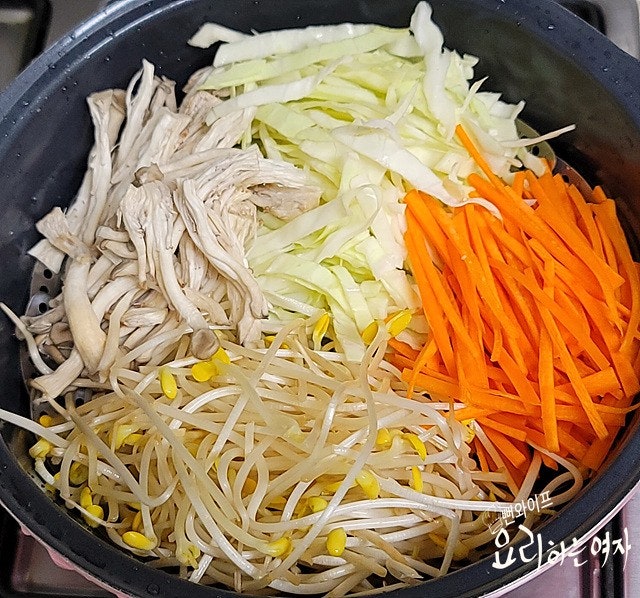
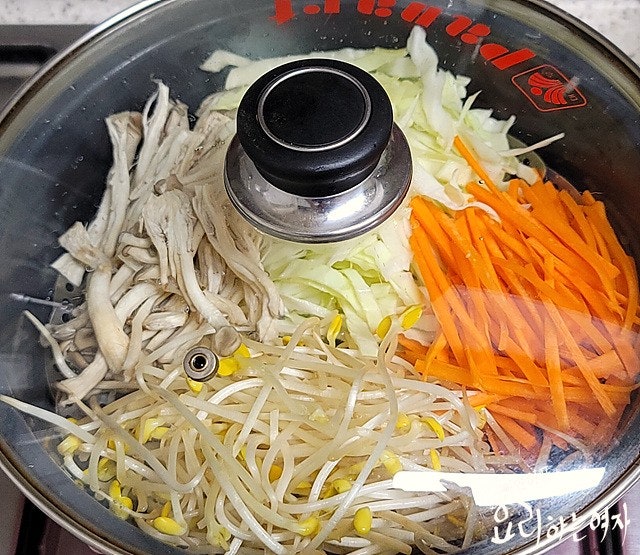
Arrange the vegetables evenly in a steamer pot. Sprinkle a little fine salt over the top to season them lightly.
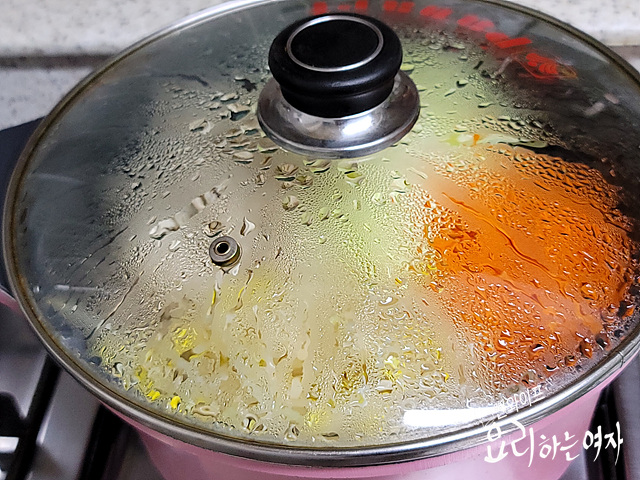
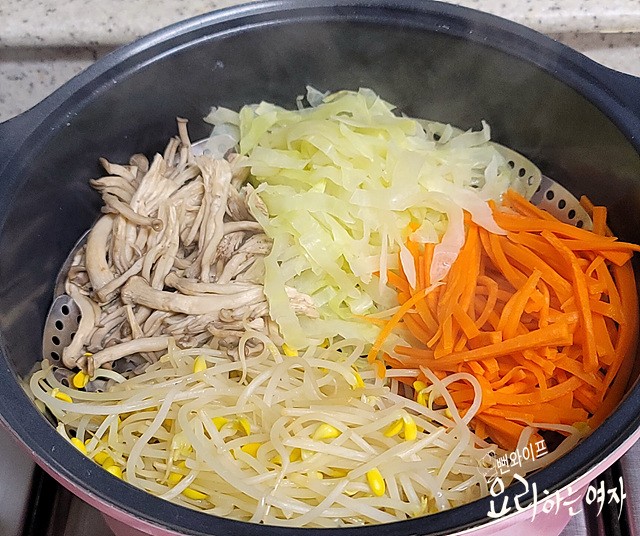
Cover with the lid and turn the heat to high. Once steam begins to rise steadily, lower the heat to medium and steam for 7 to 8 minutes.
If the raw smell of the soybean sprouts is gone while steaming, they are fully cooked, so you do not need to stick strictly to the timer.
Remove them from the steamer and let them cool slightly.
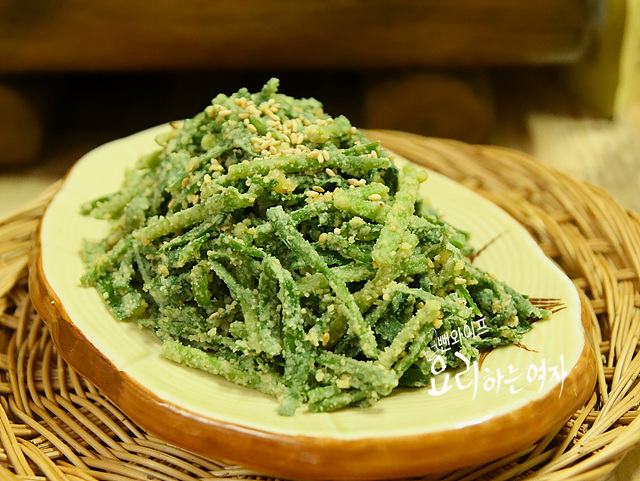
Make the garlic chive sauce (buchu jjabak-i)
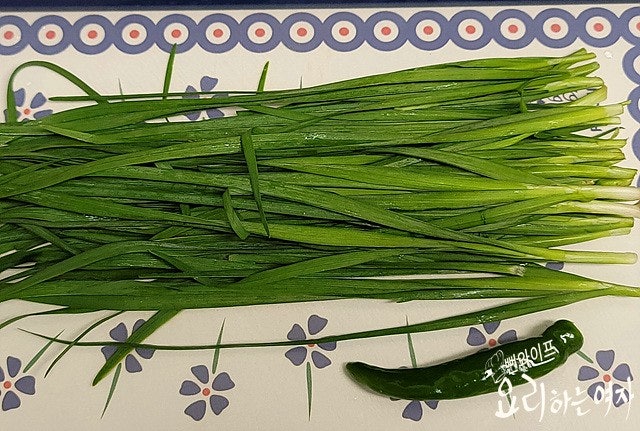
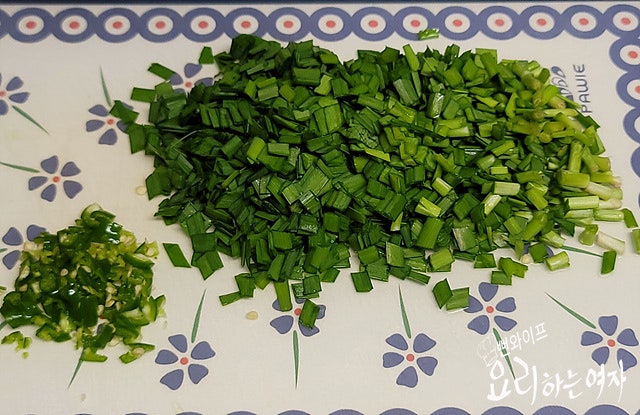
Prepare 100 g of garlic chives (buchu) and 1 Cheongyang chili pepper (hot green chili), then chop them finely.
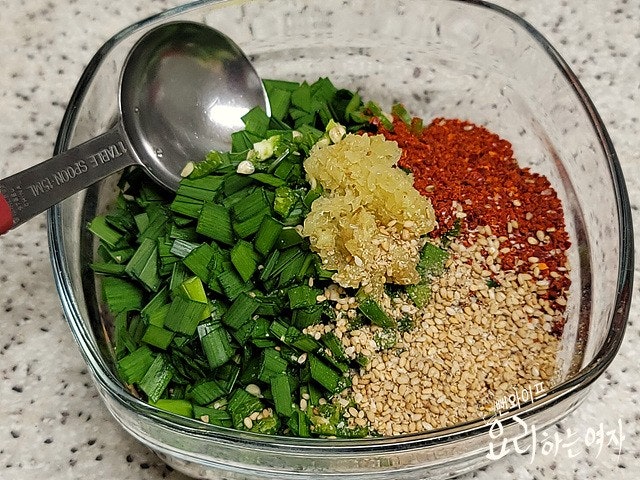
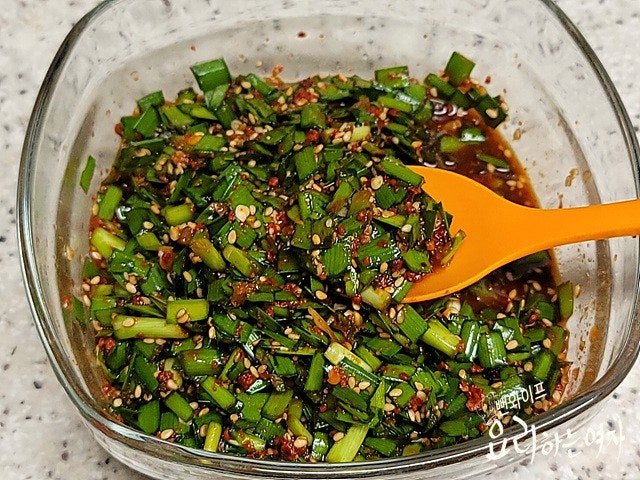
Add everything except the toasted sesame oil and mix well, and it is done.
If you make it ahead like this, simply add toasted sesame oil or perilla oil when you mix and eat your bibimbap.
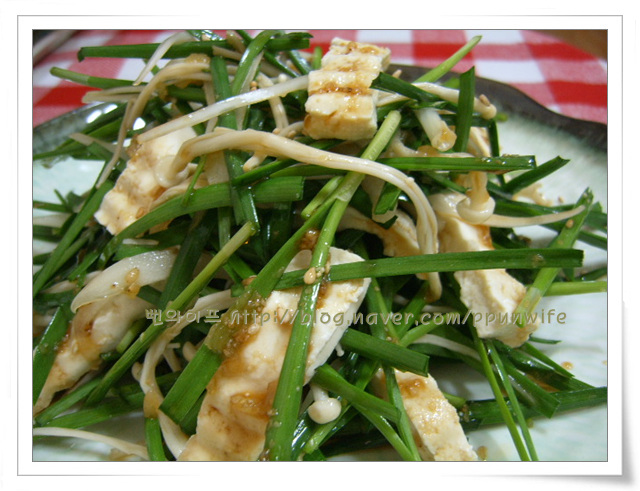
This makes plenty for 4 servings, so if you have leftover sauce, you can pan-fry tofu or mushrooms to eat with it.
It is also delicious as a dipping sauce for savory pancakes if you just add a little vinegar and sugar.
Finish
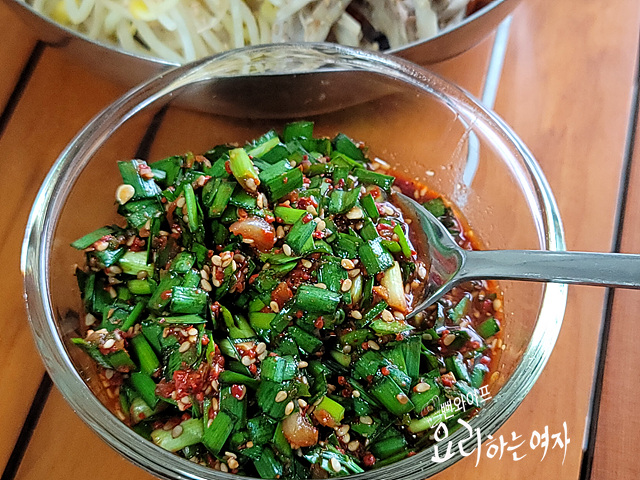
Making a sauce out of garlic chives turns it into such a wonderful side dish. It is so versatile that it feels like a little secret weapon.
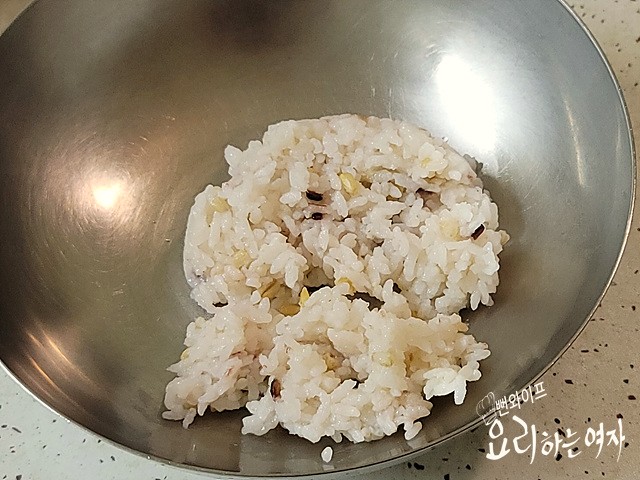
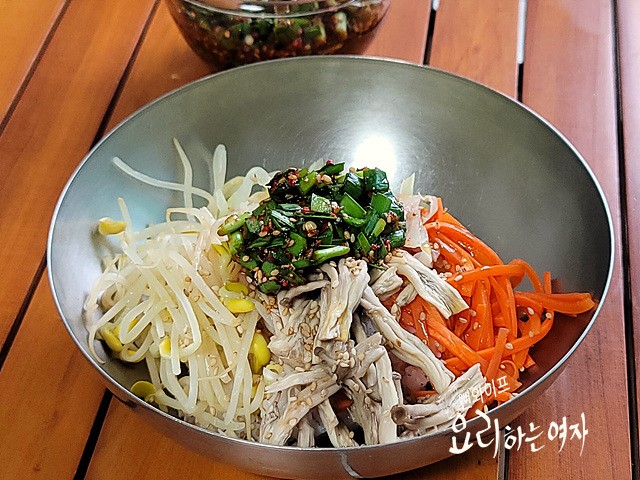
Place the assorted vegetables evenly over the rice, add 2 spoonfuls of the sauce, and drizzle toasted sesame oil in a quick circle over the top.
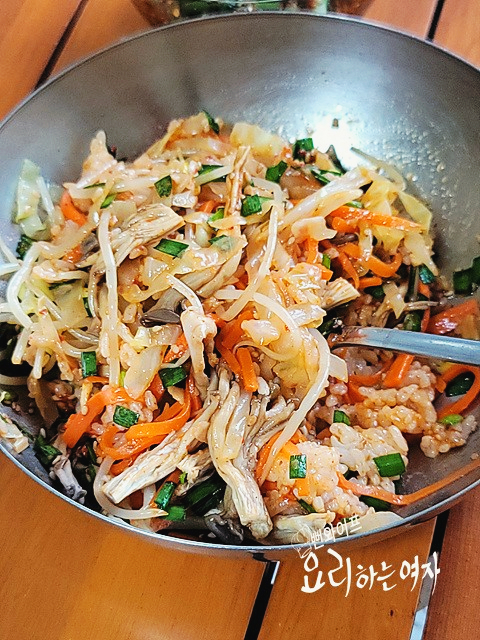
Mix gently and take a hearty bite, and your mouth will be filled with pure happiness.
Stir-frying each vegetable one by one for bibimbap takes a lot of time, but because you can enjoy it this simply, you will want to make it often.
Enjoy your meal today, and have a relaxing weekend that is easy on your stomach.
 Ppunwife's tips
- If the raw smell of the soybean sprouts is gone while steaming, they are fully cooked, so you do not need to stick strictly to the timer.
- It is best to mix the garlic chive sauce ahead of time leaving out only the toasted sesame oil, and then add toasted sesame oil or perilla oil right when you mix and eat your bibimbap.
FAQ
How can I tell when the vegetables are properly cooked?
After steam rises, steam over medium heat for about 7 to 8 minutes. They are done once the raw smell of the soybean sprouts is gone.
Can I add other ingredients besides the basic vegetables?
Feel free to add various other vegetables to steam according to your preference, such as zucchini, mung bean sprouts, Korean radish, or spinach.
How can I use any leftover garlic chive sauce?
You can serve it alongside pan-fried tofu or mushrooms, or add a bit of vinegar and sugar to use it as a dipping sauce for Korean pancakes.
Can I mix the toasted sesame oil into the sauce ahead of time?
It is recommended to mix the sauce without the toasted sesame oil first, and then drizzle the oil over the rice just before eating.