Buchu Konggaru Jjim (Steamed Chives with Soybean Flour)
A special side dish made by lightly coating garlic chives with raw soybean powder, steaming them briefly, and tossing them in a nutty seasoning.
Translated from Korean by AI and not yet checked by a native speaker. Amounts and numbers are taken directly from the original recipe. Read the Korean original →
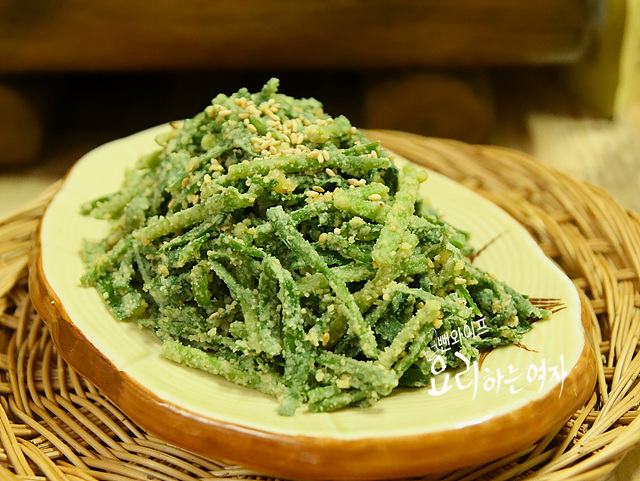
This special side dish brings out the deep nuttiness of raw soybean powder and the fragrant flavor of garlic chives with a light steaming. Steam it briefly for 3 to 4 minutes so the chives stay pleasantly tender-crisp rather than mushy. It is simple to make and pairs wonderfully as an effortless daily side dish.
- Servings
- about 3–4 servings
- Cook time
- 4 minprep not included
- Difficulty
- Easy
- Spiciness
- Not spicy
Ingredients
Ingredients
- Garlic chives (buchu)200 g
- Raw soybean powder1/2 cup
Seasoning
- Regular soy sauce (jin-ganjang)1 tbsp
- Tuna extract sauce (chamchi-aek) (or soup soy sauce (guk-ganjang))1/2 tbsp
- Minced garlic1/2 tbsp
- Salta little
- Perilla oil1 tbsp
- Ground toasted sesame seeds1 tbsp
- Use raw ground soybean powder, not roasted soybean powder. (You can find it at large supermarkets or traditional grain mills.)
- Rather than very tender baby chives, choose thicker garlic chives so that they do not stick together or go limp when steamed, giving them a much better texture.
Steps
Prepare the ingredients
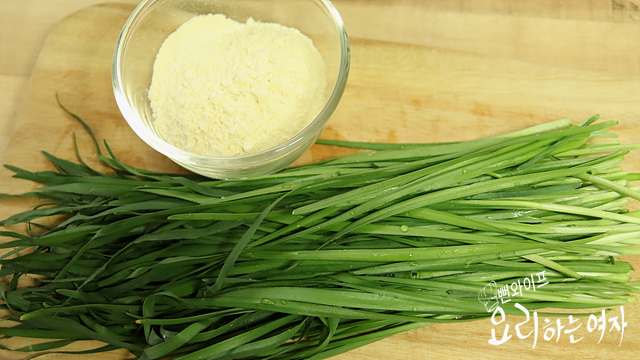
Here are the garlic chives (buchu) and raw soybean powder.
Use raw ground soybean powder, not roasted soybean powder. (You can find it at large supermarkets or traditional grain mills.)
Rather than very tender baby chives, choose thicker garlic chives so that they do not stick together or go limp when steamed, giving them a much better texture.
Cut the chives and mix the seasoning
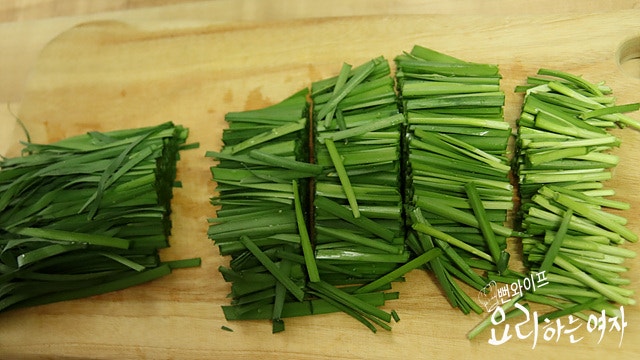
Cut the garlic chives into moderate lengths; you can trim off the tough ends and save them for doenjang soup.
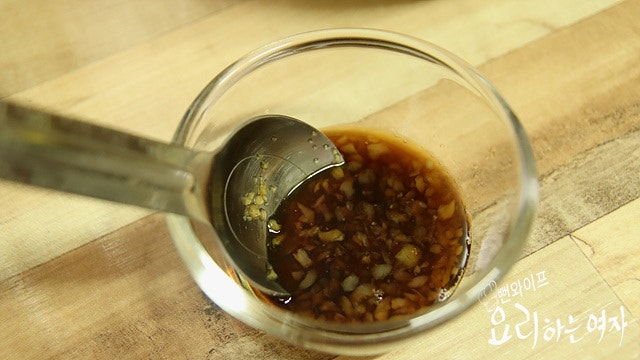
In a bowl, mix together 1 tbsp regular soy sauce (jin-ganjang), 1/2 tbsp tuna extract sauce (chamchi-aek), and 1/2 tbsp minced garlic.
Coat with soybean powder
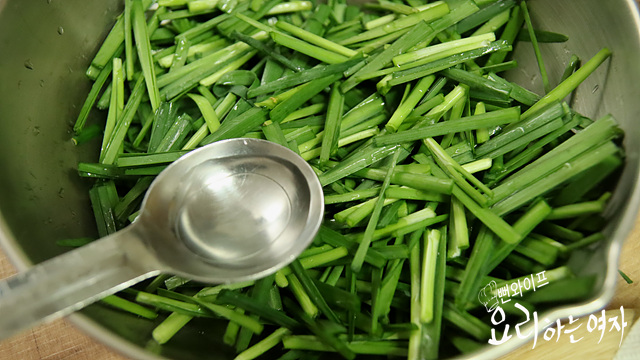
If the garlic chives are too dry, the soybean powder will not coat them well, so add 1 to 2 tbsp of water and toss evenly to add moisture.
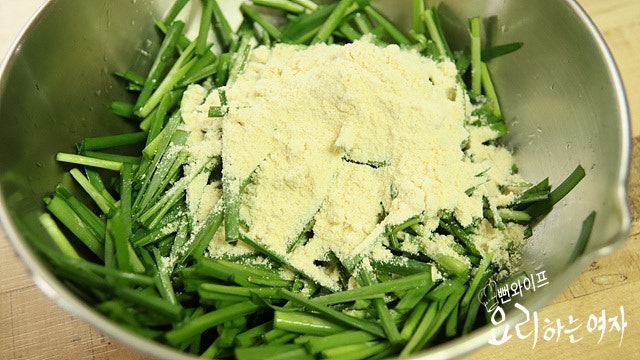
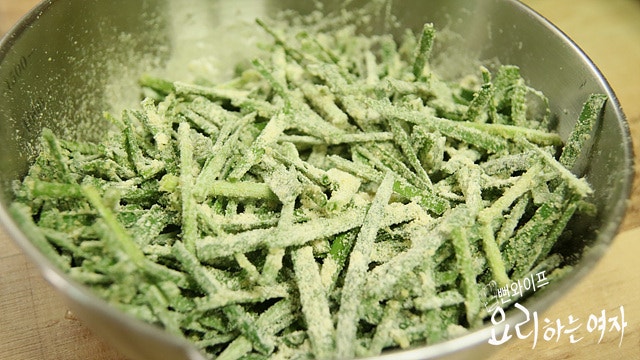
Add 1/2 cup raw soybean powder and toss so the chives are coated evenly.
Steam
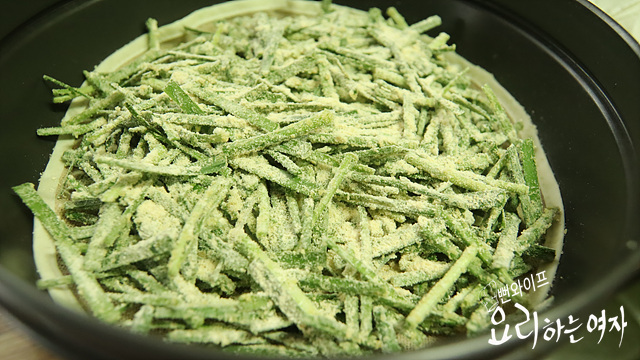
Line a steamer with a cotton cloth and spread the chives out neatly across it.
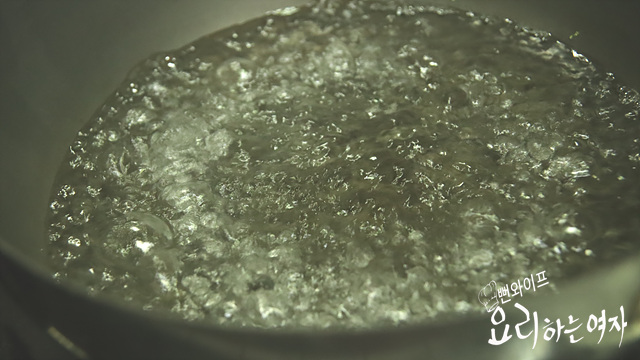
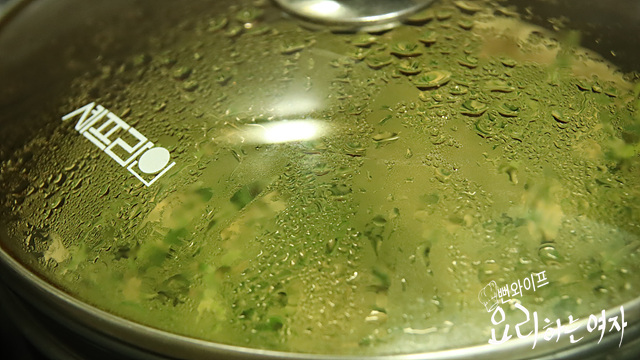
Once the water comes to a rolling boil and steam rises, cover with the lid and steam for about 3 to 4 minutes. Keep an eye on it so the chives do not overcook and turn mushy.
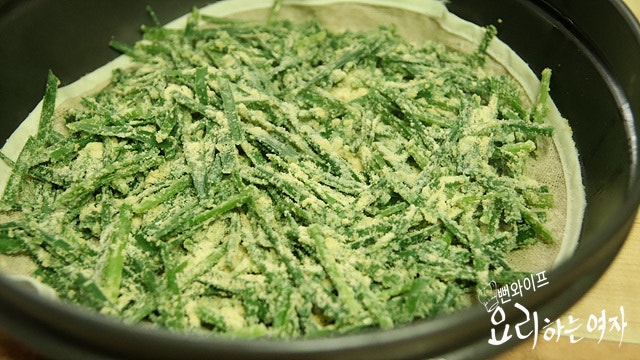
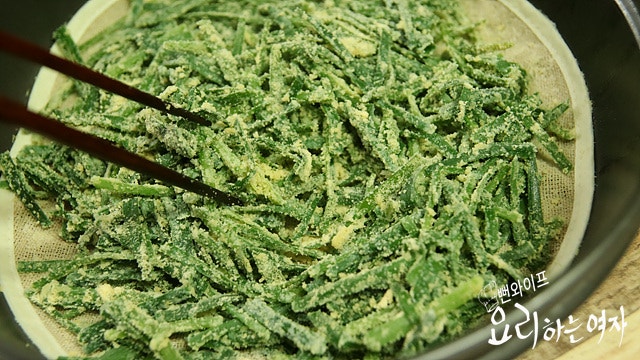
Toss gently from bottom to top with chopsticks to let the hot steam dissipate and cool.
Toss with seasoning
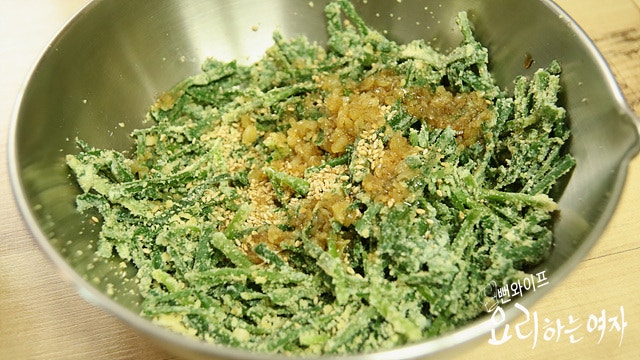
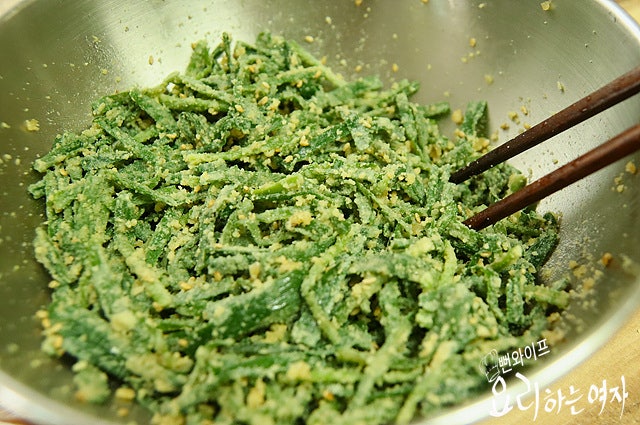
Place the steamed chives and seasoning in a bowl, add 1 tbsp perilla oil (or toasted sesame oil) and 1 tbsp ground toasted sesame seeds, and toss gently with chopsticks.
Coarsely grinding toasted sesame seeds in a mortar helps them cling to the chives and brings out a much richer, nuttier flavor.
Adjust with salt if it tastes plain, and adding just a tiny pinch of sugar mellows the flavor.
Finish
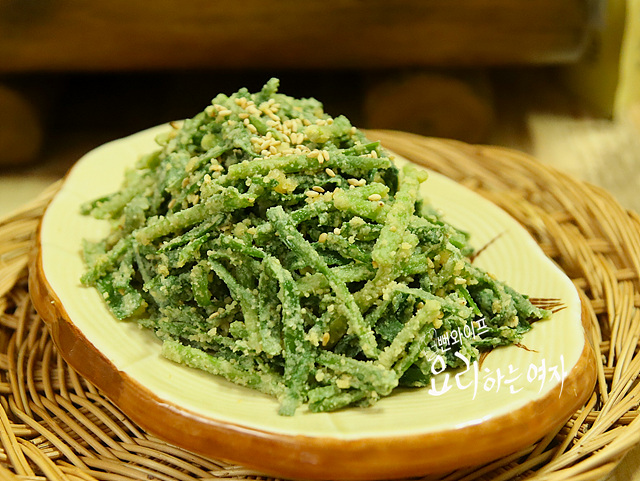
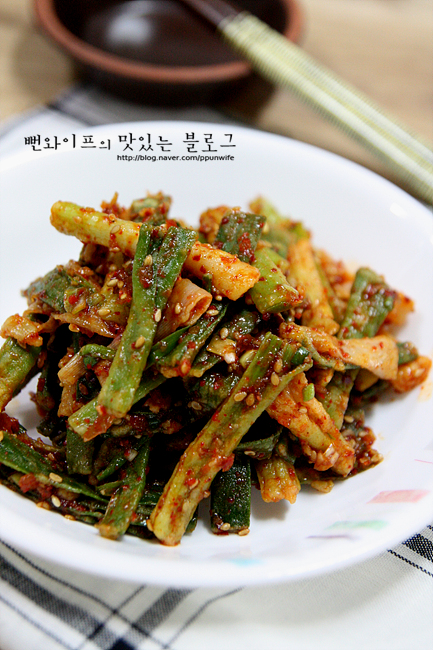
Because the garlic chives were nice and thick, they held their shape well through steaming.
They even look plump, almost like garlic scapes.
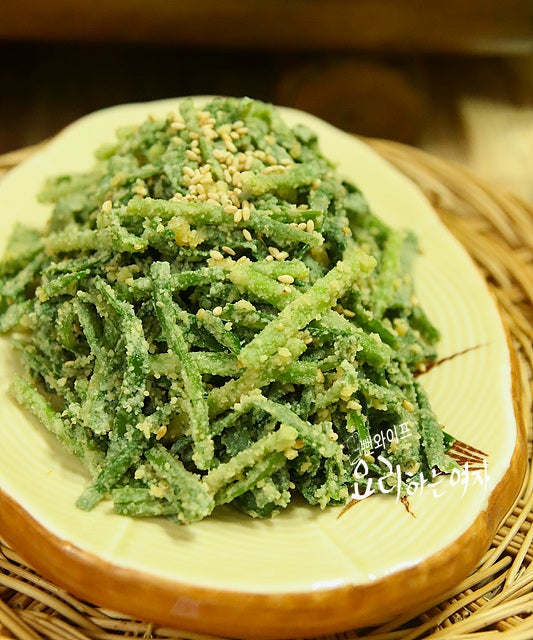
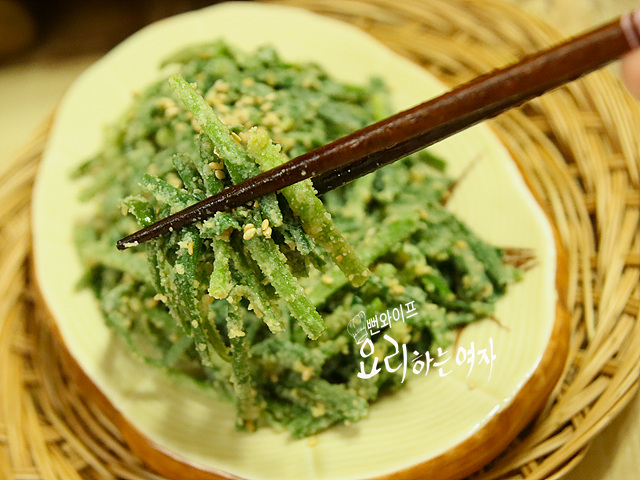
Keep a close eye on the steaming time so they stay tender-crisp while letting the nutty soybean powder and garlic chive fragrance shine through.
It has been so long since I ate this nostalgic side dish that I enjoyed so often as a child, and it tastes delicious.
Tasting it right after tossing while still slightly warm, I just cannot stop reaching for more.
Soon garlic scapes will be in season, and they are also wonderful steamed with soybean powder just like this.
 Ppunwife's tips
- If the garlic chives are too dry, the soybean powder will not coat them well, so add 1 to 2 tbsp of water and toss evenly to add moisture.
- Coarsely grinding toasted sesame seeds in a mortar helps them cling to the chives and brings out a much richer, nuttier flavor.
- Adjust with salt if it tastes plain, and adding just a tiny pinch of sugar mellows the flavor.
- Keep a close eye on the steaming time so they stay tender-crisp while letting the nutty soybean powder and garlic chive fragrance shine through.
FAQ
Can I use roasted soybean powder?
For this dish, you must use unroasted, raw ground soybean powder. You can find it at large Korean supermarkets or traditional grain mills.
What kind of garlic chives should I choose for the best texture?
Rather than very young, thin chives, use thicker and sturdier garlic chives so they do not clump or turn limp when steamed, keeping a pleasant texture.
What should I do if the soybean powder does not stick to the chives?
If the surface of the chives is too dry, the powder will dust off loosely. Sprinkle 1 to 2 tbsp of water over them to moisten before tossing, and the powder will adhere smoothly.
Can I substitute another ingredient for the tuna extract sauce?
You can use soup soy sauce (guk-ganjang) instead of tuna extract sauce.