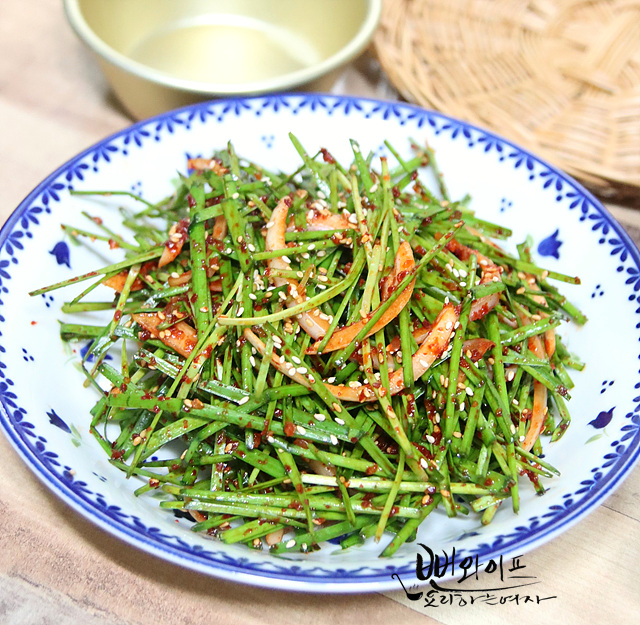
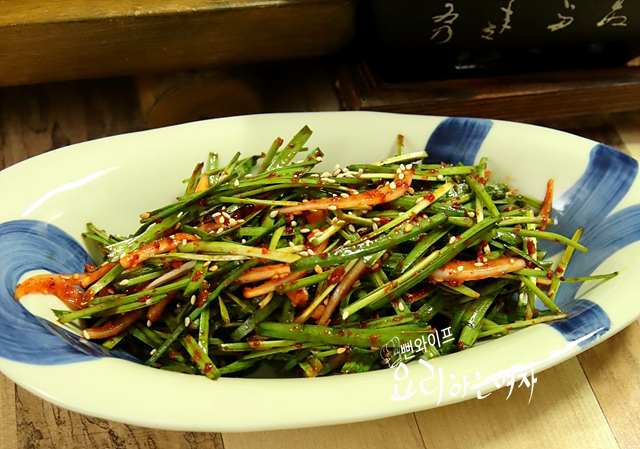
Crisp and Clean Buchu Kimchi (Garlic Chive Kimchi)
A special buchu kimchi side dish mixed cleanly using rich anchovy broth instead of glutinous rice paste.
Translated from Korean by AI and not yet checked by a native speaker. Amounts and numbers are taken directly from the original recipe. Read the Korean original →
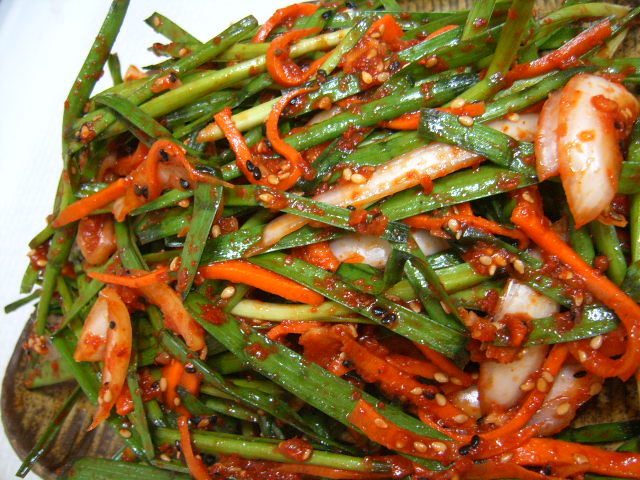
Garlic chives are lightly salted with anchovy fish sauce and tossed with rich anchovy broth instead of glutinous rice paste for a clean taste without heaviness. When trimming the chives, select mostly thick stems and toss them lightly by shaking them through your hands so they do not develop a raw grassy smell. It is a hearty, pungent, and spicy side dish to enjoy.
- Servings
- about 10–12 servings
- Cook time
- 30 minprep not included
- Difficulty
- Easy
- Spiciness
- Spicy
Ingredients
Ingredients
- Garlic chives (buchu)1 kg
- Onion2
- Carrot1
Seasoning
- Gochugaru (Korean chili flakes)1 cup
- Anchovy fish sauce2/3 cup
- Anchovy broth1/2 cup
- Minced garlic4 tbsp
- Sugar1.5 tbsp
- Toasted sesame seeds
- Separate thick and thin stems as you trim; make kimchi with the thick garlic chives, and use the thin ones for pancakes, soups, or japchae.
- You may omit the onion and carrot if you prefer.
- Use richly brewed anchovy broth instead of glutinous rice paste.
Steps
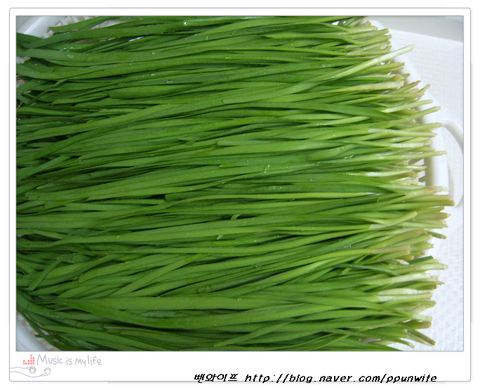
Making kimchi with garlic chives is simple, but trimming and washing them takes quite a long time.
If you do not trim them thoroughly, washing takes even longer.
When you untie a bunch of garlic chives, there are thick ones, but many thin ones are mixed in as well.
That is why I separate the thick ones from the thin ones while trimming them.
If you make kimchi with both together, the thin chives quickly lose their body and look messy.
Rinse them clean under running water, then drain the water thoroughly.
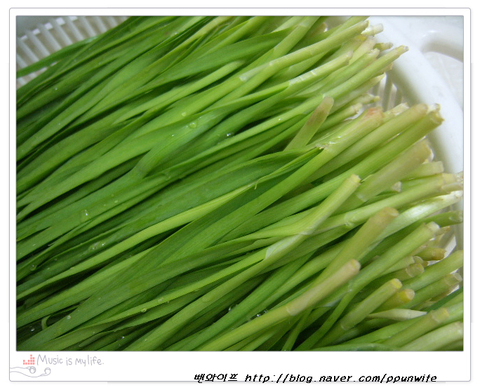
These are the thick garlic chives; I will use them to make kimchi.
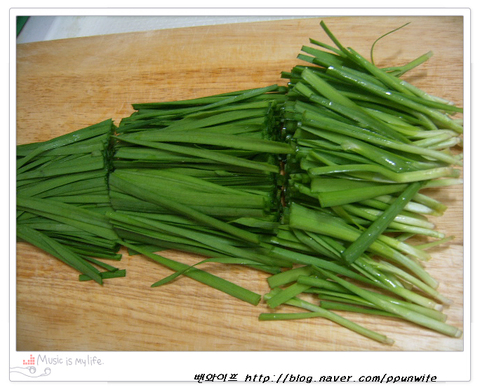
Cut the garlic chives into 3 parts...
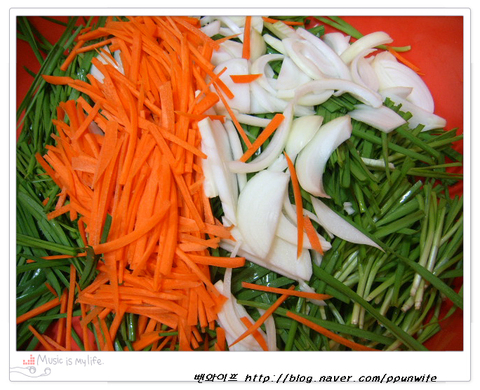
Thinly slice the carrot and onion and place them together in a large container.
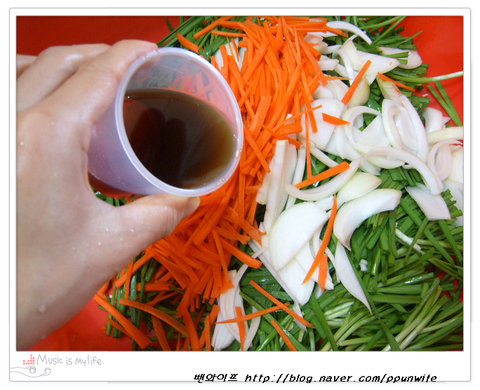
Add the anchovy fish sauce...
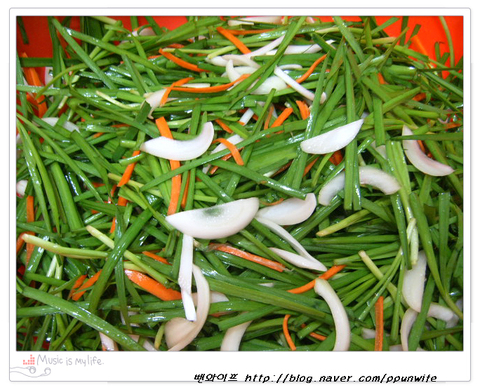
Gently mix the ingredients. I will let them salt like this for about 30 minutes.
If you make the kimchi right away, the chives are stiff, so it is better to season them once they have wilted slightly.
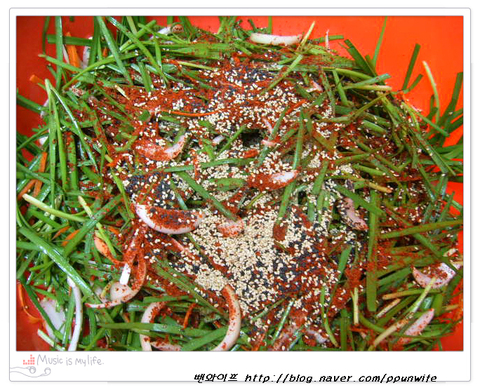
I do not use glutinous rice paste for buchu kimchi; instead, I make a rich anchovy broth and use that.
The deep flavor of anchovy fish sauce pairs wonderfully with garlic chives. When making perilla leaf kimchi, substituting anchovy broth for glutinous rice paste also keeps it clean and nice.
Add gochugaru, garlic, anchovy broth, sugar, and toasted sesame seeds to the lightly salted garlic chives, then toss gently.
When making buchu kimchi, I do not let the seasonings hydrate in advance.
They form clumps and become difficult to distribute evenly across the chives. If you rub them too long, they lose their crispness and develop a raw grassy smell.
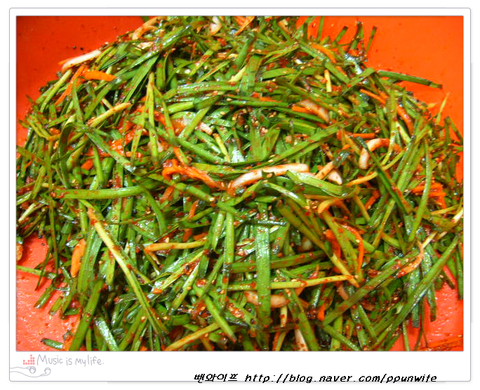
Lift gently with both hands and shake your hands as if sprinkling the garlic chives to toss them.
If you rub the garlic chives with your palms, they quickly turn mushy.
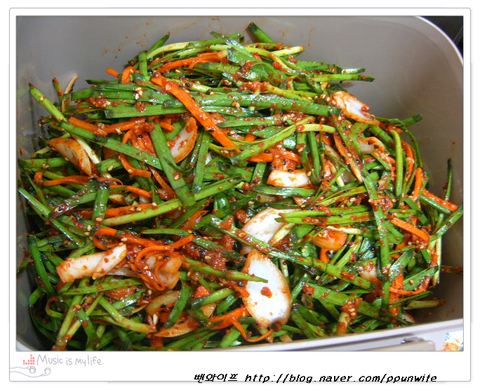
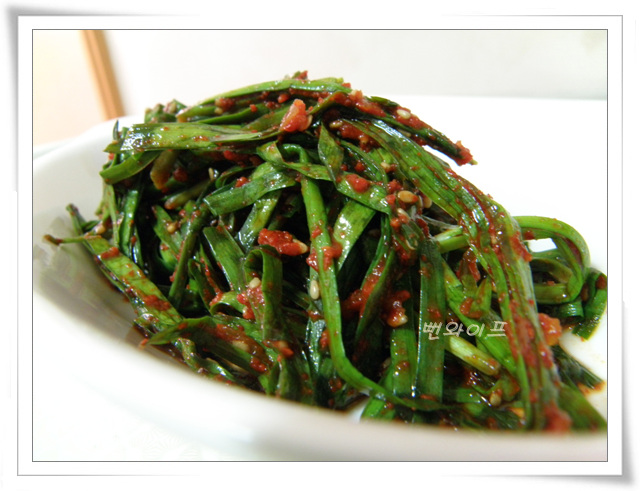
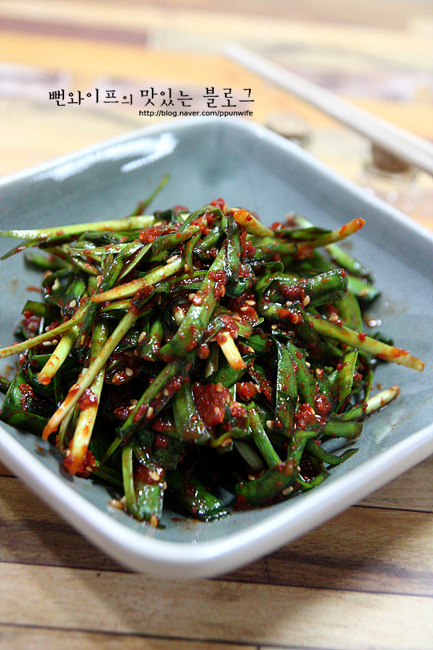
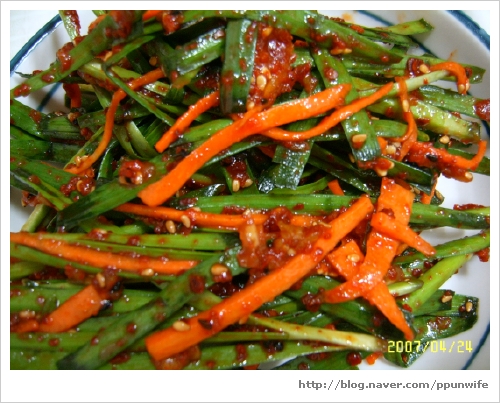
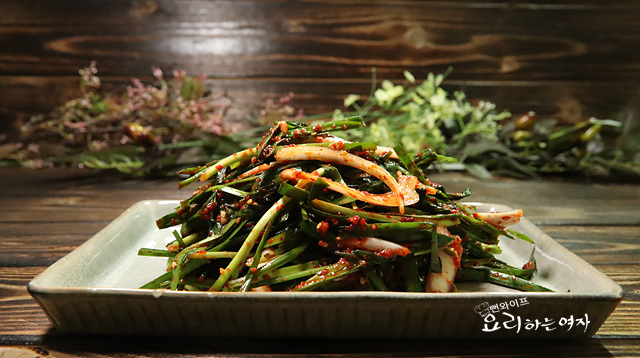
A full container of buchu kimchi is ready.
I will not have to worry about kimchi for a while.
It is also delicious when added to gomtang.
 Ppunwife's tips
- Rinsing garlic chives with friction or rubbing them while seasoning will cause a raw grassy smell.
- If you include thin garlic chives in the kimchi, they quickly lose their body and turn messy.
- When making buchu kimchi, soaking the seasoning in advance causes clumps that are hard to spread evenly, and prolonged rubbing can wilt the chives and cause a raw grassy smell.
- Rubbing garlic chives with your palms makes them turn mushy quickly, so lift them gently with both hands and toss as if scattering them.
- Buchu kimchi is also delicious when stirred into gomtang.
FAQ
Why do you use anchovy broth instead of glutinous rice paste?
Omitting the glutinous rice paste and adding richly brewed anchovy broth complements the deep savory flavor of the anchovy fish sauce and keeps the liquid clean without any heaviness.
How do you toss garlic chives without creating a raw grassy smell?
Instead of pressing down and rubbing with your palms, lift them gently with both hands and toss lightly as if scattering them so they do not wilt or turn grassy.
Are onion and carrot required?
You can leave them out according to your preference, but adding them contributes a mild sweetness and a crisp crunch.
What kind of garlic chives are best for kimchi?
Thin garlic chives wilt quickly and tend to look messy, so it is best to pick out mainly thick garlic chives when making kimchi.