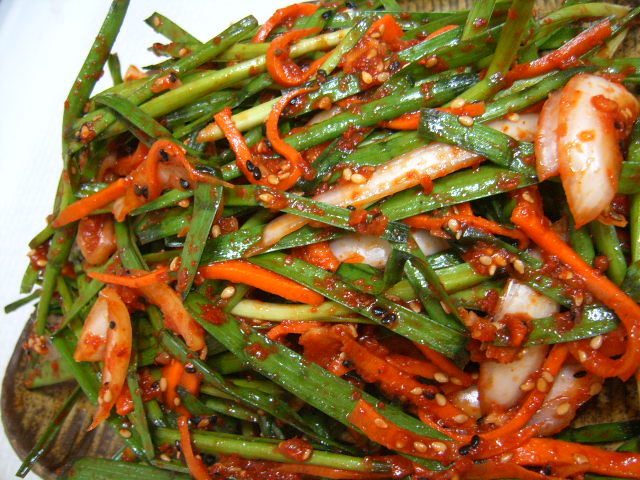
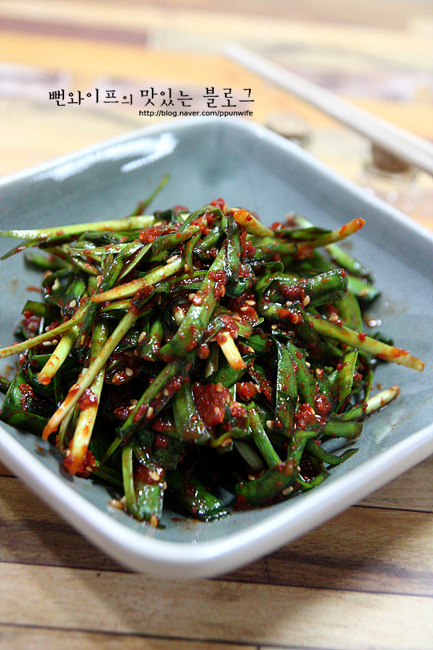
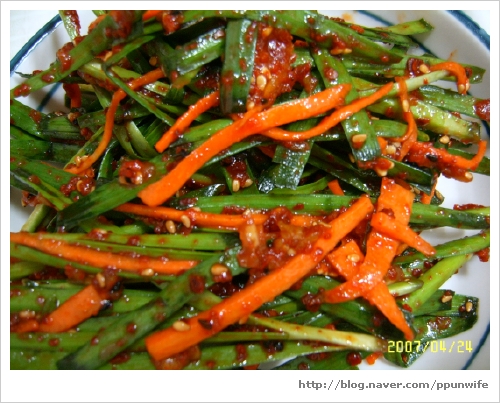
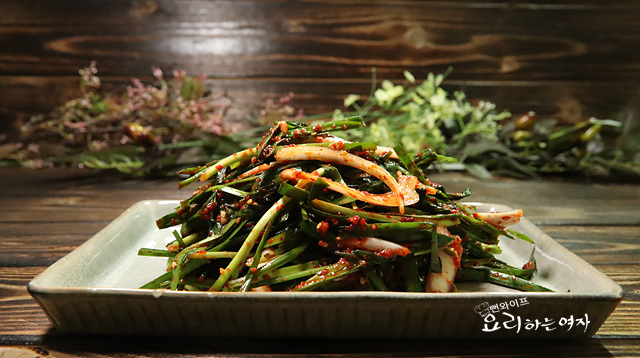
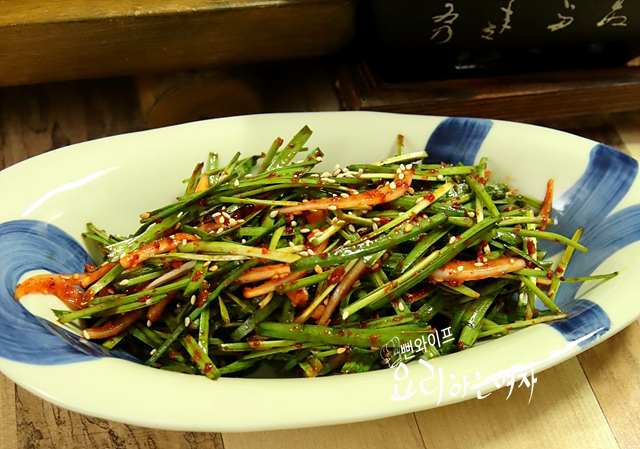
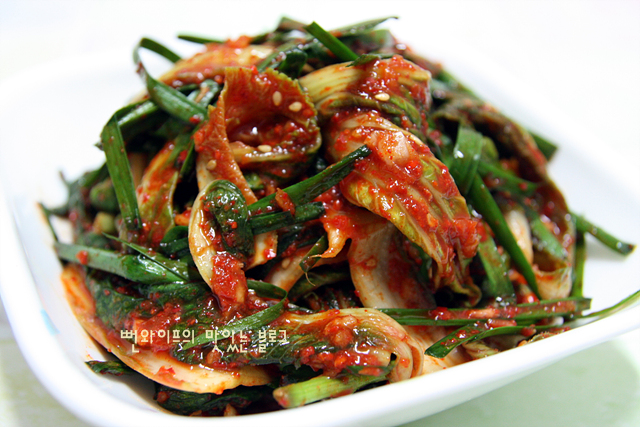
Clean Buchu Kimchi (Garlic Chive Kimchi) with Anchovy Broth
A fresh garlic chive kimchi side dish lightly tossed with anchovy broth for a clean flavor, ready to enjoy right away.
Translated from Korean by AI and not yet checked by a native speaker. Amounts and numbers are taken directly from the original recipe. Read the Korean original →
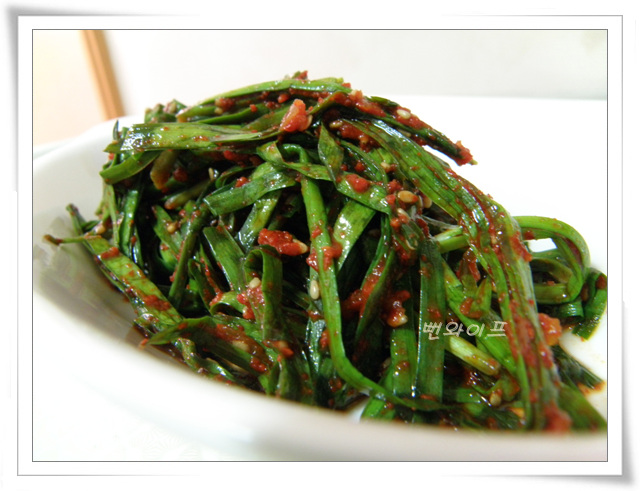
This garlic chive kimchi is seasoned simply with basic ingredients and no complicated extras. Using rich anchovy broth instead of glutinous rice paste keeps the flavor light and clean rather than heavy. To keep the garlic chives from bruising, the seasoning is not soaked ahead of time; everything is tossed together gently right away and stored in the refrigerator.
- Servings
- about 8–10 servings
- Difficulty
- Easy
- Spiciness
- Spicy
Ingredients
Ingredients
- Garlic chives (buchu)1 bunch, 1 kg
Seasoning
- Anchovy fish sauce2/3 cup
- Anchovy broth1/2 cup
- Gochugaru (Korean chili flakes)1.5 cups
- Minced garlic4 tbsp
- Sugar1.5 tbsp
- Toasted sesame seedsas needed
- 1 bundle of garlic chives sold at large supermarkets is usually around 500g, while one bundle sold at traditional markets weighs over 1kg, so if buying from a supermarket, prepare about two bundles.
Steps
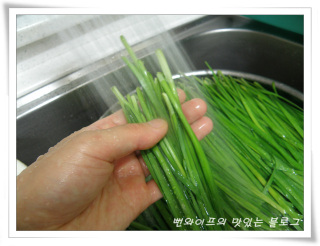
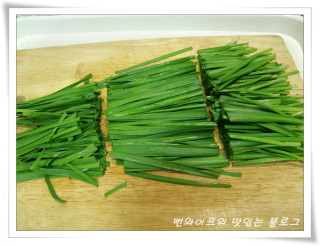
1. 1 bundle of garlic chives sold at large supermarkets usually weighs about 500g.
I always buy vegetables at traditional markets, and the weight of one bundle of garlic chives is over 1kg.
If you bought them at a supermarket, it is an amount equal to about two bundles.
Wash the cleanly trimmed garlic chives under running water.
2. Cut into 3-4 pieces...
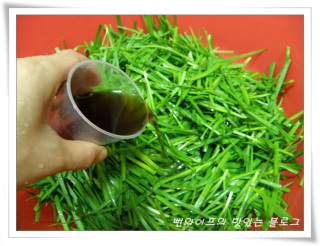
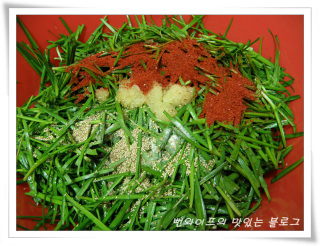
3. Place the garlic chives in a kimchi container and sprinkle the fish sauce evenly over them...
4. Add all the remaining seasoning ingredients.
For garlic chive kimchi or perilla leaf kimchi seasoning, I use rich anchovy broth instead of glutinous rice paste, which I find gives a much cleaner taste for kimchi meant to be eaten fresh without fermenting.
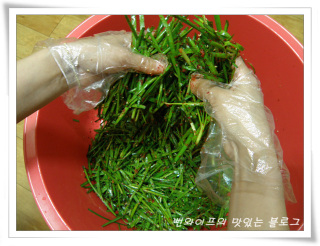
Toss gently with both hands so the seasoning coats evenly.
If you let the seasoning soak and swell in advance, the garlic chives can get bruised and mushy while coating, so for garlic chive kimchi seasoning, I always toss it immediately without soaking ahead.
 Ppunwife's tips
- Using rich anchovy broth instead of glutinous rice paste for garlic chive kimchi or perilla leaf kimchi gives a much cleaner flavor for kimchi eaten fresh.
- If you soak the seasoning in advance, the garlic chives can turn mushy while you coat them, so it is best to toss garlic chive kimchi right away without pre-soaking the seasoning.
- Garlic chives taste great fresh without fermenting, so you can store the kimchi in the refrigerator right after making it.
FAQ
Why use anchovy broth instead of glutinous rice paste?
For kimchi that is eaten fresh rather than fermented, using rich anchovy broth gives a much cleaner, lighter taste than glutinous rice paste.
Is there a reason not to let the seasoning soak in advance?
If the seasoning is soaked ahead of time, the garlic chives can easily bruise and turn mushy during tossing. Adding the seasonings directly and tossing gently prevents this.
Should it be fermented at room temperature after making?
Garlic chives taste wonderful fresh without fermentation, so you can put the kimchi straight into the refrigerator as soon as it is made.
How do I measure the amount when using supermarket garlic chives?
1 bundle sold at supermarkets is usually around 500g, so prepare about 2 bundles to match this recipe's 1kg standard.