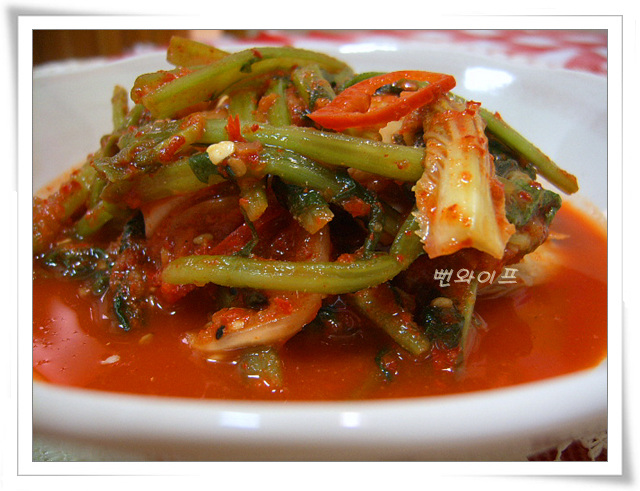
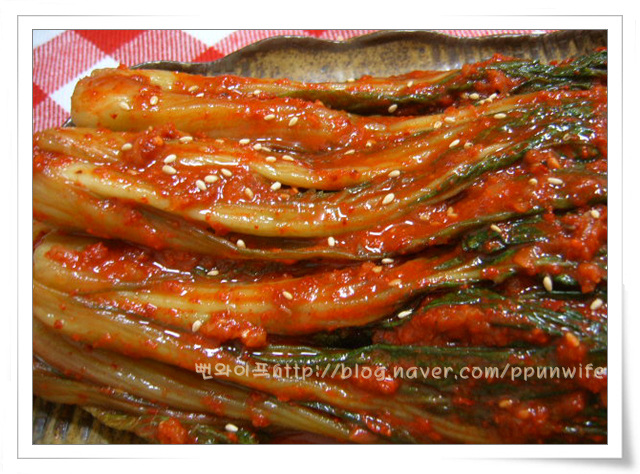
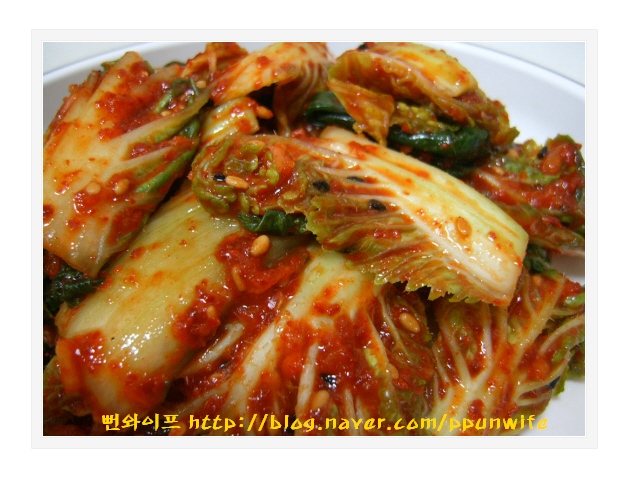
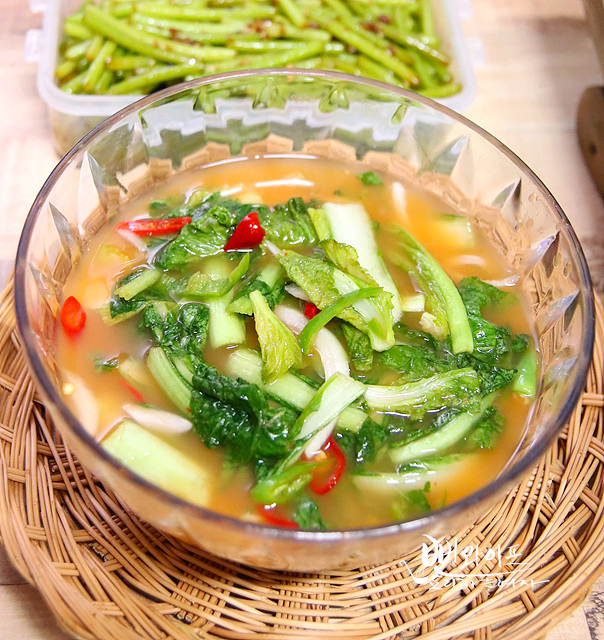
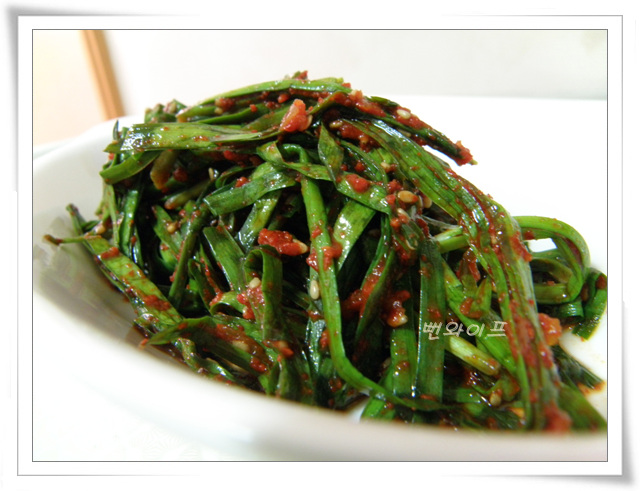
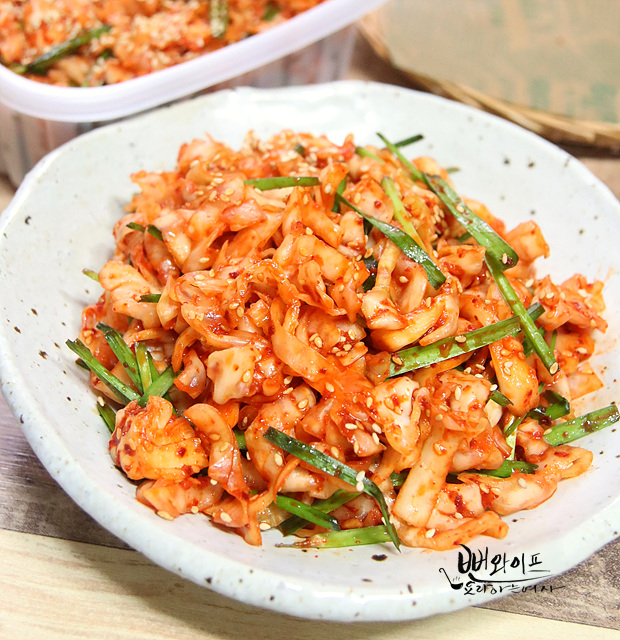
Buchu Eolgari Baechu Kimchi (Chive and Winter Cabbage Kimchi)
A summer delicacy kimchi side dish made by tossing salted eolgari cabbage with glutinous rice paste and garlic chives.
Translated from Korean by AI and not yet checked by a native speaker. Amounts and numbers are taken directly from the original recipe. Read the Korean original →
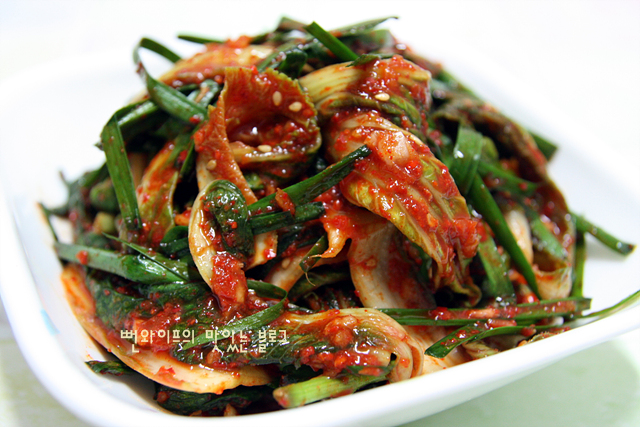
This is a crisp kimchi that is great for reviving your appetite in the summer. Salt the eolgari cabbage just until the stems bend slightly, then toss it lightly with garlic chives, glutinous rice paste, and seasonings. Mixing the seasoning ahead of time lets the gochugaru bloom properly, making the color and flavor even more harmonious.
- Servings
- about 10–12 servings
- Difficulty
- Medium
- Spiciness
- Spicy
Ingredients
Ingredients
- Eolgari cabbage1.5 bunches, 1.5 kg (one and a half bunches)
- Garlic chives (buchu)3 handfuls, 300 g (three handfuls)
- Coarse sea salt2/3 cup
Seasoning
- Glutinous rice paste2 cups
- Gochugaru (Korean chili flakes)1.5 cups (1 1/2 cups)
- Minced garlic4 tbsp
- Anchovy fish sauce (or sand lance fish sauce)2 tbsp
- Salted fermented shrimp (saeujeot)2 tbsp
- Sugar2 tbsp
- Ginger juice1 tbsp
- Toasted sesame seedsas needed
Glutinous rice paste
- Water2 cups
- Glutinous rice flour3 tbsp
- Sprinkle the cabbage with salt and let it pickle for around 1 hour 30 minutes.
- You can use scallions (jjokpa) instead of garlic chives.
Steps
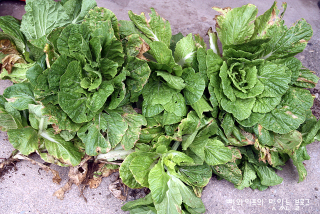
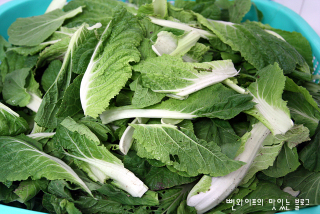
1. For store-bought eolgari cabbage, this is the amount of one bunch plus about half a bunch more.
2. Remove any withered outer leaves and trim them off leaf by leaf with a knife, almost like tapping through them.
Wash several times until the water runs clear.
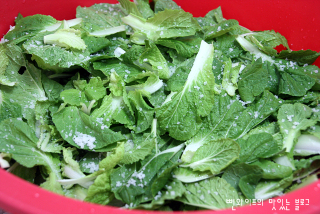
3. Lay down a layer of cabbage in a container, sprinkle salt gently, lay down another layer of cabbage, sprinkle salt...
Repeat this way, then let it pickle for around 1 hour 30 minutes.
For the pickling time, it just needs to be pickled until the cabbage stems bend slightly, so do not pickle it for too long.
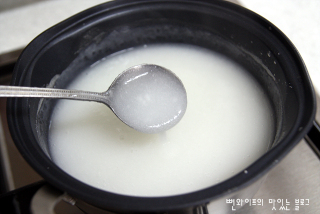
4. While the cabbage is pickling, you can make the glutinous rice paste.
Add 3 tbsp glutinous rice flour to 2 cups water and stir so lumps do not form; once it turns thick,
remove it from the heat and set the pot of glutinous rice paste in a bowl of cold water to cool.
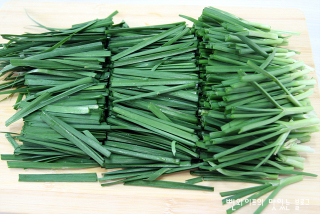
5. I brought the garlic chives from the vegetable garden, too.
Before cutting, it is an amount of about three handfuls. Trim, wash, and cut the garlic chives into 3 to 4 sections.
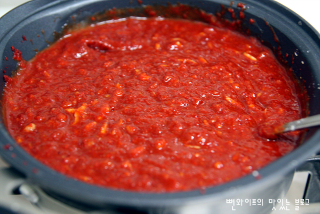
6. Once the glutinous rice paste has cooled, add all the remaining seasoning ingredients and mix.
If you make the seasoning in advance, the gochugaru blooms, the color turns vibrant, and everything dissolves and blends together well.
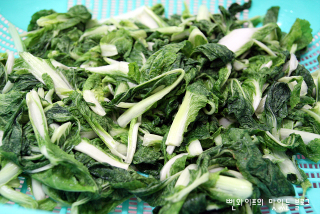
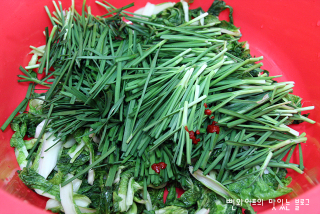
7. Rinse the pickled cabbage once or twice in water and drain it in a colander.
8. Add the cabbage and garlic chives...
10
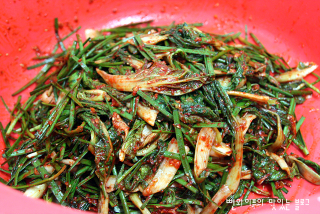
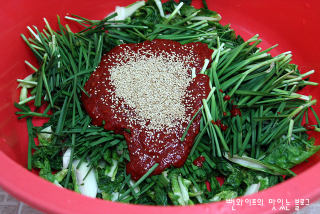
9. Add the kimchi seasoning and a suitable amount of toasted sesame seeds...
10. Toss gently so the seasoning coats evenly.
Right after making the kimchi, the garlic chives are stiff, but after two or three hours they wilt nicely so they are good to eat.
 Ppunwife's tips
- For the pickling time, it just needs to be pickled until the cabbage stems bend slightly, so do not pickle it for too long.
- If you make the seasoning in advance, the gochugaru blooms, the color turns vibrant, and everything dissolves and blends together well.
- Right after making the kimchi, the garlic chives are stiff, but after two or three hours they wilt nicely so they are good to eat.
FAQ
If I do not have garlic chives, what ingredient can I substitute?
You can also use scallions (jjokpa) instead of garlic chives to make it.
Can I use sand lance fish sauce instead of anchovy fish sauce?
Yes, you can use the same amount of whichever is convenient between anchovy fish sauce and sand lance fish sauce.
How long should eolgari cabbage be pickled?
After sprinkling with salt, pickle it for around 1 hour 30 minutes; it is ready when the stems bend slightly.
What is the benefit of mixing the kimchi seasoning in advance?
The gochugaru blooms nicely and the seasoning ingredients dissolve evenly, blending the flavors together well.