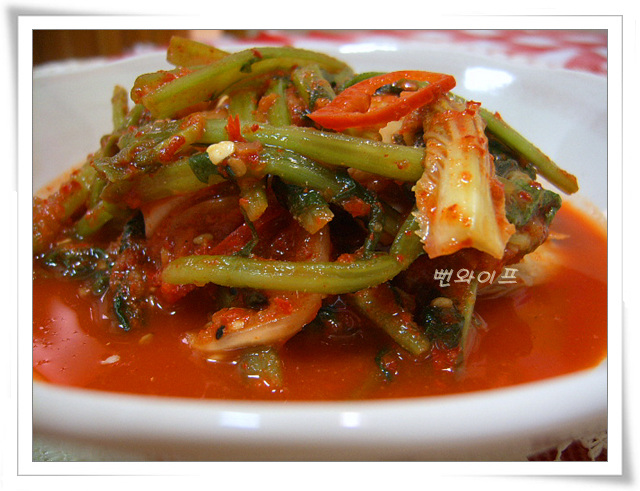
Eolgari Baechu Kimchi (Young Summer Cabbage Kimchi) with Radish Juice
A clean and refreshing side dish of whole eolgari cabbage tossed with grated radish juice and glutinous rice paste.
Translated from Korean by AI and not yet checked by a native speaker. Amounts and numbers are taken directly from the original recipe. Read the Korean original →
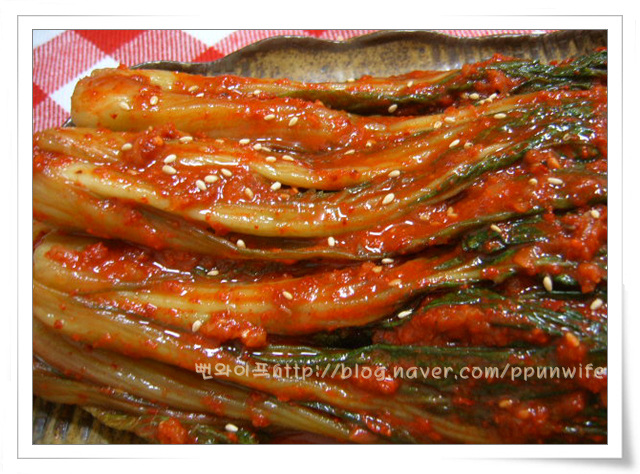
This kimchi is made by salting whole, budget-friendly eolgari cabbage, perfect for autumn. Adding clear grated radish juice to the seasoning brings out a crisp, savory taste, and using few other sub-ingredients keeps it clean and light. It is delicious eaten right after tossing or lightly fermented at room temperature.
- Servings
- about 10–12 servings
- Difficulty
- Hard
- Spiciness
- Spicy
Ingredients
Ingredients
- Eolgari cabbage6 bunches (1kg×6 kg)
Seasoning
- Glutinous rice paste6 cups
- Grated radish juice1 cup
- Gochugaru (Korean chili flakes)5 cups
- Anchovy fish sauce1/2 cup
- Salted fermented shrimp (saeujeot)1/3 cup
- Minced garlic1 cup
- Sugar2 tbsp
- Minced ginger2 tbsp
- Toasted sesame seeds
Glutinous rice paste
- Water6 cups
- Glutinous rice flour9 tbsp (2/3 cup)
- Since we are making it whole, 1 head at a time, trim only the root end so the cabbage leaves do not fall apart.
- If you do not like fish sauce, you can use only salted fermented shrimp.
Steps
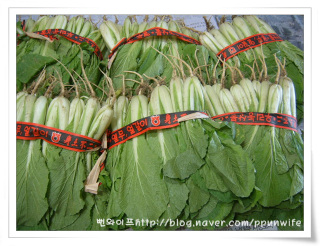
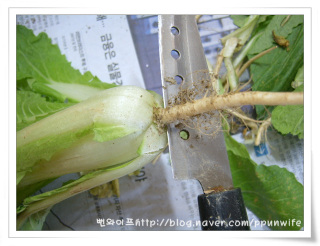
1. Here are 6 bunches of eolgari cabbage. Usually, 1 bunch weighs around 1 kg.
2. Since we are making it whole, 1 head at a time, trim only the root end so the cabbage leaves do not fall apart.
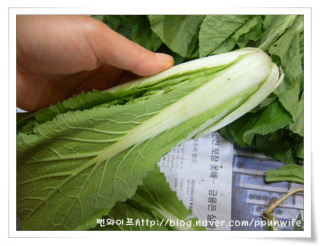
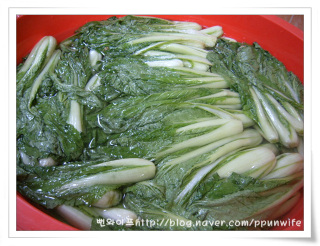
3. Remove damaged outer leaves and trim them to look like this.
Among the discarded leaves, those in good condition can be blanched and seasoned with a doenjang mixture for a delicious dish.
4. Dissolve 9 cups (1.8 L) of coarse sea salt in 36 cups (7.2 L) of water.
For 1 bunch of cabbage, the ratio is 6 cups of water to 1.5 cups of coarse sea salt.
Soak the cabbage in the dissolved salt water and salt for 1 hour to 2 hours. Flip the top and bottom during the salting process.
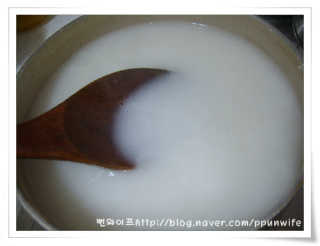
5. While the cabbage is salting, prepare the seasoning. First, cook the glutinous rice paste.
Add 9 tbsp of glutinous rice flour (approx. 2/3 cup) to 6 cups of water, dissolve well with no lumps, stir over medium heat
until thickened, and let it cool.
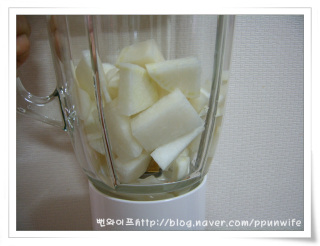
6. Grind approx. 300 g of Korean radish (1/4 of a medium-sized radish) in a blender.
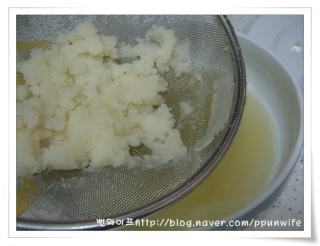
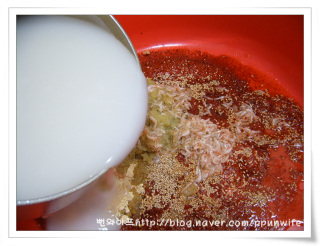
7. Strain the ground Korean radish through a fine sieve or cheesecloth to extract clear juice. It will make approx. 1 cup.
Just like adding julienned Korean radish when making whole napa cabbage kimchi, adding grated radish juice makes the kimchi taste refreshing.
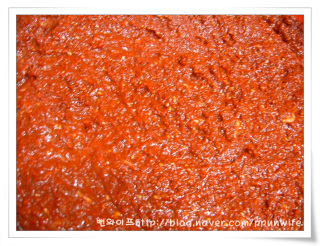
8. Add all the seasoning ingredients and mix evenly. If you do not like fish sauce, you can use only salted fermented shrimp.
10
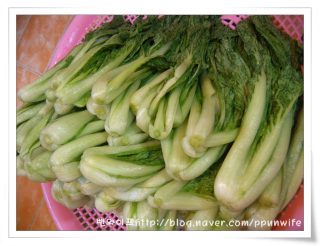
9. Let it sit so the seasoning ingredients blend well and the color of the gochugaru turns vibrant.
As time passes, the gochugaru will swell and the seasoning might become thick; you can adjust the consistency by adding rich anchovy broth.
Tear off a salted cabbage leaf and dab some seasoning on it to taste. If the seasoning is too mild, adjust with salt.
10. After 1 hour 30 minutes, if the stem bends flexibly, you can stop salting.
Rinse approx. 3 times in running water and drain for approx. 2 hours.
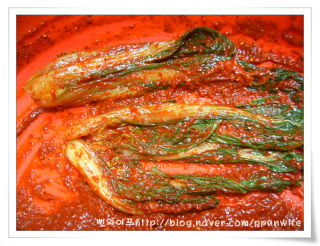
Spread the seasoning evenly over the cabbage.
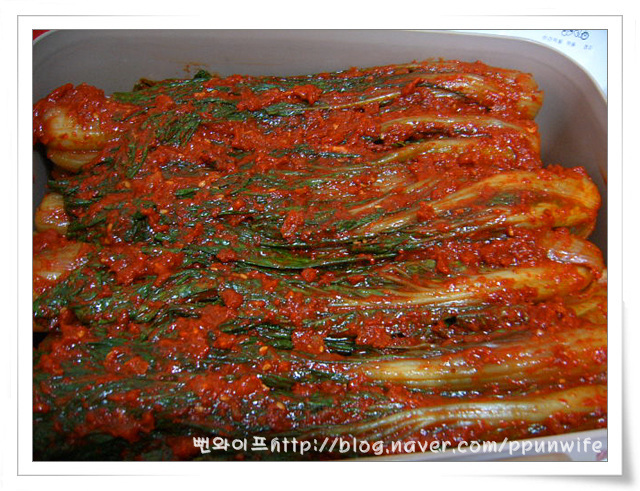
This yields about the equivalent of 3 heads of napa cabbage.
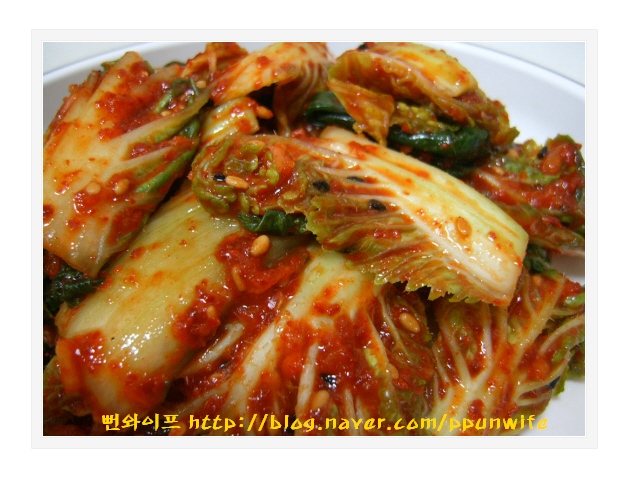
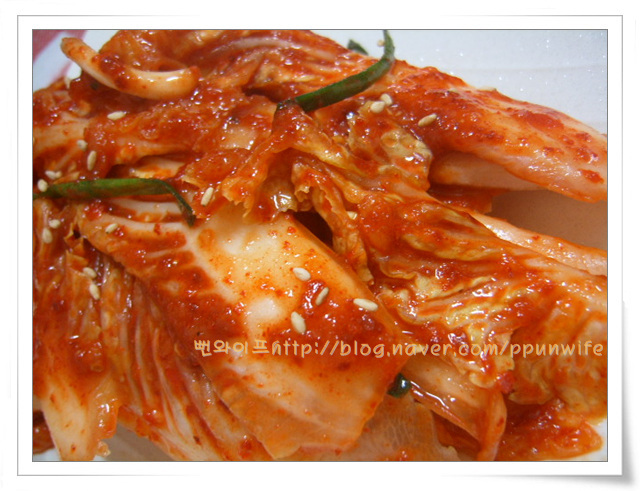
It is delicious eaten right away freshly tossed in the seasoning, and it is also delicious lightly fermented.
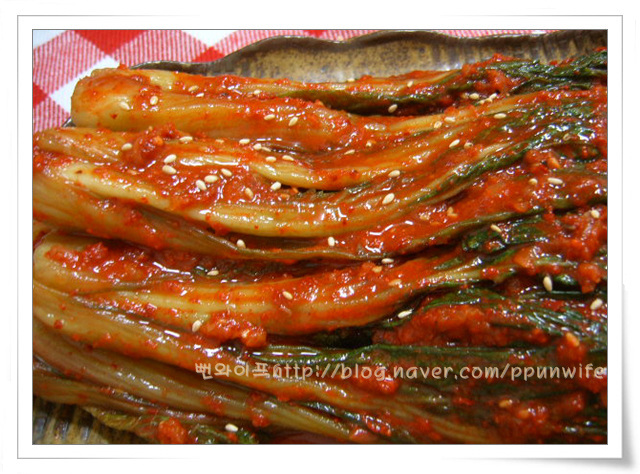
This is aged at room temperature for about a day and a half. It has developed just the right amount of moist broth.
 Ppunwife's tips
- Soak the cabbage in the dissolved salt water and salt for 1 hour to 2 hours. Flip the top and bottom during the salting process.
- Just like adding julienned Korean radish when making whole napa cabbage kimchi, adding grated radish juice makes the kimchi taste refreshing.
- As time passes, the gochugaru will swell and the seasoning might become thick; you can adjust the consistency by adding rich anchovy broth.
- Tear off a salted cabbage leaf and dab some seasoning on it to taste. If the seasoning is too mild, adjust with salt.
FAQ
Can I use only salted fermented shrimp instead of anchovy fish sauce?
If you do not care for the distinct flavor of fish sauce, you can omit the anchovy fish sauce and season it using only salted fermented shrimp.
Why is grated radish juice strained and added to the seasoning paste?
Just as julienned Korean radish is added to whole napa cabbage kimchi, mixing clear grated radish juice into the paste makes the kimchi broth and flavor much more refreshing.
How do I adjust the seasoning if it thickens too much as it sits?
When the gochugaru absorbs liquid and the paste becomes too thick, you can pour in a rich anchovy broth to smoothly adjust the consistency.
How can I tell when the cabbage is properly salted?
When you bend the stem of the eolgari cabbage soaked in salt water and it bends flexibly without snapping, it is sufficiently salted.