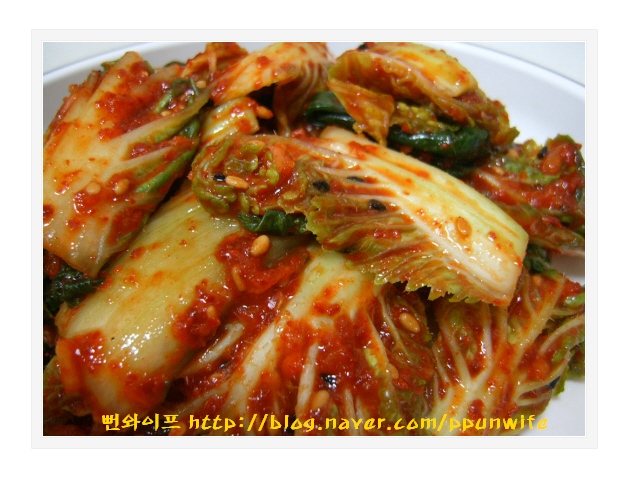
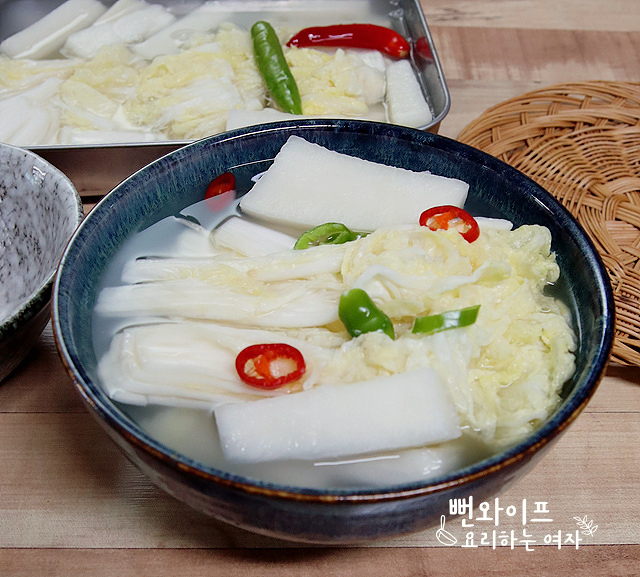
Tart, Refreshing Eolgari Mul Kimchi (Cabbage Water Kimchi)
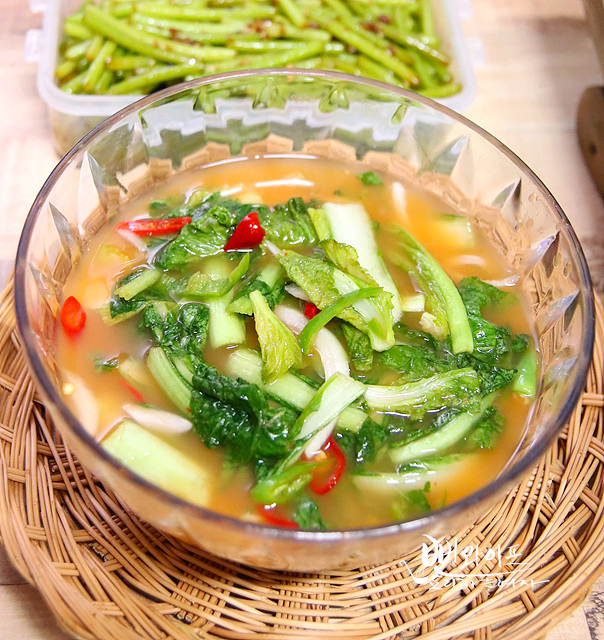
A water kimchi made by salting tender inner leaves of eolgari cabbage and radish, then pouring over a refreshing, tart broth to ferment.
Translated from Korean by AI and not yet checked by a native speaker. Amounts and numbers are taken directly from the original recipe. Read the Korean original →
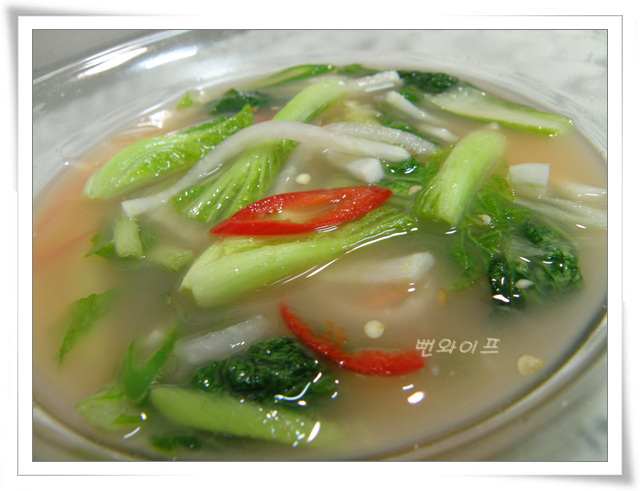
This refreshing water kimchi is made by salting tender inner leaves of eolgari cabbage along with julienned Korean radish. Korean pear, garlic, and seasonings are blended into a boiled and cooled flour paste, then strained through a sieve for a clear, clean broth. Once properly fermented, it is delicious served cold with a bundle of noodles mixed in.
- Servings
- about 10–12 servings
- Difficulty
- Hard
- Spiciness
- Mildly spicy
Ingredients
Ingredients
- Eolgari cabbage3 bunches, 1.5 kg (inner leaves only)
- Korean radish (mu)1/2, 500 g
- Green chili pepper5
- Red chili pepper5
- Large green onion (daepa)2 stalks (stems only)
For salting
- Coarse sea salt2/3 cup
Kimchi broth ingredients
- Water20 cups
- Flour1 cup
- Garlic20 cloves
- Ginger1 piece
- Red chili pepper4
- Korean pear1
- Salt4 tbsp
- Sugar1 tbsp
- One bunch usually weighs around 1 kg, but because only the tender inner leaves are used for this water kimchi, think of it as making the kimchi with 1 1/2 bunches (1.5 kg) out of 3 bunches. If you mistakenly use all 3 bunches for the water kimchi, you will run very short on sub-ingredients and broth.
- For large green onion or scallions going into water kimchi, it is best to use only the white and pale green stems, which are free of slimy sap. You can also prepare onion, or use scallions instead of large green onion.
- If you do not have a Korean pear, you can add about 1-2 tbsp more sugar to the kimchi broth instead.
- If you like young summer radish (yeolmu), you can make the water kimchi simply by swapping in young summer radish in place of the eolgari cabbage.
Steps
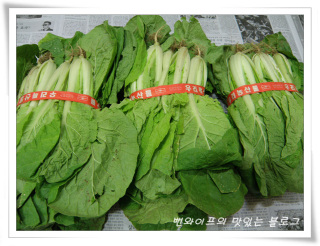
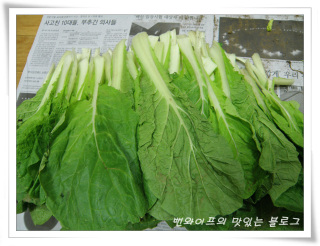
1. One bunch usually weighs around 1 kg, but because I used only the tender inner leaves for the water kimchi, think of it as making the kimchi with 1 1/2 bunches (1.5 kg) out of 3 bunches.
Please keep this in mind, because if you mistakenly use all 3 bunches for the water kimchi, you will run very short on sub-ingredients and kimchi broth ingredients.
2. I needed a lot of outer greens (ugeoji), so I pulled off plenty of the outer leaves. I plan to boil them for soup and toss them into seasoned side dishes.
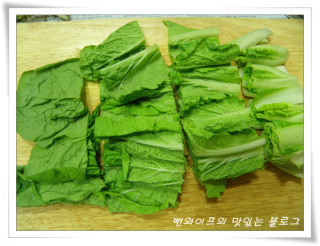
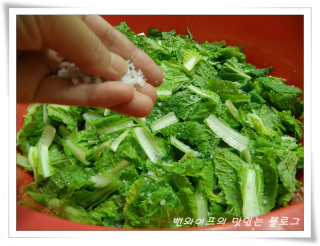
3. Cut the trimmed inner core portions into 4 lengthwise.
4. Wash thoroughly in water. You do not need to drain off all the water.
Lay down a layer of cabbage, grab about 2 tbsp of salt in your hand and sprinkle it gently over top, lay down another layer of cabbage, sprinkle more salt...
Continue sprinkling the salt in this manner.
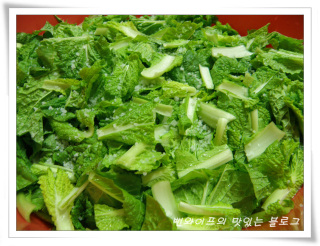
5. Salt for about 1 hour 30 minutes to 2 hours, flipping it over once halfway through.
6. While the cabbage is salting, let us prepare the sub-ingredients and kimchi broth.
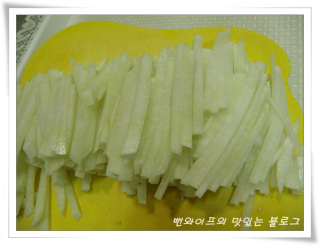
Take the Korean radish prepared alongside the cabbage and julienne it thickly. We will add it toward the end of salting the cabbage to salt it briefly together.
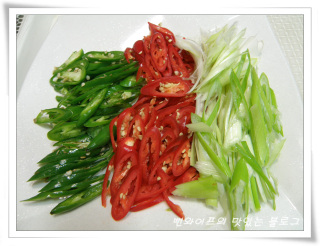
7. Slice both the chili peppers and large green onion diagonally.
For large green onion or scallions going into water kimchi, it is best to use only the stem parts that have no slimy sap.
You can also prepare onion, or substitute scallions for the large green onion.
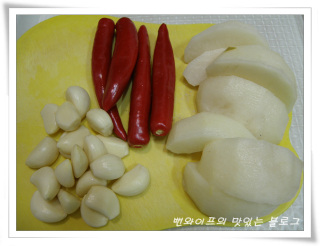
8. The kimchi broth ingredients are 1 Korean pear, 20 cloves garlic, 4 red chili peppers, and one piece ginger (about the size of a thumb).
Ginger is not pictured because I prepared it as ginger juice (2 tbsp).
If you do not have a pear, you can add about 1-2 tbsp more sugar to the kimchi broth.
10
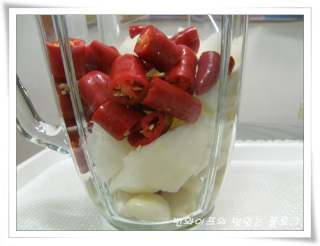
9. Place all the kimchi broth ingredients into a blender and blend thoroughly, then set aside.
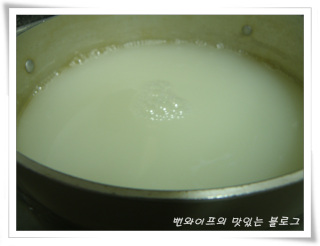
10. Dissolve flour in cold water and bring it to a rolling boil;
to prevent lumps from forming, dissolve the flour into the water through a sieve. Let it cool.
11
12
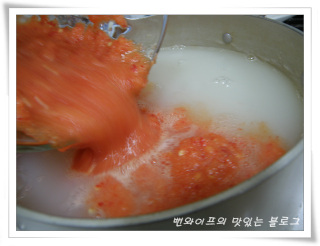
11. Add 4 tbsp salt and 1 tbsp sugar to the cooled flour paste, stir to dissolve, and pour in the blended seasoning from step 9.
To keep the broth clean, you can just pour in the liquid strained through a sieve; I strained mine through a sieve at the very end.
I omitted anchovy broth, but replacing 1/3 of the 20 cups of flour paste with anchovy broth also makes a delicious kimchi broth.
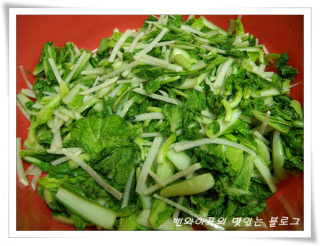
12. Add the julienned radish to the cabbage that has been salted for about 1 hour 30 minutes, mix evenly, and let salt for about 10 more minutes.
13
14
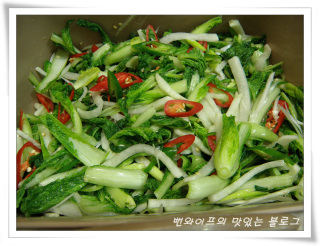
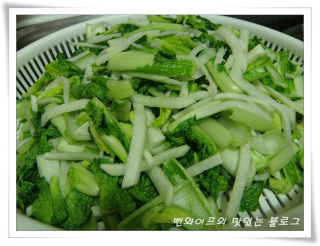
13. Rinse 1 to 2 times in water and drain.
14. Place the salted cabbage into a kimchi container along with the prepared ingredients from step 7 (green chili pepper, red chili pepper, large green onion) and mix evenly.
15
16
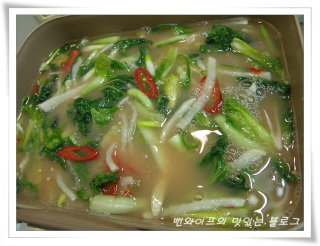
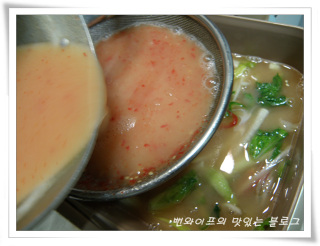
15. Pour the kimchi broth into the kimchi container through a sieve.
16. Leave at room temperature for one or two days, and once it develops a pleasantly tart taste, place it in the refrigerator.
 Ppunwife's tips
- For large green onion or scallions going into water kimchi, it is best to use only the stem parts that have no slimy sap.
- To prevent lumps from forming, dissolve the flour into the water through a sieve.
- Replacing 1/3 of the 20 cups of flour paste with anchovy broth also makes a delicious kimchi broth.
FAQ
Do I use all the leaves of the eolgari cabbage?
It is best to strip off the tough outer leaves to save for outer greens (ugeoji) and make the kimchi mainly with the tender, soft inner leaves.
What should I do if I do not have a pear for the broth seasoning?
Instead of the pear, you can add about 1 to 2 tbsp more sugar to the kimchi broth to adjust the sweetness.
Can I use other vegetables instead of large green onion?
You can use scallions or onion instead of large green onion; when using scallions or green onion, it is cleanest to use mainly the stems, which do not have slimy sap.
When should I put the prepared kimchi in the refrigerator?
Leave it at room temperature for one or two days, and once a pleasantly tart aroma and flavor have developed, store it in the refrigerator.