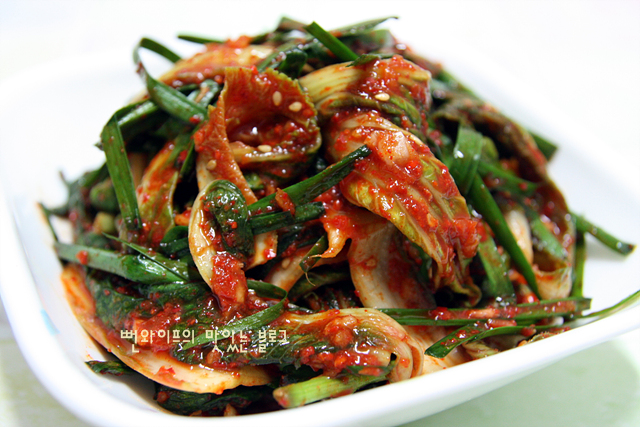
Eolgari Baechu Mulkimchi (Young Cabbage Water Kimchi)
A refreshing summer young cabbage water kimchi made conveniently by blending cold cooked rice instead of cooking glutinous rice paste.
Translated from Korean by AI and not yet checked by a native speaker. Amounts and numbers are taken directly from the original recipe. Read the Korean original →
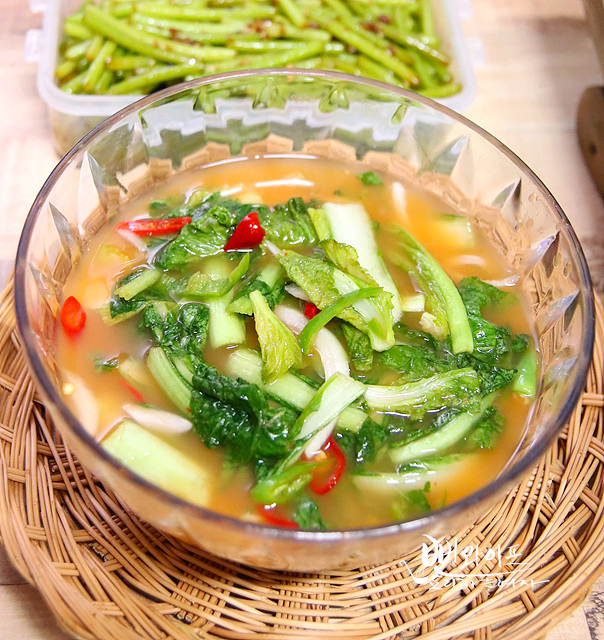
This summer kimchi skips the hassle of cooking glutinous rice paste by blending cold cooked rice and aromatics directly into the broth. Tender eolgari cabbage salted for about 1 hour is combined with anchovy broth for a crisp, deeply savory flavor.
- Servings
- about 10–12 servings
- Difficulty
- Medium
- Spiciness
- Mildly spicy
Ingredients
Ingredients
- Eolgari cabbage3 bunches, 2.5 kg (after cleaning)
- Red chili pepper4
- Cheongyang chili pepper (hot green chili) (or green chili pepper)3–4
- Onion1 (large)
- Coarse sea salt1 cup
Kimchi broth
- Cold cooked rice1 bowl
- Anchovy broth20 cups
- Bottled water10 cups
- Red chili pepper5
- Peeled garlic20 cloves
- Ginger1 piece (about half the size of a thumb)
- Salted fermented shrimp (saeujeot)4 tbsp
- Coarse sea salt3 tbsp
- Sugar2 tbsp
- Green plum syrup (maesil-cheong)3 tbsp
- Flip the cabbage once halfway through and salt it within 1 hour until the stems soften.
- When young summer radish is good, you can make this using half young summer radish and half eolgari cabbage.
- The red chili pepper for garnish was included for color, but you can substitute carrot or bell pepper.
- If you have minced garlic instead of peeled garlic cloves, you can add 2/3 cup to the blender and blend it together.
Steps
Prepare the ingredients
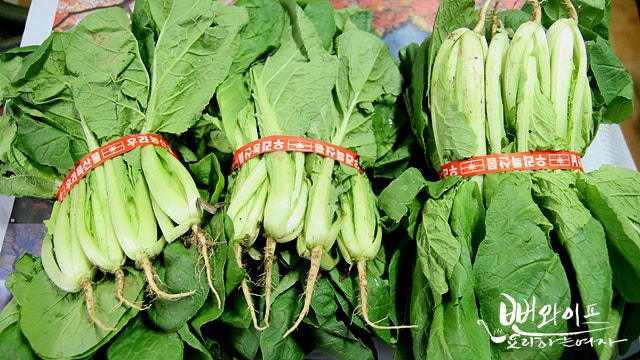
Here are 3 bunches of eolgari cabbage.
The young summer radish was large and tough so I only prepared cabbage, but when young summer radish looks good you can use half and half.
Trim the cabbage
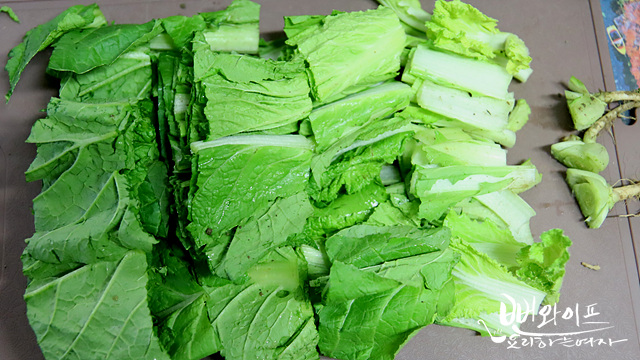
Remove any soft or wilted outer leaves from the cabbage and cut off the roots.
Cut into bite-sized lengths of 4 to 5 pieces, and collect the leafy tips separately to use in doenjang soup and other dishes.
Wash
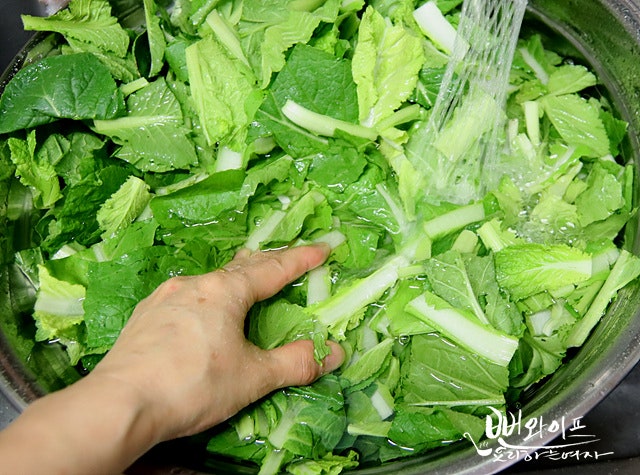
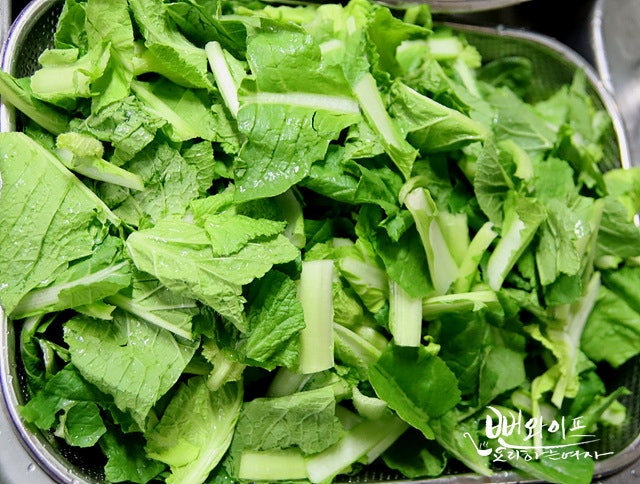
The cabbage has a lot of dirt clinging to it, so if you pour in enough water to submerge it and let it sit briefly, a lot of the dirt will drop to the bottom.
Now shake it gently while washing until no dirt is visible.
Salt
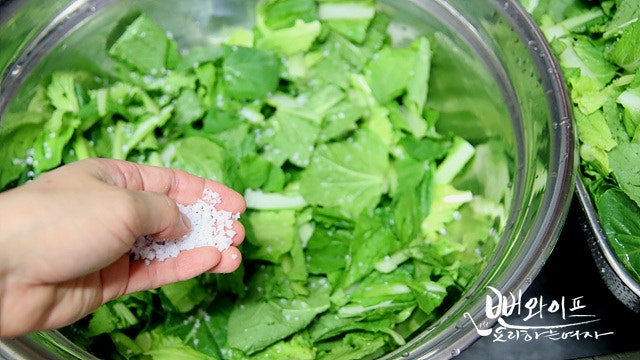
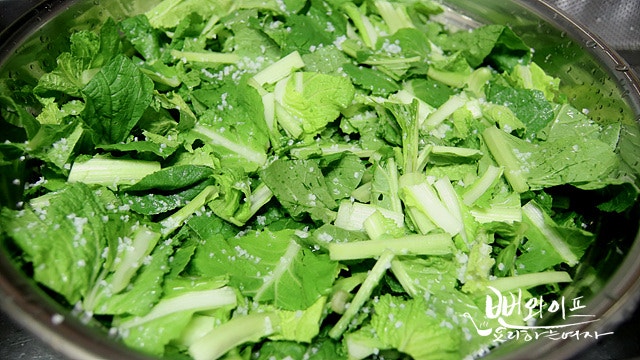
Grab coarse sea salt in your hand and sprinkle it evenly over the cabbage, salting it in layers.
It salts well when there is an adequate amount of moisture, so it is best to salt it right away after washing when it retains the most moisture.
Salt it within 1 hour.
While the cabbage is salting, slice the supplementary ingredients and prepare the broth.
Slice the garnish ingredients
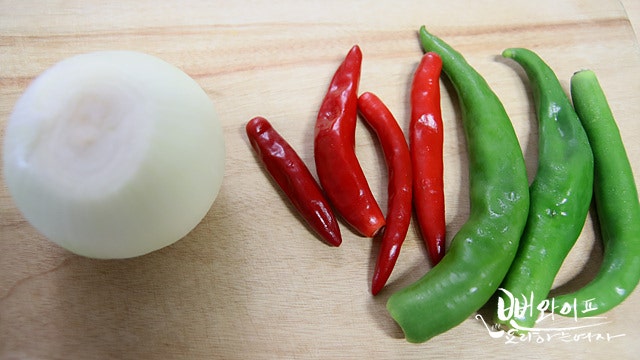
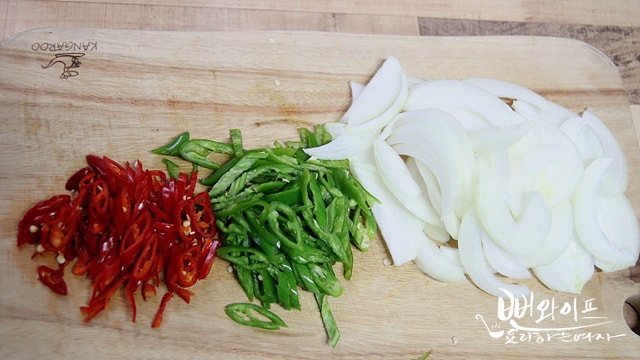
Thinly julienne the onion, green chili pepper, and red chili pepper to be used as garnish for the water kimchi.
The red chili pepper was included for color, but you can substitute carrot or bell pepper.
Make the kimchi broth
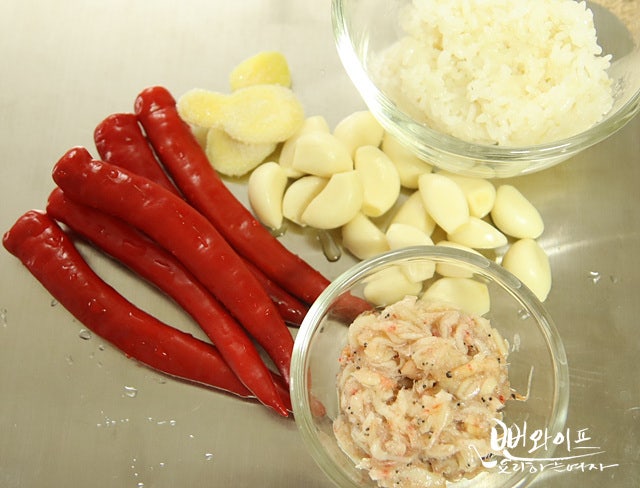
These are the seasoning ingredients to blend for the kimchi broth: red chili pepper, garlic, ginger, salted fermented shrimp (saeujeot), and cold cooked rice.
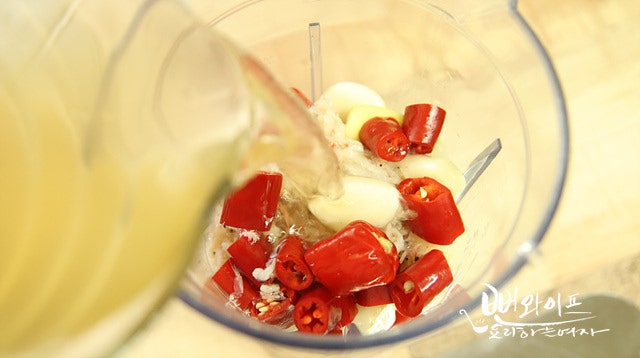
Pour in some of the anchovy broth or bottled water meant for the kimchi broth and blend finely.
Cut the chilies so they blend well before adding them. If you have minced garlic instead of peeled garlic cloves, you can add 2/3 cup to the blender and blend it together.

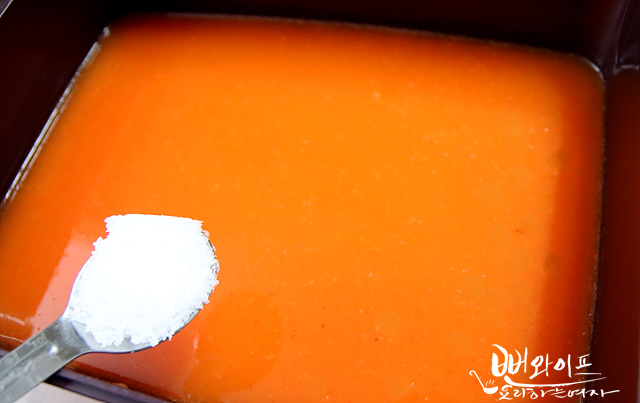
Pour the anchovy broth and bottled water into a kimchi container, then pour in the blended seasoning.
To avoid any gritty texture when chewing, straining the seasoning solids through a sieve once keeps the broth clean.
Add the salt, sugar, and green plum syrup (maesil-cheong), and stir to dissolve.
Once the kimchi broth is prepared, you are almost done.
Mix together
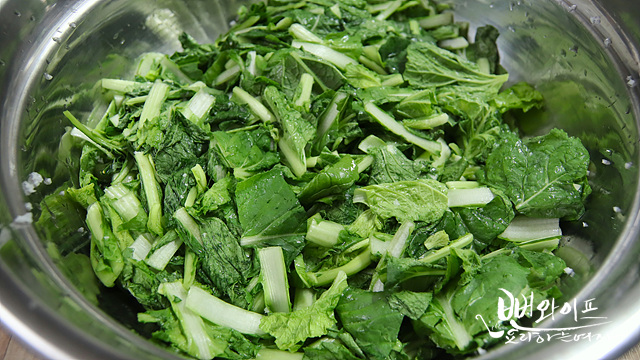
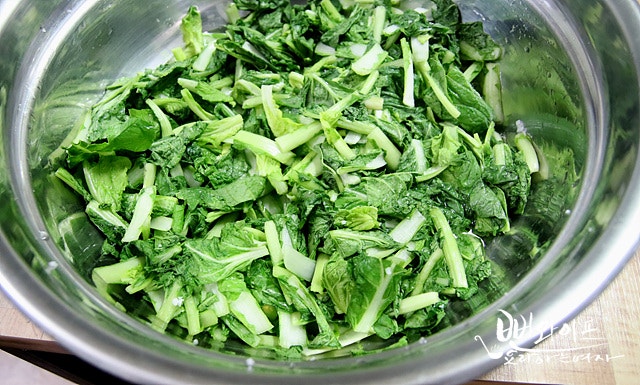
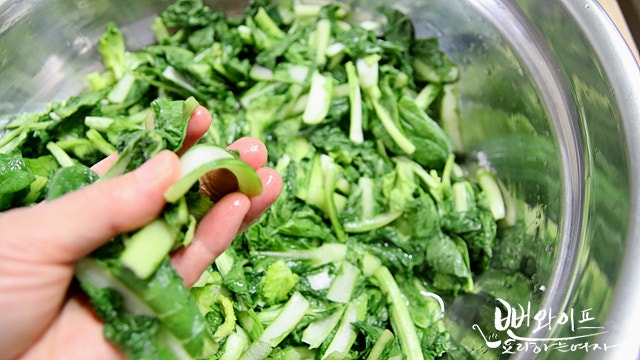
I turned the cabbage over once halfway through and salted it for 1 hour so the stem portions became tender.
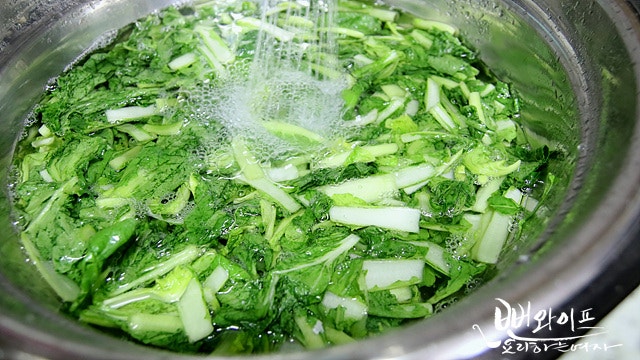
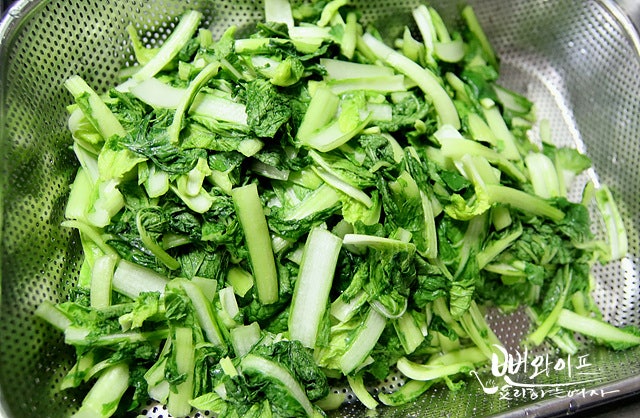
Rinse the salted cabbage once in water and drain it in a colander to remove moisture.
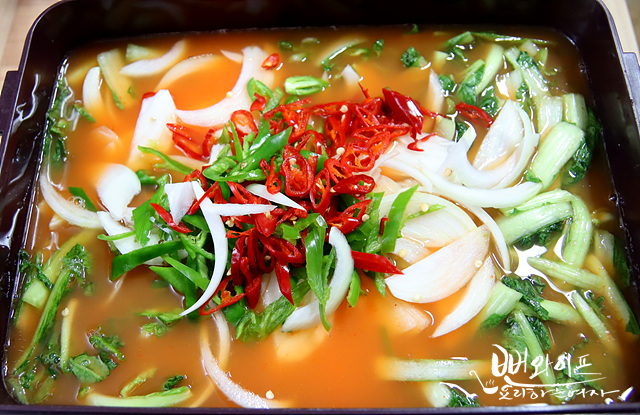
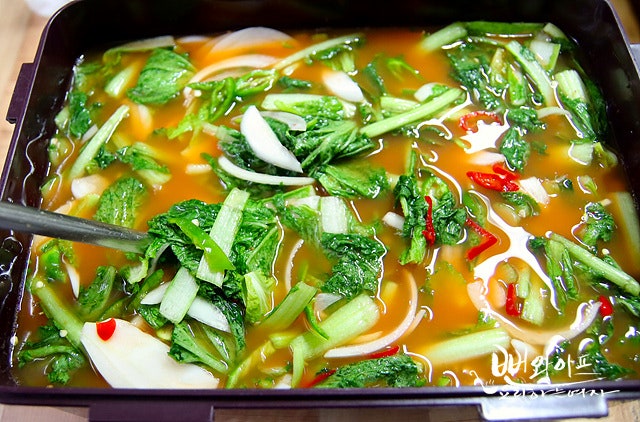
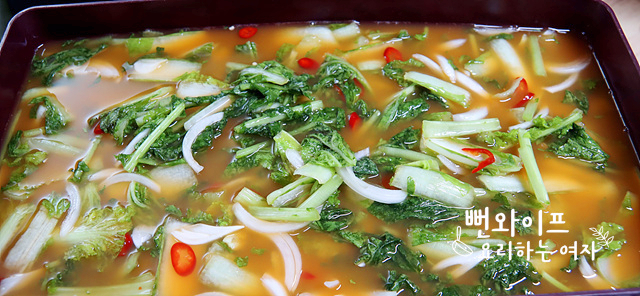
Add the salted cabbage, sliced onion, and chilies to the kimchi broth and mix together.
Now taste it again and add more seasoning if it lacks flavor, or add bottled water to adjust if it is too salty.
If the young summer radish or cabbage was salted heavily, adjust the broth to be mild; in the opposite case, make the broth slightly saltier to balance it.
Finish
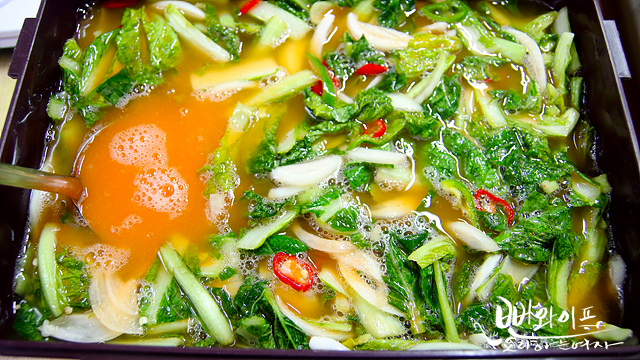
I made this in the evening, kept it in a cool place, and opened the lid the next morning.
In hot summer weather like these days, bubbles form and it ferments even overnight.
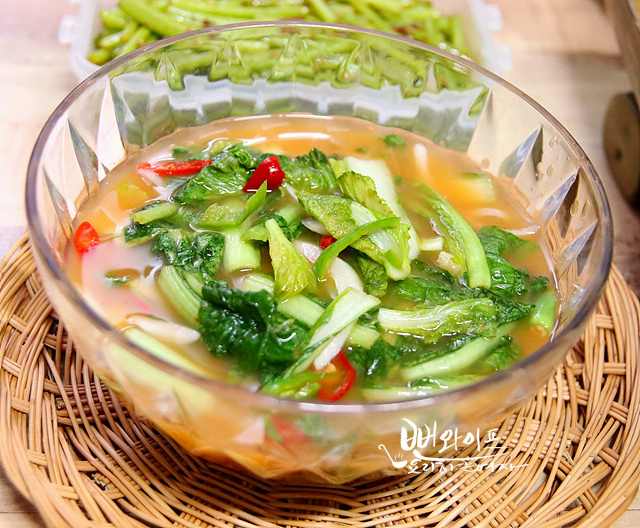
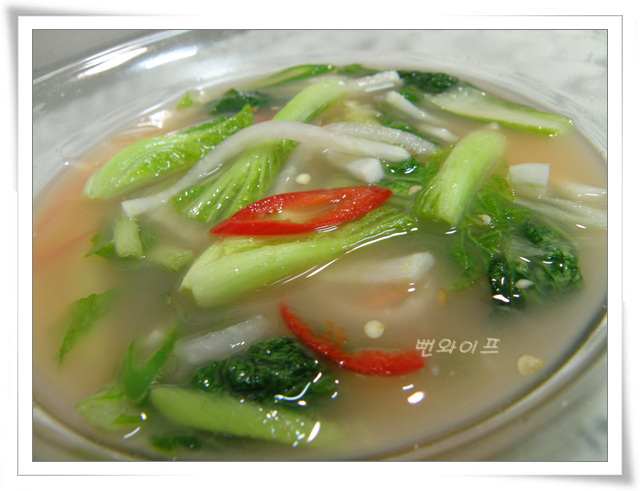
Keep it cool in the refrigerator for about two days and enjoy.
People usually make water kimchi or kimchi using only young summer radish (yeolmu) or half and half.
While its crispness does not quite match young summer radish, soft and savory eolgari cabbage also goes very well in water kimchi.
 Ppunwife's tips
- It salts well when there is an adequate amount of moisture, so it is best to salt it right away after washing when it retains the most moisture.
- To avoid any gritty texture when chewing, straining the seasoning solids through a sieve once keeps the broth clean.
- If the young summer radish or cabbage was salted heavily, adjust the broth to be mild; in the opposite case, make the broth slightly saltier to balance it.
FAQ
Is it okay to use cold cooked rice instead of boiling glutinous rice paste separately?
Even without turning on the stove, blending cold cooked rice finely with the seasoning ingredients makes a thoroughly delicious water kimchi broth.
Can I use other vegetables instead of the red chili pepper added as garnish?
Since it is an ingredient added for color, you can substitute julienned carrot or bell pepper for the red chili pepper.
Can I add minced garlic instead of peeled garlic cloves?
If you do not have whole garlic cloves, you can add 2/3 cup of minced garlic to the blender and blend it together.
Can I mix in young summer radish with the eolgari cabbage?
If you have good-quality young summer radish, you can make this by mixing it half and half with eolgari cabbage.