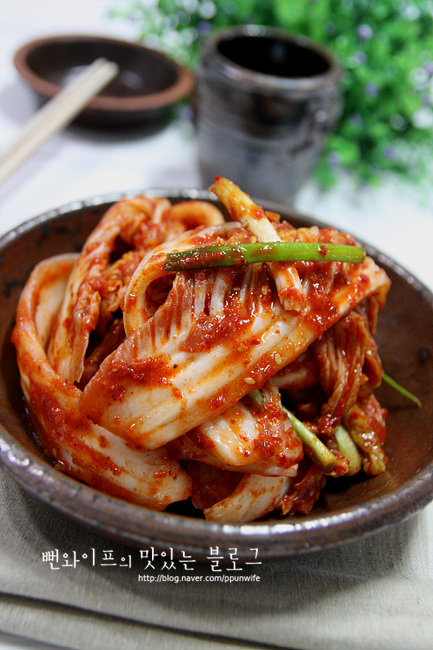
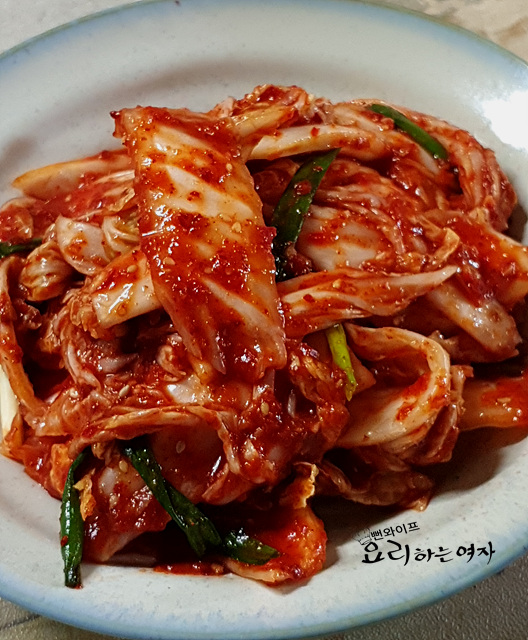
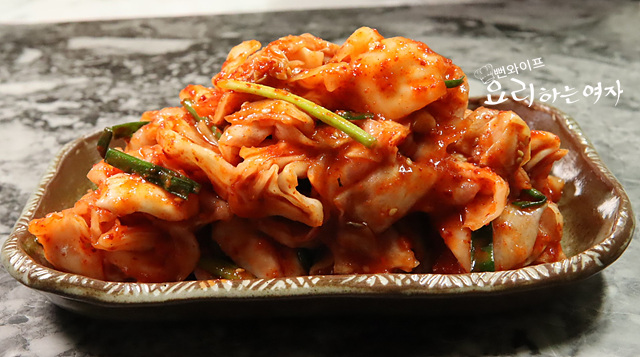
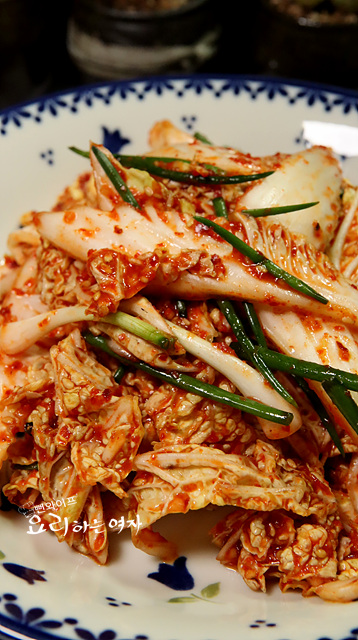
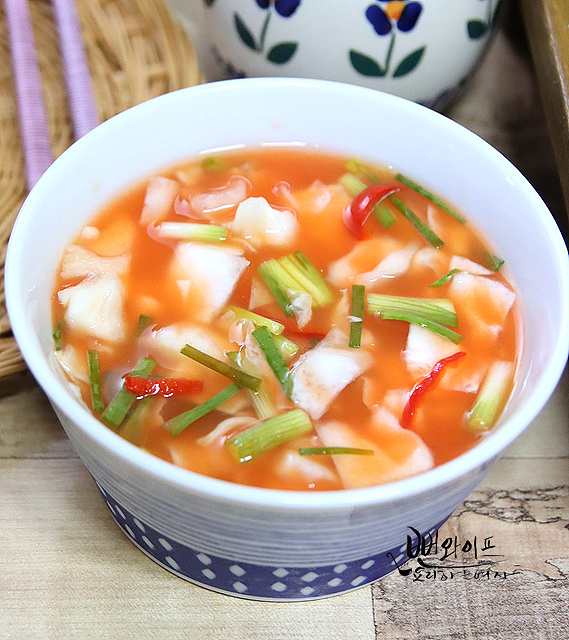
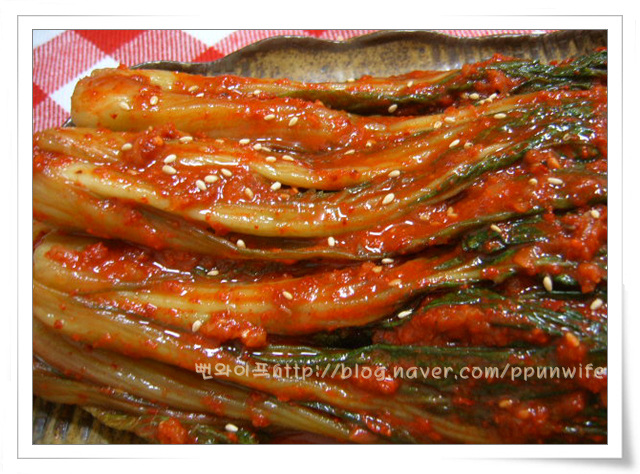
Crisp and Spicy Autumn Baechu Geotjeori (Fresh Cabbage Kimchi)
A crisp, refreshing autumn baechu geotjeori tossed with freshly ground red chili peppers and sweet fruit and vegetable juices.
Translated from Korean by AI and not yet checked by a native speaker. Amounts and numbers are taken directly from the original recipe. Read the Korean original →
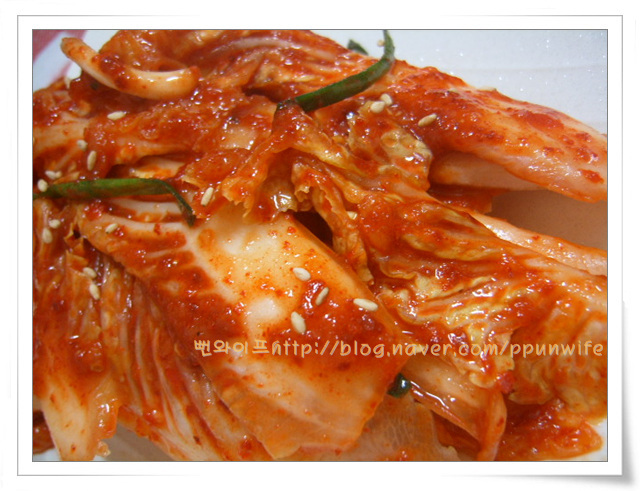
This fresh kimchi lightly salts autumn napa cabbage to highlight its naturally crisp texture. Pureed red chili peppers combined with fresh radish and pear juices give it a clean, spicy savoriness. It pairs wonderfully with freshly steamed rice as well as noodle dishes.
- Servings
- about 8–10 servings
- Difficulty
- Medium
- Spiciness
- Spicy
Ingredients
Ingredients
- Napa cabbage1 head, 2 kg
- Scallions (jjokpa)25 stalks
Seasoning
- Glutinous rice paste3 cups
- Gochugaru (Korean chili flakes)1 1/2 cups
- Red chili pepper5 (ground)
- Grated radish juice1/3 cup
- Pear juice1/2 cup
- Anchovy fish sauce (or sand lance)3 tbsp
- Salted fermented shrimp (saeujeot)2 tbsp
- Sugar3 tbsp
- Minced garlic6 tbsp (1/2 cup)
- Minced ginger0.5 tbsp
Glutinous rice paste
- Water3 cups
- Glutinous rice flour5 tbsp
Cabbage Brining Water
- Water30 cups (6 L)
- Coarse sea salt6 cups
- Submerge the cabbage leaves in the saltwater and let brine for 1 hour 30 minutes to 2 hours.
- Tear away the dark green outer leaves and separate the rest leaf by leaf with your hands. Boil those outer leaves thoroughly to use in soups or seasoned side dishes.
- You can also make anchovy broth to mix in along with the radish and pear juices for the seasoning.
- You can also slice 1 large green onion diagonally and toss it in.
Steps
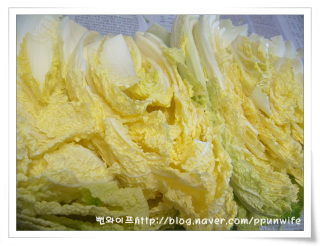
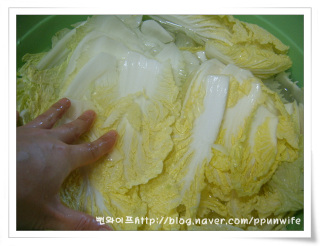
1. Autumn napa cabbage packed tight with leaves is in season. It weighs over 2 kg, so I took off the dark green outer leaves.
Separate the inner leaves one by one by hand.
Boil the tough outer leaves thoroughly to use in soups or seasoned vegetable dishes.
2. In a large bowl, dissolve 6 cups coarse sea salt in 30 cups water (6 L), add the cabbage leaves, and let brine for 1 hour 30 minutes to 2 hours.
Turn the leaves upside down halfway through so they salt evenly.
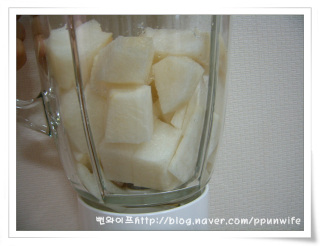
3. Grate 1 piece Korean radish (200 g) and 1/2 pear, then strain them to collect the clear juice. You should get about 1 cup of juice.
You can also brew anchovy broth to combine with the radish and pear juices for the seasoning.
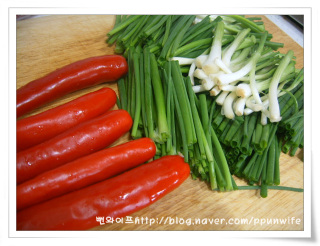
4. Cut the scallions into 4–5 cm lengths.
I also added red chili peppers to the seasoning for a prettier color and a sharper kick (you can omit them).
Finely grind 5 red chili peppers in a blender.
You can also slice 1 large green onion diagonally and add it in.
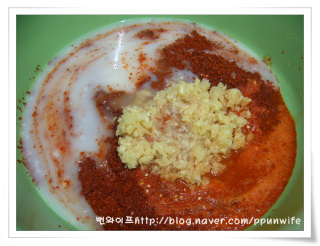
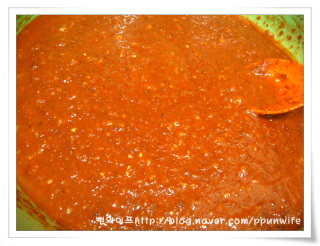
5. Add all seasoning ingredients together and mix well.
6. Let the paste rest for at least 30 minutes so the gochugaru blooms and develops a richer color.
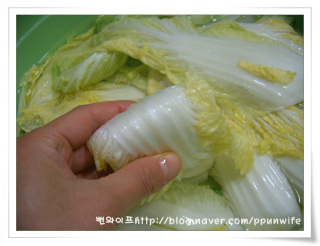
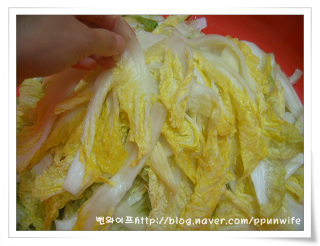
7. It has been 1 hour 30 minutes, and the cabbage looks just right. It is ready when the thick stems bend gently without snapping.
Because geotjeori should stay crisper than regular kimchi, it is fine if the ribs still feel slightly stiff, so do not brine them for too long.
8. Drain the brined cabbage well and tear it into thick strips by hand. Tearing it by hand gives a much nicer texture than neat knife cuts.
10
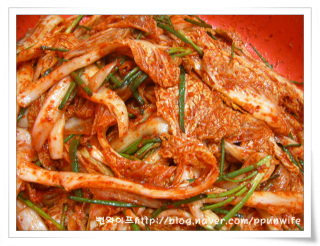
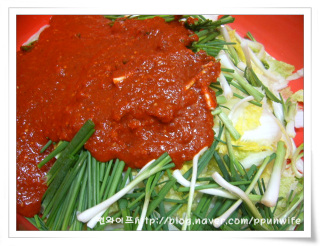
9. Add the cabbage, scallions, and prepared seasoning...
Adjust the amount of fish sauce and sugar to your liking.
10. Gently toss so the cabbage is evenly coated with seasoning. Taste it, and if it is too mild, season with salt.
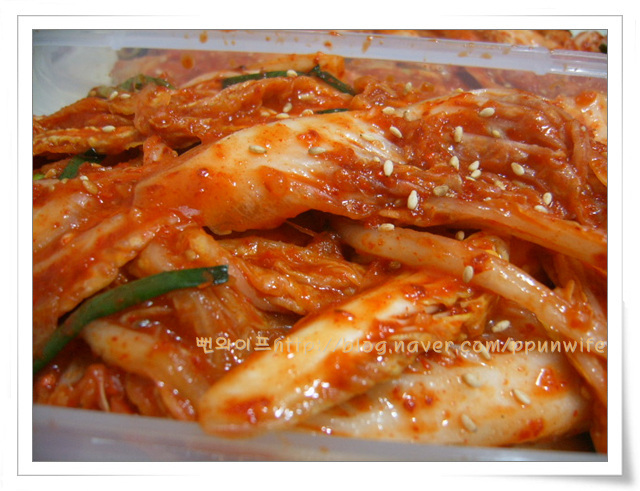
Pack into a kimchi container and press down firmly.
 Ppunwife's tips
- Geotjeori should be crisper than ordinary cabbage kimchi, so do not over-salt it even if the thick stems still feel slightly stiff.
- Drain the brined cabbage thoroughly and tear it lengthwise into thick strips with your hands. It tastes much better than cleanly cutting it with a knife.
- Let the seasoning sit for at least 30 minutes so the chili flakes bloom and deepen in color.
FAQ
How long should I brine the cabbage?
Brine the cabbage leaves just until they bend without breaking. To keep the signature crispness of geotjeori, do not over-brine even if the white stems still feel slightly firm.
Are the fresh red chili peppers necessary in the seasoning?
The ground red chili peppers are added for vibrant color and a clean, spicy kick, but you can feel free to leave them out if you prefer.
How can I use the leftover dark outer leaves?
Tear off the tough, dark green outer leaves and boil them until soft; you can then use them in hearty soups or seasoned banchan.
Can I add other ingredients besides scallions?
You can diagonally slice 1 large green onion and toss it in together with the scallions.