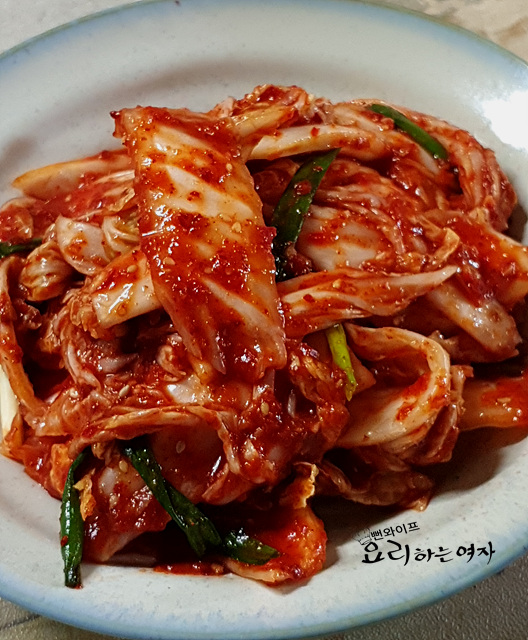
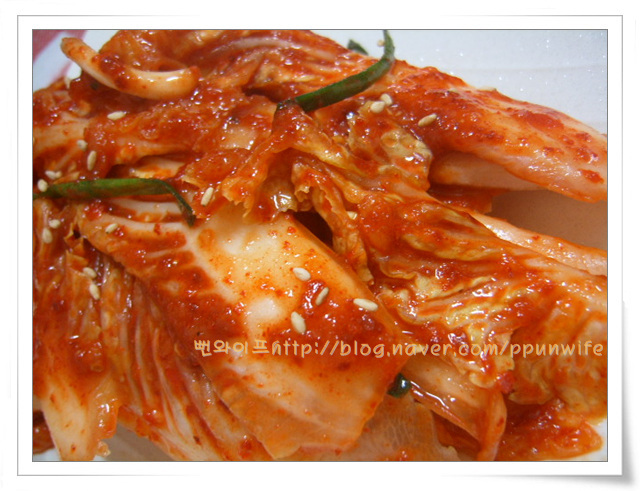
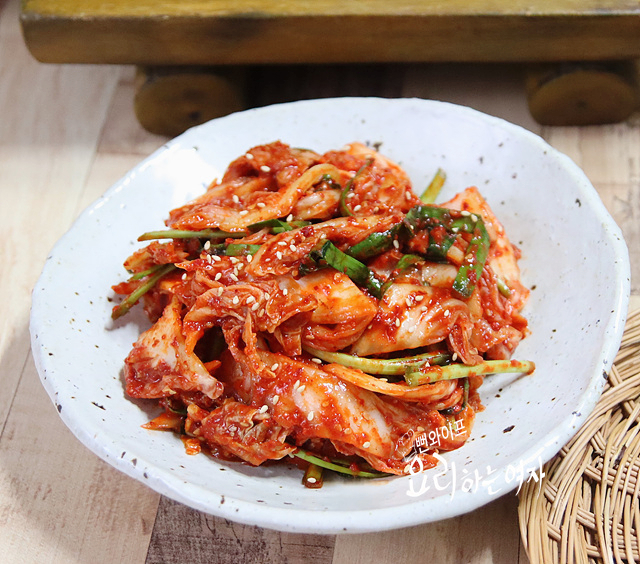
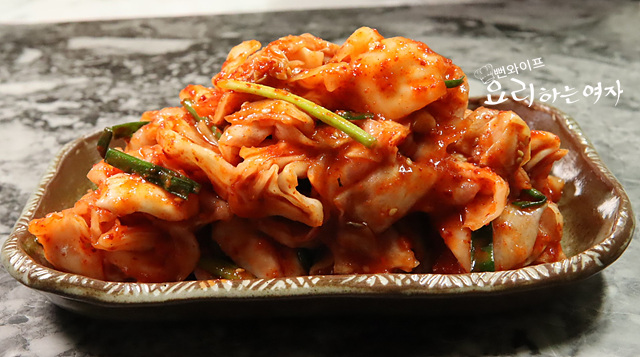
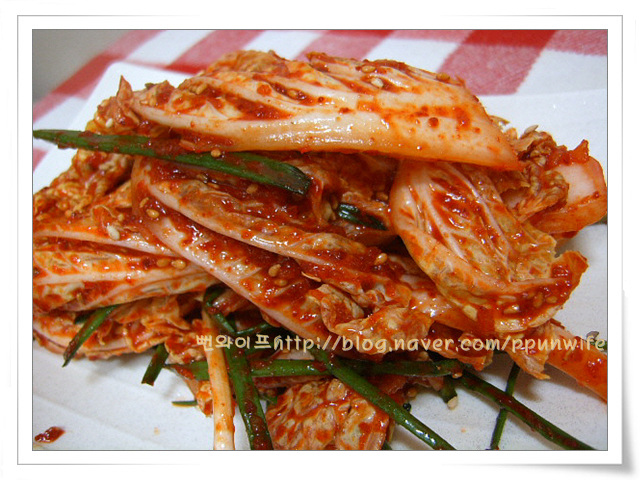
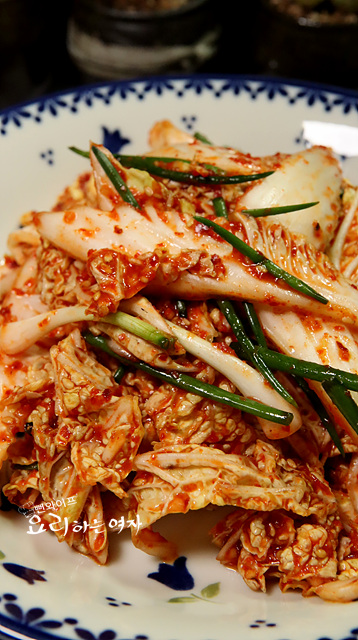
Crisp and Refreshing Baechu Geotjeori (Fresh Cabbage Kimchi)
A crisp, fresh geotjeori kimchi made by salting napa cabbage hearts and tossing them in a seasoning of blended red chili peppers and onion.
Translated from Korean by AI and not yet checked by a native speaker. Amounts and numbers are taken directly from the original recipe. Read the Korean original →
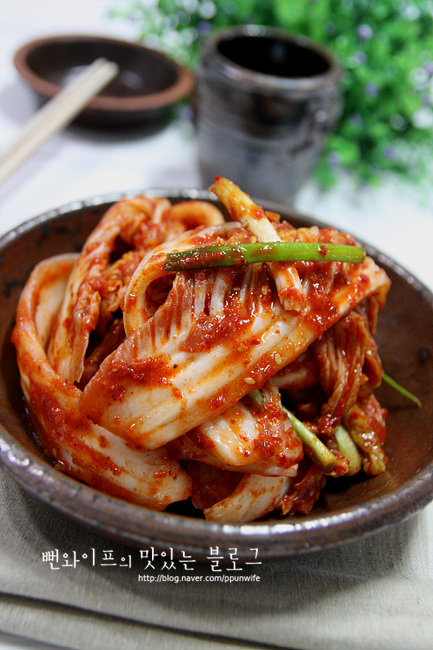
This fresh napa cabbage kimchi features yellow inner cabbage salted and tossed lightly in a sweet and spicy seasoning. Blending red chili pepper and onion together with glutinous rice paste creates the perfect consistency, making it a clean, delicious side for knife-cut noodle soup (kalguksu) or rich beef bone soup (gomguk). Keeping the seasoning from becoming too salty is the key tip.
- Servings
- about 8–10 servings
- Cook time
- 120 minprep not included
- Difficulty
- Hard
- Spiciness
- Spicy
Ingredients
Ingredients
- Napa cabbage2 heads, 2 kg (1 kg)
- Scallions (jjokpa)25 stalks
- Coarse sea salt2 cups
- Water10 cups
Seasoning
- Gochugaru (Korean chili flakes)1.5 cups (1 1/2 cups)
- Minced garlic6 tbsp
- Anchovy fish sauce (or sand lance fish sauce)3 tbsp
- Salted fermented shrimp (saeujeot)2 tbsp
- Sugar2 tbsp
- Ginger juice1 tbsp
- Red chili pepper5
- Onion1/2
- Glutinous rice paste
- Pear juice1/2 cup
- Toasted sesame seeds
Glutinous rice paste
- Glutinous rice flour5 tbsp
- Water3 cups
- If you do not have pear juice for the seasoning, you can omit it and add a little more sugar.
- The scallion stems were thick, so I prepared about 20 stalks, but normally 25 stalks is the right amount. It is roughly a generous handful before cutting.
Steps
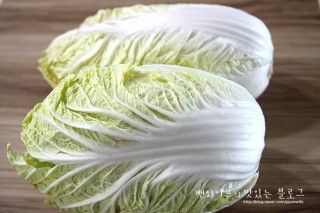
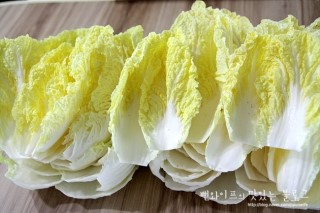
1. These are 2 heads of inner cabbage where the outer green leaves have been removed and the yellow leaves begin.
2. Separate all the leaves one by one.
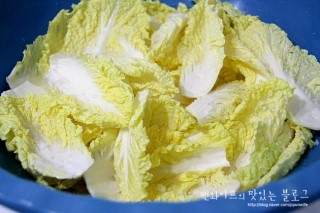
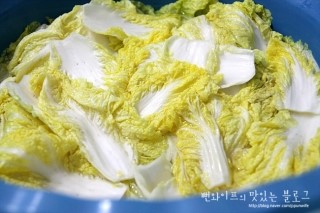
3. Dissolve 1 cup of coarse sea salt in 10 cups of water, soak all the cabbage,
and then scatter the remaining 1 cup of salt between the cabbage leaves.
4. Salting the cabbage takes about 2 hours; flip the top and bottom positions after 1 hour.
If the cabbage stem bends without snapping, it is well salted.
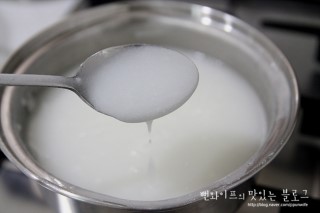
5. Make the seasoning while the cabbage is salting.
First, for the glutinous rice paste, put the water and glutinous rice flour in a pot, mix evenly, simmer over low heat until thickened,
then remove from the heat and let cool.
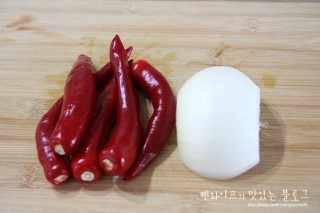
6. These are the red chili pepper and onion to be used in the seasoning.
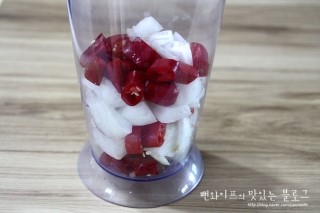
7. Place them in a blender and grind.
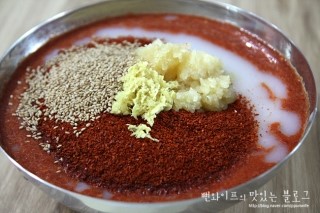
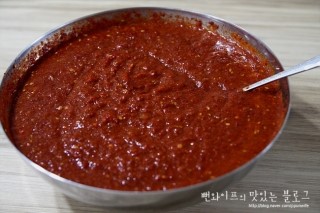
8. Add the blended red chili pepper and onion along with the glutinous rice paste and the seasoning ingredients, then mix together.
If you do not have pear juice for the seasoning, you can omit it and add a little more sugar.
10
9. As time passes, the well-mixed seasoning will blend together, and the gochugaru will swell nicely, giving it a beautiful color.
So set everything else aside and quickly make this first right when you start salting the cabbage.
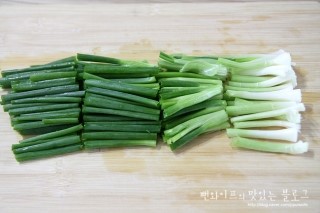
10. As a garnish to go with the cabbage, cut the scallions into lengths of 3 to 4 cm.
The scallion stems were thick, so I prepared about 20 stalks, but normally 25 stalks is the right amount.
It is roughly a generous handful before cutting.
11
12
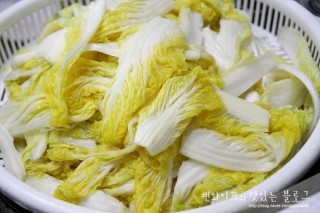
11. Rinse the salted cabbage once in water and drain it in a colander.
At this point, taste the cabbage, and if you feel it is too salty, you can soak it in water to draw out the excess salt.
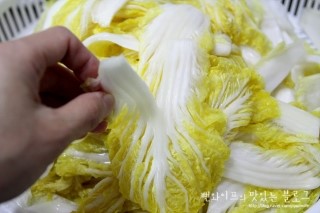
12. Tear into bite-sized pieces with your hands.
13
14

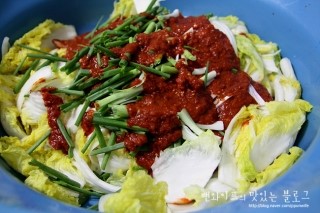
13. Place the cabbage, scallions, and all the seasoning in a large mixing bowl...
14. Toss gently and evenly, and it is complete.
 Ppunwife's tips
- If the cabbage stem bends without snapping, it is well salted.
- As time passes, the well-mixed seasoning will blend together, and the gochugaru will swell nicely, giving it a beautiful color. So set everything else aside and quickly make this first right when you start salting the cabbage.
- At this point, taste the cabbage, and if you feel it is too salty, you can soak it in water to draw out the excess salt.
- The key to making this kind of fresh cabbage geotjeori is not making it too salty.
FAQ
How do I check if the cabbage is properly salted?
After salting for about 2 hours, if you bend the thick stem part and it bends flexibly without breaking, it is properly salted.
What should I do if the salted cabbage is too salty?
After rinsing it in water, taste it; if the seasoning is too strong, soak it in water for a little while to remove excess salt, then drain thoroughly.
Can I substitute anything if I don't have pear juice for the seasoning?
You can leave out the pear juice completely, and just add a little extra sugar to balance the sweetness.