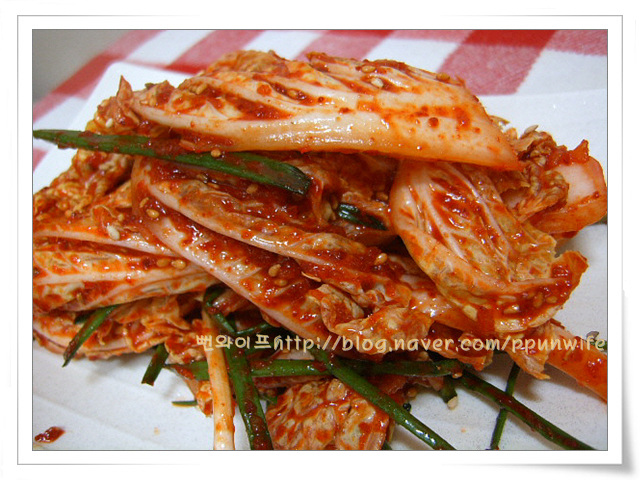
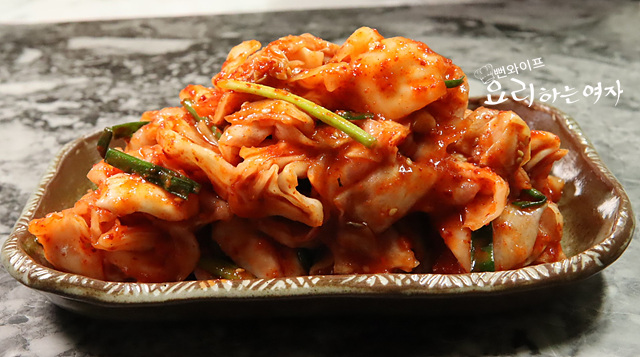
Baechu Geotjeori (Fresh Cabbage Kimchi) for Kalguksu
A fresh kimchi tossed with salted napa cabbage and a blended seasoning of cooked rice and onion, perfect to enjoy alongside noodle soup.
Translated from Korean by AI and not yet checked by a native speaker. Amounts and numbers are taken directly from the original recipe. Read the Korean original →
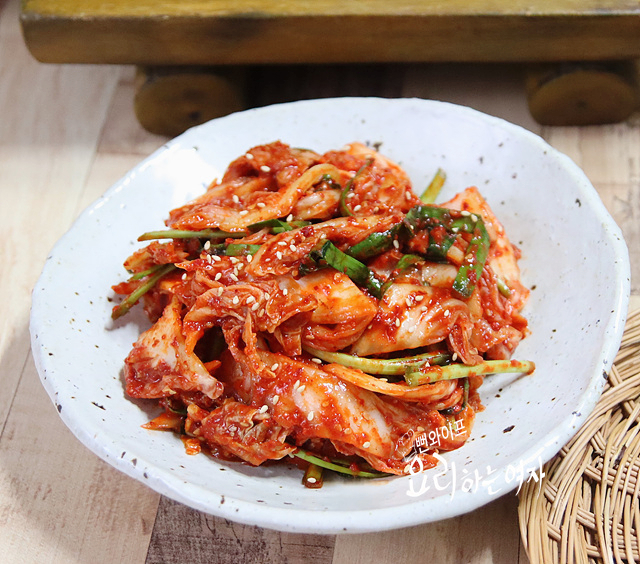
This fresh baechu geotjeori uses cooked rice blended with onion instead of starch porridge to make the seasoning quick and simple. Cutting the cabbage at an angle gives it the characteristic noodle-shop style and a spicy, savory kick. Be sure to drain the salted cabbage thoroughly so the seasoning adheres well.
- Servings
- about 10–12 servings
- Difficulty
- Easy
- Spiciness
- Spicy
Ingredients
Ingredients
- Napa cabbage2 heads, 4 kg
- Garlic chives (buchu)1/2 bunch, 500 g
- Coarse sea salt3 cups
Seasoning
- Onion2 (medium)
- Cooked rice1 1/2 bowls
- Water (or anchovy broth)3 cups
- Sand lance fish sauce (or dried anchovies)1/2 cup
- Salted fermented shrimp (saeujeot)1/3 cup
- Gochugaru (Korean chili flakes)3 cups
- Minced garlic2/3 cup
- Minced ginger2 tbsp
- Green plum syrup (maesil-cheong) (or sugar)5 tbsp
- Toasted sesame seeds
- Scallions are also fine instead of garlic chives.
- Salt for 1 hour to 1 hour 30 minutes, but extend the time if the white stems are very thick.
- If you do not have minced garlic or ginger, you can add peeled garlic cloves and ginger directly to the blender.
- If you do not care for the aroma of fish sauce, you can increase the proportion of salted fermented shrimp or use only salted fermented shrimp.
Steps
Prepare the ingredients
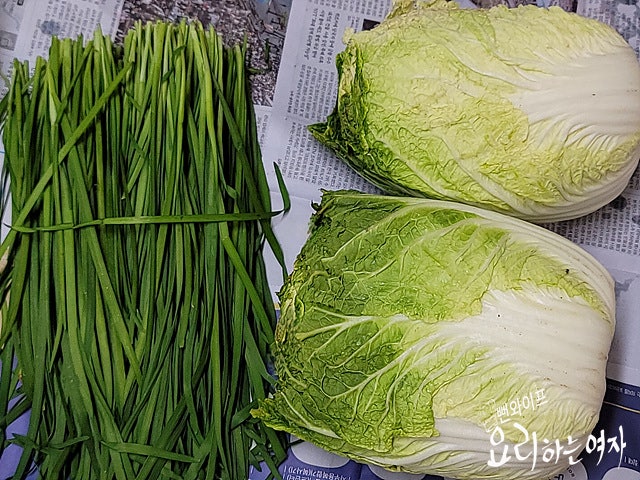
Prepare 2 firm heads of napa cabbage and 1/2 bunch of garlic chives.
Scallions are also fine instead of garlic chives.
Prepare the cabbage
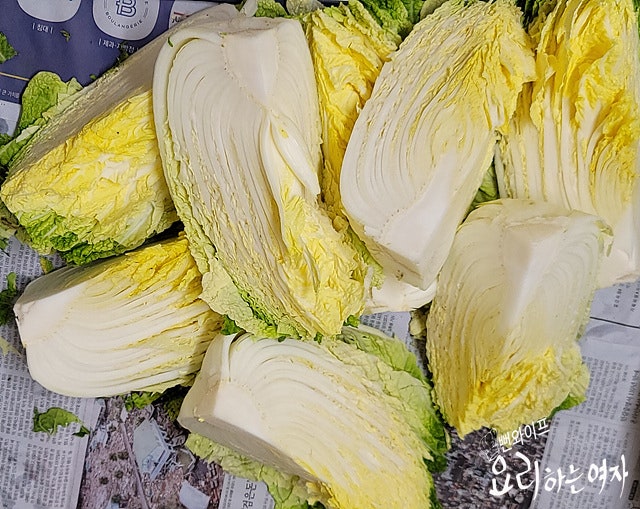
Remove all withered or tough outer leaves and quarter each cabbage, just like when making seasonal kimchi. That gave me 8 wedges in total.
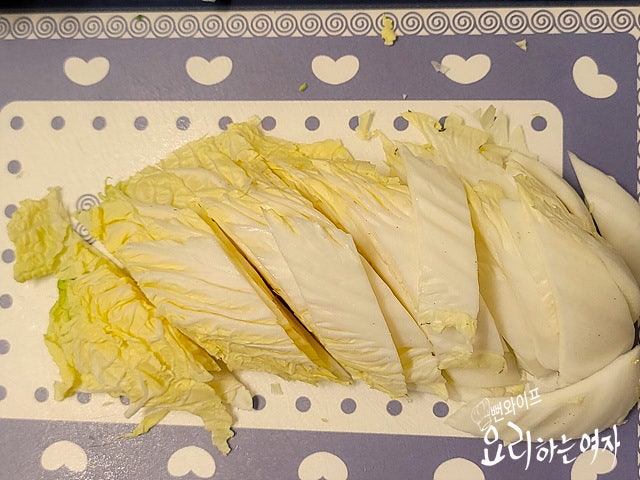
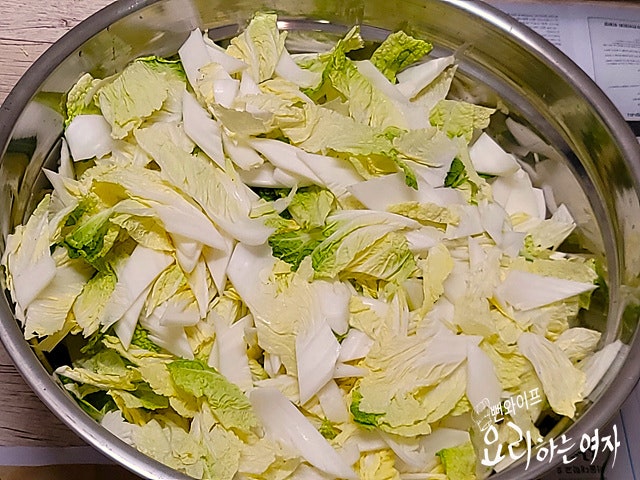
Cut 1 quarter in half again and slice it diagonally to get the look of kalguksu noodle-restaurant baechu geotjeori.
Cut all of it this way and place it in a large basin.
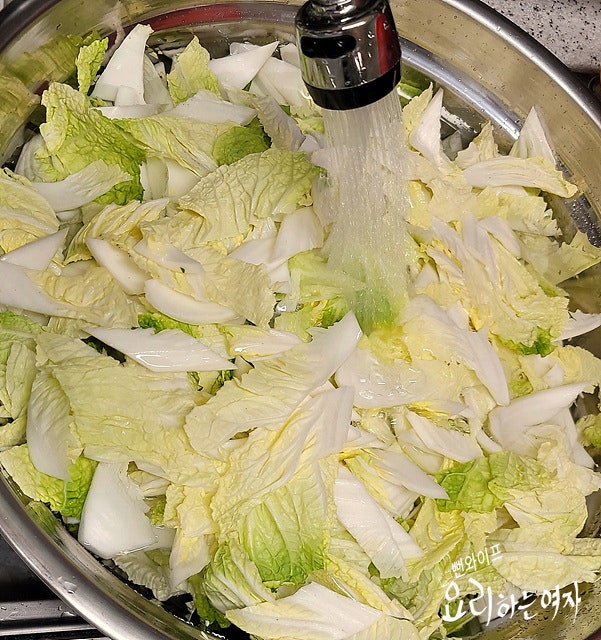
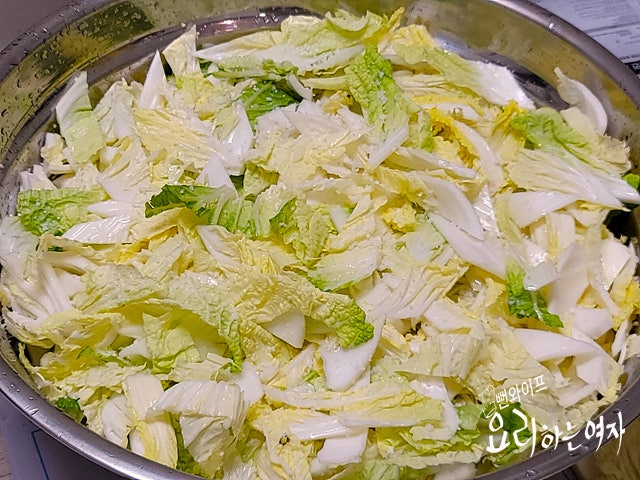
Wash it several times in water.
Lift the cabbage out of the final rinse and immediately transfer it to a large basin to sprinkle with coarse sea salt.
Layer it by alternating cabbage with a little salt each time.
If there is too little moisture, it takes longer to salt and the cabbage turns tough, so salt it straight from the rinse water like this.
Salt for 1 hour to 1 hour 30 minutes, but extend the time if the white stems are very thick.
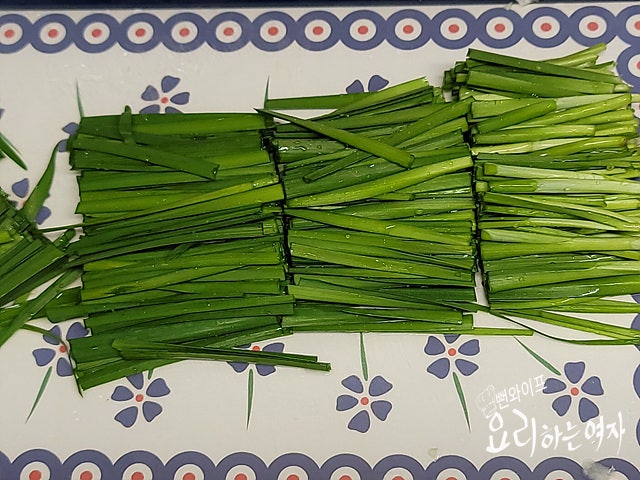
While the cabbage salts, prep the secondary ingredients and make the seasoning.
First trim and wash the garlic chives and cut them into bite-sized lengths, discarding any messy tips and using only the tender stalks.
Make the seasoning
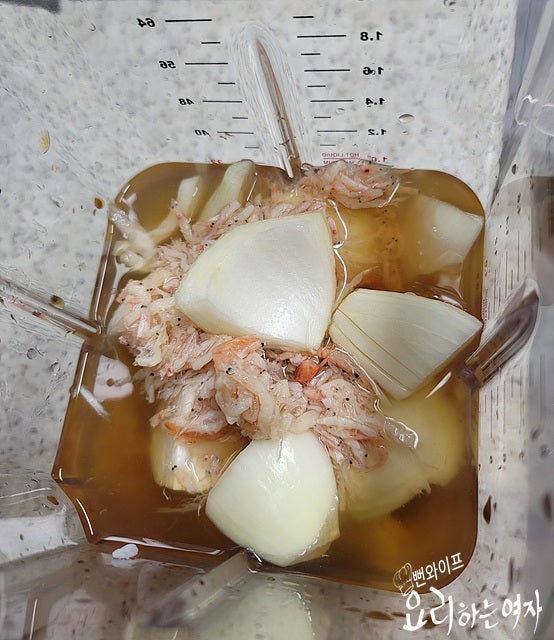
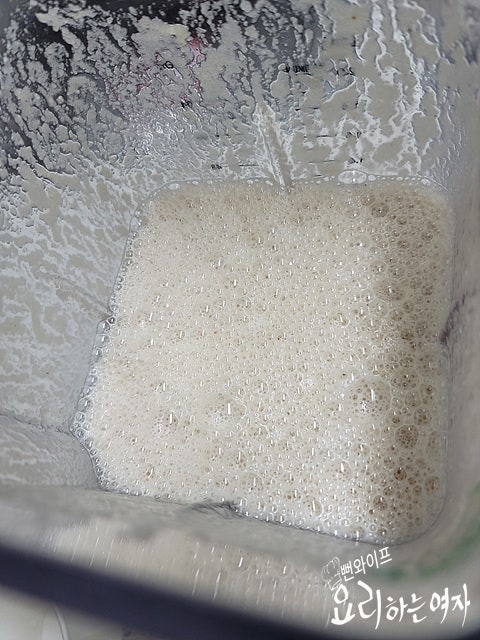
Roughly chop 2 medium onions and add them to a blender along with 1+1/2 bowls of cooked rice, 3 cups of water (or anchovy broth), 1/2 cup of sand lance fish sauce, and 1/3 cup of salted fermented shrimp...
Blend everything finely in the blender.
If you do not have minced garlic or ginger, you can add peeled garlic cloves and ginger directly to the blender.
When I make fresh kimchi, I like the aroma of fish sauce, so I used more of it than salted fermented shrimp.
If you do not care for the aroma of fish sauce, you can increase the proportion of salted fermented shrimp or use only salted fermented shrimp.
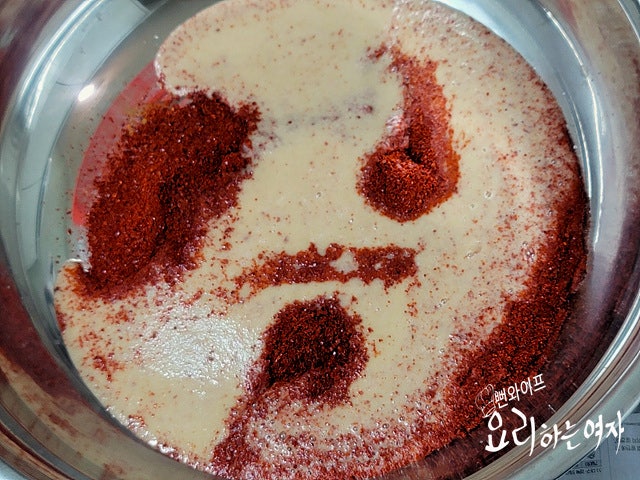
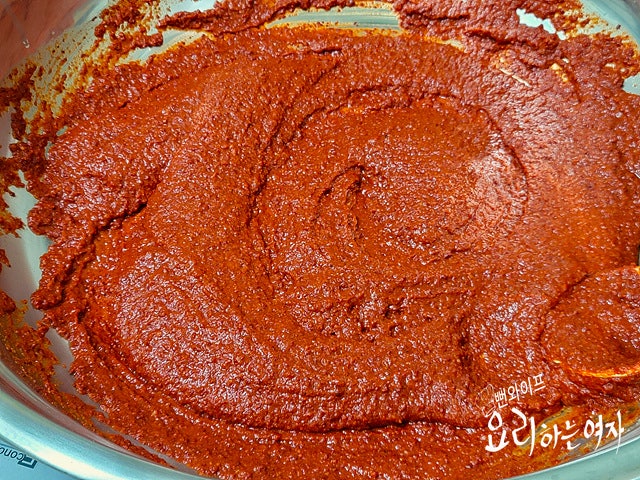
In the mixing basin, add 3 cups of gochugaru, 2/3 cup of minced garlic, 2 tbsp of minced ginger, 5 tbsp of green plum syrup (or sugar), and all of the blended mixture, then mix well. Making the seasoning while the cabbage is salting allows the flavors to meld and deepens the color.
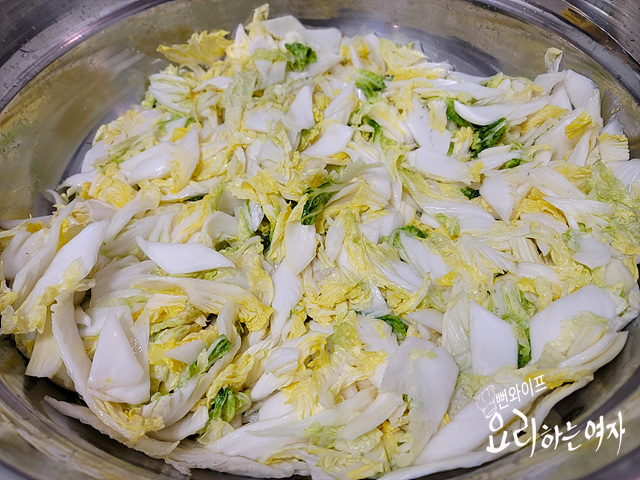
Toss the cabbage once halfway through salting; I salted it for 1 hour 20 minutes in total.
It is well salted when the thick stem bends smoothly without snapping.
Rinse the salted cabbage
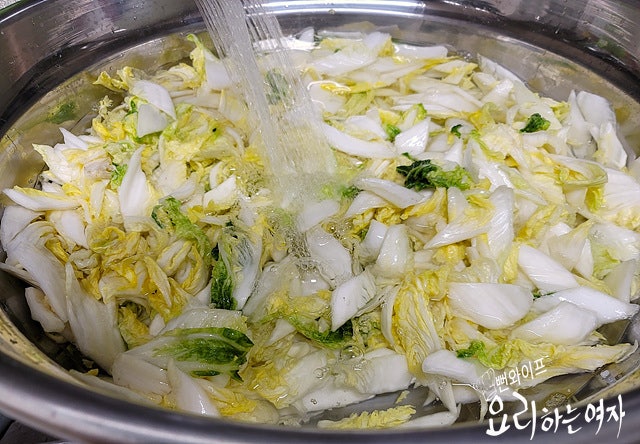
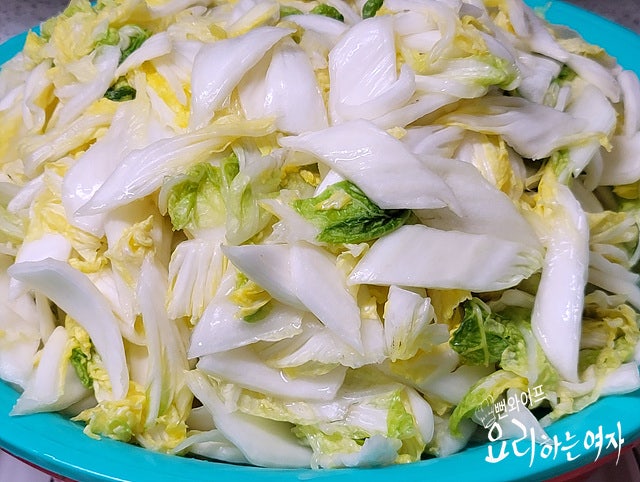
Rinse the cabbage once or twice depending on how salty it is.
Taste a piece after rinsing; it should taste seasoned but slightly mild, not overly salty.
If it tastes quite salty, rinse it several times and drain the water very well.
If you toss it without draining well, excess liquid forms and dilutes the seasoning, ruining the flavor.
Toss together
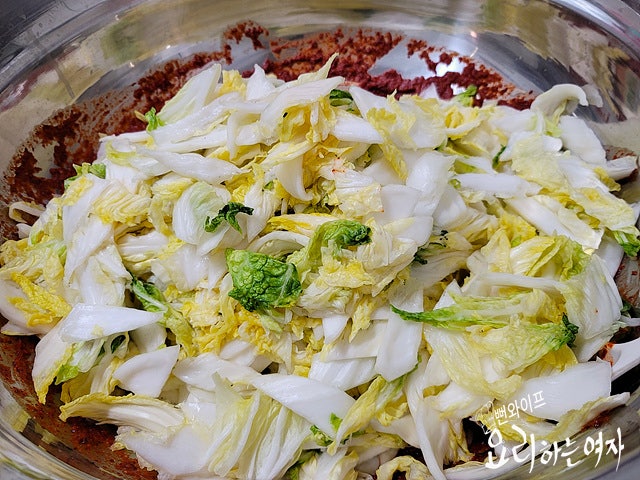
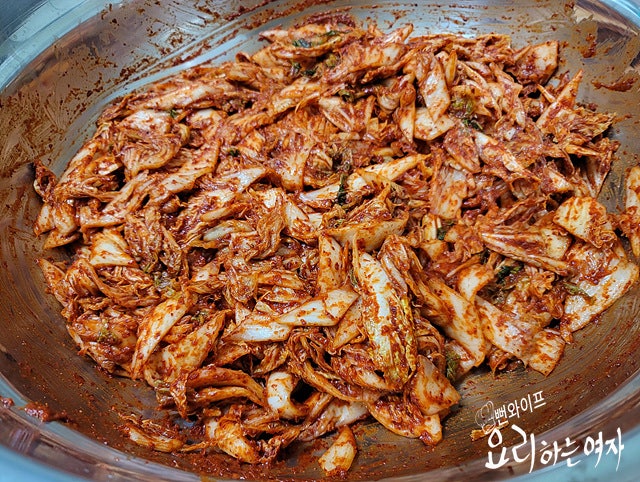
Add the thoroughly drained cabbage to the prepared seasoning and toss well to coat evenly.
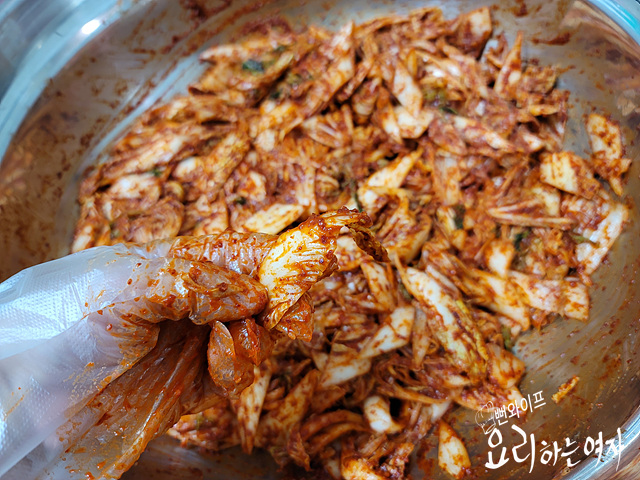
If it needs more seasoning, adjust the saltiness with salt or salted fermented shrimp, and adjust the sweetness to your taste.
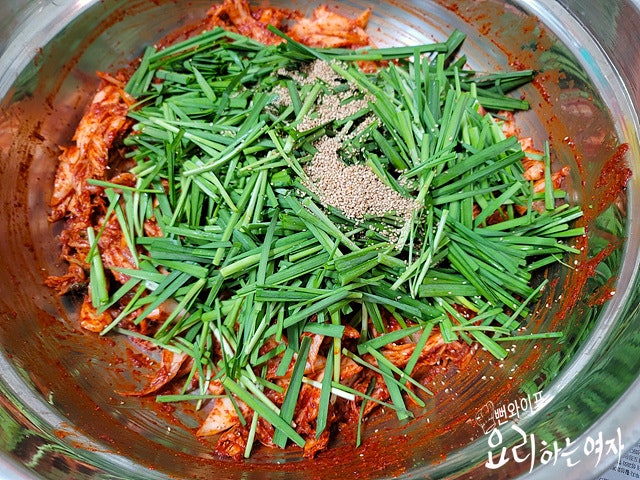
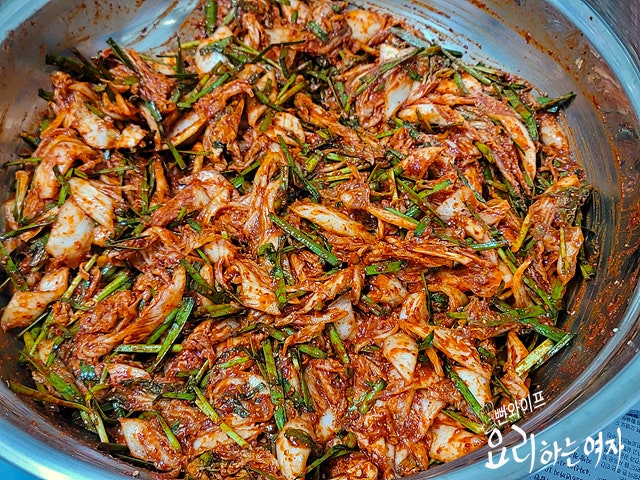
Now add the garlic chives and toasted sesame seeds, toss gently, and finish.
Finish
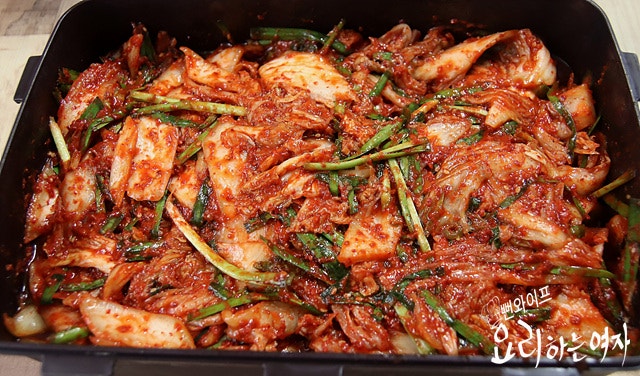
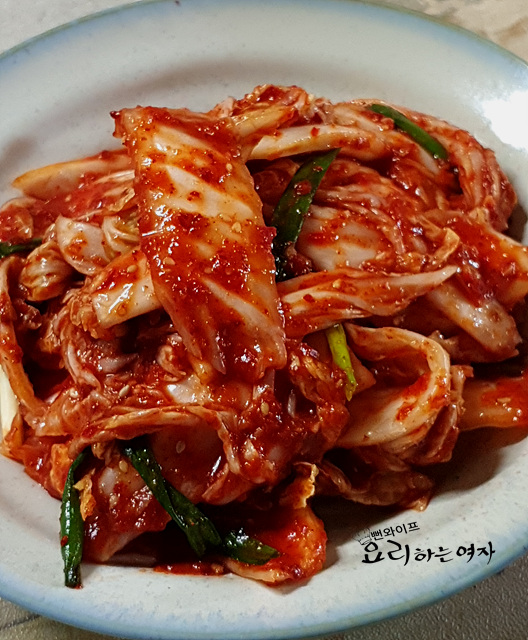
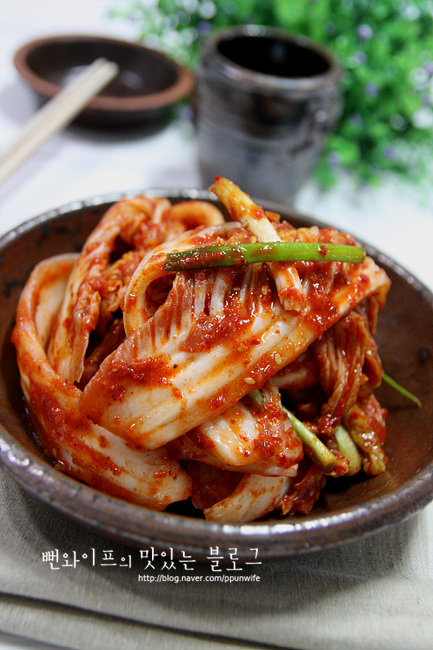
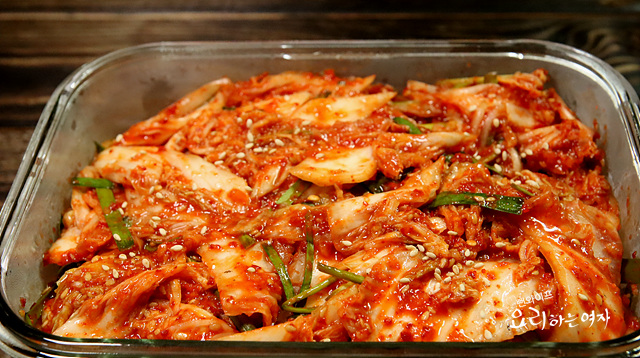
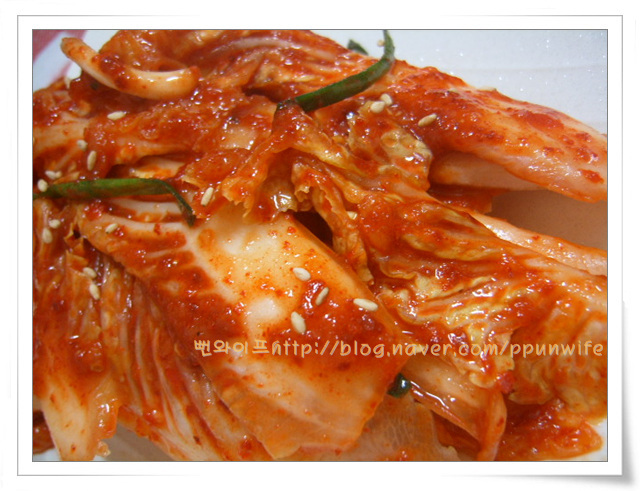
The baechu geotjeori looks delicious and beautifully seasoned.
Let it rest overnight or keep it straight in the refrigerator to enjoy.
 Ppunwife's tips
- If there is too little moisture, it takes longer to salt and the cabbage turns tough, so salt it straight from the rinse water like this.
- Making the seasoning while the cabbage is salting allows the flavors to meld and deepens the color.
- It is well salted when the thick stem bends smoothly without snapping.
- If you toss it without draining well, excess liquid forms and dilutes the seasoning, ruining the flavor.
FAQ
Is there a substitute if I don't have garlic chives?
You can use scallions instead of garlic chives.
How can I adjust it if the fish sauce aroma is too strong?
You can reduce the fish sauce and increase the salted fermented shrimp, or skip the fish sauce entirely and season with only salted fermented shrimp.
How do I tell if the cabbage is properly salted?
It is properly salted when you bend the stem and it curves smoothly without snapping.
Do I really need to drain the salted cabbage thoroughly before tossing?
If you toss the cabbage with leftover moisture, a lot of liquid is released and weakens the seasoning, so be sure to shake off the water thoroughly.