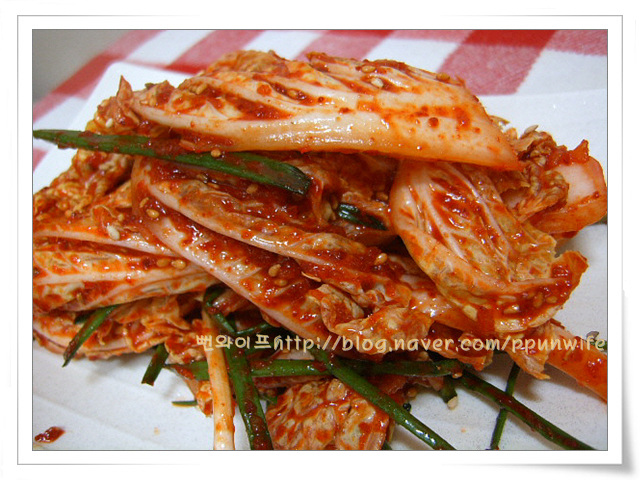
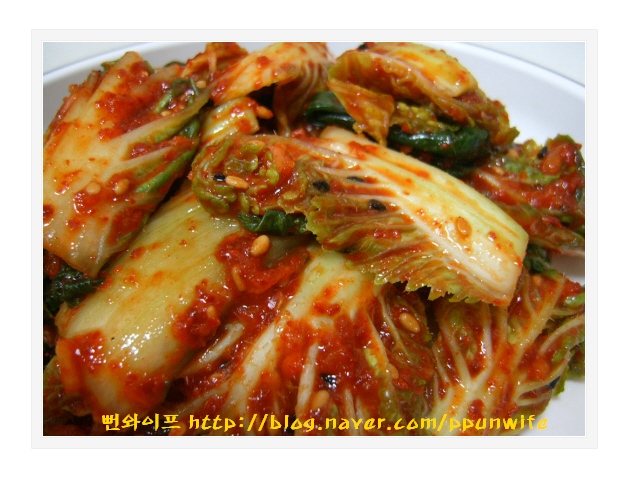
Baechu Geotjeori (Fresh Cabbage Kimchi) for Kalguksu
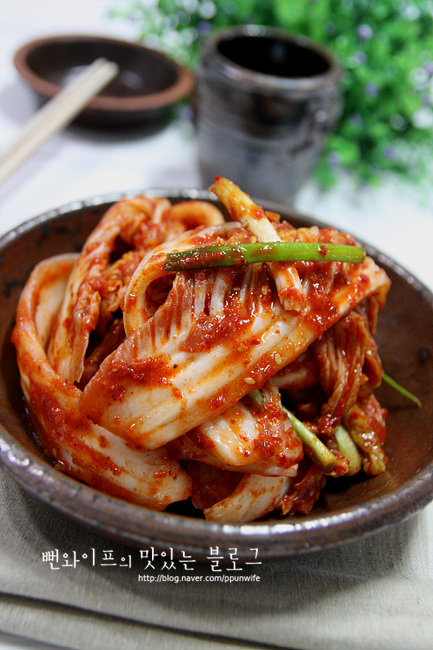
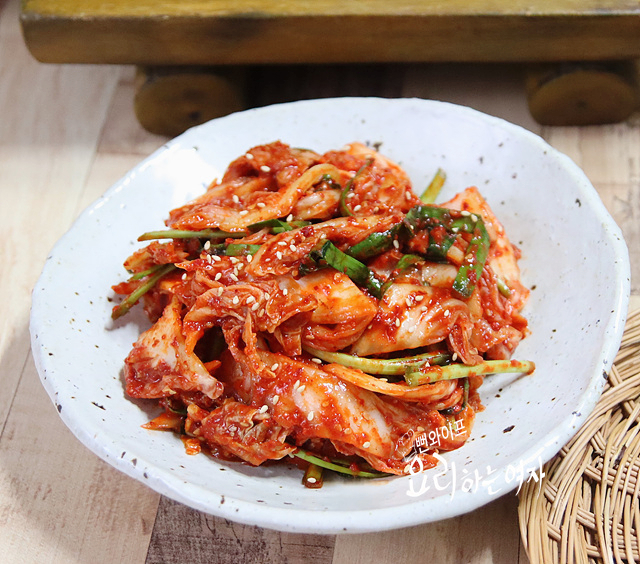
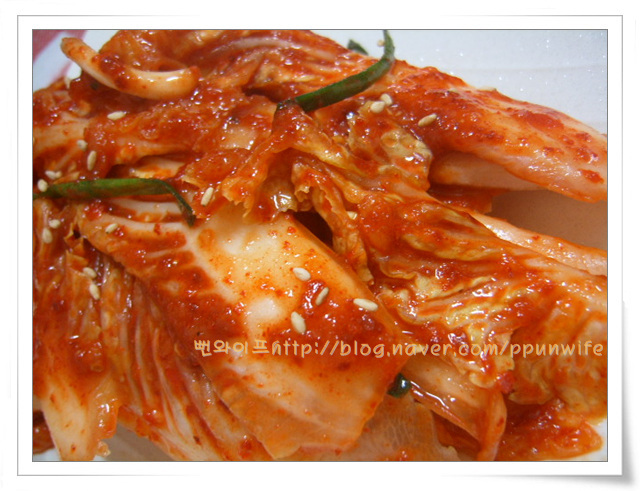
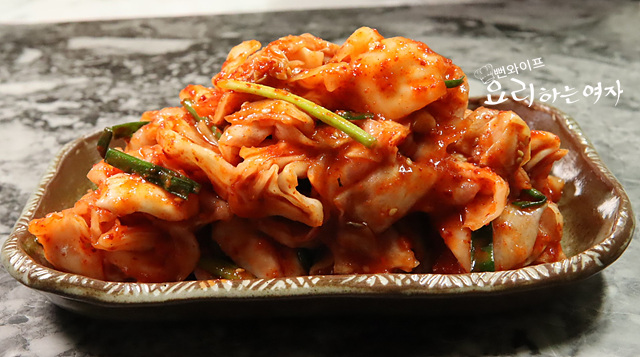
Baechu geotjeori (fresh cabbage kimchi) made by tossing salted napa cabbage in a seasoning paste of fresh red chili peppers and glutinous rice paste.
Translated from Korean by AI and not yet checked by a native speaker. Amounts and numbers are taken directly from the original recipe. Read the Korean original →
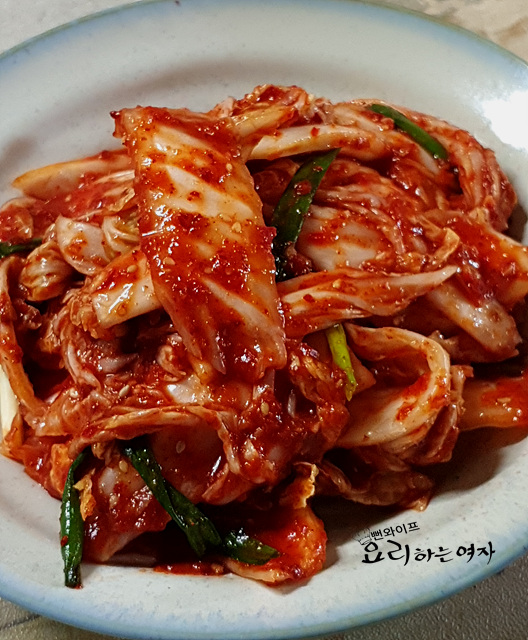
This fresh geotjeori brings out rich umami by finely blending fresh red chili peppers and onion together with fish sauce and salted shrimp. Napa cabbage is salted in layers, then tossed in a glutinous rice paste seasoning that pairs wonderfully with rice or a bowl of kalguksu noodle soup. You can enjoy it right after making it, or refrigerate it to eat the next day once the flavors have soaked in even deeper.
- Servings
- about 8–10 servings
- Difficulty
- Medium
- Spiciness
- Spicy
Ingredients
Ingredients
- Napa cabbage1 head, 2 kg
- Scallions (jjokpa)1 handful (25 roots)
- Coarse sea salt1 cup
Glutinous rice paste
- Glutinous rice flour5 tbsp
- Water3 cups
Seasoning
- Red chili pepper5
- Onion1/2
- Gochugaru (Korean chili flakes)1 1/2 cups
- Garlic4 tbsp
- Fish sauce3 tbsp
- Salted fermented shrimp (saeujeot)2 tbsp
- Sugar2 tbsp
- Minced ginger1 tsp
- Toasted sesame seeds3 tbsp
- Sprinkle the napa cabbage with coarse sea salt and salt for about 1 hour 30 minutes, flipping it after 1 hour to salt for about 30 minutes more.
- Rinse the salted napa cabbage once and drain the water for about 30 minutes.
Steps
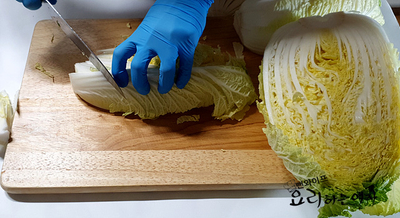
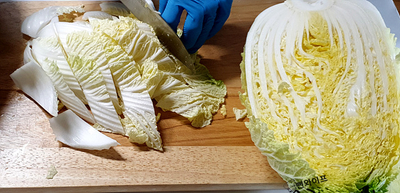
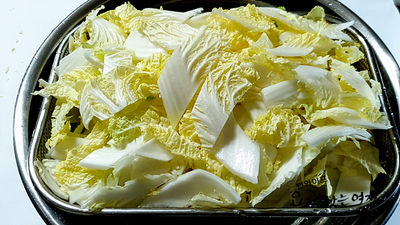
Remove the outer green leaves from one head of napa cabbage, cut it in half,
cut it in half again, and slice diagonally.
That is, after cutting it into about 1/4 head or 1/8 head portions, holding the shape together and slicing diagonally
is much easier than pulling off leaves one by one to slice them.
Rinse the cut cabbage once under running water.
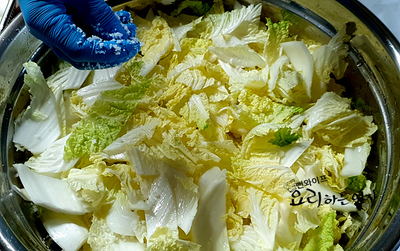
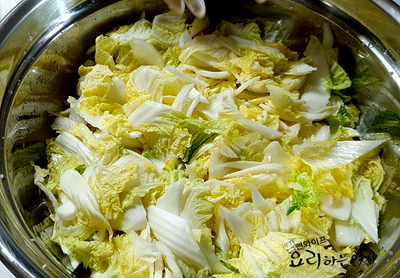
Lay a layer of napa cabbage in a large basin, grab about one or two tablespoons of coarse sea salt in your hand, and sprinkle it over...
Salt the cabbage in alternating layers: cabbage... salt... cabbage... salt...
About 1 hour 30 minutes is ideal; after 1 hour, flip it over, swapping the top and bottom, and salt for about 30 minutes more.
Check the condition of the salting cabbage, rinse a stem piece in water to taste it, and if it is tenderly salted without being too salty,
you do not necessarily need to fill the entire 1 hour 30 minutes.
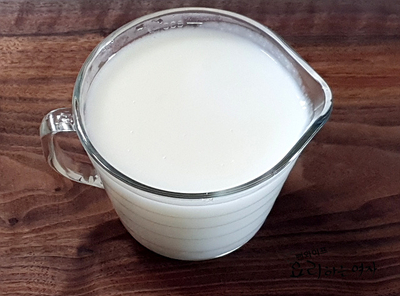
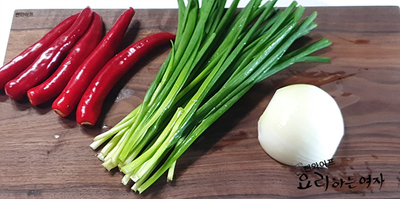
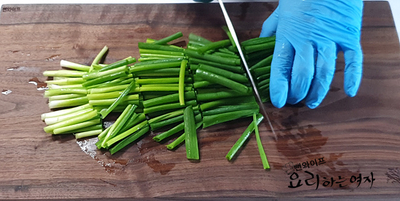
While the cabbage is salting, make the glutinous rice paste.
Add the water and glutinous rice flour to a pot, mix evenly until lump-free, cook over low heat until thick,
then remove from the heat and let it cool.
Cut the scallions into 3 to 4 cm lengths, and roughly chop the red chili peppers and onion
since they will go into the seasoning and be blended in a blender.
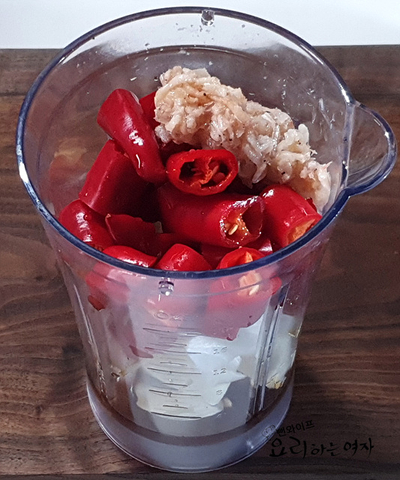
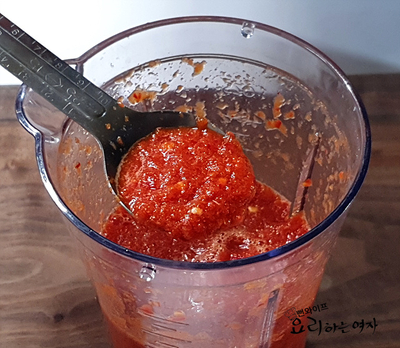
Put the roughly chopped red chili peppers and onion into a blender,
and blend them together with the fish sauce and salted fermented shrimp.
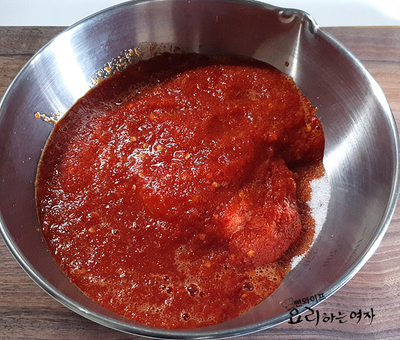
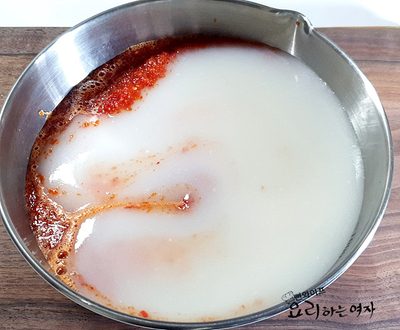
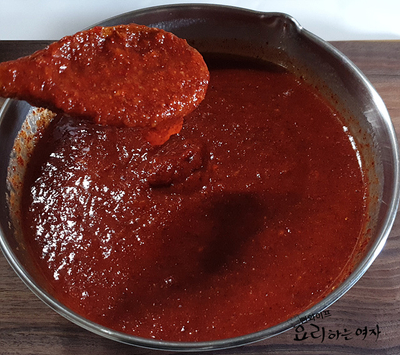
Add the blended seasoning along with the glutinous rice paste, minced garlic, minced ginger, sugar, and gochugaru,
and mix evenly so everything comes together.
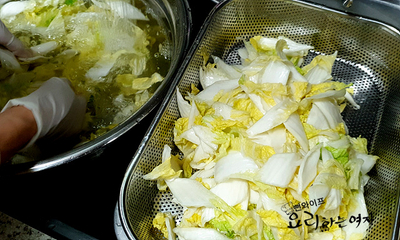
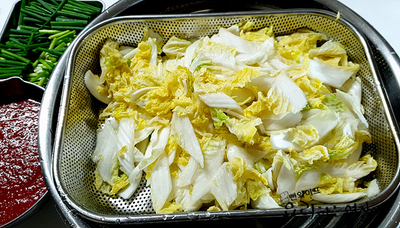
Rinse the salted napa cabbage once and drain the water for about 30 minutes.
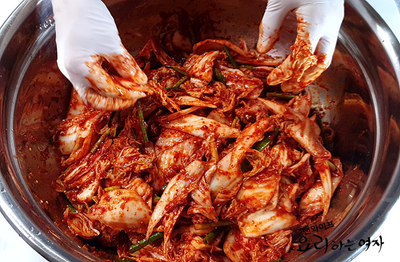
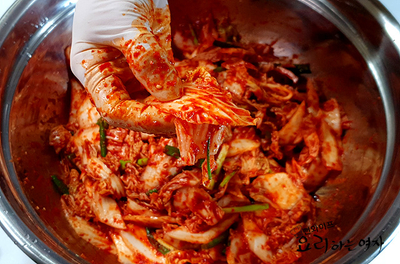
Add the napa cabbage, seasoning, and toasted sesame seeds, and mix thoroughly to finish.
 Ppunwife's tips
- After cutting the napa cabbage into about 1/4 head or 1/8 head portions, holding the shape together and slicing diagonally is much easier than pulling off leaves one by one to slice them.
- Check how the cabbage is salting by rinsing a stem piece in water to taste; if it is pliable and not overly salty, you do not need to wait the full 1 hour 30 minutes.
- It is delicious eaten right away, and if you put it straight into the refrigerator without fermenting to eat the next day, the seasonings soak in amazingly well and make it even tastier.
FAQ
How long should the napa cabbage be salted?
Salt it for about 1 hour 30 minutes, flipping the top and bottom once after 1 hour. If you rinse a thick stem piece and taste it, and find it tender and not overly salty, you do not need to wait the full 1 hour 30 minutes.
Can I eat it right after making it?
You can eat it immediately after tossing, or store it in the refrigerator without a separate fermentation step to eat the next day, when the flavors will have soaked in even more deeply.
Is there a trick to slicing the napa cabbage easily?
After dividing the napa cabbage into 4 or 8 parts, holding the shape together without peeling off the leaves one by one and slicing diagonally makes prep easy.
Can I use regular all-purpose flour instead of glutinous rice flour for the paste? AI-generated
Generally, if you do not have glutinous rice flour, you can substitute it by dissolving wheat flour in water and simmering it over low heat until thickened.