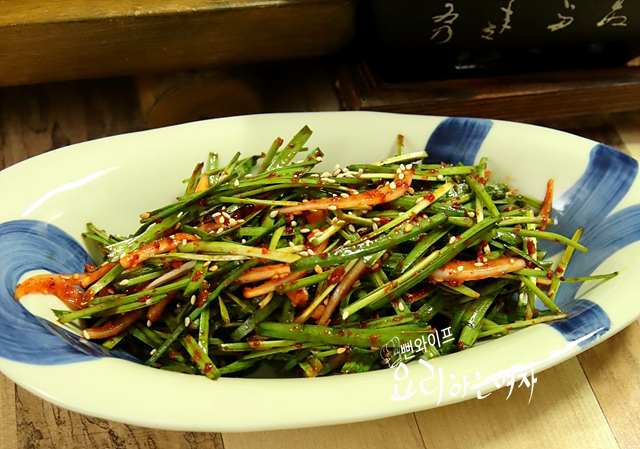
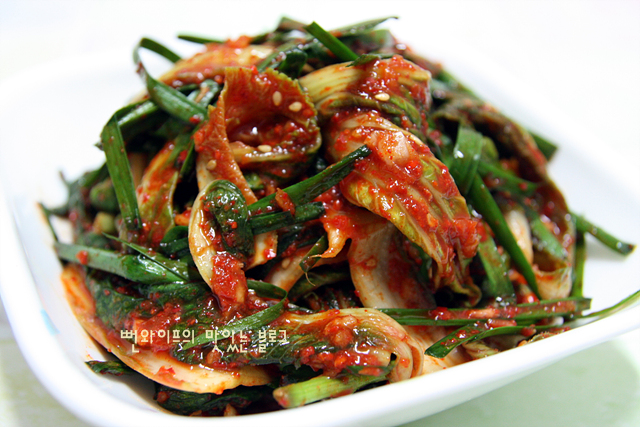
Buchu Kimchi (Garlic Chive Kimchi)
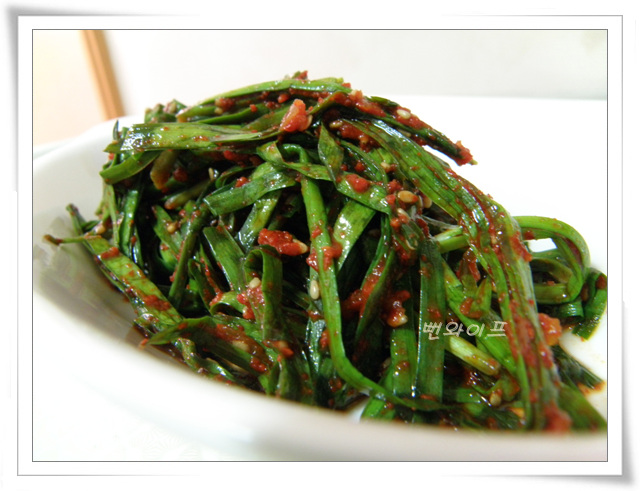
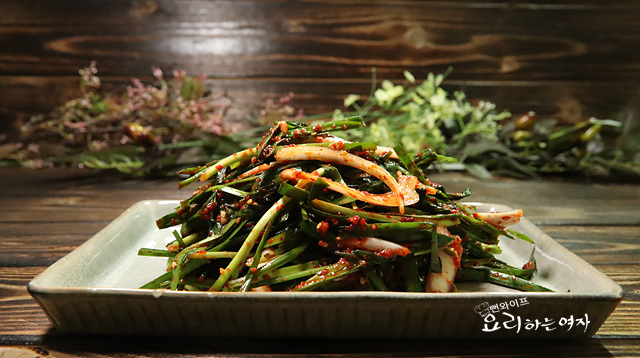
A clean-tasting garlic chive kimchi side dish tossed together in 30 minutes using anchovy broth instead of glutinous rice paste.
Translated from Korean by AI and not yet checked by a native speaker. Amounts and numbers are taken directly from the original recipe. Read the Korean original →
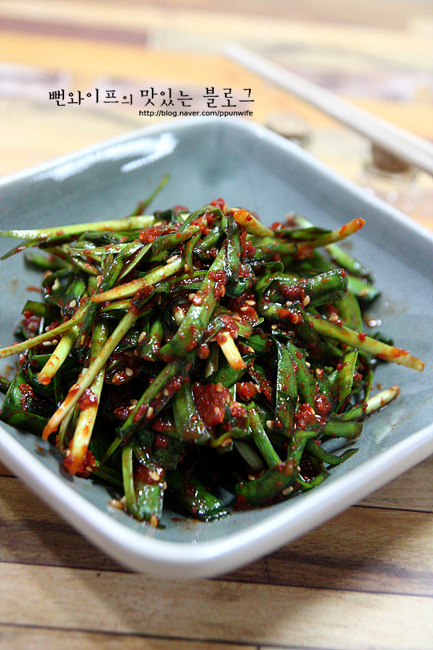
This easy kimchi uses rich anchovy broth instead of the hassle of making glutinous rice paste. The key is to lightly salt the tender garlic chives with fish sauce first, then add the seasonings and toss gently so the chives do not wilt excessively or become mushy. With simple ingredients, you can easily make this side dish in around 30 minutes.
- Servings
- about 6–8 servings
- Cook time
- 30 minprep not included
- Difficulty
- Medium
- Spiciness
- Spicy
Ingredients
Ingredients
- Garlic chives (buchu)500 g
Seasoning
- Gochugaru (Korean chili flakes)1 cup
- Minced garlic2 tbsp
- Anchovy fish sauce (or sand lance)4 tbsp
- Sugar1 tbsp
- Anchovy broth1/2 cup
- Toasted sesame seedsas needed
- If very thin stems are mixed in, they wilt too much and look messy like threads, so pick out the thicker garlic chives to make kimchi.
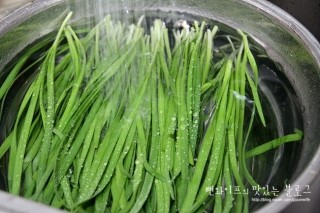
- Instead of washing the trimmed garlic chives right away, let them sit submerged in water for at least 10 minutes so foreign debris and dirt can float out.
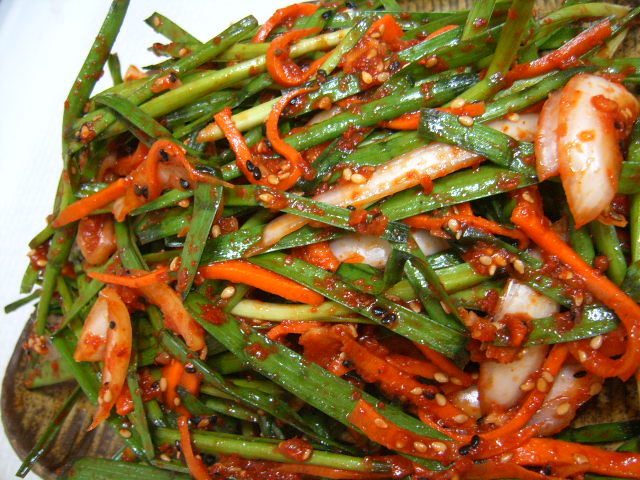
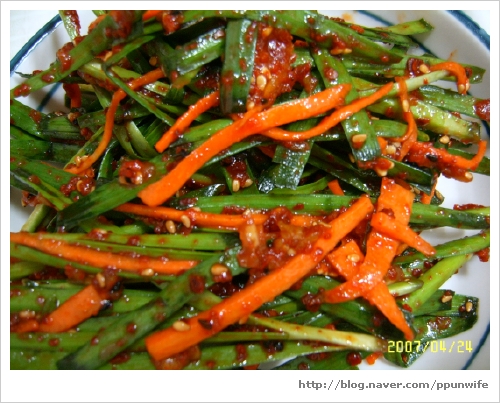
- You can also julienne an onion or other vegetables and add them along with the garlic chives.
- If you want to ferment it to a tangy sourness, you can blend one or two spoons of cooked rice with water equal to the amount of anchovy broth and use it instead of glutinous rice paste.
- To maintain freshness, do not return portions that were served on the table to the main storage container; keep one or two days' worth in separate containers.
Steps
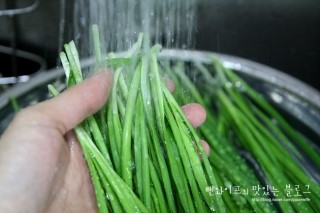
1. I bought a 1 kg bundle of small garlic chives, but the stems are uneven with both thick and thin ones.
As I cleaned them and picked out the thicker ones for kimchi, it came out to 500 g.
When you make kimchi with stems that are too thin, they wilt too much and look messy like threads.
So I use those right away to fry pancakes or toss them just before a meal as an ingredient for bibimbap.
Instead of washing the cleaned garlic chives right away, fill a bowl with plenty of water and let them sit for at least 10 minutes
so any stuck debris or soil comes out into the water.
2. Now wash them thoroughly under running water, gently stroking off any debris clinging to the root ends.
Scallions are thick at least, but garlic chives take so much effort to trim and wash that even when I see good ones, my hand hesitates.
As I get older, I find myself looking only for ingredients that are easy to prep, which is a real problem.
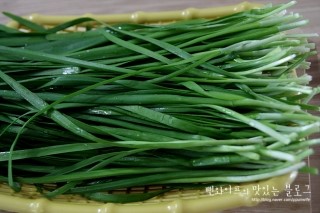
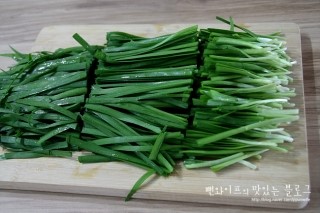
3. Drain them in a colander...
4. Cut them into bite-sized lengths.
If you make it without cutting, it is hard to coat them with seasoning, and this also saves the trouble of having to cut them before eating.
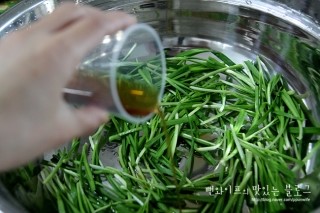
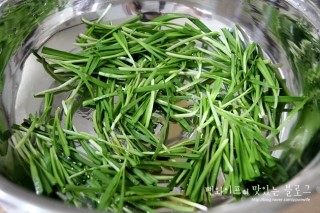
5. Use half of the fish sauce (2 tbsp) to salt just the root ends of the garlic chives first (the first section when cut into 3).
6. After adding the fish sauce, toss gently so it spreads evenly across the bowl. Leave it for about 15 minutes...
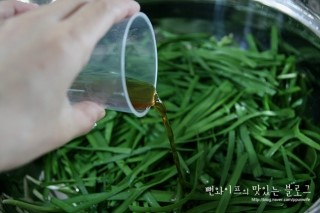
7. Add all the remaining garlic chives and the remaining 2 tbsp of fish sauce, then gently toss everything together, including the root ends at the bottom.
If you leave it for another 10 to 15 minutes like this, they will wilt just right.
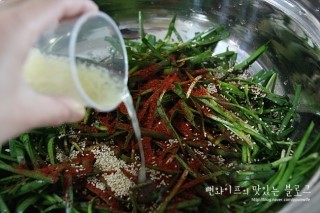
8. Scatter the gochugaru evenly over the garlic chives, and in 1/2 cup of anchovy broth, mix together 2 tbsp of minced garlic and 1 tbsp of sugar, then pour it evenly over the top. Add toasted sesame seeds at the end as well.
Since minced garlic tends to clump, mixing it into the anchovy broth distributes it evenly and works really well.
Dissolving the sugar in advance also lets you taste the seasoning accurately.
10
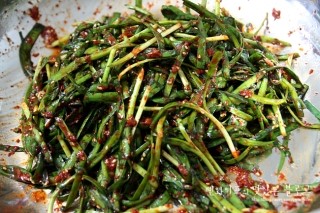
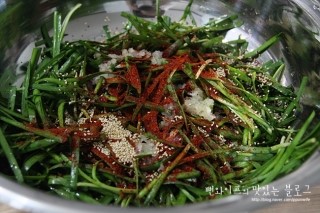
9. Using both hands, gently lift a large bunch of garlic chives, place it back down,
turn it over softly, lift it again and set it down; repeating this process coats them evenly with seasoning.
10. If you mix all the seasoning ingredients in advance, the tender chives get bruised and turn mushy while being coated,
so for garlic chive kimchi, I prefer to cut them first and make it simply like this.
Because garlic chives are tender, the less you handle them, the longer they stay fresh.
Ever since I started trying to find simple, effortless ways to do things, I ended up using methods that are a bit unusual compared to others.
No matter how delicious a dish is or how much you love it, when it is difficult, tiring, or requires hard-to-find ingredients,
it is not easy to roll up your sleeves and you end up giving up.
That goes for anything, but cooking feels especially that way.
I think picking up your own little tips and know-how along the way and eating fresh, delicious food in season is the quickest path to staying healthy.
 Ppunwife's tips
- Minced garlic tends to clump, so mixing it into the anchovy broth makes it distribute evenly and works really well.
- Dissolving the sugar in advance allows you to gauge the seasoning accurately when tasting.
- Because garlic chives are tender, handling them as little as possible helps them stay fresh longer.
- Garlic chive kimchi is delicate, so it is best to pack it into separate small portions for one or two days, and never return any leftovers from the table back into the main container. Exposure to air or frequent handling with chopsticks causes the kimchi to lose its freshness.
FAQ
Is it okay not to add glutinous rice paste?
Yes, using rich anchovy broth instead of glutinous rice paste gives it a clean finish. If you prefer a tangy, fermented flavor, you can blend one or two spoons of cooked rice with water equal to the amount of anchovy broth and use that in place of paste.
How can I prevent the garlic chives from turning mushy or developing a grassy odor while tossing?
Instead of mixing the seasoning beforehand, scatter the ingredients directly over the cut garlic chives and toss gently by lifting them up in large bunches with both hands. Handling them minimally keeps them fresh.
How should leftover kimchi be stored to keep it fresh longer?
Rather than storing it all in one large container, divide it into small containers with enough for one or two days and take out only what you need.
Can I add other ingredients besides garlic chives?
Yes, thinly sliced onion or other vegetables pair very well if you want to toss them in together.