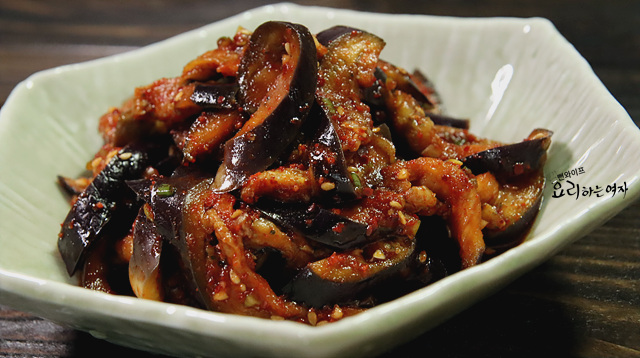
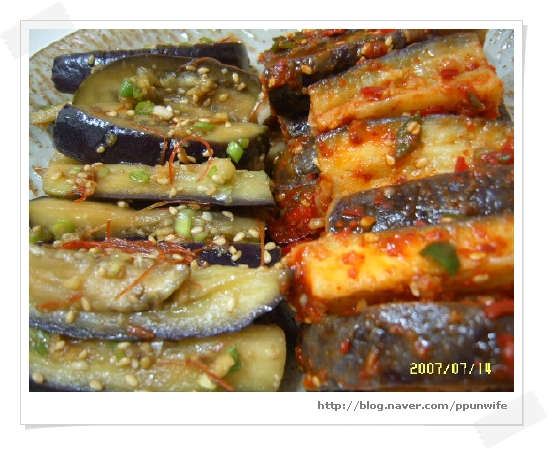
Savory Gaji Jorim (Braised Eggplant)
Gaji jorim is a side dish of eggplant dry-pan roasted to preserve its texture and then braised in a savory sauce.
Translated from Korean by AI and not yet checked by a native speaker. Amounts and numbers are taken directly from the original recipe. Read the Korean original →
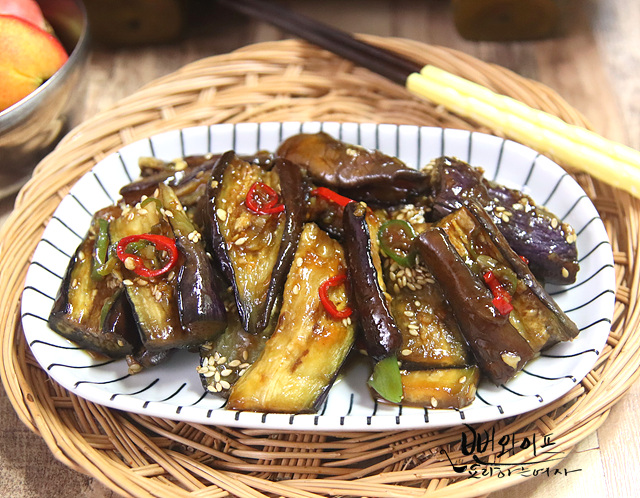
This side dish starts by searing eggplant in a dry pan with no oil to cook off excess moisture, then quickly braises it in a savory seasoning. The eggplant never turns mushy—chewy on the outside and tender on the inside—making it fantastic as a regular side dish or served over a bowl of warm rice.
- Servings
- 3–4 servings
- Difficulty
- Easy
- Spiciness
- Mildly spicy
Ingredients
Ingredients
- Eggplant3, 450 g
- Large green onion (daepa)1/2 stalk
- Cheongyang chili pepper (hot green chili)1
- Red chili pepper1
Seasoning
- Water4 tbsp
- Regular soy sauce (jin-ganjang) (or brewed soy sauce (yangjo-ganjang))2 tbsp
- Oyster sauce1 tbsp
- Minced garlic1 tbsp
- Corn syrup (mulyeot)1 tbsp
- Mirin (cooking rice wine)2 tbsp
- Toasted sesame oila little
- Toasted sesame seedsa little
Steps
Prepare the ingredients
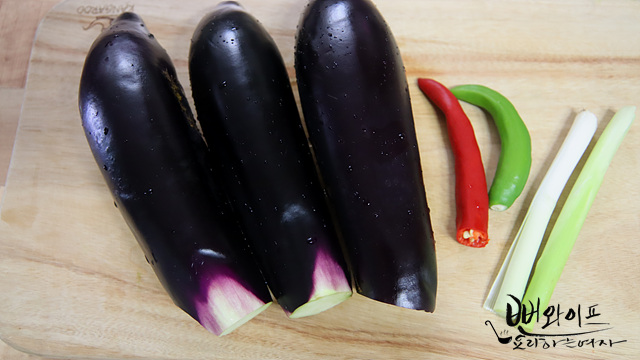
Prepare 3 plump eggplants, large green onion, Cheongyang chili pepper, and red chili pepper.
Slice the ingredients
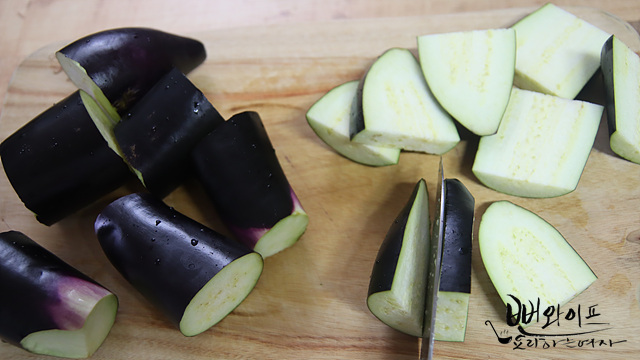
Cut the eggplant into 3 sections, then cut each piece in half lengthwise, or slice the thicker middle sections into 3 pieces so they are all similar in thickness.
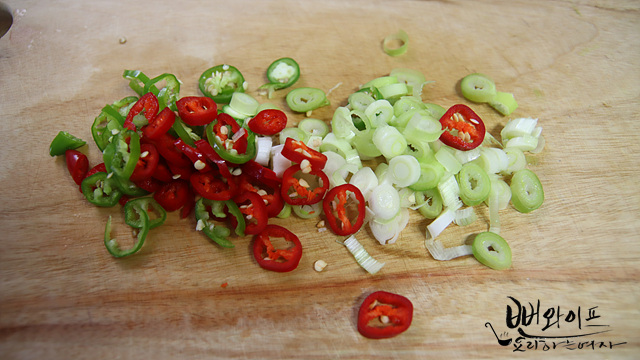
Thinly slice the large green onion and chili peppers into small rounds.
Pan-sear the eggplant
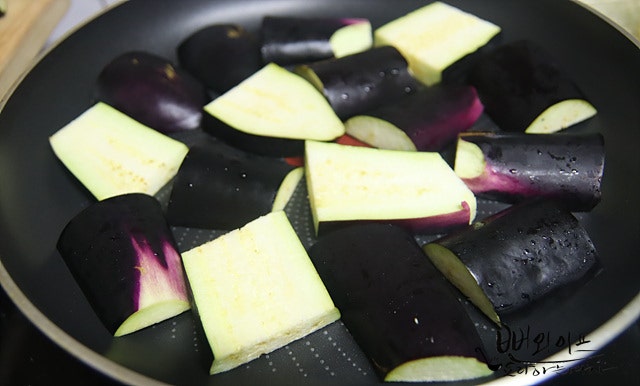
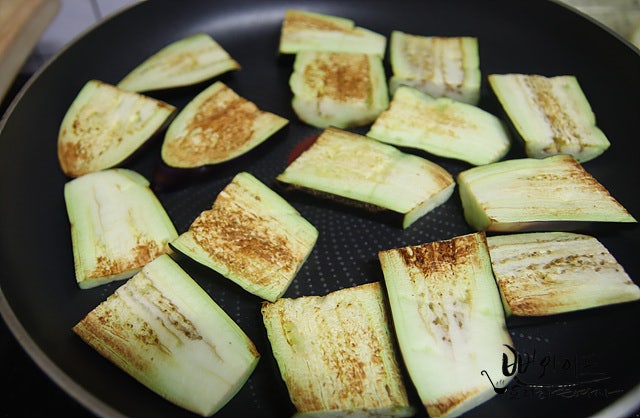
Without adding any oil, place the eggplant in a pan and sear both sides until nicely browned.
Searing them like this shrinks the eggplant as it cooks and evaporates the moisture, so they will not turn mushy when braised.
Braise in the sauce
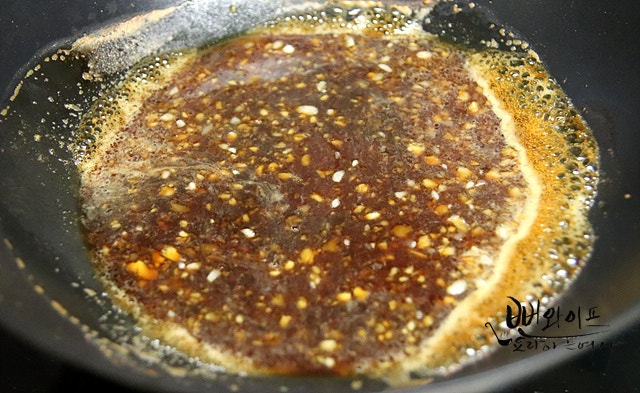
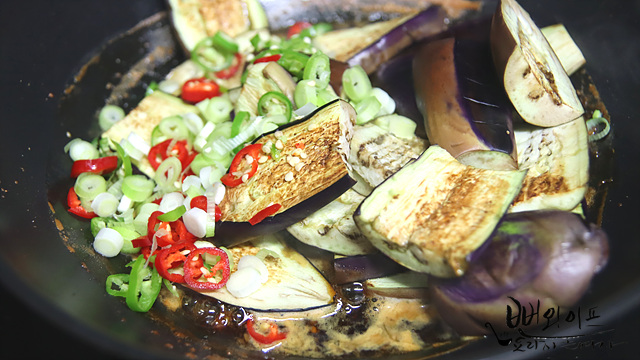
Add 4 tbsp water, 2 tbsp regular soy sauce (jin-ganjang), 1 tbsp oyster sauce, 1 tbsp minced garlic, 1 tbsp corn syrup (mulyeot), and 2 tbsp mirin (cooking rice wine) to a pan and bring to a bubbling simmer.
Add the eggplant, large green onion, and chili peppers.
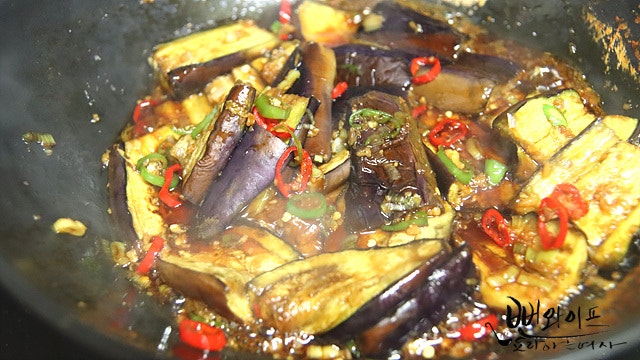
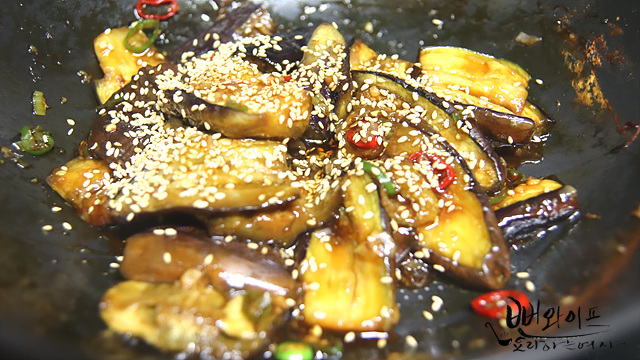
Stir-fry quickly, simmering it down so the eggplant absorbs the sauce and seasons through.
Once the seasoning is just right, finish with toasted sesame oil and toasted sesame seeds.
Finish
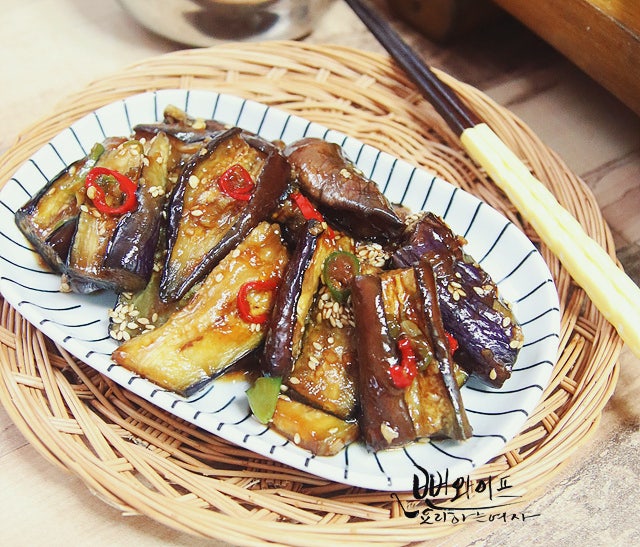
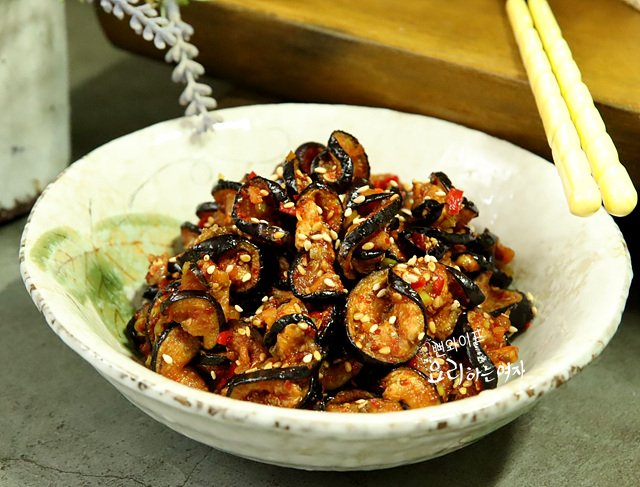
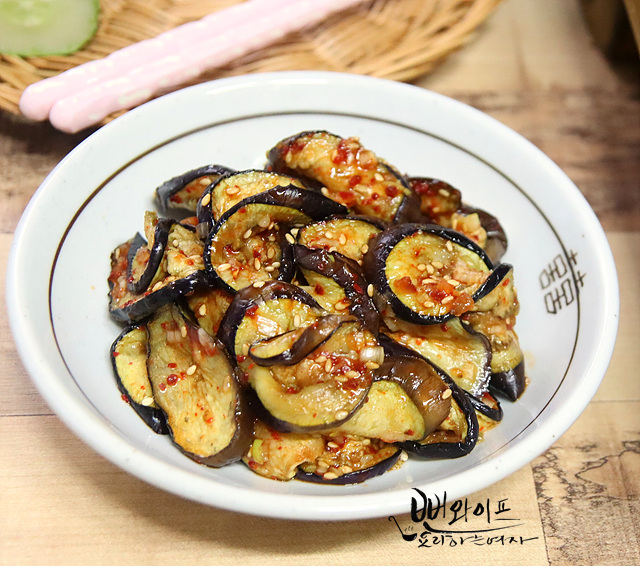
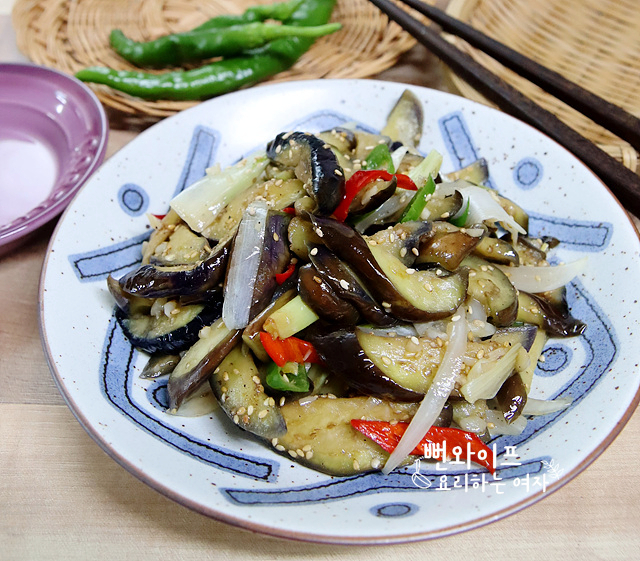
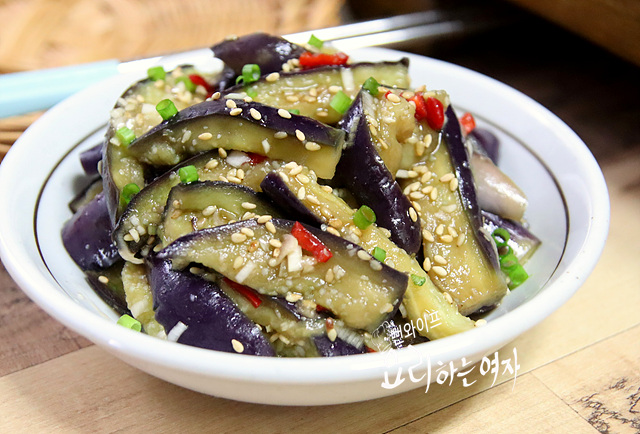
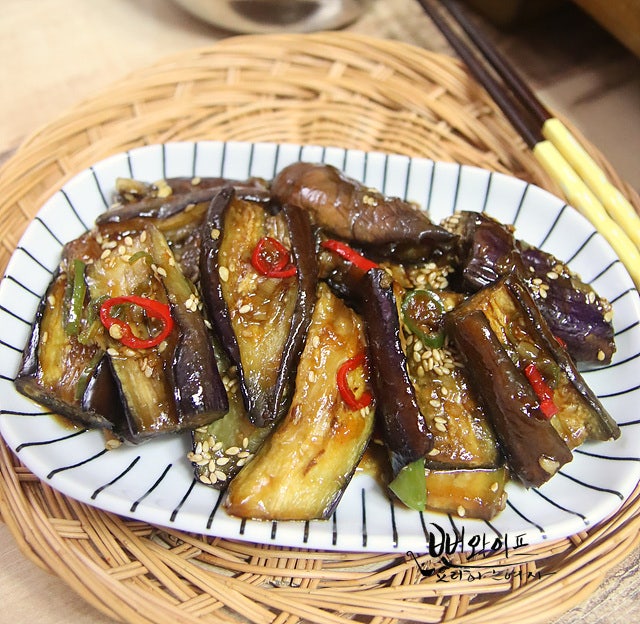
The fully braised eggplant has a wonderful glossy sheen.
Because the eggplant is seared once before being lightly braised in sauce, it does not turn mushy; the skin remains delightfully chewy while the flesh stays tender.
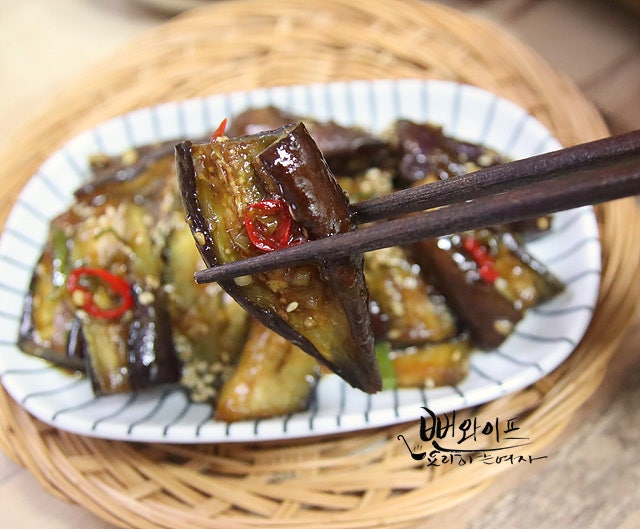
It absorbs the sauce completely and bursts with juicy flavor, making it a perfect match with a bowl of rice.
If you omit the chili peppers, kids can easily enjoy it too, and it is also wonderful served over rice as a rice bowl topping.
 Ppunwife's tips
- Searing the eggplant in a dry pan without oil until browned on both sides reduces its volume as it cooks and evaporates the moisture, preventing it from turning mushy when braised.
- If you omit the chili peppers, kids can easily enjoy this dish without it being spicy, and it works wonderfully served as a rice bowl topping.
FAQ
Why is the eggplant seared in a dry pan before braising?
Cooking it without oil drives off excess moisture and shrinks the eggplant, allowing it to keep a pleasantly chewy texture without turning mushy when braised in the sauce.
How can I make this for kids who cannot eat spicy food?
Simply leave out the Cheongyang chili pepper and red chili pepper. The dish will not be spicy, making it very gentle for kids to enjoy.
Can this be enjoyed in ways other than as a side dish?
Yes, you can serve the braised eggplant over a bowl of warm rice as an eggplant rice bowl (gaji deopbap) for a simple one-bowl meal.
Can I use brewed soy sauce (yangjo-ganjang) instead of regular soy sauce (jin-ganjang)?
Yes, you can substitute brewed soy sauce in equal amounts.