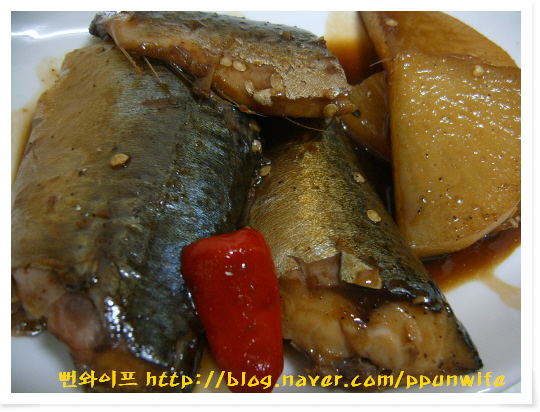
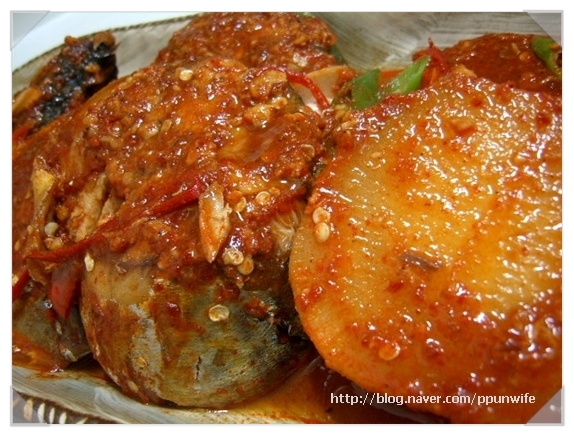
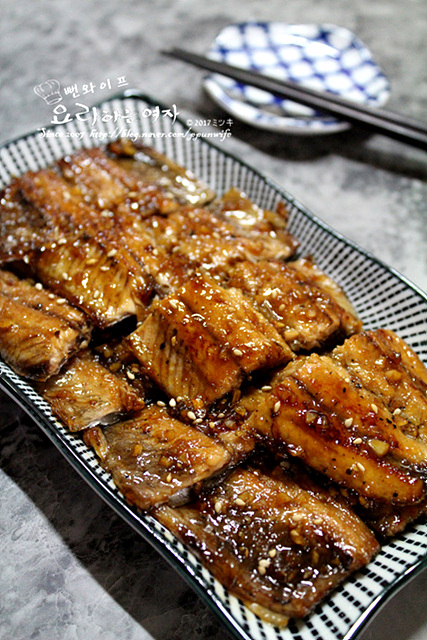
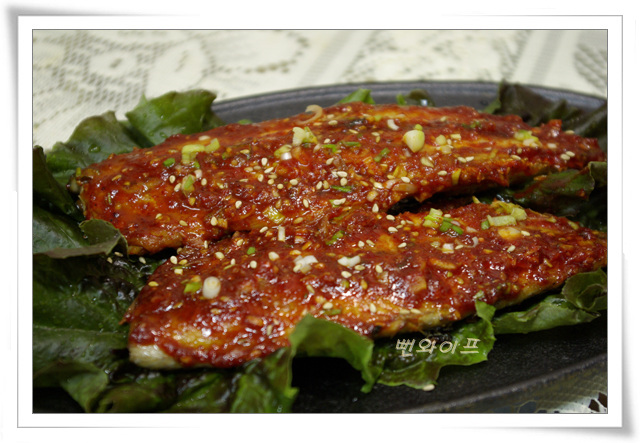
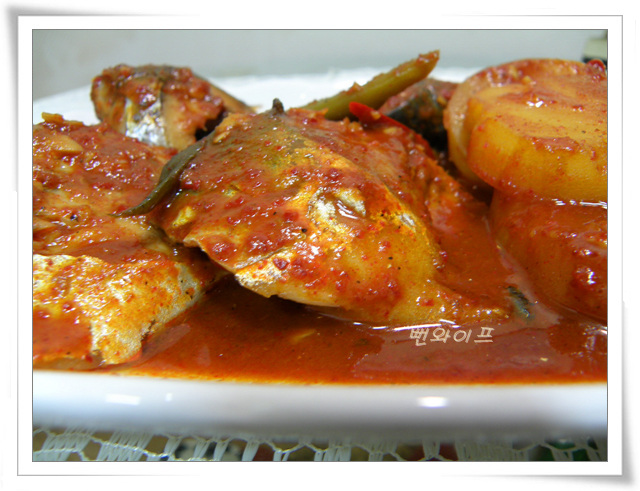
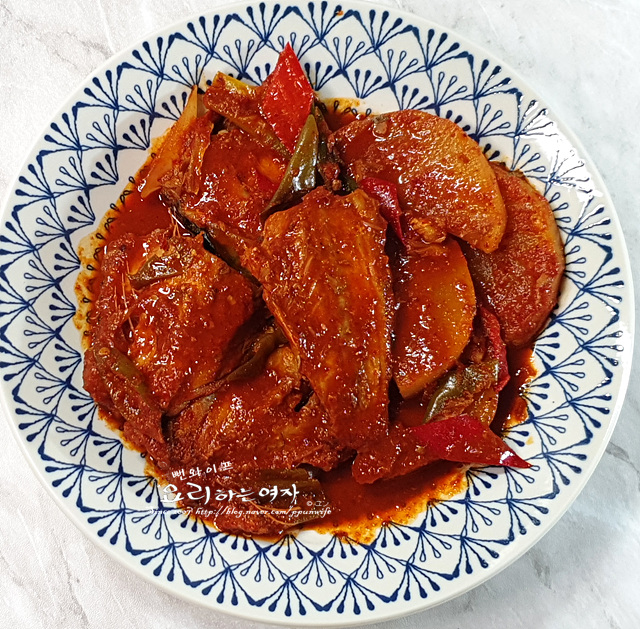
Godeungeo Ganjang Jorim (Soy Braised Mackerel)
A side dish made by pan-frying starch-coated mackerel and braising it in a sweet and savory ginger teriyaki sauce.
Translated from Korean by AI and not yet checked by a native speaker. Amounts and numbers are taken directly from the original recipe. Read the Korean original →
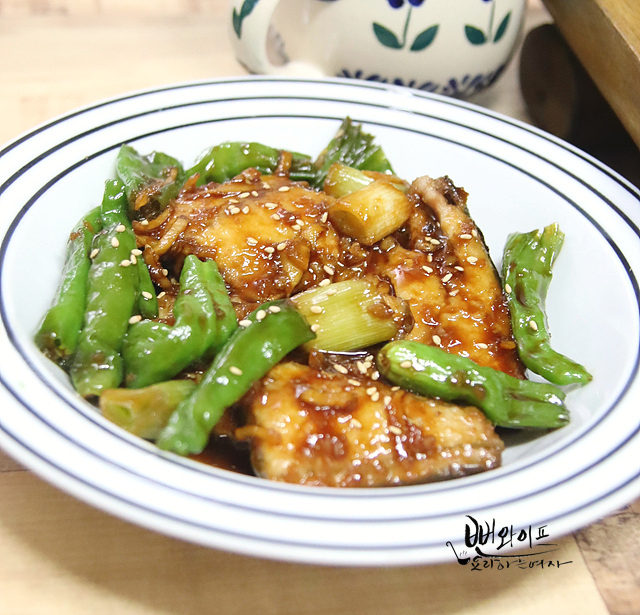
This side dish uses plenty of ginger to tame fishiness and simmers everything in a sweet, savory soy glaze until glossy. Coating the mackerel in starch before pan-frying locks in its juices so the meat stays moist and doesn't break apart. Mild and gentle, it makes a great side dish for the whole family and kids alike.
- Servings
- 2–3 servings
- Difficulty
- Medium
- Spiciness
- Not spicy
Ingredients
Ingredients
- Salted mackerel1 whole
- Shishito peppers (kkwari-gochu)10
- White part of large green onion (daepa)
- Ginger20 g
- Potato starch (or flour)1/2 cup
Seasoning
- Water5 tbsp
- Regular soy sauce (jin-ganjang)2 tbsp
- Mirin (cooking rice wine)2 tbsp
- Rice syrup (jocheong) (or corn syrup (mulyeot), oligosaccharide syrup (oligodang))1 tbsp
- Brown sugar1 tbsp
- Minced garlic1 tbsp
- Lemon juice (or optional)1 tbsp
- Ground black peppera little
- If the salted mackerel feels too salty, soak it in water from washing rice to draw out just the right amount of excess salt. Remove the large backbone and the surrounding long bones to a good extent, and pat thoroughly dry.
- If using fresh mackerel, gently sprinkle with salt and ground black pepper.
- Adding plenty of ginger to the teriyaki sauce helps remove fishiness and deepens the flavor, so prepare more than usual.
Steps
Prepare the ingredients
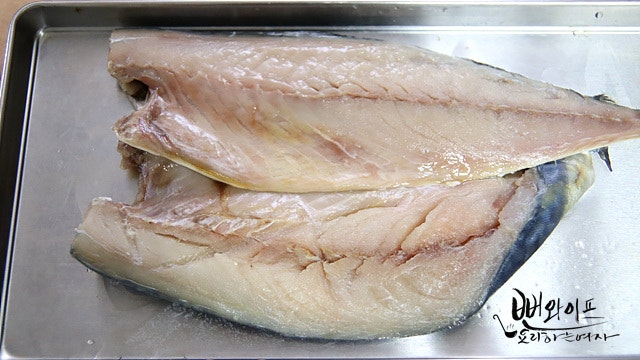
I prepared salted mackerel meant for pan-frying.
If it feels too salty, soak it in water from washing rice to draw out just the right amount of excess salt.
Remove the large backbone and the surrounding long bones to a good extent, and pat thoroughly dry.
If using fresh mackerel, gently sprinkle with salt and ground black pepper.
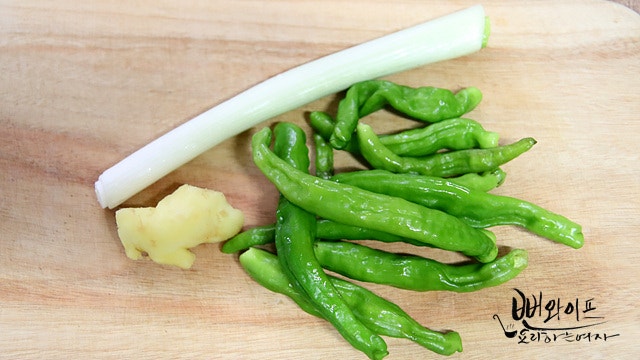
The vegetables to braise alongside are shishito peppers (kkwari-gochu) and the white part of large green onion (daepa).
Adding plenty of ginger to the teriyaki sauce helps remove fishiness and deepens the flavor, so prepare more than usual.
Slice the ingredients
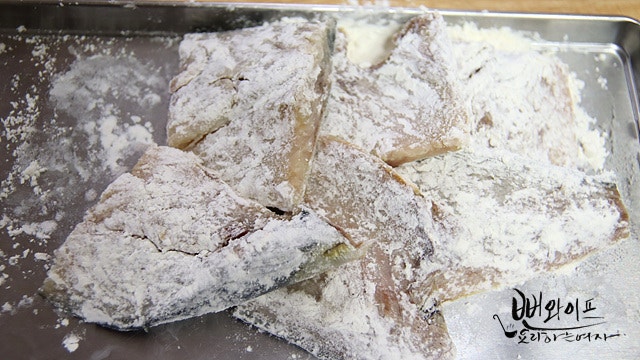
Cut the mackerel into 3 pieces, coat evenly in potato starch or flour, and shake off any excess powder.
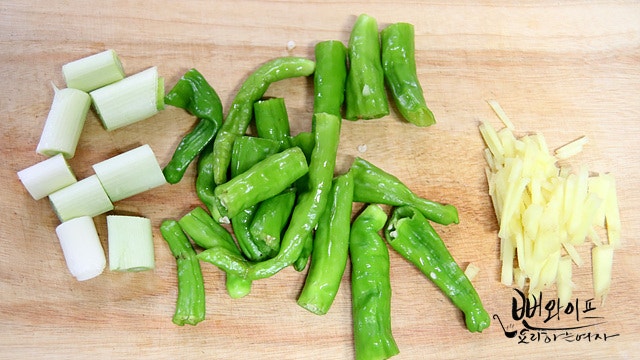
Thinly julienne the ginger, and cut the shishito peppers and large green onion into large pieces.
You can also peel garlic cloves and slice them into thin chips instead.
Pan-fry the mackerel
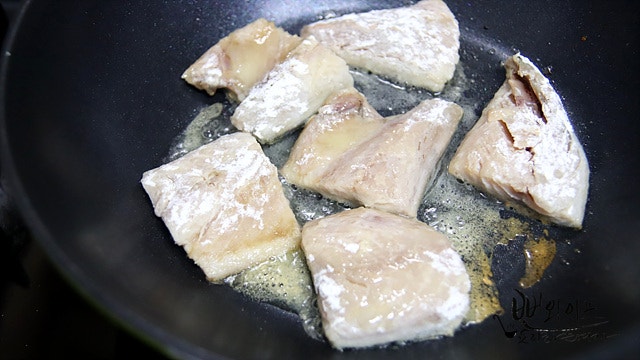
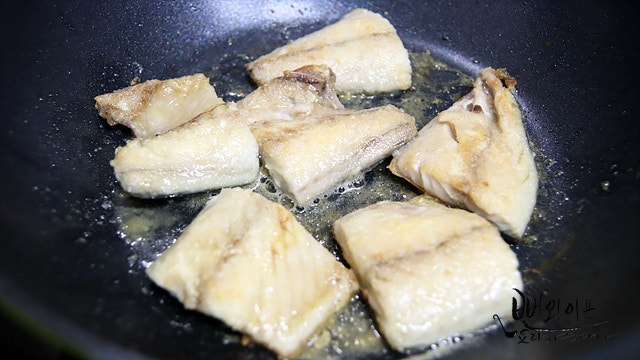
Coat a heated pan with oil and pan-fry the mackerel until crispy on both sides, then transfer to a plate.
Coating it with potato starch or flour before pan-frying firms up the flesh and locks in the fish's natural juices, so it won't break apart while braising and stays wonderfully moist.
Braise
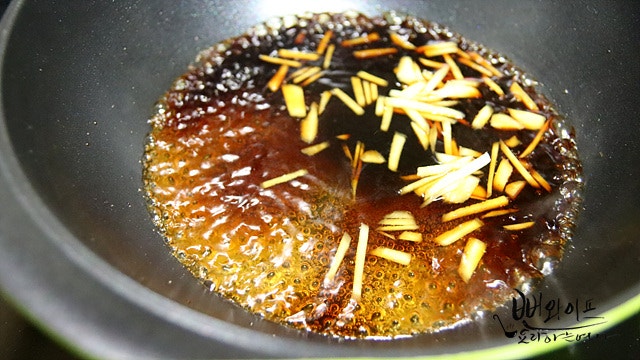
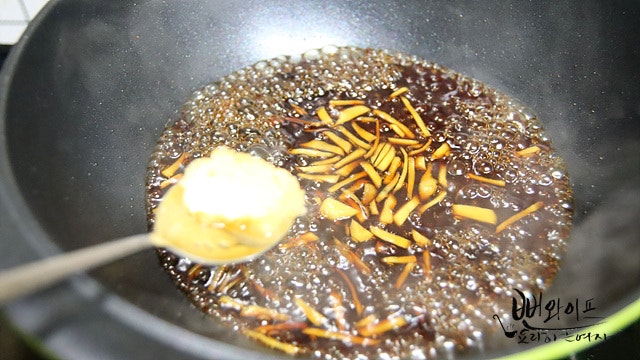
Wipe the pan used for pan-frying the mackerel, then add 5 tbsp water, 2 tbsp regular soy sauce (jin-ganjang), 2 tbsp mirin (cooking rice wine), 1 tbsp rice syrup (jocheong), 1 tbsp brown sugar, and the ginger, bringing it to a bubbling boil so the ginger flavor infuses. If using sliced garlic, add it here to boil together.
Before adding the rest of the ingredients, stir in 1 tbsp minced garlic, and...
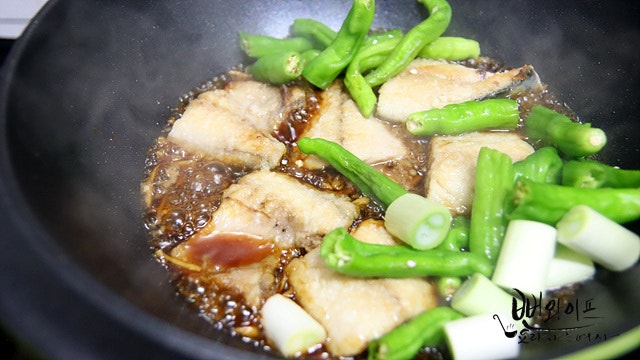
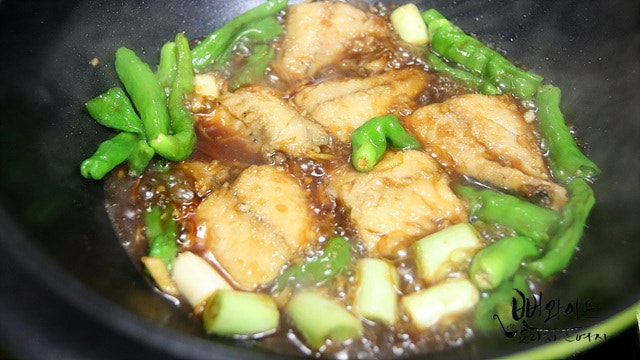
Add the mackerel, shishito peppers, and green onion, then braise over medium to low heat while spooning the sauce over everything so the flavor coats both the mackerel and the vegetables thoroughly.
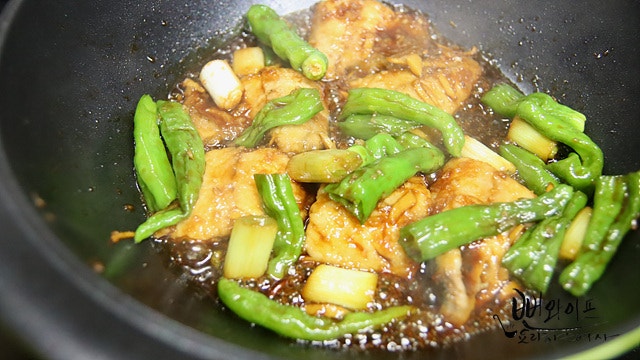
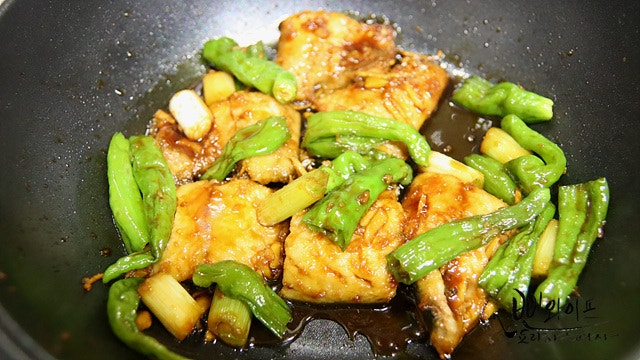
Once glossy and the sauce has reduced until just a little remains on the bottom, add 1 tbsp lemon juice to eliminate any lingering fishiness and bring a fresh brightness, and...
Finish by adding a little ground black pepper.
Serve
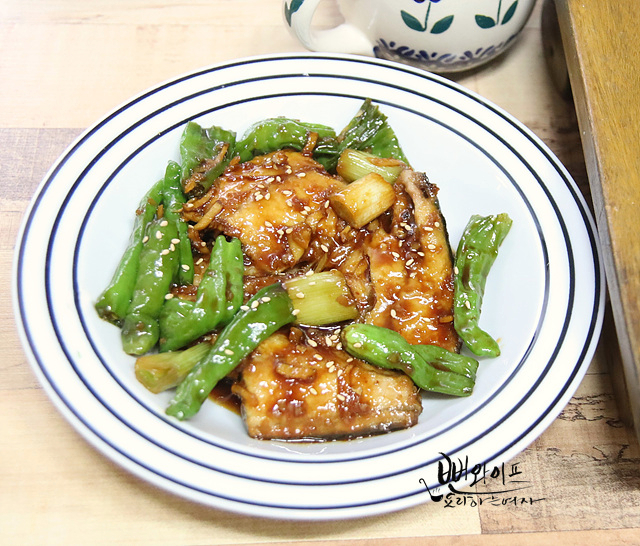
Scrape up the remaining sauce and drizzle it over the top, and you have a teriyaki braised mackerel dish that feels as refined as anything from a specialty restaurant.
 Ppunwife's tips
- Coating it with potato starch or flour before pan-frying firms up the flesh and locks in the fish's natural juices, so it won't break apart while braising and stays wonderfully moist.
- Once glossy and the sauce has reduced until just a little remains on the bottom, add 1 tbsp lemon juice to eliminate any lingering fishiness and bring a fresh brightness.
FAQ
How should I season fresh mackerel?
When using fresh mackerel, gently sprinkle it with salt and ground black pepper before pan-frying.
What should I do if the salted mackerel is too salty?
If the salted mackerel is heavily salted, soak it in water from washing rice before cooking to draw out the excess salt.
Why coat the mackerel in starch before pan-frying?
Coating it in potato starch or flour firms up the flesh so it doesn't break apart during braising, while keeping the juices locked inside.
Can I use other sweeteners instead of rice syrup?
You can substitute corn syrup (mulyeot) or oligosaccharide syrup (oligodang).