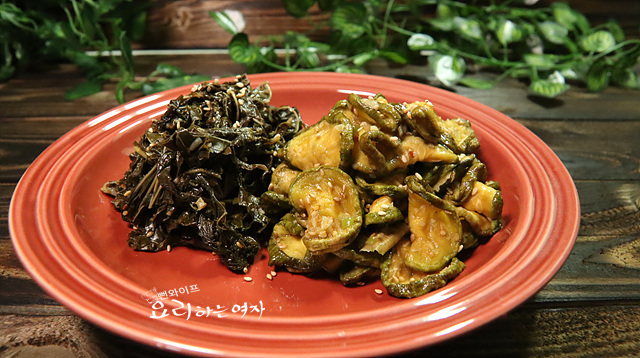
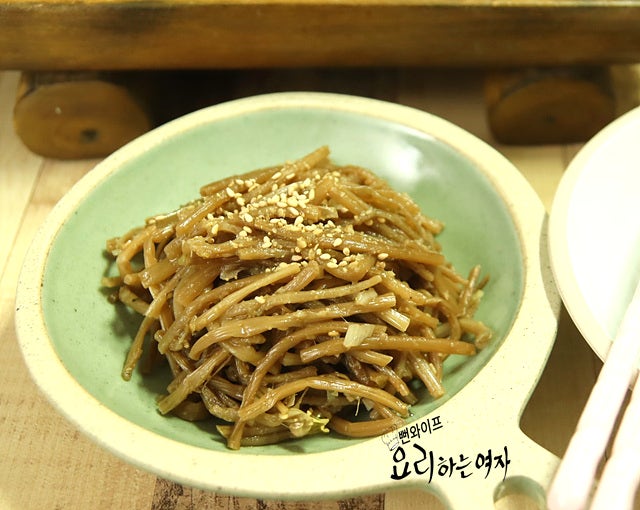
Namul Bokkeum (Stir Fried Seasoned Vegetables)
A Jeongwol Daeboreum side dish made by gently boiling dried chwinamul and gondre, then moistly stir-frying them with broth.
Translated from Korean by AI and not yet checked by a native speaker. Amounts and numbers are taken directly from the original recipe. Read the Korean original →
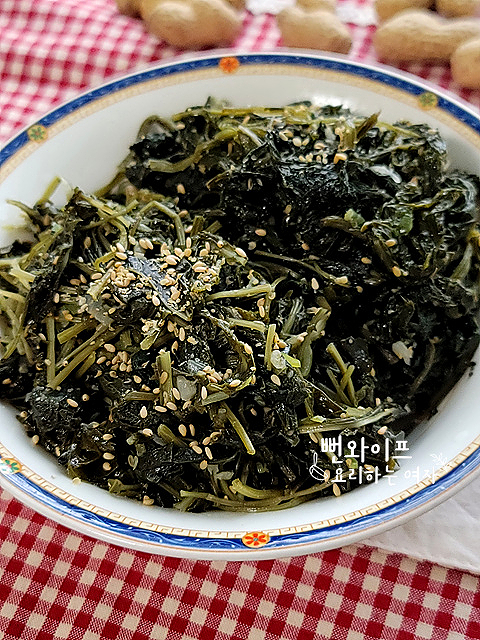
This aged namul bokkeum is made by thoroughly soaking, boiling, and steaming dried leaves and stems before stir-frying them into a savory dish. Pouring in anchovy broth and covering the pan to steam while stir-frying makes the greens even softer and allows the seasonings to soak in deeply. Mild and savory, it is wonderful to enjoy for holiday feasts or as an ingredient in bibimbap.
- Servings
- about 4–5 servings
- Difficulty
- Medium
- Spiciness
- Not spicy
Ingredients
Dried Chwinamul Stir-fry Ingredients
- Boiled gondre (cirsium setidens)200 g
- Soup soy sauce (guk-ganjang) (or tuna extract sauce (chamchi-aek))1 tbsp
- Minced green onion2 tbsp
- Minced garlic1/2 tbsp
- Mirin (cooking rice wine)1 tbsp
- Anchovy broth4 tbsp
- Salta little
- Toasted sesame oil (or perilla oil)1 tbsp
- Ground toasted sesame seeds1 tbsp
Dried Gondre Stir-fry Ingredients
- Boiled gondre (cirsium setidens)200 g
- Soup soy sauce (guk-ganjang)1 tbsp
- Minced green onion2 tbsp
- Minced garlic1/2 tbsp
- Mirin (cooking rice wine)1 tbsp
- Anchovy broth4 tbsp
- Salta little
- Toasted sesame oil (or perilla oil)1 tbsp
- Ground toasted sesame seeds1 tbsp
- Soak in plenty of water for about 1 to 2 hours.
- I prepared two types of dried greens with thin stems and leaves, but you can follow the exact same method for mulberry leaves, castor leaves, and other similar greens.
- The drained chwinamul and gondre weigh 200 g each. You can consider this to be about twice their dry weight.
Steps
Prepare the ingredients
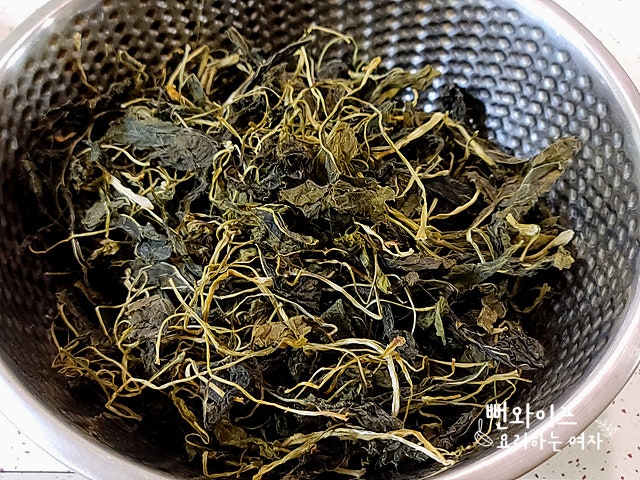
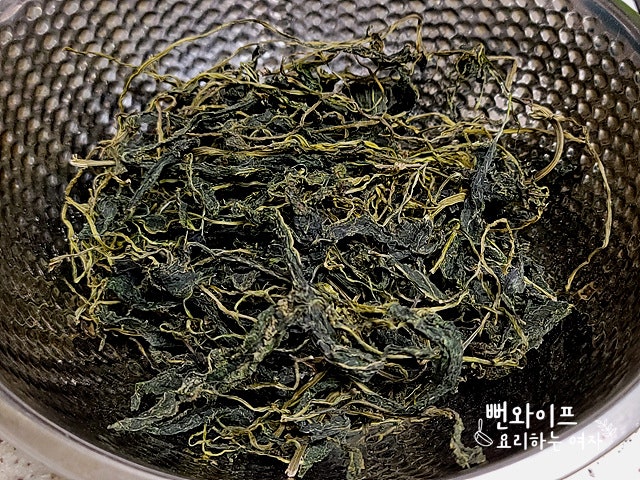
Here are dried chwinamul (left) and dried gondre (right).
I prepared two types of dried greens with thin stems and leaves, but you can follow the exact same method for mulberry leaves, castor leaves, and other similar greens.
Soak dried chwinamul and dried gondre
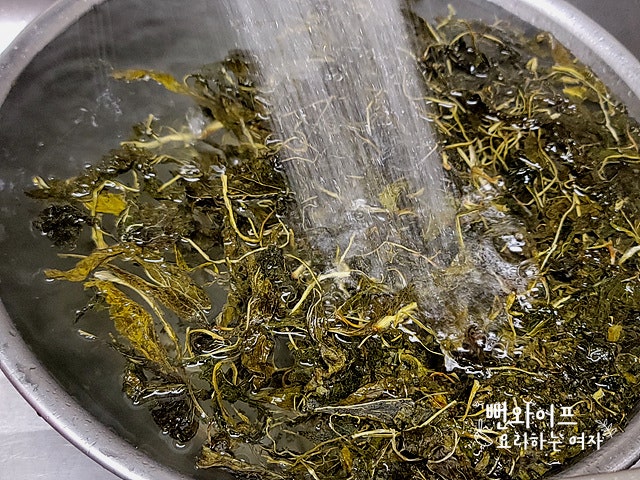
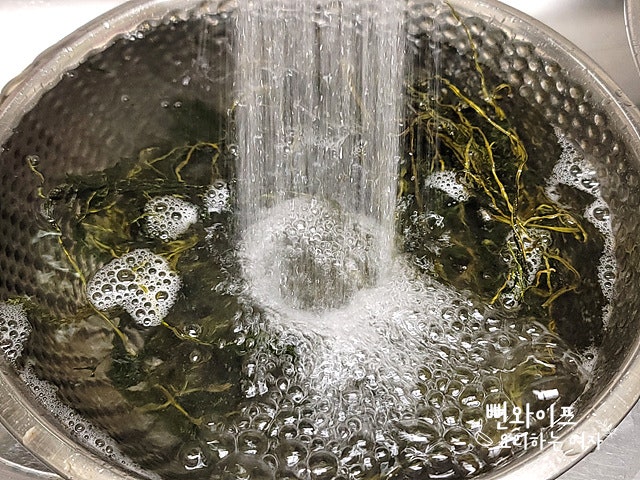
Because the leaves and stems are thin and delicate, they crumble easily, so handle them gently until they are completely soaked in water.
Place them in plenty of water and soak for about 1 to 2 hours. Hot or lukewarm water both work fine, though warmer water will naturally rehydrate them faster.
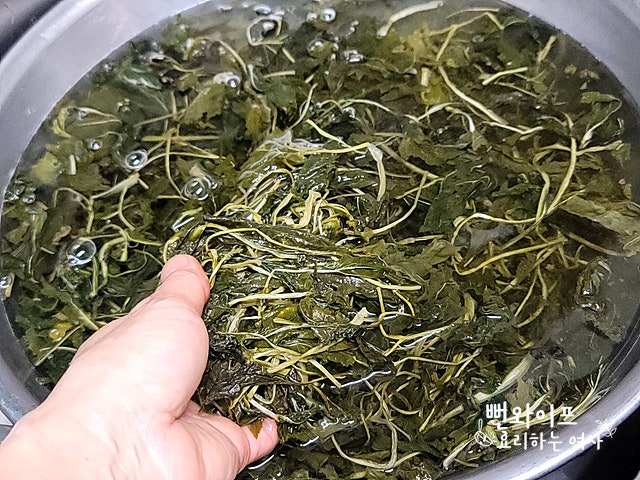
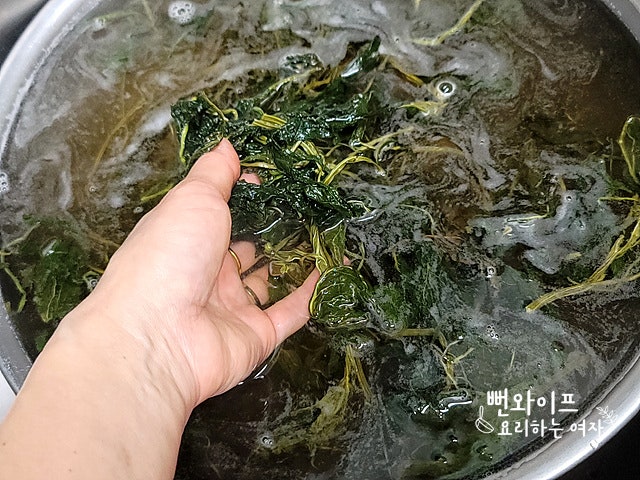
Once they are sufficiently soaked so they will not break or crumble when touched, you can boil them.
How to boil dried chwinamul and dried gondre
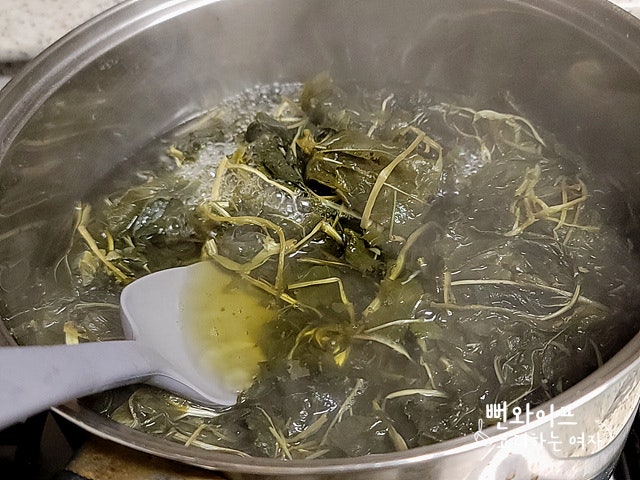
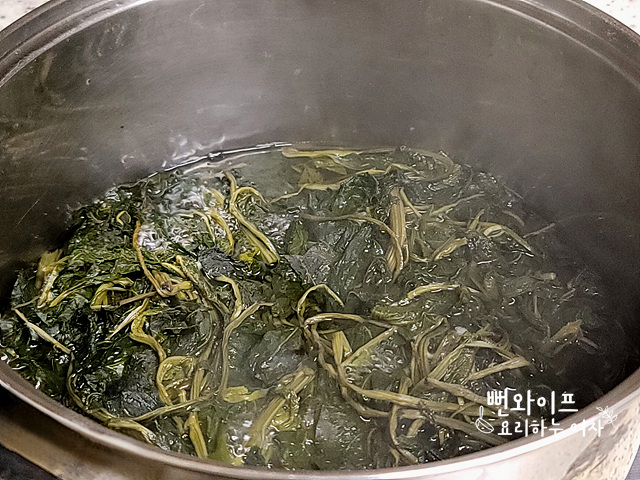
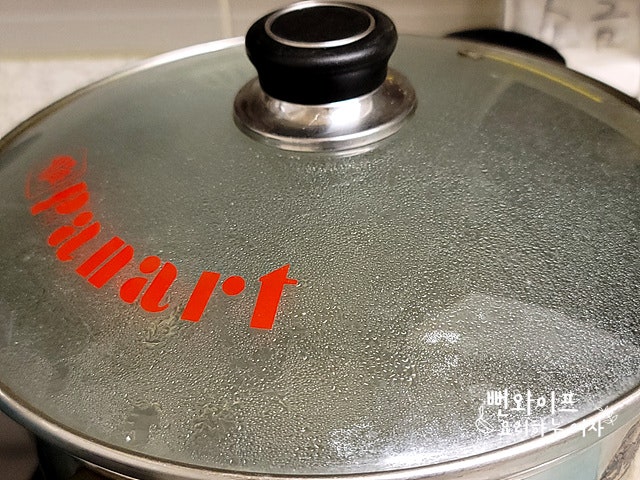
Pour in plenty of water and bring to a boil over high heat. Once boiling, reduce to low heat, cover with a lid, and simmer for around 20 minutes.
Turn off the heat and let them steam in the residual heat with the lid on for about 20 minutes.
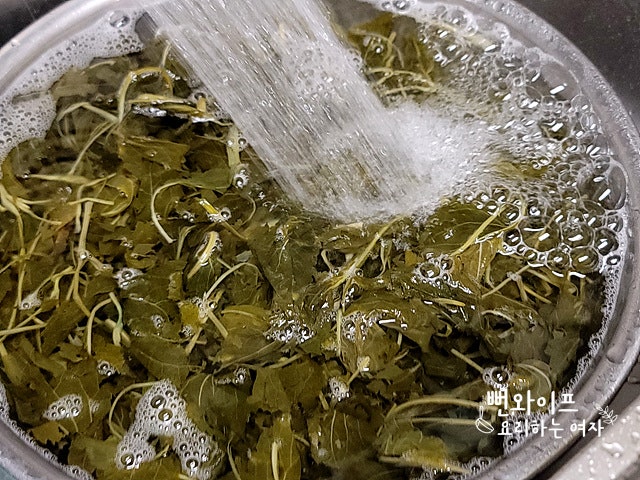
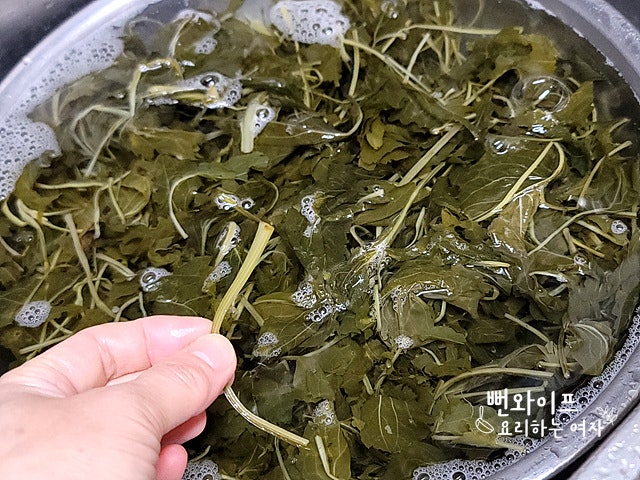
Rinse several times until the water runs clear.
Trim off any tough or fibrous stems.
Slice
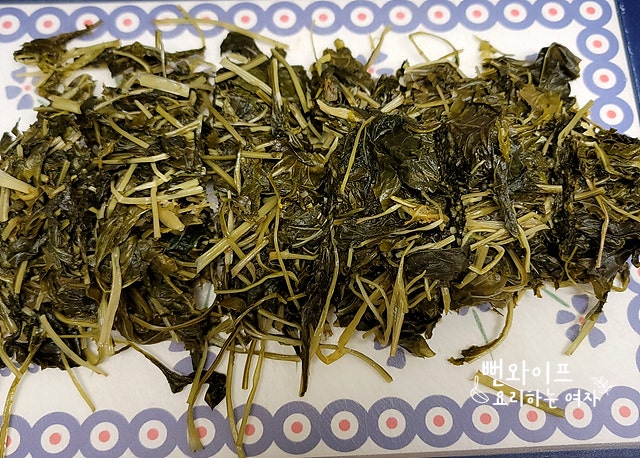
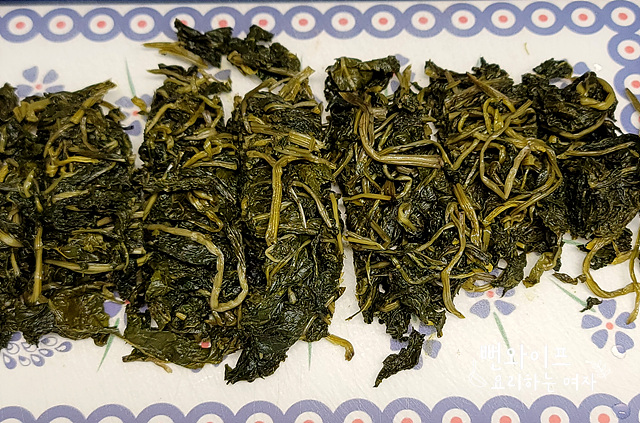
The drained chwinamul and gondre weigh 200 g each.
You can consider this to be about twice their dry weight.
Cut them into bite-sized lengths.
Season chwinamul and gondre
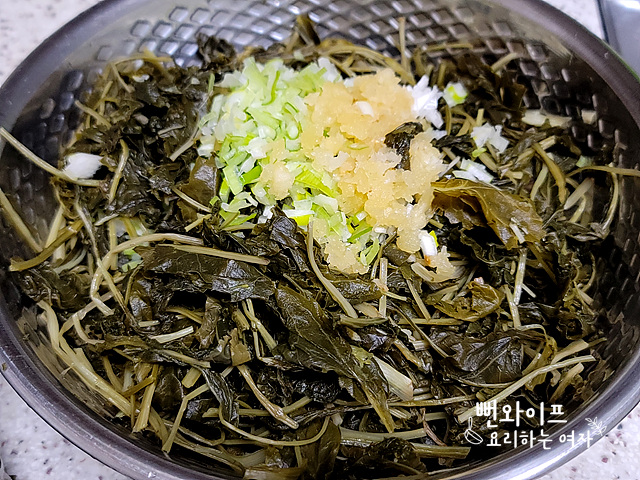
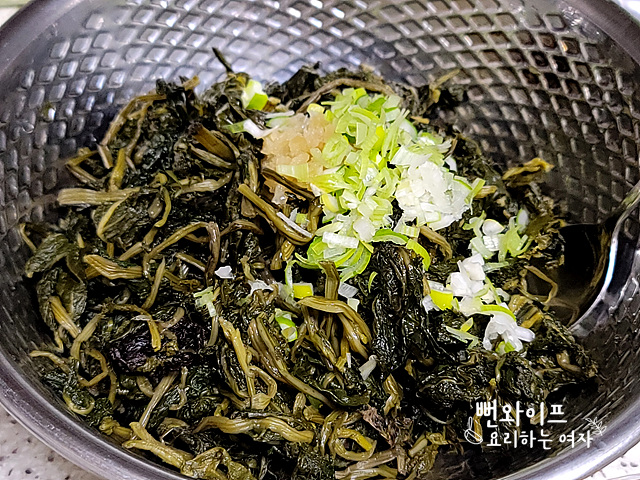
Season the chwinamul and gondre by mixing each with 1 tbsp soup soy sauce (guk-ganjang), 2 tbsp minced green onion, 1/2 tbsp minced garlic, and 1 tbsp mirin (cooking rice wine).
Adding sugar or mirin helps remove the characteristic smell of dried greens.
You can also use tuna extract sauce (chamchi-aek) instead of soup soy sauce for extra umami.
Stir-fry
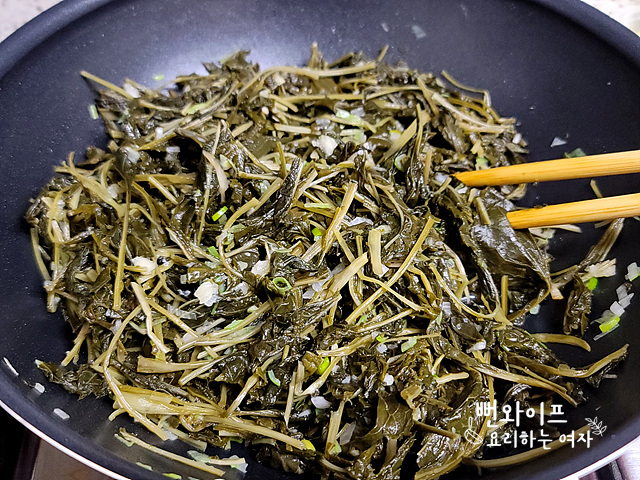
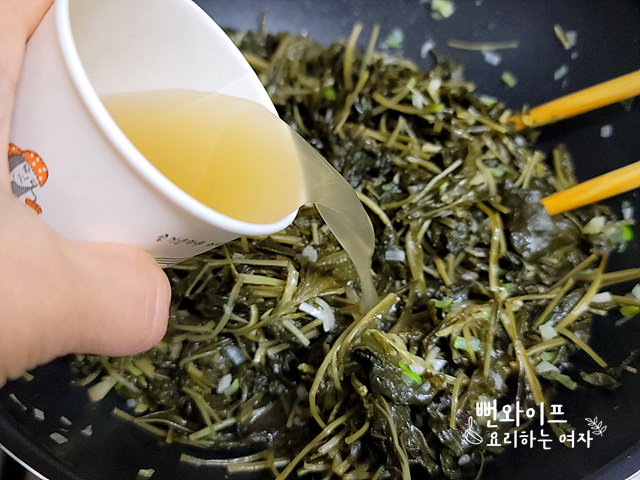
Heat oil in a pan and stir-fry briskly. Once the greens are evenly coated in oil, pour in about 1/3 cup (4 tbsp) of anchovy broth.
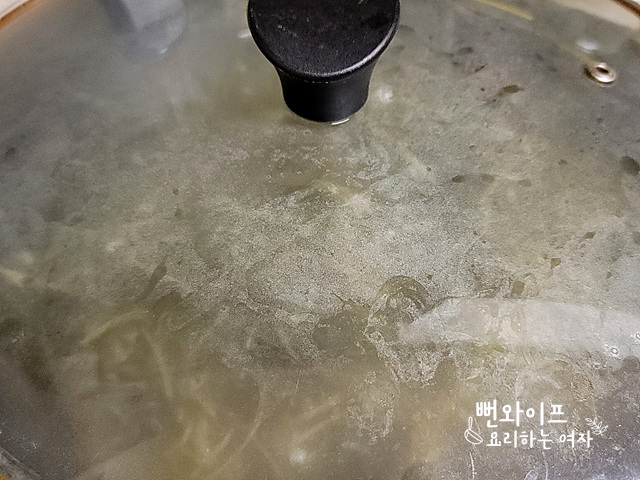
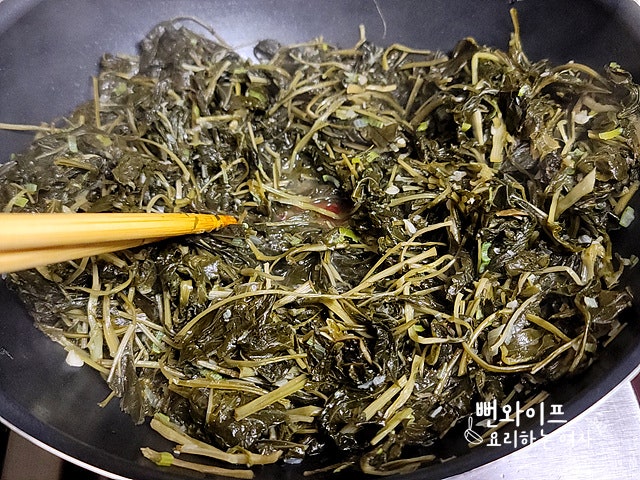
Cover with a lid and let steam for 2 to 3 minutes; this allows the flavors to absorb well and softens the greens pleasantly.
Open the lid, taste to check the texture, and if they still seem tough, pour in a little more broth or water, cover, and steam a bit longer.
Stir-fry to cook off the remaining liquid, then taste and adjust the seasoning with about 1/2 tsp of salt if needed.
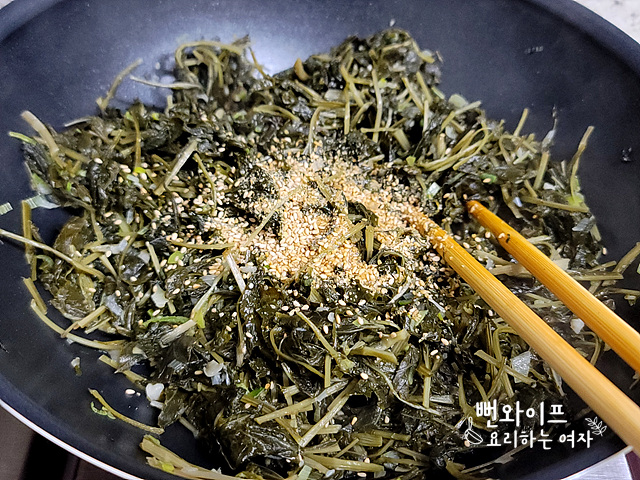
Finish by adding 1 tbsp of toasted sesame oil or perilla oil, along with 1 tbsp of ground toasted sesame seeds (ground sesame seeds).
Complete
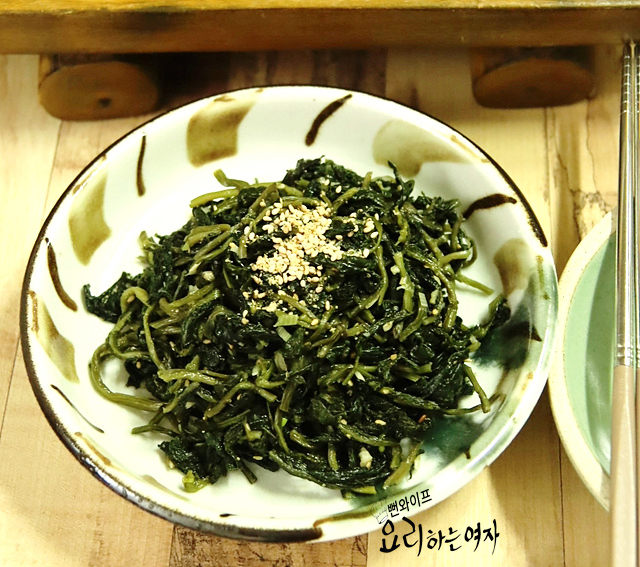
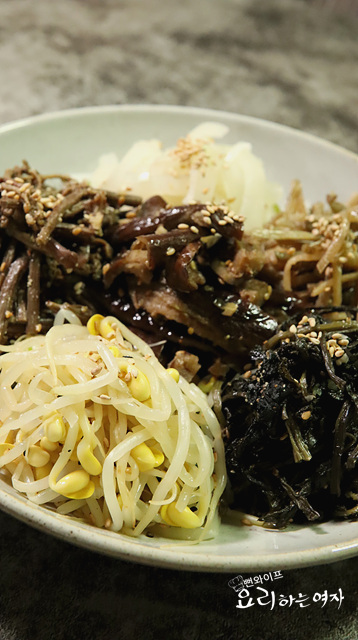
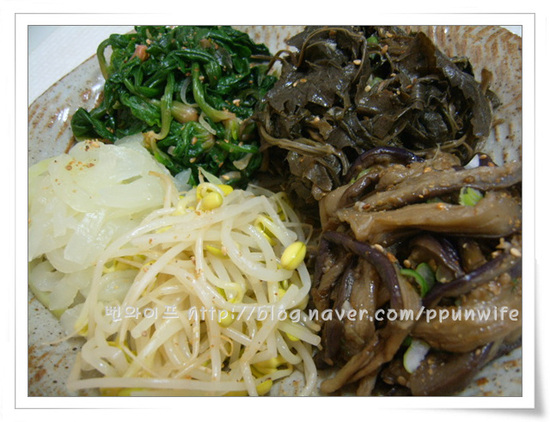
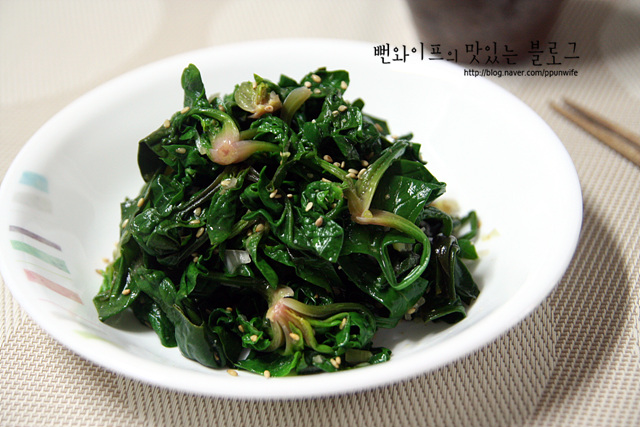
The Jeongwol Daeboreum seasoned greens—dried chwinamul bokkeum and gondre bokkeum—are complete.
Making a few kinds of Daeboreum greens in advance and mixing them with rice is so delicious, you will never get tired of it even after several meals.
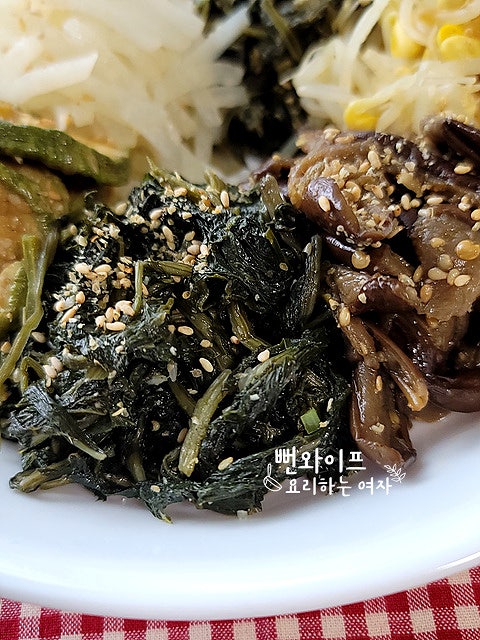
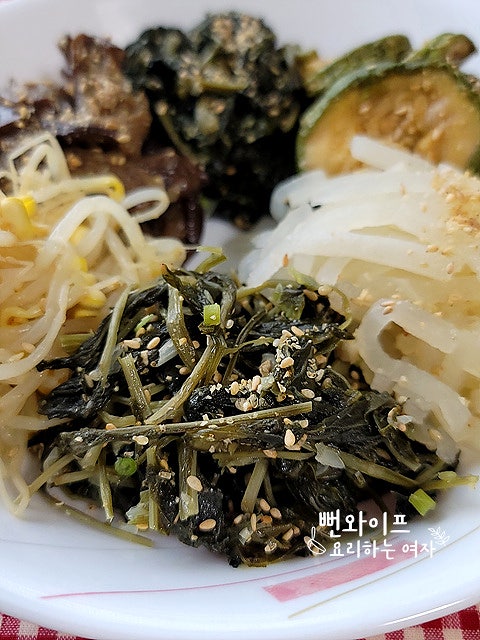
The effort and care you put in will be rewarded with wonderful flavor in every bite.
Pre-soaked greens are also available at markets and grocery stores, so stir-fry a few varieties and enjoy the deep, earthy taste of traditional dried namul.
 Ppunwife's tips
- Adding sugar or mirin helps eliminate the distinctive earthy smell of dried greens.
- You can also use tuna extract sauce instead of soup soy sauce to boost savory umami.
- Open the lid and chew a piece to test the texture; if it is still tough, add a little more broth or water, cover, and steam a bit longer.
FAQ
How do I eliminate the distinct smell of dried greens?
Adding a little mirin or sugar when seasoning the greens helps neutralize the unique odor of dried namul.
What should I do if the greens are still tough after stir-frying?
Add a bit more water or broth, cover with a lid, and let them steam a little longer to soften them up nicely.
Is there a substitute for soup soy sauce?
If you want extra savory depth, you can use tuna extract sauce instead of soup soy sauce.
Can I use this same cooking method for other dried greens besides chwinamul and gondre?
Yes, you can soak, boil, and stir-fry other greens with thin stems and leaves—such as dried mulberry leaves or castor leaves—using the exact same method.