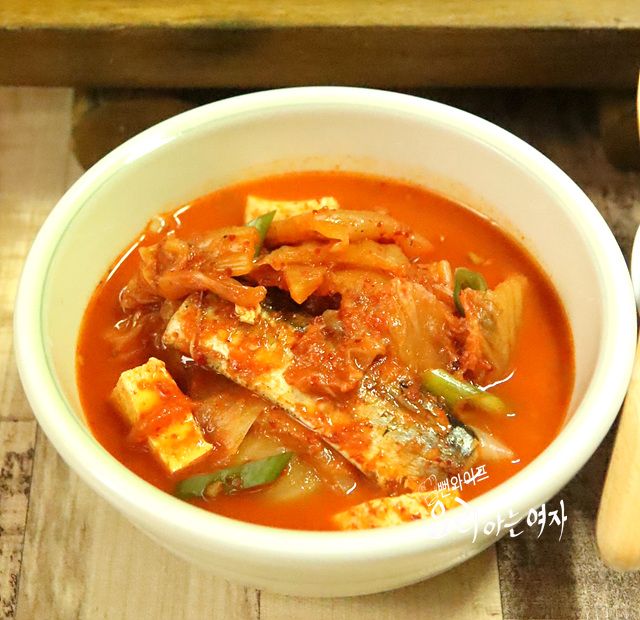
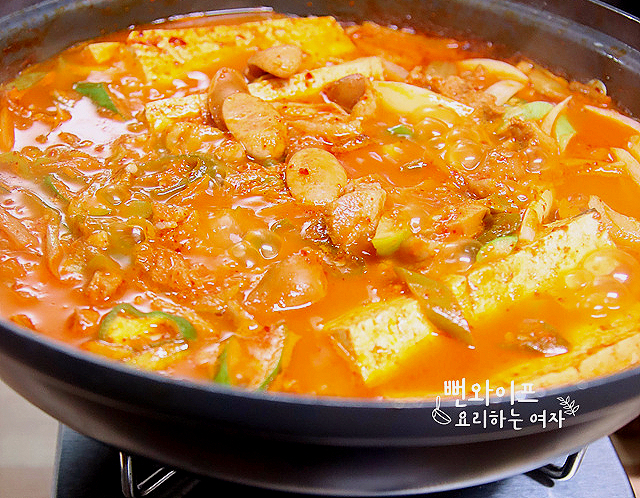
Clean, Light Kimchi Jjigae (Kimchi Stew) with Anchovies
A light stew simmered without meat, using toasted dried soup anchovies and kimchi brine.
Translated from Korean by AI and not yet checked by a native speaker. Amounts and numbers are taken directly from the original recipe. Read the Korean original →
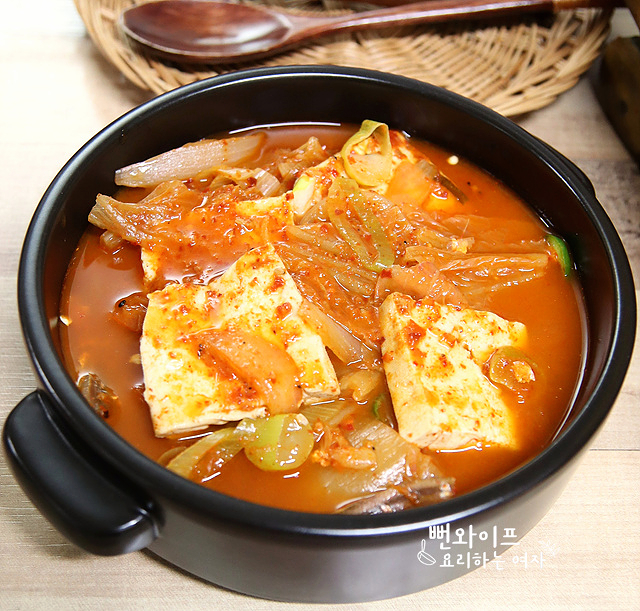
Instead of pork, toasted dried soup anchovies are added so the broth stays light and clean rather than heavy. Kimchi brine brings out a deep umami flavor, and plenty of tofu makes it hearty. It is a wonderful way to enjoy a clean-tasting stew with simple ingredients.
- Servings
- 3–4 servings
- Difficulty
- Medium
- Spiciness
- Spicy
Ingredients
Ingredients
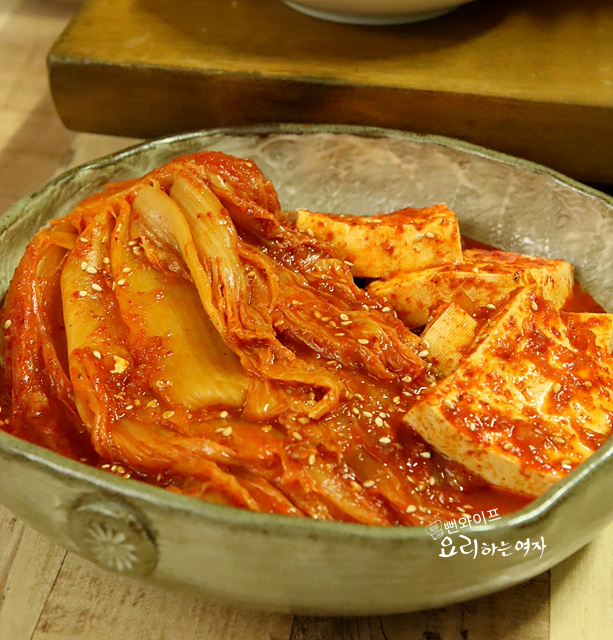
- Aged sour kimchi300 g
- Tofu200 g
- Onion1/2 (small)
- Large green onion (daepa)1/4 stalk
- Cheongyang chili pepper (hot green chili)1
- Dried soup anchovies20 (about)
- Water3 cups
- Kimchi brine1/2 cup
- Cooking oil and perilla oil
Seasoning
- Gochugaru (Korean chili flakes)1 tbsp
- Tuna extract sauce (chamchi-aek) (or soup soy sauce (guk-ganjang), salted fermented shrimp (saeujeot))1–2 tbsp
- Mirin (cooking rice wine)1 tbsp
- Salta little
- Ground black peppera little
- Remove the heads and guts of the dried soup anchovies before using.
- Use half a head (300 g) of aged sour kimchi or mugeonji.
- Instead of tuna extract sauce, you can use soup soy sauce, fish sauce, or salted fermented shrimp, and add a little sugar depending on how sour your kimchi is.
- Since there is no meat, try adding plenty of tofu.
Steps
Prepare the ingredients
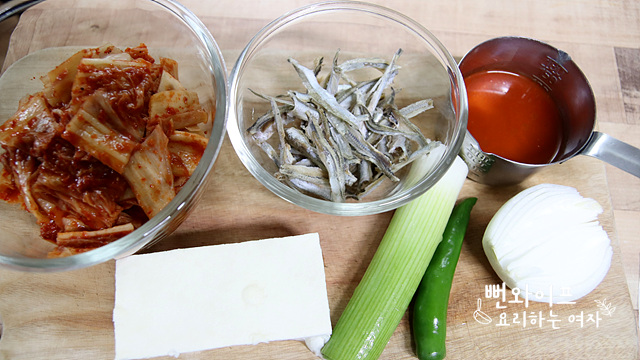
Prepare half a head (300 g) of aged sour kimchi or mugeonji.
Remove the heads and guts from about 20 dried soup anchovies.
Prepare a small amount of tofu, onion, large green onion, and Cheongyang chili pepper.
Adding a bit of kimchi brine, which is concentrated flavor, lets you cut down on other seasonings or chili flakes while making the broth refreshing and rich.
Cut the ingredients
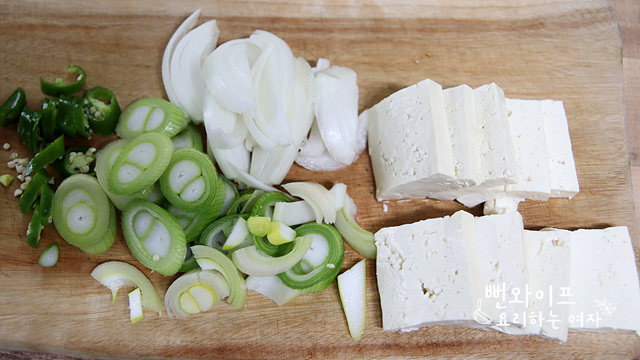
Slice the tofu into thick pieces, thinly slice the onion, and slice the large green onion and Cheongyang chili pepper either diagonally or into rounds.
Toast the anchovies
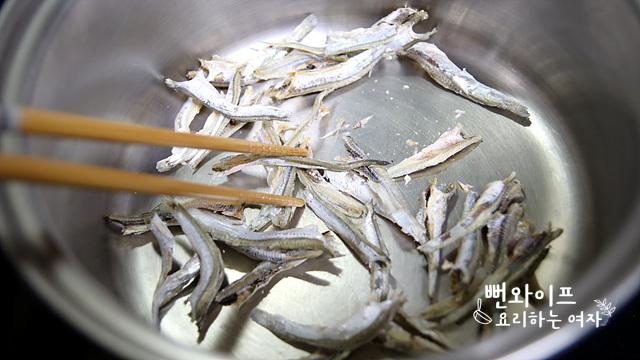
Toast the anchovies until crisp to remove any fishy odor and bring out a savory, nutty broth flavor.
Stir-fry the kimchi
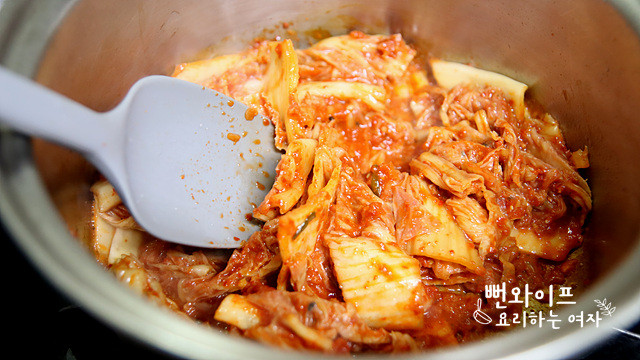
Add equal parts perilla oil and cooking oil to a pot, and stir-fry the kimchi until translucent and tender.
Simmer
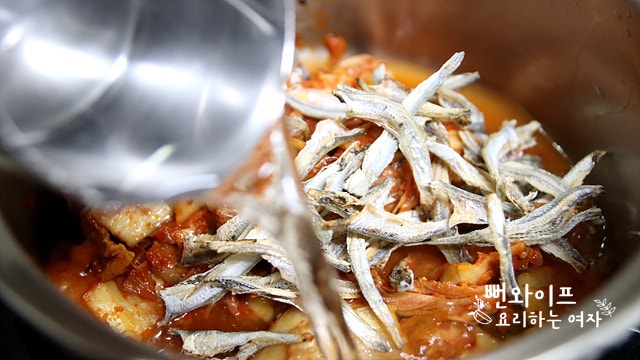
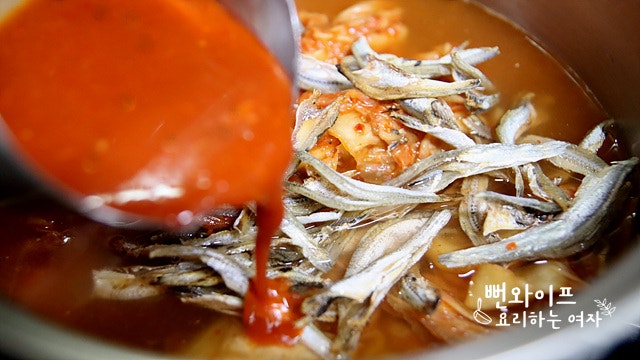
Add the anchovies and 3 cups of water, then pour in 1/2 cup of kimchi brine.
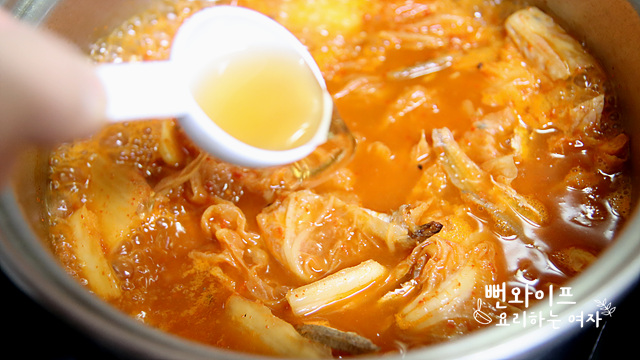
Add 1 to 2 tbsp tuna extract sauce and 1 tbsp mirin; once it comes to a rolling boil, simmer gently so the flavor of the anchovies infuses the broth and the kimchi softens.
Instead of tuna extract sauce, you can use soup soy sauce, fish sauce, or salted fermented shrimp, and add a little sugar depending on how sour your kimchi is.
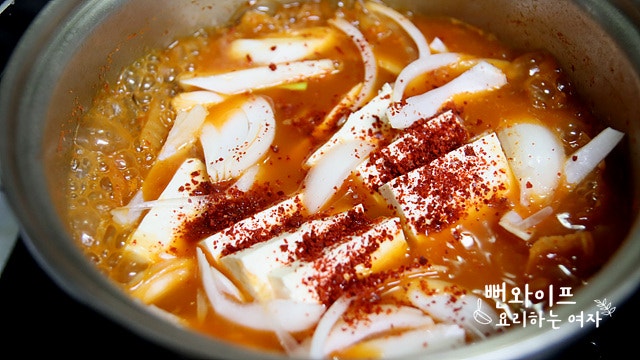
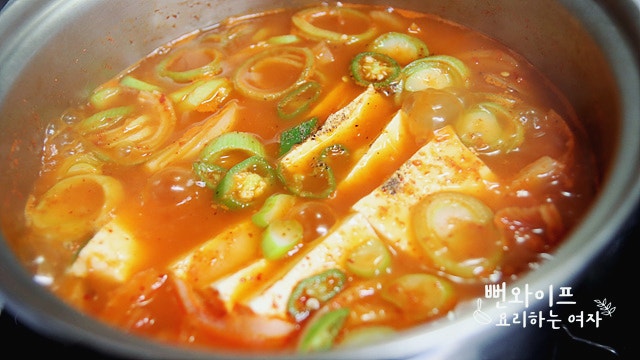
Add the tofu, onion, and 1 tbsp gochugaru, and bring to a brief boil.
Taste the broth and adjust the seasoning with salt if needed.
Finally, add the large green onion, Cheongyang chili pepper, and a little ground black pepper, then bring to one more brief boil to finish.
Complete
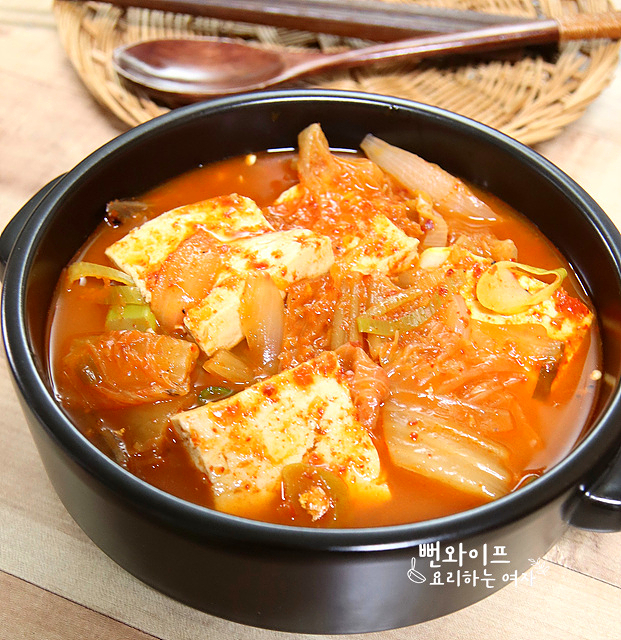
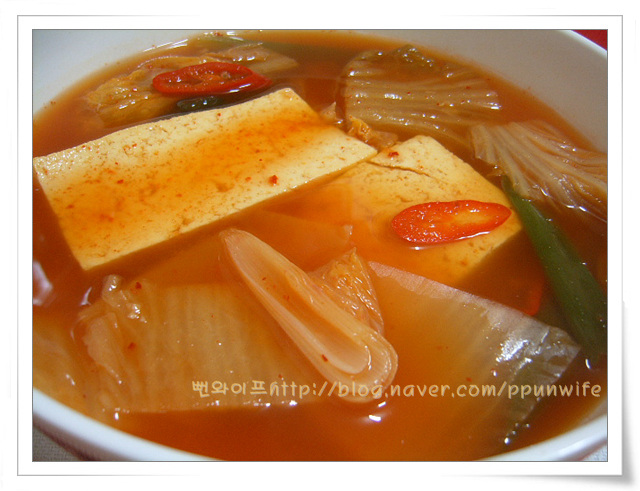
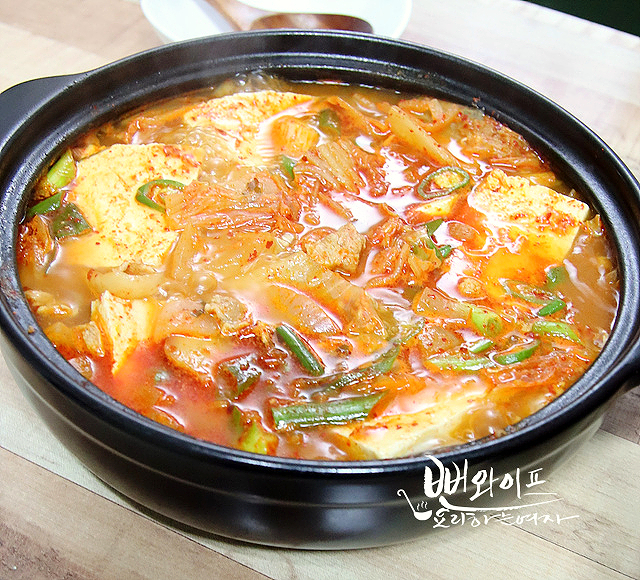
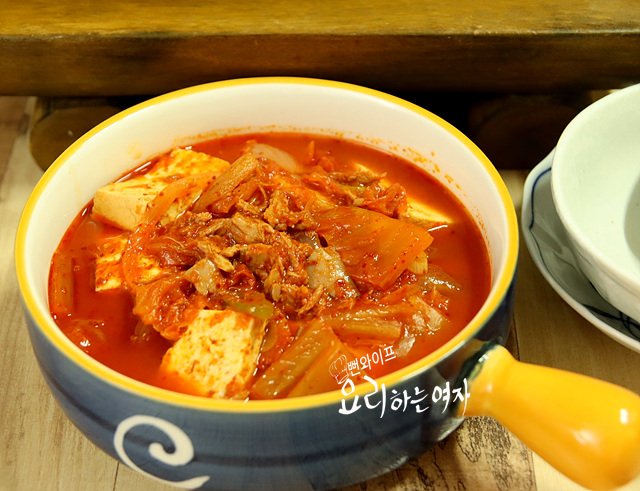
Kimchi jjigae is always an appetizing soup dish.
Since there is no meat, try adding plenty of tofu.
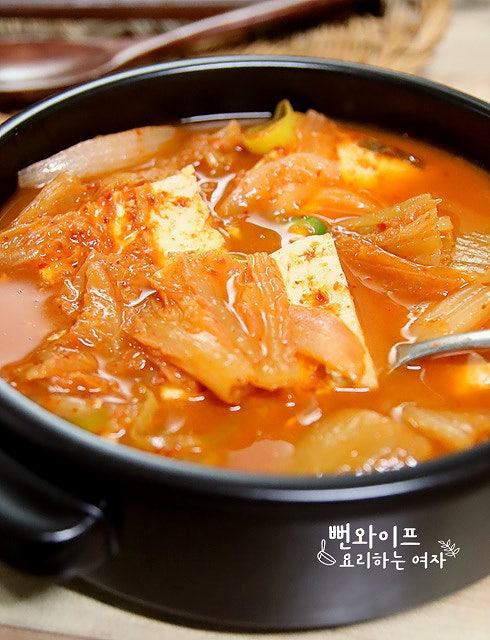
The thick slabs of tofu take the place of meat, and spoonfuls with tender-crisp kimchi stay clean and refreshing without feeling greasy to the very end.
You could say it is richer and has more solid ingredients than a plain kimchi soup.
In any case, it is delicious.
 Ppunwife's tips
- Adding a bit of kimchi brine, which is concentrated flavor, lets you cut down on other seasonings or chili flakes while making the broth refreshing and rich.
- Toast the anchovies until crisp to remove any fishy odor and bring out a savory, nutty broth flavor.
FAQ
How can I reduce the fishy smell from the anchovies?
After removing the heads and guts, toast them dry in the pot until crisp first. This drives away off-odors and brings out a savory flavor.
What seasonings can I use instead of tuna extract sauce?
You can season the broth instead with soup soy sauce, fish sauce, or salted fermented shrimp.
What should I do if the kimchi is overly sour?
Simmer with a little sugar added according to how sour the kimchi is to balance the tartness.
Why do you add kimchi brine?
Adding kimchi brine allows you to use less gochugaru and other seasonings while giving the broth a more refreshing, deep flavor.