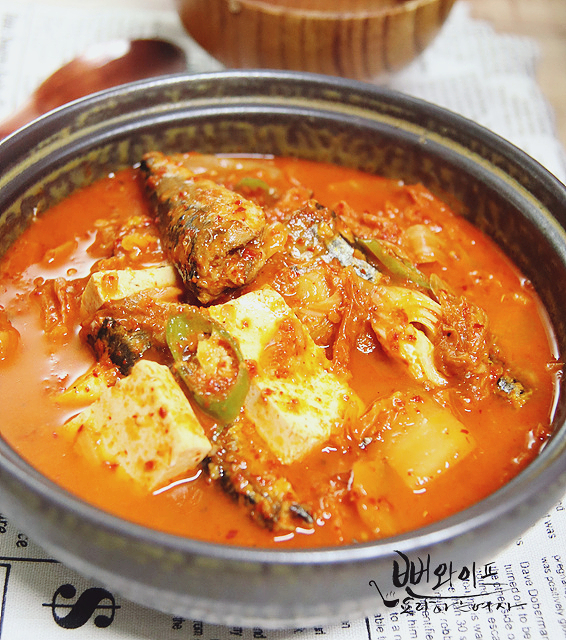
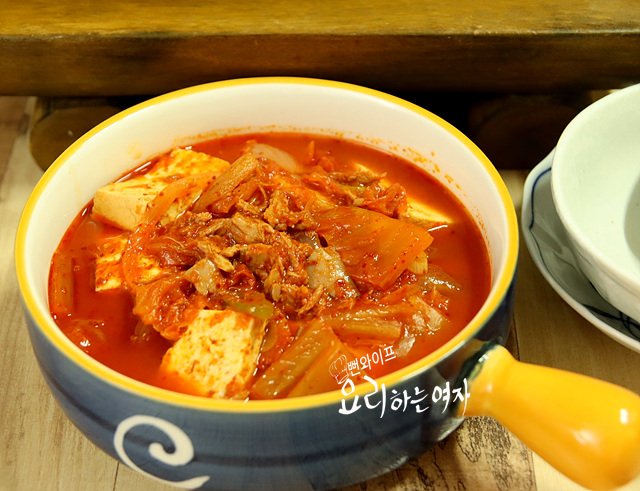
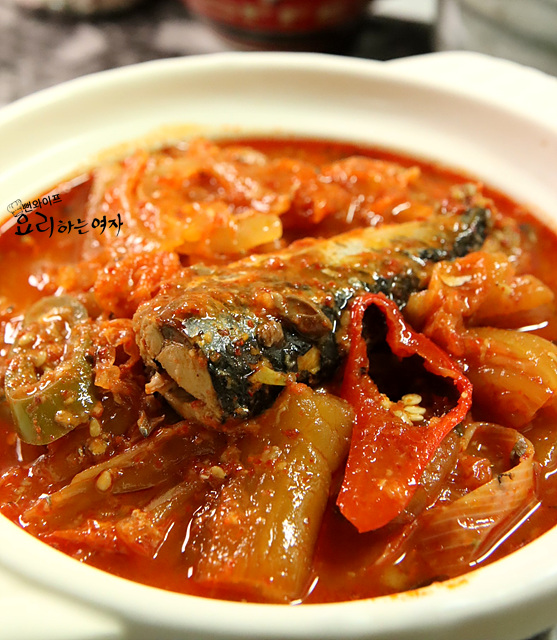
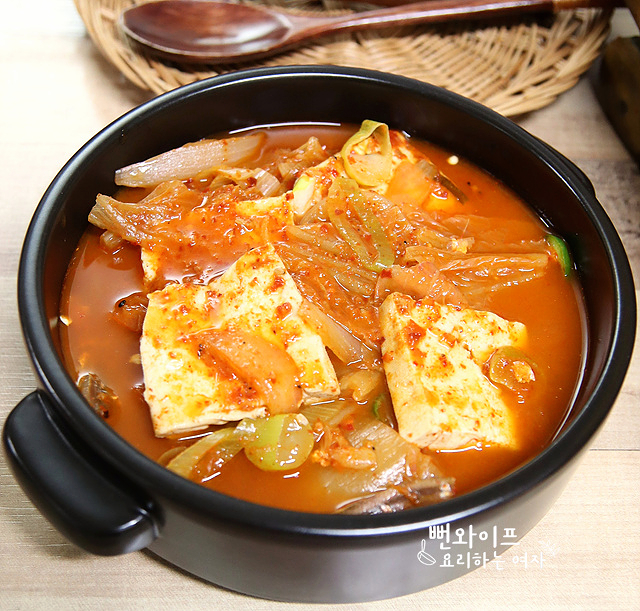
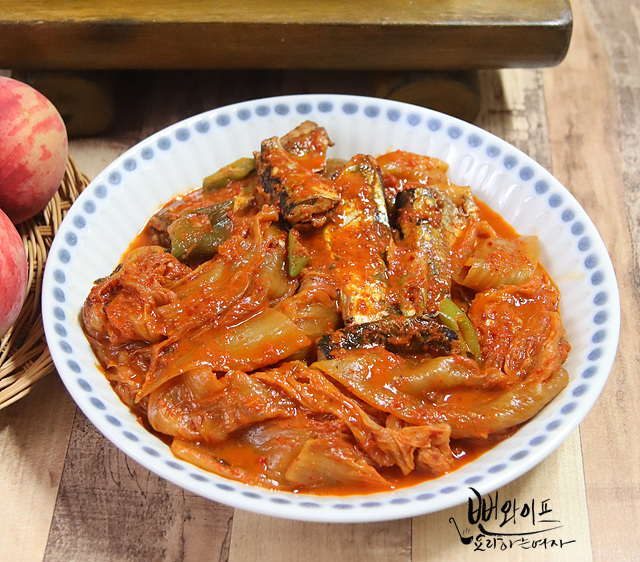
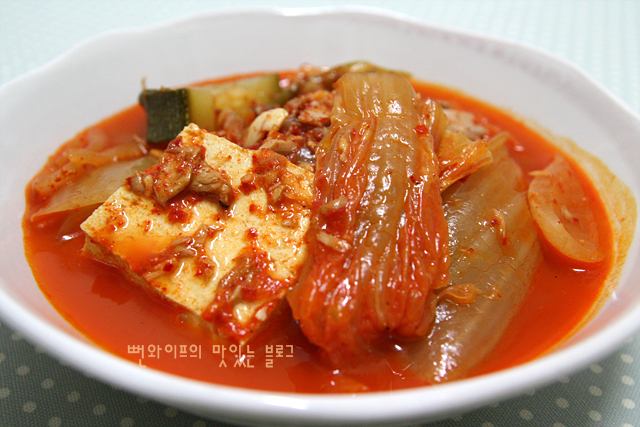
Rich Saury Kimchi Jjigae (Kimchi Stew with Saury)
A stew made by gently simmering aged sour kimchi together with canned saury and its canning liquid.
Translated from Korean by AI and not yet checked by a native speaker. Amounts and numbers are taken directly from the original recipe. Read the Korean original →
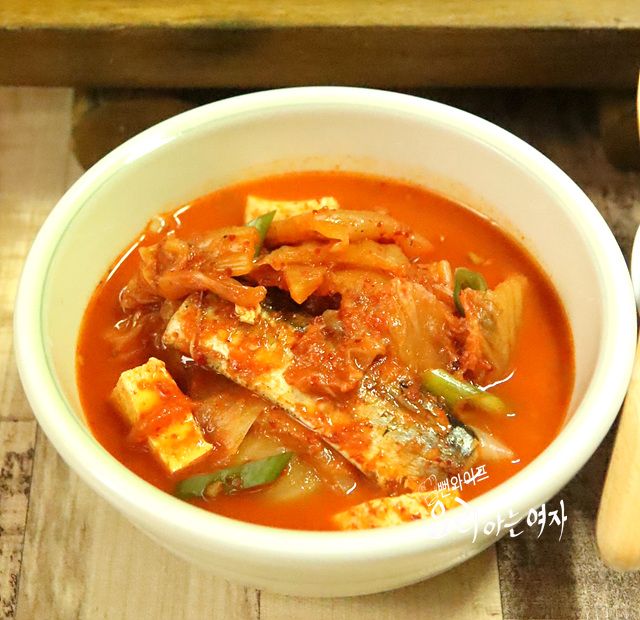
This stew develops deep savory flavor without extra seasoning by using aged sour kimchi along with the canning liquid from canned saury. Rather than stir-frying the kimchi in oil, it is gently simmered over low heat for a clean, refreshing taste with no greasiness.
- Servings
- 3–4 servings
- Cook time
- 10 minprep not included
- Difficulty
- Easy
- Spiciness
- Spicy
Ingredients
Ingredients
- Aged sour kimchi1 clove (1/4 head)
- Canned pacific saury400 g
- Tofu200 g
- Onion1/2
- Large green onion (daepa)1/2 stalk
- Cheongyang chili pepper (hot green chili)1
- Kimchi brine2/3 cup
- Anchovy broth3 cups
Seasoning
- Gochugaru (Korean chili flakes)1 tbsp
- Mirin (cooking rice wine)1 tbsp
- Sugar1/2 tbsp
- Ground black peppera little
- We will also add the liquid from the canned saury. Adding flavorful kimchi brine to the stew makes the broth rich and eliminates the need for separate seasoning.
Steps
Prepare the ingredients
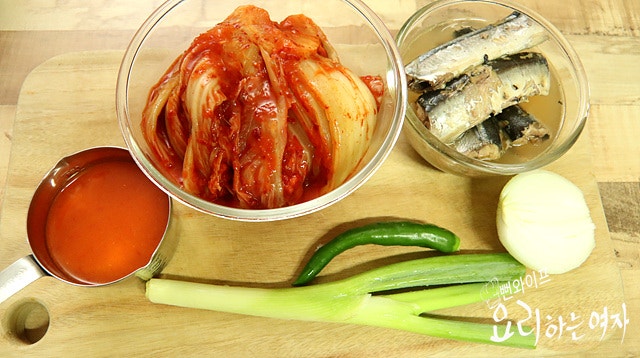
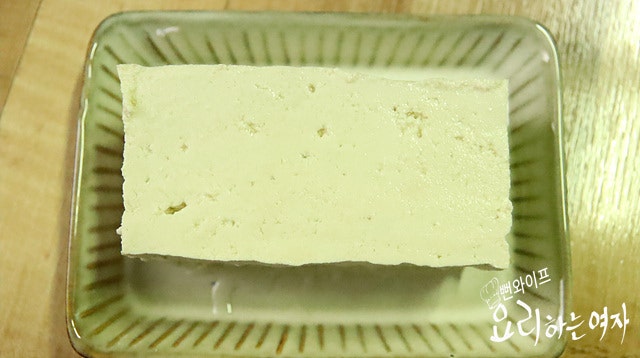
Use 1 quarter head (1/4 head) of aged sour kimchi, and 1 can of canned pacific saury, including its liquid.
Adding flavorful kimchi brine to the stew makes the broth rich and eliminates the need for separate seasoning.
For the vegetables, use 1/2 onion, 1/2 stalk large green onion (daepa), and 1 Cheongyang chili pepper (hot green chili).
Tofu is also great to add for extra substance to enjoy.
Slice the ingredients
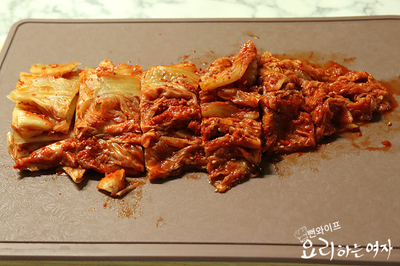
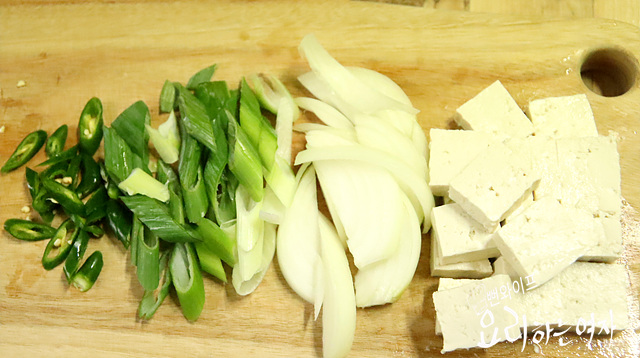
Cut the aged sour kimchi into bite-sized pieces and slice the tofu into thick flat squares.
Thickly julienne the onion and large green onion. Thinly slice the Cheongyang chili pepper.
Combine ingredients in the pot
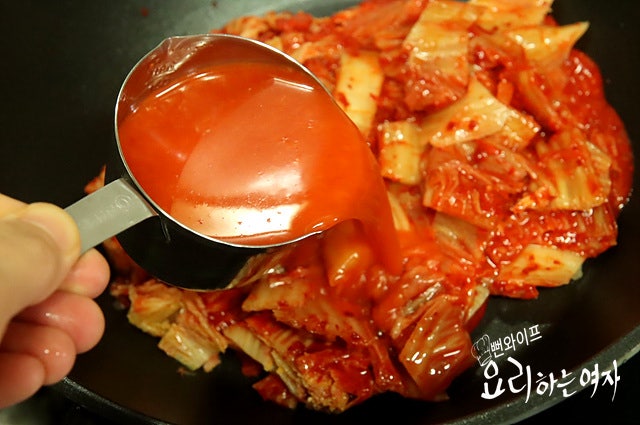
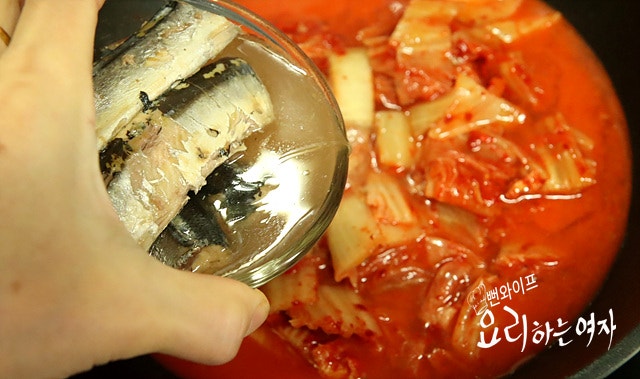
In a deep pan or pot, add the sliced aged sour kimchi, kimchi brine, canned saury, and 3 cups of anchovy broth, then bring to a boil.
Since the canning liquid is also added, we simmer it gently for a long time without stir-frying the kimchi in oil to keep it from becoming greasy.
Season the stew
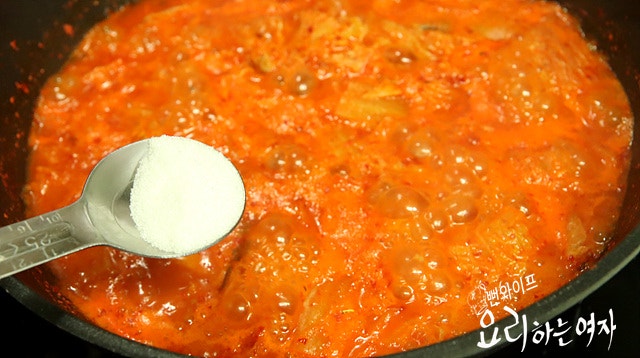
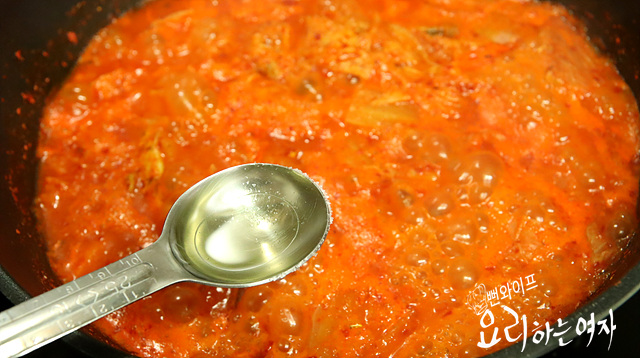
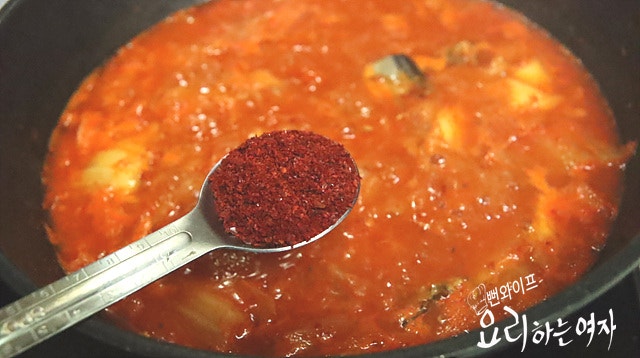
Adjust the sugar depending on the sourness of the kimchi; I added 1/2 tbsp.
Since canned saury is used, also add 1 tbsp mirin (cooking rice wine) and 1 tbsp gochugaru (Korean chili flakes).
Simmer
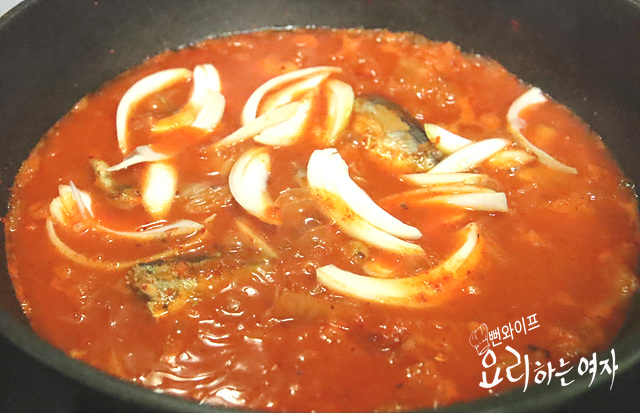
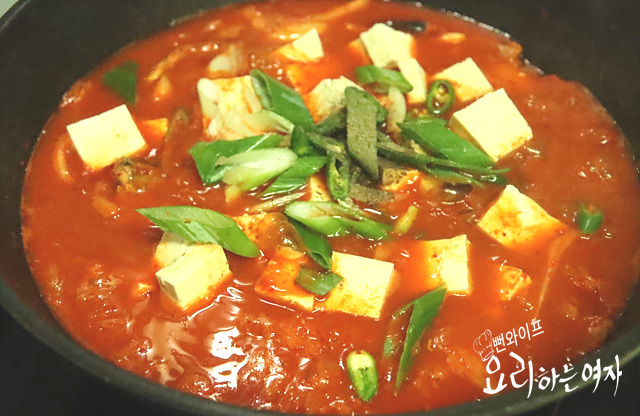
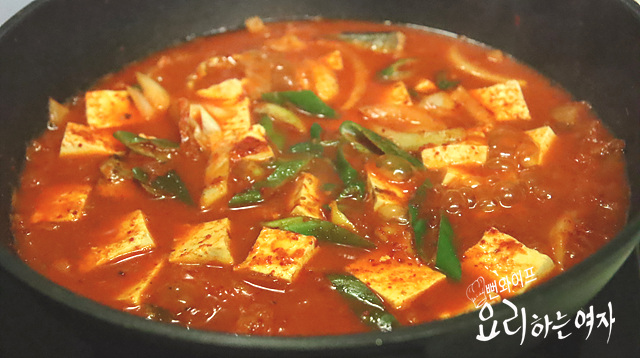
Simmer gently over low heat for over 10 minutes so the kimchi turns tender.
Taste it, and if it is bland, adjust the seasoning with salt or soup soy sauce (guk-ganjang). I did not add separate seasoning because of the salinity in the canned saury and kimchi brine.
Add the onion, tofu, large green onion, Cheongyang chili pepper, and a little ground black pepper, then boil a bit more to finish.
Finish
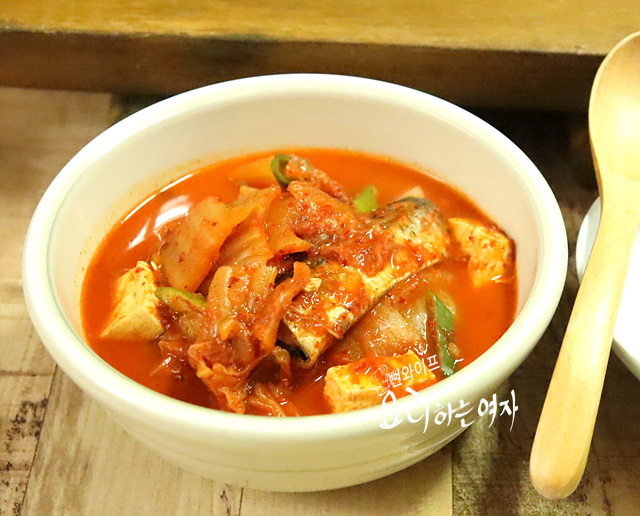
Kimchi jjigae is delicious anytime, and having it after a while makes it look even more appetizing and welcome.
 Ppunwife's tips
- Since the canning liquid is also added, simmer it gently for a long time without stir-frying the kimchi in oil to keep it from becoming greasy.
- Adjust the sugar depending on the sourness of the kimchi; I added 1/2 tbsp.
- Taste it, and if it is bland, adjust the seasoning with salt or soup soy sauce (guk-ganjang). I did not add separate seasoning because of the salinity in the canned saury and kimchi brine.
FAQ
Why isn't the kimchi stir-fried in oil first?
Because the canning liquid is also used, stir-frying in oil can make the stew feel greasy, so it is simmered gently right away without stir-frying.
What seasoning should be added if it tastes too bland?
You can adjust the seasoning to taste by adding salt or soup soy sauce (guk-ganjang).
How do you reduce the sourness of the kimchi?
You can balance the flavor by adjusting the amount of sugar according to how sour the kimchi is.