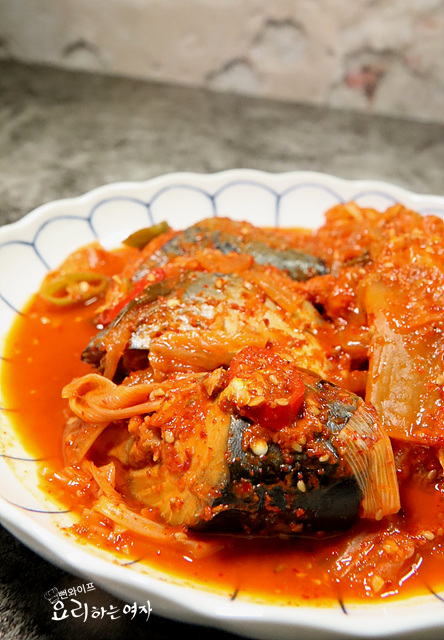
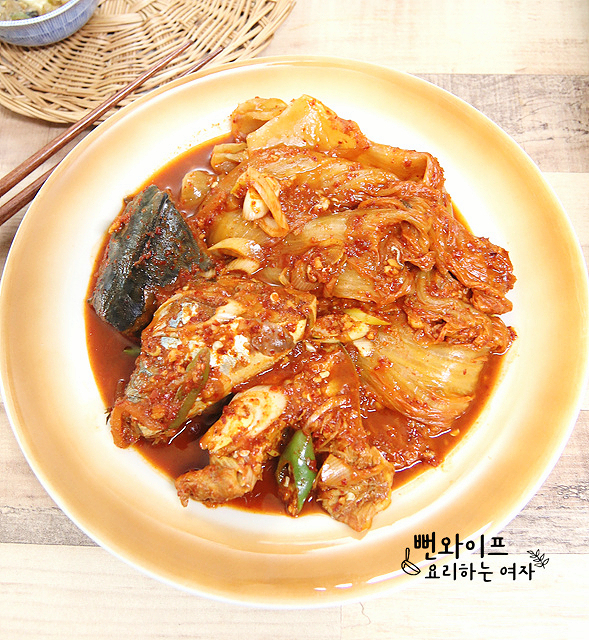
Easy Kkongchi Kimchi Jjim (Braised Mackerel Pike and Kimchi)
A braised fish dish gently simmered with aged sour kimchi and canned Pacific saury liquid to bring out rich savory flavors.
Translated from Korean by AI and not yet checked by a native speaker. Amounts and numbers are taken directly from the original recipe. Read the Korean original →
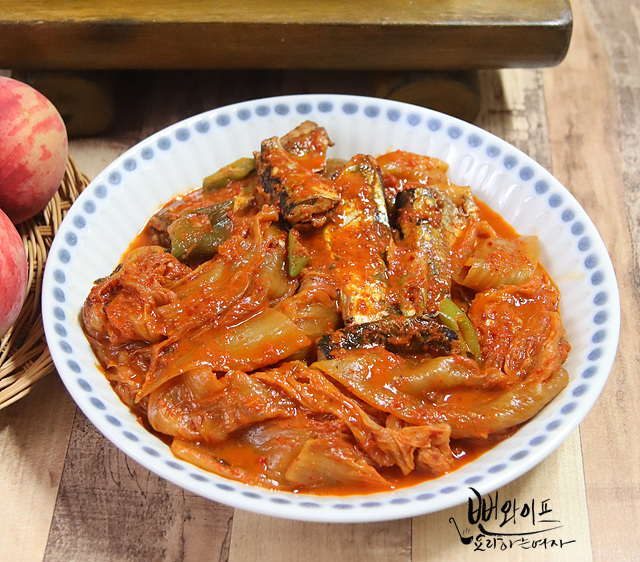
A simple braised dish made with canned Pacific saury and aged sour kimchi, so you don't have to worry about tiny bones. Using the liquid from the can as a broth adds rich savoriness while everything gently simmers until the kimchi turns translucent. A final drizzle of perilla oil brings out a wonderfully nutty aroma.
- Servings
- 3–4 servings
- Difficulty
- Easy
- Spiciness
- Spicy
Ingredients
Ingredients
- Aged sour kimchi1/4 clove, 600 g
- Canned Pacific saury1 can, 300 g (large can)
- Large green onion (daepa)1/2 stalk
- Cheongyang chili pepper (hot green chili)3
- Water2 cups
Seasoning
- Sugar1 tbsp
- Mirin (cooking rice wine)2 tbsp
- Gochugaru (Korean chili flakes)1 tbsp
- Ground black peppera little
- Perilla oilas needed
- Shake off the seasonings from inside the kimchi before using.
- The liquid from the canned Pacific saury is used in place of broth.
Steps
Prepare the ingredients
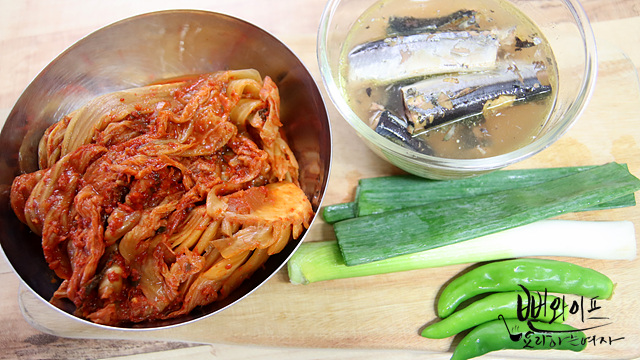
This is 1 wedge from a large head of aged sour kimchi.
Shake off the inner seasoning from the kimchi. Here is 1 large can of canned Pacific saury; we will use the liquid from the can in place of broth.
Prepare the large green onion (daepa) and Cheongyang chili peppers (hot green chilies).
Slice the ingredients
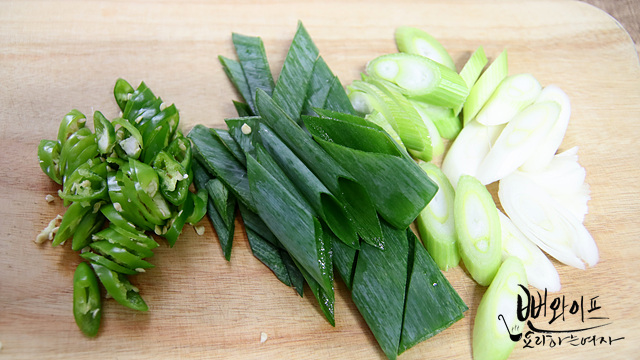
Slice both the large green onion and Cheongyang chili peppers diagonally.
Add the ingredients to the pan
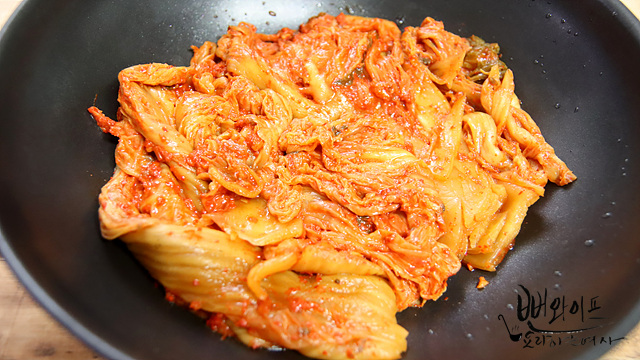
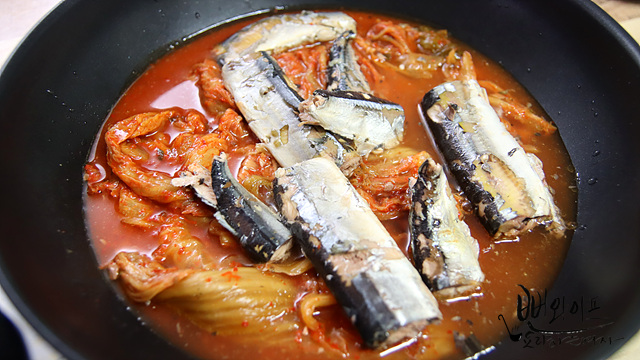
Spread the kimchi across the bottom of the pan, then pour in the saury along with its liquid.
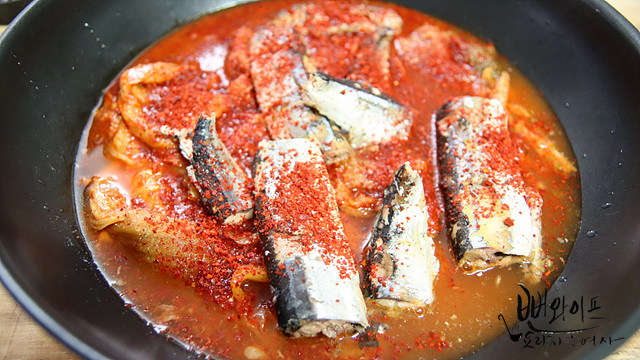
Since there is not quite enough liquid, pour in 2 cups more of water, then evenly sprinkle in 1 tbsp gochugaru (Korean chili flakes), 1 tbsp sugar, 2 tbsp mirin (cooking rice wine), and a little ground black pepper.
Simmer
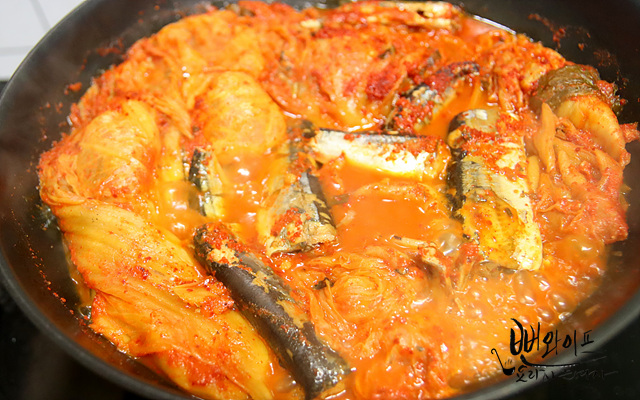
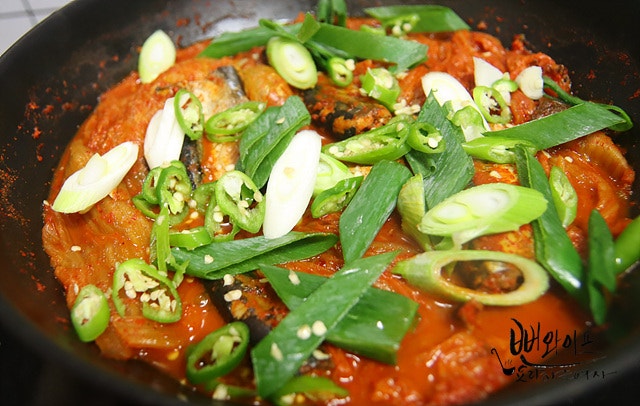
Once it starts boiling vigorously over high heat, simmer gently until the kimchi turns soft and translucent.
Spread the chili peppers and large green onion evenly over the top, and let it simmer so their aromas blend right in.
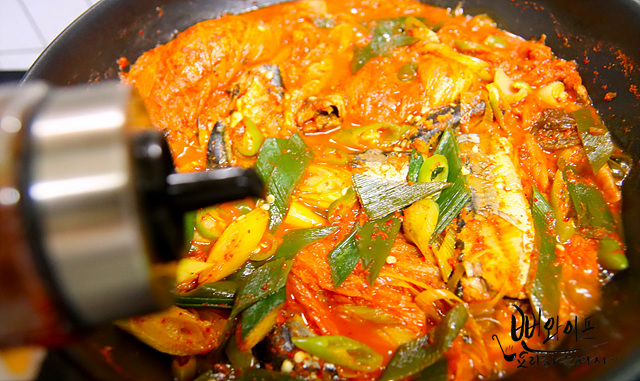
Turn off the heat and finish by drizzling a suitable amount of perilla oil over the top.
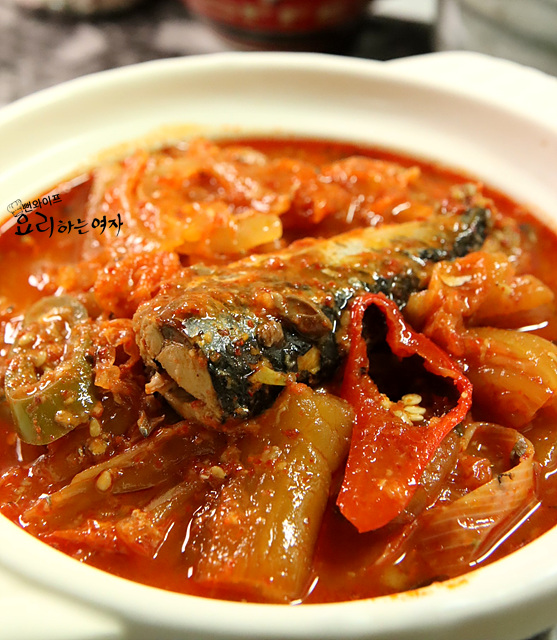
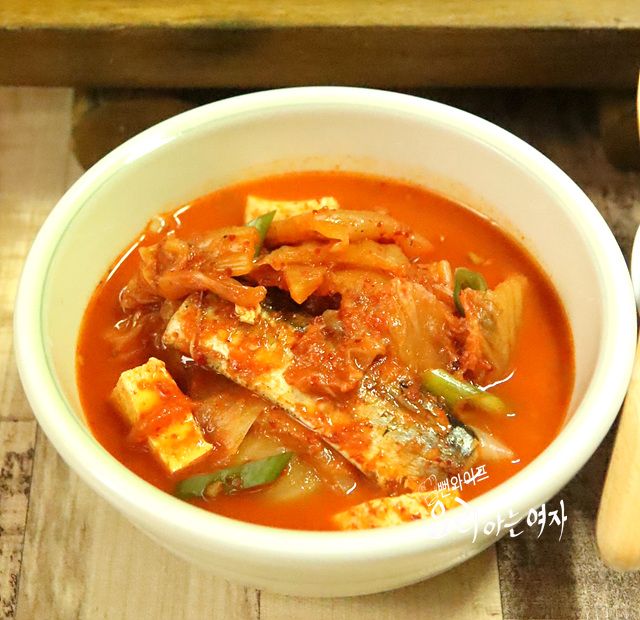
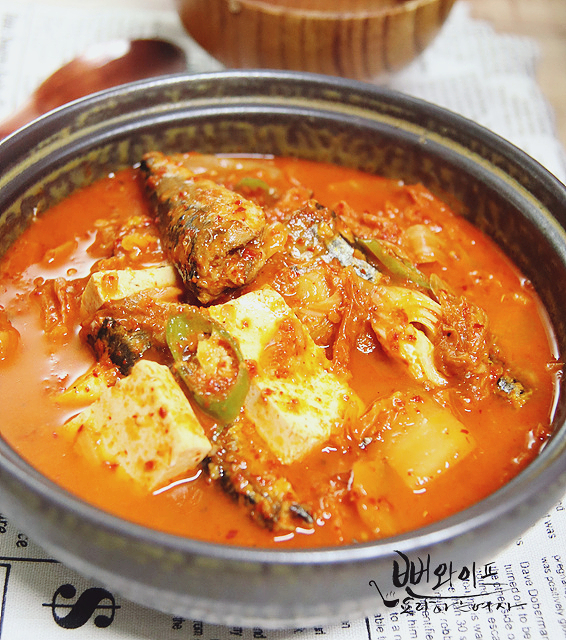
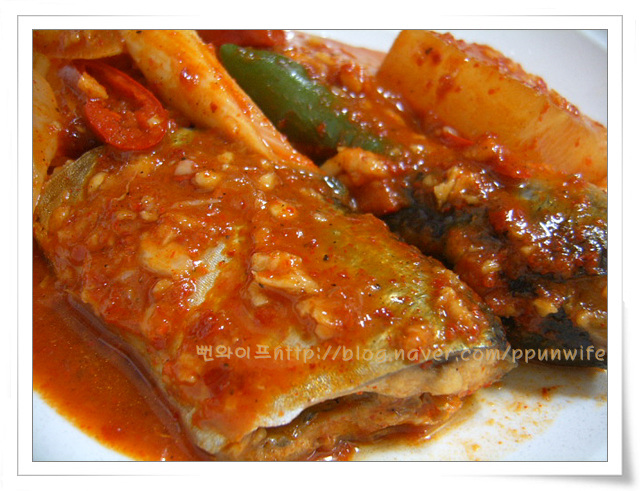
Complete
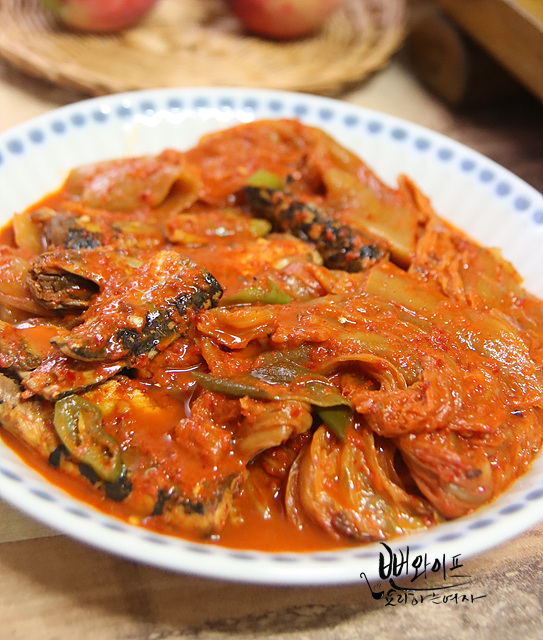
I love braised kimchi jjim made with fish, but picking out the bones can sometimes be a hassle.
When you braise it with canned saury, it doesn't break apart easily, it's convenient to eat, and it tastes delicious.
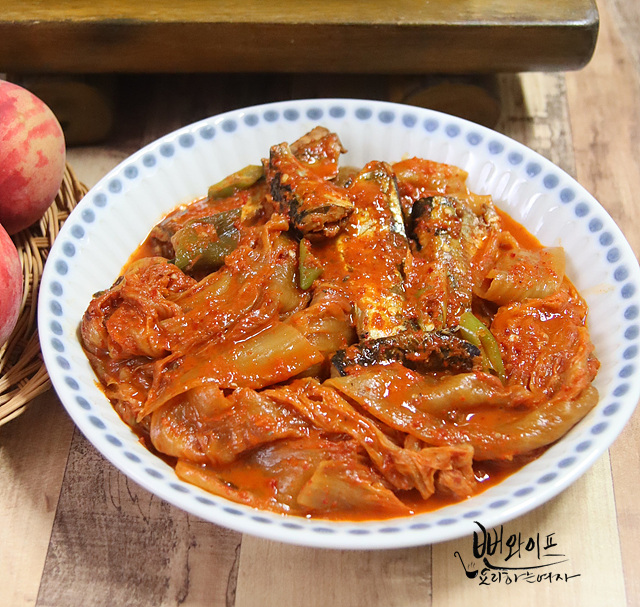
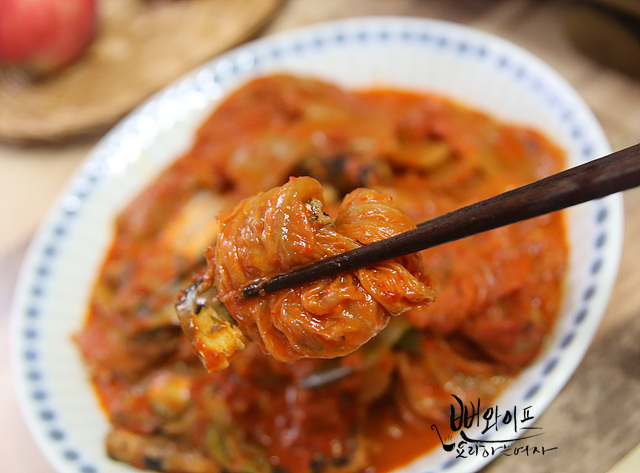
Help yourself to some tender, thoroughly braised kimchi jjim.
Thank you for your hard work today as well.
 Ppunwife's tips
- When you braise it with canned Pacific saury, the fish does not easily fall apart, making it convenient to eat and very tasty.
FAQ
Do you also use the liquid inside the can for cooking?
Yes, do not discard the liquid from the canned saury; pour it right into the pot to use as your broth base.
How long or to what stage should the kimchi be simmered?
Once it comes to a boil over high heat, lower the heat and simmer gently until the kimchi cooks soft and turns translucent.
What are the advantages of using canned Pacific saury instead of fresh saury?
Canned Pacific saury has soft bones so there is no need to pick them out, and the flesh does not easily break apart during cooking, making it very easy to eat.