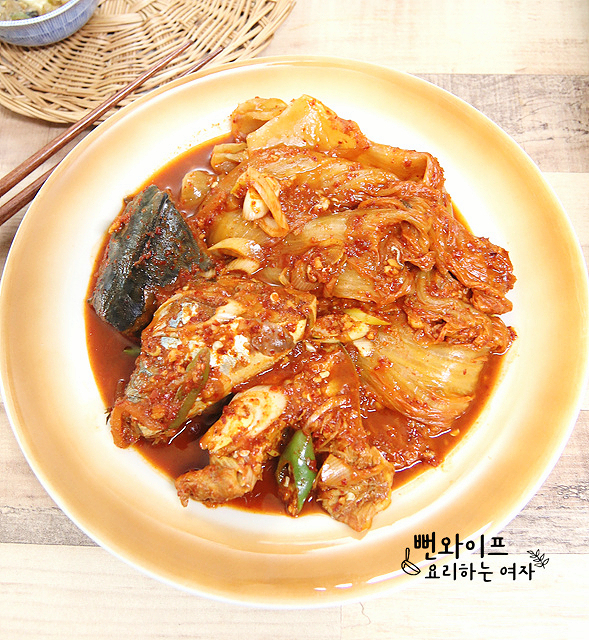
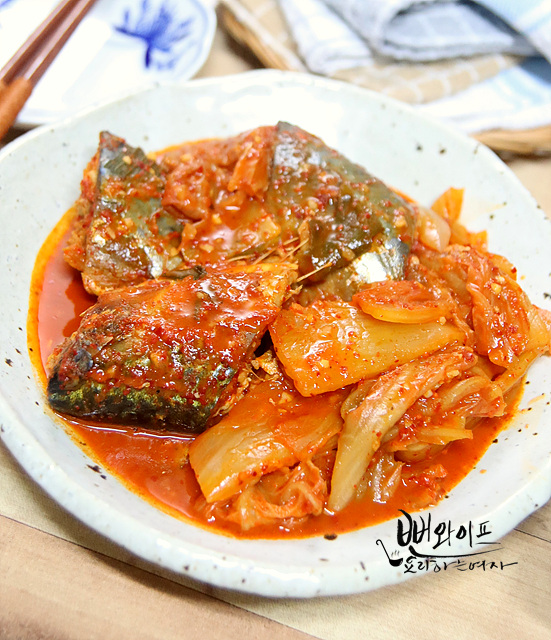
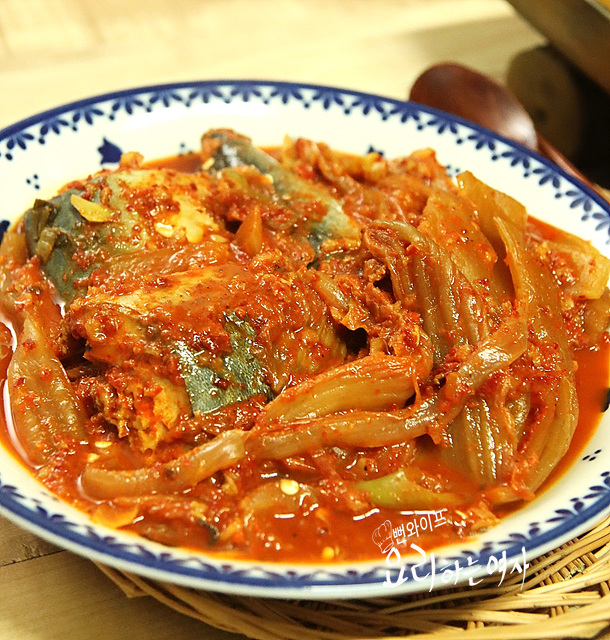
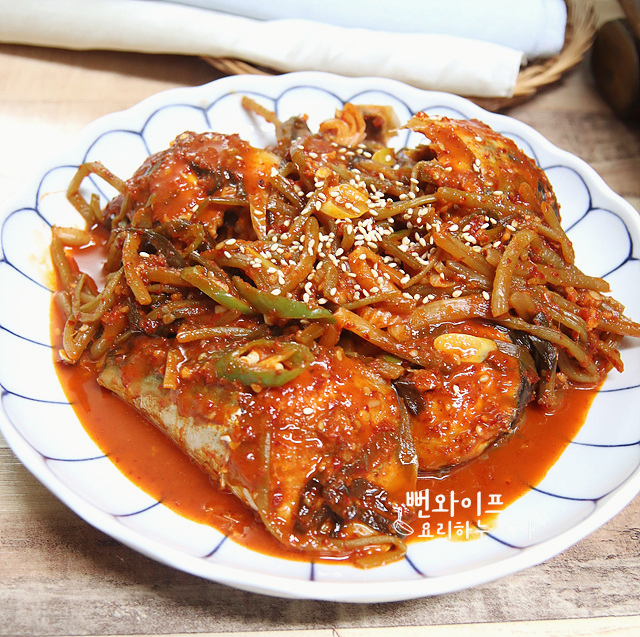
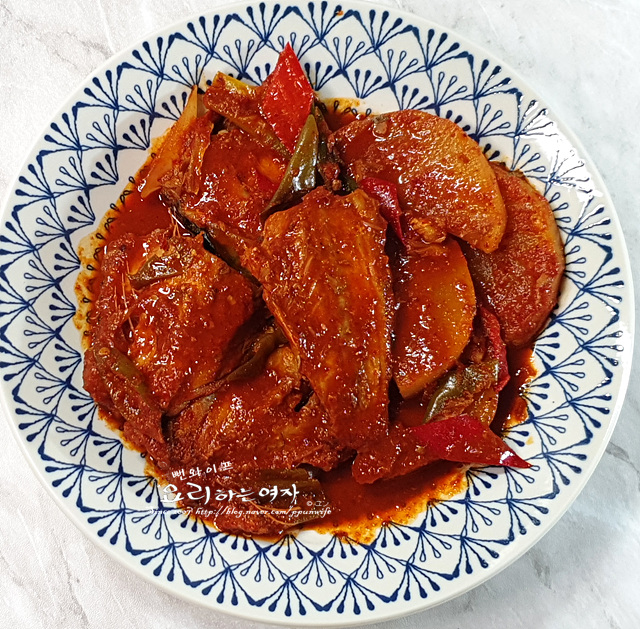
Godeungeo Kimchi Jjim (Braised Mackerel and Kimchi)
A spicy braised mackerel and kimchi simmered thoroughly with aged sour kimchi and rice-washing water to eliminate fishiness.
Translated from Korean by AI and not yet checked by a native speaker. Amounts and numbers are taken directly from the original recipe. Read the Korean original →
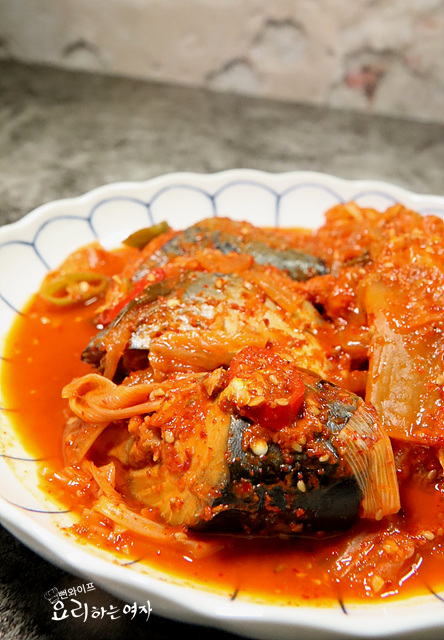
This braised dish features fresh mackerel layered with aged sour kimchi and perilla oil, simmered thoroughly in seasoned rice-washing water. The aged sour kimchi neutralizes the fishy taste, and the key technique is keeping the lid open until the mackerel is cooked through. Sized for 2 to 3 servings, it is great paired with rice.
- Servings
- 2–3 servings
- Difficulty
- Medium
- Spiciness
- Spicy
Ingredients
Ingredients
- Fresh mackerel1 whole, 200 g (large)
- Aged sour kimchi1 clove (1/4 head)
- Onion1/2
- Large green onion (daepa)1/4 stalk
- Cheongyang chili pepper (hot green chili)2
- Red chili pepper1
- Perilla oil1 tbsp
- Water from washing rice3 cups
Seasoning
- Gochugaru (Korean chili flakes)2 tbsp
- Regular soy sauce (jin-ganjang) (or brewed soy sauce (yangjo-ganjang))2 tbsp
- Minced garlic1 tbsp
- Mirin (cooking rice wine)2 tbsp
- Sugar1/2 tbsp
- Minced ginger1/2 tsp
- Ground black peppera little
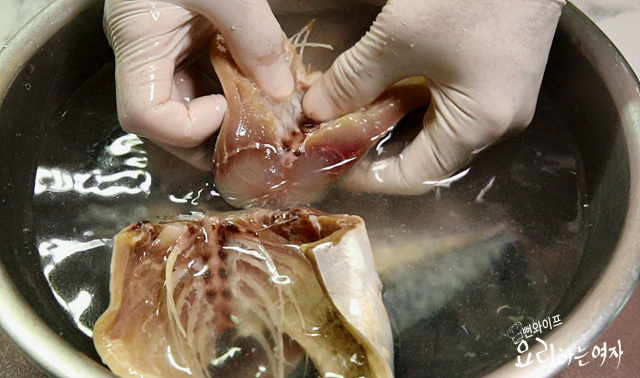
- Be sure to rub and thoroughly wash away any clotted blood along the mackerel bones to keep it from smelling fishy.
- If you use salted mackerel, soak it in rice-washing water to draw out the excess salt before cooking.
Steps
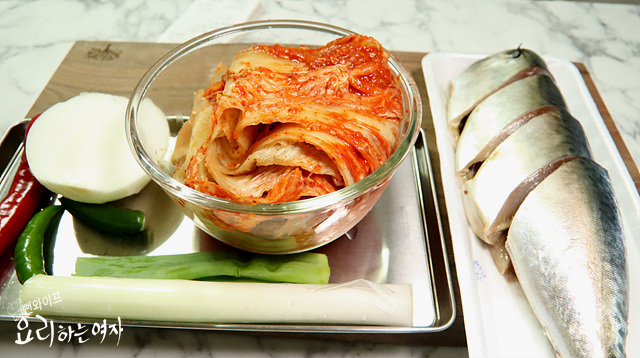
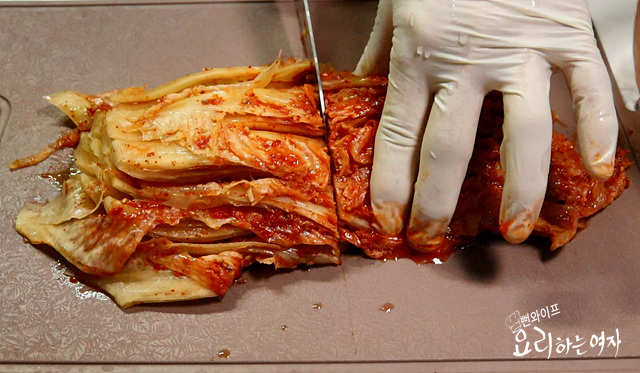
Prepare aged sour kimchi, and for the mackerel, I bought fresh mackerel cut into pieces.
Be sure to rub and thoroughly wash away any clotted blood along the mackerel bones to keep it from smelling fishy.
If you use salted mackerel, soak it in rice-washing water to draw out the excess salt before cooking.
I cut the 1 wedge of kimchi roughly in half so it is easy to eat.
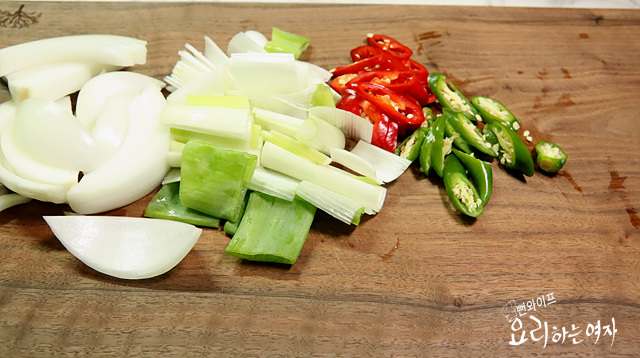
Slice the onion thickly, and cut the large green onion and chili peppers into suitable pieces.
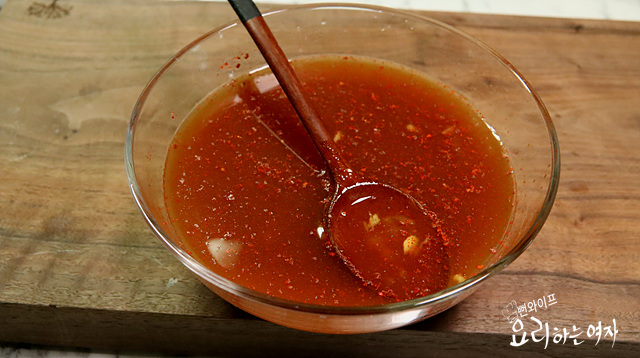
Add all the seasoning ingredients together with the rice-washing water and mix well.
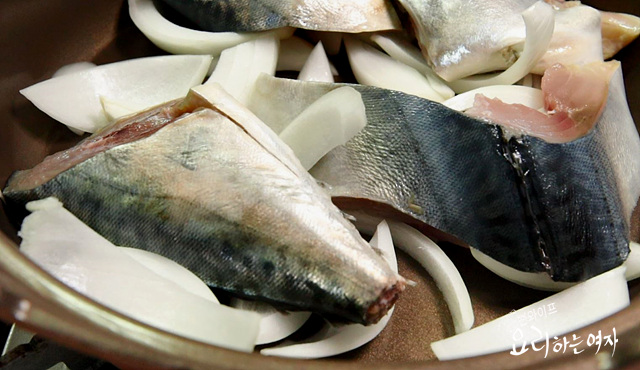
Place all the onion at the bottom of the pot and arrange the mackerel on top.
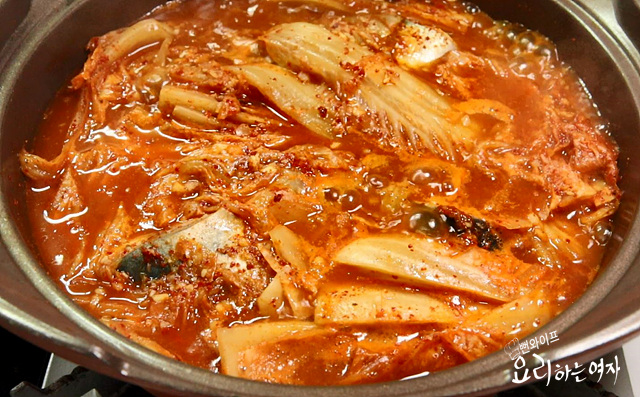
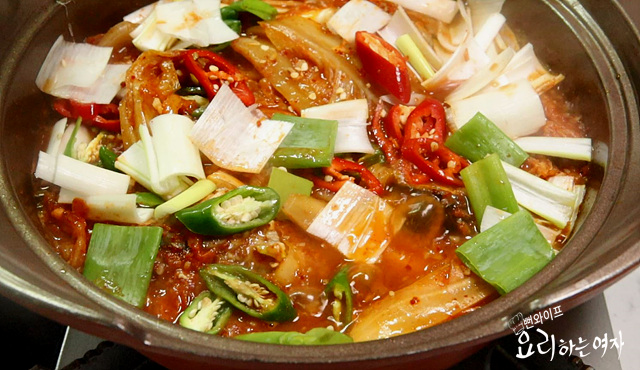
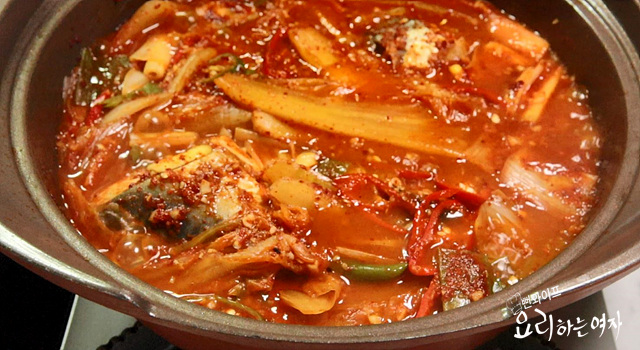
Place the kimchi on top, pour in the mixture of rice-washing water and seasonings, and drizzle 1 tbsp of perilla oil over it.
Bring to a boil with the lid open, and once it begins to boil, reduce to low heat and simmer until the mackerel is cooked through.
Covering the pot before the mackerel is fully cooked can cause fishy odors, so cover with the lid only once it seems cooked.
Add all the green onion and chili peppers and simmer until the liquid reduces to a shallow simmer to finish.
 Ppunwife's tips
- Covering the pot before the mackerel is fully cooked can cause fishy odors, so cover with the lid only once it seems cooked.
FAQ
Can I use salted mackerel instead of fresh mackerel?
When using salted mackerel, soak it in rice-washing water beforehand to remove excess salt before cooking.
Are there ways to reduce fishiness during cooking?
Thoroughly rinse away any clotted blood around the mackerel bones, and boil with the lid open until the fish is cooked through so fishy odors evaporate.
If I don't have rice-washing water, can I use regular water or broth? AI-generated
You can easily replace it with regular plain water or anchovy kelp broth.