Spicy Godeungeo Jorim (Braised Mackerel) with Sour Kimchi
A satisfying side dish of mackerel braised thoroughly with aged sour kimchi, using water from washing rice to eliminate fishy odors.
Translated from Korean by AI and not yet checked by a native speaker. Amounts and numbers are taken directly from the original recipe. Read the Korean original →
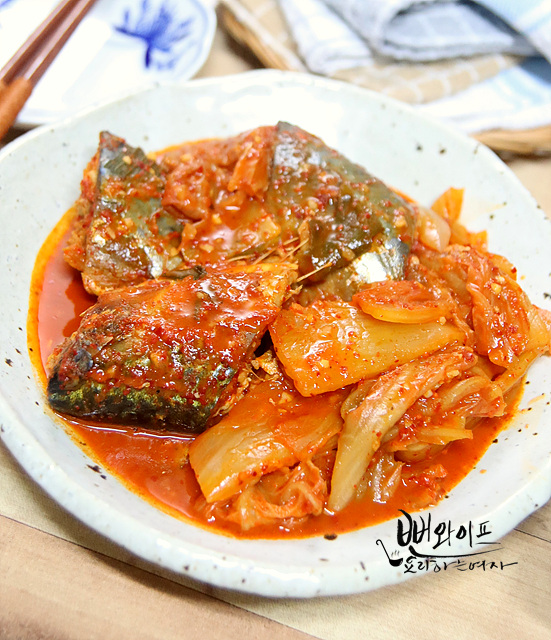
A rice side dish made by simmering salted mackerel and aged sour kimchi with seasoning until tender. Soaking the fish in water from washing rice tames the fishiness and excess salt, and simmering with the lid off until fully cooked is key. The gently braised kimchi and tender fish complement each other wonderfully.
- Servings
- 3–4 servings
- Difficulty
- Easy
- Spiciness
- Spicy
Ingredients
Ingredients
- Salted mackerel (gan-godeungeo)2 whole (1 pair)
- Aged sour kimchi1/4 head, 500 g (1 clove)
- Onion1/2
- Large green onion (daepa)1/2 stalk
- Cheongyang chili pepper (hot green chili)2
- Water from washing rice3 cups
Seasoning
- Gochugaru (Korean chili flakes)3 tbsp
- Regular soy sauce (jin-ganjang) (or brewed soy sauce (yangjo-ganjang))3 tbsp
- Minced garlic2 tbsp
- Minced ginger1 tsp
- Mirin (cooking rice wine)2 tbsp
- Sugar (or green plum syrup (maesil-cheong))1 tbsp
- Ground black peppera little
- Whether using fresh or salted mackerel, soaking it in water from washing rice helps remove the fishy smell; since salted mackerel is salty, let it soak for at least 20 minutes to draw out some of the salt before rinsing.
Steps
Prepare the ingredients
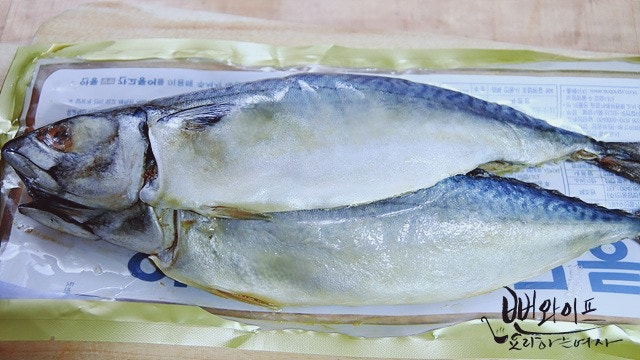
Here is one pair (two whole) of salted mackerel (gan-godeungeo).
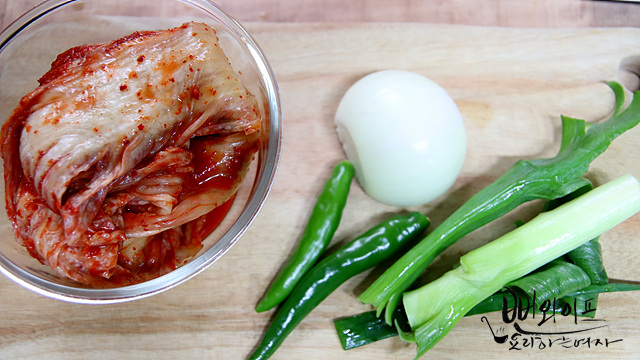
1 wedge (1/4 head) of aged sour kimchi, onion, large green onion (daepa), and Cheongyang chili peppers.
Prep the mackerel and cut the ingredients
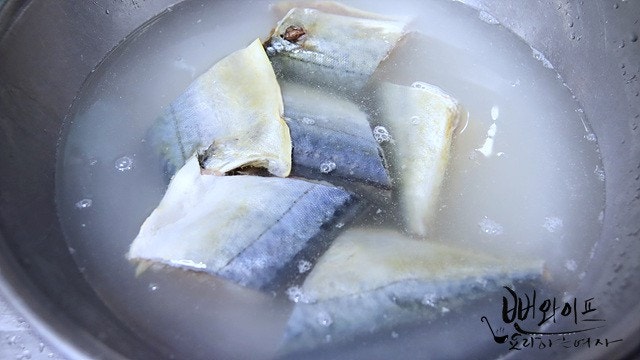
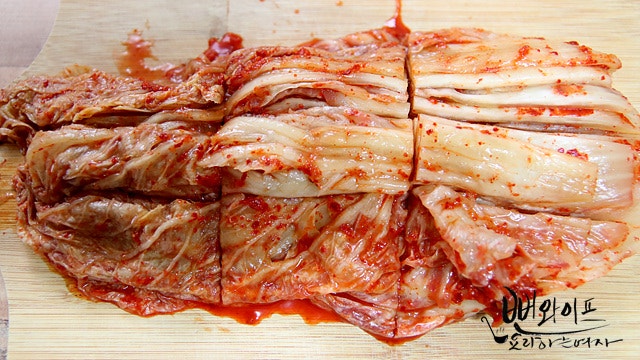
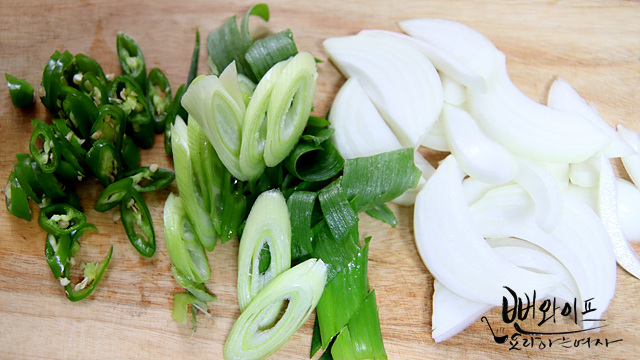
Whether using fresh or salted mackerel, soaking it in water from washing rice helps remove the fishy odor.
Because it is salty, soak it for at least 20 minutes until a good amount of the salt is drawn out, then rinse clean.
Cut the kimchi into bite-size pieces as desired, and slice the onion, large green onion, and Cheongyang chili peppers thickly.
Add ingredients and seasoning
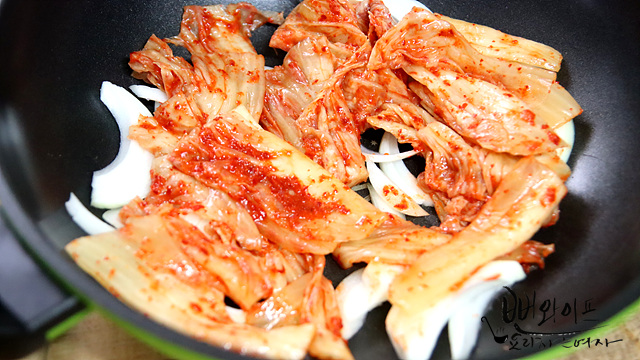
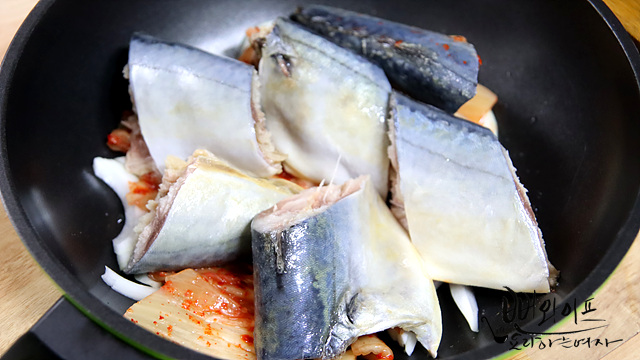
Spread the onion and half of the kimchi across the bottom of the pan, then lay the mackerel on top.
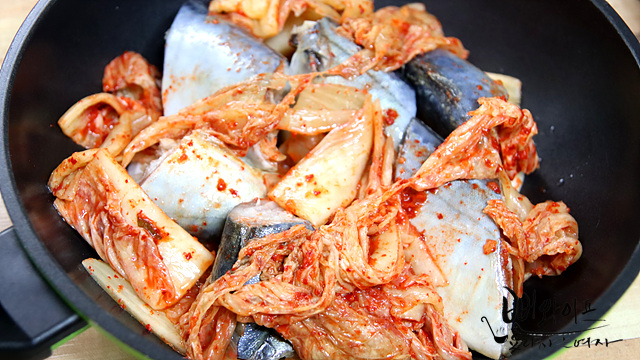
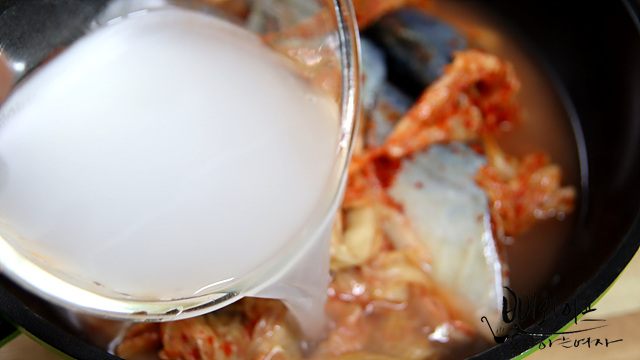
Place the rest of the kimchi on top, then pour in 3 cups of water from washing rice.
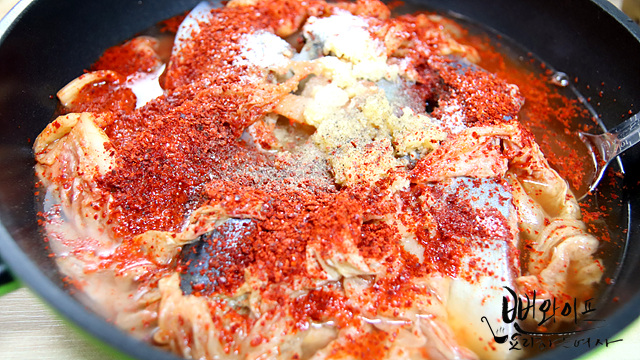
Scatter 3 tbsp gochugaru, 3 tbsp regular soy sauce, 2 tbsp minced garlic, 1 tsp minced ginger, 2 tbsp mirin, 1 tbsp sugar, and a little ground black pepper evenly over the top.
You can mix the sauce separately beforehand, but since it simmers for a long time, you can also just ladle the seasonings straight over.
Adding ginger alongside garlic to the sauce helps remove fishy smells from seafood or gaminess from meat.
Simmer
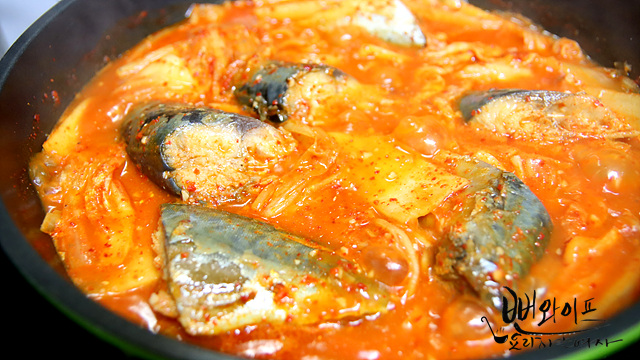
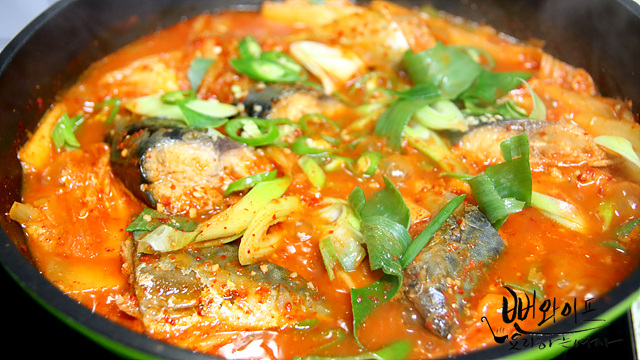
Turn the heat to high, and once the broth starts bubbling vigorously, spoon it over the top so the seasonings blend evenly.
Lower the heat to medium-low and keep the lid off while boiling until the mackerel is completely cooked through so no fishy smell lingers.
Flip the mackerel over once halfway through and let the liquid reduce until shallow; finally, toss in the large green onion and Cheongyang chili peppers and bring to a brief boil to release their aroma.
Finish
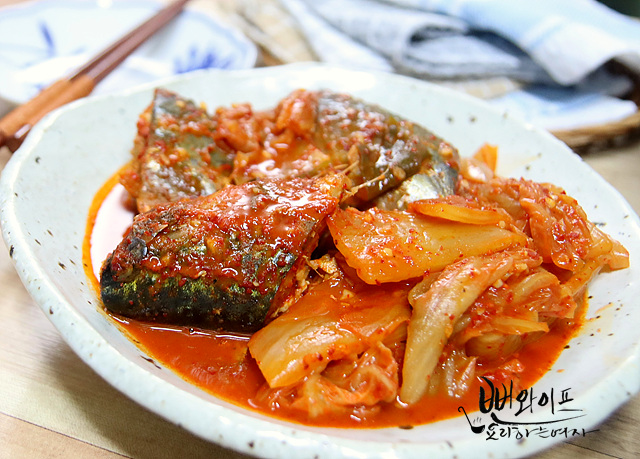
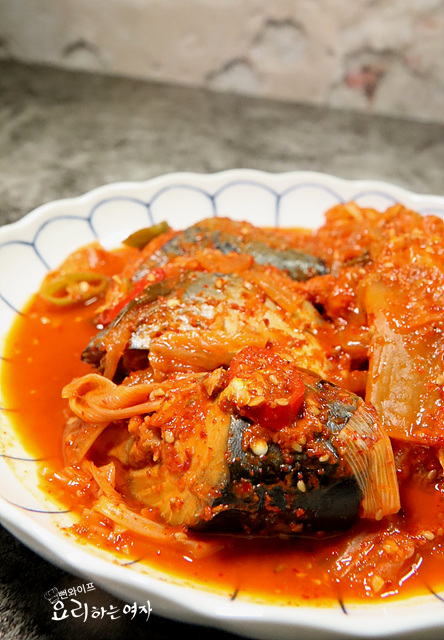
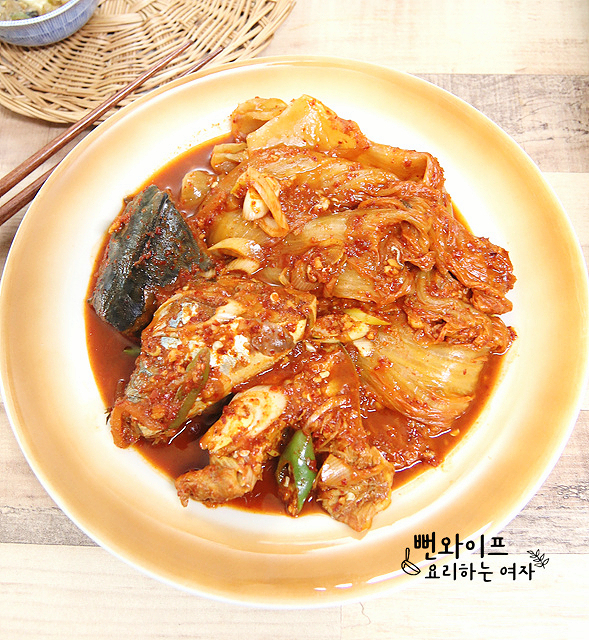
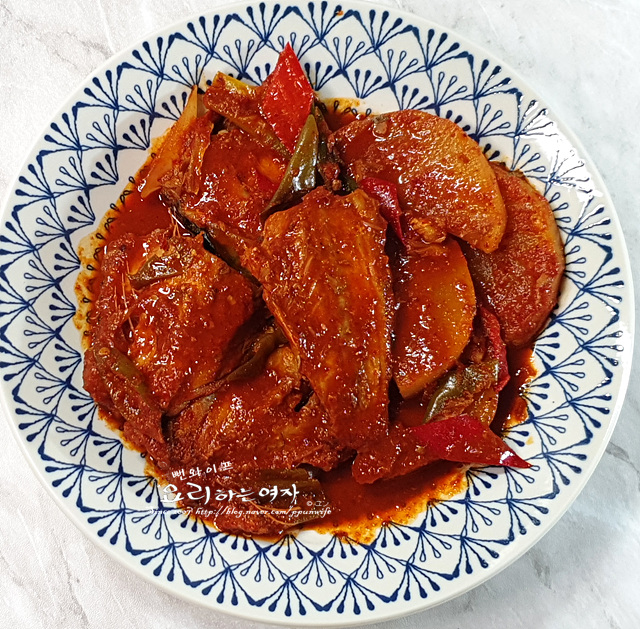
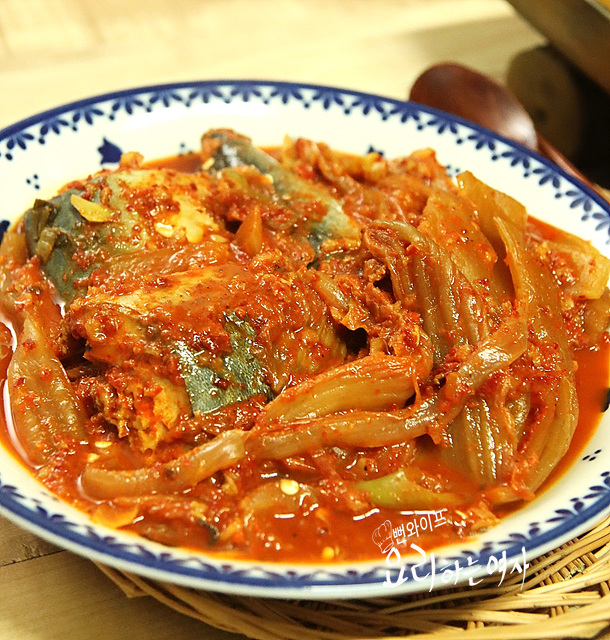
Just looking at it makes your mouth water—braised mackerel is complete.
Braised mackerel is also easy to make, as you simply add the ingredients and seasonings and let it simmer down.
Soft kimchi cooked thoroughly and mackerel soaked in all the rich sauce flavors...
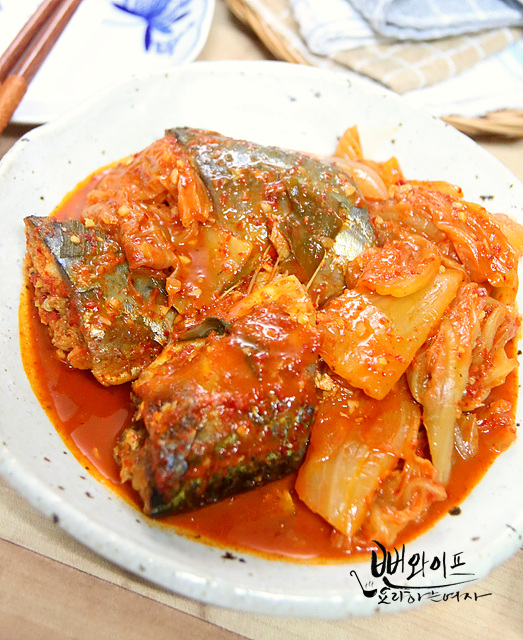
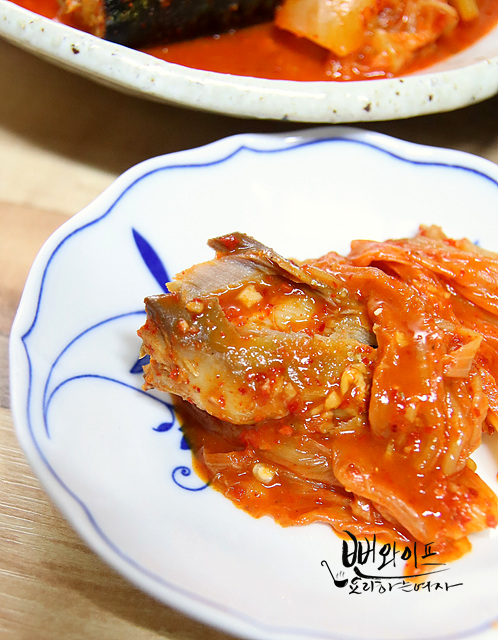
Wrap deboned mackerel in kimchi, spoon over a bit of broth, and take a spoonful of rice along with it—it is pure heaven in your mouth.
The solid ingredients are delicious, but spooning the broth over rice and mixing it in is great too.
Instead of meat for dinner, enjoy a happy meal with gently simmered mackerel and kimchi.
 Ppunwife's tips
- Adding ginger along with garlic to the seasoning helps remove any fishy odor from seafood or gaminess from meat.
- Turn the heat down to medium-low and simmer with the lid off until the mackerel is fully cooked so the fishy smell can evaporate.
FAQ
How can I reduce the fishy smell of mackerel?
Soaking the fish in water from washing rice for at least 20 minutes before cooking helps tame both the fishy smell and the saltiness. It is also good to add ginger to the seasoning and braise with the lid off until the mackerel is completely cooked through.
Can I substitute another ingredient for sugar?
You can use an equal amount of green plum syrup (maesil-cheong) in place of sugar to provide sweetness.
Is it okay to cook this with fresh mackerel?
Fresh mackerel works just fine instead of salted mackerel; simply soak it in water from washing rice in the same way to tone down the fishiness before cooking.