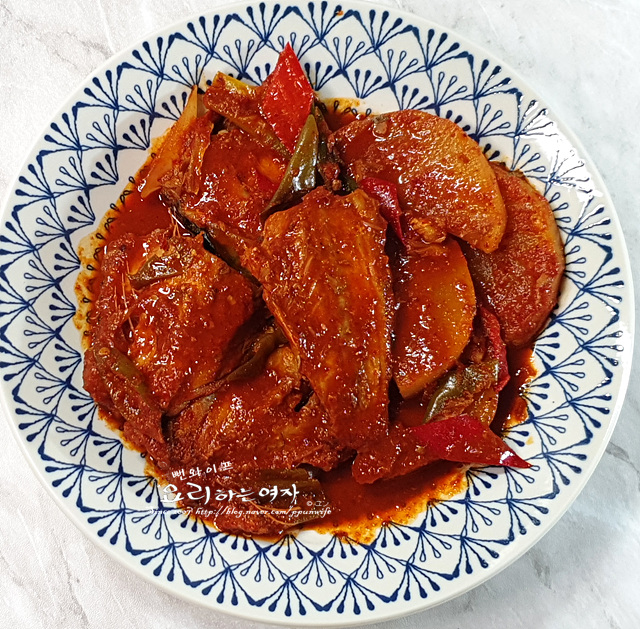
Savory Godeungeo Kimchi Jjim (Braised Mackerel with Kimchi)
A braised fish and kimchi dish made by simmering aged kimchi and fresh mackerel in a seasoned rice water broth without any fishiness.
Translated from Korean by AI and not yet checked by a native speaker. Amounts and numbers are taken directly from the original recipe. Read the Korean original →
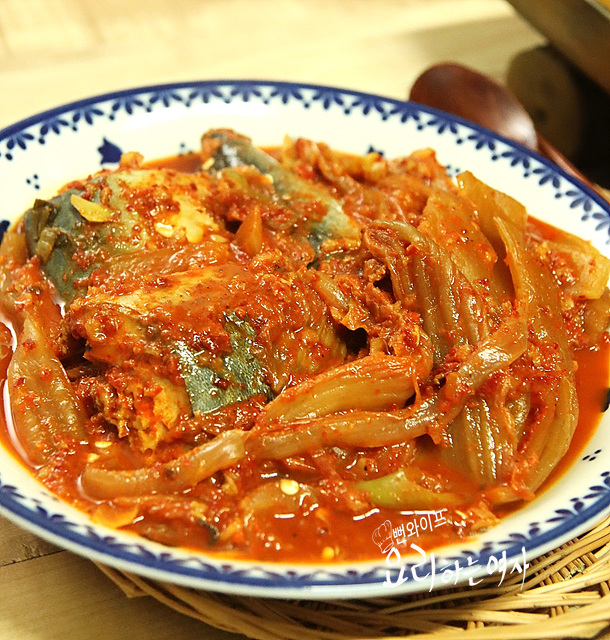
This braised fish dish uses water from washing rice to neatly eliminate fishiness and any musty odor from the kimchi. Simmer uncovered until the mackerel is cooked, then braise covered for over 20 minutes to infuse deep, savory flavor. Wonderfully spicy, it makes a generous main dish for dinner.
- Servings
- 3–4 servings
- Cook time
- 20 minprep not included
- Difficulty
- Medium
- Spiciness
- Spicy
Ingredients
Ingredients
- Fresh mackerel2 whole, 600 g (medium)
- Aged kimchi (mugeonji)1 clove (1/4 head, aged sour kimchi)
- Onion1/2
- Large green onion (daepa)1/2 stalk
- Cheongyang chili pepper (hot green chili)2
- Perilla oil3 tbsp
Seasoning
- Water from washing rice3 cups
- Gochugaru (Korean chili flakes)3 tbsp
- Regular soy sauce (jin-ganjang) (or brewed soy sauce (yangjo-ganjang))3 tbsp
- Minced garlic2 tbsp
- Minced ginger1 tsp
- Mirin (cooking rice wine)2 tbsp
- Sugar1 tbsp
- Ground black peppera little
- If using salted mackerel, soak it in water from washing rice to draw out excess salt.
- Adding onion to braised aged kimchi helps neutralize the kimchi's sourness.
Steps
Prepare the ingredients
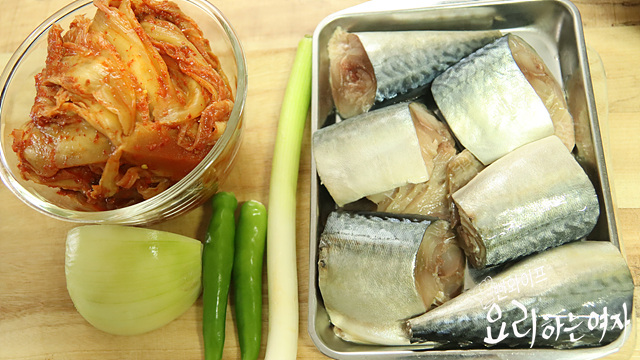
I cleaned 2 fresh mackerel by cutting off the heads and fins. If using salted mackerel, soak it in water from washing rice to draw out excess salt.
Prepare 1/4 head (1 quarter) of aged kimchi or well-fermented sour kimchi; adding onion to braised aged kimchi helps neutralize the kimchi's sourness.
Prepare the large green onion and Cheongyang chili peppers as well.
Slice the ingredients
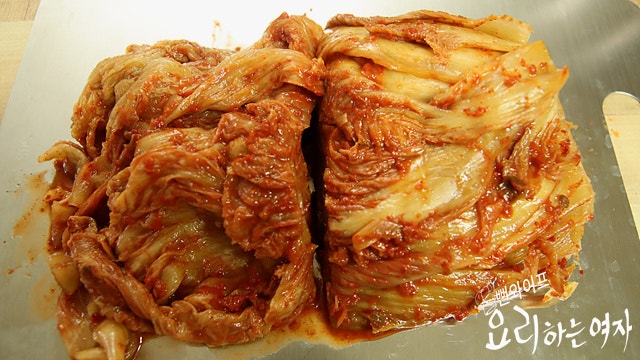
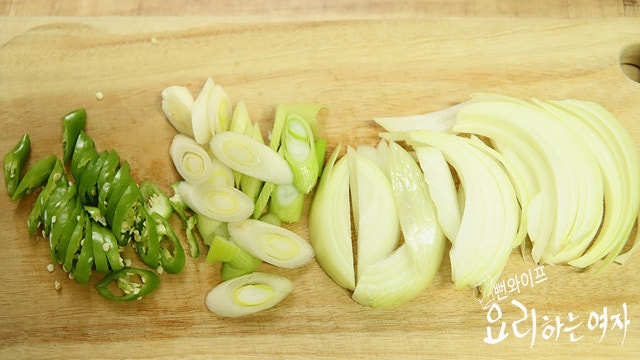
Slice the aged kimchi lengthwise into narrower strips, then cut in half to make it easy to eat in one bite.
Thickly slice the onion, and diagonally slice the large green onion and chili peppers.
Make the seasoning sauce
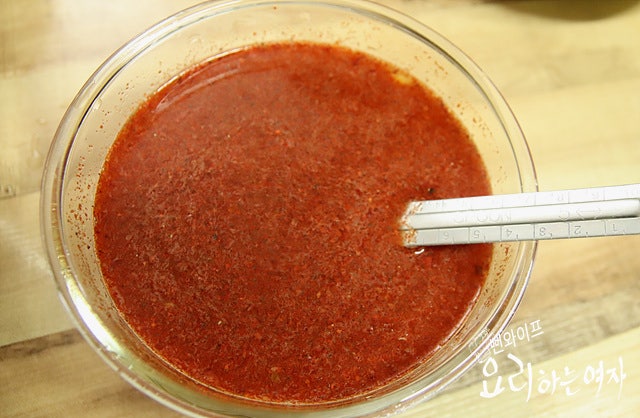
Add all seasoning ingredients and mix together.
When braising aged kimchi or strong-smelling fish like mackerel, using water from washing rice instead of plain water helps eliminate musty kimchi odors and fishiness.
Start simmering
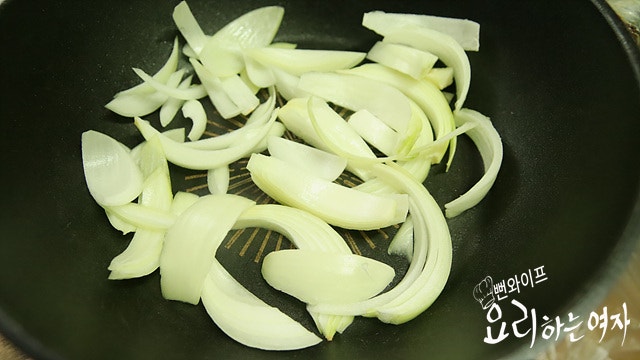
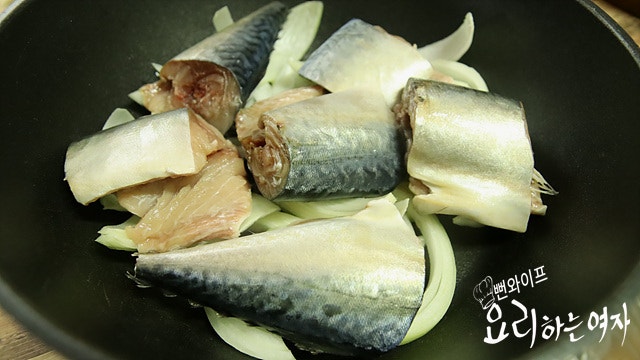
Spread the sliced onion across the bottom of the pot and place the mackerel on top.
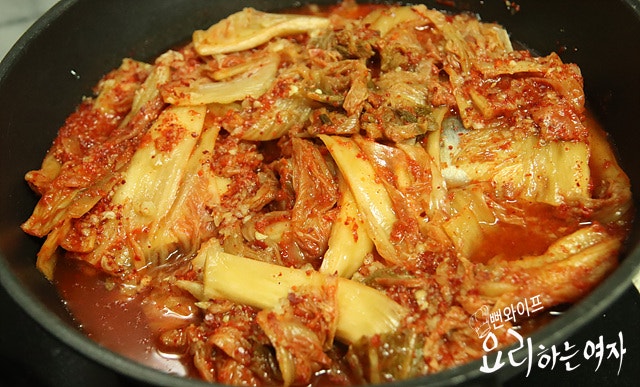
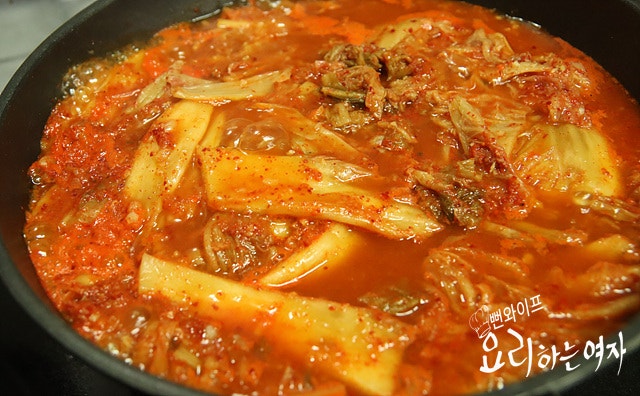
Layer the aged kimchi evenly over the very top and pour all of the prepared seasoning sauce over it.
Finally, drizzle 3 tbsp of perilla oil over everything.
Bring to a boil over high heat, then reduce to medium-low heat and simmer with the lid off until the mackerel cooks through and the fishy smell dissipates.
If you cover the pot before the mackerel cooks, the fishiness will remain even after it is done.
Braise down
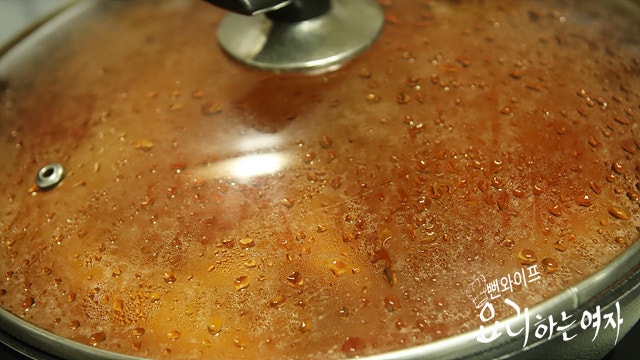
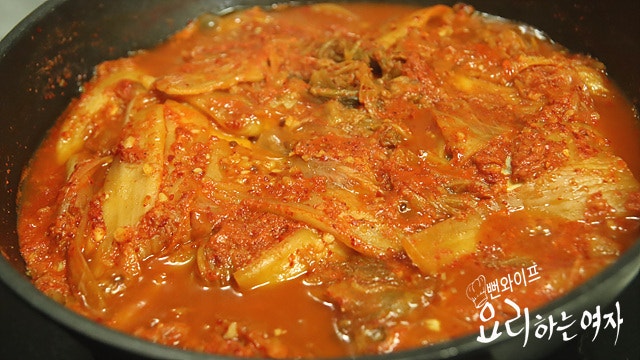
Now cover with the lid and braise thoroughly for over 20 minutes so the kimchi turns tender.
Then remove the lid, raise the heat to high, and boil down until the broth is reduced to your desired amount.
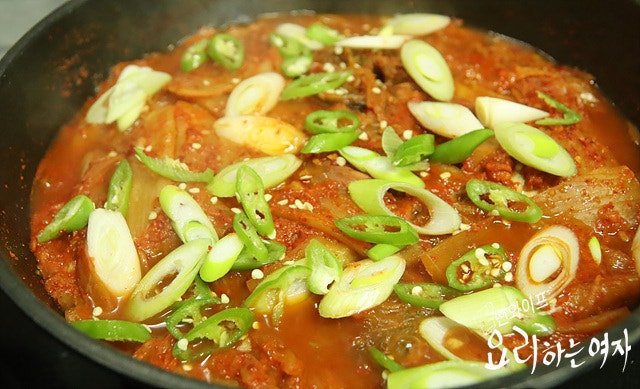
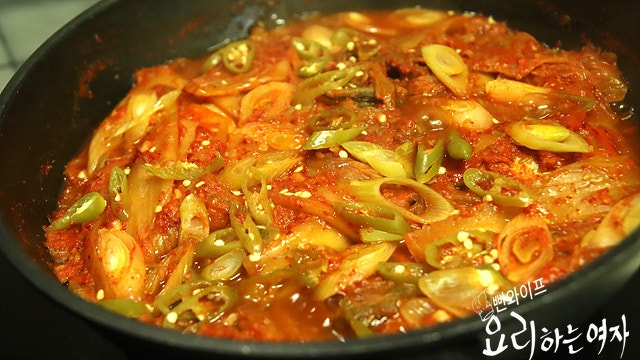
Add the large green onion and Cheongyang chili peppers, then simmer briefly so their aroma blends in evenly to finish.
Serve
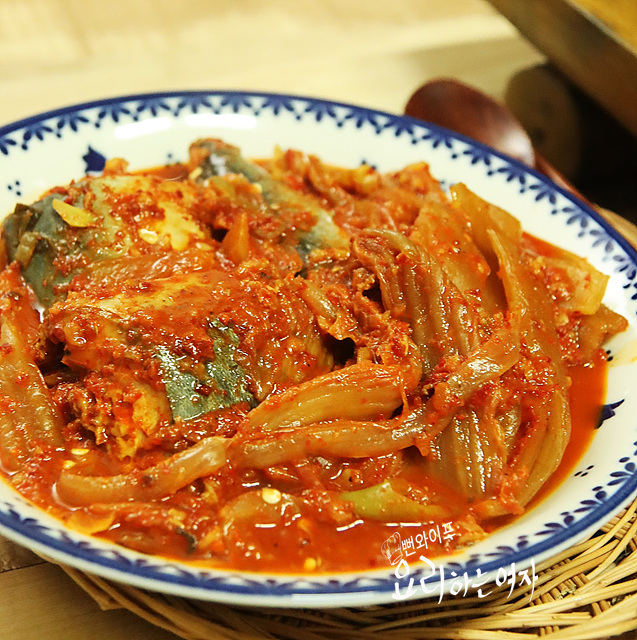
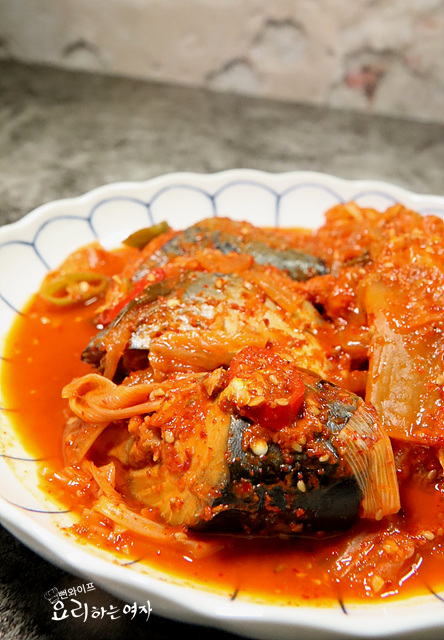
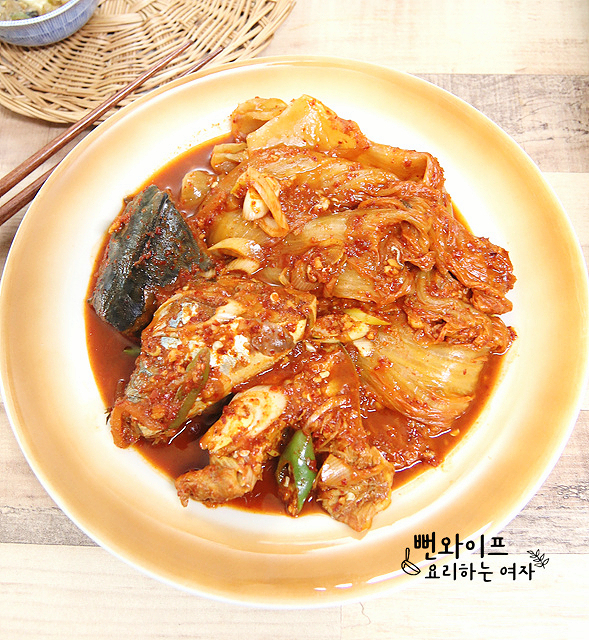
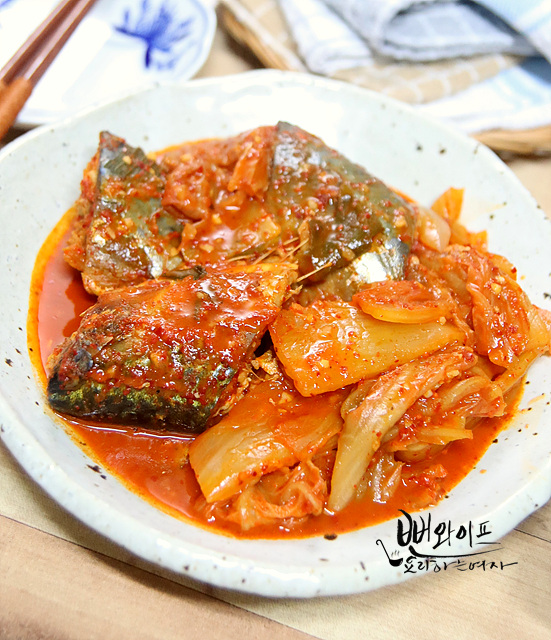
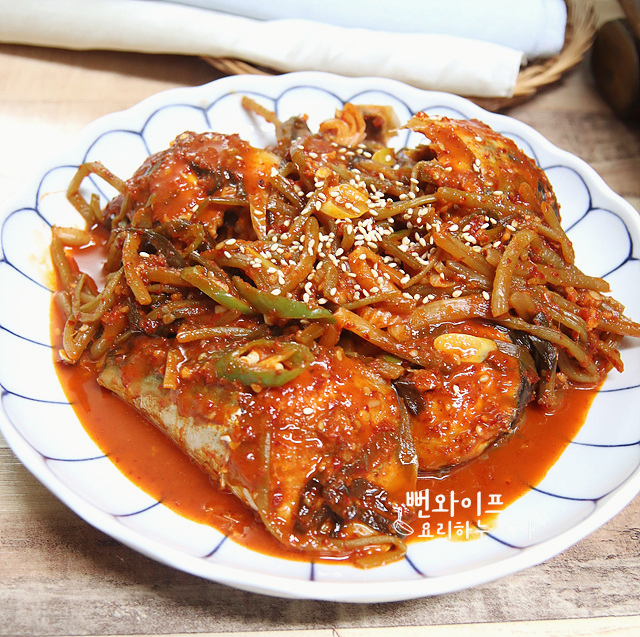
The godeungeo kimchi jjim is ready.
Braised thoroughly with a quarter of a large head of kimchi and 2 fresh mackerel, it makes a generous dish.
It is plenty for a family of 3 to 4 people to enjoy.
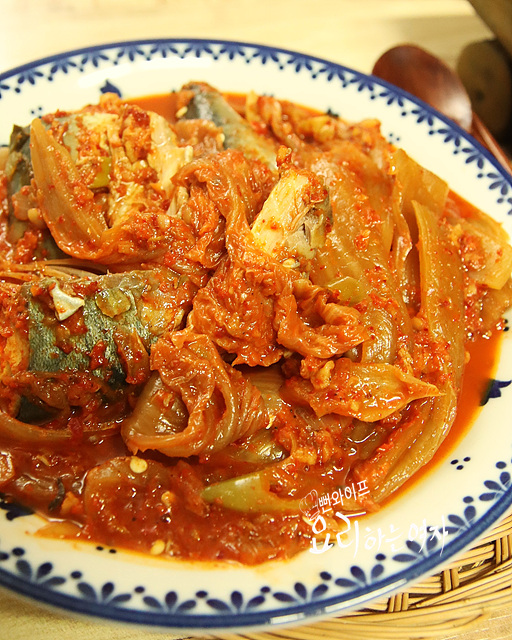
With just aged kimchi and mackerel, a delicious dinner is quickly taken care of.
Since it is a braised dish packed with kimchi, you do not even need side dishes, and second helpings of rice are a must, so be sure to cook more rice than usual.
 Ppunwife's tips
- When braising aged kimchi or strong-smelling fish like mackerel, using water from washing rice instead of plain water helps eliminate musty kimchi odors and fishiness.
- Simmer with the lid open until the mackerel cooks through and the fishy smell dissipates. If you cover the pot before the mackerel cooks, the fishiness will remain even after it is done.
FAQ
Can I use salted mackerel instead of fresh mackerel?
When using salted mackerel, soak it beforehand in water from washing rice to remove excess salt so the seasoning balances properly.
When should I cover the lid to minimize fishiness?
Do not cover it right away; simmer uncovered until the mackerel cooks through and the fishy smell evaporates, then cover with the lid to braise until the kimchi is tender.
Why use water from washing rice instead of plain water?
Water from washing rice helps reduce the musty aged odor of kimchi and subdues the characteristic fishiness of mackerel.
Is there a specific order for layering the ingredients in the pot?
Spread the onion on the bottom, place the mackerel on top, cover the very top with aged kimchi, and then pour in the seasoning sauce and perilla oil to cook.