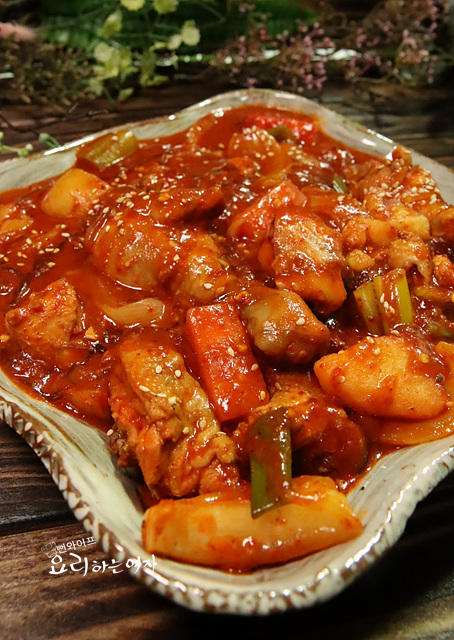
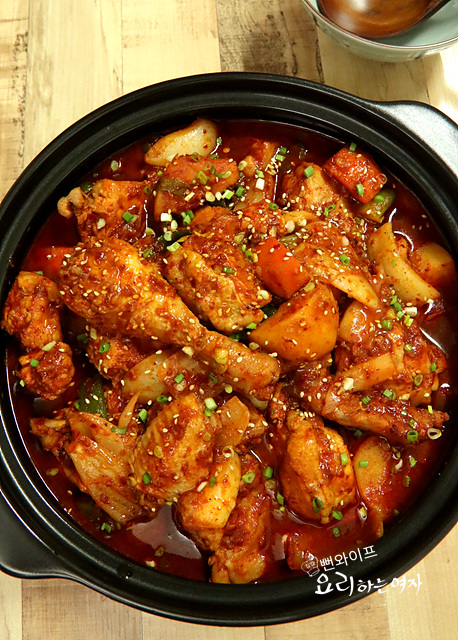
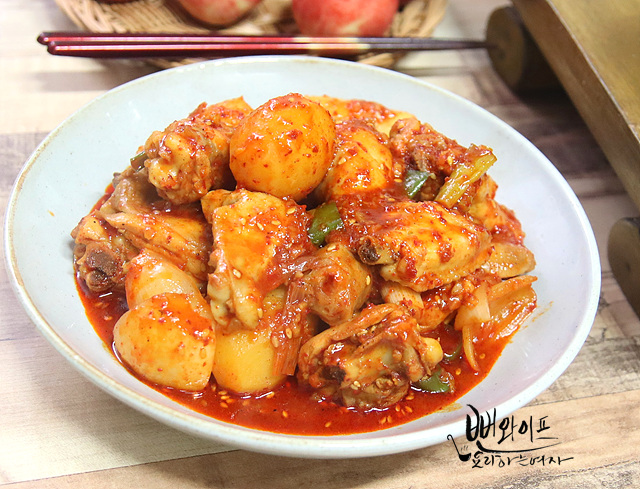
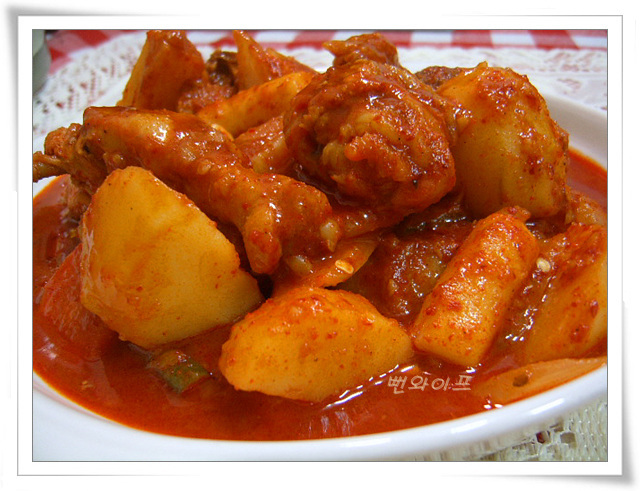
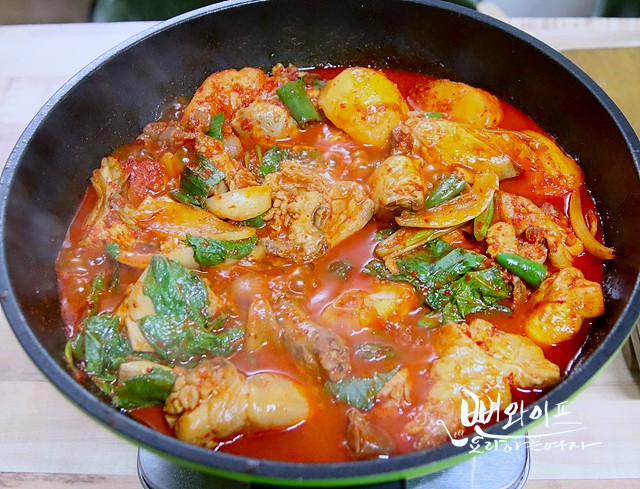
Spicy Dak Bokkeum Tang (Spicy Braised Chicken) with Oyster Sauce
A spicy dak bokkeum tang braised until the sauce is reduced, using oyster sauce instead of gochujang for a deep savory flavor.
Translated from Korean by AI and not yet checked by a native speaker. Amounts and numbers are taken directly from the original recipe. Read the Korean original →
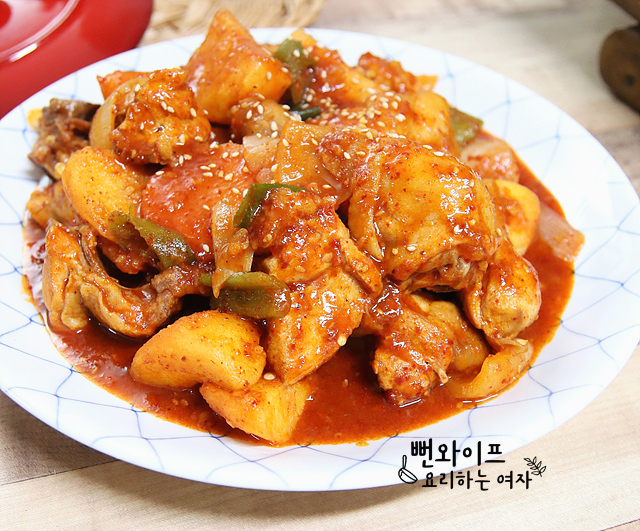
This dak bokkeum tang uses oyster sauce instead of gochujang for a clean, deep savory umami without any heaviness. The chicken is simmered first with soy sauce and mirin to remove any gamey smell and establish a base flavor, then braised down until thick with fluffy potatoes and vegetables for a delicious spicy dish.
- Servings
- 2–3 servings
- Difficulty
- Medium
- Spiciness
- Spicy
Ingredients
Ingredients
- Chicken650 g
- Potato2
- Onion1
- Carrot1/2
- Large green onion (daepa)1/2 stalk
- Cheongyang chili pepper (hot green chili)2
- Water2 1/2 cups
Seasoning
- Regular soy sauce (jin-ganjang) (or brewed soy sauce (yangjo-ganjang))4 tbsp
- Mirin (cooking rice wine)2 tbsp
- Minced ginger1 tsp
- Sugar2 tbsp
- Gochugaru (Korean chili flakes)3 tbsp
- Minced garlic2 tbsp
- Oyster sauce1 tbsp
- Corn syrup (mulyeot) (or oligosaccharide syrup (oligodang))1 tbsp
- Toasted sesame oil1/2 tbsp
- Toasted sesame seedsa little
- Ground black peppera little
- Rinse the chicken thoroughly under running water, rubbing the pieces clean.
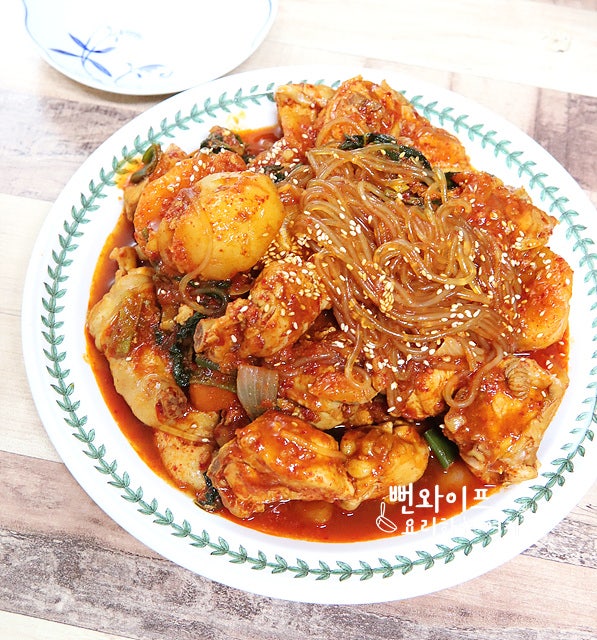
- Beyond the suggested ingredients, feel free to add rice cakes or sweet potato glass noodles, or increase the amounts as you like.
Steps
Prepare the ingredients
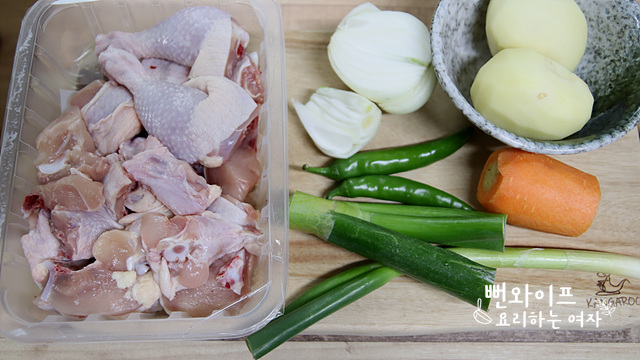
This is 1 pack of braising-cut chicken, 650 g. Rinse the chicken thoroughly under running water, rubbing the pieces clean.
You will need 2 medium potatoes, 1 onion, 1/2 carrot, 1/2 stalk of large green onion (daepa), and 2 Cheongyang chili peppers (hot green chilies).
Beyond the suggested ingredients, feel free to add rice cakes or sweet potato glass noodles, or increase the amounts as you like.
Chop the ingredients
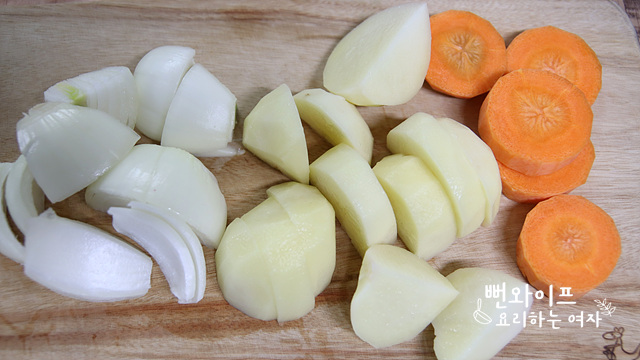
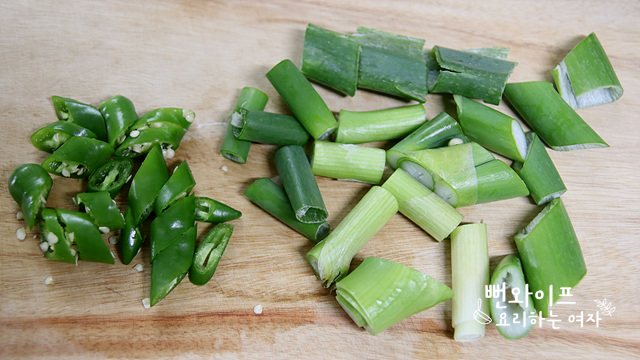
Cut the potatoes, carrot, and onion into thick pieces. Chop the green onion and Cheongyang chili peppers into large chunks.
Simmer with initial seasoning
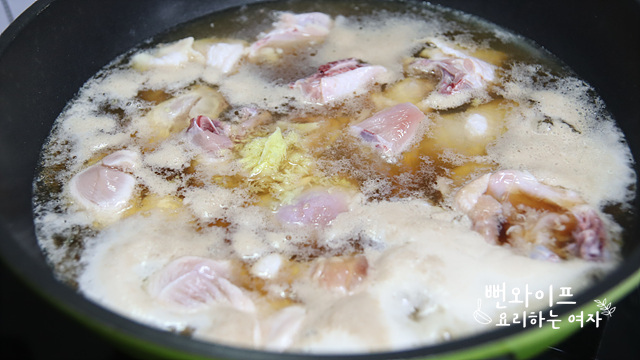
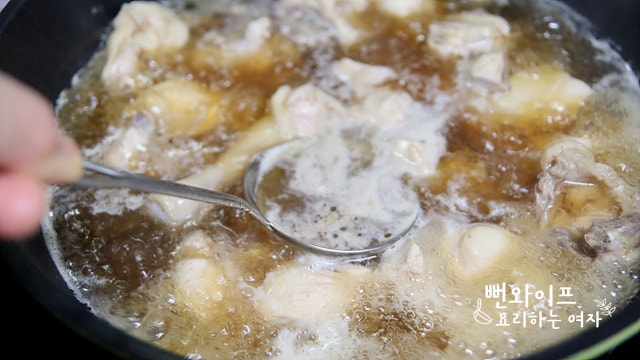
Put the cleaned chicken into a pot and add 2 1/2 cups of water, along with the seasoning ingredients: 4 tbsp regular soy sauce (jin-ganjang), 2 tbsp mirin (cooking rice wine), 1 tsp minced ginger, and 2 tbsp sugar...
Once it comes to a rolling boil, skim off any scum cleanly.
Think of this step as letting the chicken cook slightly, infusing it with a basic seasoning, and eliminating any unwanted meat odors.
Add the remaining seasonings
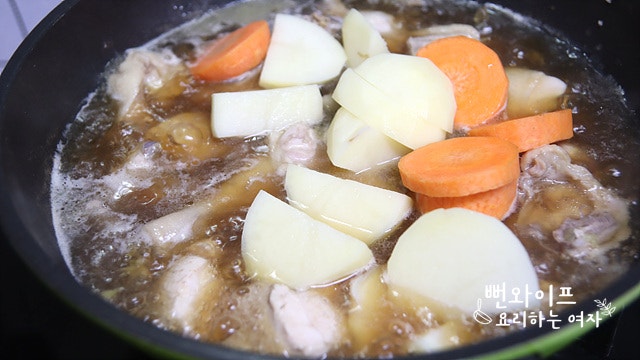
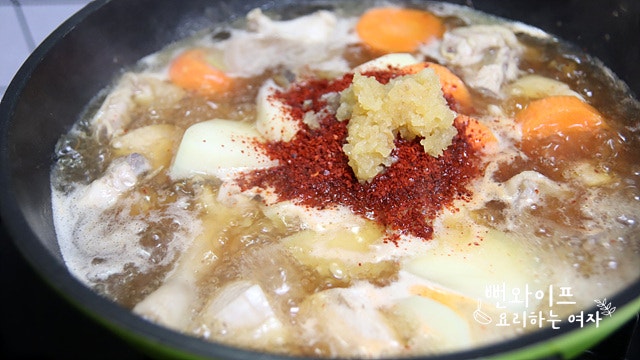
Add the potatoes, carrot, and the remaining seasonings: 3 tbsp gochugaru (Korean chili flakes), 2 tbsp minced garlic, 1 tbsp oyster sauce, and 1 tbsp corn syrup (mulyeot).
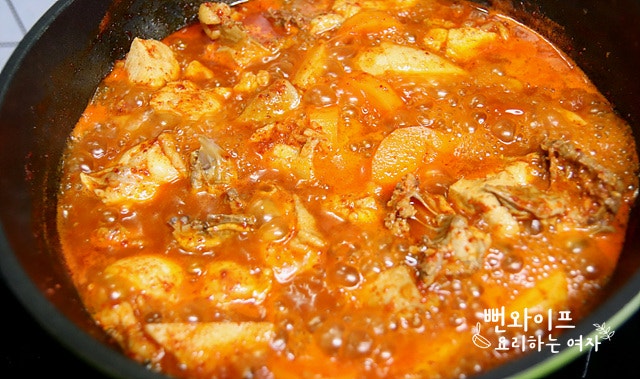
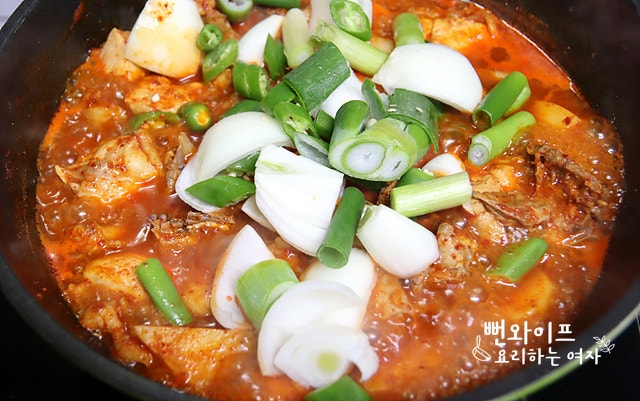
Cover with a lid and simmer gently so that all ingredients cook through and absorb the sauce well.
Once the broth has reduced down somewhat, add the onion, green onion, and Cheongyang chili peppers, and cook for at least 3 minutes to infuse their fresh aromatics.
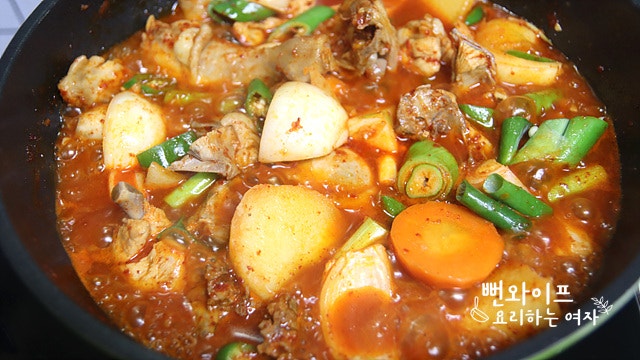
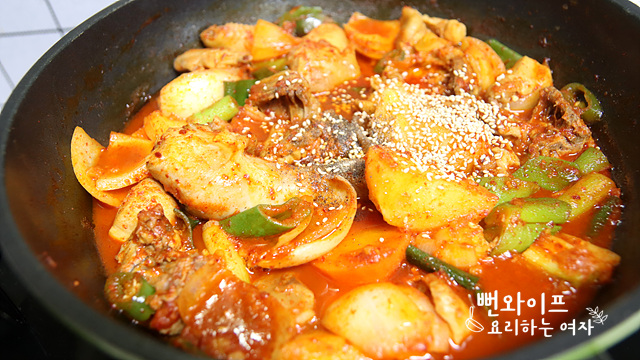
Finish by adding toasted sesame oil, toasted sesame seeds, and ground black pepper at the very end.
Serve
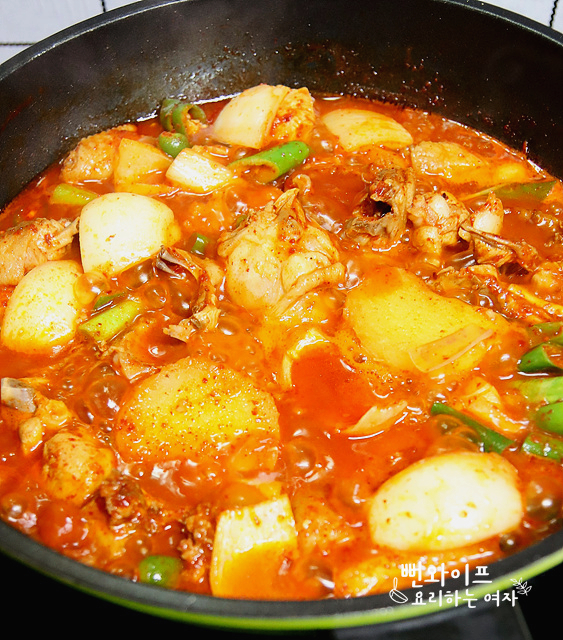
Today, I skipped the gochujang and added a little oyster sauce to bring out savory umami.
Just like with fish jorim, dak bokkeum tang tastes so much better when you reduce the liquid down enough until it is shallow and rich.
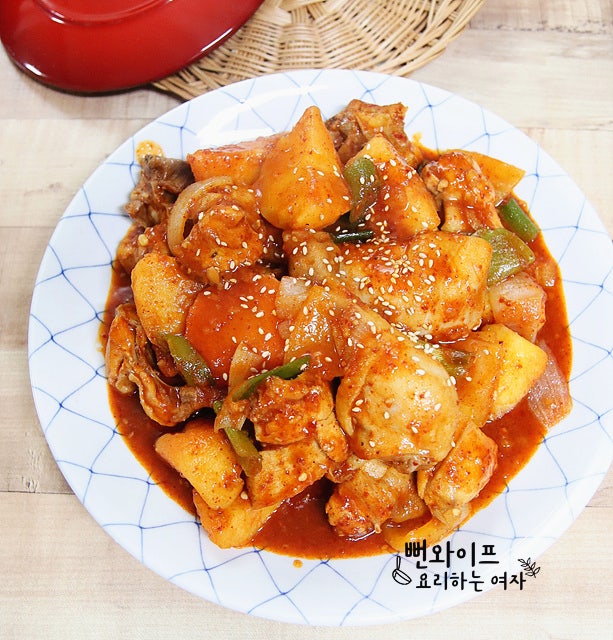
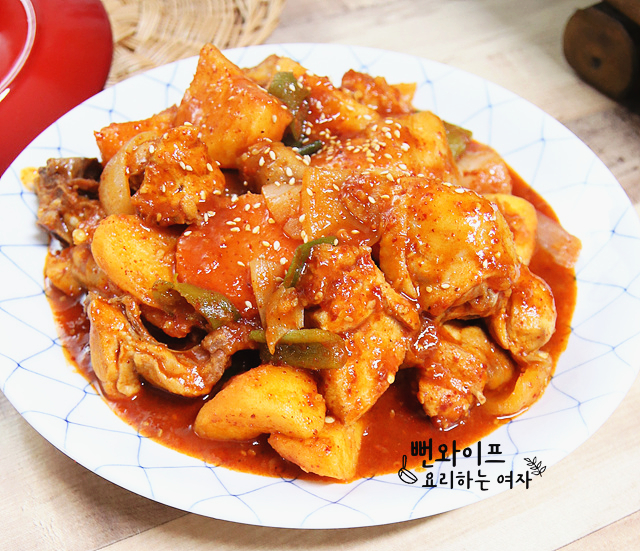
Dak bokkeum tang is always delicious, wonderfully familiar, and loved by the whole family.
If you haven't decided on a Friday night dinner menu yet, pick up a whole chicken and braise it up deliciously.
 Ppunwife's tips
- Just like with fish jorim, dak bokkeum tang tastes so much better when you reduce the liquid down enough until it is shallow and rich.
FAQ
Why use oyster sauce instead of gochujang?
Skipping gochujang and adding a little oyster sauce yields a clean, deep umami flavor without making the broth thick and heavy.
Why simmer the chicken with the initial seasonings first?
Simmering first with soy sauce, mirin, ginger, and sugar infuses the meat with a base flavor while skimming the foam removes unwanted odors.
Are there other ingredients that go well besides the basic vegetables?
Rice cakes or sweet potato glass noodles make great additions, or you can increase the amount of vegetables to braise together according to your preference.
When should the onion, green onion, and Cheongyang chili peppers be added?
Add them after the broth has reduced down somewhat and cook for at least 3 minutes so their fresh aromas infuse nicely into the dish.