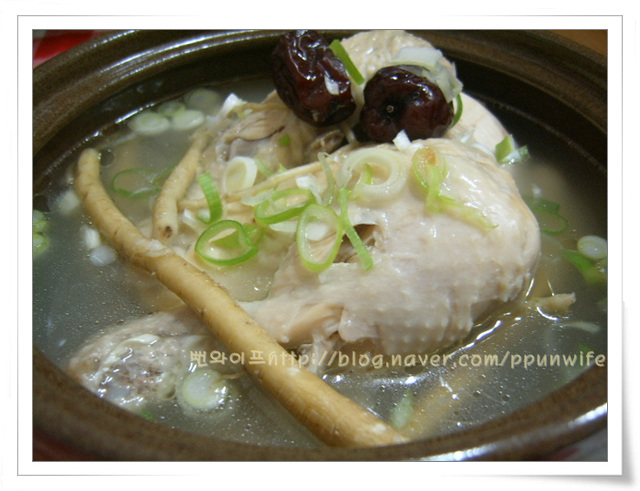
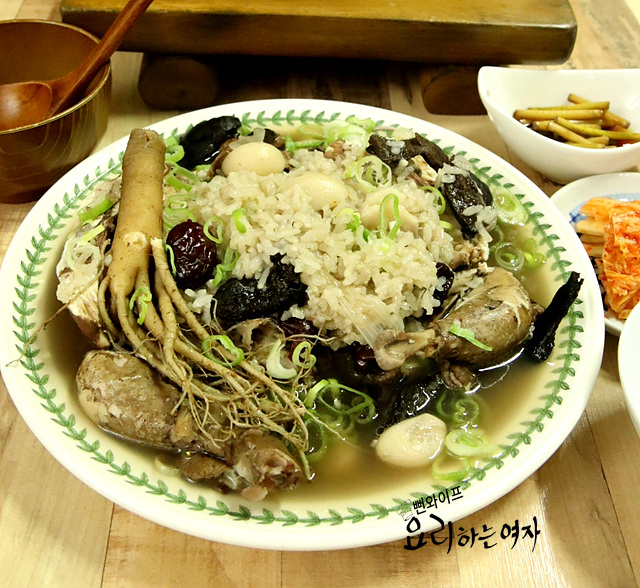
Samgyetang (Ginseng Chicken Soup) with Scorched Rice
A rich pressure-cooker ginseng chicken soup cooked with Korean medicinal herbs, scorched rice, and glutinous rice.
Translated from Korean by AI and not yet checked by a native speaker. Amounts and numbers are taken directly from the original recipe. Read the Korean original →
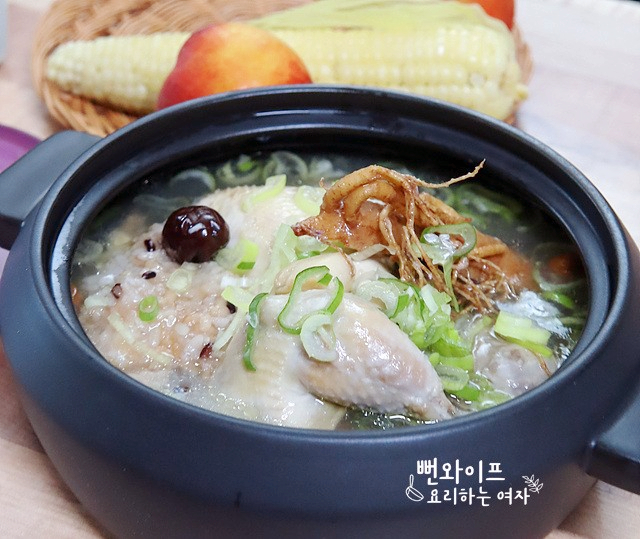
This rich samgyetang features young chickens, scorched rice, and glutinous rice cooked tender in a pressure cooker using a broth infused with Korean medicinal herbs. Trimming gamey parts removes chicken odor, while bundling the grains in cheesecloth yields a clean yet savory porridge. It makes a nourishing meal, especially during the sweltering heat of summer or on Sambok dog days.
- Servings
- 3–4 servings
- Cook time
- 35 minprep not included
- Difficulty
- Medium
- Spiciness
- Not spicy
Ingredients
- Young chicken2 whole, 550 g
- Korean medicinal herbs (hanyakjae)1 pack
- Fresh ginseng (susam)1 root (large)
- Peeled garlic15–20 cloves
- Glutinous rice1 cup
- Scorched rice (nurungji)1 bowl
- Water including broth13 cups
- Coarse sea salt1 tbsp
- Large green onion (daepa)sliced
- Ground black peppera little
- Rinse the glutinous rice, cover it with water, and let it soak for about 30 minutes.
- The fresh ginseng root was large, so I split it in half. If using 2 small roots, use them whole.
- Cut off the chicken tails and wing tips, which are sources of gamey odors. Trim excess fat and skin so the broth stays clean. Thoroughly scrape away the dark red blood clots caught between the rib bones inside the cavity using your fingers.
Steps
Prepare the ingredients
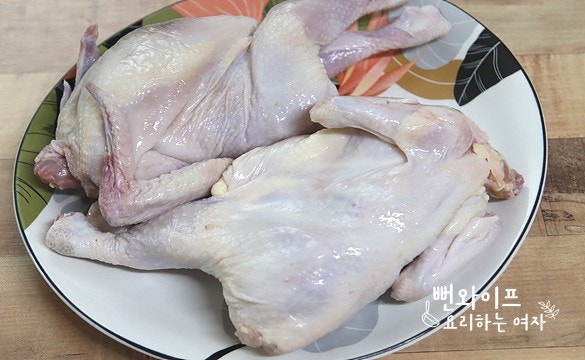
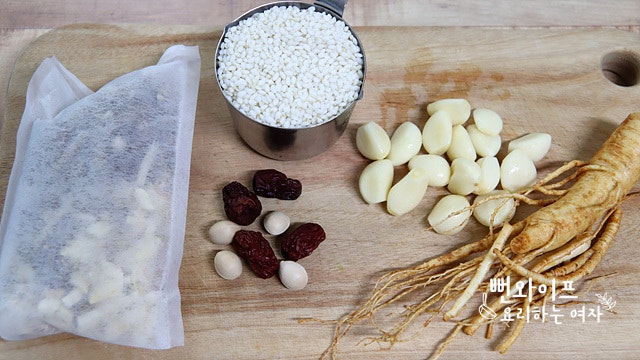
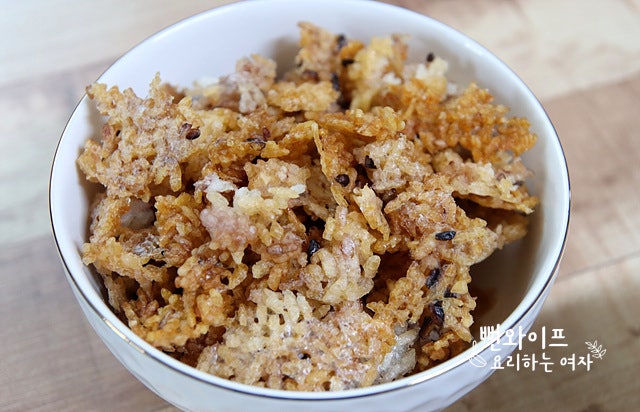
2 young chickens, about 550g each.
One pack of Korean medicinal herbs (hanyakjae) from the store, 1 root of fresh ginseng (susam) (large), 15 to 20 cloves of peeled garlic, 1 cup of glutinous rice, and one bowl of scorched rice (nurungji).
Soak the glutinous rice
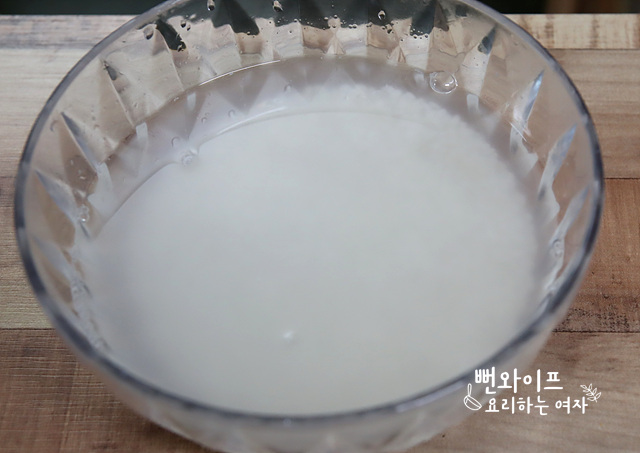
Rinse the glutinous rice, cover it with water, and let it soak for about 30 minutes.
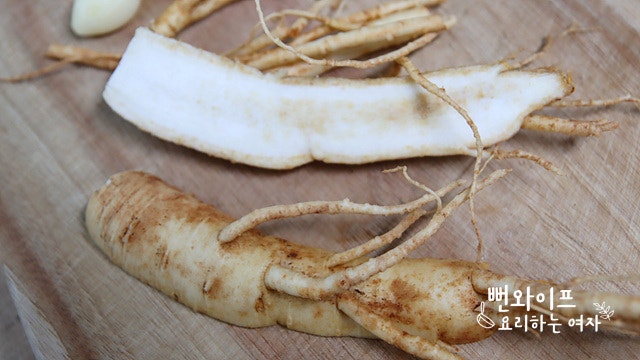
The fresh ginseng was large, so I split it in half. If using 2 small roots, use them whole.
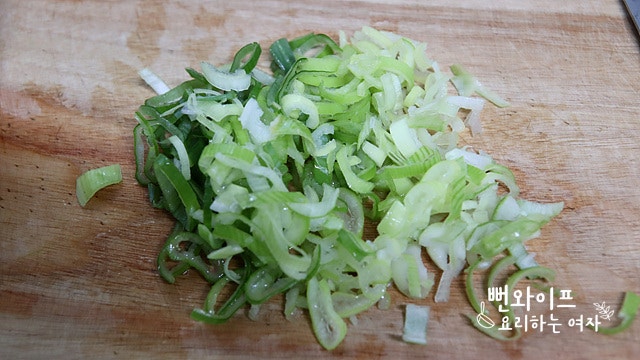
Finely slice a little large green onion for garnish.
Simmer the medicinal herbs
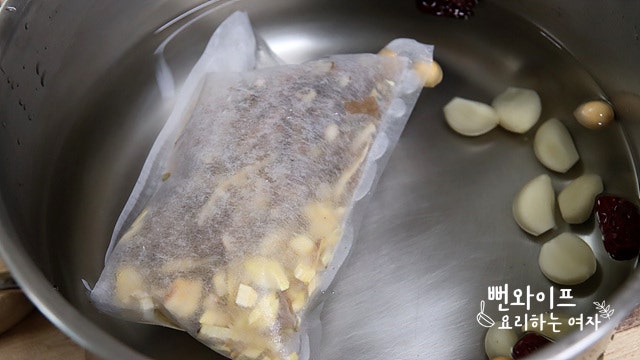
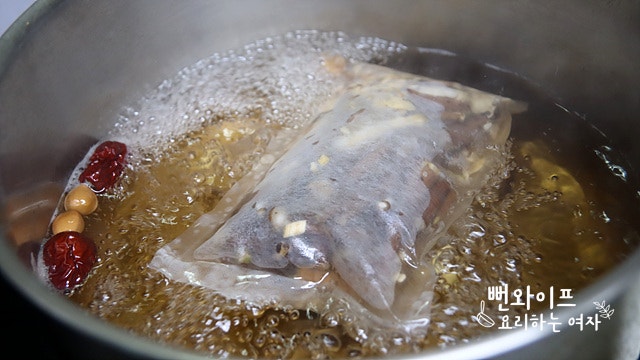
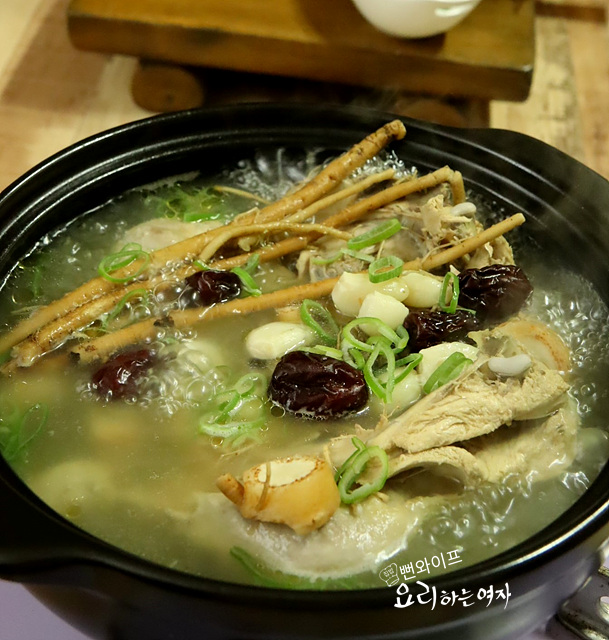
Simmer the base broth for samgyetang with one pack of Korean medicinal herbs and about half of the prepared peeled garlic for at least 15 minutes.
Like a broth, this liquid will be poured in when cooking the samgyetang to cook the chicken in the pressure cooker.
Clean the chickens
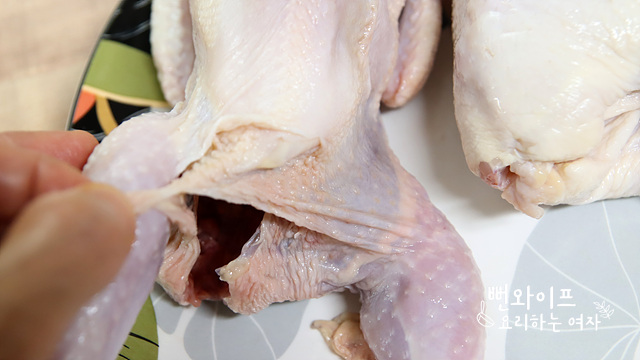
Clean the chickens while the broth simmers and the glutinous rice soaks.
Cut off the chicken tails and wing tips, which cause gamey odors. Trim away excess fat and chicken skin so the broth stays clean.
Mine were already cleaned, so I only trimmed off excess fat.
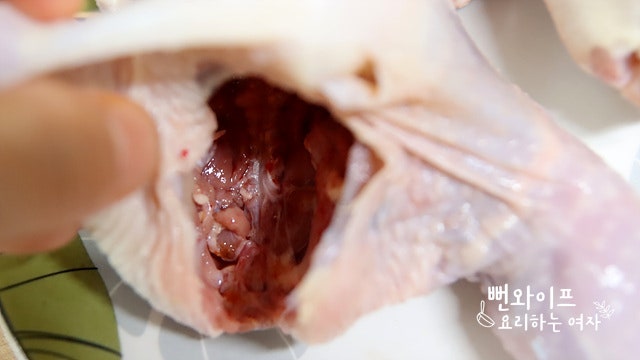
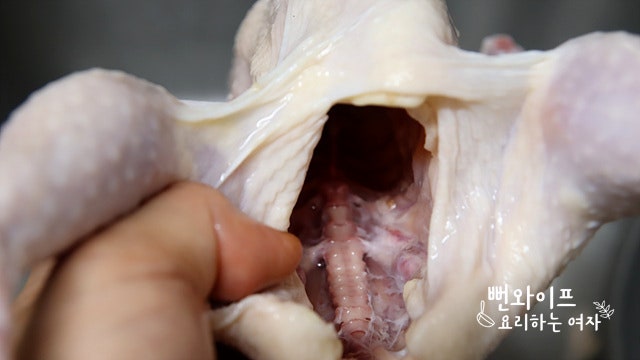
Carefully scrape away and remove any dark red blood clots caught between the rib bones inside the cavity using your fingers.
Add the ingredients
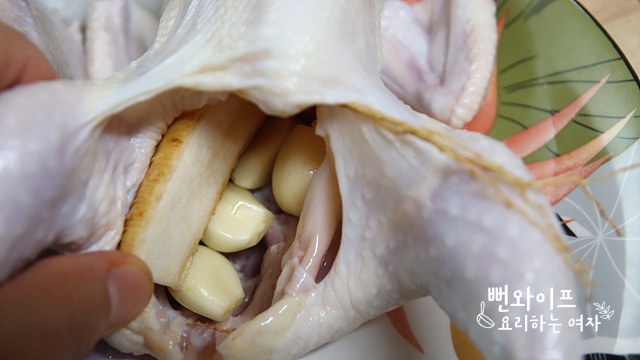
Divide the ginseng and the remaining garlic between the chicken cavities and stuff them inside.
Infusing them with the aroma of fresh ginseng and garlic seems effective in removing chicken odors.
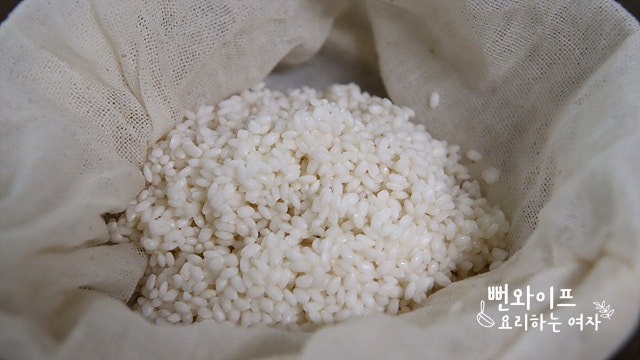
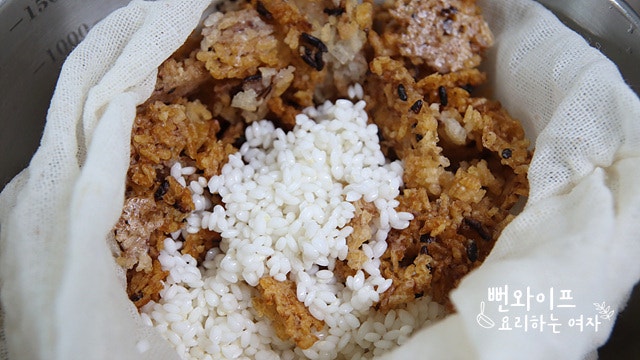
Place the glutinous rice and scorched rice together into a cotton cheesecloth bag, and...
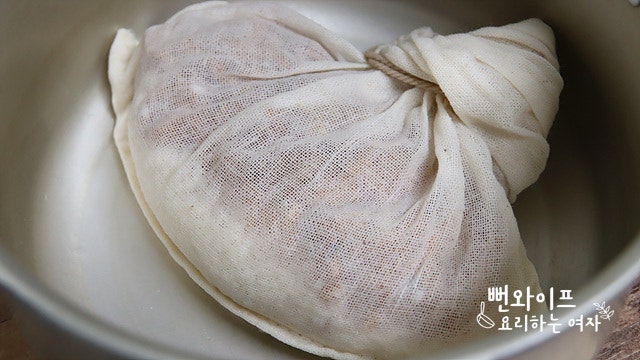
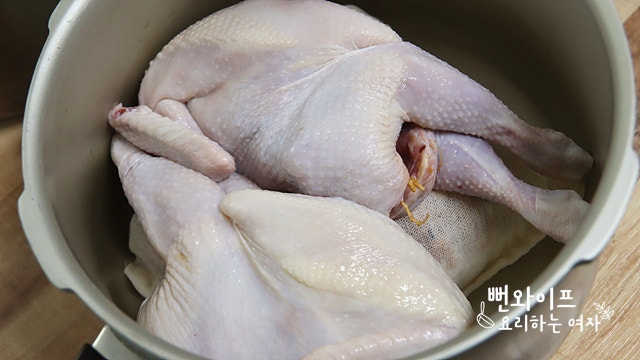
Tie it up, place it on the bottom of the pressure cooker, and arrange the prepared chickens on top.
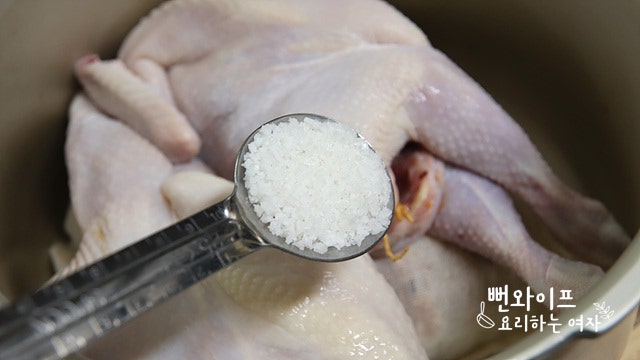
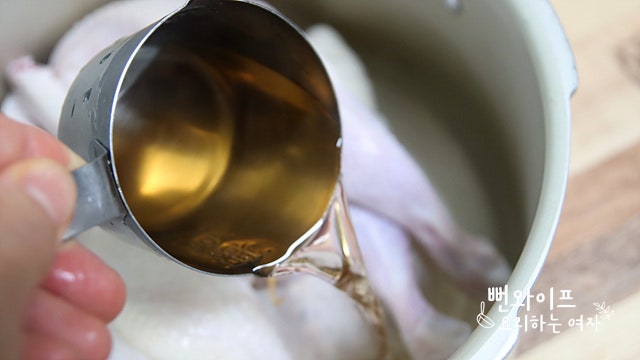
Add 1 tbsp of coarse sea salt and pour in all of the medicinal herb broth.
Cook in the pressure cooker
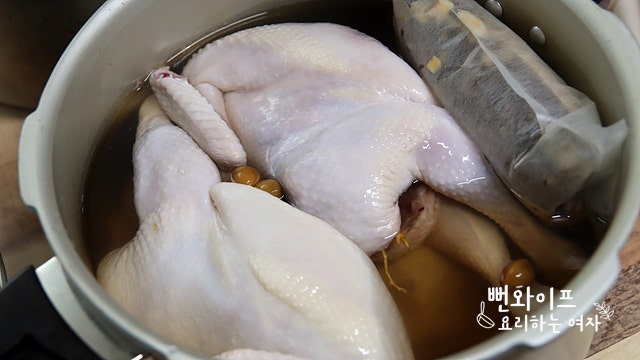
Add enough additional water to fully submerge the chicken, bringing the total liquid including the broth to about 13 cups.
I also threw the simmered medicinal herb pouch back in so it could steep even more.
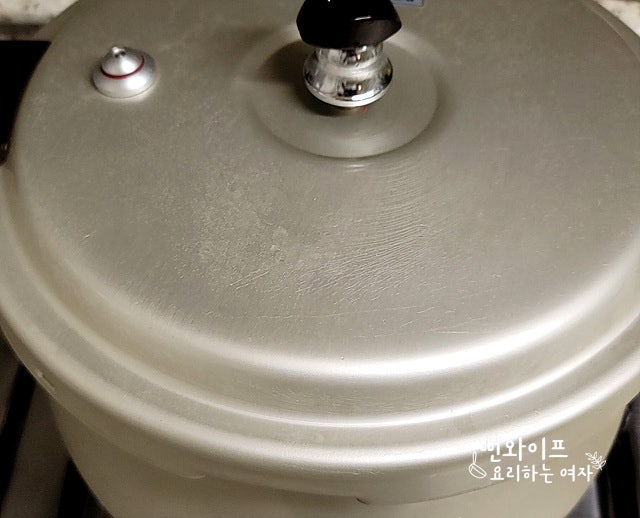
Over high heat, once the weight starts jiggling, reduce the heat to medium-low, cook for 20 minutes, then turn off the heat and let it rest until the pressure releases completely.
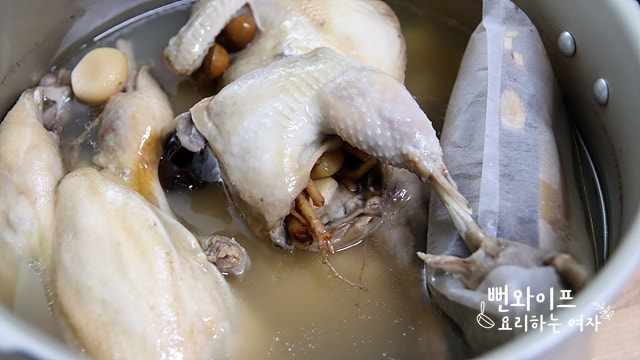
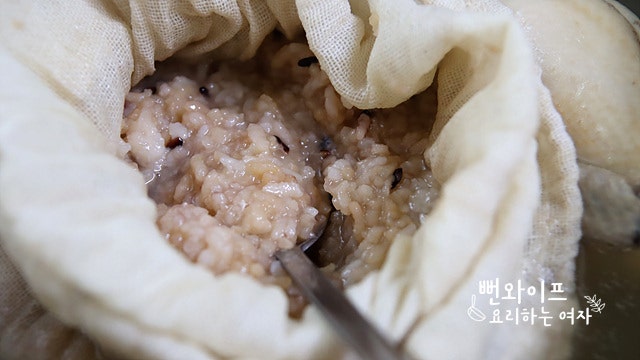
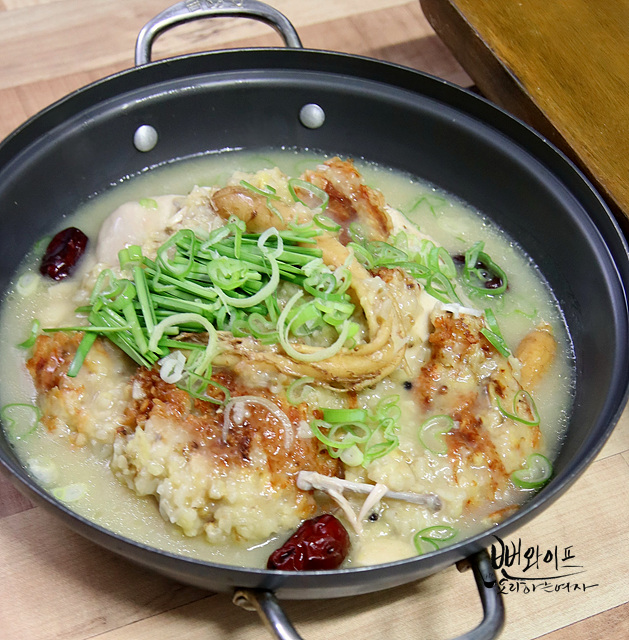
When you open the lid, you will see a deeply extracted broth and the meat is tender and well cooked.
The glutinous rice and scorched rice are also cooked to an enjoyable, soft texture.
Finish the dish
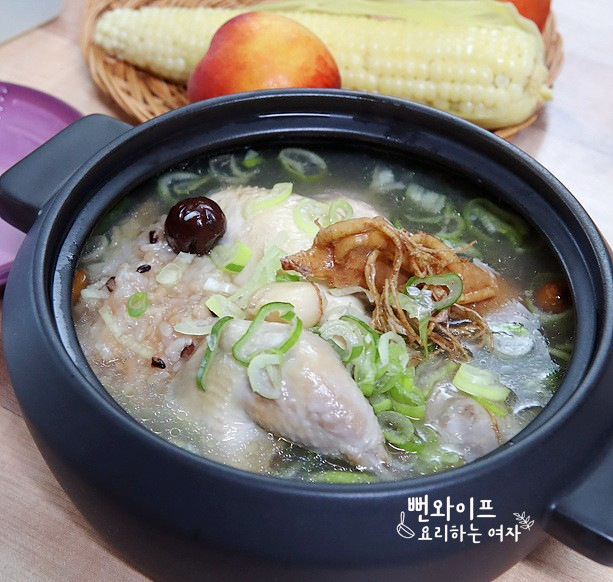
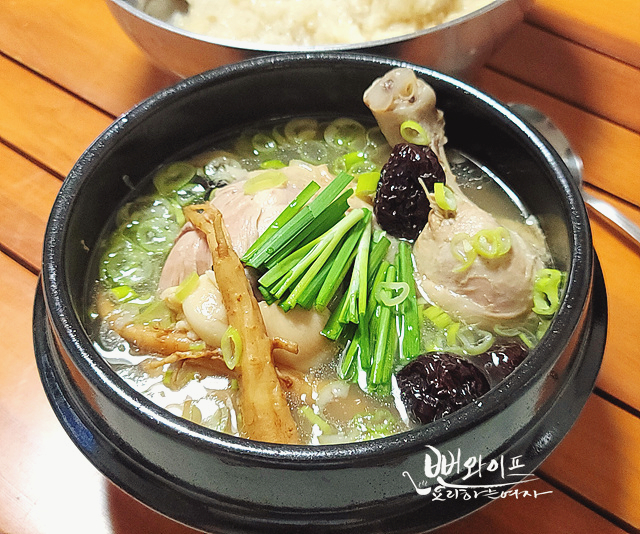
Place one chicken into an earthenware bowl (ttukbaegi), add some broth along with the well-cooked glutinous rice and scorched rice, and bring it to a brief boil before serving.
Top with sliced large green onion as a garnish at the end.
It looks truly appetizing.
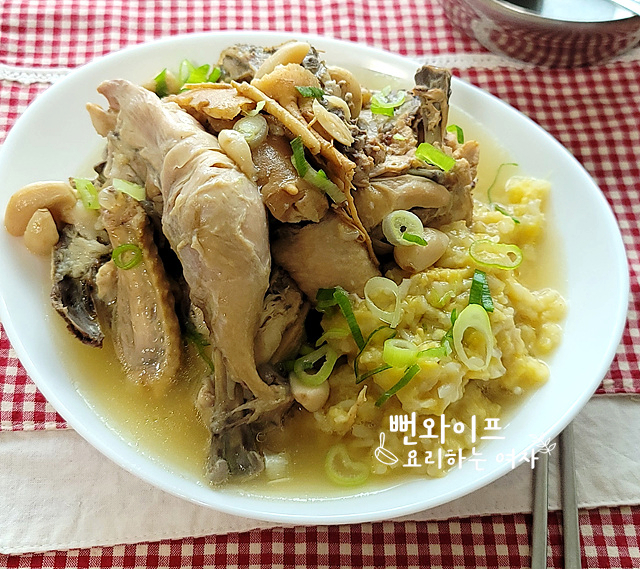
I make this often regardless of the season, but in summer when it is hot, you sweat a lot, and you feel drained, simmering it rich with fresh ginseng makes it as deep and restorative as any restaurant-bought samgyetang.
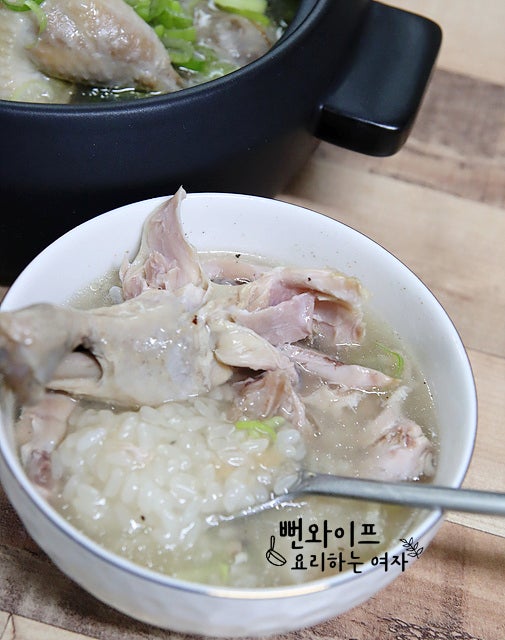
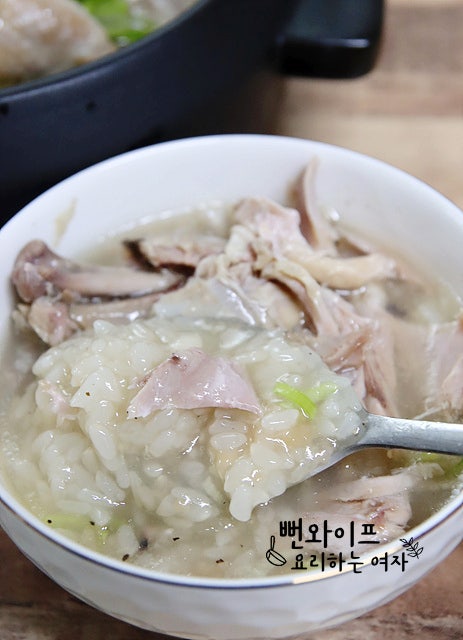
Because it was boiled with salt, the seasoning penetrates subtly into the meat, and adding just a bit of ground black pepper makes it perfect to eat.
The meat is delicious, but the porridge tastes absolutely incredible.
 Ppunwife's tips
- Simmer the base broth for samgyetang with one pack of Korean medicinal herbs and about half of the prepared peeled garlic for at least 15 minutes. Like a broth, this liquid will be poured in when cooking the samgyetang to cook the chicken in the pressure cooker.
- Stuffing the cavity with fresh ginseng and garlic helps infuse their aroma, which seems effective in removing chicken odors.
- Over high heat, once the weight starts jiggling, reduce to medium-low heat and cook for 20 minutes, then turn off the heat and leave it until the pressure releases naturally.
FAQ
Which parts should be trimmed to reduce chicken odor?
Cut off the tail and wing tips, which cause gamey smells, and thoroughly scrape away fat and the dark red blood clots trapped between the rib bones inside the cavity.
Why put the glutinous rice and scorched rice into a cheesecloth bag?
Tying the glutinous rice and scorched rice in a cheesecloth bag at the bottom of the pressure cooker keeps the grains from scorching against the pot or scattering messily into the soup, cooking them tenderly.
How should heat and cooking time be managed in the pressure cooker?
Place over high heat until the weight begins to jiggle, reduce the heat to medium-low to cook for 20 minutes, then turn off the heat and let the steam release completely on its own.
Can fresh ginseng be substituted or omitted? AI-generated
Since commercial samgyetang herb pouches generally contain standard medicinal herbs, you can omit the fresh ginseng and increase the amount of whole garlic cloves or large green onions instead.