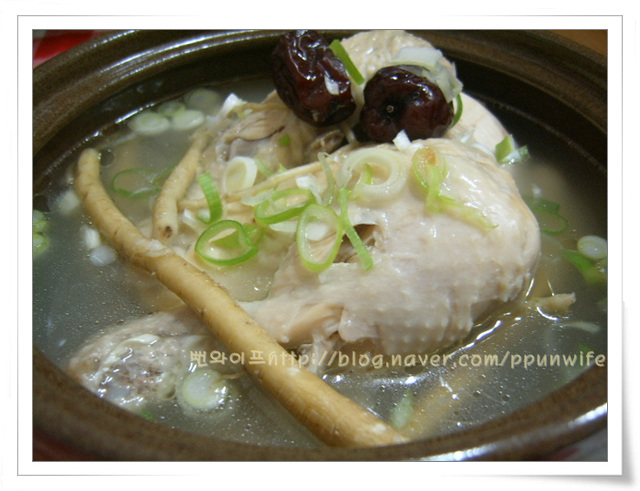
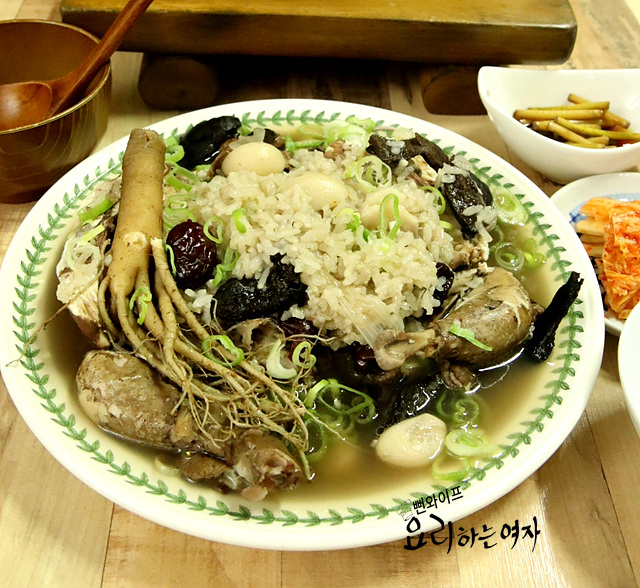
Pressure Cooker Nokdu Samgyetang (Ginseng Chicken Soup with Mung Beans)
A savory ginseng chicken soup with a clean broth, made by simmering mung beans and glutinous rice inside a cotton cloth bag in a pressure cooker.
Translated from Korean by AI and not yet checked by a native speaker. Amounts and numbers are taken directly from the original recipe. Read the Korean original →
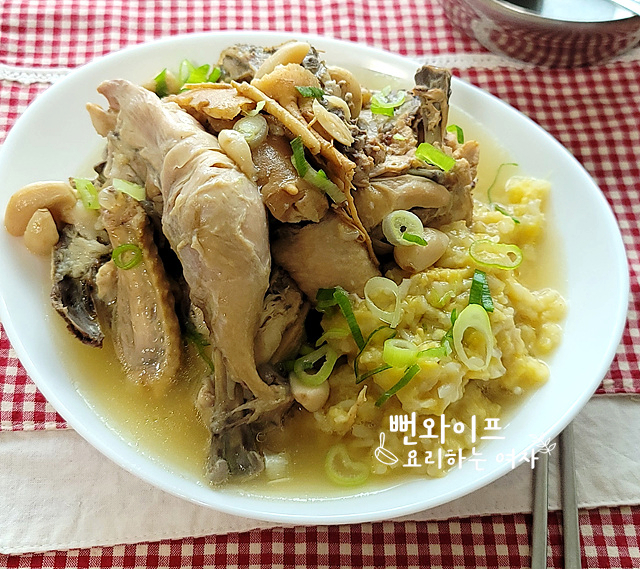
Simmering the base broth first with medicinal herbs and fresh ginseng creates a deep, rich flavor. Cooking it in a pressure cooker makes the chicken tender, while cooking the glutinous rice and hulled mung beans in a cotton cloth bag keeps the broth light, savory, and never thick or murky. It is a hearty nourishing soup perfect for restoring your stamina on hot summer days.
- Servings
- 2–3 servings
- Cook time
- 35 minprep not included
- Difficulty
- Medium
- Spiciness
- Not spicy
Ingredients
- Chicken1 whole, 1 kg
- Korean medicinal herbs (hanyakjae)1 pack
- Fresh ginseng (susam)2 roots
- Peeled garlic1 cup
- Glutinous rice1 cup
- Hulled mung beans1 cup
- Large green onion (daepa)for garnish
- Salt1 tbsp
- Water13–15 cups
- You can also use 2 young chickens instead.
- Combine the glutinous rice and mung beans, rinse them under running water, and soak in water for 30 minutes to expand.
- Instead of medicinal herbs or fresh ginseng, you can boil ginger, onion, large green onion, jujubes, whole black peppercorns, and other aromatics thoroughly to make the broth.
Steps
Prepare the ingredients
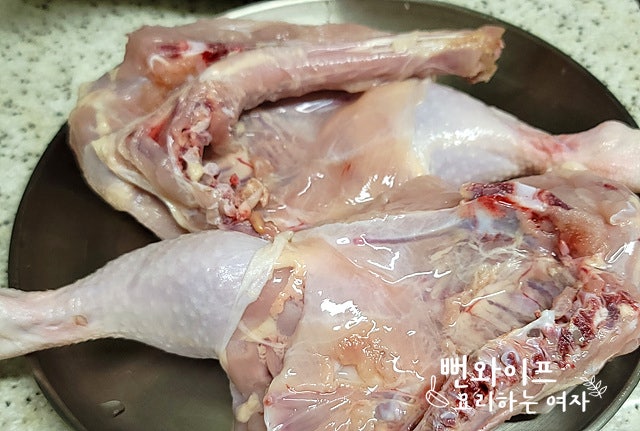
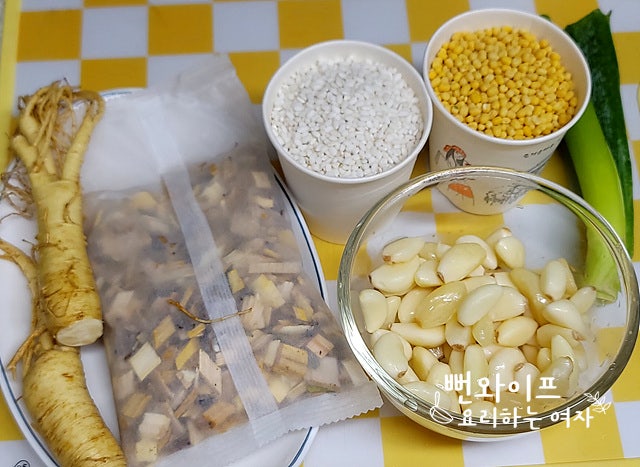
I used one whole size 11 chicken. I split it in half and washed it clean.
You can also use 2 young chickens instead.
I prepared 1 cup glutinous rice, 1 cup mung beans, 1 pack Korean medicinal herbs (hanyakjae), 2 roots fresh ginseng (susam), and 1 cup peeled garlic since the cloves were small.
I prepared a little large green onion (daepa) for garnish.
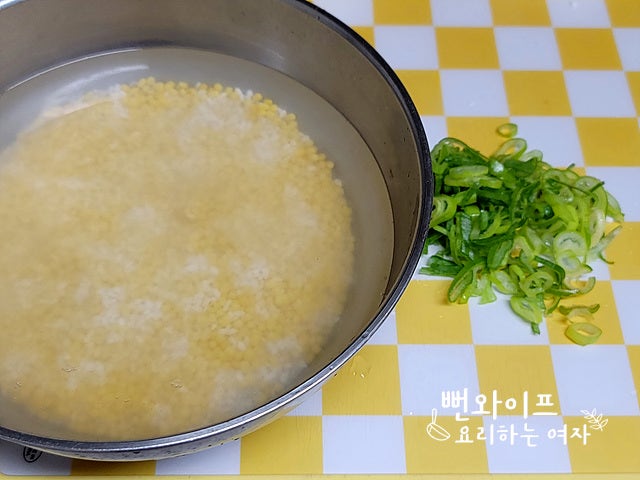
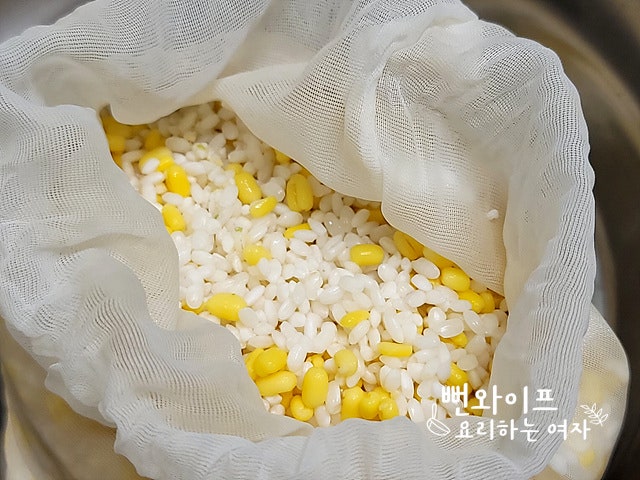
Combine the glutinous rice and mung beans, rinse them under running water, and soak in water for 30 minutes to expand.
Slice the large green onion thinly.
Put the soaked glutinous rice and mung beans into a cotton cloth bag and tie the opening securely.
Simmer the medicinal herbs
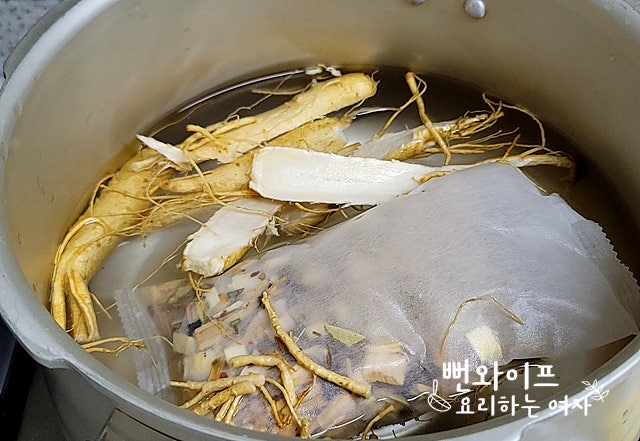
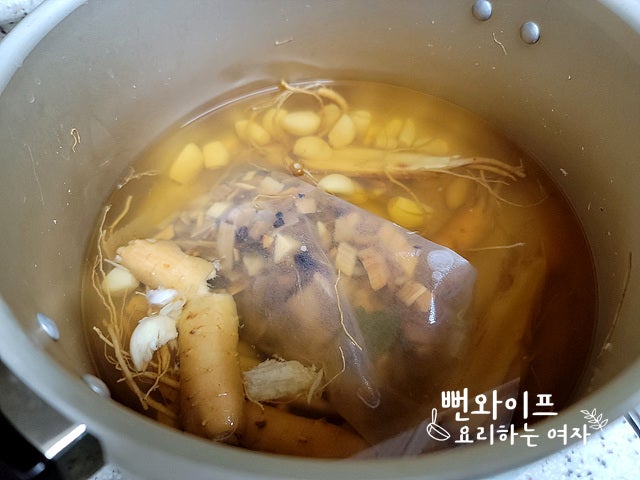
If you extract a base broth first for samgyetang, just like making stock, you can enjoy a much richer and more delicious soup.
Instead of medicinal herbs or fresh ginseng, you can boil ginger, onion, large green onion, jujubes, whole black peppercorns, and other aromatics thoroughly to make the broth.
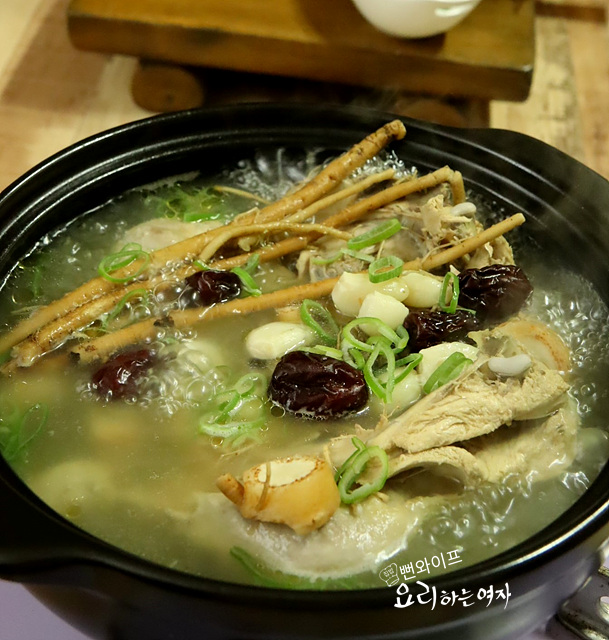
Add the fresh ginseng and medicinal herb pack, add about half of the prepared garlic, pour in about 10 cups of water, and simmer for about 15 minutes.
Simmer the samgyetang
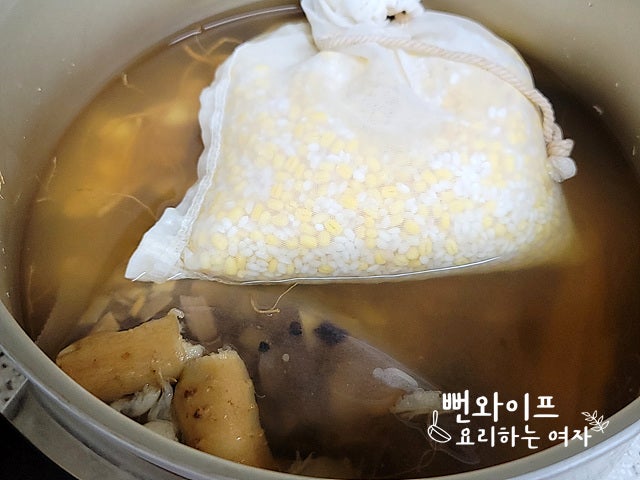
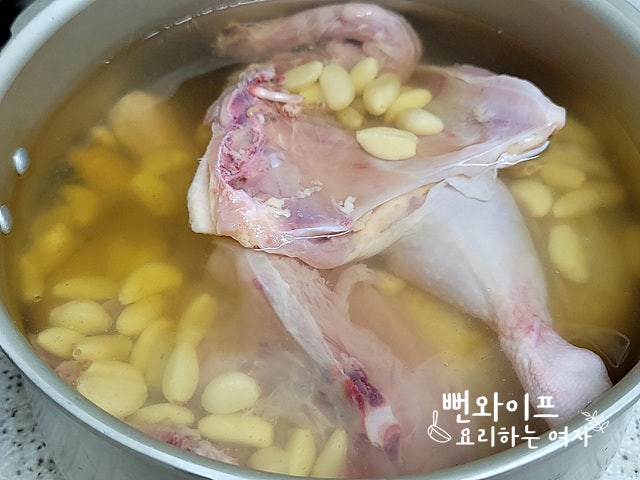
Without removing the previously simmered ingredients, add the cotton cloth bag first, then add the chicken and the rest of the garlic.
If you add 1 tbsp salt when boiling, the seasoning penetrates deep into the chicken, making it much more delicious to eat.
Add more water so that the chicken is fully submerged; I poured in about 15 cups in total, including the simmered broth.
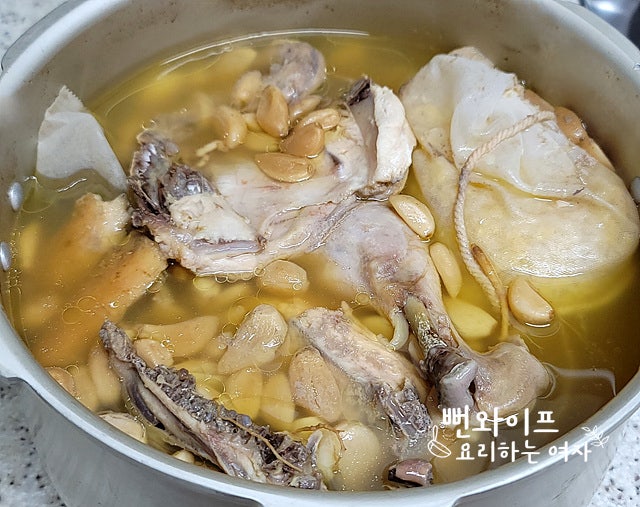
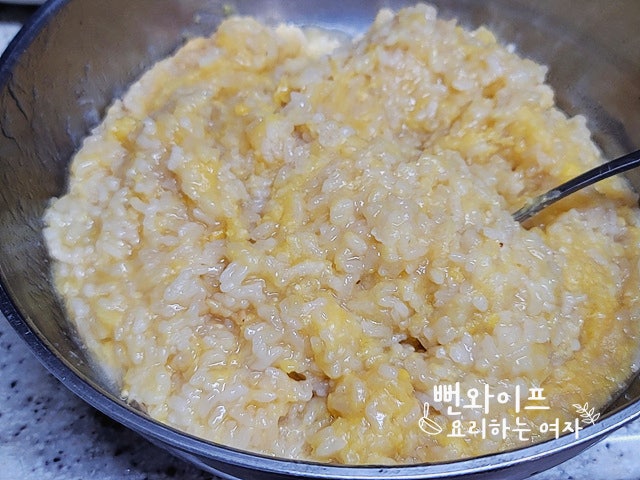
Cover with the lid, and once the pressure cooker weight starts shaking vigorously, reduce the heat to medium-low and simmer for 20 minutes.
Turn off the heat and leave it alone until the pressure releases completely to let it finish steaming.
Remove the glutinous rice and mung beans from the cotton cloth bag and transfer them to a separate bowl.
Finish
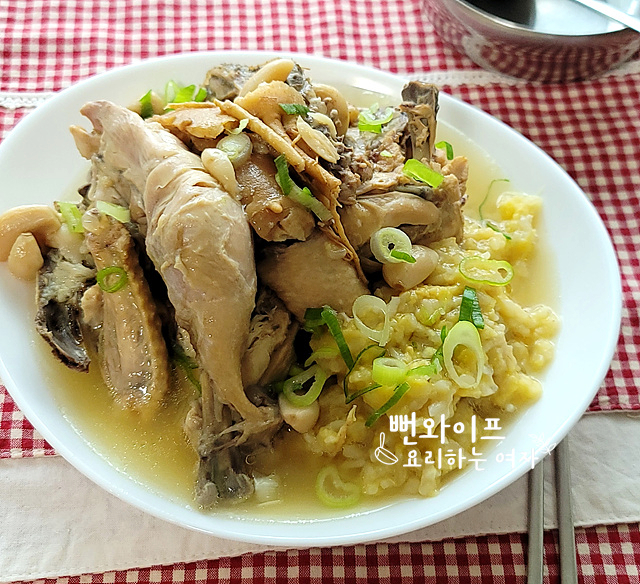
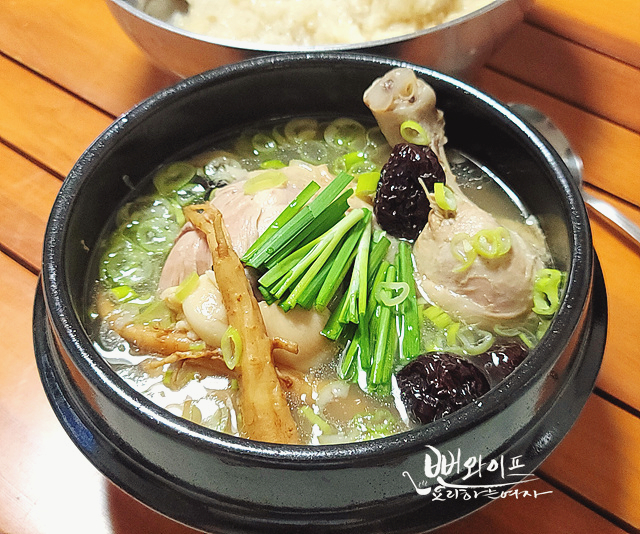
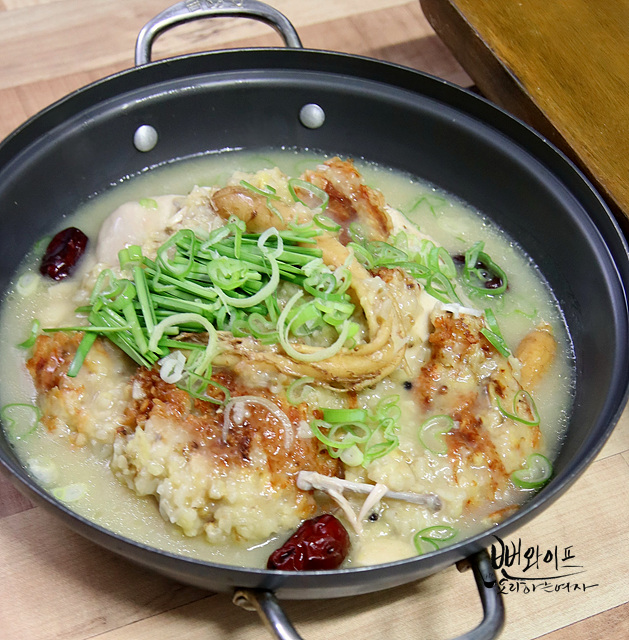
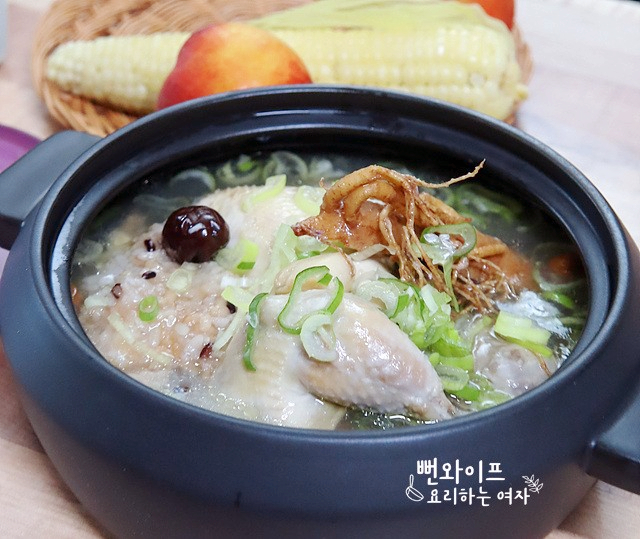
I plated the chicken and the porridge on a dish.
Because the samgyetang was simmered in the broth extracted from medicinal herbs first, the soup turned out very rich.
Also, cooking the grains separately keeps them from mixing into the soup, so the broth is clean and not thick.
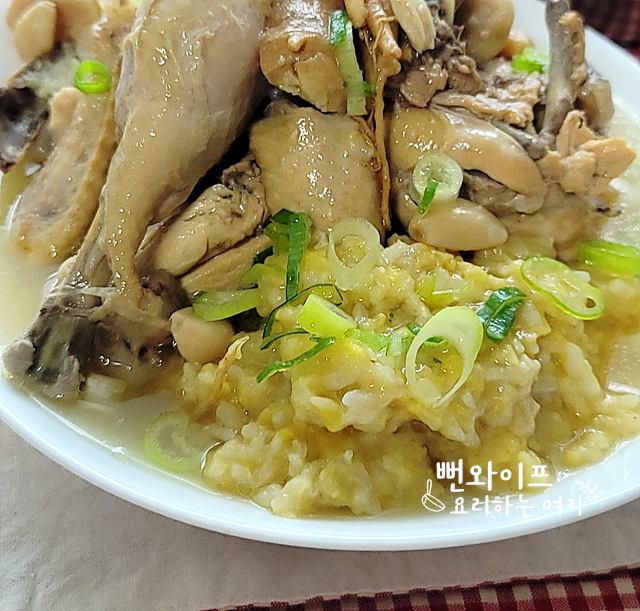
The glutinous rice and yellow mung beans are also cooked sticky, soft, and tender.
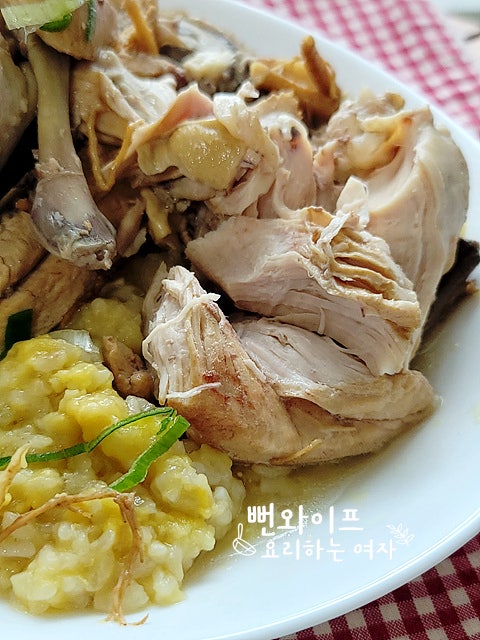
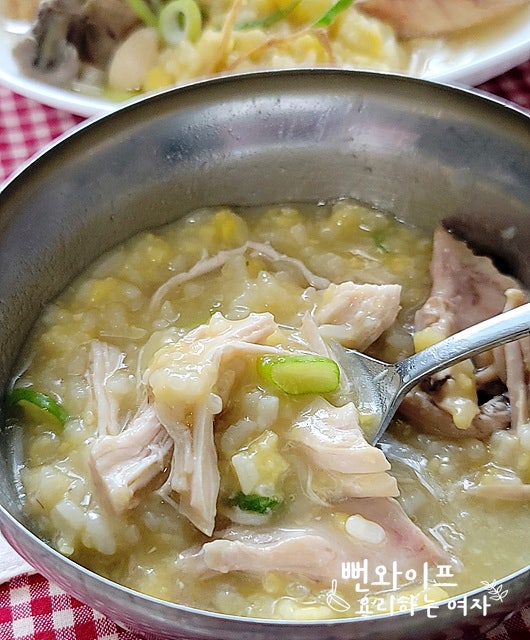
Cooking in a pressure cooker makes even the chicken breast you might usually dislike tender enough to enjoy with ease.
Enjoy the meat and clean broth separately first, and at the end, pour plenty of hot broth over the porridge and mix it in; it becomes just as nutty and delicious as freshly cooked mung bean porridge.
 Ppunwife's tips
- Cooking in a pressure cooker lets you enjoy tender meat and porridge without simmering for a long time.
- If you extract a base broth first for samgyetang, just like making stock, you can enjoy a much richer and more delicious soup.
- If you add 1 tbsp salt when boiling, the seasoning penetrates deep into the chicken, making it much more delicious to eat.
- Cooking the grains separately keeps them from mixing into the soup, so the broth stays clean instead of turning thick.
FAQ
Why do you put the glutinous rice and mung beans separately into a cotton cloth bag?
Simmering the grains in a cloth bag keeps them from mixing into the soup, preventing it from thickening and maintaining a clean broth.
How can I substitute if I do not have a medicinal herb pack or fresh ginseng?
You can brew the broth by adding ginger, onion, large green onion, jujubes, whole black peppercorns, and similar aromatics.
Can I use smaller chickens instead of a size 11 chicken?
Yes, you can cook using 2 young chickens instead of one size 11 chicken.