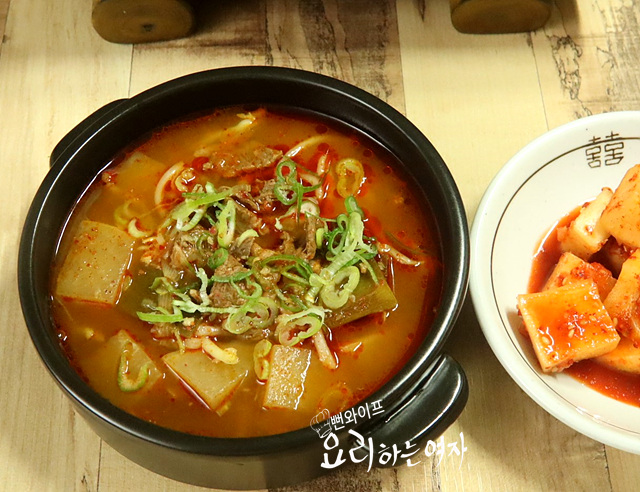
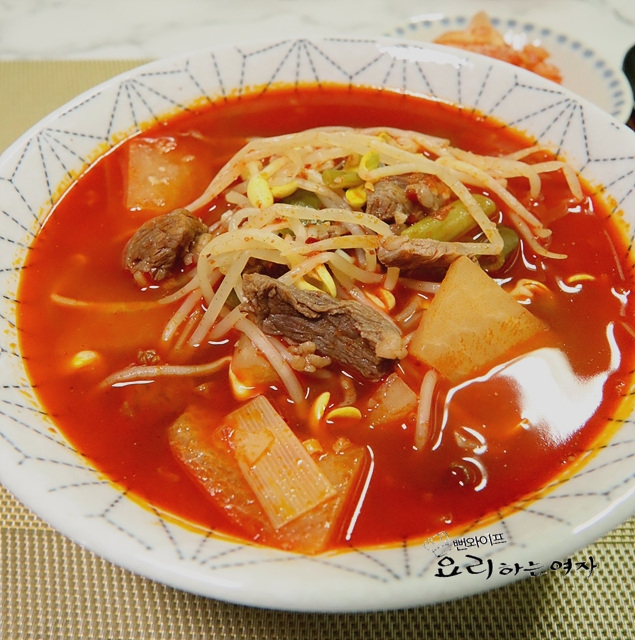
Spicy Gyeongsang-do Style Sogogi Muguk (Beef Radish Soup)
A spicy and refreshing Gyeongsang-do style beef radish soup made with Korean chili flakes and soybean sprouts.
Translated from Korean by AI and not yet checked by a native speaker. Amounts and numbers are taken directly from the original recipe. Read the Korean original →
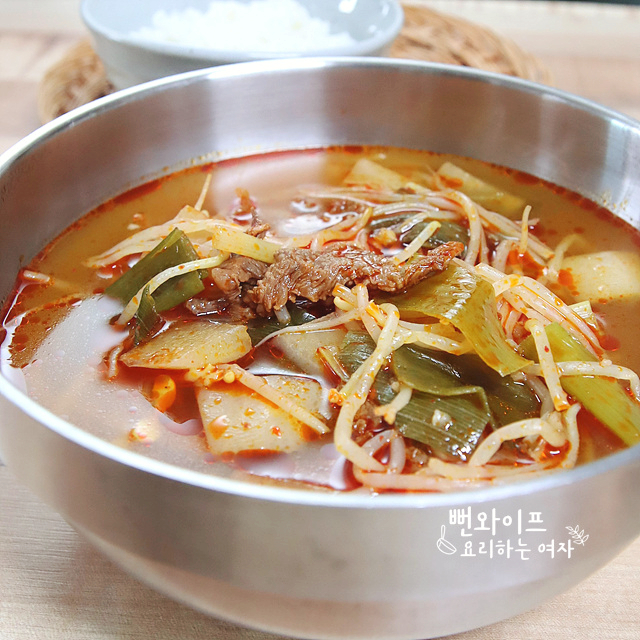
Generous amounts of beef, Korean radish, and soybean sprouts create a deeply refreshing and rich broth that soothes the stomach. By stir-frying the chili flakes with the ingredients first, the soup stays clean and spicy without any powdery heaviness. Hearty like a traditional market soup, it is perfect enjoyed with rice stirred in, especially as a hangover soup.
- Servings
- 9–10 servings
- Cook time
- 25 minprep not included
- Difficulty
- Medium
- Spiciness
- Spicy
Ingredients
Ingredients
- Beef450 g (for soup)
- Korean radish (mu)700 g
- Soybean sprouts400 g
- Large green onion (daepa)2 stalks
- Water15 cups (or more)
- Dried kelp (dasima)3 pieces (10 cm square)
- Toasted sesame oil and cooking oil4 tbsp
- Gochugaru (Korean chili flakes)5 tbsp
Meat marinade
- Soup soy sauce (guk-ganjang)2 tbsp
- Mirin (cooking rice wine)3 tbsp
Seasoning
- Minced garlic4 tbsp
- Soup soy sauce (guk-ganjang)2 tbsp
- Tuna extract sauce (chamchi-aek) (or fish soy sauce, yondu (vegetable seasoning essence), sand lance fish sauce)2 tbsp
- Coarse sea salt1 tbsp
- Ground black pepper1/2 tsp
- I cut the stewing beef into bite-sized pieces while trimming away excess fat.
- The secret to the spicy, refreshing broth is plenty of Korean radish and soybean sprouts, so prepare them generously.
- Instead of adding dried kelp, you can use 4 broth tablets or anchovy broth.
- You can use sand lance fish sauce or anchovy fish sauce instead of tuna extract sauce.
Steps
Slice the ingredients
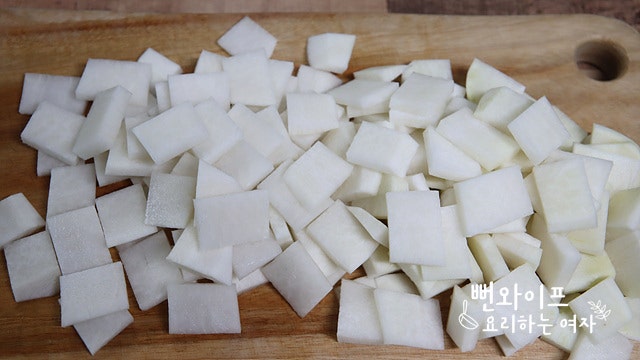
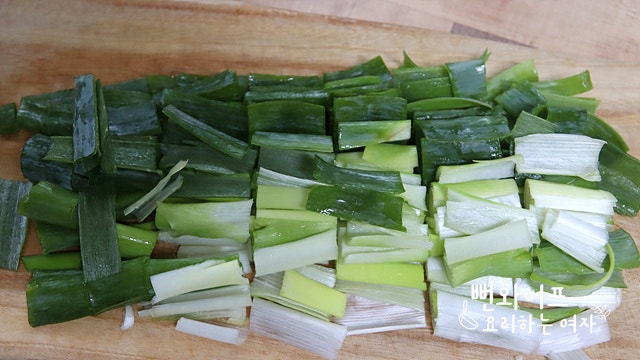
Thinly slice the Korean radish into bite-sized flat squares, split the large green onions lengthwise, and cut them into lengths of around 3 cm.
Remove blood from the beef
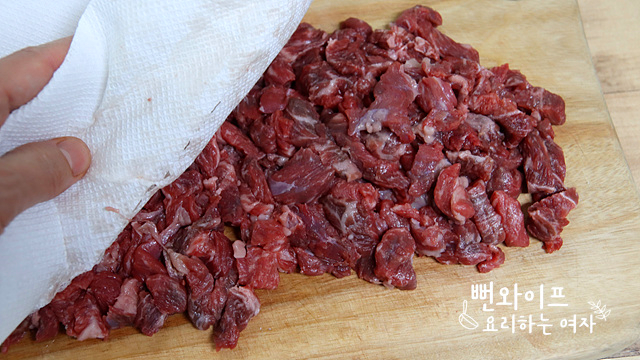
Press the beef with paper towels to remove the surface blood.
Stir-fry the beef
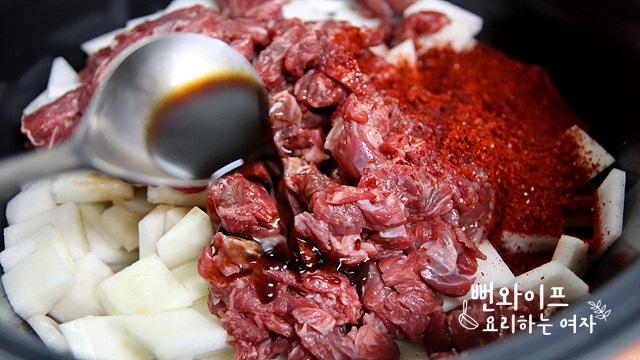
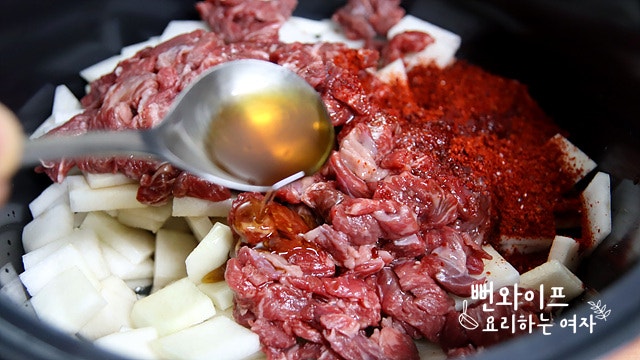
In the pot you will cook in, add the beef, Korean radish, and 5 tbsp gochugaru, then add 2 tbsp soup soy sauce and 3 tbsp mirin to season them.
Add about 4 tbsp of the mixed cooking oil and toasted sesame oil so the chili flakes can stir-fry moistly into a chili oil without burning.
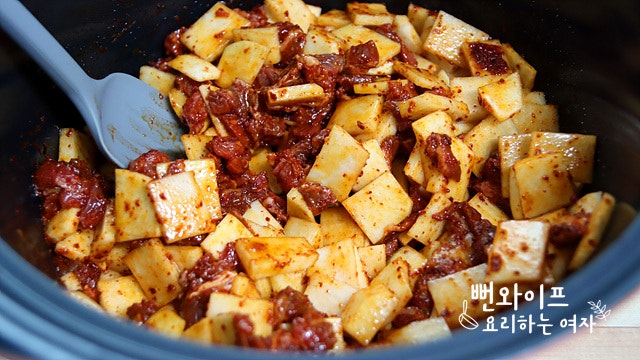
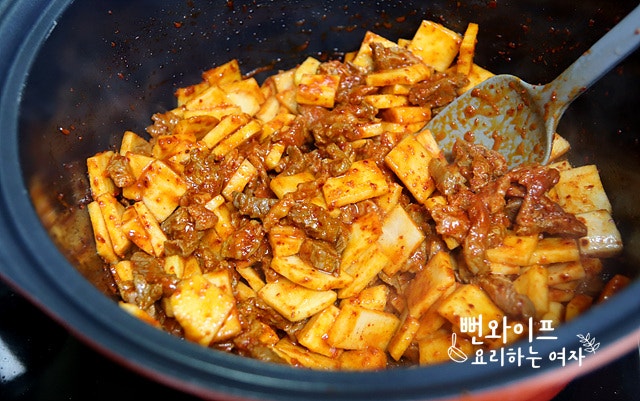
Mix well before turning on the heat so the gochugaru absorbs the moisture a bit.
Turn on the heat to medium so it does not burn, and stir-fry until the beef is cooked and the radish softens slightly.
When you stir-fry the chili flakes with the ingredients like this before boiling, you get a clean, spicy broth without the powdery heaviness that comes from just adding chili flakes straight into water.
Simmer
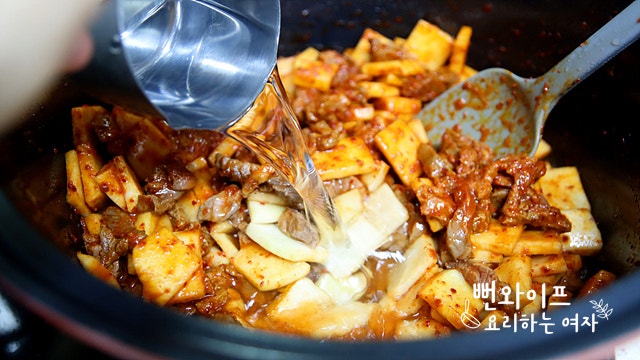
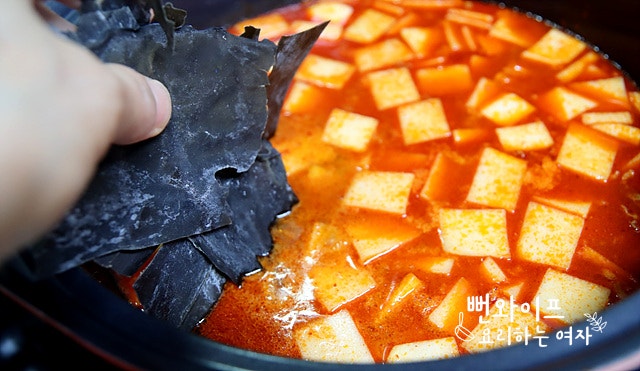
Pour in about 13 cups of water and add the dried kelp.
Instead of dried kelp, you can add 4 broth tablets or use anchovy broth.
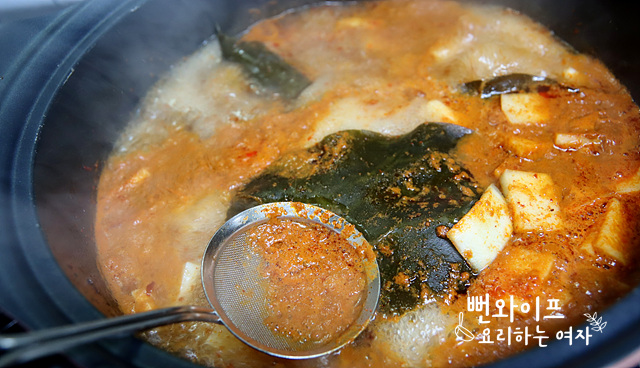
Raise the heat to high, and once it comes to a rolling boil, skim off the foam that rises to the surface cleanly.
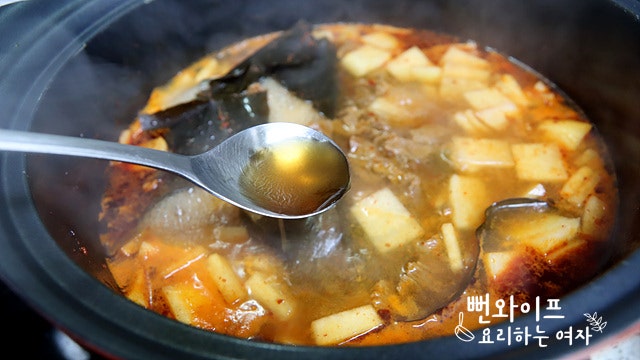
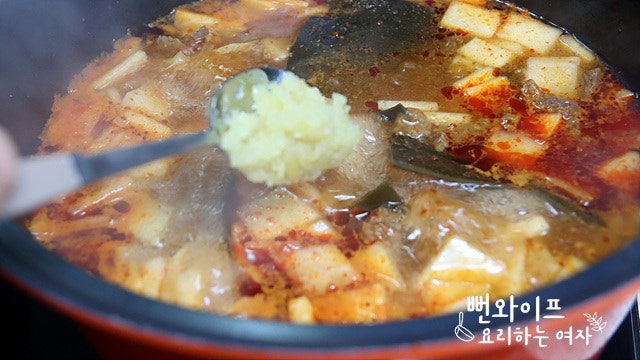
Season the broth.
Add 2 tbsp soup soy sauce, 2 tbsp tuna extract sauce or fish sauce (or Yondu), and 4 tbsp minced garlic.
You can use sand lance fish sauce or anchovy fish sauce instead of tuna extract sauce.
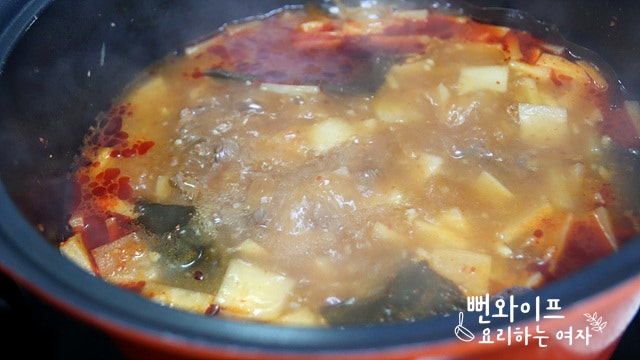
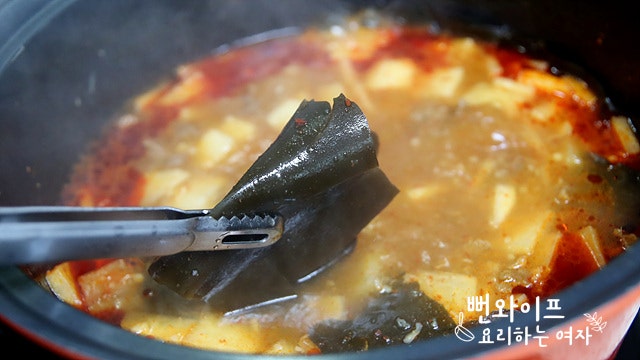
Cover with a lid and simmer gently for about 20 minutes so the savory flavor of the meat and the refreshing taste of the radish meld together.
Now take out the dried kelp...
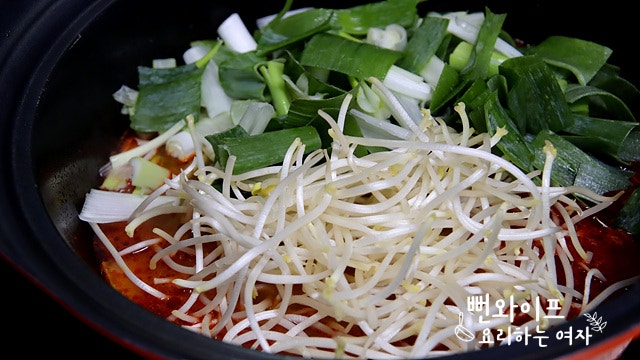
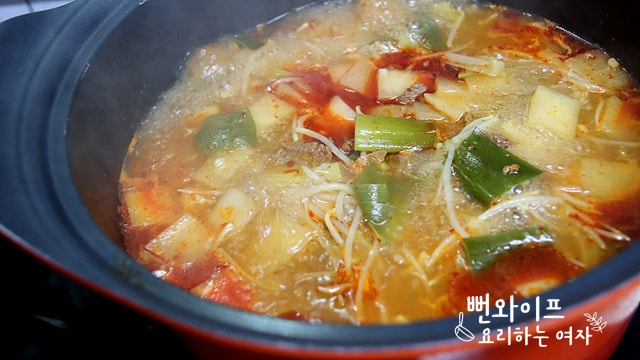
Add the soybean sprouts and large green onion. The broth had boiled down, so I added about 2 cups of water and boiled for 5 minutes more.
You can adjust the amount of water to your taste depending on whether you prefer more solids or more broth.
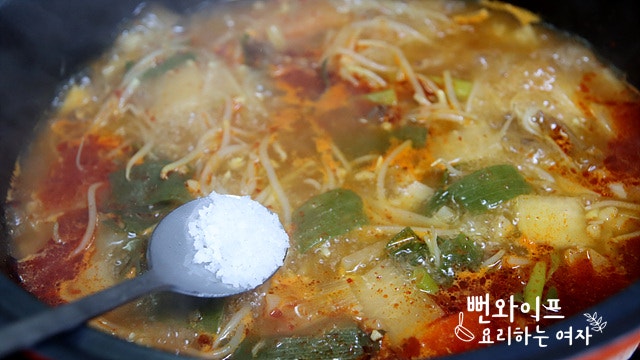
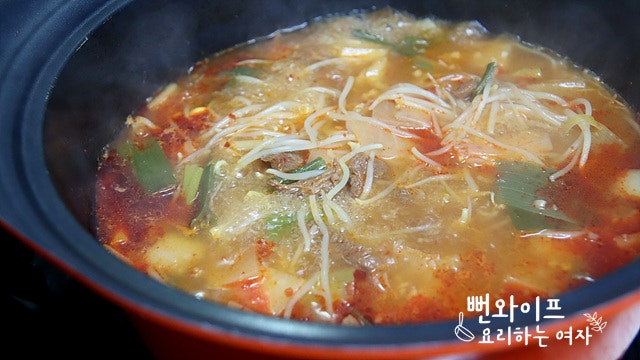
I adjusted the final seasoning by adding salt little by little, and it seems I used about 1 tbsp coarse sea salt.
Turn off the heat, add 1/2 tsp ground black pepper at the very end, and stir to finish.
Complete
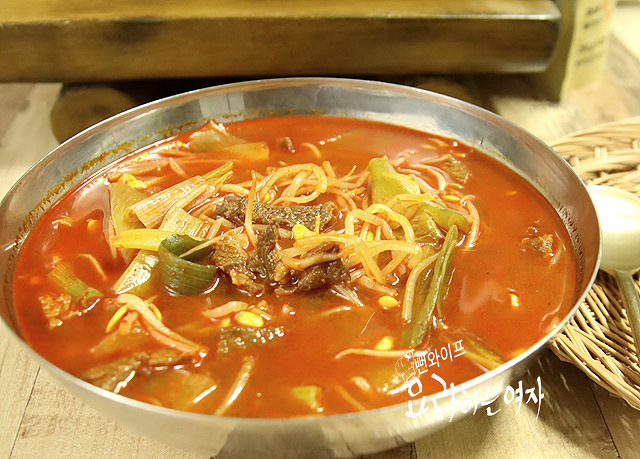
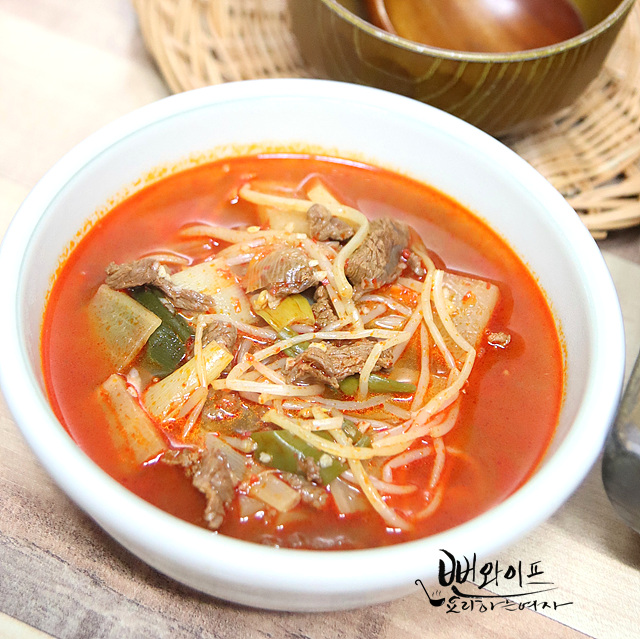
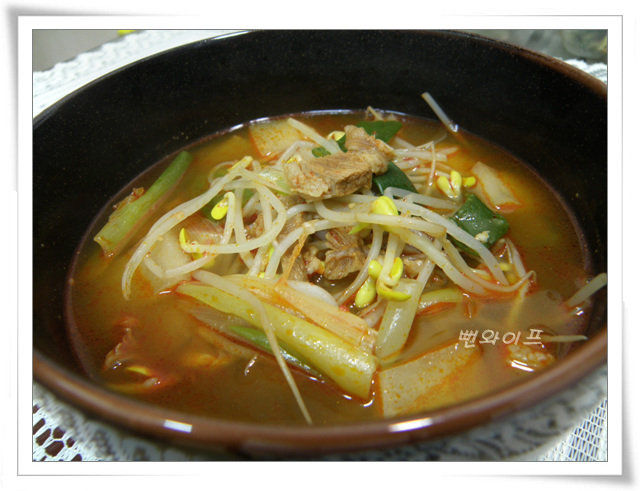
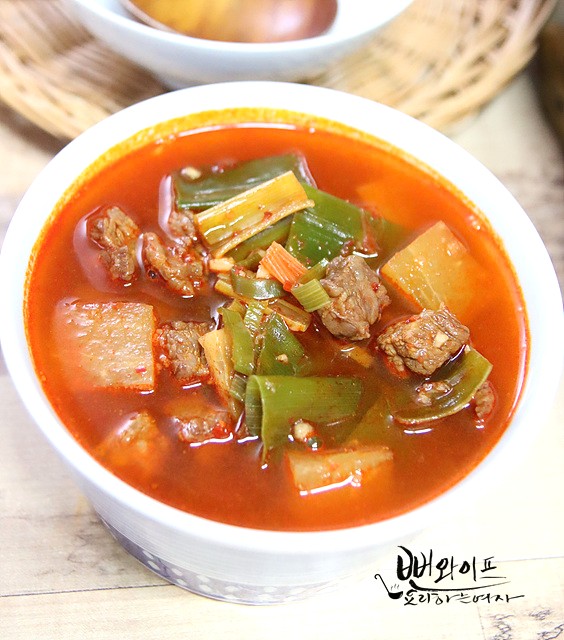
The Gyeongsang-do beef radish soup is complete. Just looking at it makes you feel refreshed.
I cooked it properly, even pinching off the soybean sprout heads.
 Ppunwife's tips
- When you stir-fry the chili flakes with the ingredients like this before boiling, you get a clean, spicy broth without the powdery heaviness that comes from just adding chili flakes straight into water.
- Raise the heat to high, and once it comes to a rolling boil, skim off the foam that rises to the surface cleanly.
FAQ
Why do you stir-fry the chili flakes first instead of dissolving them directly in water?
Stir-frying the chili flakes in oil with the beef and Korean radish prevents any powdery texture and produces a clean, sharp, spicy broth.
Can I use other broth ingredients instead of dried kelp?
Yes, instead of dried kelp, you can use 4 broth tablets or regular anchovy broth.
Is there a substitute for tuna extract sauce when seasoning?
You can replace the tuna extract sauce with the same amount (2 tbsp) of fish sauce, Yondu, sand lance fish sauce, or anchovy fish sauce.