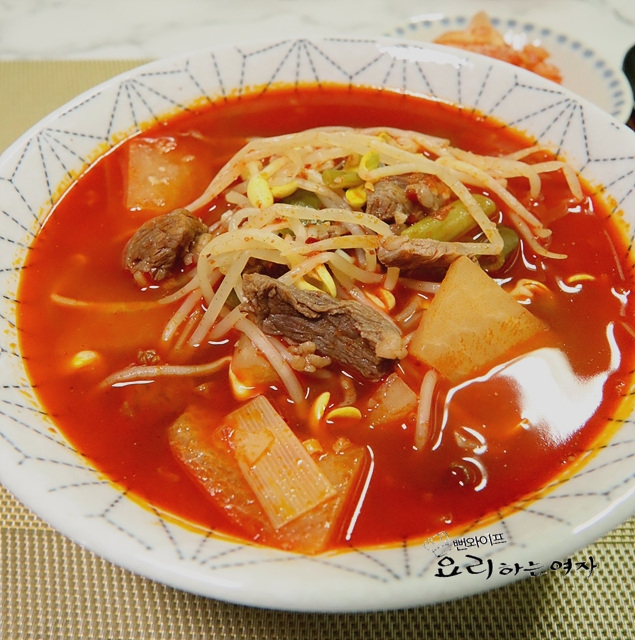
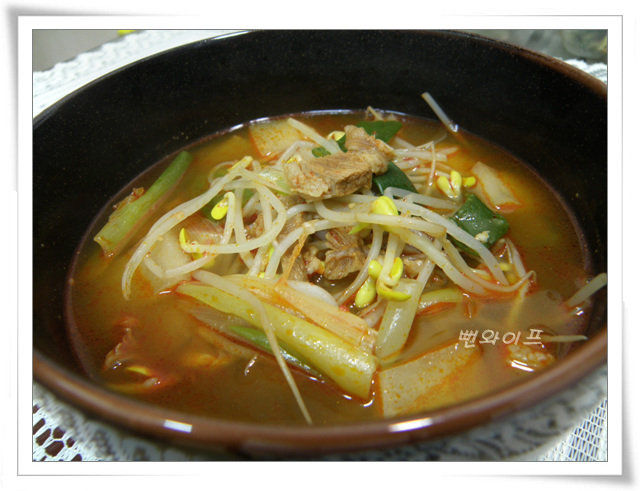
Spicy, Refreshing Sogogi Gukbap (Beef Soup with Rice)
A spicy and refreshing Gyeongsang-do market-style beef soup simmered thoroughly after stir-frying beef and Korean radish in chili oil.
Translated from Korean by AI and not yet checked by a native speaker. Amounts and numbers are taken directly from the original recipe. Read the Korean original →
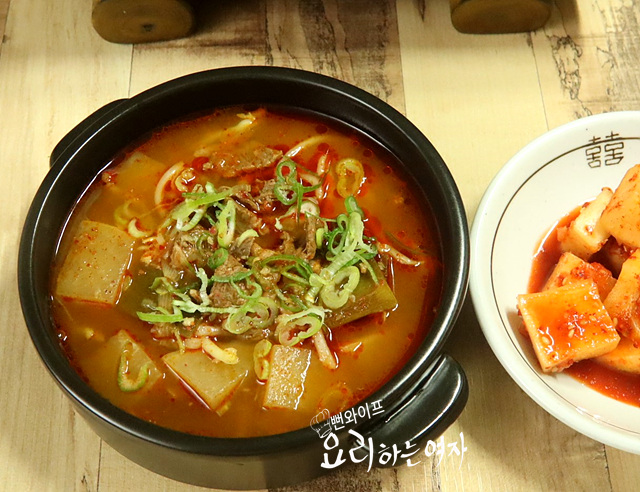
This Gyeongsang-do-style gukbap simmers beef and Korean radish in chili oil made by pre-mixing chili flakes and cooking oil. Thickly sliced radish, large green onions, and thick soybean sprouts are gently simmered together to create a deep, refreshing broth. Spicy and hearty, it makes a wonderful hangover soup or a satisfying dish to accompany drinks.
- Servings
- 9–10 servings
- Cook time
- 25 minprep not included
- Difficulty
- Medium
- Spiciness
- Spicy
Ingredients
Ingredients
- Beef450 g
- Korean radish (mu)400 g
- Soybean sprouts300 g
- Large green onion (daepa)2 stalks
- Dried kelp (dasima) broth14 cups
Meat marinade
- Gochugaru (Korean chili flakes)6 tbsp
- Cooking oil3 tbsp
- Soup soy sauce (guk-ganjang)1 tbsp
- Mirin (cooking rice wine)2 tbsp
Seasoning
- Soup soy sauce (guk-ganjang)2 tbsp
- Tuna extract sauce (chamchi-aek)2 tbsp
- Minced garlic4 tbsp
- Salt1/2 tbsp
- Ground black peppera little
- For the broth, steep 5 sheets of 10 cm square dried kelp in 14 cups of water for at least 30 minutes.
- To give it an authentic market gukbap texture, buy thick soybean sprouts meant for braising (jjim-yong) and remove the heads.
Steps
Prepare the ingredients
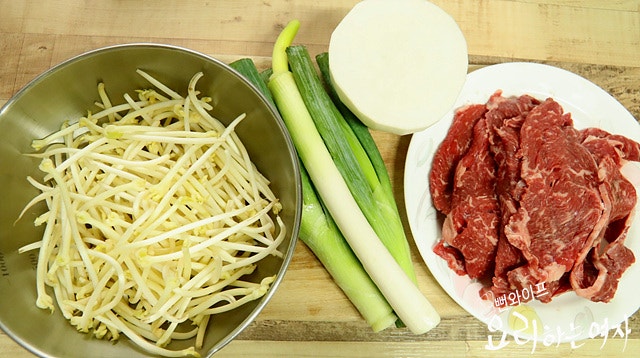
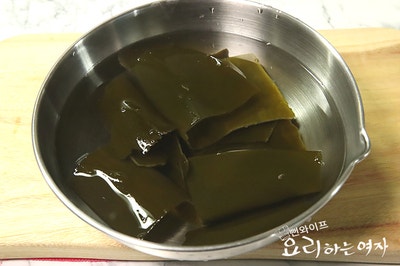
Prepare beef for soup, and buy thick soybean sprouts meant for braising and remove the heads to give it a classic gukbap texture.
Prepare the Korean radish and 2 large stalks of large green onion.
For the kelp broth that provides savory depth to the soup, steep 5 sheets of 10 cm square dried kelp in 14 cups of water for at least 30 minutes.
Cut the ingredients
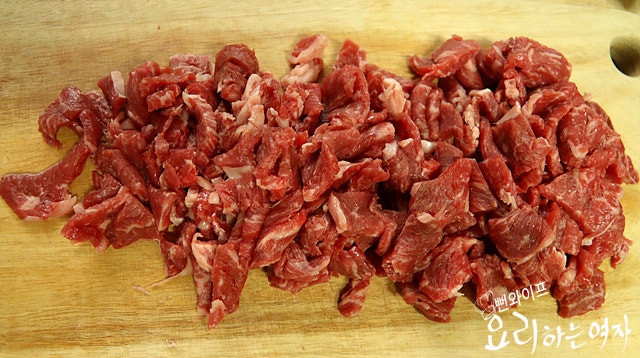
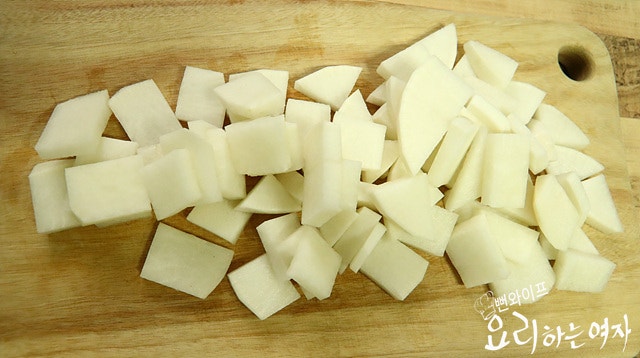
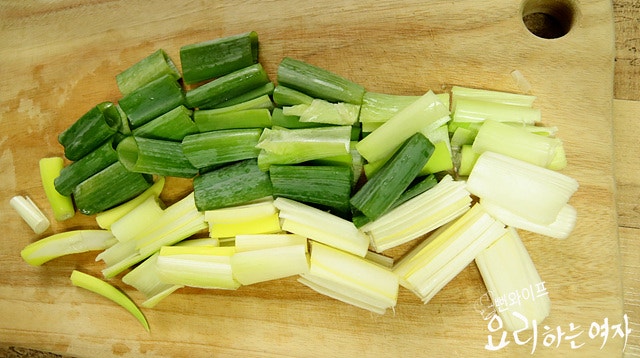
Cut the beef into bite-sized pieces and slice the Korean radish into thick bite-sized squares.
Halve the large green onions lengthwise and cut into large chunks.
Because this gukbap simmers gently for a long time, it is best to cut everything larger than usual.
Stir-fry in chili oil and add broth
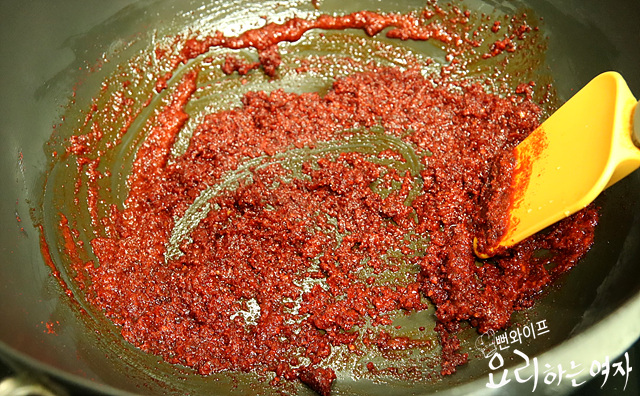
Without turning on the heat, add 3 tbsp cooking oil and 6 tbsp gochugaru to the pot and mix.
Add about 2 tbsp water to keep it moist and mix together.
Because gochugaru burns easily, mixing it first hydrates the chili flakes and produces a vibrant chili oil.
If you already have chili oil, you can just add the beef and radish directly to stir-fry.
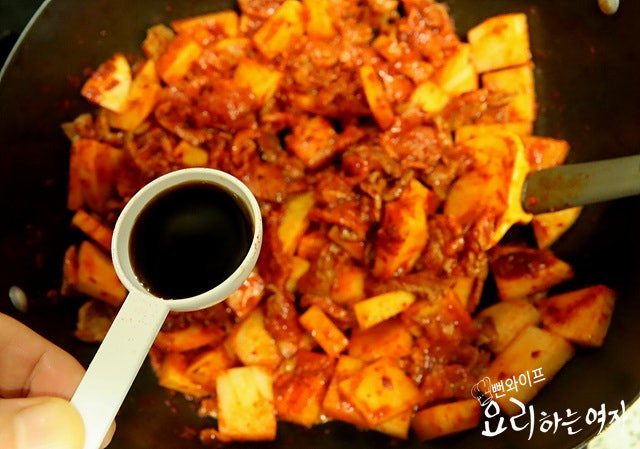
Now turn on the heat, add the radish, beef, 1 tbsp soup soy sauce, and 2 tbsp mirin, and stir-fry so the meat seasons, coats evenly in chili oil, and cooks through.
Add a little water at a time while stir-frying so it does not burn.
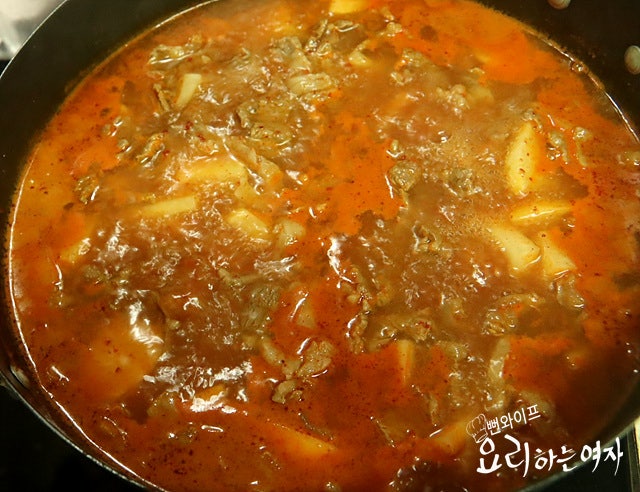
Pour in 14 cups of dried kelp broth and bring to a rolling boil.
Simmer
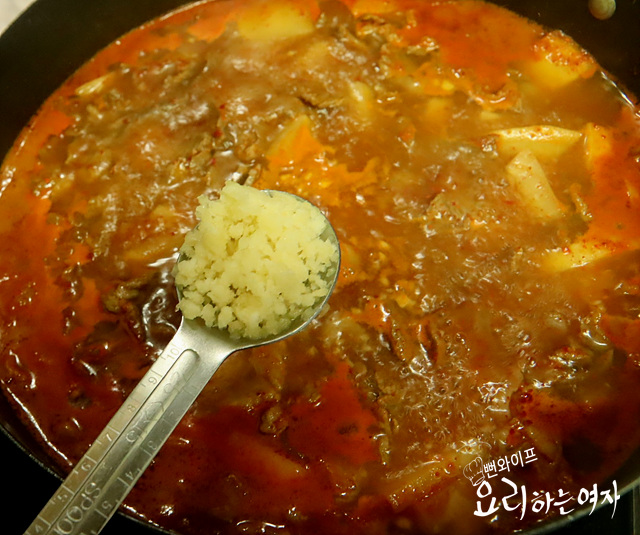
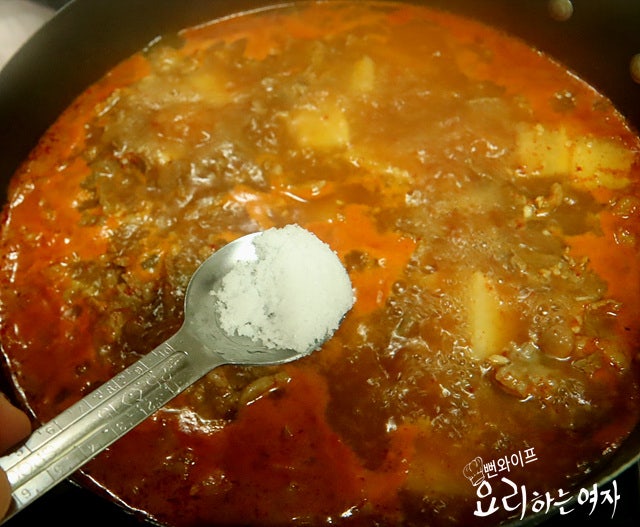
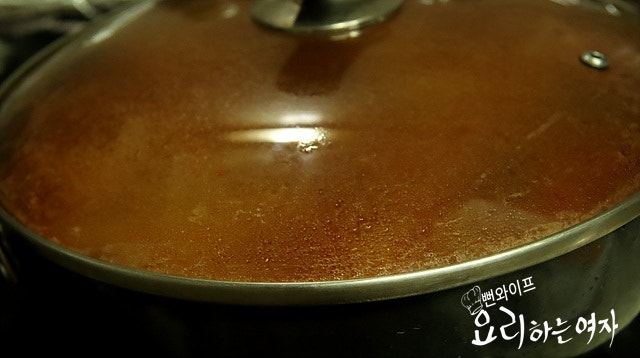
Season with 4 tbsp minced garlic, 2 tbsp soup soy sauce, 2 tbsp tuna extract sauce, and 1/2 tbsp salt, cover with a lid, and simmer gently for at least 20 minutes to draw out a deep broth flavor.
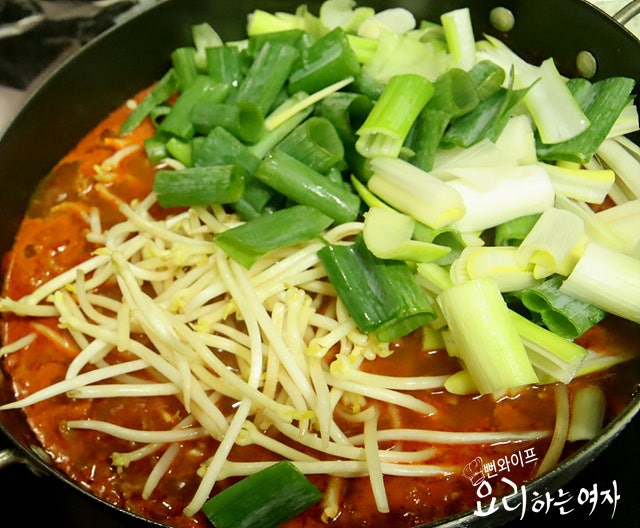
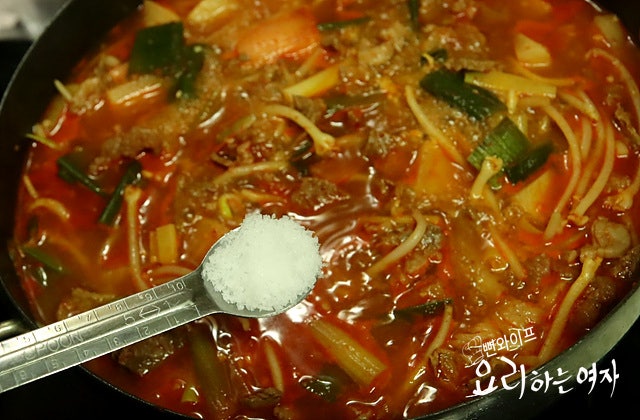
Add the soybean sprouts and large green onion, simmer for about 5 more minutes until softened, then taste and adjust the seasoning with salt if needed.
If you have leftover bracken fern (gosari) or mung bean sprouts from the holidays, adding them at the end turns this into yukgaejang.
Since holiday greens are already seasoned, reduce the salt or soup soy sauce, or add more water when simmering.
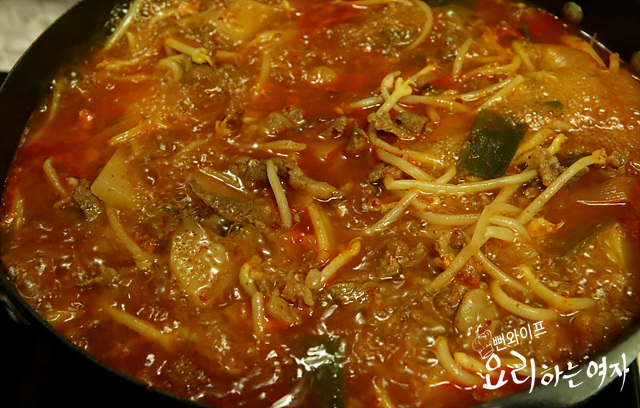
Let everything simmer together until well blended to finish.
Serve
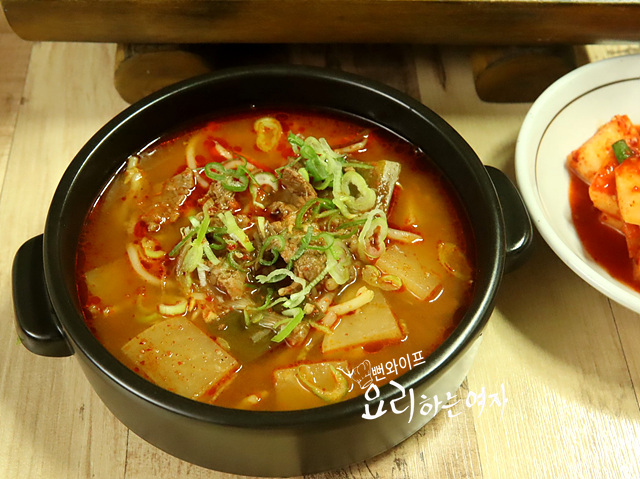
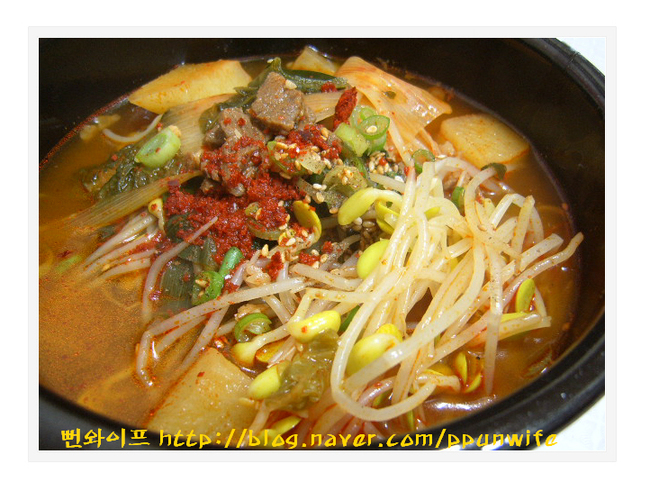
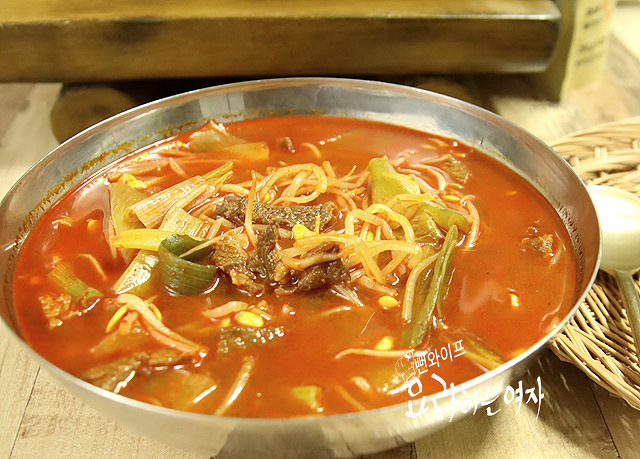
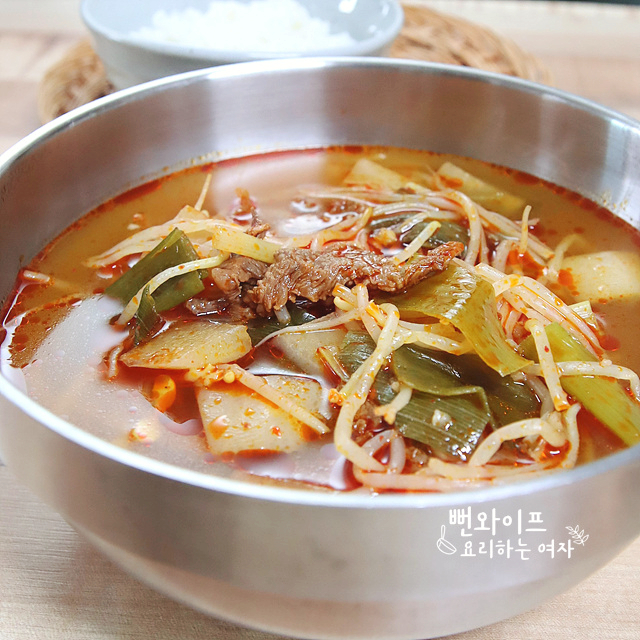
Simmer it like this and serve piping hot in an earthenware bowl (ttukbaegi) to capture the authentic flavor of traditional market gukbap.
I topped it with chopped green onion and ground black pepper at the end.
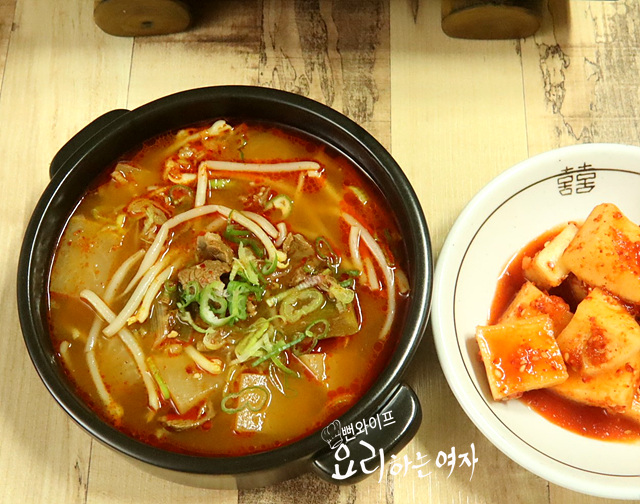
I happened to be out of regular kimchi, so I brought out some homemade gukbap-style kkakdugi (radish kimchi), and it made a fantastic combination.
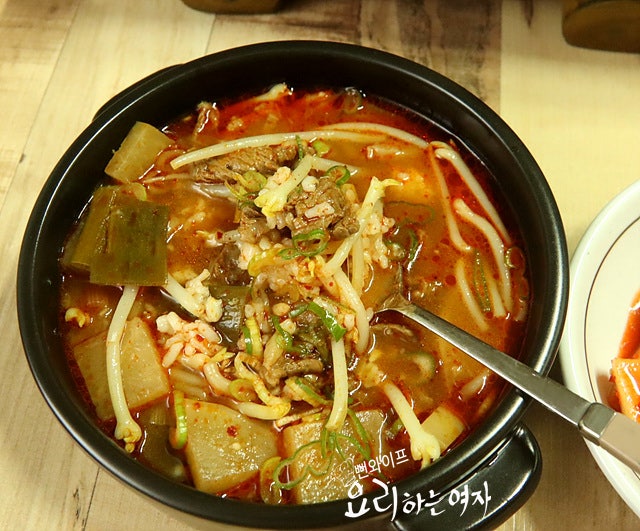
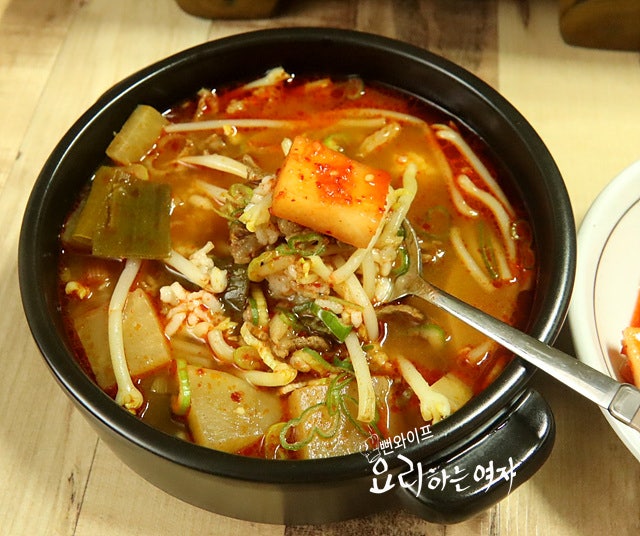
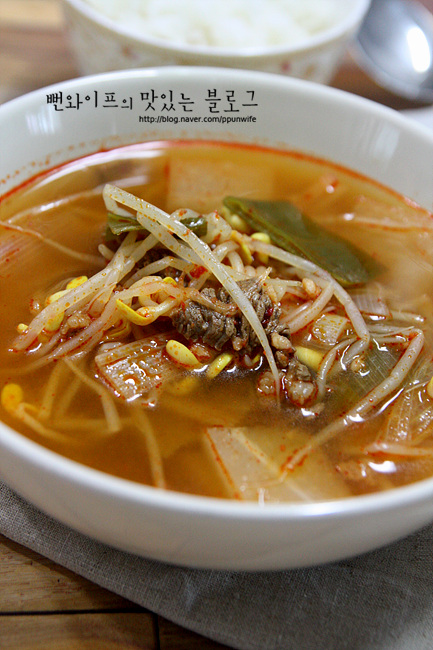
Add a bowl of rice and eat it with kkakdugi—it is delicious beyond words.
If you are tired of rich, greasy holiday food, give this spicy, refreshing, and rich beef radish soup a try.
Sogogi gukbap is perfect for a rainy day.
 Ppunwife's tips
- Because this gukbap simmers gently for a long time, it is best to cut everything larger than usual.
- Because gochugaru burns easily, mixing it first hydrates the chili flakes and produces a vibrant chili oil.
- Add a little water at a time while stir-frying so it does not burn.
FAQ
How do I make chili oil without burning the chili flakes?
Before turning on the heat, mix the cooking oil, gochugaru, and a little water in the pot to hydrate the flakes; this creates a beautifully colored chili oil without burning.
What size should I cut the vegetables for gukbap?
Since this dish simmers gently for a long time, cut the radish into thick pieces and halve the large green onions lengthwise into generous chunks so they hold up well.
Can I use leftover holiday greens to turn this into yukgaejang?
Yes, adding leftover bracken fern (gosari) or mung bean sprouts near the end turns it into yukgaejang. Because seasoned greens contain salt, reduce the soup soy sauce or salt, or add more water to balance the broth.