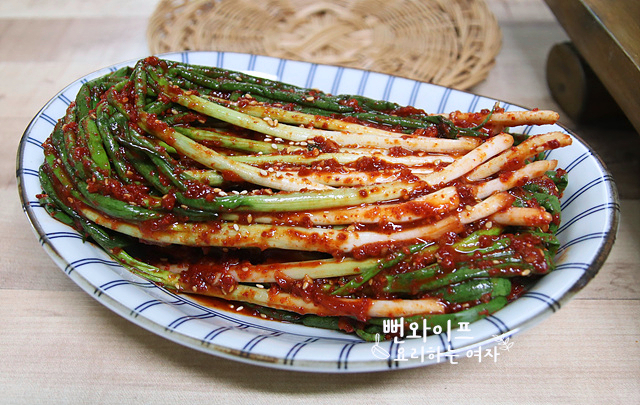
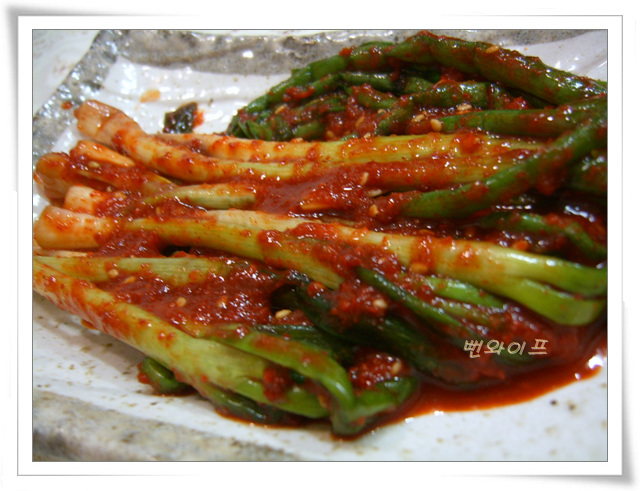
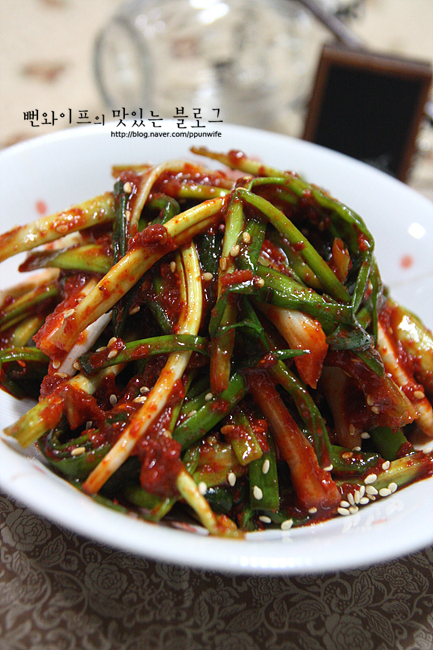
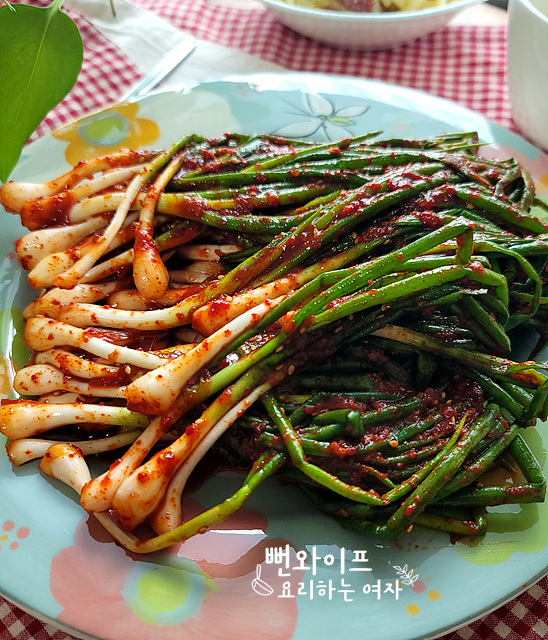
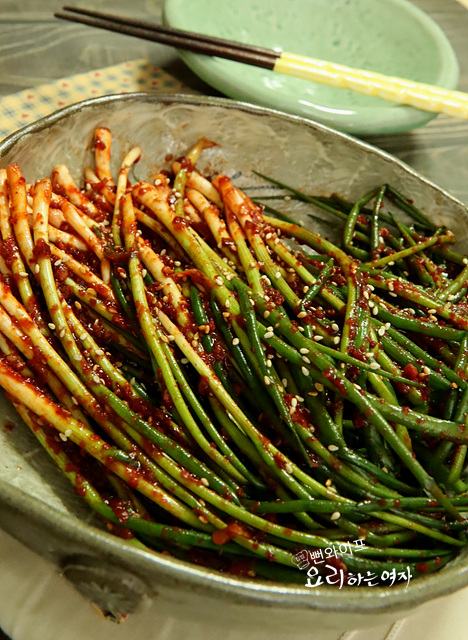
Spicy and Savory Pa Kimchi (Green Onion Kimchi)
Scallion kimchi seasoned with anchovy fish sauce and rich anchovy broth for deep savory flavor.
Translated from Korean by AI and not yet checked by a native speaker. Amounts and numbers are taken directly from the original recipe. Read the Korean original →
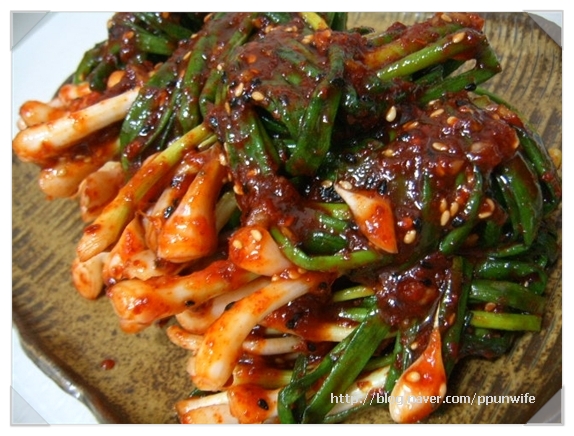
This kimchi is made by salting scallions in anchovy fish sauce, then mixing that sauce with a concentrated anchovy broth to bring out deep savoriness. Using anchovy broth instead of glutinous rice paste keeps the flavor light and clean, while corn syrup adds an appetizing gloss. With the sharp, spicy punch unique to green onions, it makes an excellent appetite-whetting side dish.
- Servings
- about 8–10 servings
- Difficulty
- Medium
- Spiciness
- Spicy
Ingredients
Ingredients
- Scallions (jjokpa) (or thin scallions)670 g
- Anchovy fish sauce2/3 cup
Seasoning
- Gochugaru (Korean chili flakes)2 cups
- Corn syrup (mulyeot)3 tbsp
- Anchovy broth1/3 cup
- Garlic1 tbsp
- Toasted sesame seeds
- You can also use thin green onions (silpa) instead of scallions.
- Shake off any yellow leaves or dirt caught between the stems, soak in water, rinse thoroughly, and drain well.
- Slit only the thick bulb ends of the scallions about halfway down with a knife.
- Very thin scallions can make the kimchi look messy, so pick them out and use them in stews or pancakes instead.
Steps
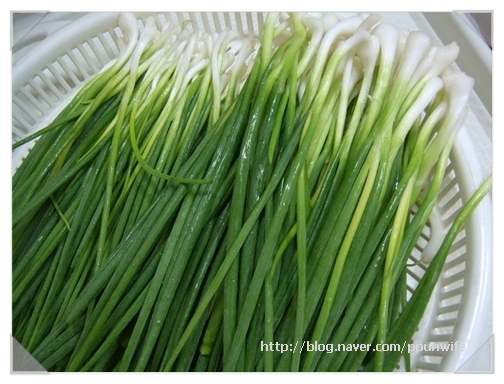
I bought scallions (jjokpa), but thin green onions (silpa) work just fine too.
Shake off any yellow leaves or dirt caught between the green onion stems, soak in water, rinse each one cleanly, and drain.
If there is too much moisture left, the seasoning will become watery and lose its proper flavor.
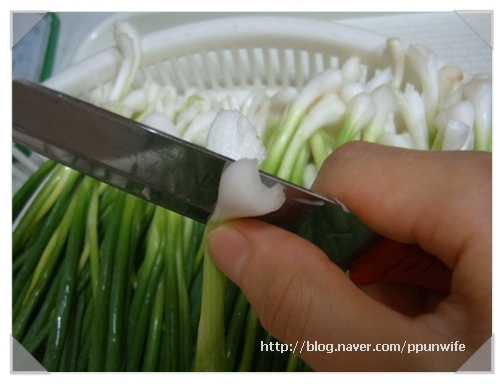
Thin green onions are fine as they are, but scallions have slightly larger bulb ends, so you just need to cut the thick root end about halfway down with a knife.
You can leave the small ones whole.
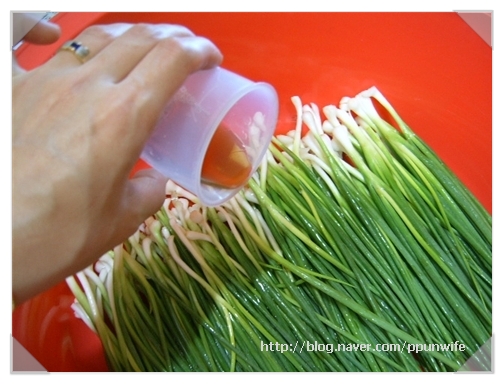
Arrange the scallions neatly and spread them out in a large container, then pour over the anchovy fish sauce to salt them.
Spreading them thinly in a wide-bottomed container ensures they salt evenly.
I salted them for about 1 hour, tossing them once or twice.
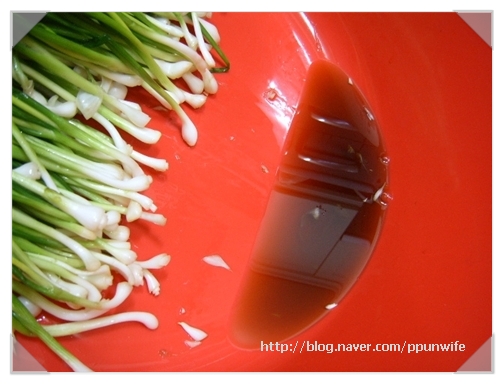
After 1 hour, tilt the container to collect the fish sauce that drained from the scallions and use it to make the seasoning paste.
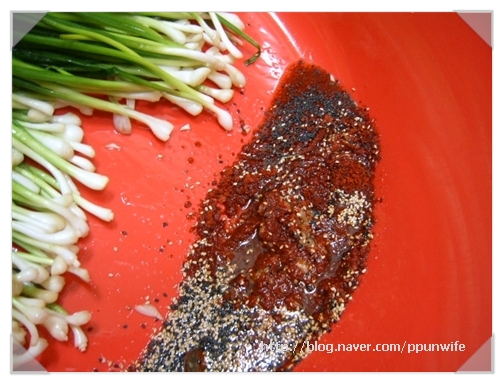
Making the seasoning with only the fish sauce would be too salty, so I brewed a rich broth with dried anchovies and mixed it in. Although not pictured, this broth was made by stir-frying 5-6 dried anchovies, adding 1 cup of water, and boiling it down until it reduced to 1/3 cup, then letting it cool.
Add all the seasoning ingredients listed above and mix well.
If you let it sit like this for about 10 minutes, the seasoning will develop a richer, prettier color.
Some people make the seasoning by adding a little glutinous rice flour, but I felt that made the taste heavy and pasty, so I used anchovy broth instead. Since scallions already have their own sharp, pungent bite, there was no need to add ginger, so I left it out. Using corn syrup instead of sugar gives it a nice shine while making up for the volume of the seasoning paste.
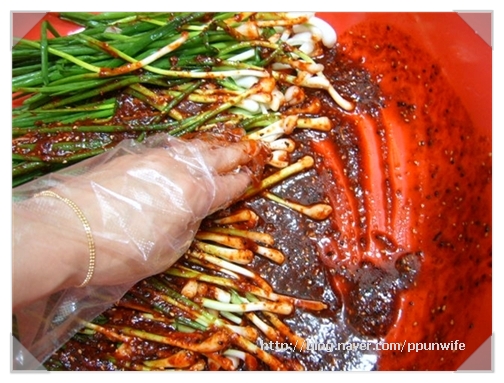
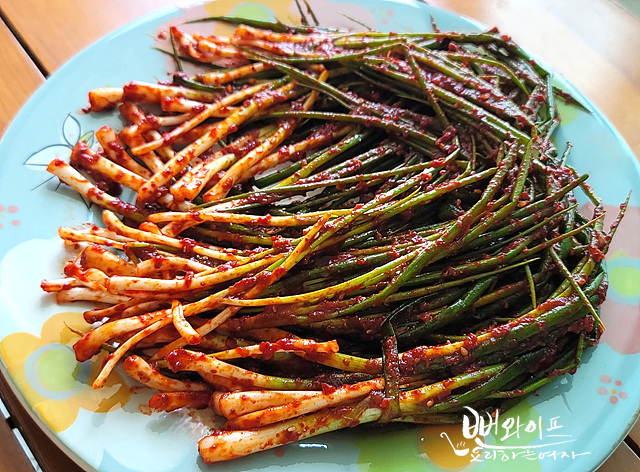
Today I kept them whole and long without cutting, so spread the seasoning evenly onto each one.
If you rub or handle them too roughly, they will secrete sap and wilt completely, losing their fresh look.
Taste it, and if it is too bland, adjust with salt; if you prefer it slightly sweet, add sugar. For me, making green onion kimchi a bit sweet and salty really perks up my appetite. Having it slightly punchy and bold revives the palate.
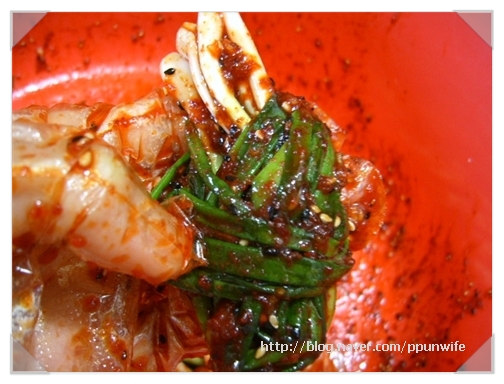
Gather about 4 thick seasoned scallions or about 6 thin ones together, and wrap the leafy greens around the middle.
Doing this keeps them from tangling together and makes it convenient to take out cleanly just the amount you want to eat from the container. Cut them into bite-sized lengths when serving.
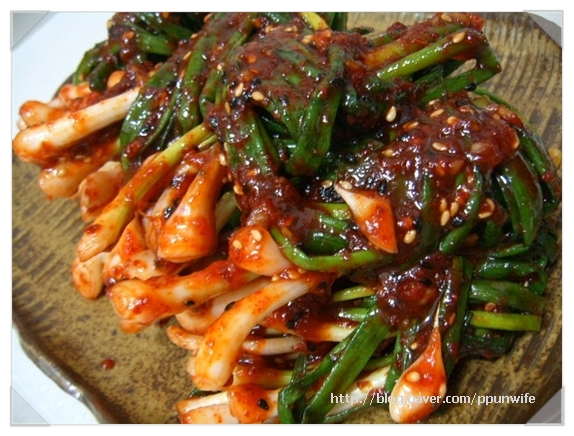
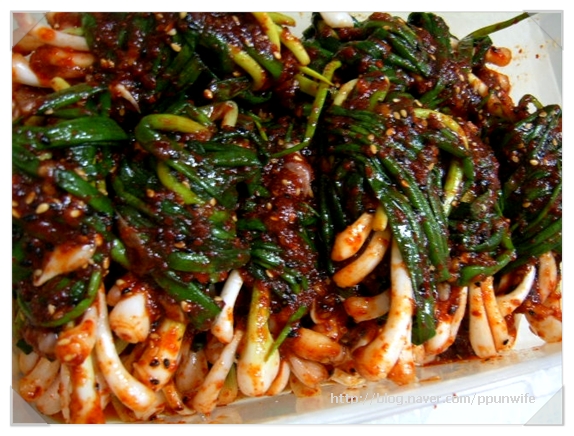
Roll them up neatly and pack them layer by layer into a kimchi container.
Delicious pa kimchi (green onion kimchi) is quickly finished today!
Personally, I prefer unfermented pa kimchi because it tastes fresh and spicy, so I eat it all before it ferments. It also tastes great once fermented.
Spend your summer with this appetite-reviving kimchi.
Please stop scraping posts without leaving comments.
If you like kimchi, click like.
Author: Ppunwife (ppunwife) http://blog.naver.com/ppunwife/140041544909
 Ppunwife's tips
- If there is too much moisture left, the seasoning will become watery and lose its proper flavor.
- Spreading them thinly in a wide-bottomed container ensures they salt evenly.
- Letting the mixed seasoning sit for about 10 minutes gives it a richer, prettier color.
- If you rub the scallions too roughly, they will secrete sap and wilt, losing their fresh look.
- Gathering and bundling the scallions prevents them from tangling and makes it convenient to remove just the amount you need.
FAQ
Can I make this with thin green onions (silpa) instead of scallions (jjokpa)?
Yes, you can use thin green onions without problem. However, scallions have thicker white bulb ends, so it is best to slit the root ends about halfway down with a knife.
Why don't you add glutinous rice paste or ginger to the seasoning?
Adding glutinous rice flour can make the flavor heavy and pasty, so anchovy broth was used instead. Ginger was omitted because scallions already have plenty of their own sharp, spicy bite.
What should I be careful about when coating the scallions with seasoning?
If you handle or rub them too forcefully, sap will release and the scallions will wilt severely, so gently coat the seasoning along each whole green onion.