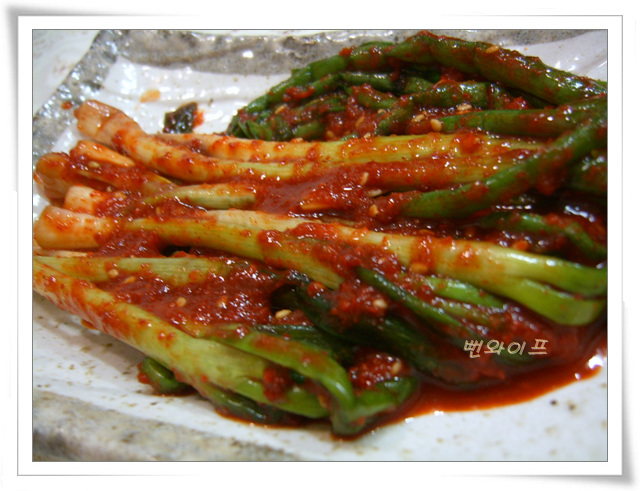
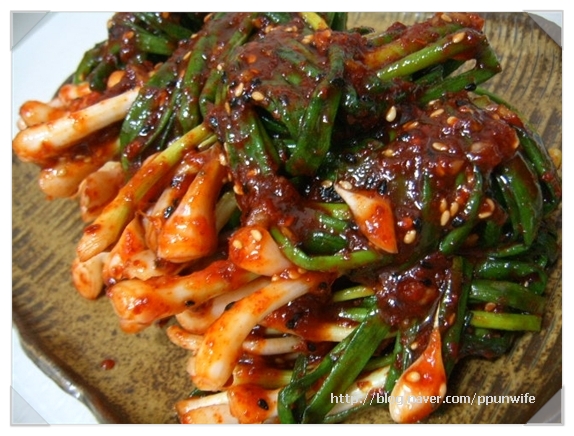
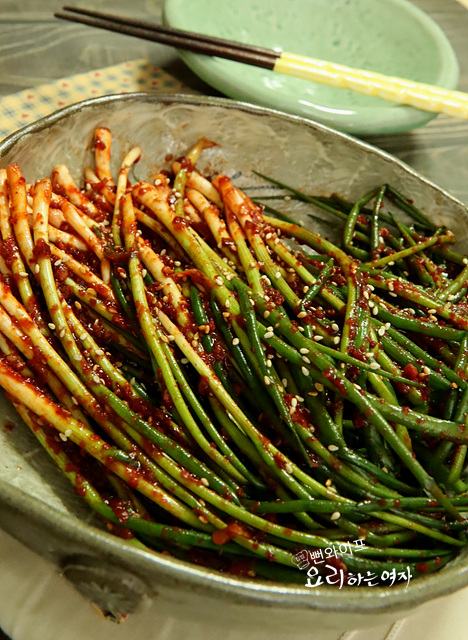
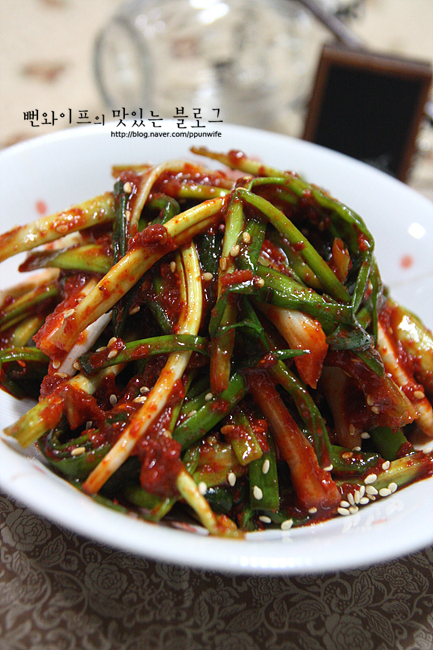
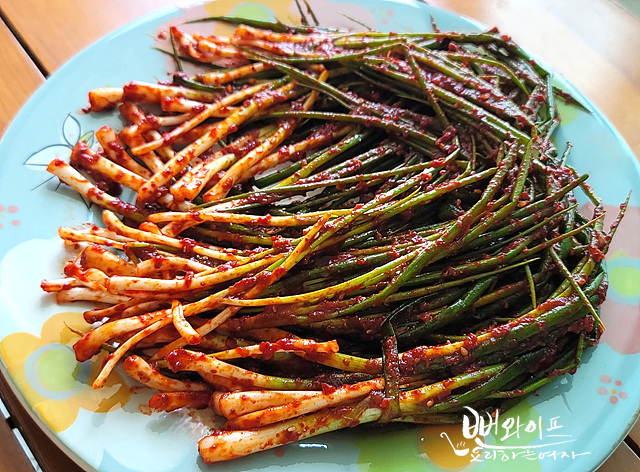
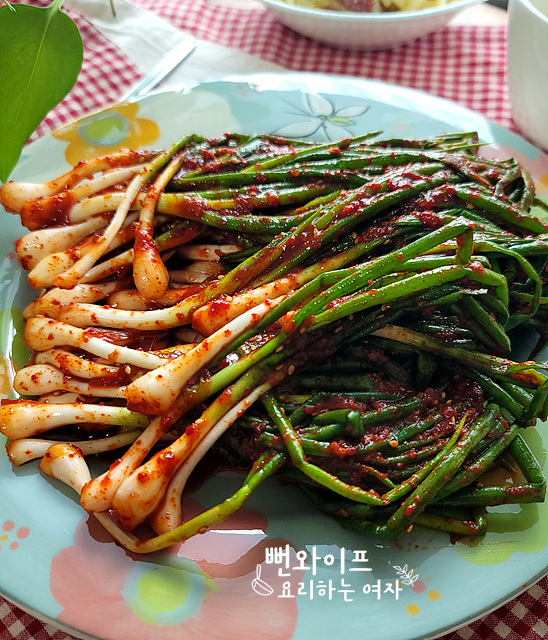
Spicy Pa Kimchi (Green Onion Kimchi) for Spring
Scallion kimchi tossed with an umami-rich seasoning made from anchovy broth and fish sauce.
Translated from Korean by AI and not yet checked by a native speaker. Amounts and numbers are taken directly from the original recipe. Read the Korean original →
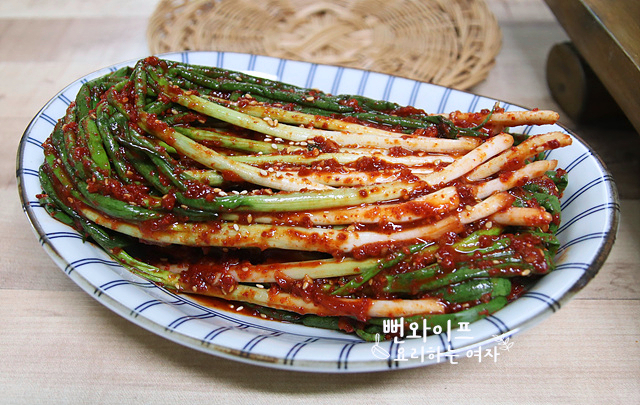
This kimchi is made by lightly salting in-season scallions in fish sauce, then tossing them in a seasoning enriched with anchovy broth. Using anchovy broth instead of glutinous rice paste makes it approachable for anyone to prepare, yielding a pleasant, pungent umami flavor. Letting it mature in the refrigerator overnight allows the seasoning to soak in thoroughly and mellow out.
- Servings
- about 10–12 servings
- Difficulty
- Medium
- Spiciness
- Spicy
Ingredients
Ingredients
- Scallions (jjokpa)2 bunches, 2 kg (after cleaning)
Seasoning
- Gochugaru (Korean chili flakes)3 cups
- Sand lance fish sauce (or dried anchovies)1 1/2 cups
- Anchovy broth2 cups
- Minced garlic3 tbsp
- Green plum syrup (maesil-cheong) (or rice syrup (jocheong), corn syrup (mulyeot))4 tbsp
- Sugar2 tbsp
- Toasted sesame seeds
- If the scallions are thin, you can skip salting and toss them directly in the seasoning.
- If the fish sauce aroma is too strong for you, you can use half fish sauce and half salted fermented shrimp (saeujeot). If you want a milder, softer pa kimchi, you can substitute glutinous rice paste or blended cold rice for the anchovy broth.
Steps
Prepare the ingredients
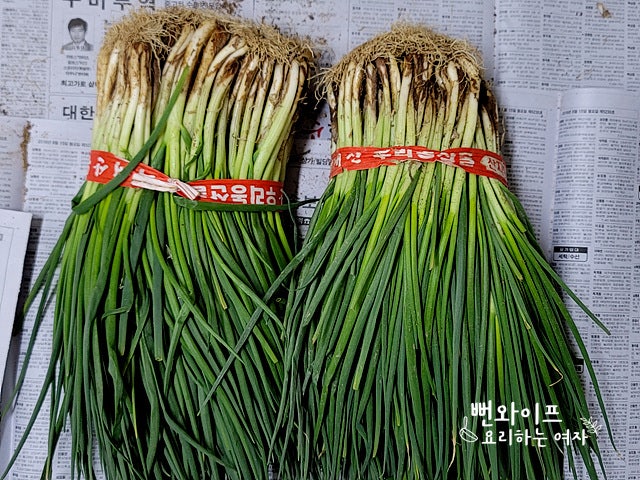
These are 2 bunches of scallions (jjokpa), slightly over 1 kg for 1 bunch.
Trim the scallions
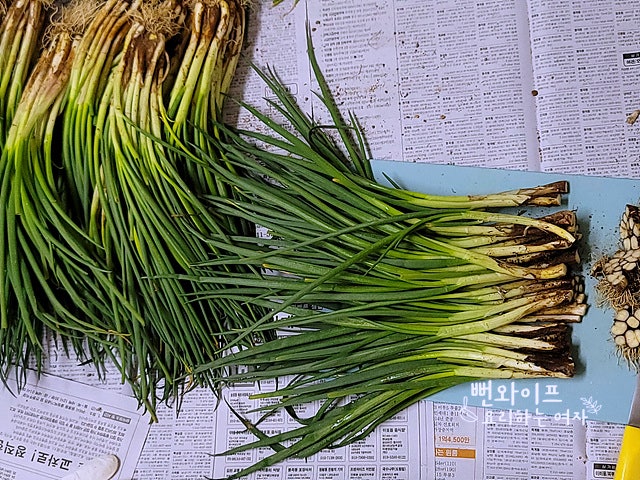
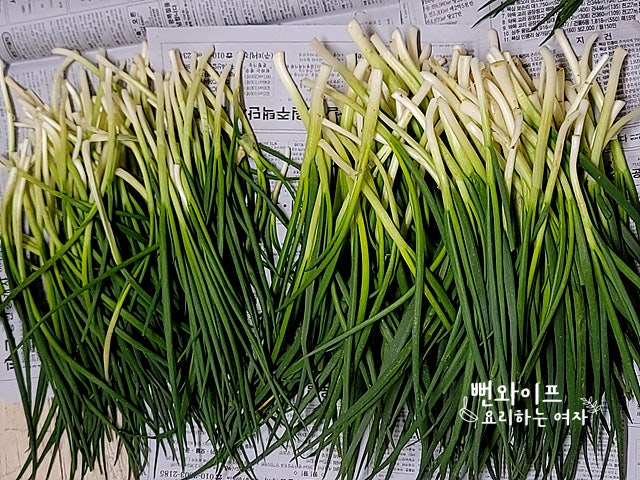
Trim off the roots and clean them thoroughly.
Wash
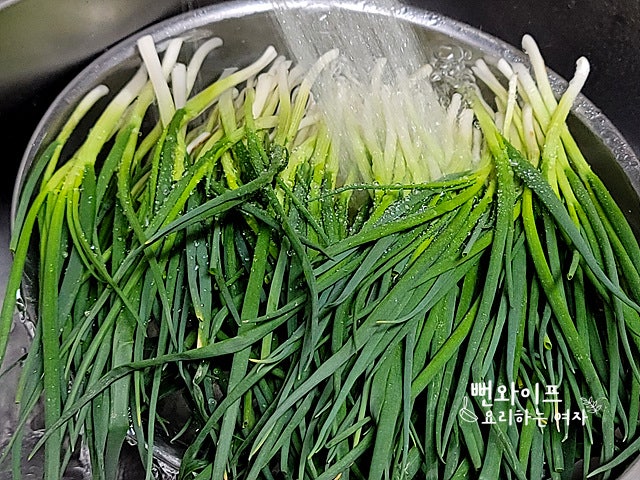
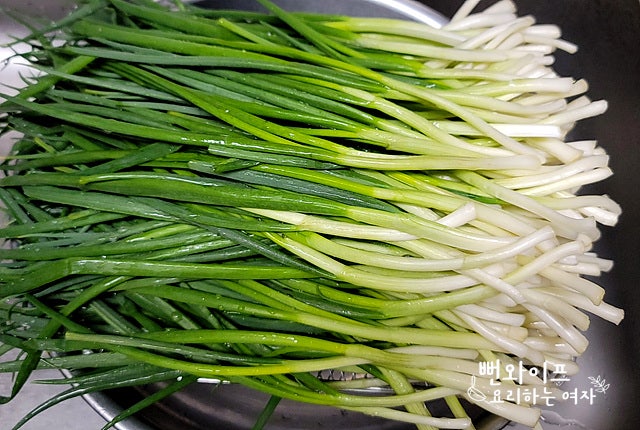
Sometimes soil gets trapped between the scallion stems and leaves, so soak them in water briefly.
Rinse them multiple times under running water until no dirt remains, then drain the water.
Salt in fish sauce
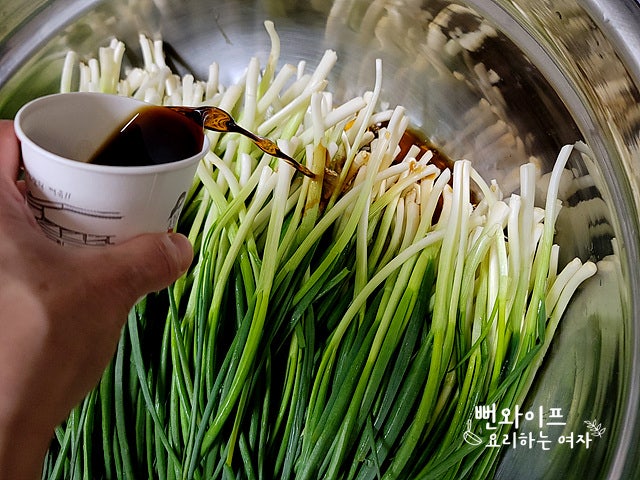
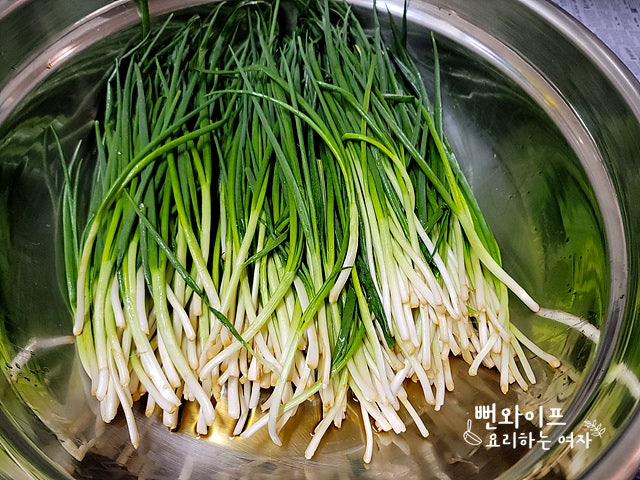
Arrange the scallions neatly in a bowl, pour 1 1/2 cups of sand lance fish sauce over just the root ends (tilt the bowl slightly), and let them salt for around 1 hour, flipping them over occasionally.
If the scallions are thin, you can skip salting and toss them directly in the seasoning.
Make the seasoning
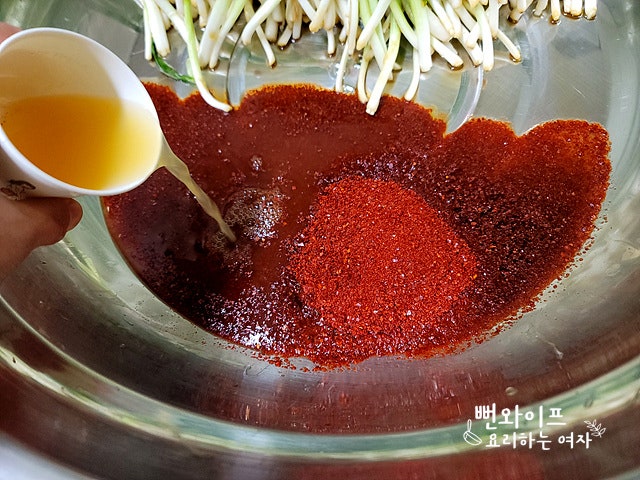
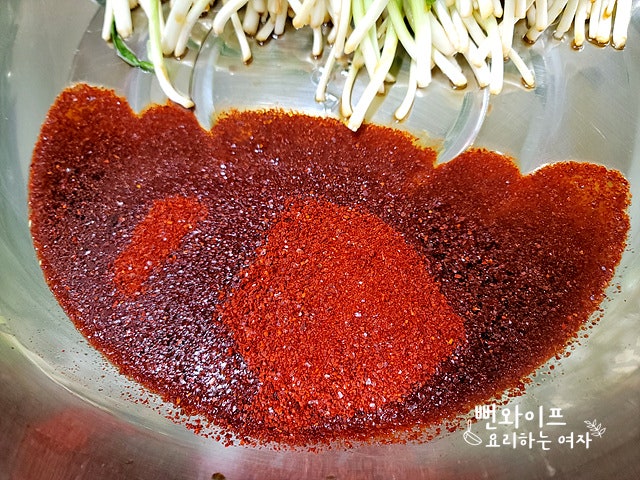
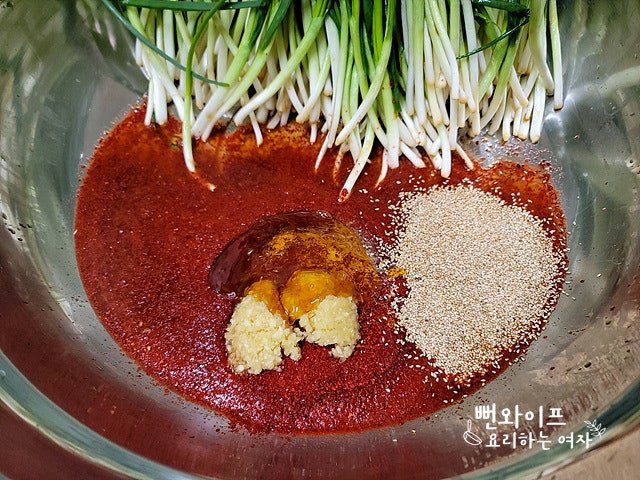
Tilt the bowl fully so the poured fish sauce drains down to one side, then add the pa kimchi seasoning: 2 cups anchovy broth, 3 cups gochugaru (Korean chili flakes), 3 tbsp minced garlic, 4 tbsp green plum syrup (maesil-cheong) (or rice syrup (jocheong), corn syrup (mulyeot)), 2 tbsp sugar, and toasted sesame seeds.
Toss together
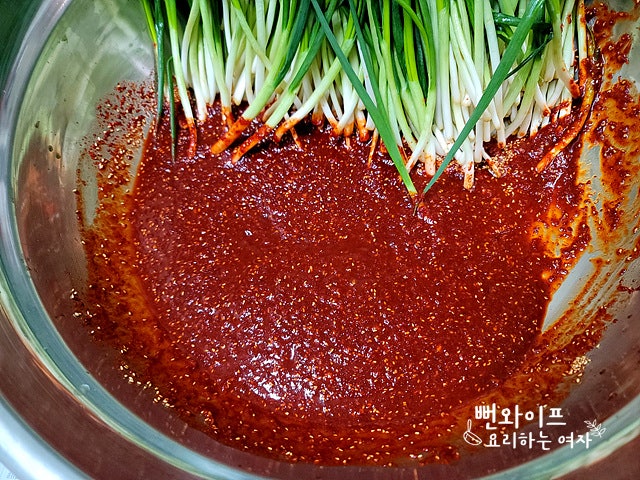
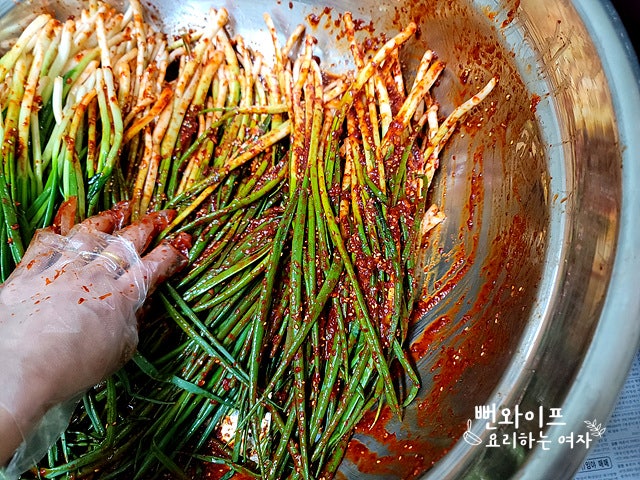
Mix together and wait a moment for the seasoning to blend and the chili flakes to bloom, then toss evenly with the scallions.
Apply more seasoning toward the white root ends rather than the green tops.
If the fish sauce aroma is too strong for you, you can use half fish sauce and half salted fermented shrimp (saeujeot).
If you want a milder, softer pa kimchi, you can substitute glutinous rice paste or blended cold rice for the anchovy broth.
Finish
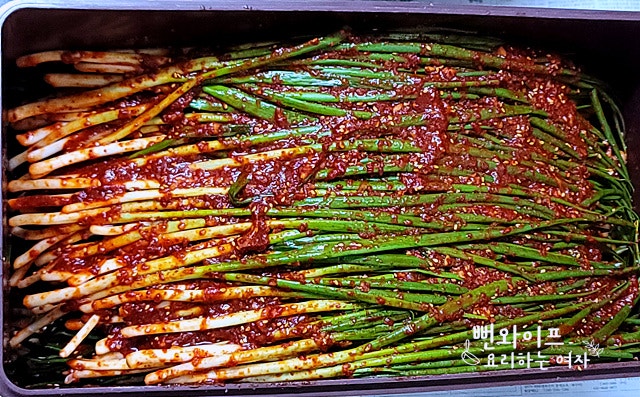
I finished 2 bunches of pa kimchi and packed them neatly into a kimchi container.
When made like this and kept in the refrigerator overnight, the seasoning infuses well and moisture releases, making it juicy and mellowing out the strong seasoning flavor considerably.
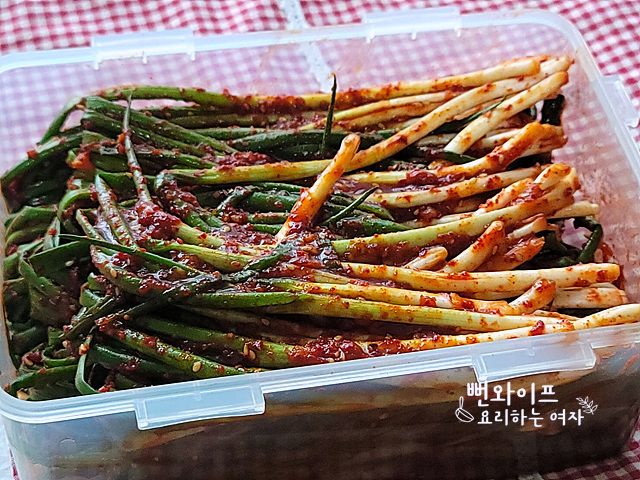
I made this at night and moved it into a smaller container the next morning.
The seasoning was just right, and while tasting one or two stalks, I immediately brought out some warm rice and finished a whole bowl.
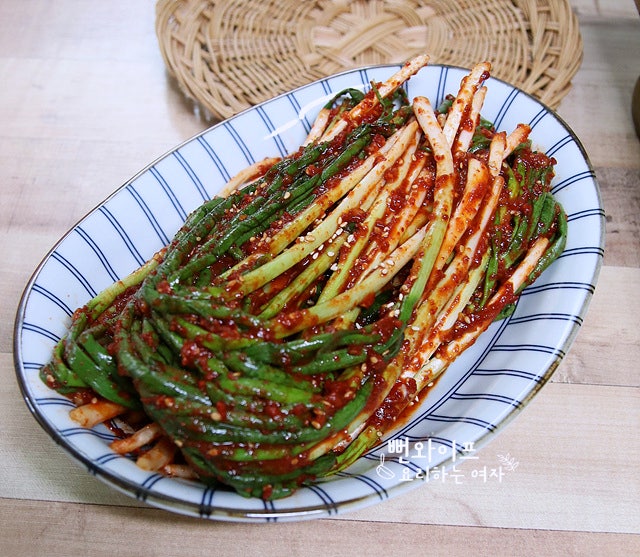
It has the exact look that calls for Chapagetti.
Fresh scallions are in season in abundance now, so the price has become very reasonable. Make some pa kimchi at the start of spring to revive your appetite.
 Ppunwife's tips
- Apply more seasoning toward the white root ends rather than the green tops.
- When made like this and kept in the refrigerator overnight, the seasoning infuses well and moisture releases, making it juicy and mellowing out the strong seasoning flavor considerably.
FAQ
Do I still need to salt the scallions in fish sauce if they are thin?
If the scallions are thin, you can skip salting them in fish sauce and toss them directly into the seasoning paste.
What can I do if the aroma of the fish sauce is too strong?
If the fish sauce scent feels overwhelming, it is good to use half fish sauce and half salted fermented shrimp (saeujeot).
What should I add to make the flavor milder and softer?
Instead of anchovy broth, you can make and add glutinous rice paste or blend cold cooked rice into the seasoning to give it a much milder flavor.
Is it okay to use another sweetener instead of green plum syrup?
You can use rice syrup (jocheong) or corn syrup (mulyeot) in place of green plum syrup (maesil-cheong) for the same purpose.