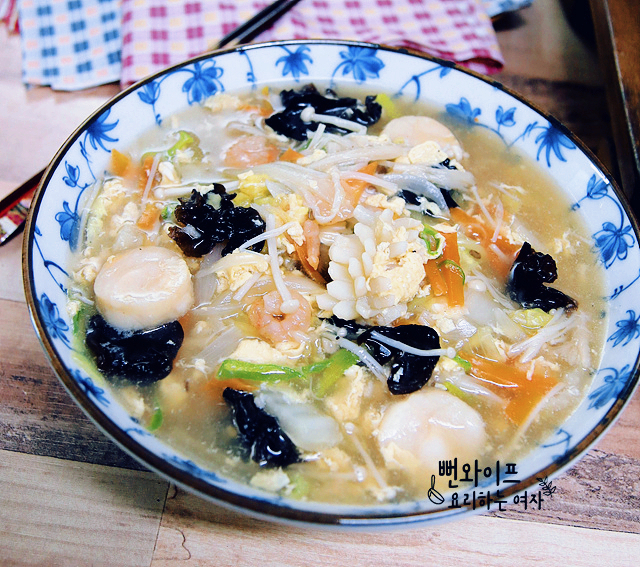
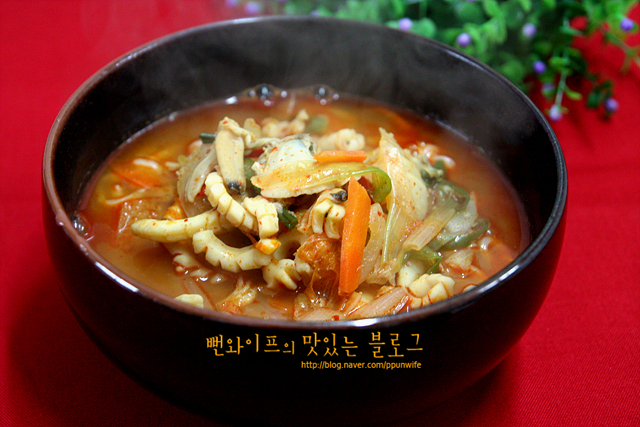
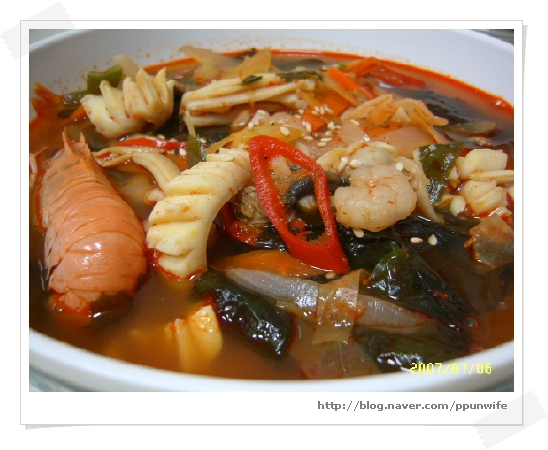
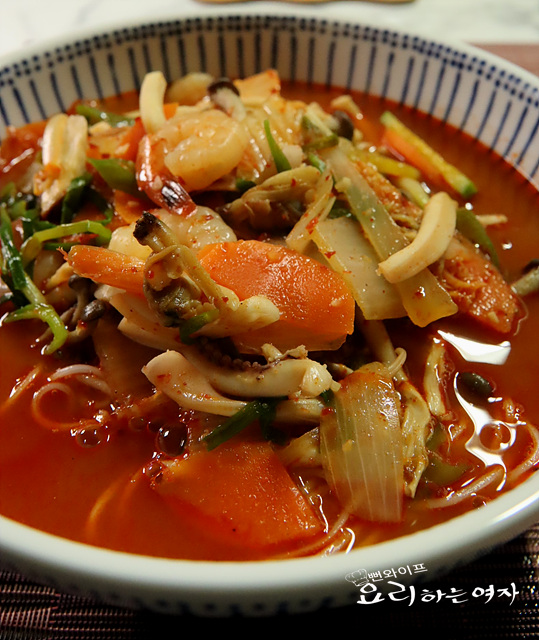
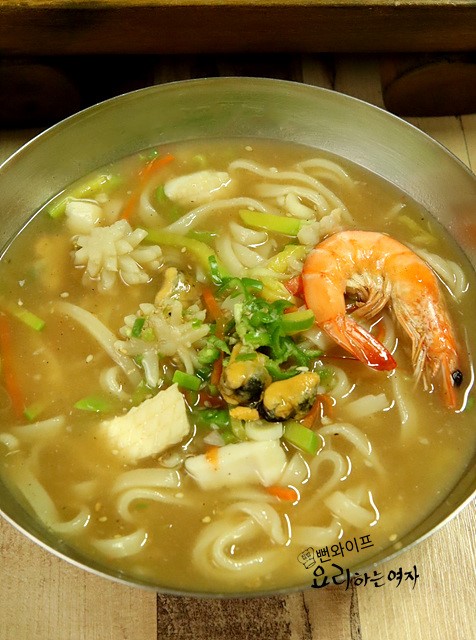
Hearty Ulmyeon (Thick Noodle Soup with Vegetables)
A Chinese-Korean noodle soup thickened with starch slurry and filled with shrimp, squid, and vegetables in a clear broth.
Translated from Korean by AI and not yet checked by a native speaker. Amounts and numbers are taken directly from the original recipe. Read the Korean original →
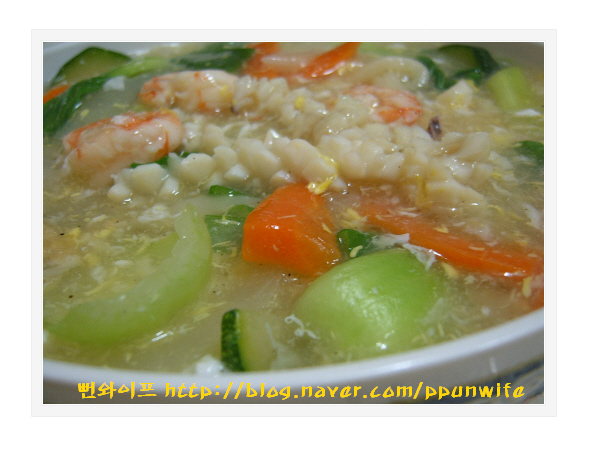
Squid and various vegetables are stir-fried and simmered in a clear seafood broth brewed with dried anchovies and shrimp heads. Beaten egg and starch slurry are stirred in for a thick consistency, creating a warming, non-spicy noodle dish.
- Servings
- 2 servings
- Difficulty
- Hard
- Spiciness
- Not spicy
Ingredients
Ingredients
- Squid1/2 whole (body only)
- Shrimp6-7
- Bok choy
- Carrot
- Squash
- Mushrooms
- Onion
- Large green onion (daepa)
- Egg1
- Fresh noodles2 servings (udon noodles)
Seasoning
- Minced garlic1 tbsp
- Oyster sauce (or regular soy sauce (jin-ganjang))1 tbsp
- Ground black pepper1 tsp
- Mirin (cooking rice wine)1 tbsp
- Ginger juice1 tsp
- Salt0.5 tsp
- Toasted sesame oil1 tbsp
Broth
- Dried kelp (dasima)2
- Dried anchovies1 handful
- Trimmed shrimp heads or shells
- Water7 cups
Starch Slurry
- Potato starch3 tbsp
- Water3 tbsp
- Soak 2 pieces of dried kelp (dasima) in cold water for 1 hour to prepare the broth.
- Cut the vegetables into bite-sized pieces; it is fine if you are missing one or two, and you can also add cabbage leaves or garlic chives if you have them.
- Score the skinned squid body, peel the shrimp, and remove the shrimp heads.
Steps
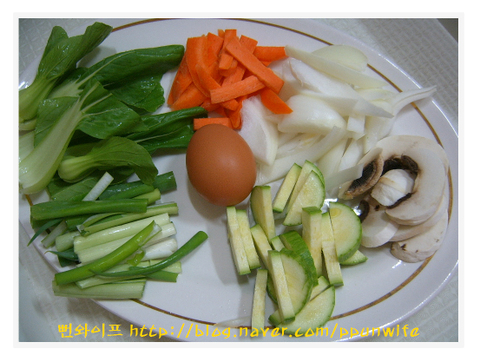
Cut the vegetables into suitable bite-sized pieces as shown in the picture. It does not matter if one or two vegetables are missing.
You can also add cabbage leaves or garlic chives (buchu) if you have them.
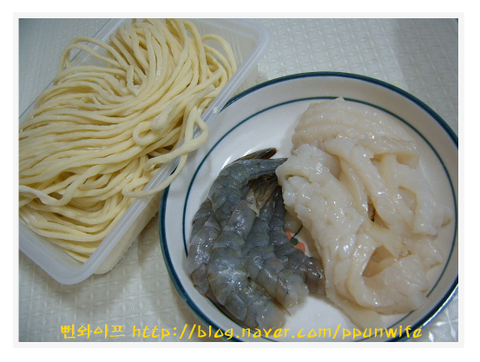
Score the skinned squid body with shallow cuts, peel the shrimp, and remove the heads.
Prepare 2 servings of fresh noodles (udon noodles).
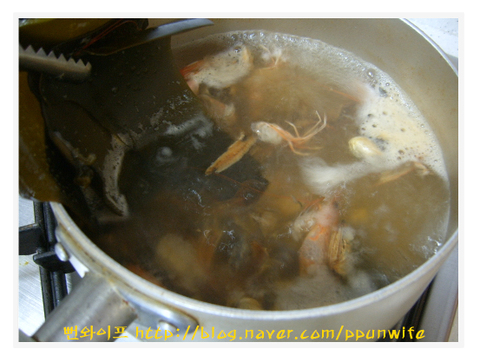
Chicken broth is often used as the broth for ulmyeon.
I prefer a refreshing broth, so I will make the broth using dried anchovies, shrimp heads, and dried kelp (dasima).
Soak 2 pieces of dried kelp in cold water for an hour, then add lightly toasted dried anchovies and shrimp heads or shells, and bring to a boil. Once it boils, remove the kelp, steep over low heat for about 10 minutes more, discard the solids, and use only the clear broth.
The broth boiled down this way will measure 6 cups.
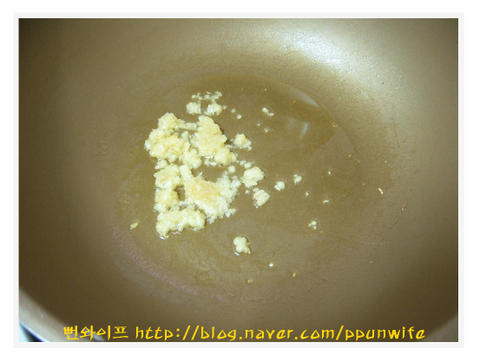
Heat oil in a preheated pan and stir-fry the minced garlic until fragrant.
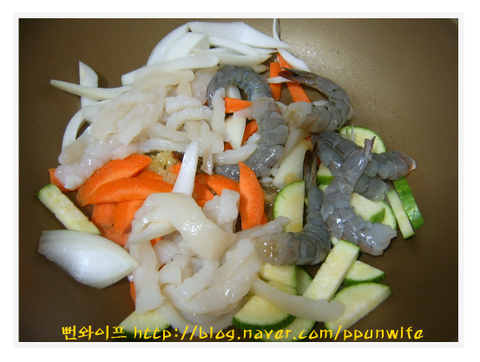
Add all the vegetables except the bok choy and large green onion (daepa), along with the seafood, and stir-fry.
When all the ingredients are almost fully cooked,
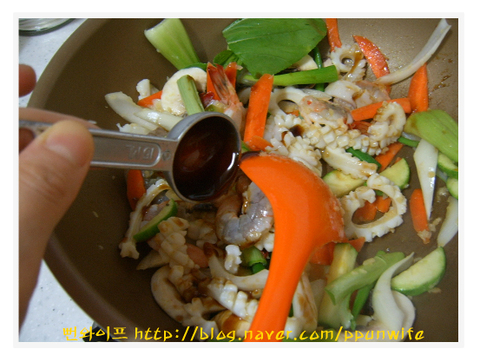
Add the large green onion and bok choy, then season.
Add the oyster sauce, mirin (cooking rice wine), ginger juice, and ground black pepper, and stir-fry.
Once the seasonings are well combined with the vegetables and seafood,
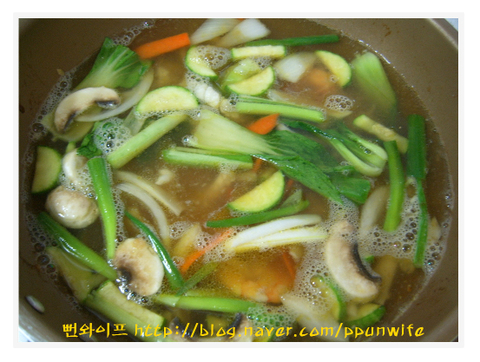
Pour in the prepared broth and bring it to a boil.
Once it comes to a boil over high heat, reduce the heat.
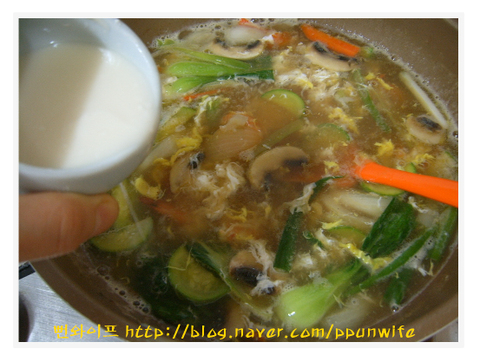
Pour in the beaten egg, then slowly pour in the starch slurry while stirring the broth.
If you prefer it thicker, pour in enough starch slurry and let it simmer.
Season to taste with salt, then finish by stirring in the toasted sesame oil.
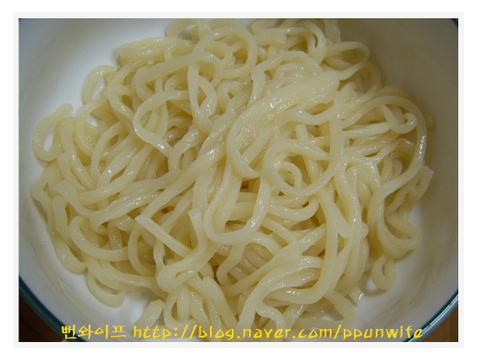
Boil the fresh noodles (udon noodles) and place them in serving bowls.
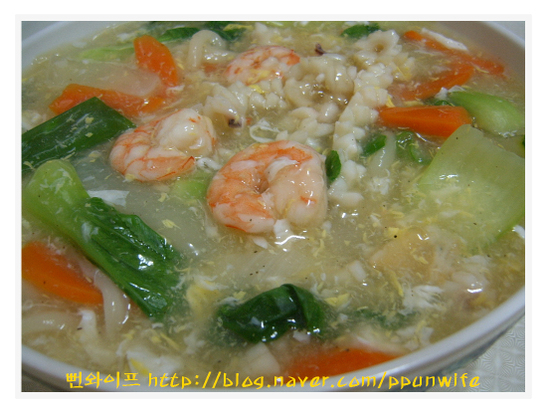
Pour the broth over the noodles to finish.
 Ppunwife's tips
- Once the broth comes to a boil, take out the dried kelp (dasima), simmer over low heat for about 10 minutes to extract more flavor, discard the solids, and use only the clear broth.
- If you like a thicker broth, pour in plenty of starch slurry as you simmer.
FAQ
Can I use anchovy broth instead of chicken broth?
Chicken broth is commonly used for ulmyeon, but simmering dried anchovies, dried kelp (dasima), and shrimp heads together produces a clean, refreshing seafood broth that works wonderfully.
What can I use if I do not have oyster sauce?
You can substitute regular soy sauce (jin-ganjang).
What should I do if I am short on vegetables?
It is completely fine to skip one or two of the suggested vegetables, and you can also add cabbage leaves or garlic chives (buchu) to suit your taste.
How do I adjust the thickness of the broth?
After stirring in the beaten egg, slowly pour in the starch slurry while stirring. If you want a thicker texture, add more starch slurry to reach the desired consistency.