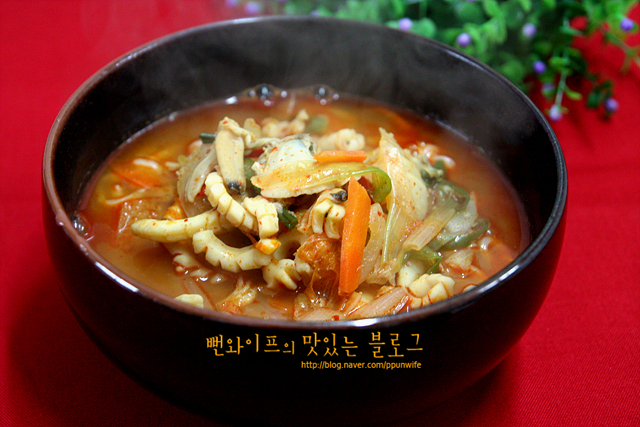
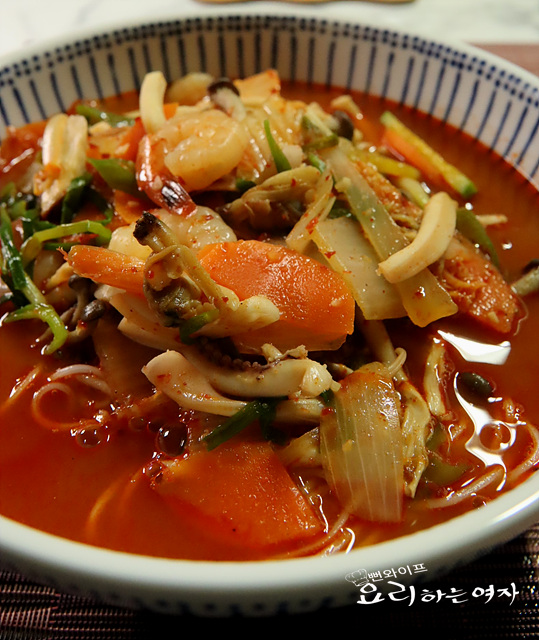
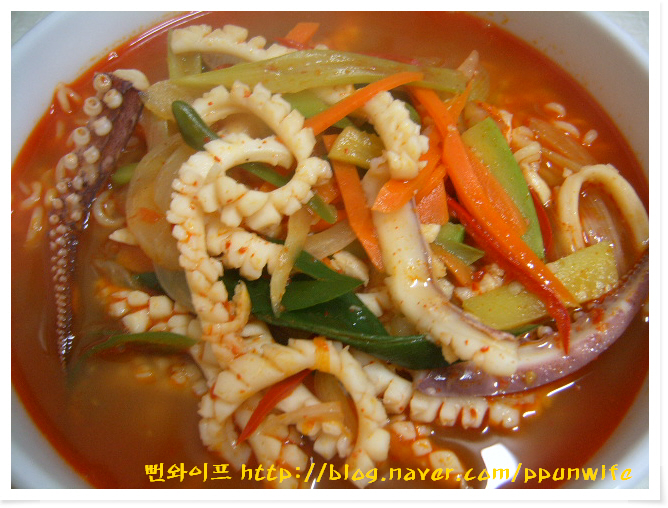
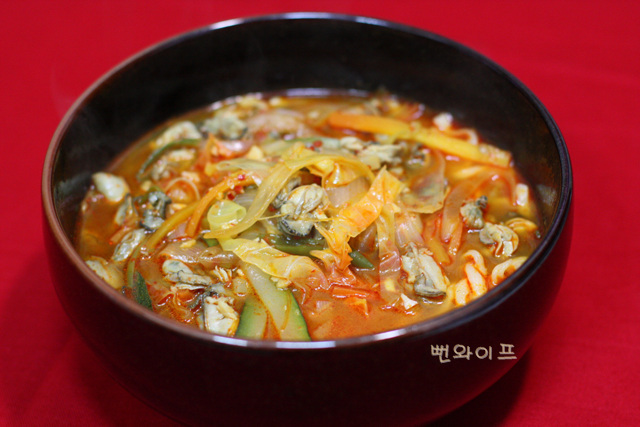
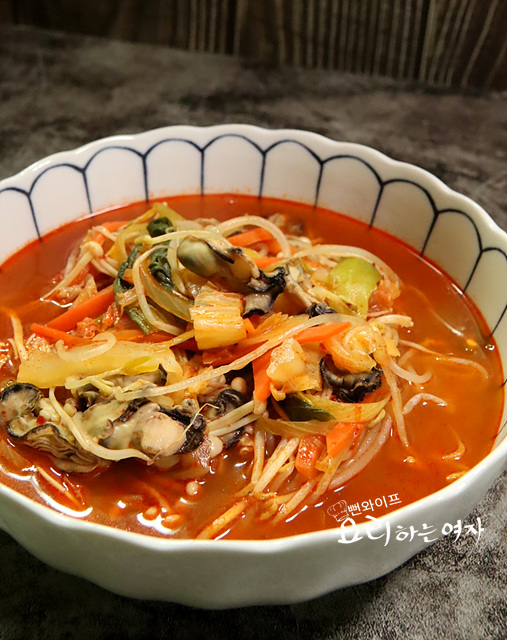
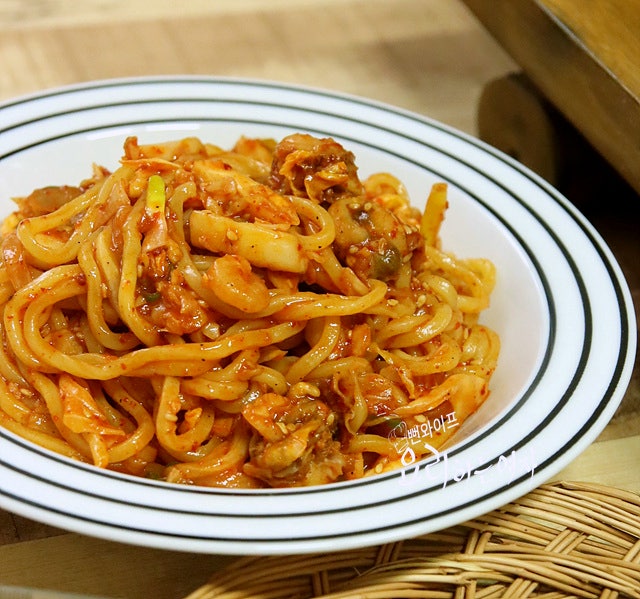
Fiery and Refreshing Seafood Jjamppong (Spicy Seafood Noodle Soup)
A spicy noodle soup made by stir-frying seafood and vegetables in chili oil, then simmering in a rich broth.
Translated from Korean by AI and not yet checked by a native speaker. Amounts and numbers are taken directly from the original recipe. Read the Korean original →
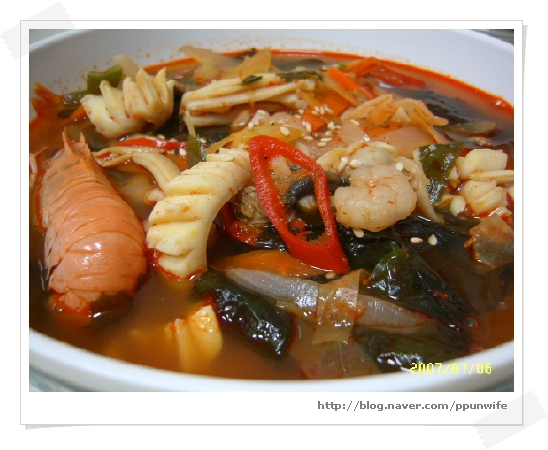
This 3-serving soup dish brings together seafood like squid and shrimp with vegetables for a deeply refreshing broth. Aromatic vegetables are stir-fried in chili oil and simmered with kelp and anchovy broth for a spicy yet clean finish. Seasoning the broth generously makes it ideal for serving over noodles as a comforting hangover cure.
- Servings
- 3 servings
- Difficulty
- Medium
- Spiciness
- Very spicy
Ingredients
Ingredients
- Squid1 whole (body only)
- Manila clam meat50 g
- Shrimp meat50 g
- Crayfish3
Vegetables
- Onion1/2
- Carrot1/3
- Cabbage1 leaf
- Button mushrooms3
- Large green onion (daepa)1 stalk
- Red chili pepper1
- Cheongyang chili pepper (hot green chili)2
- Dried seaweed (miyeok)50 g (soaked)
Seasoning
- Chili oil1 tbsp
- Gochugaru (Korean chili flakes)1 tbsp
- Fine gochugaru (Korean chili flakes)1 tbsp
- Garlic1.5 tbsp
- Oyster sauce1 tbsp
- Salt2 tsp
- Mirin (cooking rice wine)1 tbsp
- Ground black pepper0.5 tsp
- Broth3 cups (900 ml)
- You do not need to use the exact same ingredients; squid with 50g of pork will also make a refreshing and rich broth.
- Score and slice only the body part of the squid.
- The dried seaweed (miyeok) can be omitted, and since the gochugaru alone provides heat, you can leave out the fresh chili peppers.
- Cabbage was used instead of napa cabbage leaves, and button mushrooms can be replaced with shiitake or oyster mushrooms.
Steps
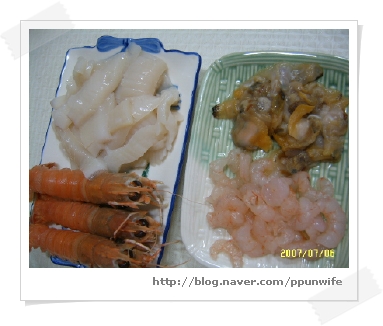
You do not need to use the exact same ingredients as mine. Using squid with 50g of pork also makes a refreshing and rich broth.
I have made it that way before. I just cleared out whatever was in my fridge.
Score and slice just the squid body. Save the legs to use in savory pancakes.
The shrimp meat, manila clam meat, and crayfish will be used as they are.
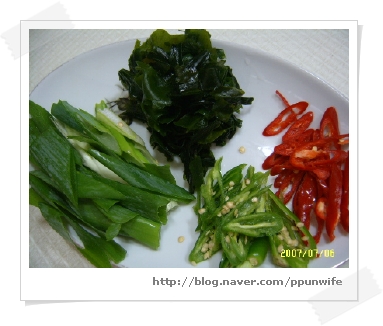
Soak a little dried seaweed (miyeok) to prepare it (it is totally fine to skip this), and julienne the vegetables to a similar size.
Since gochugaru (Korean chili flakes) alone provides enough heat, you can omit the fresh chili peppers.
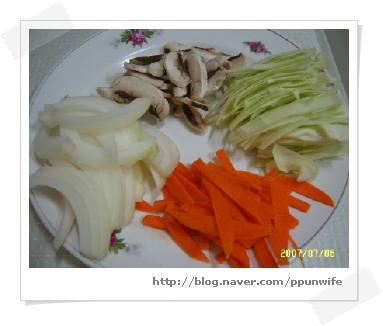
I used cabbage instead of napa cabbage leaves. Julienne the carrot, onion, and 3 button mushrooms (or shiitake, oyster mushrooms).
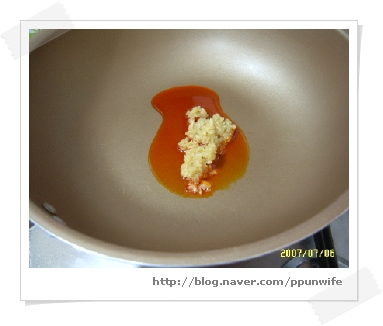
Swirl the chili oil in a pan and stir-fry the garlic.
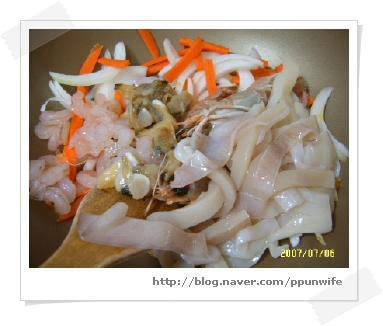
Add the carrot, onion, and all the seafood, then stir-fry together. Stir-fry lightly, then
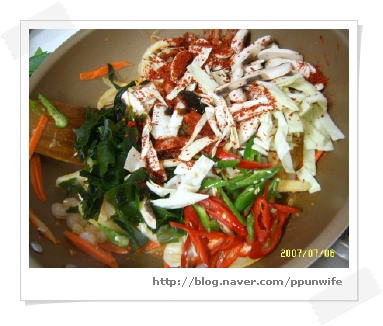
Add the rest of the vegetables, except the large green onion (daepa), and stir-fry a little.
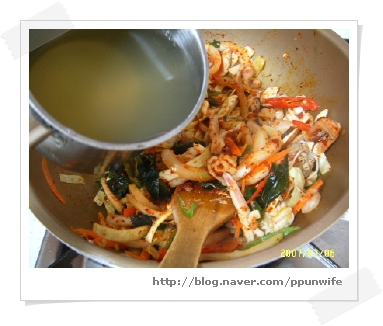
This is a broth made by steeping dried kelp (dasima) and simmering dried anchovies. Pour in the broth, add the large green onion (daepa), and add the seasonings listed above in the given amounts, then bring to a boil. Since noodles will be added, you can season the broth slightly on the stronger side.
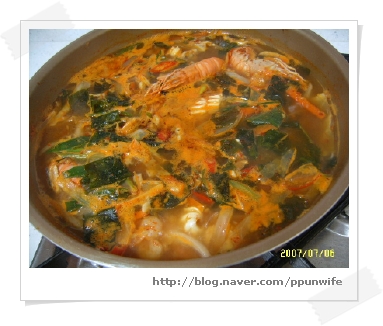
The jjamppong broth is fully cooked. It really is a true medley of vegetables.
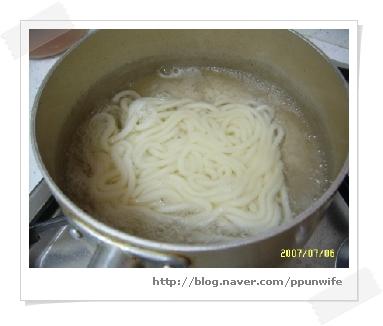
Blanch udon noodles or fresh noodles in boiling water, drain well,
and pour the piping-hot broth over them.
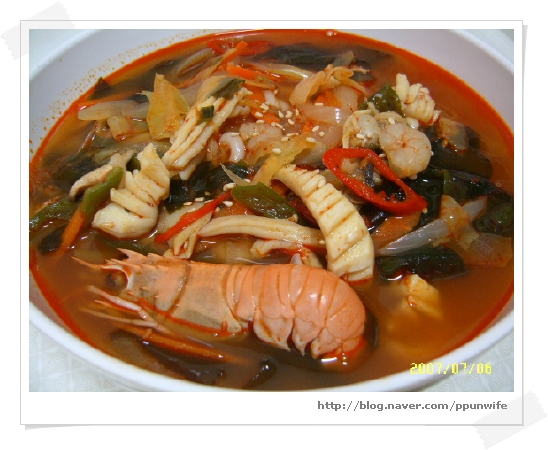
Ta-da! A wonderful bowl of jjamppong is complete. I will save the remaining 2 bowls of broth for tomorrow.
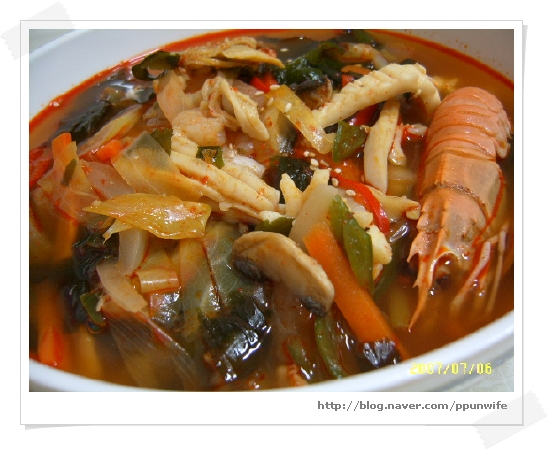
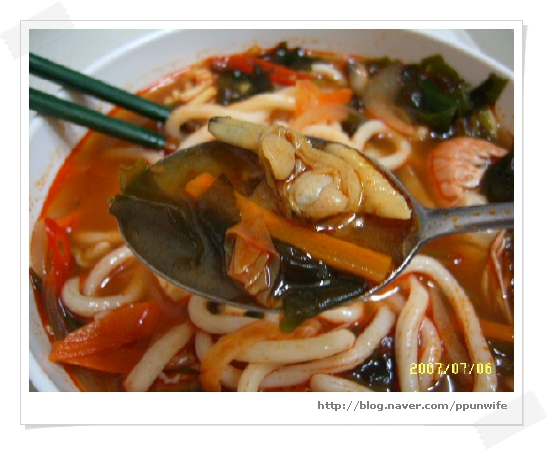
 Ppunwife's tips
- Save the squid legs to use in savory pancakes.
- Since noodles will be added, you can season the broth slightly on the stronger side.
FAQ
Do I have to prepare the exact same seafood ingredients?
You do not need to match all the seafood. Just combining squid with around 50g of pork will still give you a refreshing and deep broth flavor.
How can I adjust the heat if I cannot handle spicy food well?
The gochugaru provides plenty of spice on its own, so you can freely omit the red chili pepper and Cheongyang chili pepper to suit your taste.
Can I substitute other mushrooms for the button mushrooms?
Yes, you can slice and use shiitake mushrooms or oyster mushrooms instead of button mushrooms.
Is there anything to keep in mind when seasoning the broth?
Since this dish is served over blanched fresh noodles or udon noodles, it is best to season the broth slightly on the stronger side.