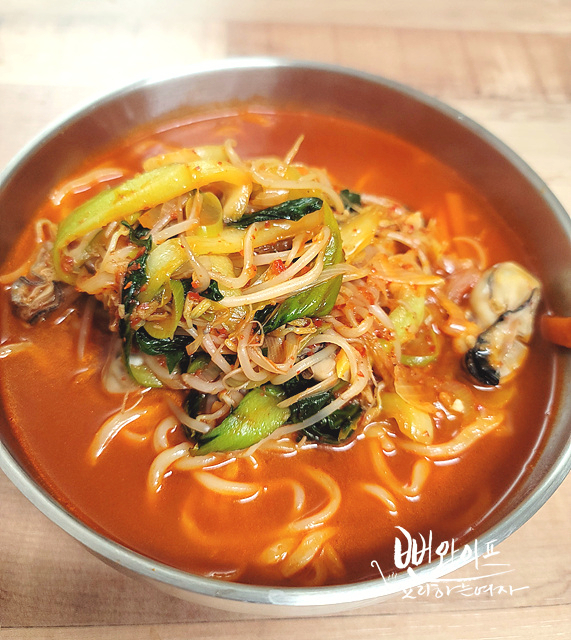
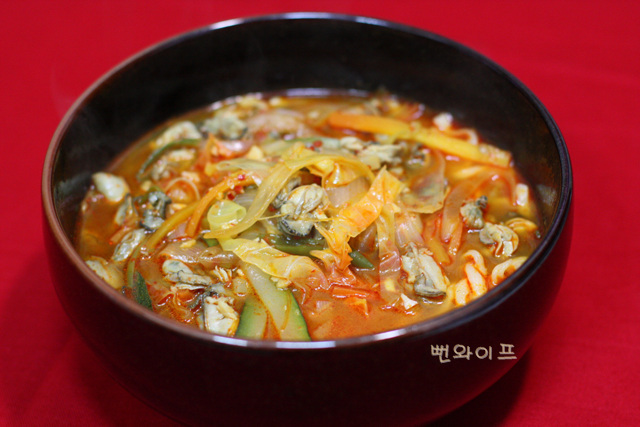
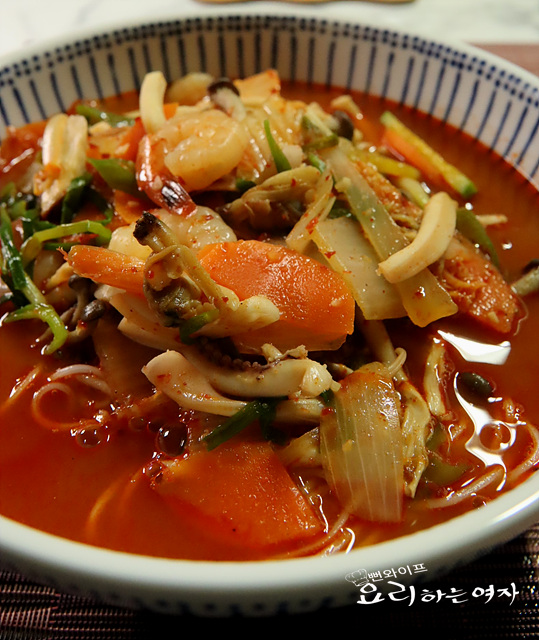
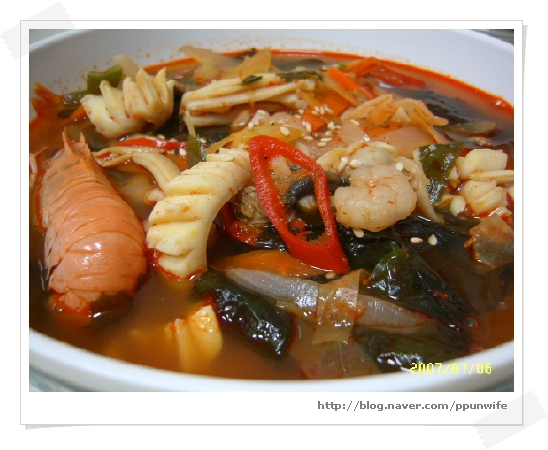
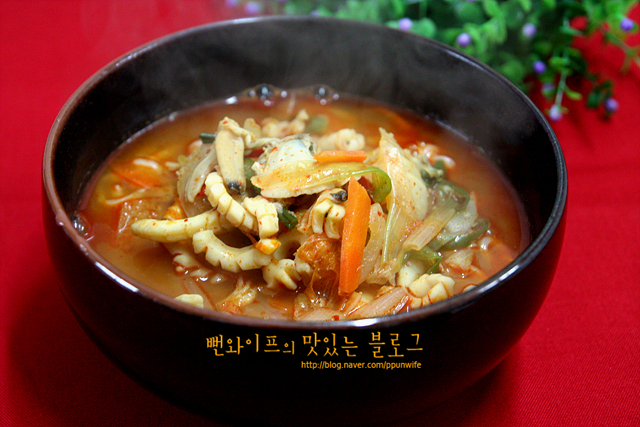
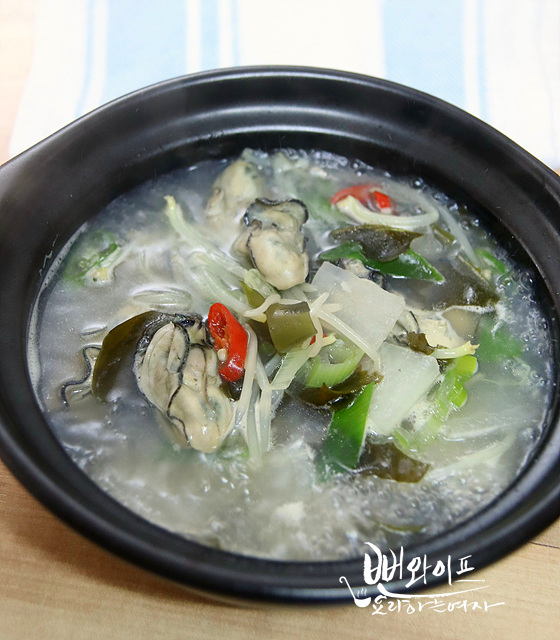
Spicy Oyster Jjamppong (Oyster Noodle Soup)
A spicy and refreshing noodle soup made by stir-frying fragrant in-season raw oysters and vegetables, then simmering them in beef bone and anchovy broth.
Translated from Korean by AI and not yet checked by a native speaker. Amounts and numbers are taken directly from the original recipe. Read the Korean original →
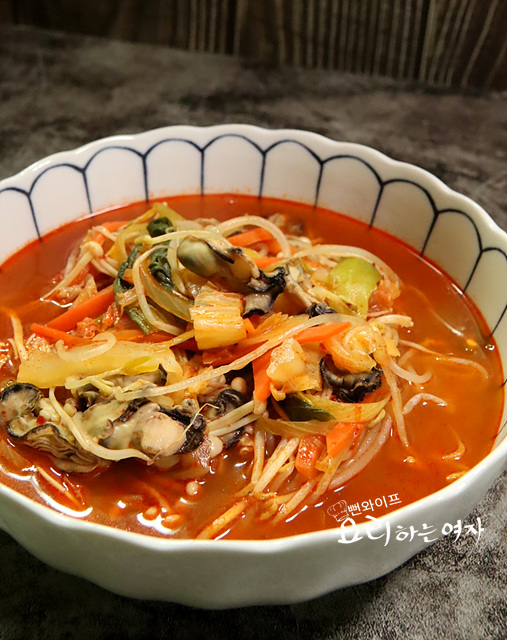
This 2-serving noodle dish generously uses in-season raw oysters to maximize their distinctive aroma and refreshing flavor. Combining beef bone broth and anchovy broth gives it a deep savory richness, making it spicy and clean—perfect for hangover relief or as an accompaniment to drinks.
- Servings
- 2 servings
- Difficulty
- Medium
- Spiciness
- Spicy
Ingredients
Ingredients
- Raw oysters400 g
- Inner napa cabbage leaves2 leaves
- Onion1/4
- Carrot1/5
- Bok choy3
- Large green onion (daepa)1/4 stalk
- Cheongyang chili pepper (hot green chili)2
- Enoki mushrooms1/2 pack
- Mung bean sprouts1/2 handful, 50 g
- Jjamppong noodles2
- Beef bone broth3 cups
- Anchovy broth2 cups
Seasoning
- Minced garlic1 tbsp
- Minced ginger1 tsp
- Gochugaru (Korean chili flakes)3 tbsp
- Oyster sauce1 1/2 tbsp
- Mirin (cooking rice wine)1 tbsp
- Sand lance fish sauce (or dried anchovies)1 tbsp
- Salt1 tsp
- Ground black peppera little
- Since this is oyster jjamppong, adding plenty of oysters makes it more refreshing and delicious, so by all means add a lot.
- Depending on what is in your fridge, you can also use zucchini, soybean sprouts, king oyster mushrooms, green cabbage, garlic chives, or scallions.
- Washing oysters in plain tap water diminishes their flavor and aroma, so gently swirl them in light salt water to remove foreign matter, rinse about twice, and drain in a strainer.
- If you do not have beef bone broth, you can use anchovy broth alone.
- If you dislike fish sauce, you can use soup soy sauce instead.
Steps
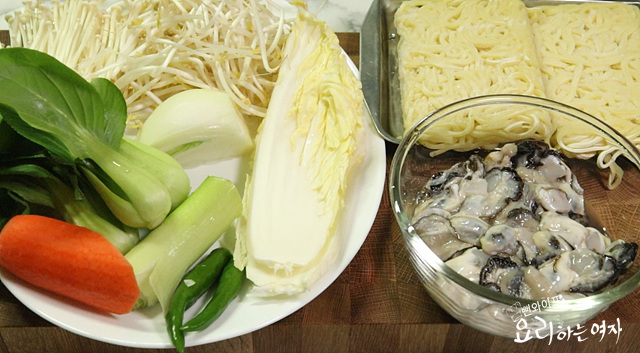
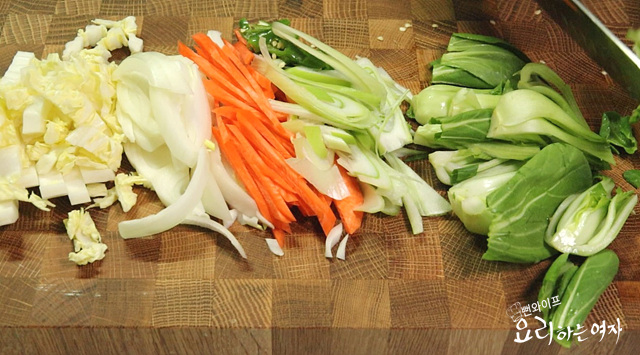
Since this is oyster jjamppong, adding plenty of oysters makes it more refreshing and delicious, so by all means use a lot.
I prepared the vegetables for the jjamppong as shown in the picture.
(You can use whatever is in your fridge; zucchini, soybean sprouts, king oyster mushrooms, green cabbage, garlic chives, scallions, etc. are all great.)
The noodles are noodle portions for jjamppong or jjajangmyeon.
Julienne the vegetables to an easy-to-eat thickness.
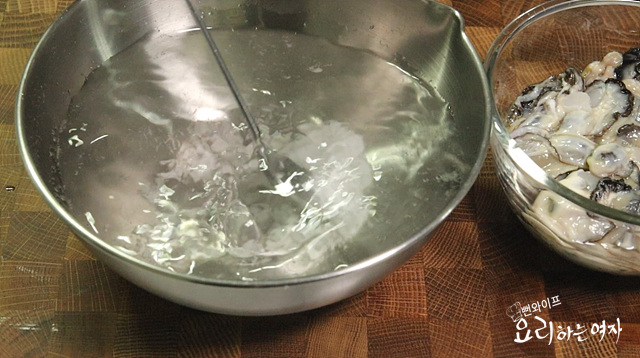
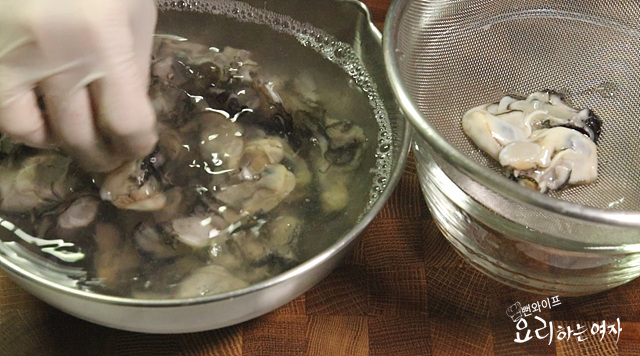
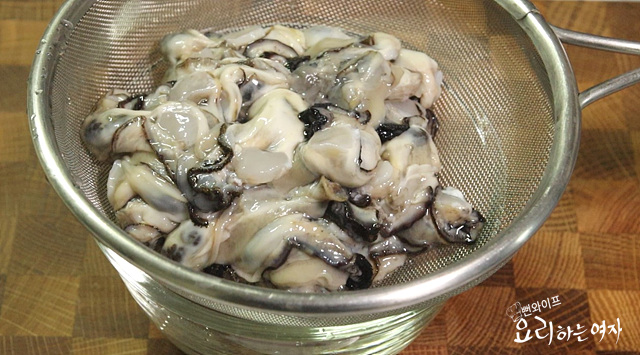
Washing oysters in plain tap water diminishes their flavor and aroma.
Gently swirl them in light salt water so oyster shell bits and foreign debris drop to the bottom.
Rinsing them about twice like this completes the cleaning.
A suitable salinity for washing oysters is water with about 3 tbsp coarse sea salt dissolved in 10 cups of water.
You can also use this same salinity when purging clams like manila clams or cockles.
Drain them in a strainer to remove excess water.
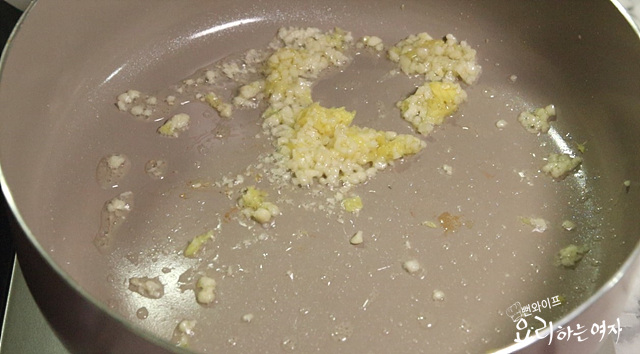
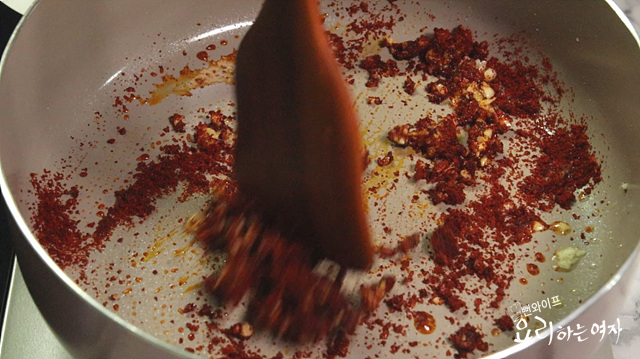
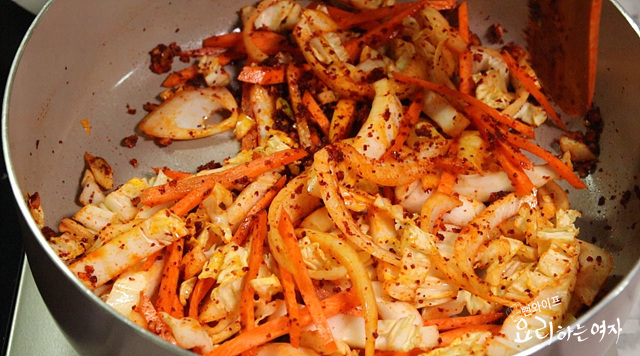
Heat 3 to 4 tbsp of oil in a heated pan, add minced garlic and minced ginger, and stir-fry nicely to release the aromas.
Add gochugaru and stir-fry without burning it; when the spicy aroma rises, add the napa cabbage, carrot, and onion, and stir-fry so they are evenly coated with the chili oil.
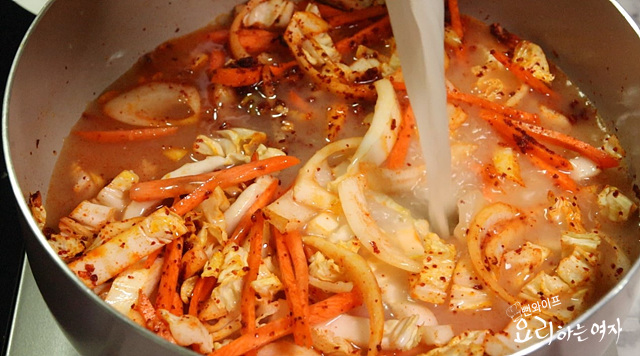
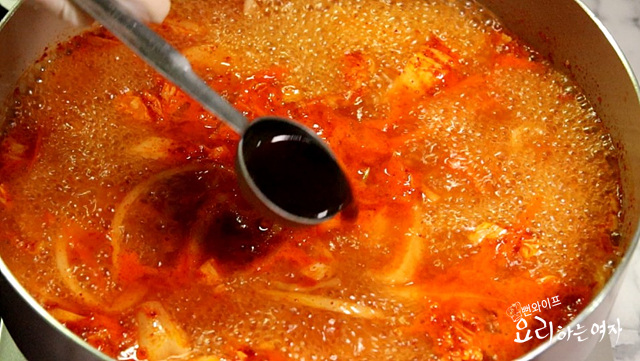
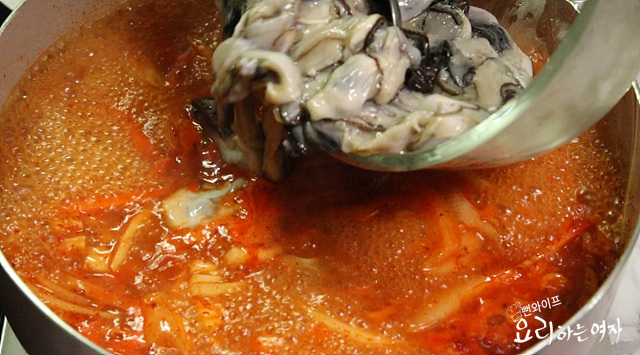
Pour in the beef bone broth and anchovy broth; once the broth comes to a rolling boil, add the oyster sauce, fish sauce, and mirin, along with the drained oysters.
Using fish sauce instead of soup soy sauce is great because it boosts the missing umami.
If you dislike fish sauce, you can use soup soy sauce.
If you do not have beef bone broth, you can use just anchovy broth.
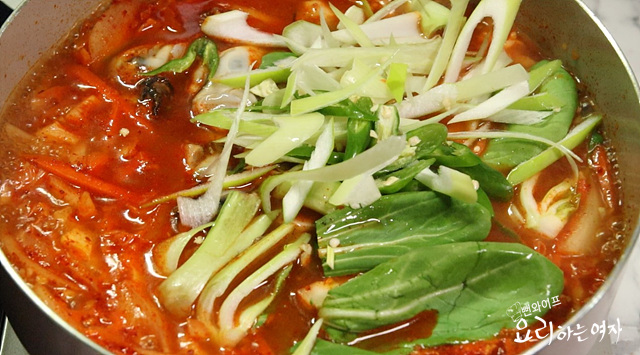
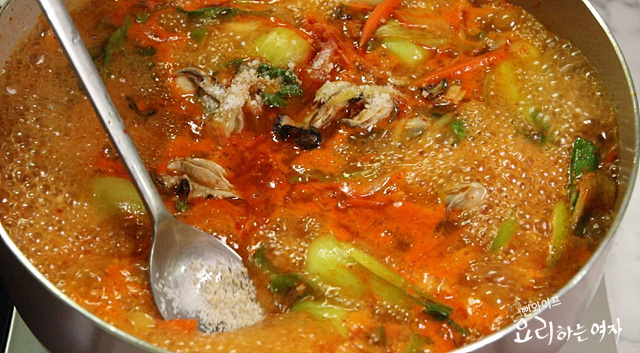
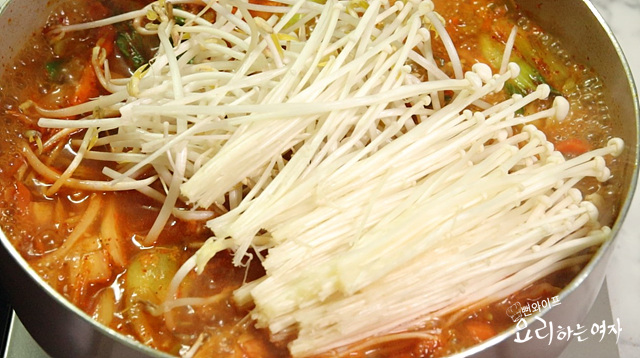
Add the bok choy, large green onion, and Cheongyang chili pepper; once the oysters seem cooked, season with salt and add a little ground black pepper.
Finally, add the enoki mushrooms and mung bean sprouts, simmer just briefly to keep their texture, and it is done.
Adjust the salt seasoning depending on how salty your broth is.
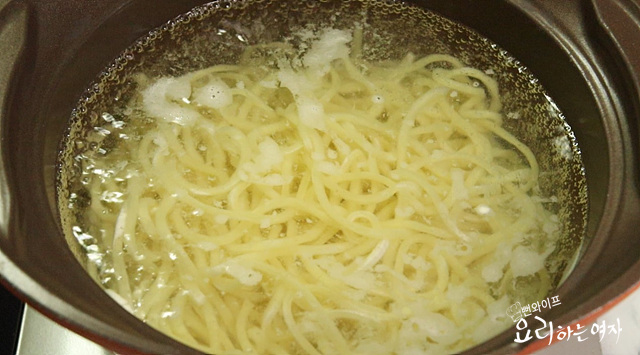
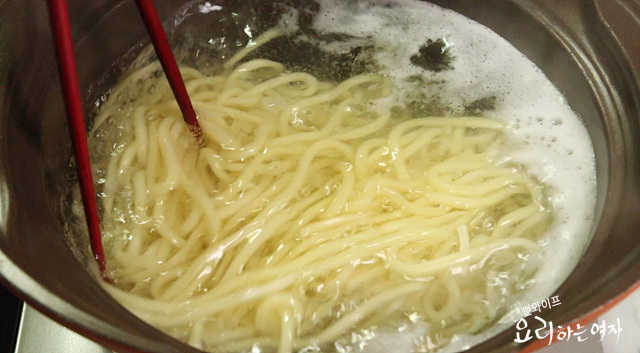
Drop the noodles into boiling water and blanch until tender.
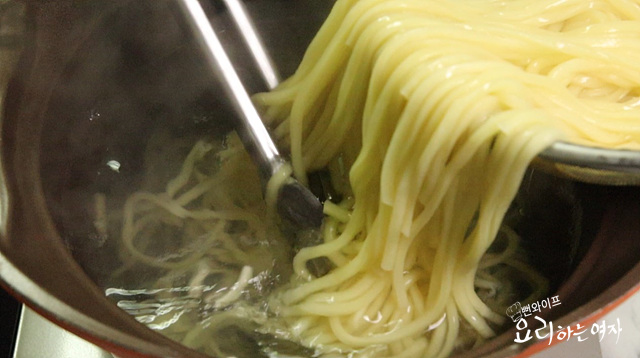
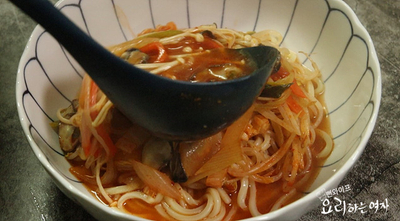
You can drain them in a strainer and pour the jjamppong soup right over them to eat,
or for springier noodles, rinse them in cold water, give them a quick hot water shower right before serving to warm them up, and then pour the broth over.
 Ppunwife's tips
- A suitable salinity for washing oysters is water with about 3 tbsp coarse sea salt dissolved in 10 cups of water.
- Using fish sauce instead of soup soy sauce is great because it makes up for missing umami.
- Adjust the salt seasoning depending on how salty your broth is.
FAQ
How should I wash raw oysters to clean them thoroughly without losing their flavor?
Instead of plain tap water, swirling them in light salt water (a ratio of 3 tbsp coarse sea salt to 10 cups of water) easily loosens shell fragments and debris while preserving the natural flavor of the oysters. Rinse lightly about twice, then drain in a strainer.
What can I substitute if I don't have beef bone broth or dislike fish sauce?
If you do not have beef bone broth, making the broth using only anchovy broth works just fine. Also, if you do not like the flavor of fish sauce, you can season with soup soy sauce instead.
Is there a way to enjoy noodles with a bouncier, chewier texture?
Rinse the blanched noodles in cold water to revive their elasticity, briefly warm them with hot water right before eating, and pour the hot soup over them for much chewier noodles.