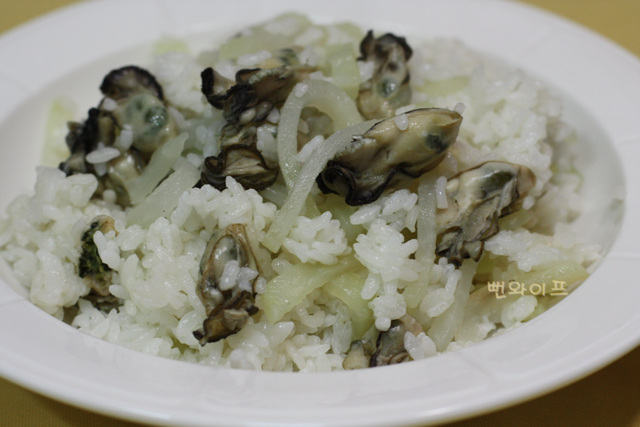
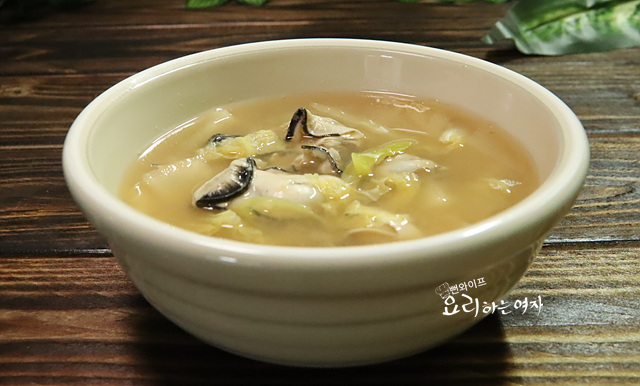
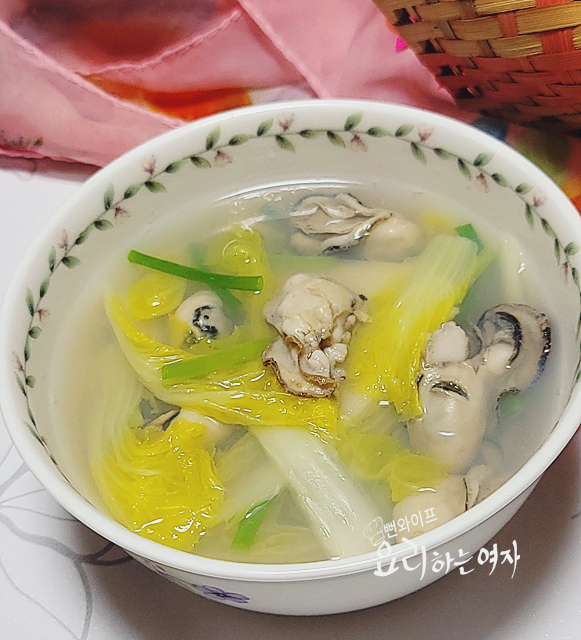
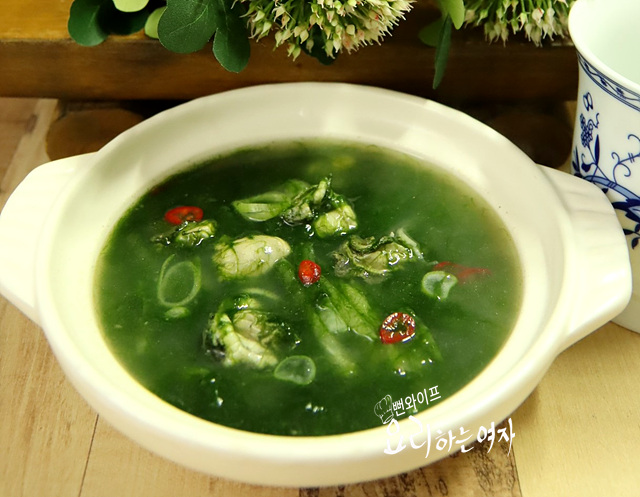
Fragrant Gul Gukbap (Oyster Soup with Rice) with Milky Broth
A refreshing soup with rice made by boiling raw oysters with Korean radish sautéed in toasted sesame oil, seasoned with salted fermented shrimp.
Translated from Korean by AI and not yet checked by a native speaker. Amounts and numbers are taken directly from the original recipe. Read the Korean original →
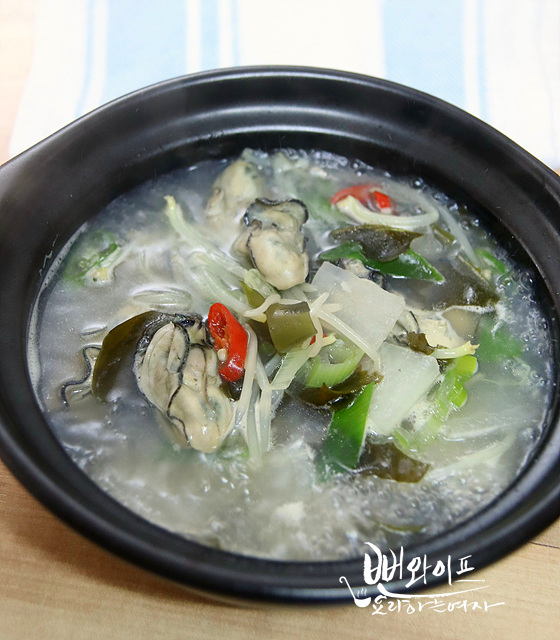
Korean radish sautéed in toasted sesame oil and raw oysters are boiled together right from the start to create a milky, deep broth. Salted fermented shrimp and soybean sprouts are added for a clean, refreshing finish, and simmering it briefly with rice in an earthenware pot makes for a comforting, warming one-bowl meal.
- Servings
- 2 servings
- Cook time
- 5 minprep not included
- Difficulty
- Easy
- Spiciness
- Mildly spicy
Ingredients
Ingredients
- Raw oysters200 g
- Korean radish (mu)150 g
- Soybean sprouts100 g
- Large green onion (daepa)1/4 stalk
- Cheongyang chili pepper (hot green chili), red chili pepper1 each
- Soaked dried seaweed (miyeok)a little
- Water4 cups
- Toasted sesame oil1 tbsp
Seasoning
- Salt1/2 tsp
- Salted fermented shrimp (saeujeot)1 tbsp
- Minced garlic1 tsp
- Mirin (cooking rice wine)1 tbsp
- Garlic chives or water dropwort are also great instead of large green onion.
- The dried seaweed is just soaked briefly to use as a garnish at the end, so you can omit it.
- Since it is a soup with rice, you can also crack an egg into it at the very end before eating.
Steps
Prepare the ingredients
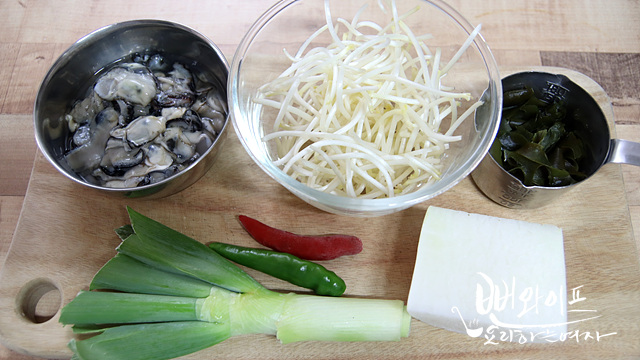
Here are the washed raw oysters.
Here are the Korean radish, soybean sprouts with the heads removed, large green onion, and chili peppers. (Garlic chives or water dropwort are also great instead of large green onion.)
The dried seaweed was soaked briefly to use as a garnish at the end, but you can omit it.
Related post on the blog (Korean)blog.naver.com/ppunwife/224087140998Refer to the detailed guide on how to wash raw oysters.
Slice the ingredients
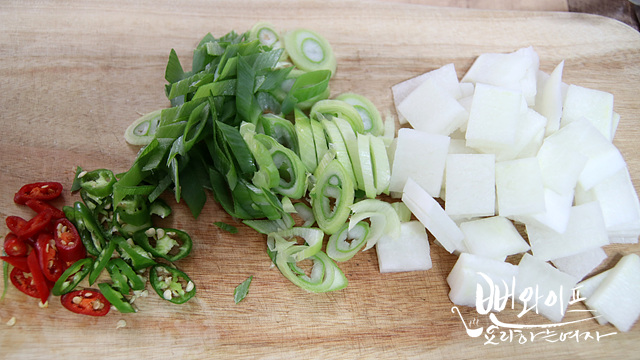
Cut the Korean radish into thin, flat bite-sized squares (nabak-seolgi), and slice the large green onion and chili peppers diagonally.
Sauté the radish in toasted sesame oil
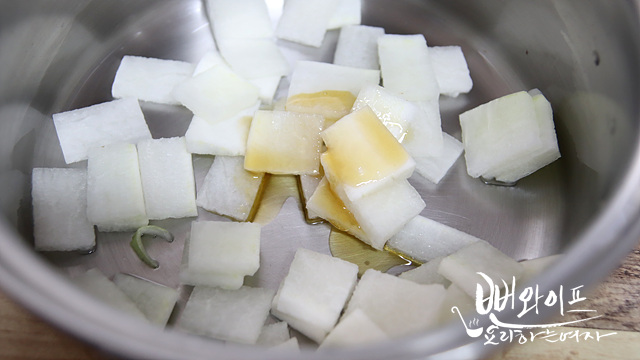
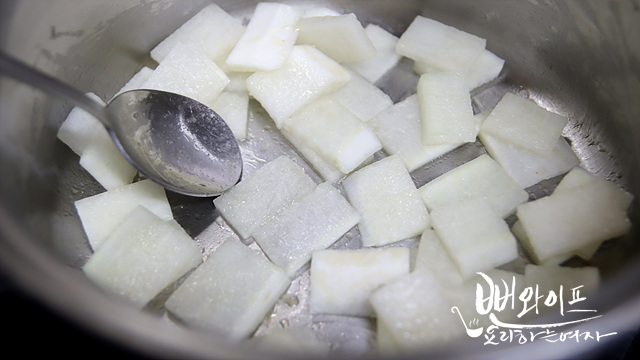
Put the radish in a pot, add 1 tbsp toasted sesame oil, and stir-fry thoroughly.
They say the nutty toasted sesame oil removes any raw smell from the radish.
Boil
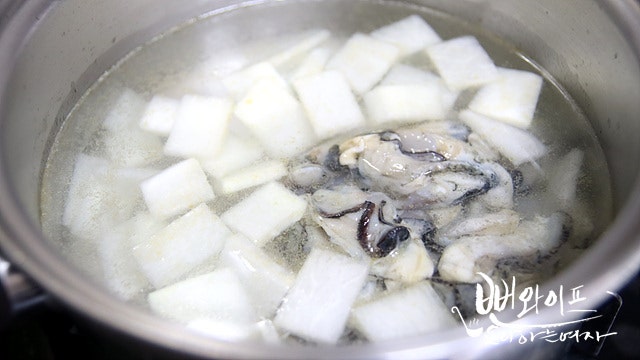
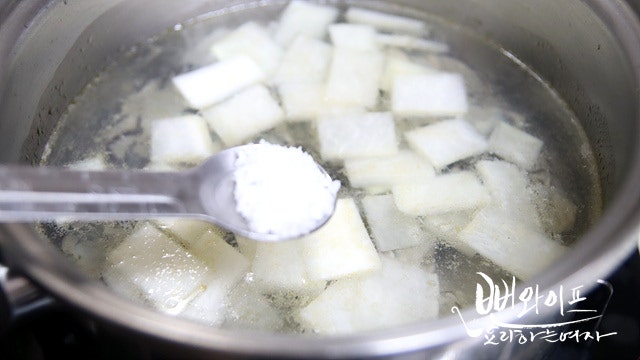
Pour in 4 cups water, add the oysters, and also add 1/2 tsp salt.
Adding the oysters early rather than halfway through keeps them from shrinking too much and lets them infuse fully into the broth.
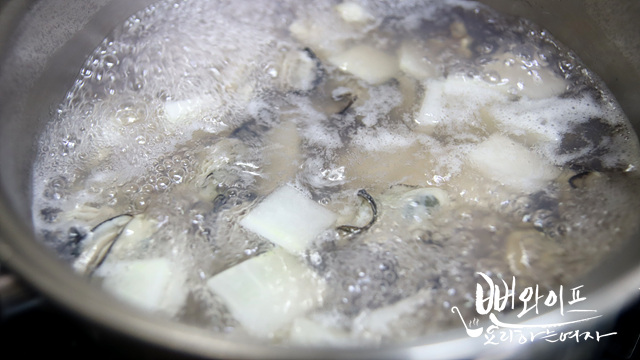
Boil for at least 5 minutes so the radish and oysters cook through and the broth turns rich and milky.
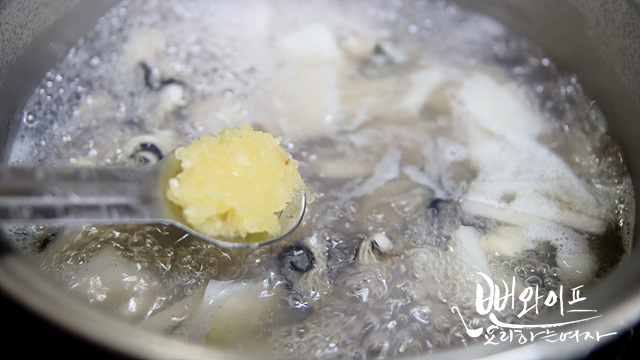
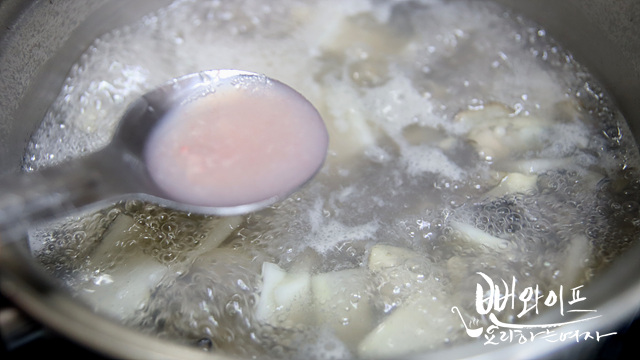
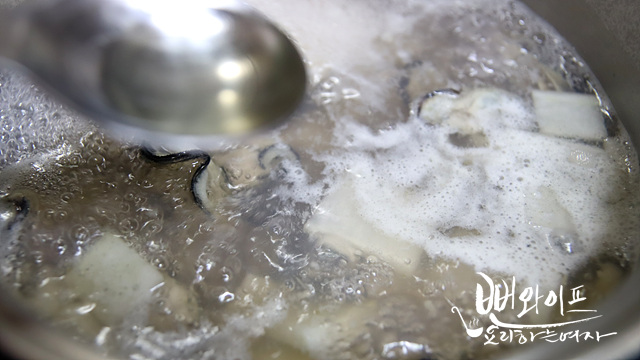
Season with 1 tsp minced garlic, 1 tbsp liquid from the salted fermented shrimp, and 1 tbsp mirin, then let it simmer so the flavors blend nicely into the broth.
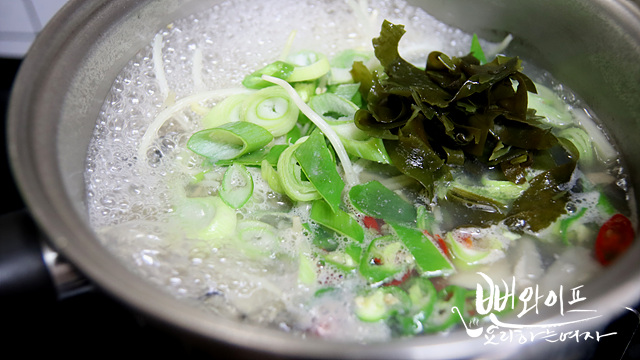
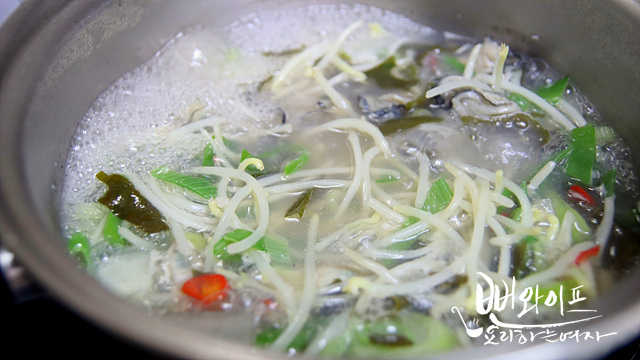
Finish by adding the soybean sprouts, large green onion, chili peppers, and soaked dried seaweed, and boil briefly.
Serve
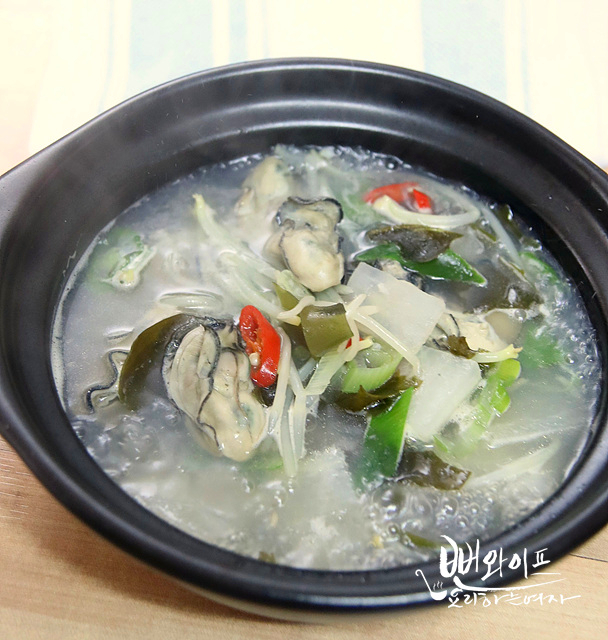
I served it in an earthenware pot to enjoy as a soup with rice.
Even though the oysters were boiled, they haven't shrunk much and have infused thoroughly into the broth, leaving it beautifully milky.
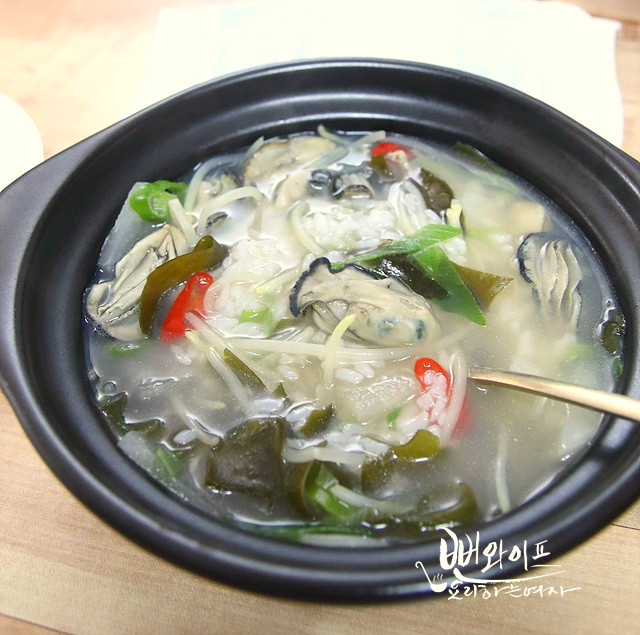
If you add rice and simmer it a little longer, the starch from the rice makes the broth taste even richer.
A piping-hot bowl of gul gukbap fills your whole body with oyster aroma and warmth.
Packed with nutrition, gul gukbap needs nothing more than a side of kimchi—perfect for a day when it turns genuinely cold.
 Ppunwife's tips
- They say the nutty toasted sesame oil removes any raw smell from the radish.
- Adding the oysters early rather than halfway through keeps them from shrinking too much and lets them infuse fully into the broth.
- If you add rice and simmer it a little longer, the starch from the rice makes the broth taste even richer.
FAQ
Why do you add the raw oysters right from the start when boiling?
It keeps the oysters from shrinking excessively and allows the rich flavor to infuse thoroughly into the broth.
Can I use other vegetables instead of large green onion?
Depending on your preference, garlic chives or water dropwort also work very well instead of large green onion.
Do I have to add dried seaweed?
It is just used as a garnish, so you can easily omit it if it is hard to prepare.
Can I add an egg at the end?
Yes, depending on your taste, you can crack an egg into the soup at the final stage of cooking before eating.