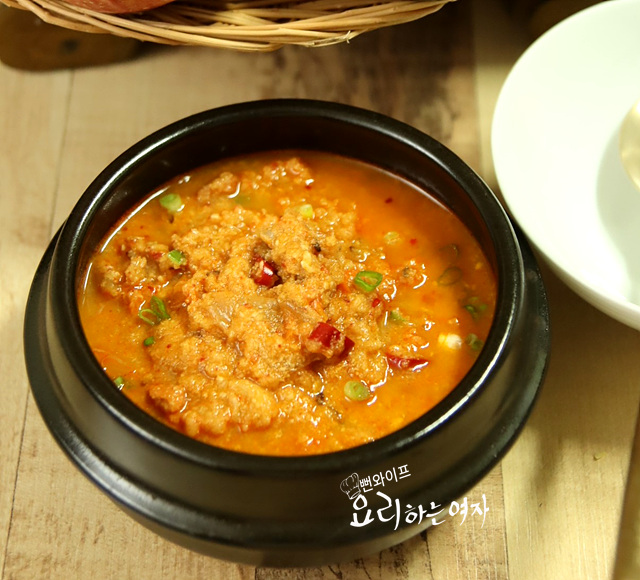
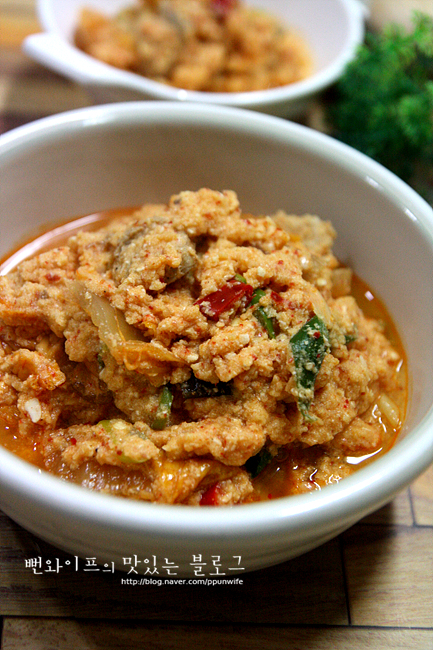
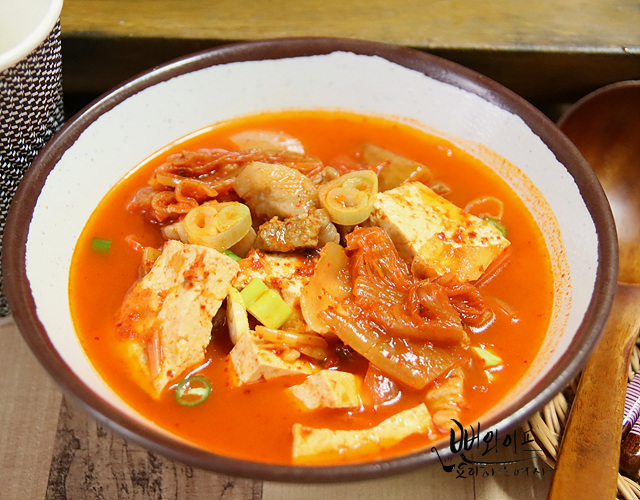
Kimchi Biji Jjigae (Soybean Curd Residue Kimchi Stew)
A savory, comforting stew made by grinding soaked soybeans and simmering them with pork and aged sour kimchi.
Translated from Korean by AI and not yet checked by a native speaker. Amounts and numbers are taken directly from the original recipe. Read the Korean original →
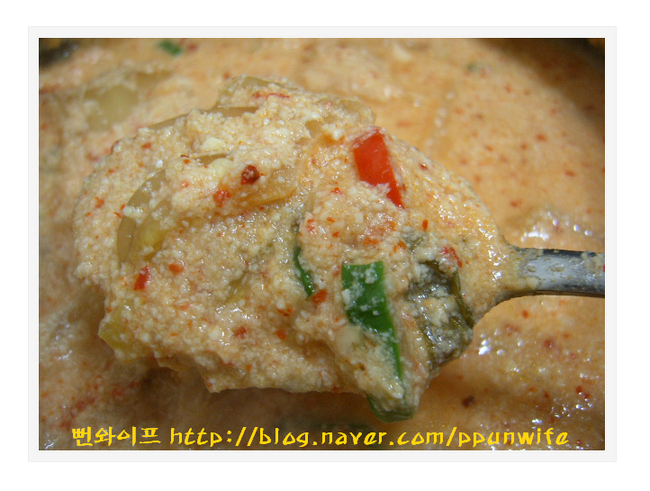
This stew brings out deep, nutty, comforting flavor by finely grinding soaked soybeans and simmering them with pork and fermented kimchi. The key is to stir thoroughly over low heat for at least 5 minutes to cook the beans and remove any raw beany smell. Seasoned cleanly with salted fermented shrimp, it is a perfect match for a warm winter meal.
- Servings
- 3 servings
- Cook time
- 5 minprep not included
- Difficulty
- Hard
- Spiciness
- Spicy
Ingredients
Biji Jjigae Ingredients
- Soybeans for meju1/2 cup (soybeans)
- Pork100 g
- Fermented kimchi2 leaves, 100 g
- Red chili pepper1
- Cheongyang chili pepper (hot green chili)1
- Large green onion (daepa)1/2 stalks
- Anchovy broth2 cups
Meat marinade
- Garlic1 tsp
- Mirin (cooking rice wine)1 tbsp
- Salta little
Soybean Purée
- Soaked soybeans
- Cold water1 cup
Seasoning
- Gochugaru (Korean chili flakes)2 tbsp
- Minced garlic1 tsp
- Salted fermented shrimp (saeujeot)1 tbsp
- Ground black peppera little
Biji Pancakes
- Soybean curd residue (biji)150 g
- Kimchi
- Ham (or pork)50 g
- Chili pepper1
- Red chili pepper1
- Onion1 slice
Batter
- Korean pancake mix (buchim-garu)5 tbsp
- Egg1
- Salt0.5 tsp
- Wateras needed
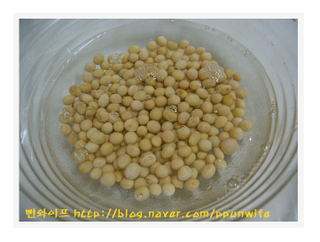
- Pour about two cups of water over half a cup of soybeans and let them soak. I soaked them from the morning until the evening.
- When making biji pancakes from ground beans, drain a little of the bean liquid through a sieve before mixing the batter.
Steps
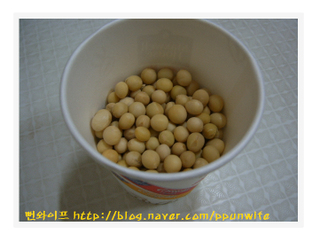
1. These are white beans, called either daedu or soybeans for meju. Domestic beans cost between 10,000 won and 15000 won per doe.
If you buy a doe, you can make sweet braised soybeans and eat them for a long time.
2. Pour about two cups of water over half a cup of soybeans and let them soak. I soaked them from the morning until the evening.
This should be plenty of food for 3 people.
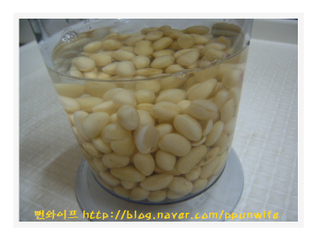
3. Half a cup of soybeans swells to a little over one cup. Put the soybeans in a blender, pour in 1 cup of water, and blend.
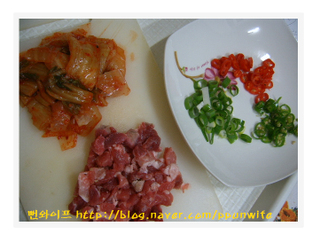
4. Cut the pork, fermented kimchi, and vegetables into suitable pieces.
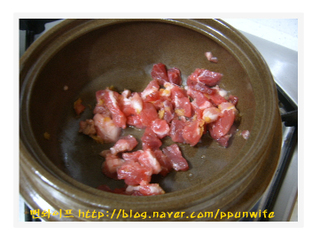
5. Season the pork with the marinade first and stir-fry it.
I made this in an earthenware pot, but once it started boiling it was completely unmanageable. It is better to cook this in a roomy pot.
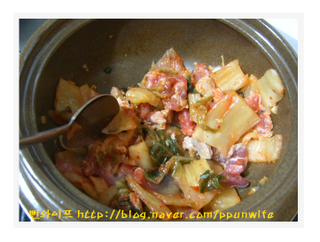
6. Stir-fry the pork lightly, then add the kimchi and stir-fry them together.
Once the kimchi and meat are cooked through...
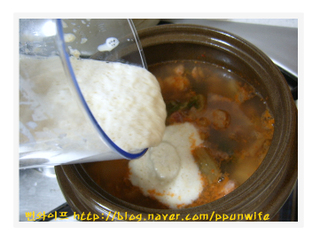
7. Add the anchovy broth and ground beans, and bring to a boil over high heat.
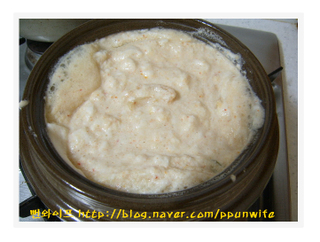
8. Once it bubbles up, lower the heat to low. Boiling for at least 5 minutes cooks the beans thoroughly and gets rid of the raw beany smell.
Stir frequently while it cooks, as the broth can easily boil over.

At the end, add the gochugaru, chili peppers, large green onion, and garlic, then season to taste with ground black pepper and salted fermented shrimp and simmer to finish.
I seasoned mine quite lightly, so adjust to your liking with extra kimchi or salted fermented shrimp.
Savory biji jjigae is complete.
Biji pancakes: 150 g soybean curd residue, kimchi, 50 g ham (or pork), 1 chili pepper, 1 red chili pepper, 1 slice onion
Batter: 5 tbsp Korean pancake mix, 1 egg, 0.5 tsp salt, water as needed
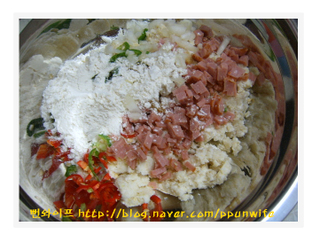

1. I got the soybean curd residue for the pancakes for free when buying tofu. These days, when you buy domestic tofu, they just give it to you.
Add diced ham or ground pork and finely chopped vegetables you have at home to the residue,
add Korean pancake mix, a little salt, and 1 egg, then stir in water a little at a time to form the batter.
When making biji pancakes from ground beans, drain a little of the bean liquid through a sieve before mixing the batter.
2. Pan-fry them small in a frying pan.
Biji pancakes crumble more easily than other Korean pancakes, so take care when pan-frying.
 Ppunwife's tips
- I made this in an earthenware pot, but once it started boiling it was completely unmanageable. It is better to cook this in a roomy pot.
- Stir frequently while it cooks, as the broth can easily boil over.
- Biji pancakes crumble more easily than other Korean pancakes, so take care when pan-frying.
FAQ
What kind of pot should I use to keep biji jjigae from boiling over?
Once it begins to boil, the stew easily spills over, so it is better to use a roomy pot rather than a narrow earthenware pot.
How long should I simmer it to eliminate the raw beany smell?
After bringing it to a boil over high heat, reduce to low and simmer for at least 5 minutes while stirring; the beans will cook thoroughly and the raw beany smell will disappear.
What should I keep in mind when making biji pancakes from freshly ground beans?
Strain the bean purée lightly through a sieve to drain excess liquid before mixing the batter, and because these pancakes break apart more easily than others, shape them small and flip gently.