Hearty Biji Jjigae (Soybean Curd Puree Stew)
A hearty stew made by stir-frying seasoned pork and kimchi, then simmering them together with soybean curd puree.
Translated from Korean by AI and not yet checked by a native speaker. Amounts and numbers are taken directly from the original recipe. Read the Korean original →

This stew is made by stir-frying seasoned pork and kimchi, then simmering them with broth and soybean curd puree. Adjust the amount of broth to match the moisture level of your biji, and season with salted fermented shrimp for deep savory flavor. It makes a wonderful winter side dish to enjoy with rice.
- Servings
- 2–3 servings
- Difficulty
- Medium
- Spiciness
- Spicy
Ingredients
Ingredients
- Soybean curd residue (biji)150 g
- Pork100 g
- Kimchi2 stems, 100 g
- Red chili pepper1
- Cheongyang chili pepper (hot green chili)1
- Large green onion (daepa)1/4 stalk
- Anchovy broth2.5 cups (2 1/2 cups)
Pork Marinade
- Minced garlic1 tsp
- Mirin (cooking rice wine)1 tbsp
- Salta little
- Ground black peppera little
Seasoning
- Gochugaru (Korean chili flakes)1 tbsp
- Minced garlic1 tsp
- Salted fermented shrimp (saeujeot)1 tbsp
- If you feel that is not enough to eliminate any gamey smell, you can also add a little ginger juice.
- You can substitute ingredients if there are things you like. (For example, onions, or if you prefer a milder taste, blanched inner napa cabbage leaves or shredded Korean radish instead of kimchi.)
- Instead of adding salted fermented shrimp, you can pour in less broth and use kimchi brine to adjust the seasoning. If you don't have salted fermented shrimp, use soup soy sauce (guk-ganjang) or salt instead.
- If substituting with dried soybeans you have at home instead of biji, soak about 1/2 cup of yellow dried soybeans in water for over 5 hours, peel off the skins, add 1 cup of water to the soaked soybeans and blend finely in a blender, then pour it in at step 5 of the cooking process.
Steps


1. Cut the pork into bite-sized pieces and season it.
Add 1 tsp minced garlic, 1 tbsp mirin (cooking rice wine), a little salt, and a little ground black pepper, then massage gently by hand.
If you feel that is not enough to eliminate any gamey smell, you can also add a little ginger juice.
2. I got a lump of biji from a place that makes homemade tofu, and after draining thoroughly it weighs 150 g.
Prepare about 2 broad stems of kimchi, shake off the seasonings, and chop finely.
Slice the remaining vegetables—the chili peppers and large green onion (daepa)—diagonally or chop into rounds.
You can substitute ingredients if there are things you like. (For example, onions, or if you prefer a milder taste, blanched inner napa cabbage leaves or shredded Korean radish instead of kimchi.)


3. Put the meat and kimchi into a pot and stir-fry thoroughly.
4. Once the meat turns somewhat pale as it cooks, pour in the broth and simmer until the meat and kimchi are completely cooked through and the flavors have melded.
At this point, pour in about half a cup less broth than the listed amount, then after adding the biji and simmering, if the consistency feels too thick, use the remaining broth to adjust the stew to your desired consistency.


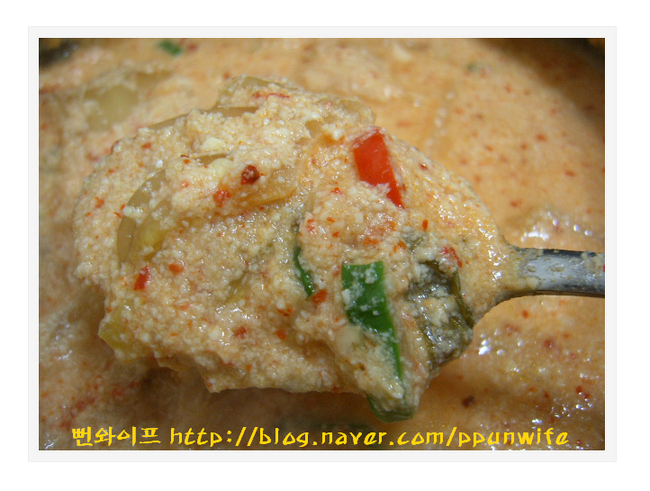
5. Add the biji and mix thoroughly.
If the consistency feels too thick, you can add more broth.
Adjust the amount of broth according to the moisture level of your biji.
6. Add all the remaining vegetables and seasonings—large green onion, chili peppers, 1 tbsp gochugaru (Korean chili flakes), and 1 tsp minced garlic—and simmer briefly...


7. Add salted fermented shrimp (saeujeot) to adjust the seasoning to taste.
Instead of adding salted fermented shrimp, you can pour in less broth and use kimchi brine to adjust the seasoning.
If you don't have salted fermented shrimp, use soup soy sauce (guk-ganjang) or salt instead.
8. Simmer a little longer until bubbling nicely, and it is done.
 Ppunwife's tips
- Pour in about half a cup less broth than the listed amount to start, and if it feels too thick after adding the biji and simmering, use the remaining broth to adjust the stew to your desired consistency.
- Adjust the amount of broth according to the moisture level of your biji.
FAQ
Can I make this with whole soybeans if I don't have store-bought biji?
You can soak half a cup of yellow dried soybeans in water for over 5 hours, peel off the skins, and blend them finely in a blender with 1 cup of water to use in place of biji.
What seasoning should I use if I don't have salted fermented shrimp?
You can season with soup soy sauce (guk-ganjang) or salt instead, or reduce the amount of broth and pour in kimchi brine to add flavor.
What should I do if I want a milder, less spicy stew?
Using blanched inner napa cabbage leaves or shredded Korean radish instead of kimchi gives you a much milder, cleaner taste.
What is the best way to adjust the consistency of the broth?
Rather than adding all the broth at the start, hold some back; once you add the biji, check how thick it is and use the remaining broth to adjust the consistency.