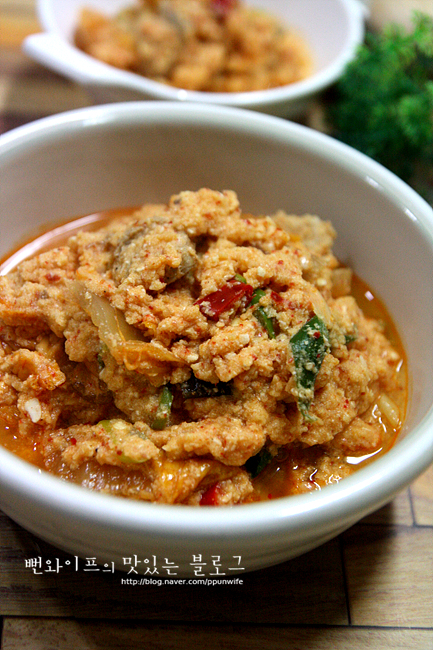
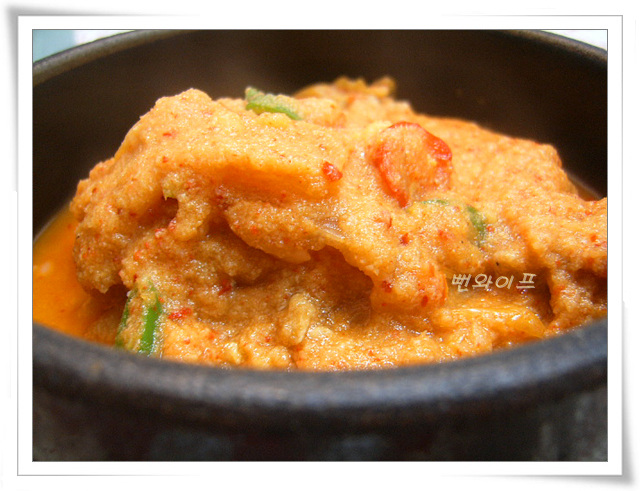
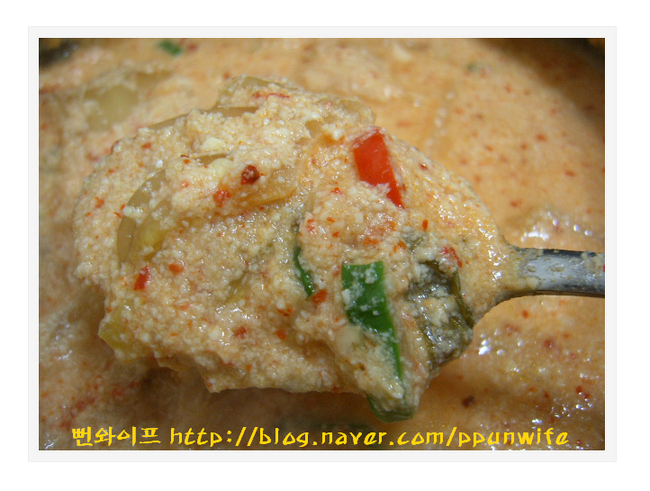
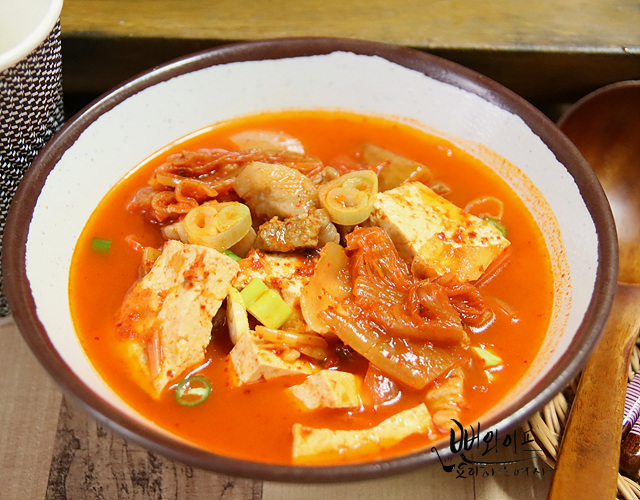
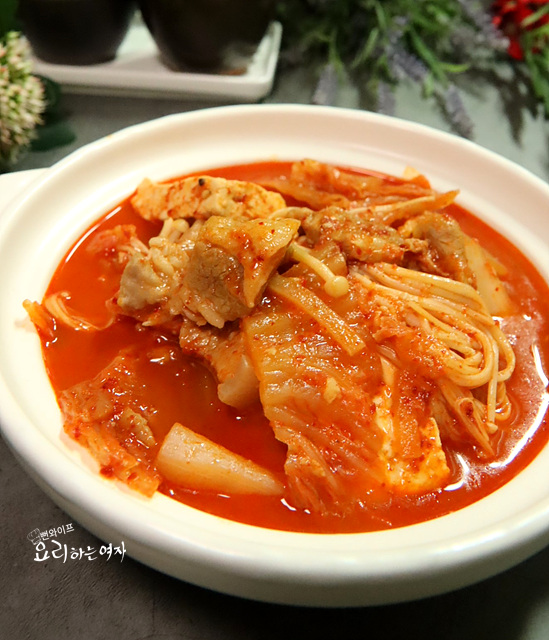
Savory Pork and Kimchi Biji Jjigae (Soybean Curd Puree Stew)
A savory stew made by stir-frying pork and aged sour kimchi with fermented soybean curd residue, simmered in anchovy broth.
Translated from Korean by AI and not yet checked by a native speaker. Amounts and numbers are taken directly from the original recipe. Read the Korean original →

This stew starts by stir-frying aged sour kimchi and pork to eliminate any gamey smell, then simmers them in anchovy broth with soybean curd residue. Using fermented biji yields a deep, rich flavor, and the dish comes together easily without any fuss.
- Servings
- 3–4 servings
- Difficulty
- Easy
- Spiciness
- Mildly spicy
Ingredients
- Soybean curd residue (biji)200 g
- Pork100 g
- Aged sour kimchi100 g
- Large green onion (daepa)a little
- Cheongyang chili pepper (hot green chili)1
- Anchovy broth2 1/2 cups
- Gochugaru (Korean chili flakes)1 tbsp
- Mirin (cooking rice wine)2 tbsp
- Minced garlic1/2 tbsp
- Salted fermented shrimp (saeujeot) (or soup soy sauce (guk-ganjang))1/2 tbsp
- Perilla oila little
- Salta little
- Ground black peppera little
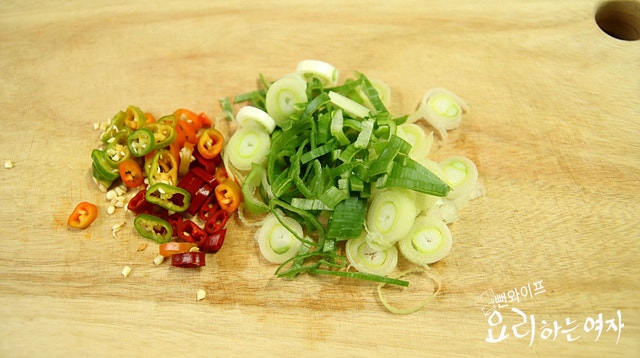
- One 200g lump of soybean curd residue (biji); for the pork, I prepared thinly shaved pork belly and chopped it finely. Finely chop the aged sour kimchi, and thinly slice about 1/4 stalk of large green onion (daepa) along with Cheongyang chili pepper (hot green chili) to equal the amount of 1 chili, using 2 small ones.
Steps
Prepare the ingredients
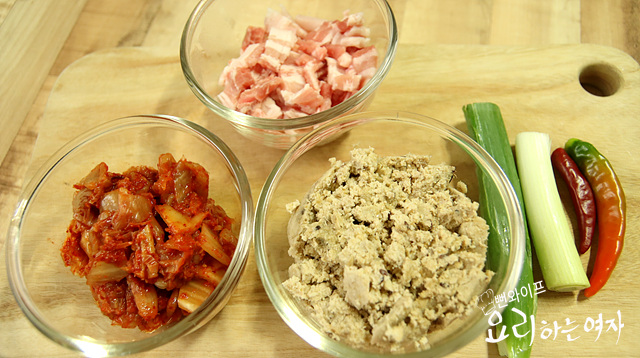
When you go to a traditional market, places that make and sell tofu often sell fermented biji, so I bought some fermented soybean curd residue.
One 200g lump of soybean curd residue (biji); for the pork, I prepared thinly shaved pork belly and chopped it finely.
Finely chop the aged sour kimchi, and thinly slice about 1/4 stalk of large green onion (daepa) along with Cheongyang chili pepper (hot green chili) to equal the amount of 1 chili, using 2 small ones.
Stir-fry the meat and kimchi
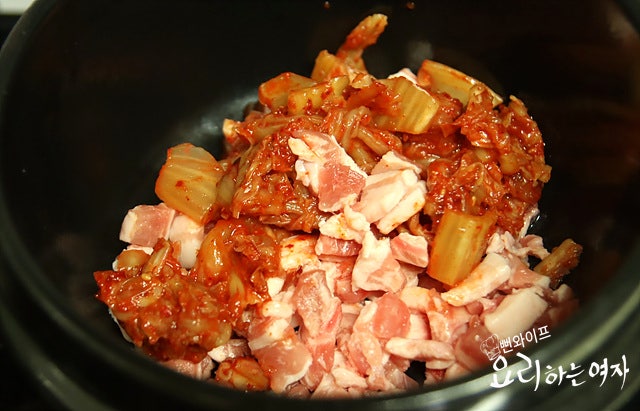
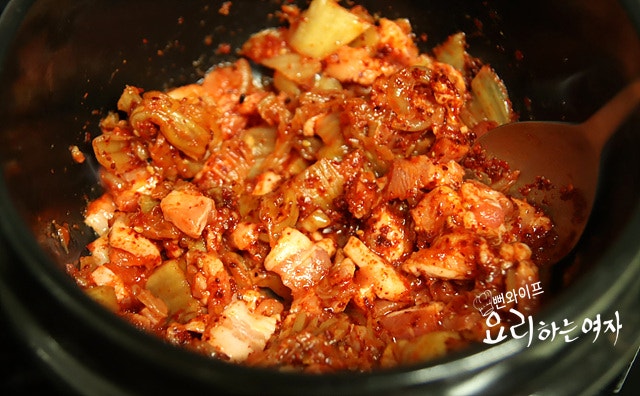
In an earthenware pot lightly coated with cooking oil, add the meat and kimchi, then add 2 tbsp mirin (cooking rice wine) and 1 tbsp gochugaru (Korean chili flakes). Stir-fry thoroughly until the meat is fully cooked.
Adding a bit of mirin helps remove not only the gameiness of the meat, but also any musty smell from aged or sour kimchi.
Simmer
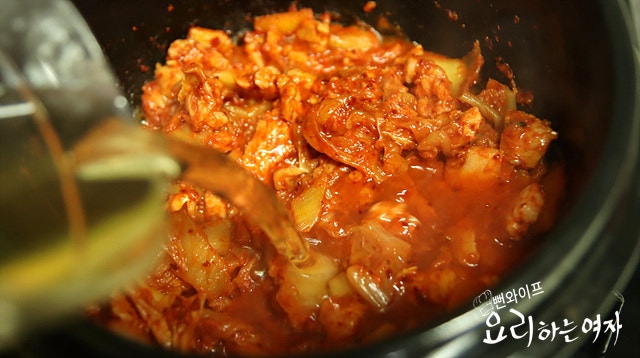

Pour in 2 1/2 cups anchovy broth and simmer so the flavors of the meat and kimchi infuse into the broth.
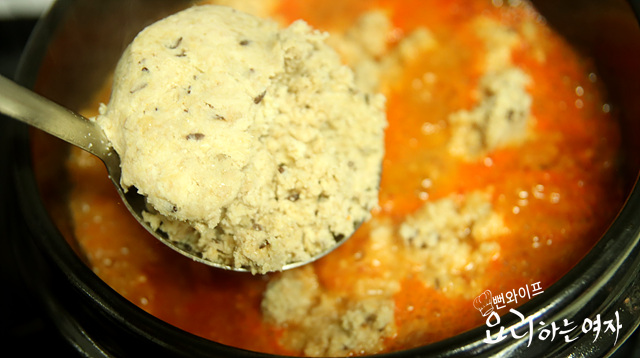
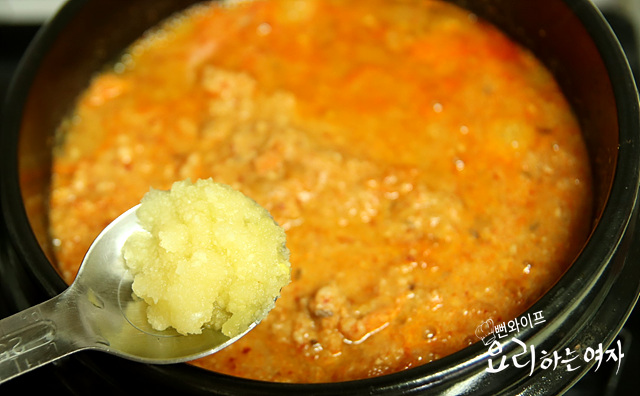
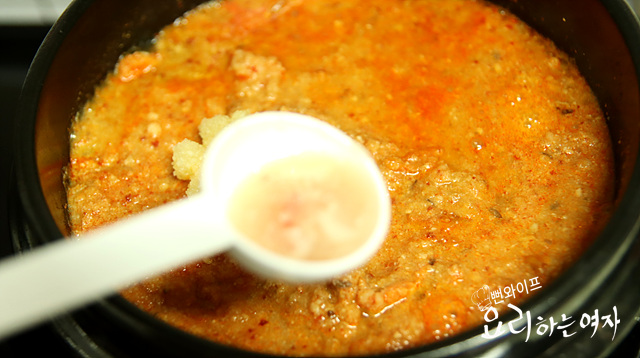
Add the soybean curd residue (biji), along with 1/2 tbsp minced garlic and 1/2 tbsp salted fermented shrimp (saeujeot), using mostly the liquid.
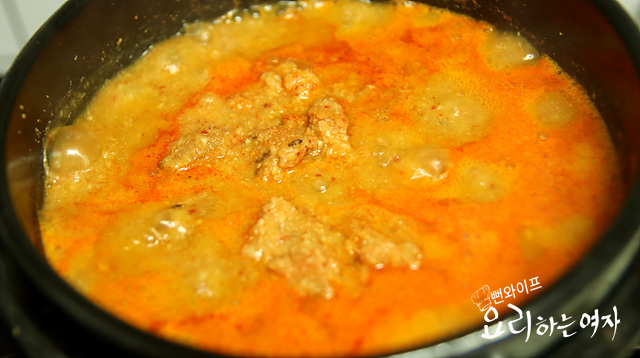
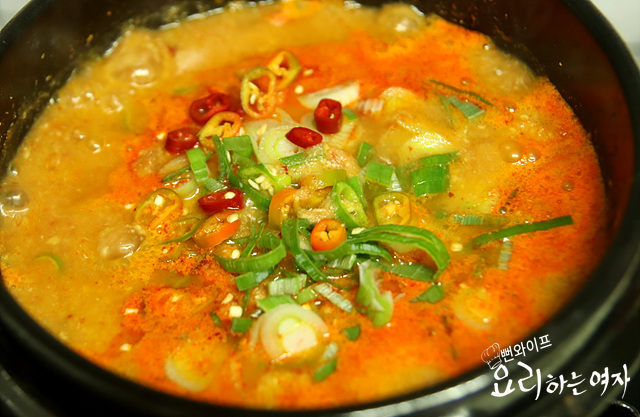
Simmer briefly so the seasonings meld together, then taste it and adjust with salt if it is too bland.
Finish by adding the large green onion (daepa), Cheongyang chili pepper, ground black pepper, and just a very light drizzle of perilla oil.
Finish

Biji is delicious when quickly simmered with kimchi and pork, and it is also delicious kept simple with just biji alone.
I bought plenty of biji, so I will try making another version next time.

Spoon it generously over warm rice, and it goes down so easily. Enjoy your meal today as well.
 Ppunwife's tips
- Adding a bit of mirin helps remove not only the gameiness of the meat, but also any musty smell from aged or sour kimchi.
FAQ
Why do you add mirin when stir-frying the meat and kimchi?
Stir-frying with mirin helps reduce not only the gamey smell of pork, but also the distinctive musty odor of aged or sour kimchi.
Can I season the stew with another seasoning instead of salted fermented shrimp?
You can season the stew by substituting an equal amount of soup soy sauce (guk-ganjang).
What cut of pork is best to use?
I used thinly shaved pork belly chopped finely, but you can also use pork cut for stew according to your preference.