Appetizing Gochu Jangajji (Pickled Chili Peppers)
Spicy, salty pickled chili peppers preserved to enjoy for a long time, either by fermenting in brine first or pickling directly in soy sauce brine.
Translated from Korean by AI and not yet checked by a native speaker. Amounts and numbers are taken directly from the original recipe. Read the Korean original →
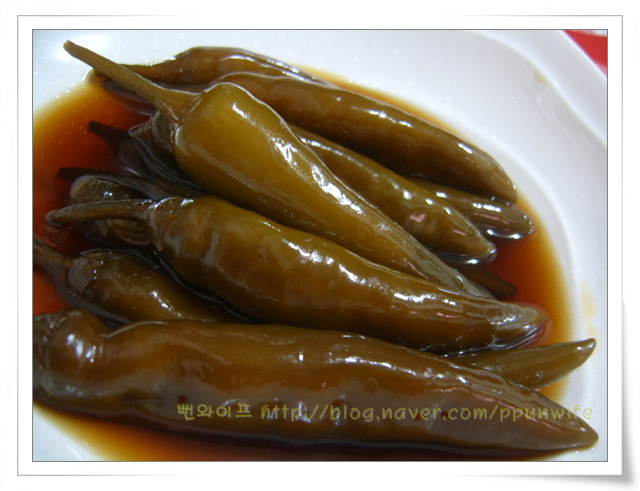
This recipe introduces two methods: fermenting Cheongyang chili pepper (hot green chili) in salt water for ten days before pouring soy sauce brine over them, and pickling green chili pepper directly in a rich soy sauce brine. Piercing the peppers beforehand helps the seasoning penetrate evenly and keeps juice from splattering when eating. It is great for enjoying spicy flavors and makes a perfect side dish for rice when you have no appetite, or as an accompaniment to meat wraps and savory pancakes.
- Servings
- about 10–12 servings
- Difficulty
- Medium
- Spiciness
- Spicy
Ingredients
Ingredients
- Cheongyang chili pepper (hot green chili)55, 450 g
- Salt1 cup
- Water10 cups
- Green chili pepper50
Soy sauce brine
- Regular soy sauce (jin-ganjang)3 cups
- Water3 cups
- Sugar1 cup
- Vinegar1 cup
- Regular soy sauce (jin-ganjang)4 cups
- Water2 cups
- Sugar1 cup
- Vinegar1 cup
Seasoning for seasoned fermented chili peppers
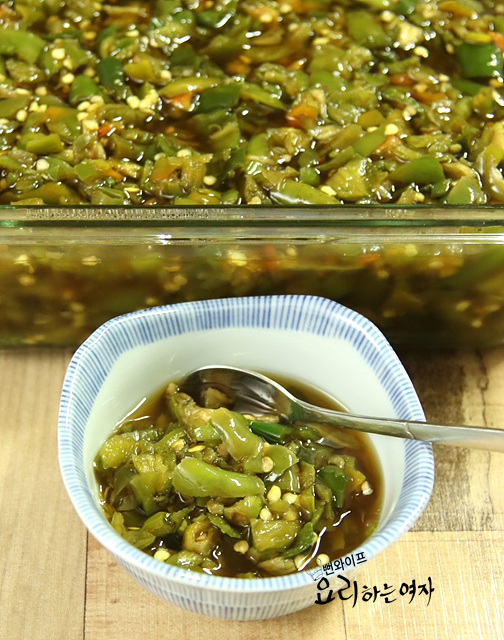
- Soy sauce-pickled chili peppers4
- Gochugaru (Korean chili flakes)1 tbsp
- Soy sauce broth1 tbsp
- Minced garlic1 tsp
- Toasted sesame oil1 tsp
- Toasted sesame seedsa little
- Piercing 3 to 4 holes with a toothpick or needle, or pricking once with a fork, helps the flavor soak in well and prevents the soy sauce brine from squirting when you eat.
Steps
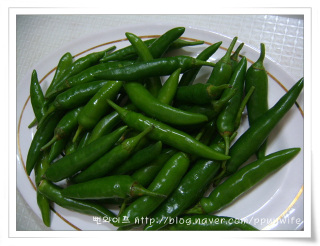
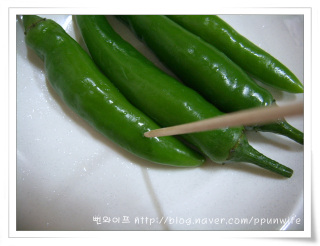
1. Use 55 medium-sized Cheongyang chili peppers. Wash them thoroughly and dry well with a clean kitchen cloth.
2. Prick 3 to 4 holes with a toothpick or needle. You can also just prick them once with a fork.
Doing this helps the flavor soak in well and keeps the soy sauce brine from squirting when you eat.
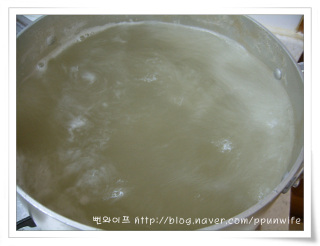
3. Combine 1 cup salt and 10 cups water, and bring to a rolling boil. For fermenting, the salt-to-water ratio just needs to be salt:water = 1:10.
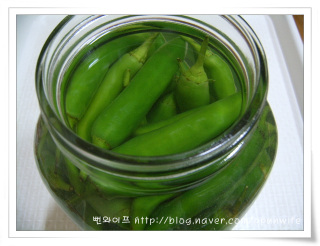
4. Put the chili peppers in a well-sterilized glass jar and pour the boiling water directly over them.
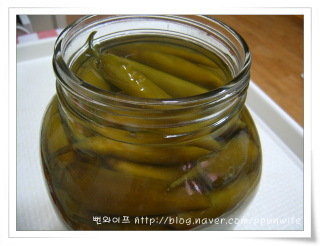
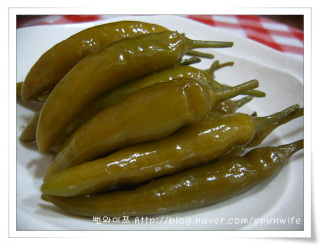
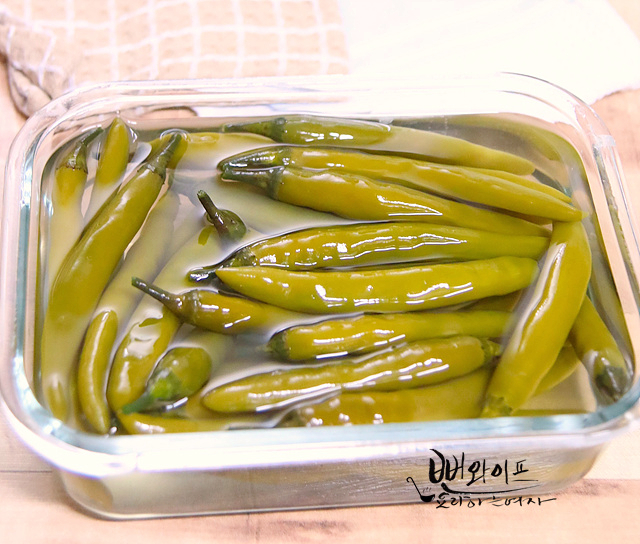
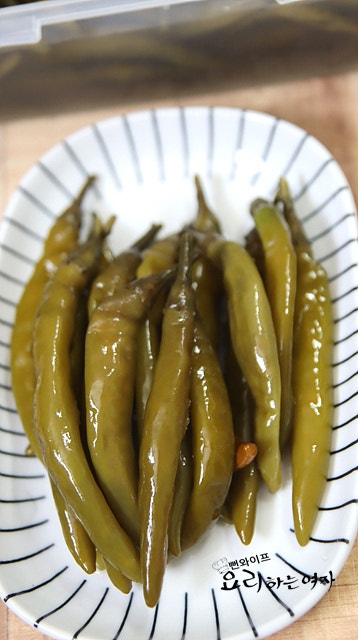
5. Once the water cools, close the lid and let ferment at room temperature for ten days. Once they reach the right color as shown, you can stop fermenting.
6. Making chili kimchi using these peppers is truly delicious. (I have linked it with the post below.)
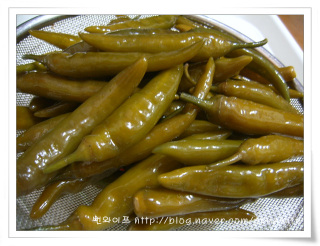
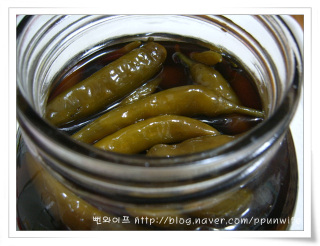
7. Remove the peppers from the salt water and discard the salt water.
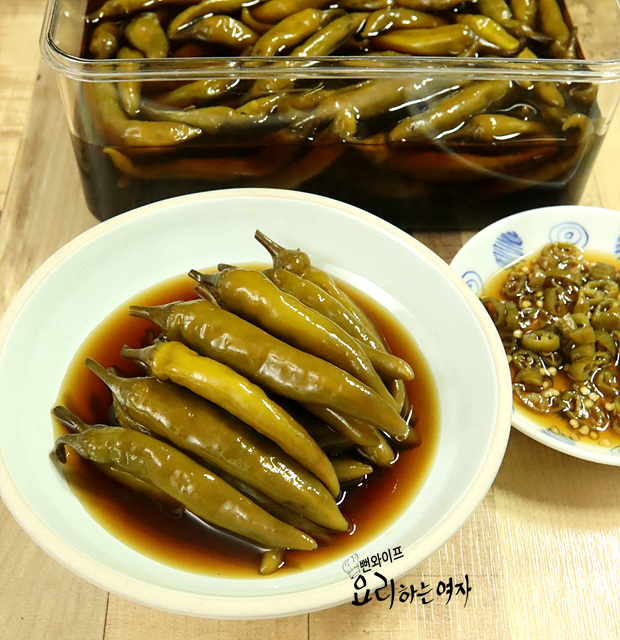
8. Combine 3 cups regular soy sauce, 3 cups water, 1 cup sugar, and 1 cup vinegar, bring to a rolling boil, let cool, and then pour into the glass jar with the chili peppers.
Repeat this process 2 more times every 5 days, and they are ready to eat after 10 days.
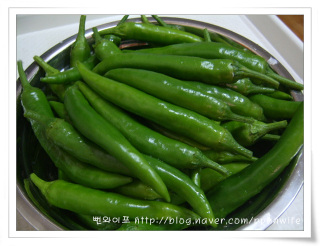
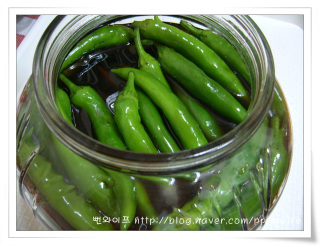
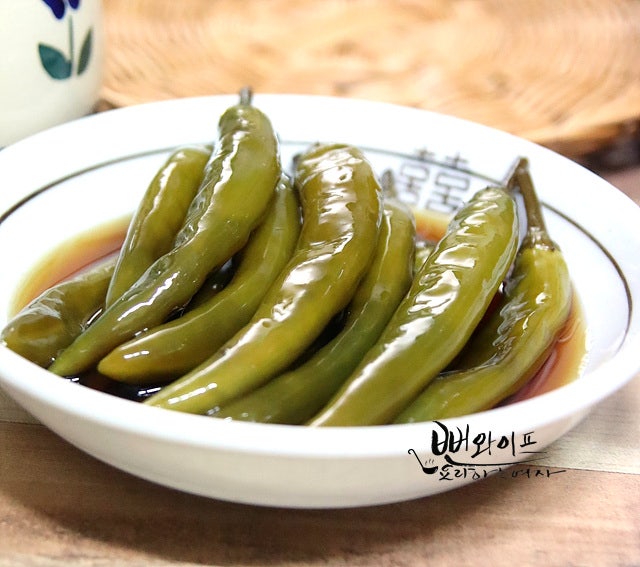
1. For pickling directly in soy sauce liquid without fermenting in salt water, I used mild green chili pepper.
2. Prepare the peppers using the same method as above and place them in a glass jar. Then bring 4 cups regular soy sauce (jin-ganjang), 2 cups water, 1 cup sugar, and vinegar cup to a rolling boil together. Cool the soy sauce liquid, pour it into the jar with the peppers, and similarly repeat the process of boiling and pouring the soy sauce liquid 2 times every 5 days. You can eat them after half a month.
Because this version skips the salt-fermenting process, I made the concentration of the soy sauce slightly richer.
After eating all the peppers, reuse the leftover soy sauce liquid to make pickles with peppers, onions, or garlic scapes.
 Ppunwife's tips
- After eating all the chili peppers, reuse the leftover soy sauce brine to make pickles with chili peppers, onions, garlic scapes, and more.
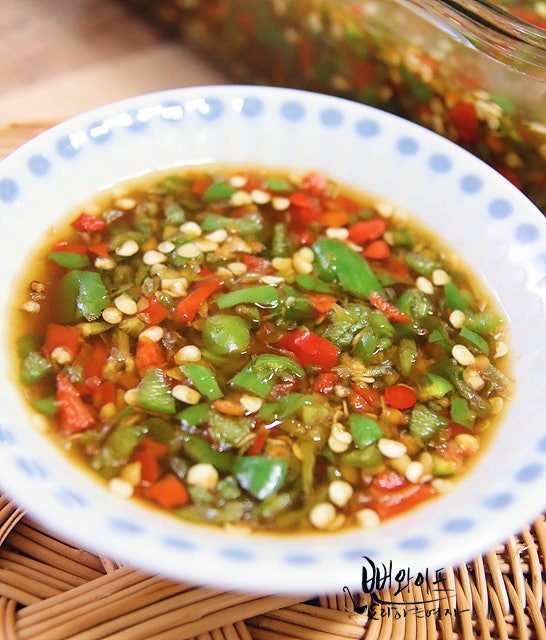
- Thinly slice or finely mince the well-seasoned Cheongyang chili peppers and serve them with the soy sauce brine as a dipping sauce for savory pancakes for a great spicy kick.
FAQ
Why should you prick holes in the chili peppers with a needle or toothpick?
It helps the pickling brine soak deep inside and prevents the soy sauce brine inside the pepper from squirting out when you take a bite.
How can you use the leftover soy sauce brine after eating the chili peppers?
Instead of throwing it away, boil it again and reuse it to pickle other vegetables like chili peppers, onions, or garlic scapes.
What dishes go well with finished pickled chili peppers?
Slice them thinly to use as a dipping sauce for savory pancakes, serve them with meat wraps, or toss them in seasoning to enjoy as a flavorful rice side dish.