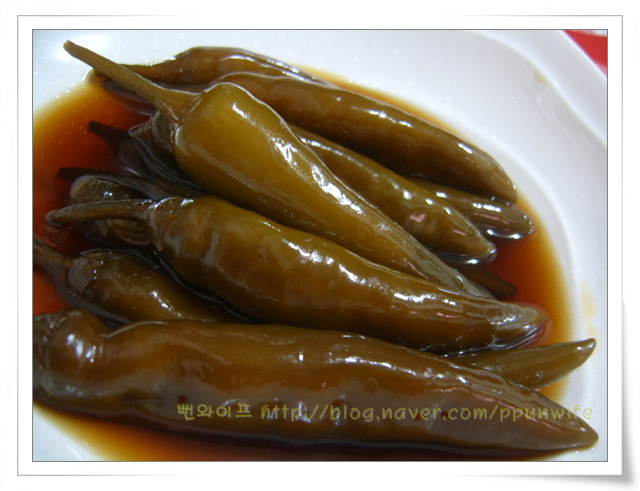
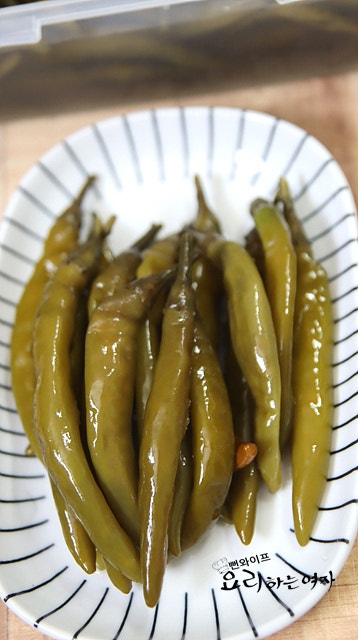
Quick-Pickled Chopped Gochu Jangajji (Pickled Chili Peppers)
A pungent side dish of roughly ground Cheongyang chili peppers pickled in a boiled soy sauce brine.
Translated from Korean by AI and not yet checked by a native speaker. Amounts and numbers are taken directly from the original recipe. Read the Korean original →
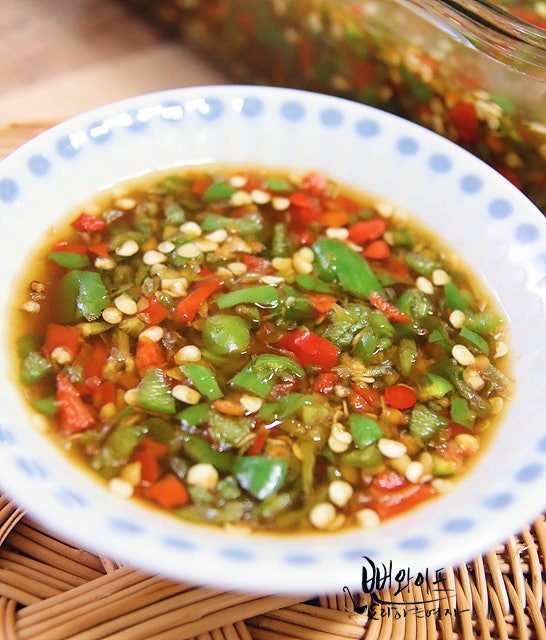
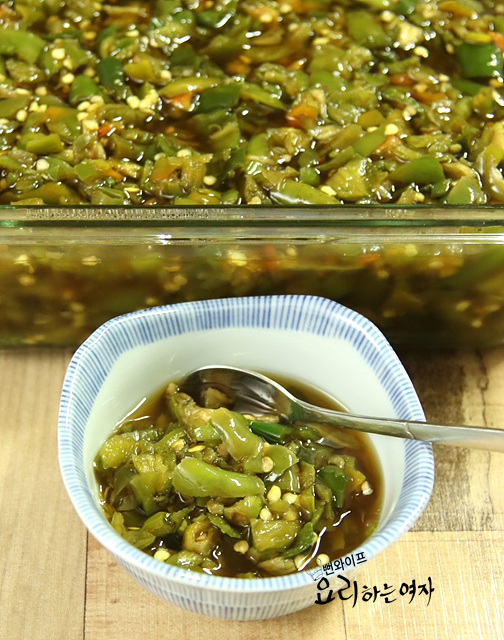
Coarsely chopping the Cheongyang chili peppers uses less pickling brine and lets the flavor soak in much faster. Pouring the hot boiled brine directly over the peppers and adding soju helps preserve them longer. Tangy and spicy, it is a great side dish for dipping Korean savory pancakes or wrapping with grilled meat.
- Servings
- about 10–12 servings
- Difficulty
- Easy
- Spiciness
- Very spicy
Ingredients
Ingredients
- Cheongyang chili pepper (hot green chili)800 g (after cleaning)
Soy sauce brine
- Regular soy sauce (jin-ganjang) (or brewed soy sauce (yangjo-ganjang))1 1/2 cups
- Water2 cups
- Sugar1 cup
- Vinegar1 1/2 cups
- Salt1/2 tbsp
- Soju1/3 cup
- Both the green and red ones are Cheongyang chili peppers. Because the weather is hot, the mixed ones that are starting to ripen are about 30% cheaper, making them great for pickles.
Steps
Prepare the ingredients
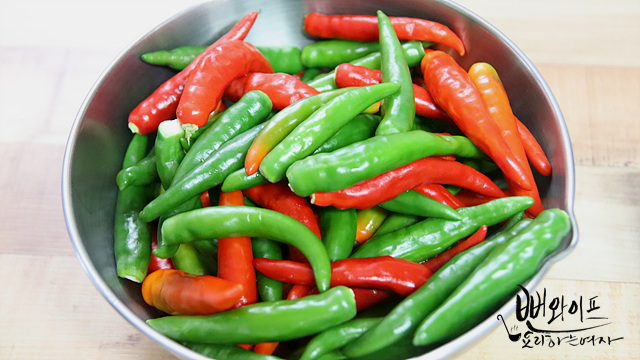
Both the green and red ones are Cheongyang chili peppers.
Because the weather is hot, the peppers are already ripening, and mixed ones like this are about 30% cheaper, so I buy them in bulk to make seasoned pepper relish or pickles and keep plenty stocked up.
Prepare the peppers
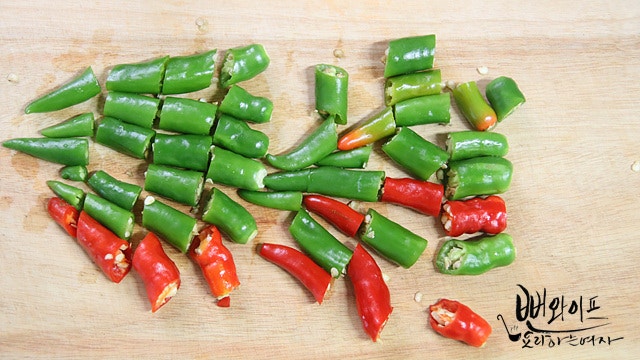
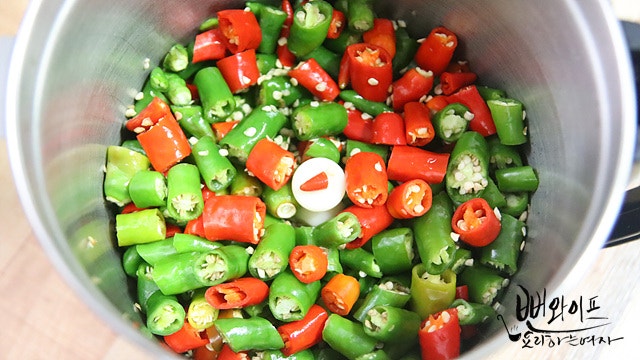
Remove the stems, wash the peppers, and roughly chop them so they grind easily in the food processor.
Put the peppers into the food processor and...
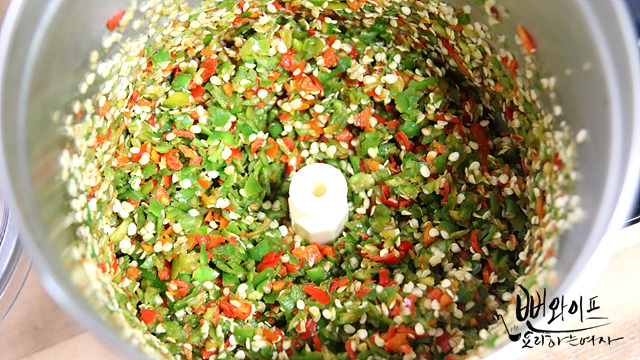
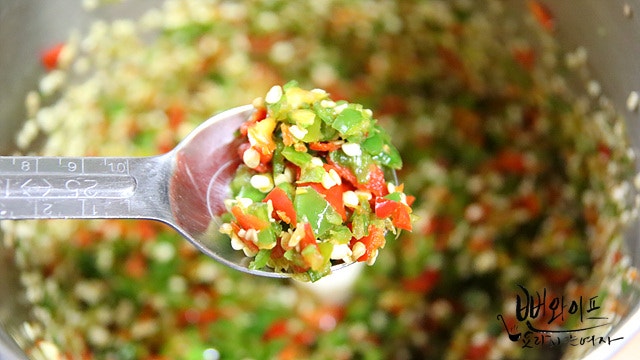
Grind them not too finely. The size used for seasoned chili pepper relish is just right.
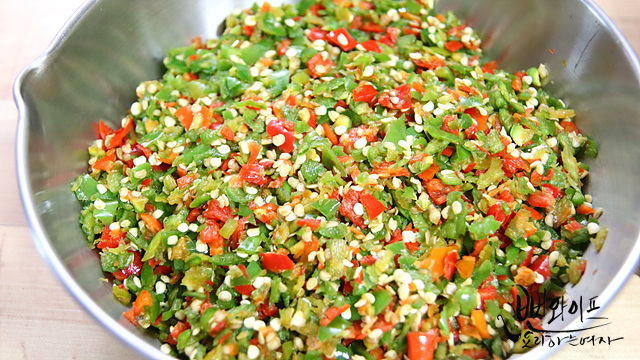
Since you need to pour in the hot soy sauce brine, transfer them to a stainless steel bowl or glass container.
Pour the soy sauce brine
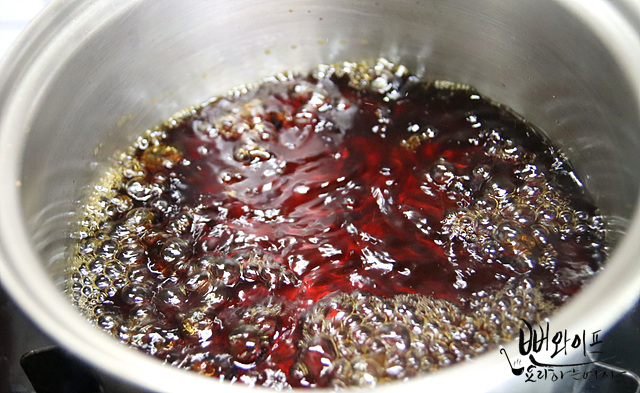
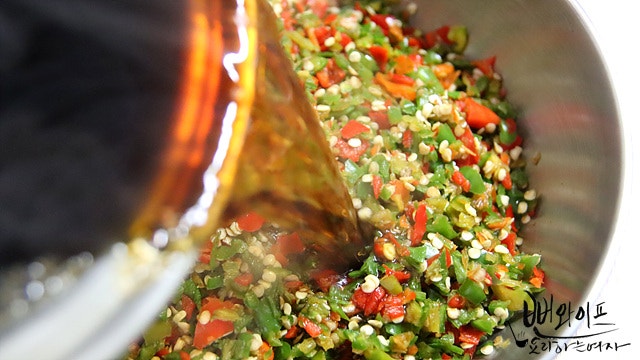
In a pot, add 1 1/2 cups regular soy sauce (jin-ganjang), 2 cups water, 1 cup sugar, 1 1/2 cups vinegar, and 1/2 tbsp salt, then bring to a rolling boil.
Pour the boiling soy sauce brine right over the peppers in the bowl.
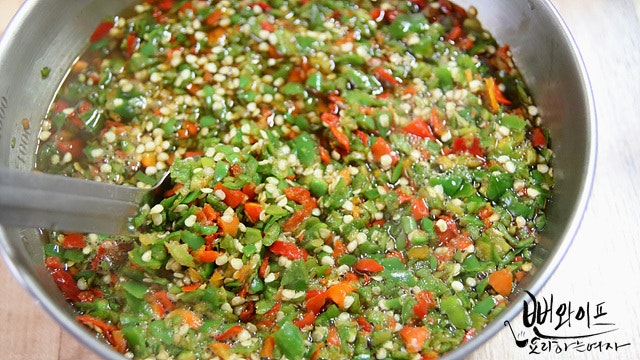
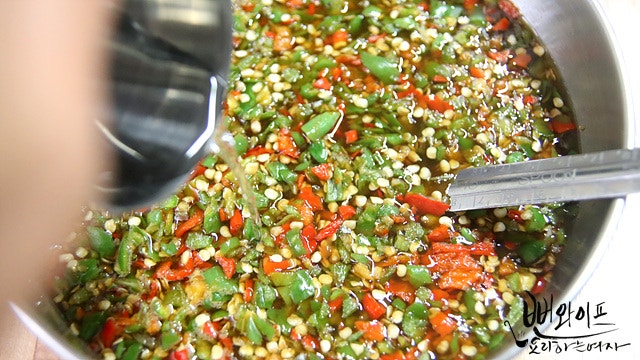
Stir evenly and let cool completely.
Once fully cooled, pour in 1/3 cup soju, mix, and transfer to a storage container.
Adding soju acts as a preservative, so you do not have to reboil the soy sauce brine later on.
Finish
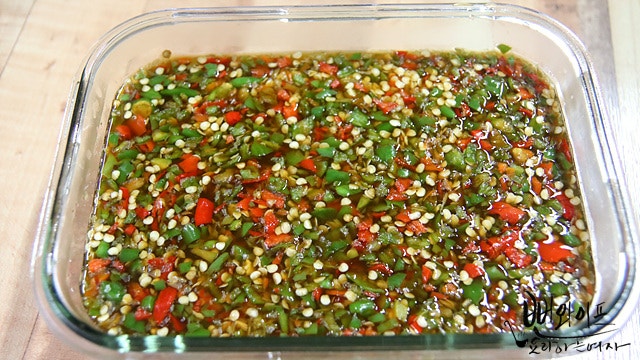
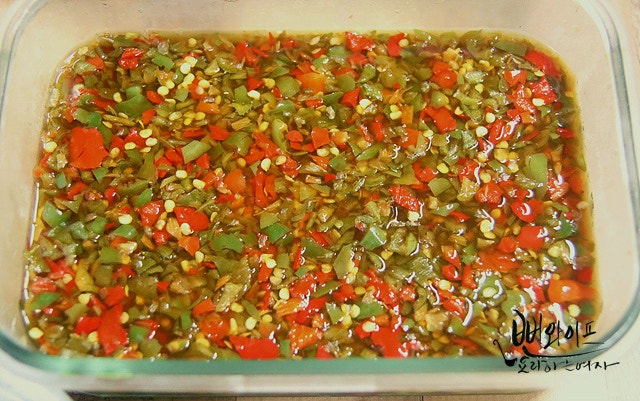
These days, when the temperature is high, leave it at room temperature for 2 to 3 hours before moving it to the refrigerator, and after a day or two, the soy color will soak in and it will be properly seasoned.
During cooler seasons, let it ferment at room temperature for a day or two before putting it in the refrigerator.
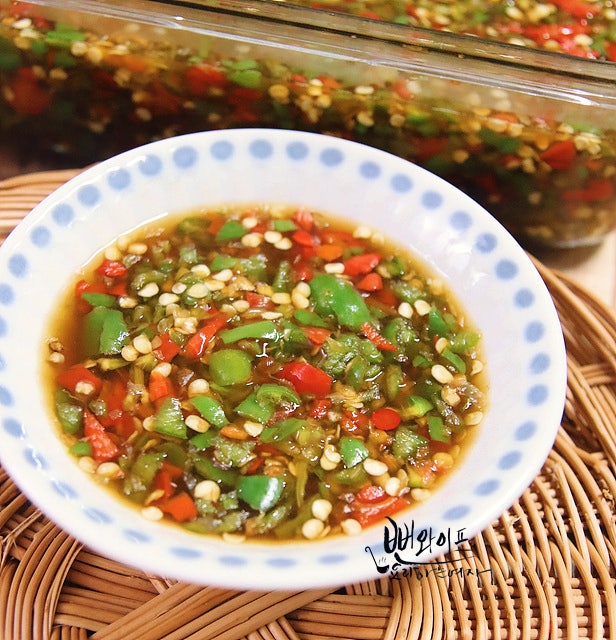
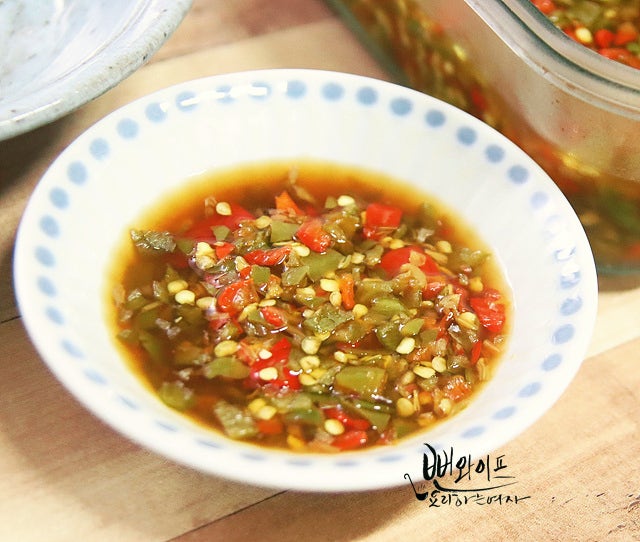
You can start eating it within a few days of pickling.
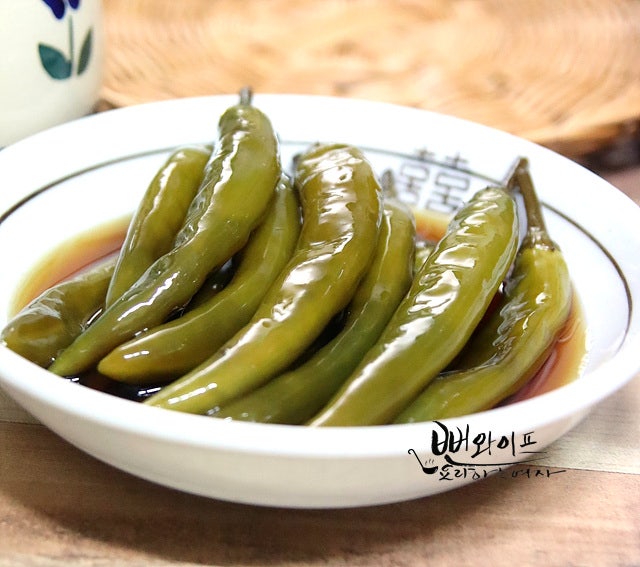
It tastes like a spicy vinegar soy sauce, so it is delicious to fry up some Korean savory pancakes and pick up the Cheongyang chili peppers along with them.
It is also very good spooned in small amounts into lettuce wraps with grilled meat.
Related post on the blog (Korean)blog.naver.com/ppunwife/223576340373
 Ppunwife's tips
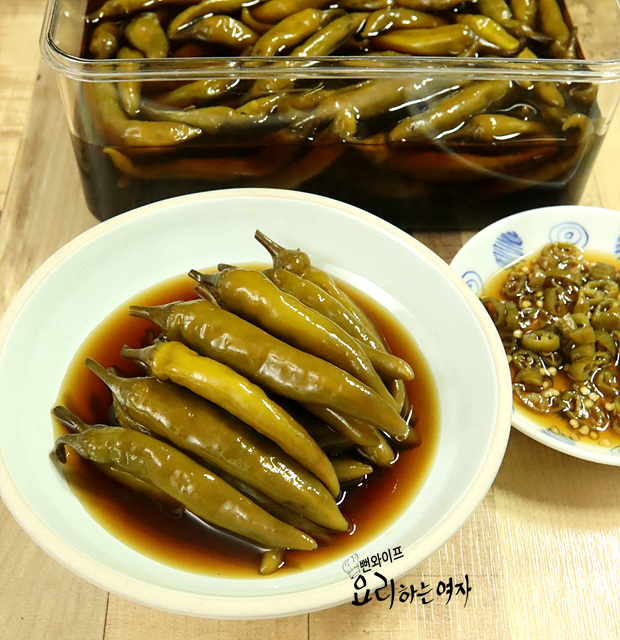
- Chopping the peppers to make pickles uses less than half the soy sauce brine compared to pickling them whole, seasons them quickly, and makes them easy to eat, so it is a practical method in many ways.
- Since you need to pour in the hot soy sauce brine, transfer them to a stainless steel bowl or glass container.
- Adding soju acts as a preservative, so you do not have to reboil the soy sauce brine later on.
FAQ
Why grind the peppers instead of pickling them whole?
It significantly reduces the amount of soy sauce brine needed, allows the flavor to soak into the peppers quickly, and makes them convenient to eat.
Why add soju to the pickling liquid?
Soju provides a preservative effect, saving you the hassle of having to reboil and pour the soy sauce brine again later.
When can it be refrigerated and eaten after making?
In warm weather, leave it at room temperature for 2 to 3 hours before transferring to the refrigerator, and you can eat it as soon as the flavor has soaked in after a day or two.
What dishes go well with this?
It pairs well as a dipping sauce alternative for greasy Korean savory pancakes, or spooned in small amounts into meat wraps.