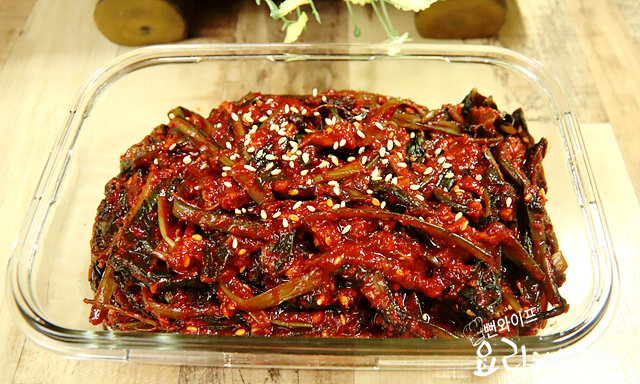
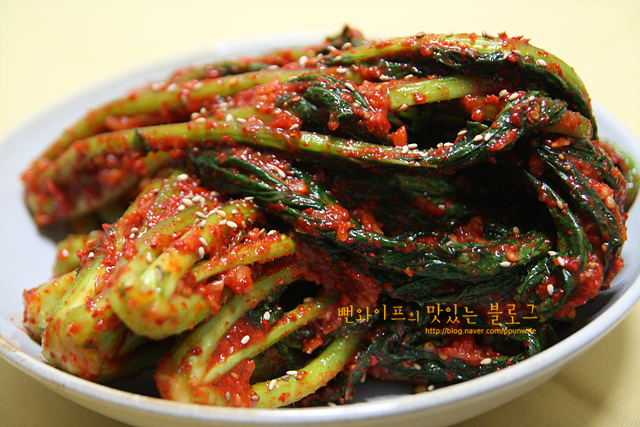
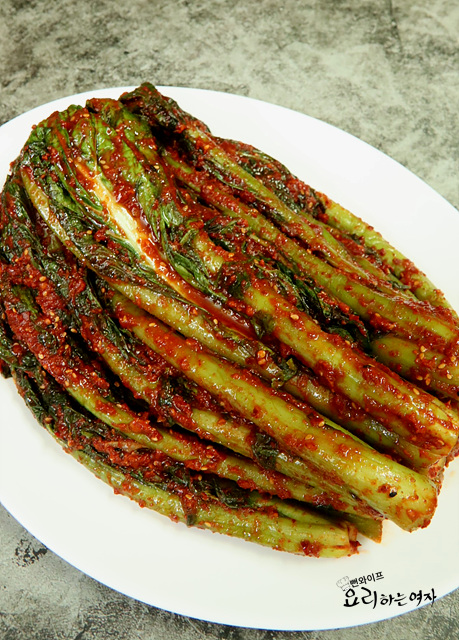
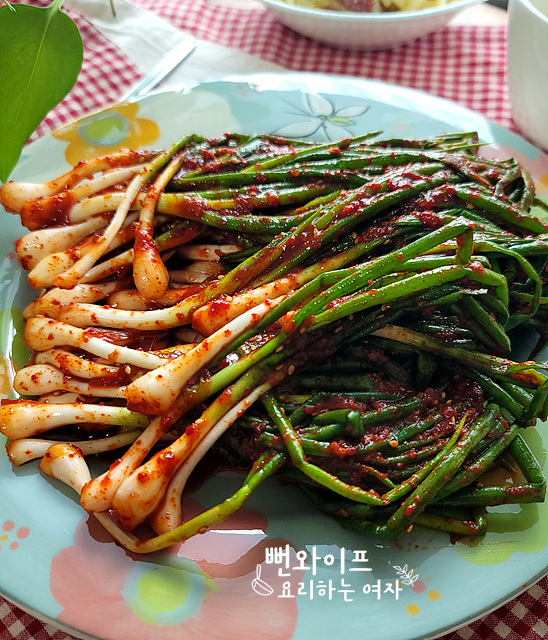
Godeulppaegi Kimchi (Bitter Lettuce Kimchi)
A hearty side dish made of bitter lettuce fermented in brine to tame its bitterness and tossed in a spicy seasoning.
Translated from Korean by AI and not yet checked by a native speaker. Amounts and numbers are taken directly from the original recipe. Read the Korean original →
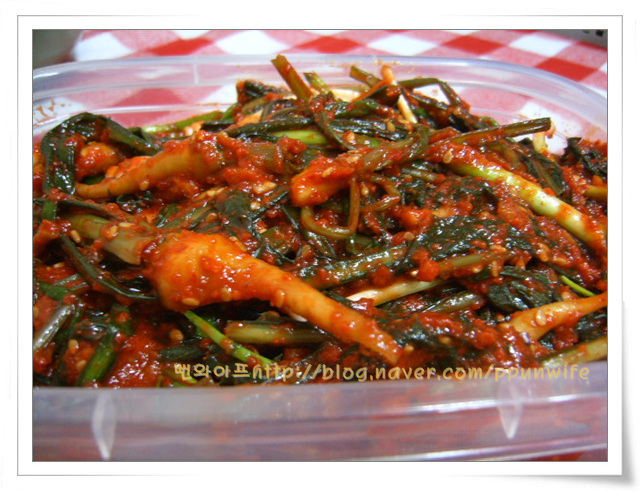
This autumn seasonal godeulppaegi kimchi is known for its uniquely charming bitter flavor. Fermenting it in brine for two days while changing the salt water once halfway through draws out just the right amount of bitterness. If you plan to store it for a long time, using rich anchovy broth instead of glutinous rice paste will help it ripen slowly.
- Servings
- about 10–12 servings
- Difficulty
- Hard
- Spiciness
- Spicy
Ingredients
Ingredients
- Godeulppaegi (crepidiastrum)1 kg
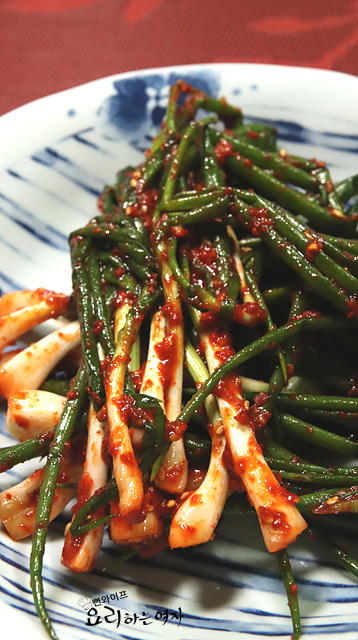
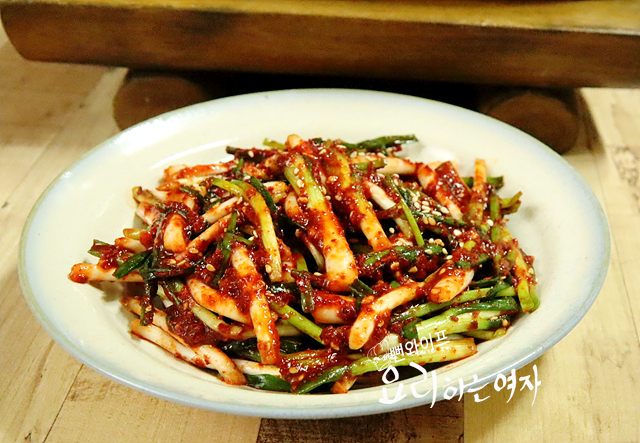
- Scallions (jjokpa) (or thin scallions)2 handfuls, 150 g
Seasoning
- Gochugaru (Korean chili flakes)2 cups
- Dried anchovies (or sand lance)1/2 cup (fish sauce)
- Minced garlic1/2 cup
- Sugar2 tbsp
- Minced ginger1 knob (thumb-sized)
- Toasted sesame seeds
- Glutinous rice paste3 cups
Glutinous rice paste
- Water3 cups
- Glutinous rice flour1/2 cup
Brine
- Coarse sea salt2 cups
- 20 cups20 cups
- If you plan to store and eat this over a long time, using rich anchovy broth instead of glutinous rice paste will keep it from turning sour too quickly.
- This is one large bundle of godeulppaegi. If they are tied in small bunches, using about two bundles should be enough.
- The trimmed weight is 1 kg; if you do not have a kitchen scale, bathroom scales usually measure in 100 g increments, so you can weigh it roughly there.
- Instead of scallions, it is also delicious to add fermented chili peppers or soaked dried squid shredded thinly.
- Sand lance fish sauce, anchovy fish sauce, or hairtail fish sauce all work well, or you can season it with salted fermented shrimp alone to suit your taste.
Steps
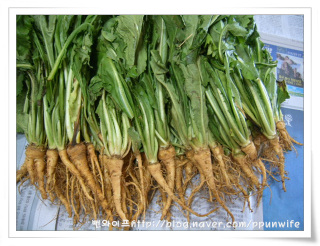
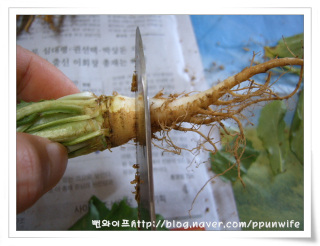
1. This is one large bundle of godeulppaegi. If they are tied in small bunches, using about two bundles should be enough.
It costs about 3-4 thousand won per bundle, but there is plenty of it, so it is not expensive.
2. Remove any damaged leaves and scrape the fine root hairs off with the tip of a knife.
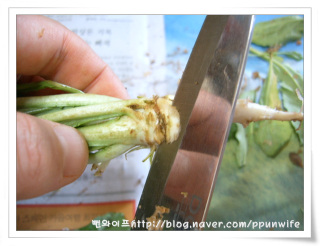
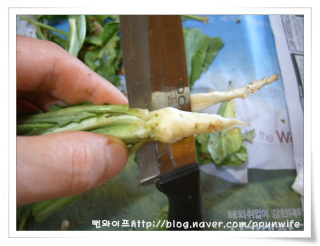
3. Use a knife to lightly trim away any dirty spots between the stem and the root.
4. Split thick roots in half. Trimming godeulppaegi takes a lot of time.
Trim them together with your husband after he comes home from work and finishes dinner.
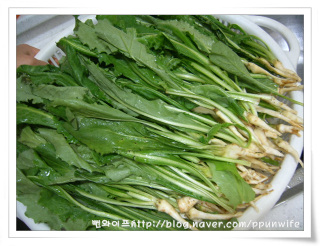
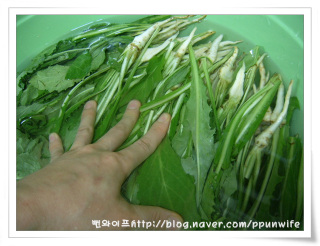
5. Soak in water for about 10 minutes so that dirt and debris on the greens dissolve into the water,
then wash thoroughly under running water and roughly drain off the excess moisture.
(The trimmed weight is 1 kg; if you do not have a kitchen scale, bathroom scales usually measure in 100 g increments, so you can weigh it roughly there.)
6. Dissolve 2 cups of coarse sea salt into 20 cups of water.
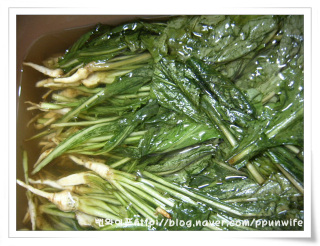
Once the salt dissolves, add the trimmed godeulppaegi, press it down with a heavy plate or stone so it does not float, and let it ferment at room temperature.
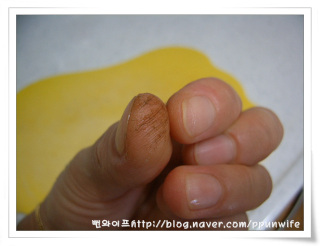
7. These are my hands after trimming. Whenever I clean greens, they always end up a mess like this.
I want pretty hands too.
8. Ferment in the brine for two days while drawing out the bitterness at the same time.
After a day, make a fresh batch of brine in the same ratio and replace it.
If you continue fermenting it in the initial brine, it stays in the water that already has bitter juices drawn into it, so the bitterness will not extract well.
Some people soak it in salt water for more than 1 week, but soaking it for too long will make it tough,
and fermenting for 2 days leaves it with a pleasant level of bitterness to eat.
(If you enjoy the bitterness of godeulppaegi, you can also salt it in concentrated brine for about 4-5 hours and make kimchi right away.)
10
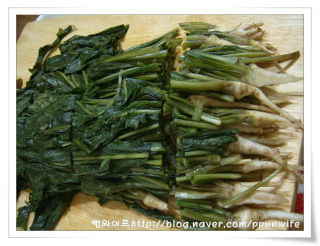
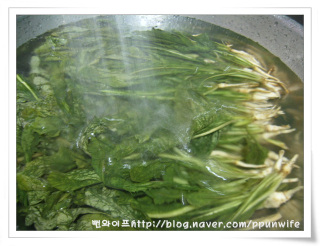
9. After fermenting, rinse several times in water and soak for about 30 minutes to draw out some of the saltiness, then lift out.
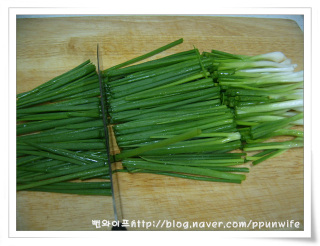
10. I cut it into 3 equal pieces for bite-sized lengths, but if you prefer to eat it long, you can leave it as is.
11
12
11. Cut two handfuls of scallions into the same length.
(Instead of scallions, it is also delicious to add fermented chili peppers or soaked dried squid shredded thinly.)
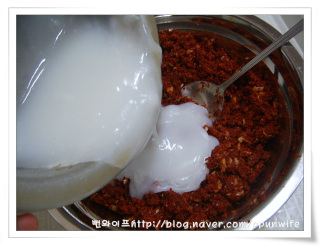
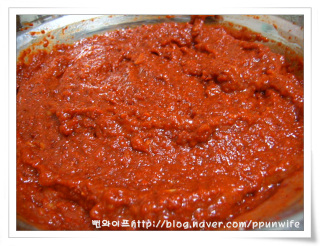
12. Combine the seasoning ingredients with the cooled glutinous rice paste and let sit for at least 30 minutes so the flavors meld.
Depending on the saltiness of the godeulppaegi, you may need to adjust the amount of fish sauce, so add only half of the suggested fish sauce first,
and after tossing with the seasoning, add the rest if it tastes bland or finish with salt.
(Sand lance fish sauce, anchovy fish sauce, or hairtail fish sauce all work well, or you can season it with salted fermented shrimp alone to suit your taste.
If you plan to store and eat this throughout the winter, using rich anchovy broth instead of glutinous rice paste will keep it from turning sour too quickly.)
13
14
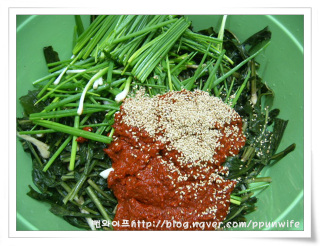
13. Making the seasoning in advance gives it a prettier color and helps the flavors meld, making the seasoning well-balanced.
14. In a large bowl, add the godeulppaegi, scallions, and seasoning, sprinkle with toasted sesame seeds, and gently toss together.
 Ppunwife's tips
- If you continue fermenting it in the initial brine, it stays in the water that already has bitter juices drawn into it, so the bitterness will not extract well.
- Soaking it for too long will make it tough, and fermenting for 2 days leaves it with a pleasant level of bitterness to eat.
- Depending on the saltiness of the godeulppaegi, you may need to adjust the amount of fish sauce, so add only half of the suggested fish sauce first, and after tossing with the seasoning, add the rest if it tastes bland or finish with salt.
- Making the seasoning in advance gives it a prettier color and helps the flavors meld, making the seasoning well-balanced.
FAQ
Is there a way to remove just the right amount of bitterness from godeulppaegi?
Submerge and ferment it in brine for about two days, and replace it with a fresh batch of brine in the same ratio after a day to draw out the bitter juices effectively.
How can I store the kimchi so it doesn't turn sour too quickly?
When making the seasoning, using richly brewed anchovy broth instead of glutinous rice paste will keep it from turning sour easily.
Are there other secondary ingredients I can add instead of scallions?
Instead of scallions, adding fermented chili peppers or thinly shredded soaked dried squid also pairs very well.
How should I adjust the seasoning when tossing?
It can become too salty depending on the salt level of the brined godeulppaegi, so add only half the fish sauce first, toss, and then adjust to taste.