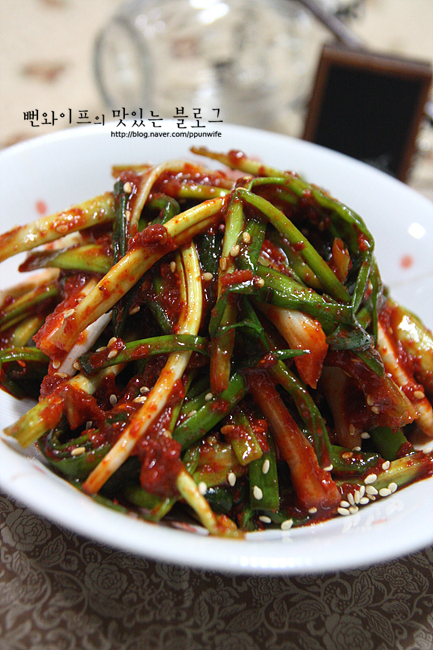
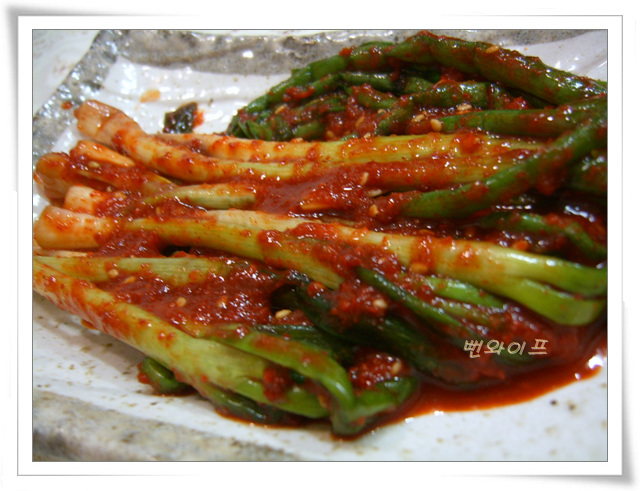
Fall Jjokpa Kimchi (Green Onion Kimchi) with Rich Broth
A scallion kimchi made with rich anchovy broth instead of glutinous rice paste for a clean, vibrant savory flavor.
Translated from Korean by AI and not yet checked by a native speaker. Amounts and numbers are taken directly from the original recipe. Read the Korean original →
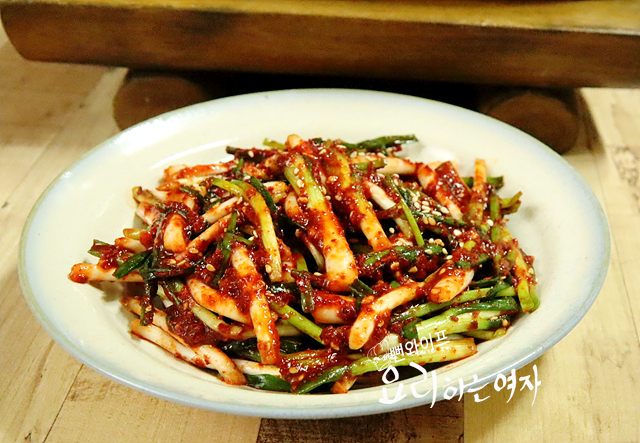
This fall green onion kimchi skips the hassle of making glutinous rice paste and uses a rich, deeply simmered anchovy broth for hearty savory flavor. Cut the scallions into bite-sized pieces, salt the firmer white root ends in fish sauce first, and toss the seasonings lightly to keep the scallions crisp. It is a wonderful side dish you can store straight in the fridge after tossing.
- Servings
- about 10–12 servings
- Difficulty
- Medium
- Spiciness
- Spicy
Ingredients
Ingredients
- Scallions (jjokpa)1.5 kg
- Anchovy broth1 1/2 cups
Seasoning
- Gochugaru (Korean chili flakes)2 cups
- Sand lance fish sauce (or dried anchovies)1 cup
- Corn syrup (mulyeot) (or green plum syrup (maesil-cheong))3 tbsp
- Sugar1 tbsp
- Minced garlic2 tbsp
- Toasted sesame seeds2 tbsp
- It is easier to trim off all the root ends with a knife at once before peeling; remove any messy outer skins one by one, pinch off soft or yellowed stems, and trim withered tips.
- Even if you do not have scallions, making this with young green onions is tender and delicious.
Steps
Prepare the ingredients
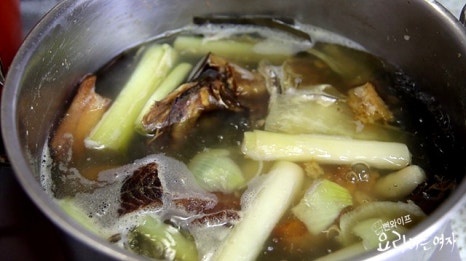
For green onion kimchi or garlic chive kimchi that I eat fresh without fermenting, I use broth instead of glutinous rice paste.
I add plenty of dried seafood, onion, and large green onion from around the house and simmer gently for a long time, using a rich broth just like making broth for the winter kimchi-making season.
Trim the scallions
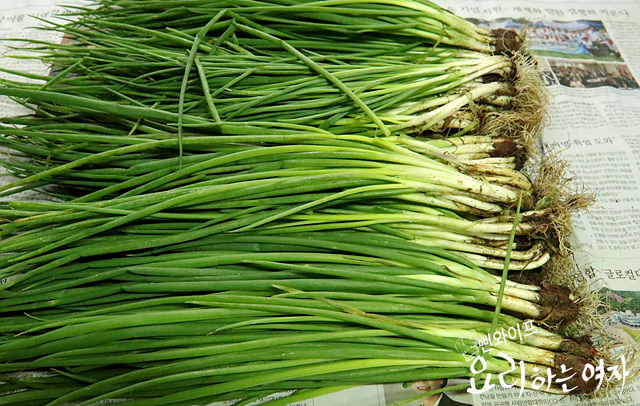
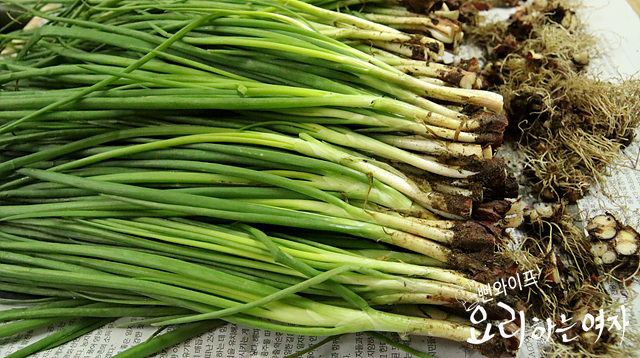
Usually 1 bundle of scallions is 1 kg. The scallions I bought at the market happened to be 1.5 kg.
If you check the weight carefully when making this, your seasoning will not run short or leave leftovers, and the seasoning will be just right.
It is easier to cut off the root ends all at once with a knife and peel them.
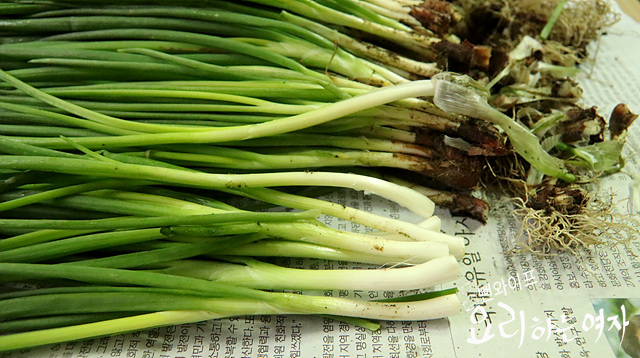
Peel off messy skins one by one, pinch off soft or yellowed stems, and trim withered tips.
Wash the scallions
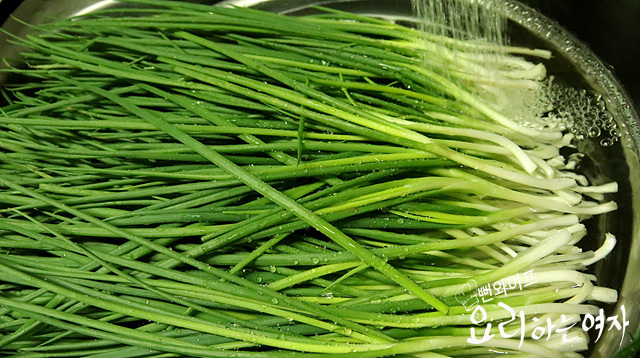
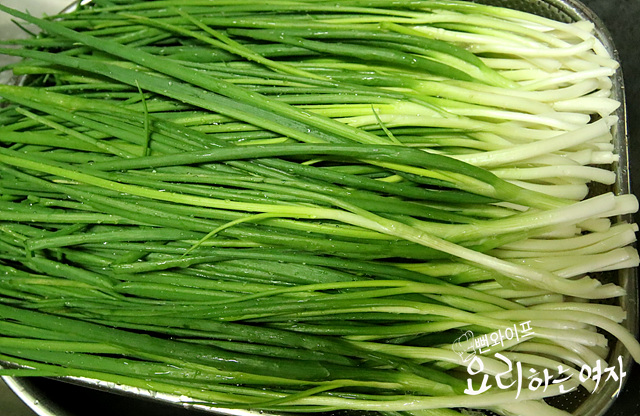
Because the scallions had a lot of dirt on them, soak them in water so dry dirt and debris fall away, then rinse them under running water.
Drain them well in a colander.
Salt the scallions
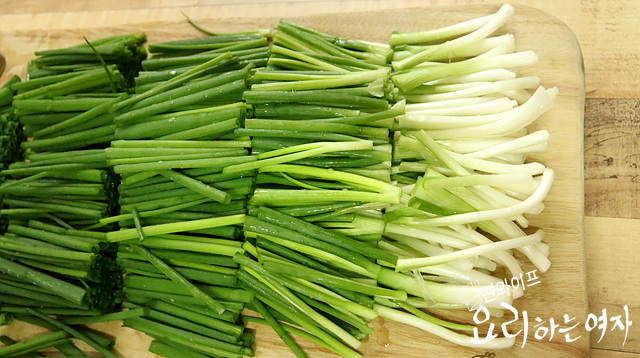
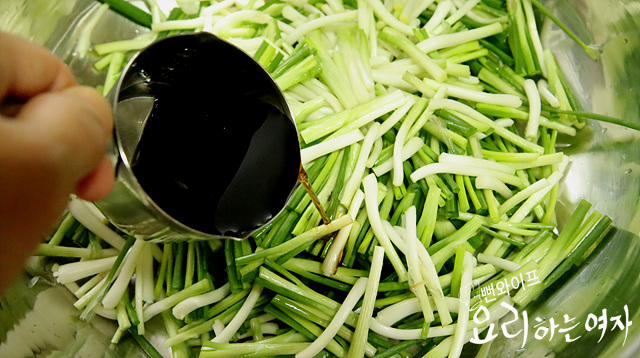
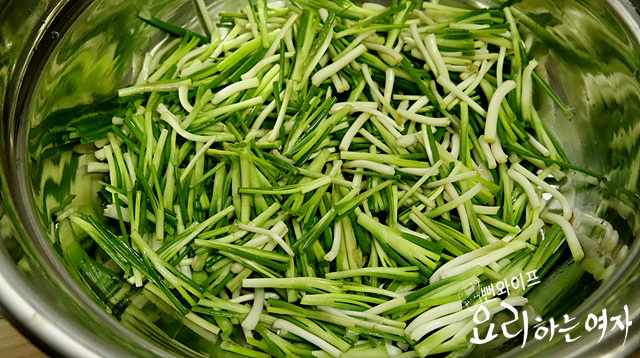
Cut them to make them easy to pick up and eat before salting.
Cut the scallions into lengths of 4 to 5 cm, and salt only the firm white root sections first.
Pour in 1/2 cup of sand lance fish sauce, mix evenly, and let salt for 30 minutes.
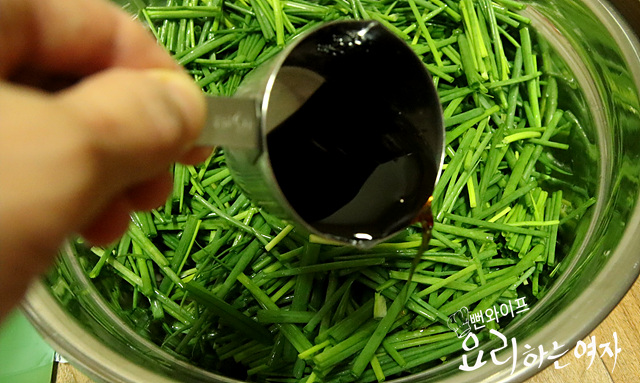
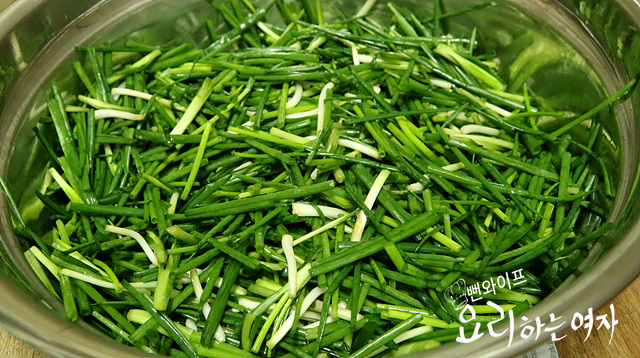
Once the root ends are somewhat salted, add all of the remaining green parts, pour in 1/2 cup of sand lance fish sauce, and mix evenly.
We will season right away without letting them sit to salt.
Add seasoning
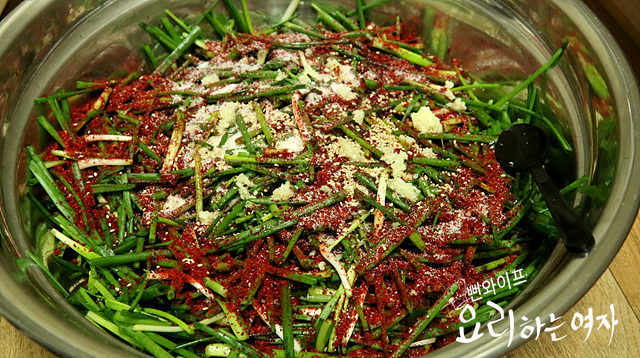
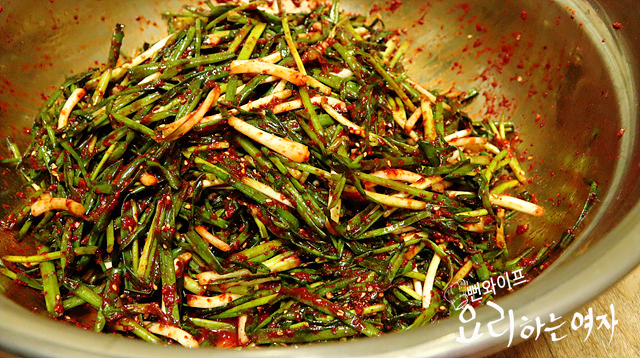
Sprinkle 1+1/2 cups of anchovy broth, 2 cups of gochugaru, 3 tbsp of corn syrup (= green plum syrup), 1 tbsp of sugar, 2 tbsp of minced garlic, and 2 tbsp of toasted sesame seeds evenly.
Toss lightly by lifting and shaking rather than kneading to mix evenly.
If you mix the seasoning paste in advance, it clumps up and is hard to spread evenly, and handling the scallions too much can bruise them, so doing it this way works best.
You can easily make chopped garlic chive kimchi the same way.
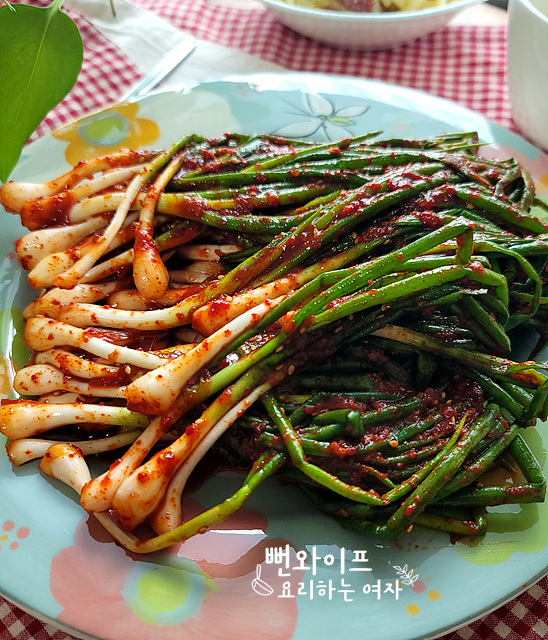
Once seasoned and slightly wilted, transfer to a container and place straight in the refrigerator to enjoy.
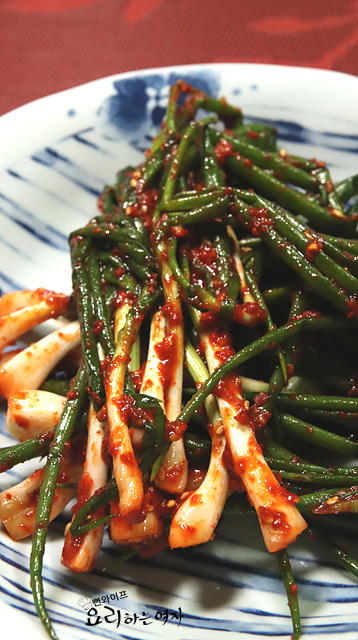
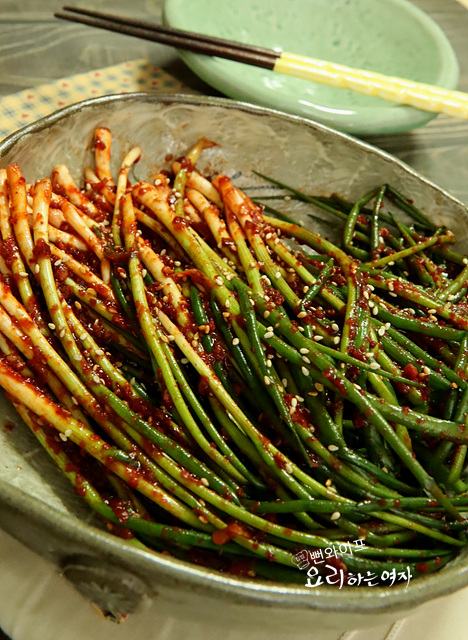
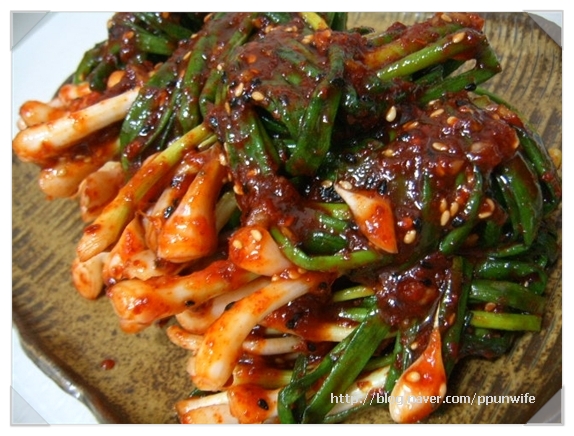
Complete
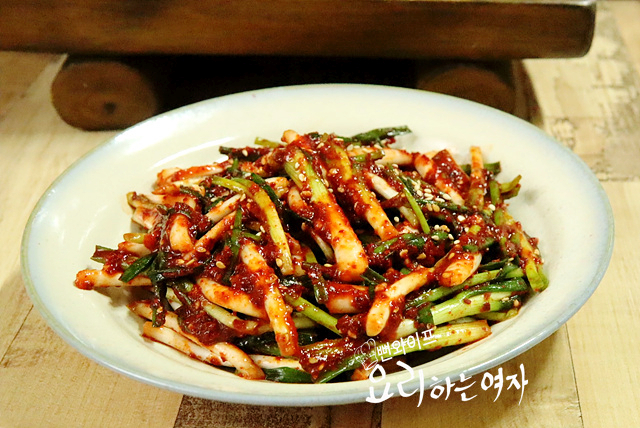
Making kimchi with glutinous rice paste gives a soft, mild seasoning flavor.
Making it with broth gives a rich, savory depth.
Try making this fall green onion kimchi to suit your own or your family's taste and revive your appetite.
 Ppunwife's tips
- It is easier to cut off the root ends all at once with a knife and peel them.
- If you mix the seasoning paste in advance, it clumps up and is hard to spread evenly, and handling the scallions too much can bruise them, so doing it this way works best.
FAQ
Why use anchovy broth instead of glutinous rice paste?
Using glutinous rice paste gives a soft, mild flavor, but using a rich broth lets you enjoy a vibrant taste and deep umami the entire time you eat the kimchi.
Why toss the seasonings directly instead of pre-mixing them?
Pre-mixed paste can clump and be difficult to distribute evenly, and excessive handling easily bruises the scallions, so sprinkling the ingredients and lightly tossing them is best.
Should the leaves and roots be salted separately?
Salting the firm white roots in fish sauce first for 30 minutes before adding the tender green leaves ensures everything is seasoned evenly.
Can young green onions be used instead of scallions?
When you do not have scallions, using tender young green onions with the same seasoning method turns out soft and delicious.