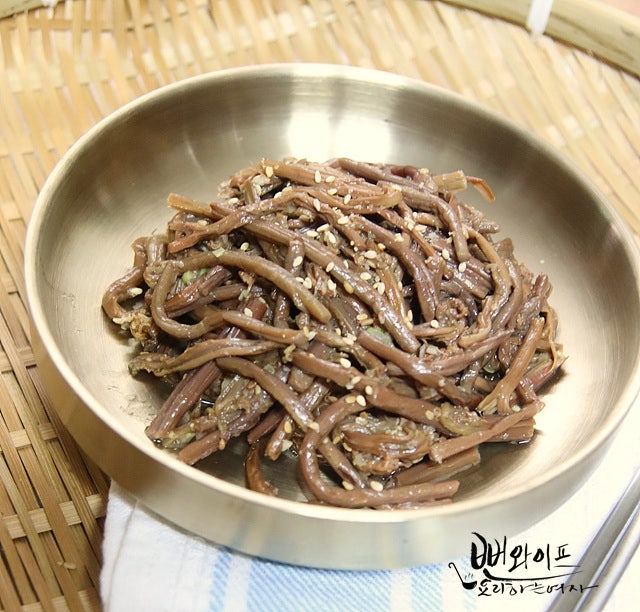
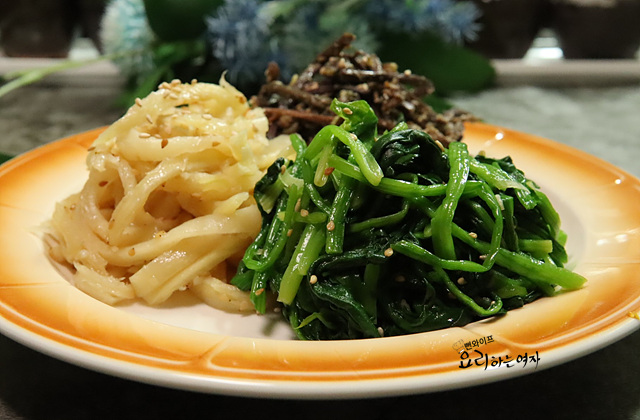
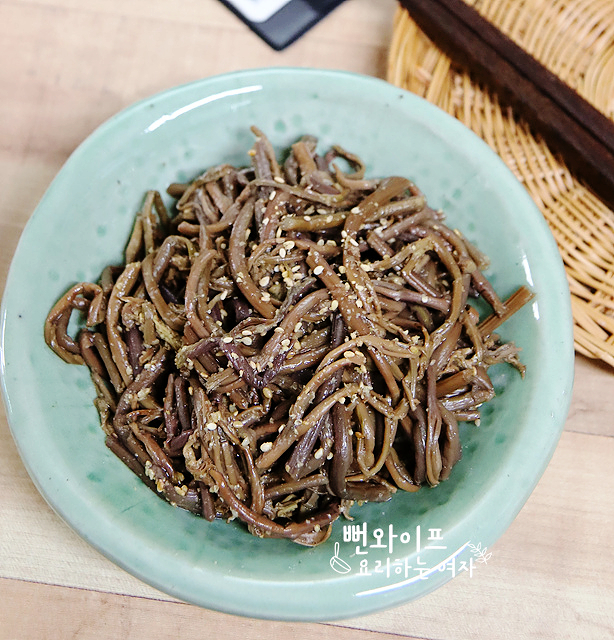
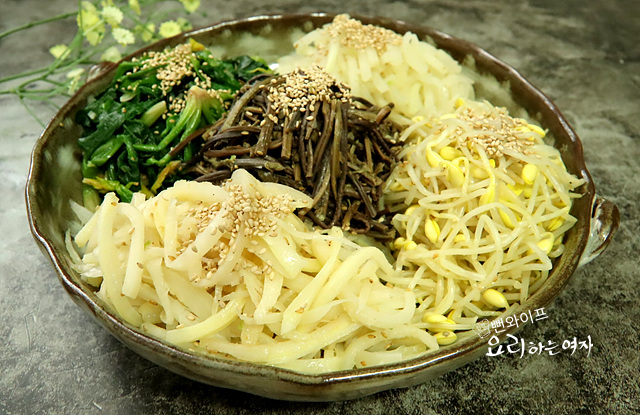
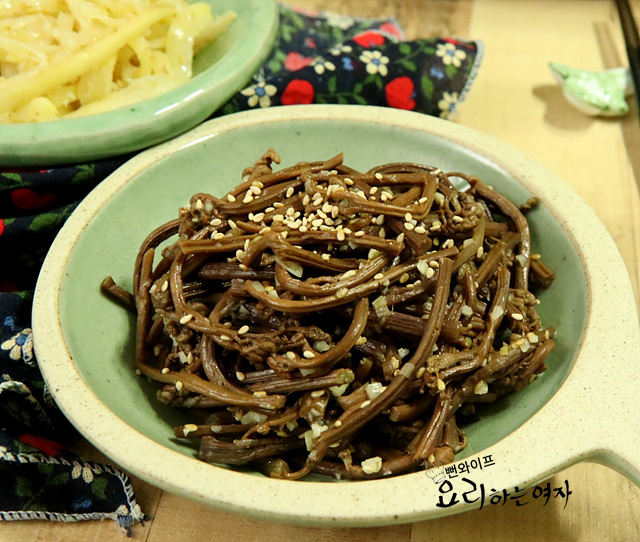
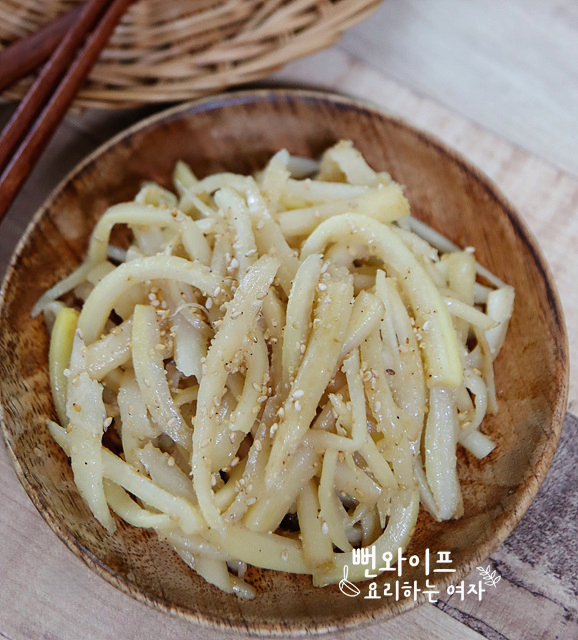
Myeongjeol Namul (Holiday Seasoned Vegetables)
Holiday seasoned vegetables simmered tender with broth to bring out savory depth and remove any harsh aromas.
Translated from Korean by AI and not yet checked by a native speaker. Amounts and numbers are taken directly from the original recipe. Read the Korean original →
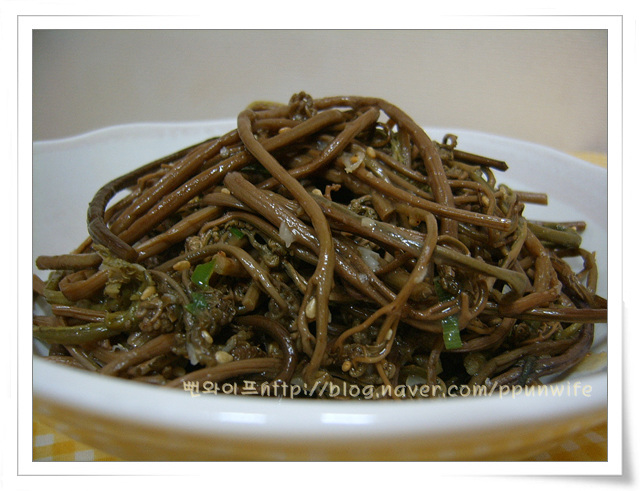
Stir-fried bracken fern and bellflower root are holiday feast essentials. Mirin tames any earthy or bitter notes, while broth instead of plain water braises them tender and flavorful all the way through. They make a refined addition to festive tables as well as everyday banchan.
- Servings
- about 4–5 servingsOriginal: 2 plates
- Difficulty
- Hard
- Spiciness
- Not spicy
- Keeps
- 3 days
Ingredients
Bracken fern namul ingredients
- Bracken fern (gosari)2 handfuls, 200 g
- Broth3 tbsp (anchovy or beef)
Bracken fern namul seasonings
- Soup soy sauce (guk-ganjang) (or house)1 tbsp
- Minced green onion1 tbsp
- Mirin (cooking rice wine)1 tbsp
- Minced garlic1 tsp
- Toasted sesame oil1/2–1 tbsp
- Ground toasted sesame seeds1 tsp
- Salta little
Bellflower root namul ingredients
- Bellflower root (doraji)2 handfuls, 200 g
- Broth1/2 cup (anchovy or beef)
Bellflower root namul seasonings
- Soup soy sauce (guk-ganjang) (or house)1 tsp
- Minced green onion1 tbsp
- Mirin (cooking rice wine)1 tbsp
- Minced garlic1 tsp
- Salt0.5 tsp
- Toasted sesame oil1/2–1 tbsp
- Ground toasted sesame seeds1 tsp
- Soak dried bracken fern thoroughly in water overnight, then boil until the stems are tender. After boiling, soak in water for 3 to 4 hours while changing the water. Trim away any tough ends of the stems.
- If using whole bellflower roots, peel them and split into manageable thicknesses. Sprinkle with coarse sea salt and 1/4 cup water, rub vigorously by hand to draw out the saponin foam (bitterness), then rinse several times in clear water to wash out the remaining saltiness.
- If preparing for ancestral rites where green onion and garlic are traditionally avoided, simply omit the green onion and garlic from the seasonings.
- If you have no broth, you can dissolve a little commercial beef dashida in plain water instead.
Steps
Soak and trim the bracken fern
Dried bracken fern must be soaked in water overnight and boiled until the stems turn tender. After boiling, let it soak for 3 to 4 hours, changing the water occasionally. These days, it is also sold pre-boiled and cleaned for convenience. Trim off any tough ends from the stems.
Rinse the bracken fern
Rinse clean in water.
Cut the bracken fern
Drain in a colander, then cut into bite-sized lengths.
Season the bracken fern
Add 1 tbsp soup soy sauce (guk-ganjang), 1 tbsp minced green onion, 1 tbsp mirin (cooking rice wine), and 1 tsp minced garlic. Mix gently with your hands and let sit briefly so the flavors absorb. Adding a little mirin removes the characteristic smell of bracken fern.
Stir-fry the bracken fern
Heat a pan with a little oil, add the bracken fern, and stir-fry briskly over high heat. Once the surface looks evenly glossy...
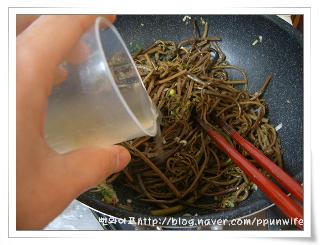
Add the broth
Pour in 3 tbsp broth and stir. Cooking with broth rather than plain water makes the namul much deeper and more savory. If you have no broth, you can dissolve a little commercial beef dashida in plain water instead.
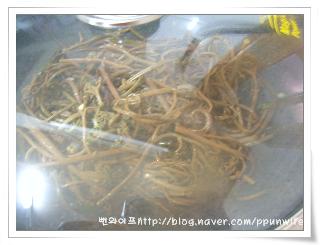
Cover and cook
Cover with a lid and cook for 2 minutes...
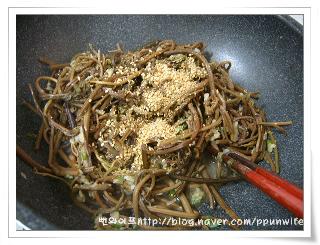
Finish the bracken fern namul
Open the lid, stir-fry to cook off some of the moisture, then add toasted sesame oil and ground toasted sesame seeds. If it tastes bland, season with salt to finish. The bracken fern namul is done.
Trim the whole bellflower root
If you bought whole bellflower roots, peel them and split them into suitable thicknesses. Bellflower root has a strong bitter taste, so it requires prep work before cooking.
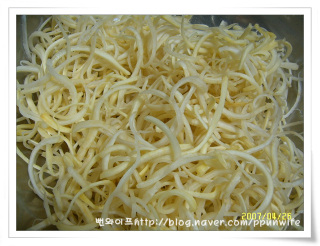
Add salt and water
Sprinkle coarse sea salt evenly over the bellflower root, along with 1/4 cup water.
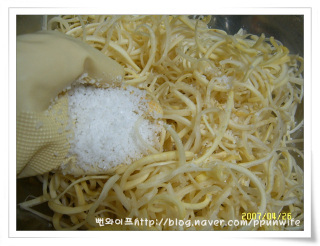
Rub to remove bitterness
Rub vigorously with your hands, and foam will form. This foam is saponin, the source of bitterness. Once the bellflower root softens and plenty of foam appears, rinse it in water.
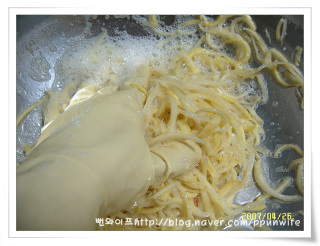
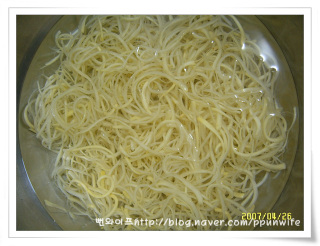
Rinse and squeeze the bellflower root
Rinse several times in clear water, then soak briefly in water to remove any lingering saltiness. Lift out and squeeze out the moisture.
Season the bellflower root
Add 1 tsp soup soy sauce (guk-ganjang), 1 tbsp minced green onion, 1 tbsp mirin (cooking rice wine), 1 tsp minced garlic, and 0.5 tsp salt to the prepared bellflower root. Mix gently with your hands and let sit briefly so the flavors soak in. If you season bellflower root with only soup soy sauce, the color becomes dingy, so balance it with salt. I minced some of the green parts of the green onion as well, but using only the white parts gives a cleaner look. You can use mirin instead of sugar to tame the unique bitterness of bellflower root.
Stir-fry the bellflower root
Heat a pan with a little oil, add the bellflower root, and stir-fry briskly over high heat. Once the surface looks evenly glossy...
Add the broth
Pour in 1/2 cup broth and stir. Because raw bellflower root takes time to cook through, it needs a generous amount of broth.
Cook covered and finish
Cover with a lid and cook. Stir occasionally until the bellflower root becomes tender. If you cook it too long at this stage, it will lose its crisp-tender bite and turn mushy, so watch it closely. Open the lid, stir-fry to let some moisture evaporate, and finish by adding toasted sesame oil and ground toasted sesame seeds. The bellflower root namul is done.
 Ppunwife's tips
- Adding a little mirin removes the characteristic smell of bracken fern.
- Cooking with broth rather than plain water makes the namul much deeper and more savory.
- If you season bellflower root with only soup soy sauce, the color becomes dingy, so balance it with salt.
- Using only the white parts of the green onion keeps the bellflower root namul neat and clean in color.
- You can use mirin instead of sugar to tame the characteristic bitterness of bellflower root.
- Because raw bellflower root takes time to cook through, it needs a generous amount of broth.
- If you cook it too long, it will lose its crisp-tender bite and turn mushy, so watch it closely.
FAQ
How do you remove the strong bitterness from bellflower root?
Sprinkle coarse sea salt and a little water over it, rub vigorously by hand until bubbly foam forms, and rinse several times in clean water.
What can I substitute if I don't have broth for the namul?
You can dissolve a small amount of commercial beef dashida in plain water and use it in place of broth.
Is there anything to keep in mind when preparing this for ancestral rites?
To follow traditional ancestral rites customs, simply omit the green onion and garlic from the basic seasonings.
How do you keep bellflower root namul looking clean and white?
Seasoning only with soup soy sauce can discolor the dish, so use salt alongside it, and mince only the white part of the green onion rather than the green leaves.