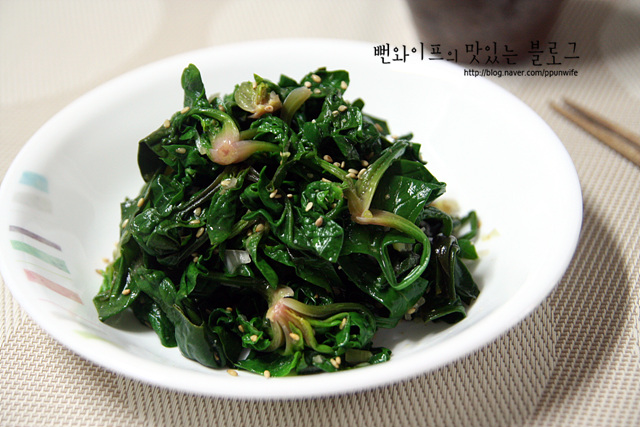
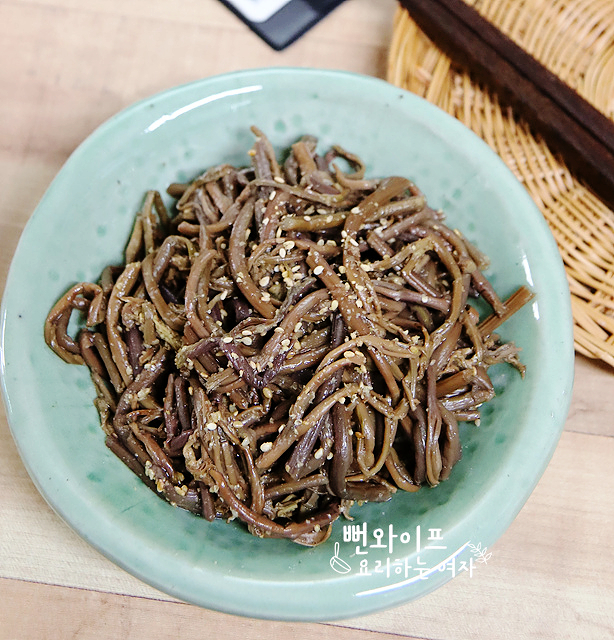
Clean and Mild Osaek Namul (Five Colored Vegetable Side Dishes)
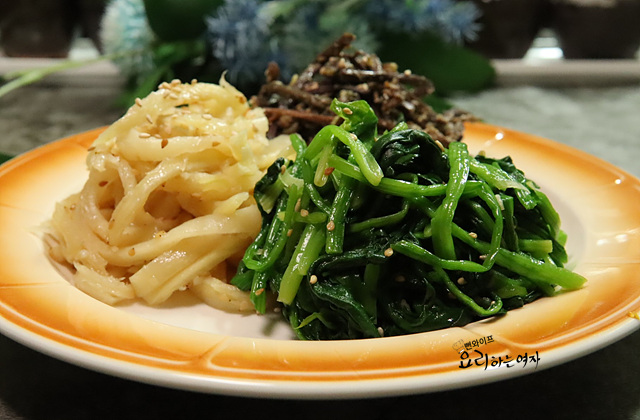
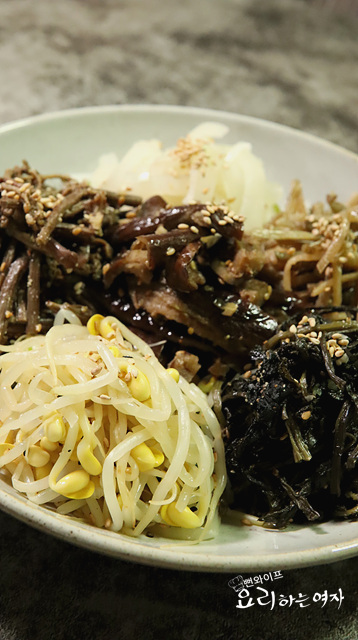
A holiday banchan platter of five neatly sautéed and seasoned vegetable dishes: bracken fern, bellflower root, spinach, Korean radish, and soybean sprouts.
Translated from Korean by AI and not yet checked by a native speaker. Amounts and numbers are taken directly from the original recipe. Read the Korean original →
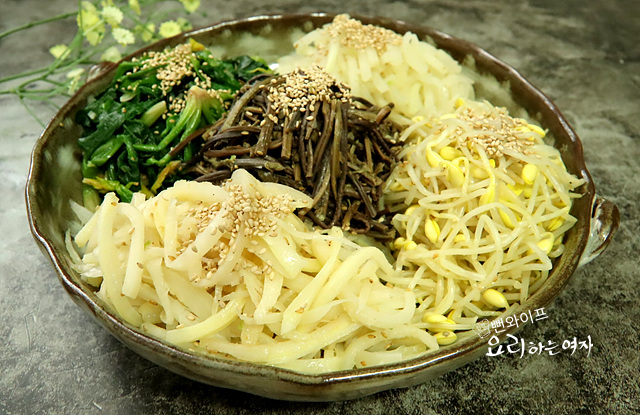
Five vegetable banchan dishes perfect for a holiday ancestral table or bibimbap. Using a deeply brewed rich broth during the sautéing process brings out deep, rich flavors. Proper prep removes the bitterness and raw smell from each vegetable for a neat, clean, and mild finish.
- Servings
- about 6–8 servings
- Difficulty
- Hard
- Spiciness
- Not spicy
Ingredients
Bracken fern namul
- Bracken fern (gosari)300 g
- Broth4 tbsp
- Toasted sesame oil1 tbsp
- Ground toasted sesame seeds1 tbsp
- Soup soy sauce (guk-ganjang)1 1/2 tbsp
- Minced green onion2 tbsp
- Mirin (cooking rice wine)1 tbsp
- Minced garlic1/2 tbsp
- Salta little
Bellflower root namul
- Bellflower root (doraji)300 g
- Broth4 tbsp
- Sugar1/2 tsp
- Toasted sesame oil1 tbsp
- Ground toasted sesame seeds1 tbsp
- Soup soy sauce (guk-ganjang)1/2 tbsp
- Salt1/2 tsp
- Minced green onion2 tbsp
- Mirin (cooking rice wine)1 tbsp
- Minced garlic1/2 tbsp
Bellflower root prep
- Coarse sea salt2 tbsp
- Water1/3 cup
Spinach namul
- Spinach300 g
- Soup soy sauce (guk-ganjang)1/2 tbsp
- Salt1 tsp
- Minced green onion2 tbsp
- Minced garlic1/2 tbsp
- Toasted sesame oil1 tbsp
- Ground toasted sesame seeds1 tbsp
Radish namul
- Korean radish (mu)500 g
- Salt1/2 tbsp
- Minced garlic1 tbsp
- Minced green onion2 tbsp
- Ground toasted sesame seeds1 tbsp
- Broth1/3 cup
- Perilla oil (or toasted sesame oil)1 tbsp
Soybean sprout muchim
- Soybean sprouts300 g
- Salt1 tbsp
- Water3 cups
- Soup soy sauce (guk-ganjang)1 tsp
- Salt1/2 tsp
- Minced garlic1/2 tbsp
- Minced green onion2 tbsp
- Toasted sesame seeds1 tbsp
- Toasted sesame oil1 tbsp
- Ground toasted sesame seeds1 tbsp
- Buy boiled bracken fern and trim away any hard or tough parts of the stems by hand. Wash the spinach and separate into individual stems, and trim off any messy roots from the soybean sprouts.
- Split the bellflower roots into bite-sized thickness and lengths, then add 2 tbsp coarse sea salt and 1/3 cup water. Rub vigorously until the bellflower roots soften to draw out the bitterness, then rinse several times in cold water.
- If cooking with dried bracken fern, refer to the boreum namul recipe on the blog to rehydrate it before use.
- Julienne the radish to about 0.5 cm thick for good texture, toss with 1/2 tbsp salt, and let it pickle for about 20 minutes.
Steps
Prepare and clean the ingredients
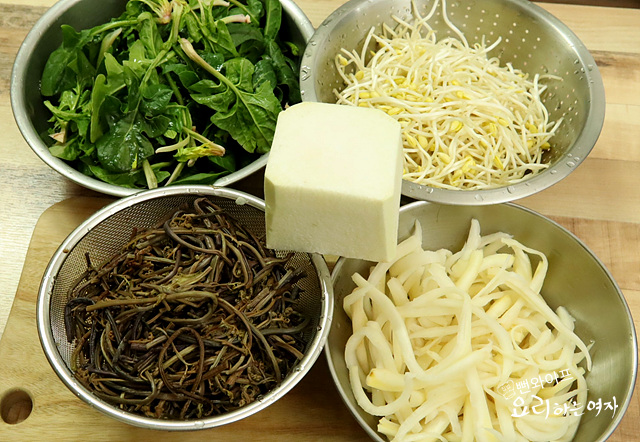
To make five-colored namul, I prepared bracken fern, bellflower root, spinach, soybean sprouts, and Korean radish.
I bought pre-boiled bracken fern. I washed the spinach and separated it into bite-sized individual stems. I trimmed the messy roots from the soybean sprouts.
Detailed prep for the bracken fern and bellflower roots will follow in the cooking steps.
If you are using dried bracken fern, refer to the boreum namul recipe on my blog.
Prepare the broth and mince the green onions
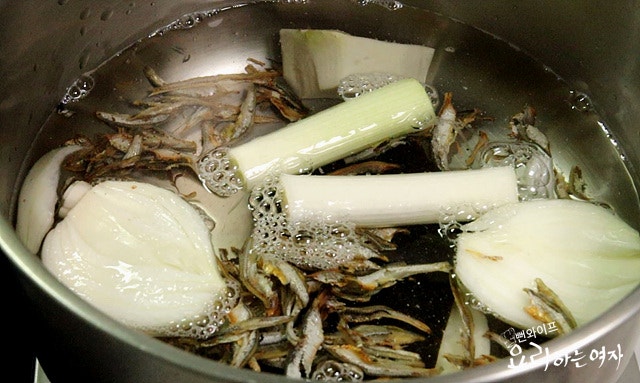
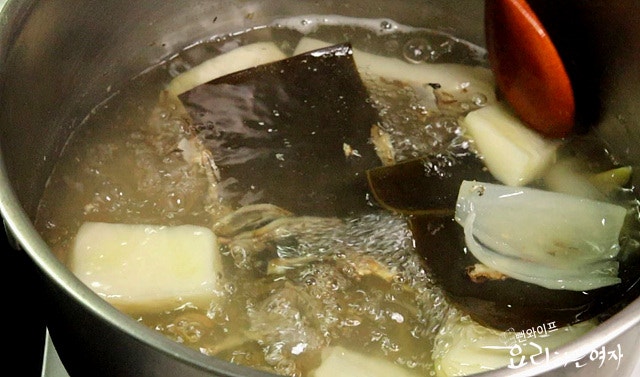
There is something to do first when making holiday namul.
Making a rich broth beforehand and adding it to the vegetables makes a huge difference in the depth of flavor.
As shown in the picture, you can brew broth with dried seafood, or use meat cooking broth.
On the holiday itself, I stir-fry the namul right next to the boiling tangguk (ancestral soup), ladling broth from the tangguk into the vegetables as I cook.
This way you don't need to prepare a separate broth for sautéing, and cooking with rich tangguk broth makes the namul much more refined with deep flavor.
Of course, I finish all the vegetable prep the day before so they are ready to cook right away.
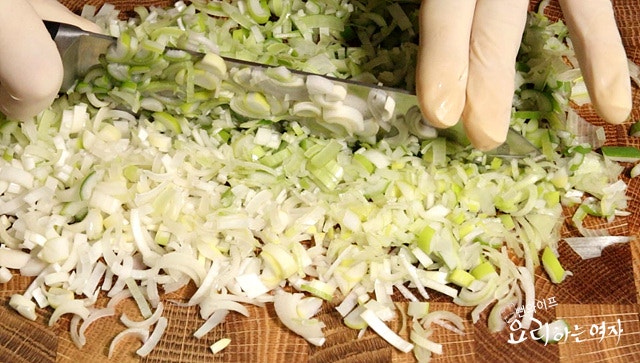
Next, since minced green onion goes into the namul, finely mince the white stems, which are free of slippery sap, in advance so you can sauté quickly.
Though not in the photo, lightly crushing toasted sesame seeds doubles the nutty flavor of namul. For this batch, I used ground toasted sesame seeds instead of whole seeds throughout.
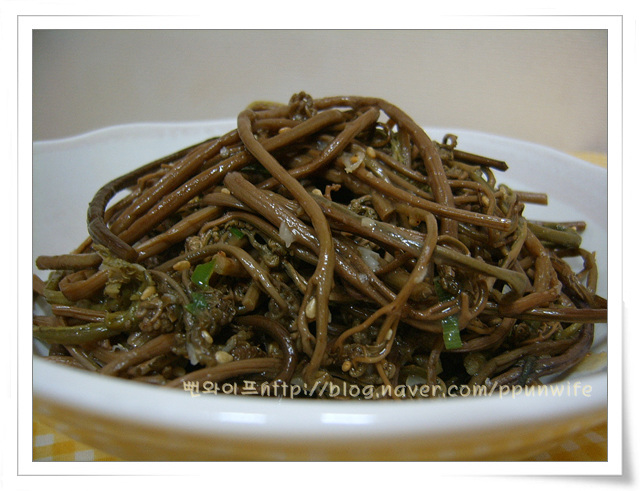
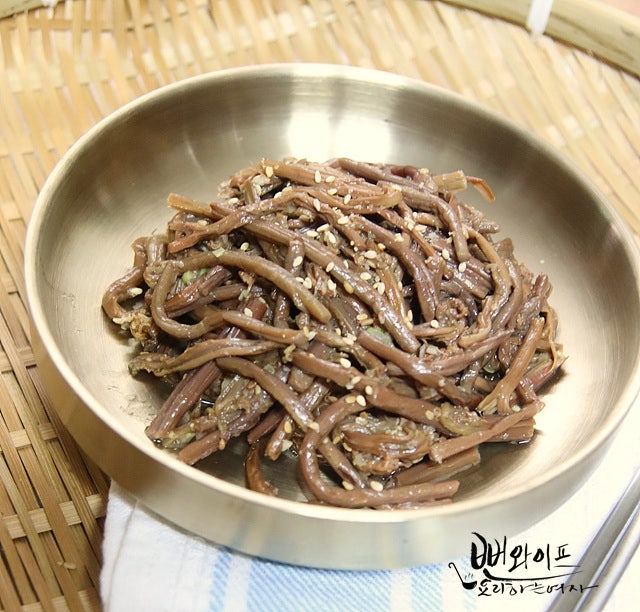
Sautéed bracken fern namul
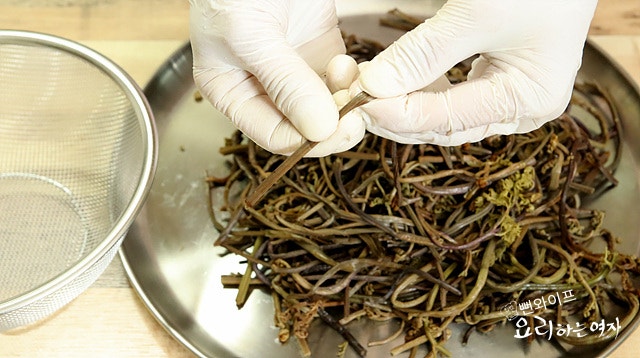
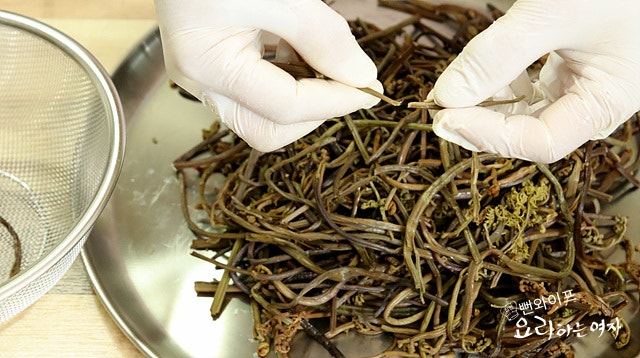
Bracken fern often has tough or woody stem ends. Leaving them on makes the texture unpleasant to chew.
Trim those parts off with your fingers.
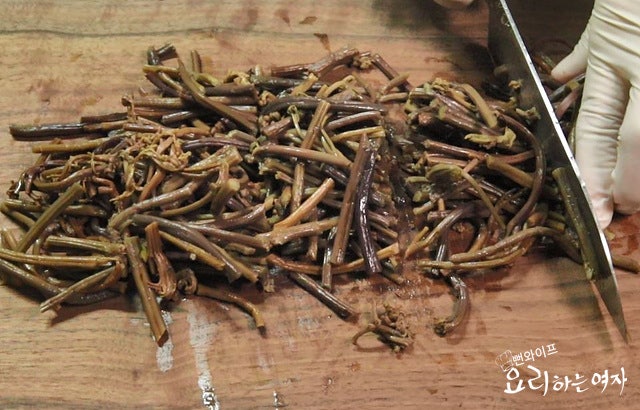
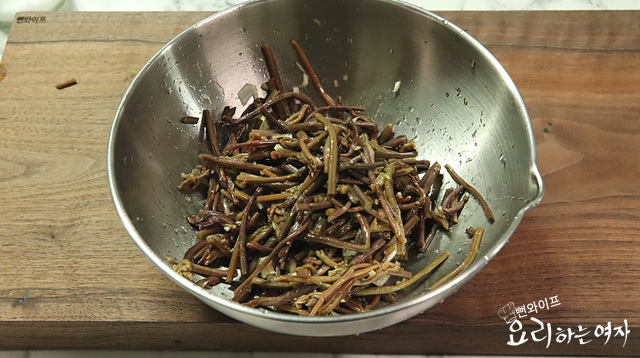
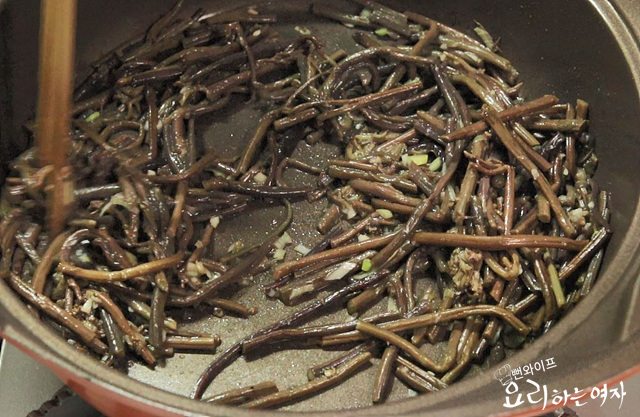
Cut into bite-sized lengths and season the bracken fern.
Add 1 1/2 tbsp soup soy sauce (guk-ganjang), 2 tbsp minced green onion, 1 tbsp mirin (cooking rice wine), and 1/2 tbsp minced garlic, then toss well to coat.
The characteristic aroma and slight bitterness of bracken fern can be mellowed with sugar or mirin. That is why I added a bit of mirin to the seasoning.
Heat cooking oil in a pan and stir-fry the bracken fern thoroughly.
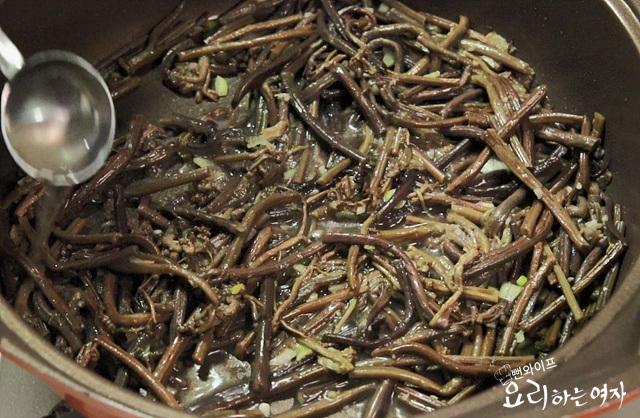

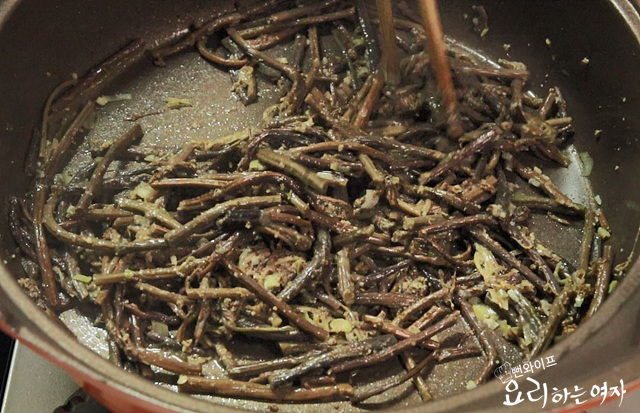
Once the bracken fern is glossy from sautéing, add 4 tbsp broth and mix evenly.
Cover with a lid and let it steam over low heat for about 2 minutes so the broth absorbs and softens the namul.
Remove the lid and sauté until just moist with minimal liquid left, adjust the seasoning with salt, and finish by tossing evenly with toasted sesame oil and ground toasted sesame seeds.
Bracken fern is also delicious stir-fried with perilla seed powder, so choose according to your taste.
Sautéed bellflower root namul
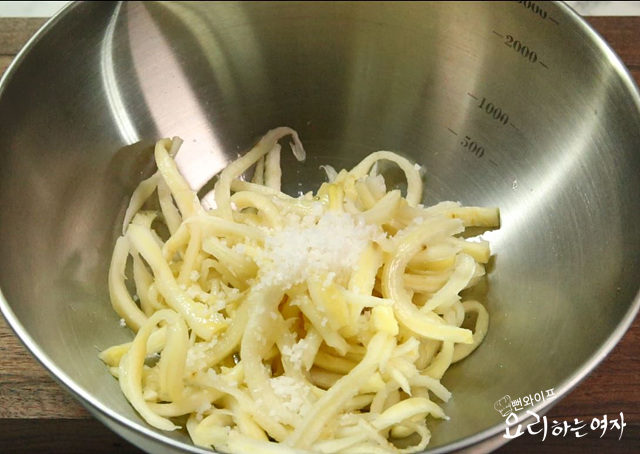
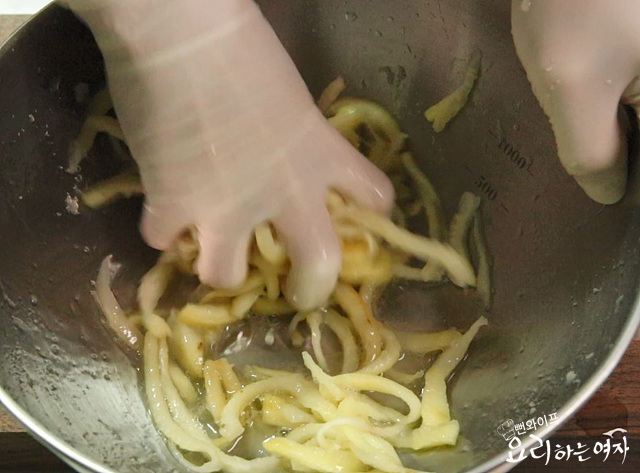
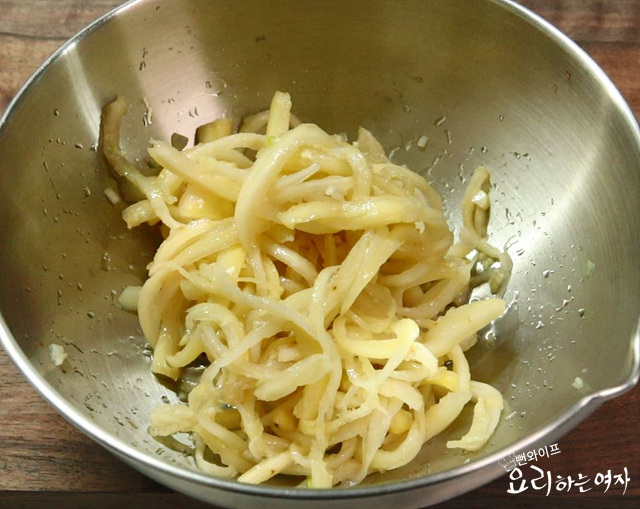
Split the bellflower roots into bite-sized thickness and lengths, then remove the bitterness.
Add 2 tbsp coarse sea salt and 1/3 cup water, and rub firmly with your hands until the bellflower roots soften.
Rubbing with salt draws out the bitterness, and any remaining bitterness is balanced out with seasoning.
Rinse several times in cold water to wash away the saltiness, gently squeeze out excess water, and toss lightly with 1/2 tbsp soup soy sauce (guk-ganjang), 1/2 tsp salt, 2 tbsp minced green onion, 1 tbsp mirin (cooking rice wine), and 1/2 tbsp minced garlic.
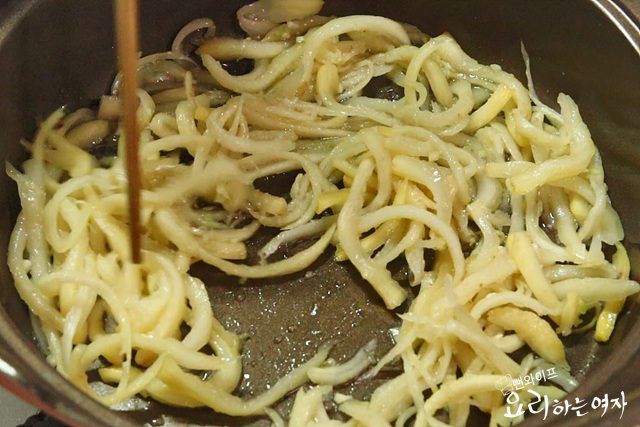
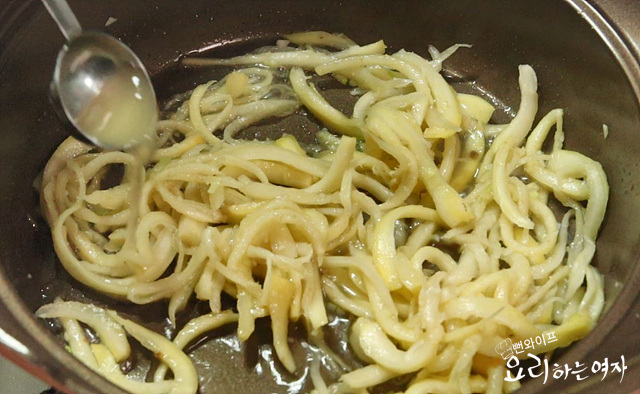
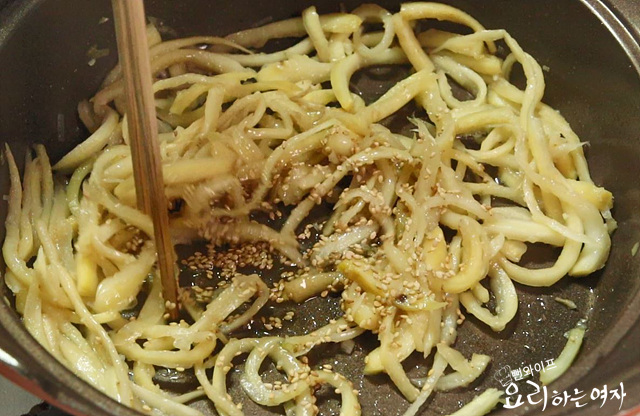
Swirl a little cooking oil in a heated pan and stir-fry the bellflower root. Add 4 tbsp broth, stir, cover with a lid to steam for about 2 minutes, then sauté until the moisture evaporates.
If any bitterness still remains, add 1/2 tsp sugar while sautéing. Finish by mixing in toasted sesame oil and ground toasted sesame seeds.
Seasoned spinach namul
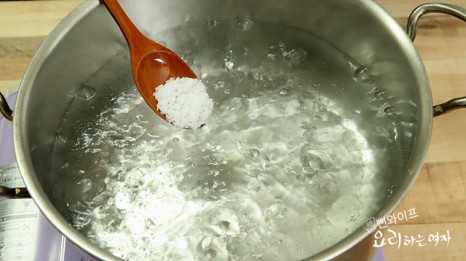
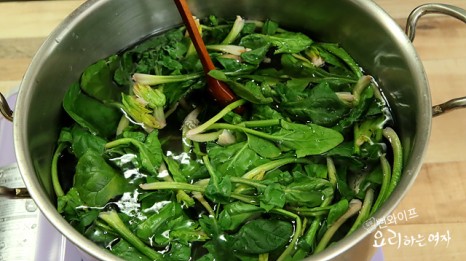
Bring water to a rolling boil with 1 tbsp salt, then blanch the spinach for 1 minute.
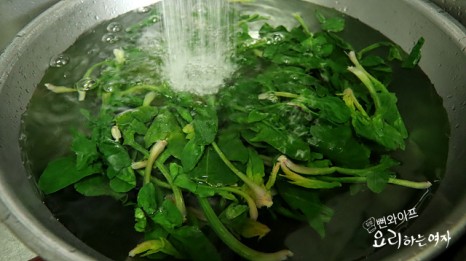
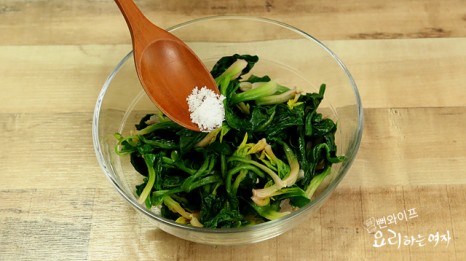
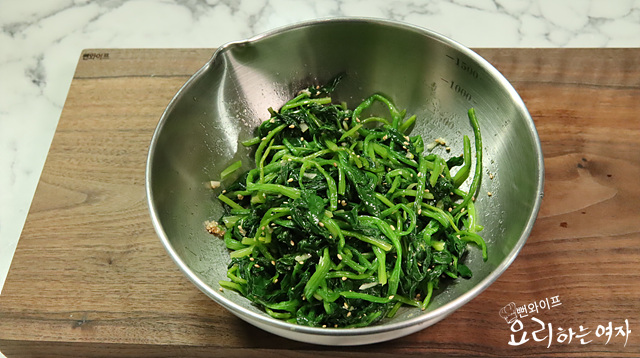
Plunge immediately into cold water to cool, then squeeze out the moisture firmly.
Season by tossing gently with 1/2 tbsp soup soy sauce (guk-ganjang), 1 tsp salt, 2 tbsp minced green onion, 1/2 tbsp minced garlic, toasted sesame oil, and ground toasted sesame seeds.
It is also delicious if you season with tuna extract sauce (chamchi-aek) instead of soup soy sauce and salt.
Sautéed radish namul
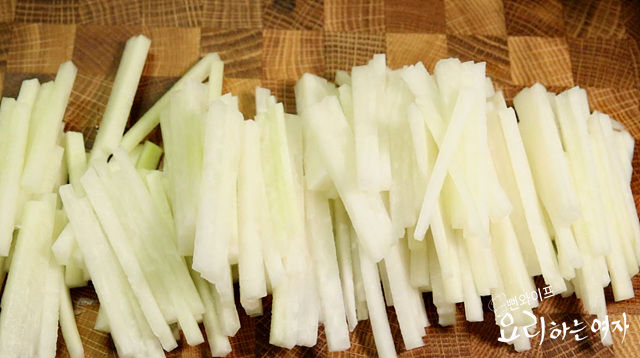
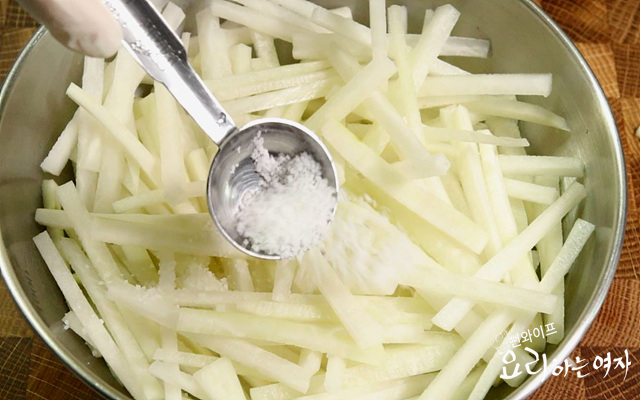
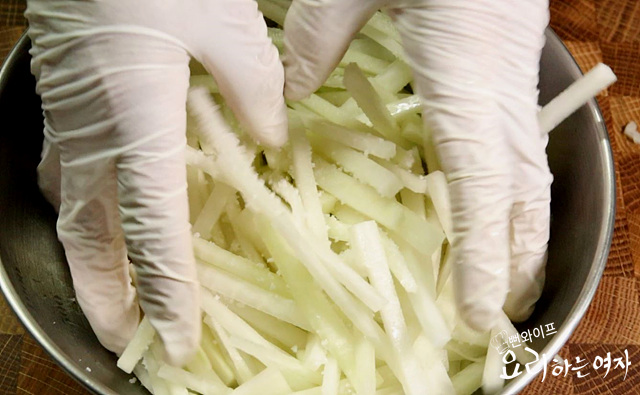
Julienne the radish to about 0.5 cm thick so it retains good texture; cutting along the grain prevents it from breaking easily.
A second way to keep it from breaking is pickling it in salt. Add 1/2 tbsp salt, mix evenly, and let it pickle for about 20 minutes.
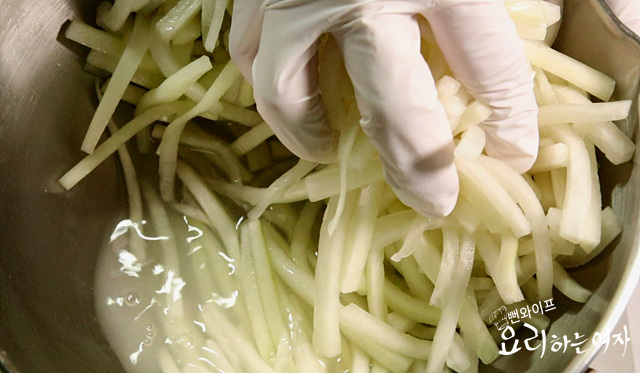
As the radish softens, liquid will release. Do not discard this liquid; use it as is when sautéing.
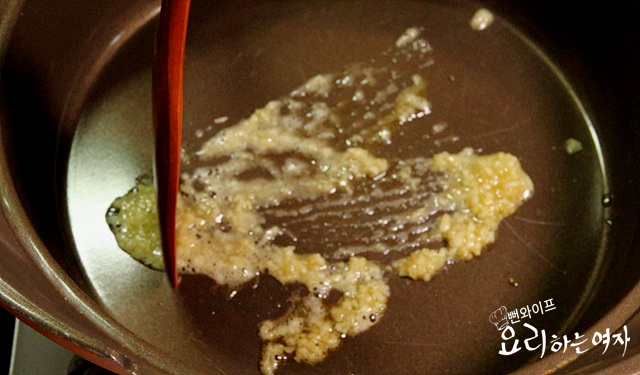
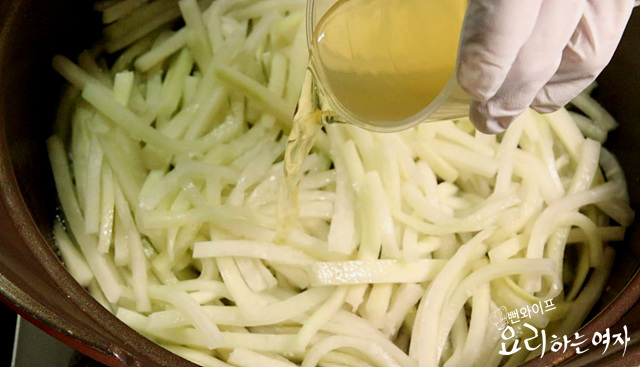
Heat cooking oil in a pan, add minced garlic and sauté until fragrant, then add the radish, sauté briefly, and pour in the broth.

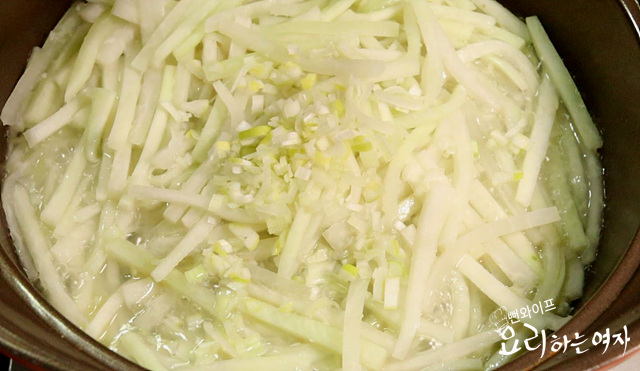
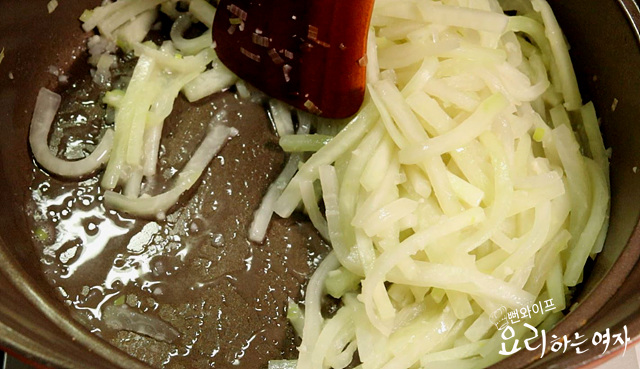
Cover with a lid to steam so the radish does not become mushy, then add minced green onion and simmer until the liquid is almost gone.
Since it was pickled in salt, you usually do not need extra seasoning, but adjust with salt if it tastes bland.
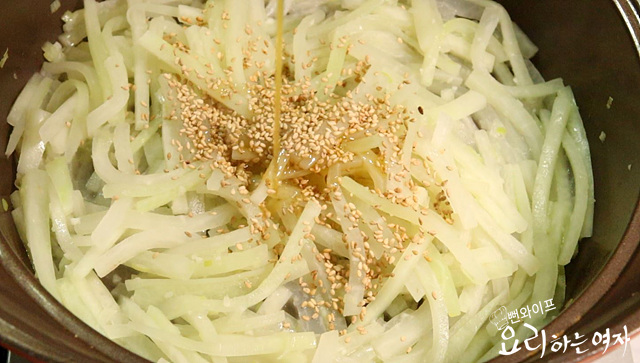
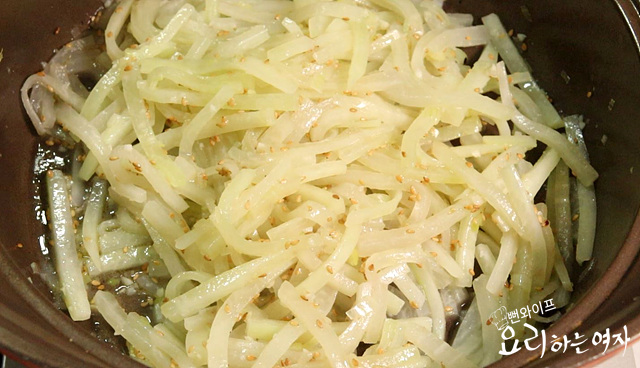
Finish by stirring in perilla oil or toasted sesame oil along with ground toasted sesame seeds.
I prefer perilla oil in radish namul, so I finished it with perilla oil.
Seasoned soybean sprouts
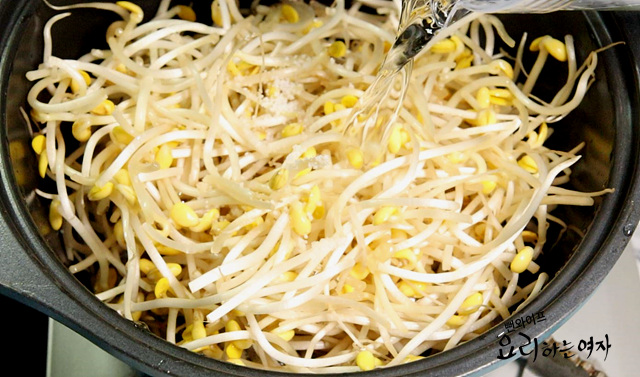
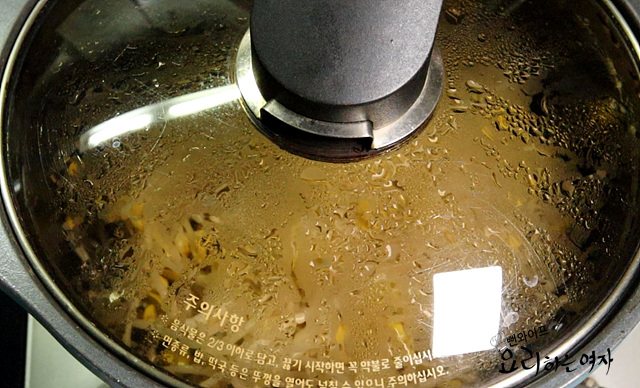
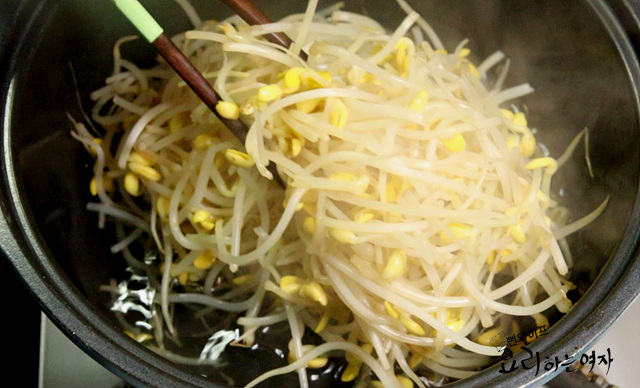
Place the soybean sprouts in a pot and pour in 1 tbsp salt and 3 cups of water.
Do not submerge the soybean sprouts completely; add just enough water to cover them halfway.
Cover with a lid and cook over high heat; it will begin to boil after about 4 minutes, and after about 2 more minutes, the raw smell will disappear and turn into a savory aroma.
Turn off the heat, keep the lid on, and let it steam in the residual heat for 3 minutes.
If you like a crisp texture, rinse in cold water and drain, or simply drain the cooked sprouts as they are.
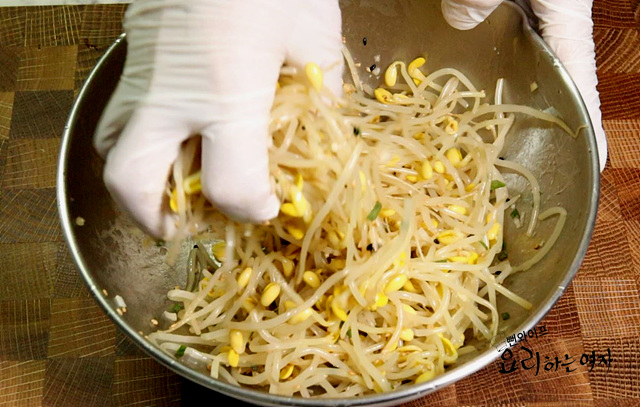
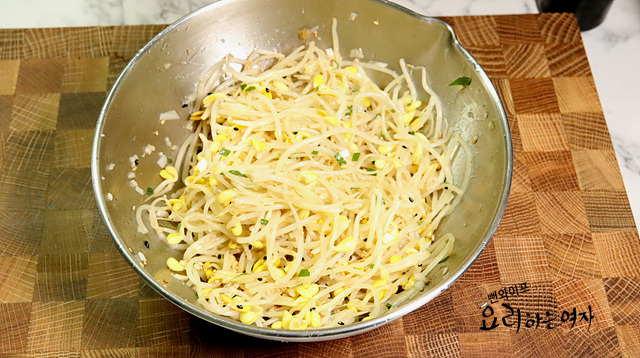
In a bowl, combine the soybean sprouts with 1 tsp soup soy sauce (guk-ganjang), 1/2 tsp salt, 1/2 tbsp minced garlic, 2 tbsp minced green onion, 1 tbsp ground toasted sesame seeds, and 1 tbsp toasted sesame oil, tossing evenly to finish.
 Ppunwife's tips
- Minced green onion goes into the namul; finely mincing the white stem parts without slippery sap in advance helps you stir-fry quickly.
- Lightly crushing toasted sesame seeds before adding doubles the nutty aroma of the namul.
- The characteristic aroma and slight bitterness of bracken fern can be balanced out with sugar or mirin.
- Julienning the radish along the grain keeps it from breaking apart easily.
- Do not discard the liquid released while salting the radish; use it directly when sautéing.
FAQ
How should I prepare the broth for sautéing namul?
You can brew broth from dried seafood or simmered meat, and using the broth from the holiday soup (tangguk) as you stir-fry imparts deep flavor without extra prep.
How do I prep bellflower roots to reduce their harsh bitterness?
Add 2 tbsp coarse sea salt and water, rub and knead vigorously by hand until softened, then rinse several times in cold water to significantly reduce the bitterness.
How can I prevent radish namul from breaking apart while cooking?
Julienne the radish along its grain and salt it for about 20 minutes beforehand so the strips remain intact during sautéing.